

Buy ELISA Readers and Microplate Washers in Nigeria.
Buy ELISA laboratory equipment in Nigeria through Franance. This category lists two BIOBASE product records: a BK-EL10 series microplate reader and a BK-9622/BK-9613 microplate washer. These are separate instruments, not a complete, validated ELISA test system or reagent-kit bundle. Specify the exact reader variant, washer model and head, assay plate and method requirements before requesting a quotation.
Products
2 models
Where can I buy ELISA equipment in Nigeria?
You can request a quotation through Franance for the current ELISA Systems category. The category currently assigns two BIOBASE product records:
Read moreWhat does the ELISA Systems category actually include?
Although the category is called “ELISA Systems,” its two assigned records are an ELISA reader series and an ELISA washer product record. They do not form a preconfigured or validated end-to-end test system. BIOBASE describes the washer as generally used with a microplate reader. That statement describes a common equipment workflow, not a compatible, bundled quote or a guarantee that every reader, washer, plate, assay kit and laboratory information system will work together.
Read moreHow do an ELISA reader and washer differ?
A microplate reader measures optical signals from wells in a microplate at selected wavelengths. BIOBASE lists the BK-EL10 series for 96-well plates with eight vertical optical channels, single- or double-wavelength detection, and model-dependent filters, wavelength range, interface and software. Some variants include an incubation function; the manufacturer lists this only for BK-EL10D and BK-EL10DA.
Read moreBuy ELISA systems in Nigeria: readers and washers
Buy ELISA laboratory equipment in Nigeria through Franance by specifying the assay workflow, plate format, required optical wavelengths, wash protocol and quality-control plan. The current “ELISA Systems” category contains two BIOBASE product records: a BK-EL10 series microplate reader and a BK-9622/BK-9613 microplate washer. These are separate instruments with different roles. The category does not list a complete, validated ELISA test system, reagent kits, calibrators or controls, and it does not establish that any listed instrument is cleared or validated for a particular diagnostic assay. Use the listings to start a quotation and a technical review. The selected reader model, washer head and plate compatibility, included software, accessories, installation and local support must be confirmed in the written offer. A reader measures optical signals and may include analysis features; a washer performs plate washing. Neither instrument supplies the assay’s antibodies, enzyme conjugates, standards, controls, instructions or evidence needed to establish performance for a specific method.
Where can I buy ELISA equipment in Nigeria?
You can request a quotation through Franance for the current ELISA Systems category. The category currently assigns two BIOBASE product records:
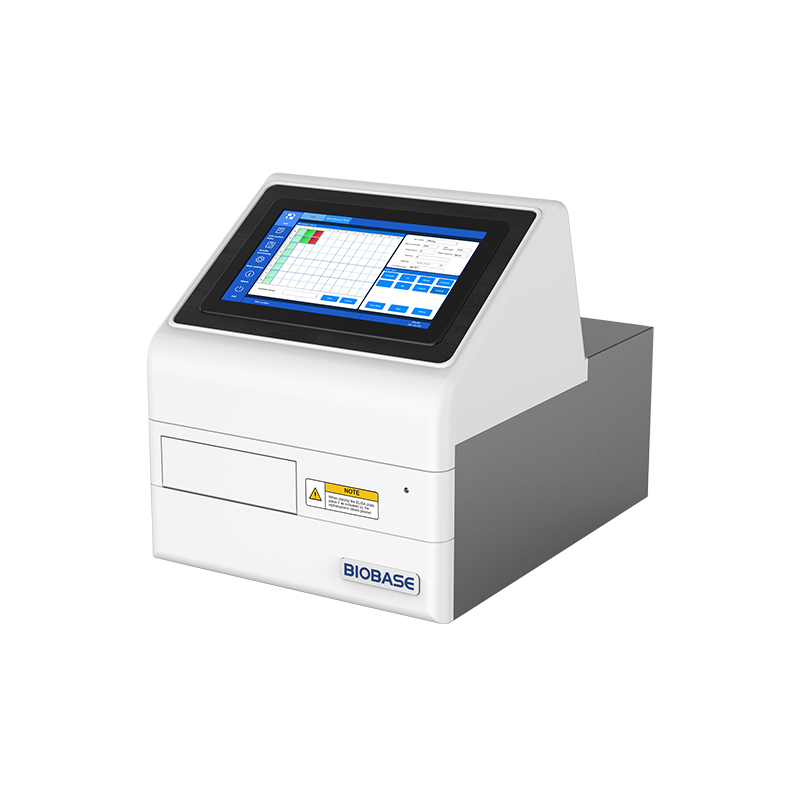
- BK-EL10 series ELISA Microplate Reader — the record includes BK-EL10A, BK-EL10B, BK-EL10C, BK-EL10D and BK-EL10DA variants.
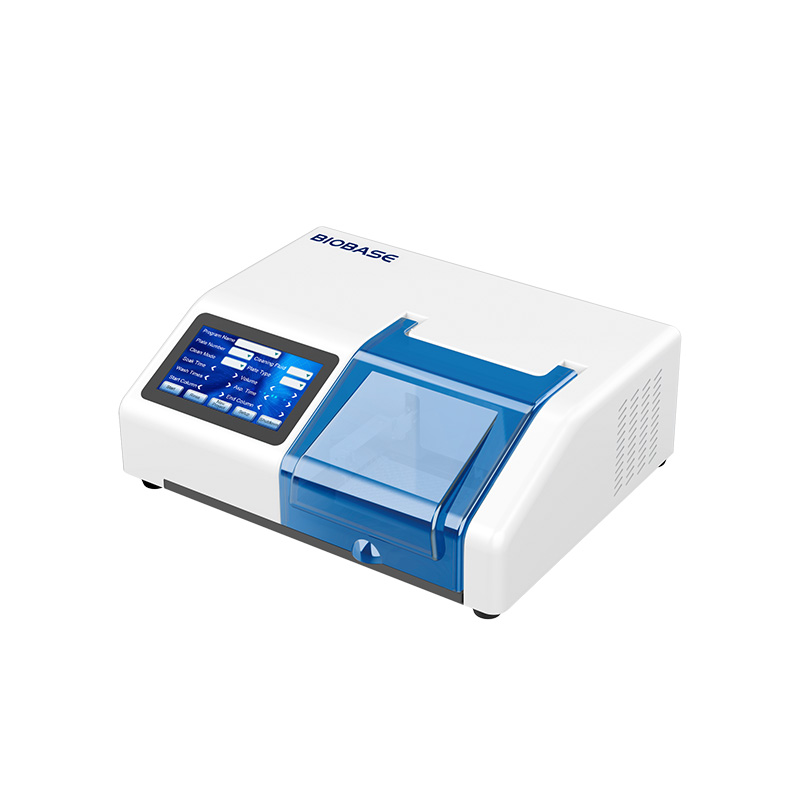
- BK-9622 / BK-9613 ELISA Microplate Washer — the record describes two washer models with different cleaning-head configurations.
These are quote-led equipment listings, not an online checkout or a statement of local stock. State your required model and application so the seller can route the right configuration for review. Ask for the current manufacturer documentation, exact model suffix, supplied accessories, price basis, delivery terms and any local installation or service scope in writing.
What does the ELISA Systems category actually include?
Although the category is called “ELISA Systems,” its two assigned records are an ELISA reader series and an ELISA washer product record. They do not form a preconfigured or validated end-to-end test system. BIOBASE describes the washer as generally used with a microplate reader. That statement describes a common equipment workflow, not a compatible, bundled quote or a guarantee that every reader, washer, plate, assay kit and laboratory information system will work together.
The reader has its own child taxonomy under ELISA Reader, and the washer is assigned to ELISA Washer. These routes reflect the separate instrument functions. Neither listing is a reagent kit, standalone assay protocol, plate shaker, automated pipetting system or complete clinical diagnostic pathway. Confirm what equipment and materials are included with the quote rather than inferring a bundle from the parent category name.
How do an ELISA reader and washer differ?
A microplate reader measures optical signals from wells in a microplate at selected wavelengths. BIOBASE lists the BK-EL10 series for 96-well plates with eight vertical optical channels, single- or double-wavelength detection, and model-dependent filters, wavelength range, interface and software. Some variants include an incubation function; the manufacturer lists this only for BK-EL10D and BK-EL10DA.
A microplate washer dispenses wash solution and aspirates liquid from a plate according to a programmed cycle. BIOBASE lists the BK-9622 with 8- or 12-channel head options and BK-9613 with a 96-pin head and single-row control. The wash head, plate shape, residual liquid, aspiration settings and wash programs matter to the assay’s prescribed procedure. A washer does not read or interpret optical results, and a reader does not automatically perform the wash protocol unless the particular system configuration explicitly provides it.
Select each instrument from the protocol and kit instructions. If your current workflow uses manual washing or a separate reader, the quote should state whether you are adding or replacing one instrument and what changes in the validated method will be assessed by your laboratory.
Buy BIOBASE BK-EL10 ELISA Microplate Reader in Nigeria
The BK-EL10 reader listing is one catalogue record covering five selectable models: BK-EL10A, BK-EL10B, BK-EL10C, BK-EL10D and BK-EL10DA. BIOBASE lists 96-well plate measurement and eight vertical optical channels. Wavelength ranges and standard filters vary by variant. The manufacturer lists four standard wavelengths for A/B/C and five for D/DA, with additional wavelengths optional, but the current offered filter configuration must be confirmed.
The variants also differ in user interface and connectivity. The manufacturer describes Windows operation for BK-EL10D and Android operation for BK-EL10DA. Incubation is listed only on D and DA. Printer support, display, workstation software and physical dimensions differ among models. Do not select “BK-EL10 series” without the suffix: specify the exact variant and ask for the quoted instrument configuration, installed filters, software license, printer and any included workstation or accessories.
The reader’s available qualitative and quantitative calculation functions do not establish assay-specific accuracy, clinical sensitivity or specificity. Confirm that the selected wavelength/filter set, measurement range, software calculations and output meet the requirements in your exact reagent kit instructions and method validation. Request the software version, export formats and connection details if results must move to a laboratory information system or another application.
Buy BIOBASE BK-9622 / BK-9613 ELISA Microplate Washer in Nigeria
The BK-9622/BK-9613 washer listing groups two washer models in one record. BIOBASE lists BK-9622 with selectable 8- or 12-channel cleaning heads; the BK-9613 is listed with a 96-pin head and single-row control. Manufacturer materials describe adjustable programs, liquid-level sensing, two-point aspiration, bottom flushing and wash functions. Confirm the exact model, head configuration, plate type, manifold, bottle set and supplied accessories before placing an order.
BIOBASE lists support for flat-, U-, V- and round-bottom plate formats and provides specific plate dimensions for BK-9622. That is not a blanket compatibility statement for every microplate or assay. Ask the lab to compare the plate catalog number and well geometry with the exact washer head and to confirm whether an adaptor or special plate carrier is required. For BK-9613, clarify what single-row control means for the intended plate and workflow.
Ask the vendor for current residual-volume and aspiration specifications for the quoted variant and the method used to measure them. The values on a product page are manufacturer specifications, not independent proof that a particular wash cycle meets your assay protocol. Confirm liquid channels, bottles, waste capacity, cleaning and maintenance requirements, wash-program storage and any software or connection options.
How should I select wavelengths, filters and software?
Begin with the intended assay and the reagent manufacturer’s current instructions. Record the required measurement wavelength or wavelengths, reference wavelength if any, plate type, read mode, incubation and timing requirements, and the intended result calculation. Match these needs to the exact instrument’s installed filters and software version. A broad optical range or optional filters do not establish that a specific filter is installed or that the analyzer supports an assay’s full procedure.
For a reader, request a model-specific configuration schedule listing filters supplied, filters optional, available measurement modes, calibration or performance checks, calculation functions and data export. If incubation is needed, confirm the capability applies to the offered BK-EL10D or BK-EL10DA configuration and verify the conditions required by the method. For software, ask whether formulas can be reviewed and controlled, how operator and run information are recorded, and whether raw optical data and calculated results can be retained and exported.
For a washer, specify plate geometry, wash volume, number of cycles, soak time, aspiration position and the wash solution arrangement defined by the assay instructions. Confirm which of these settings can be configured and stored for each plate protocol. Ask about priming, rinsing, waste handling and routine maintenance. The instrument’s ability to store many programs does not verify the method; the laboratory remains responsible for defining and approving each program.
Are these ELISA instruments a complete diagnostic test system?
No. The two category records describe instruments: a reader and a washer. A complete test workflow may also require an assay kit, microplates, calibrators, positive and negative controls, wash solution, pipettes, timers, sample-preparation materials, written procedures, trained staff, result review and quality-control records. These items are not included by implication in either instrument record.
An ELISA reader’s product description or analysis software does not show that a given kit is compatible or that it can diagnose a named disease. Intended use, specimen type, cut-off, control acceptance, result interpretation and performance claims belong to a specific assay and its current instructions and evidence. Ask the kit supplier and instrument vendor to confirm instrument compatibility, and have the laboratory establish that the procedure performs as expected before testing patient specimens.
The WHO Laboratory Quality Management System handbook explains that laboratories should evaluate new equipment and verify manufacturers’ performance claims using their own methods, samples, personnel and quality system. Use the handbook as general quality-management context; it does not certify these BIOBASE products or any assay. Do not make procurement or clinical decisions from a reader’s listed “accuracy” statement alone.
What facility and utility details belong in the quote?
Provide the destination site and room, available bench space, planned plate workflow, nearby equipment and operator requirements. Ask for exact instrument and packaging dimensions, weights, bench clearances, ventilation needs if any, and delivery access. Confirm voltage, frequency, plug and grounding requirements against the exact model and local installation. The manufacturer lists different power details for the washer models and a 100–240 V, 50/60 Hz range for the reader series; the offered configuration and nameplate should be verified before use.
For the washer, include wash and rinse solutions, bottle placement, waste container capacity, spill management and a process for routine rinsing and cleaning. For the reader, specify workstation placement, printer, USB or serial/network connections, access controls, file storage and any link to laboratory software. If the laboratory depends on a network or external computer, state what it supplies and ask the vendor to identify the system requirements and responsibilities.
For Nigeria-based operations, describe power-quality conditions and whether the facility expects a UPS or voltage protection. Ask BIOBASE or the supplier to confirm appropriate protection and whether it affects warranty or operation. Do not assume that a nominal mains rating means every local circuit, grounding arrangement or backup supply is adequate.
How should a laboratory verify an ELISA method after installation?
Before routine use, the laboratory should use its quality system to define acceptance checks for the instrument and method. The checks may involve the manufacturer’s installation or operational qualification, calibration or performance verification, control materials and the assay-specific verification required by the laboratory. The scope and acceptance criteria depend on intended use, assay instructions and local quality requirements; this guide does not prescribe a clinical validation protocol.
Ask for the manufacturer’s installation checklist, operator and service manuals, maintenance schedule, recommended consumables, service access requirements and documentation supplied with the instrument. Agree who installs and checks the system, who trains staff, what records are delivered and what happens if the equipment does not meet agreed acceptance criteria. Keep checks traceable to the exact reader or washer model and configuration.
Where a reader and washer are used together, verify the complete local process, including plate compatibility, wash settings, reader configuration, analysis, controls and result export. A demonstration with one assay or plate does not prove compatibility with every method in the laboratory. The assay owner and quality lead should approve the methods and intended use before patient testing.
What should I request in a Nigerian ELISA equipment quotation?
Name the precise model and configuration. For the BK-EL10 reader, choose A, B, C, D or DA and list required filters, wavelengths, incubation, interface, printer, software and export needs. For the washer, choose BK-9622 or BK-9613, state the head option, plate types, bottle set, wash protocols and any required adaptors. Identify the relevant assay kits and their plate and wash instructions, but do not assume the instruments include those kits or have an approved claim for them.
Ask the offer to separate the instrument from accessories, consumables, software, training, installation, shipping, warranty and service. Request the current technical sheet, manuals, conformity or regulatory documentation applicable to the offered item, serial/model identification, acceptance procedure, lead time and written commercial terms. Confirm local availability and after-sales coverage explicitly; the manufacturer pages and category records do not establish Nigerian stock or support.
For a laboratory replacing equipment, share the current reader, washer, assay kit and plate references. For a new workflow, state intended use, workload, number of plates per day, staffing, sample types and required records. This helps scope a response without treating the category name as a turnkey analyzer package.
How do I compare the reader and washer listings?
Compare only instruments with the same role. Reader comparisons should account for exact model suffix, wavelengths and filters, incubation, software, data output and plate format. Washer comparisons should account for head configuration, rows or channels, plate compatibility, aspiration, liquid channels, bottle and waste arrangement, settings and maintenance. Ask for a side-by-side response to your assay requirements rather than comparing a reader’s software features with a washer’s residue specification.
If you need both instruments, request separate line items and a written statement of what is and is not bundled. Confirm whether the washer and reader are compatible with your plates and assay workflow. If the lab expects a complete automated ELISA workstation, ask specifically whether additional automation, dispensing, incubation, reagent handling or result-management equipment is required; these are not established by the two current product records.
Franance can route quotation enquiries for the BK-EL10 reader series and BK-9622/BK-9613 washer. The vendor must confirm exact model, included items, local availability, installation and service terms in writing.
Can I buy ELISA equipment online and pay immediately?
No. The Franance listings are quotation-led. Send your model, assay workflow, required configuration and destination so the team can route a scope-based enquiry. Final pricing, local availability, supply, installation, warranty and service arrangements must be confirmed in the quotation; they are not established by a catalogue page.
Sources and evidence limits
The guide uses BIOBASE’s manufacturer pages for the BK-EL10 reader series and BK-9622/BK-9613 washer to describe listed models, configuration choices and product specifications. It uses the WHO Laboratory Quality Management System handbook for general guidance on equipment evaluation and local verification of manufacturer performance claims. The current Franance catalogue has two directly assigned records: a reader series covering five variants and a washer record covering two models.
The source material does not establish Nigerian stock, price, local warranty or service, regulatory status, intended use for a specific diagnostic claim, assay-kit compatibility, validation in your laboratory or a complete bundled ELISA system. Confirm current documentation and the offered configuration with BIOBASE or the supplier and have the laboratory approve intended use and method performance.
Request an ELISA equipment quotation from Franance
Tell Franance whether you need the BK-EL10 reader series, the BK-9622/BK-9613 washer or both. Specify the reader suffix or washer head, assay and plate requirements, filters, incubation, software, accessories, utility conditions, installation and service expectations. Franance can route the enquiry for a quotation discussion; confirm the exact configuration, supplied components, availability and commercial terms in writing before ordering.
Common questions
Does the ELISA Systems category include a complete test kit?
No. It currently lists a microplate reader series and a separate microplate washer record. Assay reagents, plates, controls, calibrators, protocols and validation are not included by implication.
Which reader variants can I request?
The BIOBASE record covers BK-EL10A, BK-EL10B, BK-EL10C, BK-EL10D and BK-EL10DA. Confirm exact filters, wavelengths, software, interfaces and incubation options for your chosen suffix.
Which washer models are listed?
The washer record includes BK-9622 and BK-9613. Specify the exact model, BK-9622 head option, plate format and required accessories in the enquiry.
Does a listed ELISA reader establish diagnostic performance?
No. Instrument specifications do not establish assay-specific diagnostic claims or method performance. Follow the assay instructions and the laboratory's approved quality and verification process.
Request an ELISA equipment quotation
Tell Franance your intended workflow, assay and plate references, exact reader or washer model, required options, site utilities and service expectations. Ask for written confirmation of the proposed instrument configuration, included items, availability and terms.
Request a quotationNeed an equipment quote?
Add the models you need to a quote order, or send us your equipment list.