






 Sysmex




 Hamilton Medical










Choosing medical equipment services in Nigeria
Which medical equipment service do you need in Nigeria?
Choose procurement when you need to specify and source equipment, installation for site readiness and handover, repair for a fault, and preventive maintenance for planned care. Use the testing guides to define calibration, performance or electrical safety requirements. For an older asset, review refurbishment against replacement with Franance.
A useful request names the decision you need to make. A facility with an intermittent monitor fault needs a different scope from a hospital reviewing a yearly maintenance programme. Likewise, moving a working device between departments can involve access, utilities and acceptance requirements that a simple delivery request would miss.
Franance’s service enquiry starts with that requirement. Include the equipment identity and the result you are seeking rather than selecting an unsupported repair method yourself. The initial review can establish what information is missing and what needs to be assessed before a written scope is prepared.
Calibration and performance verification answer measurement or function questions against a defined reference and criteria. Electrical safety testing addresses a different set of checks; neither should be treated as a blanket certificate covering every equipment function. Refurbishment also needs a defined intervention, parts and test record. Start from the decision your facility needs to make, then agree the relevant work, its limits and the evidence required before authorising it.
For a requirement spanning many assets, use the health technology management guide to define the register, maintenance evidence and decision outputs you need. Identify whether the enquiry concerns planning, verification or ongoing operations so responsibilities and deliverables can be reviewed separately.
A facility project also brings together room readiness, equipment choices and responsibilities across the project team. Use the facility-project guide to frame that enquiry, the training guide to identify learner roles and objectives, and the relocation guide to separate a move from an end-of-life decision. These topics share an equipment history but need their own clear work packages.
How do you request medical equipment support from Franance?
Send Franance the manufacturer, model, serial number, facility location and a concise description of the work. Add relevant service records and equipment photographs where available. We can then discuss the requirement and what is needed for an assessment or quotation.
Use one row per asset when several devices are involved. Identify quantities and departments, and distinguish equipment that is currently faulty from equipment included for routine maintenance. For a project, include the installation address, expected delivery stage and the person coordinating site readiness.
Do not put patient names, clinical images or other patient records in an equipment enquiry. A photograph of a rating label or a written error code is often a better starting point than a photograph of a screen containing patient information. Use your facility’s approved process for any technical access that may later be required.
What should a medical equipment service quotation in Nigeria include?
A useful quotation identifies the assets, the proposed work, the price basis, exclusions, responsibilities and any agreed documentation. It should also explain what depends on assessment, parts identification or further approval.
Compare the same scope rather than comparing a single headline price. A quotation for a diagnostic visit may not include a replacement component. A planned maintenance quote may cover a defined asset list while excluding accessories, consumables or pre-existing faults. Installation may require separate electrical, building, network or specialist work.
Ask who provides access, site utilities, permits and the facility contact. Confirm whether travel, freight, consumables, software or additional visits are included. Any warranty, response arrangement or contract term should appear in the actual offer so that the facility has a clear basis for approval.
Can you request support for a specific equipment brand or Nigerian location?
Yes. Name the exact brand and model and provide the city and state in your enquiry. Franance can review the requested equipment and location together; a product listed in the catalogue does not by itself establish service availability for that model.
Brand names help identify a device, but a manufacturer may have multiple generations, regional configurations and software versions. Include the serial number and any relevant option details when available. Existing warranty or manufacturer support arrangements should also be disclosed before third-party work is discussed.
Use the national service pages to explain your requirement. Location-specific logistics, access and scheduling belong in the written scope. If you need a particular response window or an on-site arrangement, state the requirement at the enquiry stage so it can be reviewed rather than assumed.
How do equipment procurement and service planning connect in Nigeria?
Plan the equipment’s supporting requirements alongside the purchase. Installation, accessories, staff handover, maintenance and service records can affect how a facility budgets for a device and prepares to use it. Franance can discuss the equipment enquiry and the related service requirements together.
A purchase specification should describe the intended configuration and the supporting work the facility expects. For example, a quotation for a new monitoring system may need a discussion about the installation interface and user handover, while a laboratory equipment purchase may need room-readiness information and an agreed acceptance process. State these requirements explicitly rather than assuming that a product price includes every associated service. Keep equipment supply, enabling works and future support identifiable within the project documents.
For existing equipment, compare the service decision with the asset’s history and current requirements. A replacement purchase should address the function the facility needs now, including any necessary accessories or interfaces. A repair assessment should explain the proposed work on the actual device. Ask for separate information where needed so the facility can evaluate the choices on a consistent basis. These discussions support procurement planning without treating a product listing as proof of installation or repair capability.
How do you prepare a service enquiry for several hospital departments?
Use one coordinated equipment schedule, with a separate line for each identifiable asset and a named departmental contact. Record the work requested for each unit, its current condition and any access or scheduling constraint. This keeps a larger enquiry understandable without merging different requirements into one generic task.
A useful schedule can include the facility’s asset number, manufacturer, model, serial number, department, location, reported issue or required service, and relevant previous record. Keep quantities clear where several identical units are involved. Note which devices need a fault assessment, which are included for planned care and which belong to a new installation project. If the same asset appears in two departmental lists, reconcile it before the quotation is approved so the scope does not count it twice.
Identify one person who can coordinate the facility’s consolidated request and the separate people who can explain the equipment in each department. Agree who may approve changes and who receives the final records. The facility can then review an overall proposal while retaining asset-level detail. Where the work is phased, keep a clear list of completed, deferred and outstanding assets rather than assuming that one visit date represents completion of every request.
What should facilities confirm about medical equipment services across Nigerian cities?
Give the actual city, state and site address and ask for the proposed delivery arrangement in the written scope. A national enquiry page helps you describe a need; the quotation should establish the practical arrangements for the specific equipment and location.
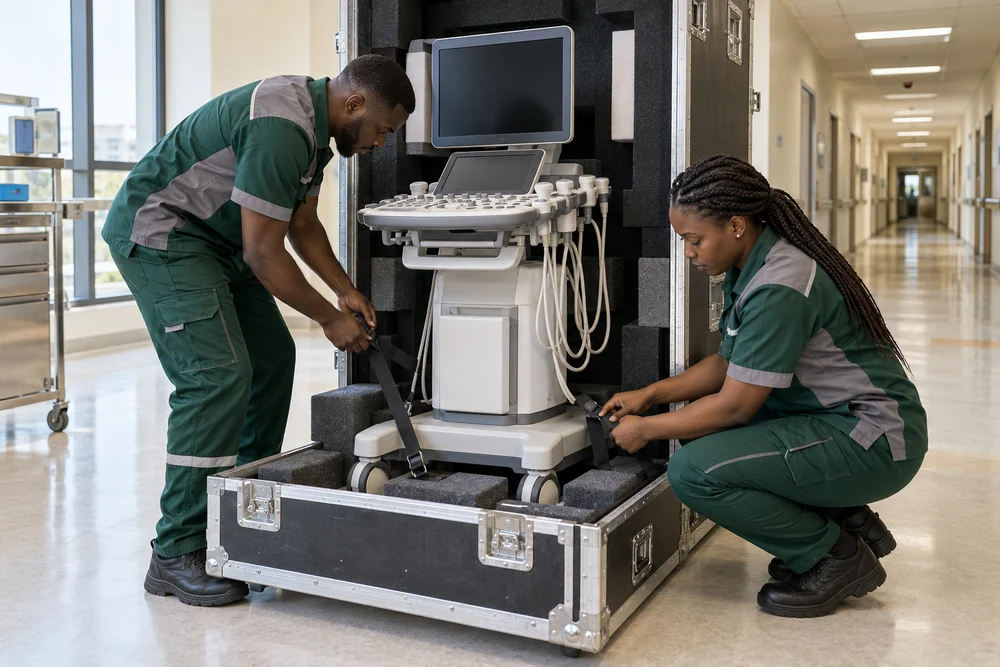
Explain any site access requirements, department operating windows, security procedures, transport limitations and local contact arrangements. If equipment may need to leave the facility, agree who coordinates packaging, collection, custody and return. If the proposed work is on site, identify the access and supporting personnel expected from the facility. These details can matter for a single device as well as a multi-site project, so they should be considered before a date is treated as confirmed.
For a group with several branches, identify the assets and requirements at each site instead of supplying only the head-office address. Ask how visits, reporting and commercial approvals will be coordinated across the sites. Where a specialist or another service provider is involved, the proposal should identify that role and the responsibility for the work and records. The result is a location-specific arrangement for the job rather than a blanket assumption about technicians, offices or response times in every city.
How can your facility keep useful medical equipment service records?
Keep service information against the facility’s asset identity so the next enquiry can refer to what actually happened to that device. Retain the request, approved scope, completed-work record, relevant results and unresolved actions together, whether the facility uses a spreadsheet or an equipment management system.
A record is more useful when someone can follow the sequence. Include the date and reason for the request, the asset and location, the assessment or work completed, any agreed changes, and the person responsible for a remaining action. Preserve relevant quotations and approvals alongside the technical record. Where several similar devices are present, use the serial number and facility asset number to reduce the chance of applying one unit’s history to another.
Use those records when requesting the next service. A recurring fault, a previous modification, a missed maintenance activity or an outstanding installation item can change the question that needs to be assessed. Share relevant technical history without patient information. A consistent record also helps your facility compare future maintenance and replacement options, prepare an equipment schedule and coordinate its own approvals. It should reflect completed work and open actions accurately rather than merely collecting generic visit attendance sheets.
Common questions about medical equipment services in Nigeria
How much do medical equipment services cost in Nigeria?
The price depends on the equipment, scope, assessment findings, parts and site requirements. Send your asset details to Franance and request an itemised quotation.
Can I submit several equipment types together?
Yes. Send a single asset schedule with one line per model or serial-numbered device, and state the required work for each.
Does a service enquiry confirm a booking?
No. The scope, availability, price and schedule must be reviewed and agreed before work is arranged.
Tell us what your facility needs.
Send the equipment details, your requirement and the facility location. We’ll discuss the information needed to review the scope and prepare the next step.
Contact Franance