

Buy ELISA Washer in Nigeria.
Buy ELISA microplate washers in Nigeria through Franance. The category lists BIOBASE BK-9622/BK-9613, Mindray MW-12A and Agilent BioTek 50 TS part 50TS8. Match the exact plate, wash head, protocol, fluid handling and power configuration before requesting a quote. Franance follows up on quotation orders by phone or email; there is no online checkout.
Products
3 models
Which ELISA microplate washers can I buy in Nigeria?
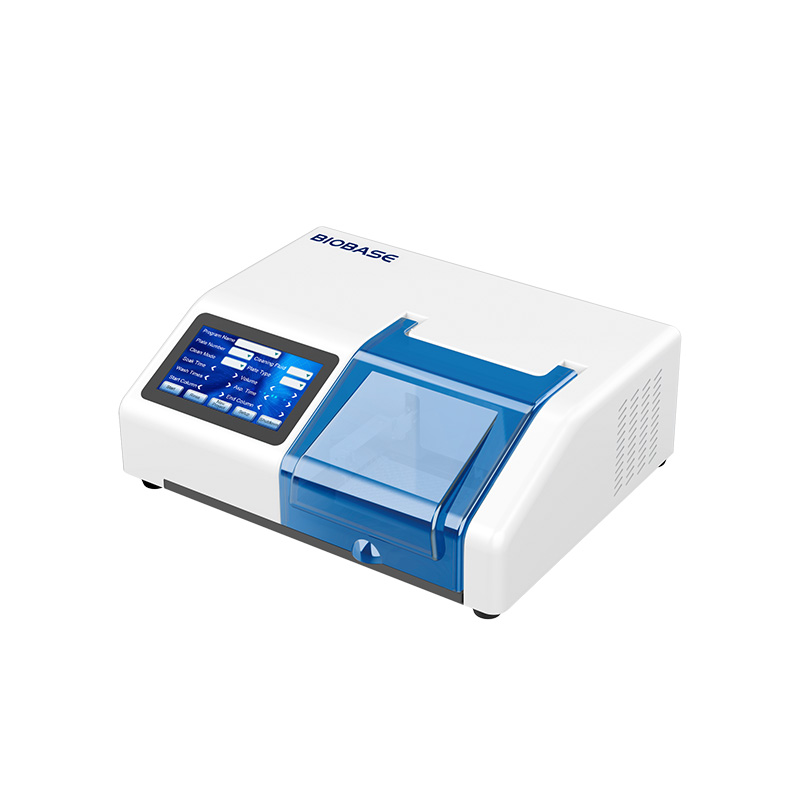
The BIOBASE BK-9622/BK-9613 listing covers two different washer configurations. BIOBASE describes the BK-9622 with an 8- or 12-channel head and the BK-9613 with a 96-pin head and single-row control. Its product page lists four plate-bottom types and up to 200 wash programs; confirm the exact model and package before ordering.
Read moreWhat does an ELISA microplate washer do?
A microplate washer automates dispensing and aspiration steps that remove liquid from wells and add wash solution according to a programmed sequence. In an ELISA workflow, washing is one component of the assay procedure: the plate type, reagent instructions, dispense volume, number of cycles, soak time, aspiration location and residual liquid requirements all matter. The washer does not independently establish that an assay is valid, that a result is accurate or that the selected method is appropriate for a clinical decision.
Read moreHow do the BIOBASE, Mindray and Agilent washer listings differ?
The main distinction is the physical plate interface and the level of configuration specificity in the catalogue. BIOBASE BK-9622 is listed with 8- or 12-channel heads, while the BK-9613 uses a 96-pin head with single-row control. BIOBASE states that four plate-bottom types are supported and publishes residual-liquid figures for the cited configurations. Ask which head is actually included and what plate dimensions it supports.
Read moreBuy ELISA Microplate Washers in Nigeria
To buy an ELISA microplate washer in Nigeria through Franance, match the plate format, wash head, aspiration pattern, fluid handling and assay workflow before comparing models. The current category listing contains three assigned systems: BIOBASE BK-9622/BK-9613, Mindray MW-12A and Agilent BioTek 50 TS part number 50TS8. They are automated plate washers, but their listed configurations differ. An assay name alone is not enough to confirm that a washer, manifold, plate and protocol work together. Franance processes orders as quotation requests and follows up by phone or email; this is not an online checkout. A listing does not establish local stock, price, delivery time, warranty, assay validation or regulatory status in Nigeria. Use the exact model and intended plate/workflow in your enquiry, then ask the written quote to state the proposed configuration and included accessories.
Which ELISA microplate washers can I buy in Nigeria?
The BIOBASE BK-9622/BK-9613 listing covers two different washer configurations. BIOBASE describes the BK-9622 with an 8- or 12-channel head and the BK-9613 with a 96-pin head and single-row control. Its product page lists four plate-bottom types and up to 200 wash programs; confirm the exact model and package before ordering.
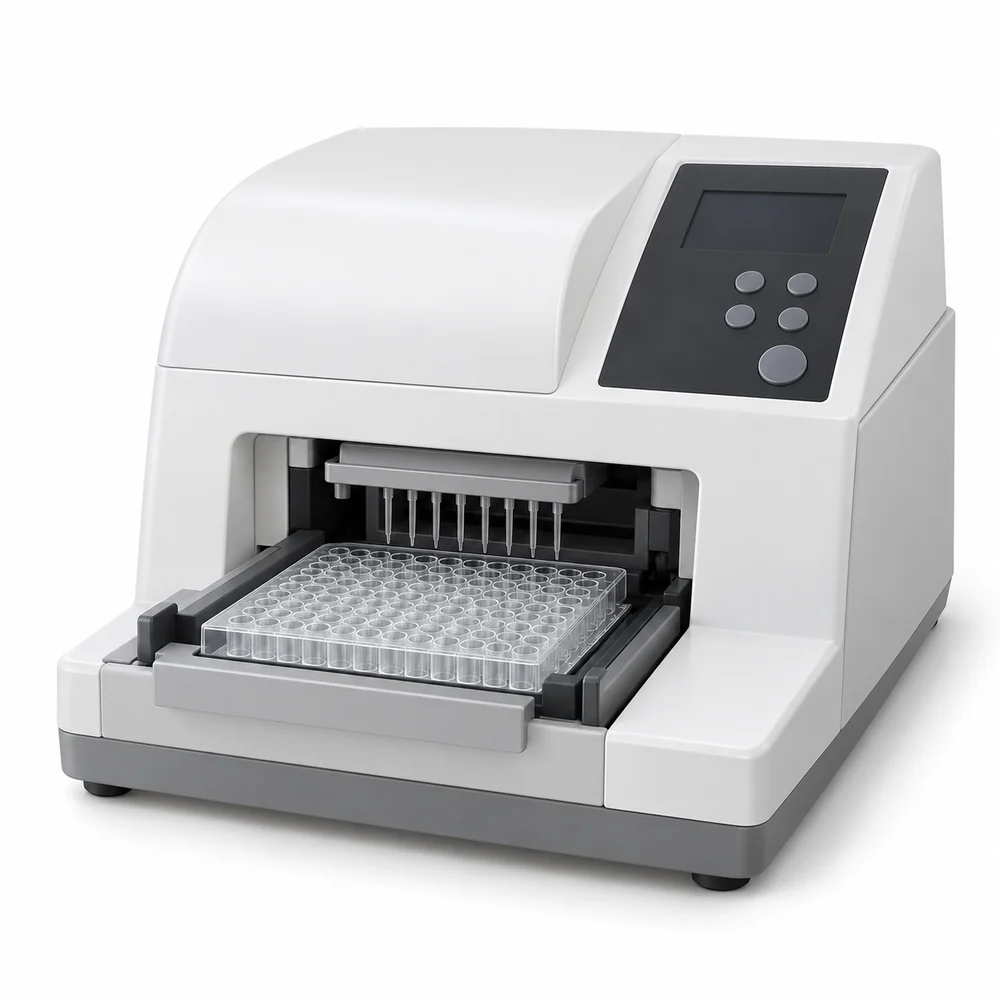
The Mindray MW-12A listing is a microplate washer with two wash modes and interchangeable 8- and 12-well strip manifolds. Mindray says it works with flat, U- or V-bottom plates and describes automatic bottom detection, collision protection, variable shaking and soaking time.
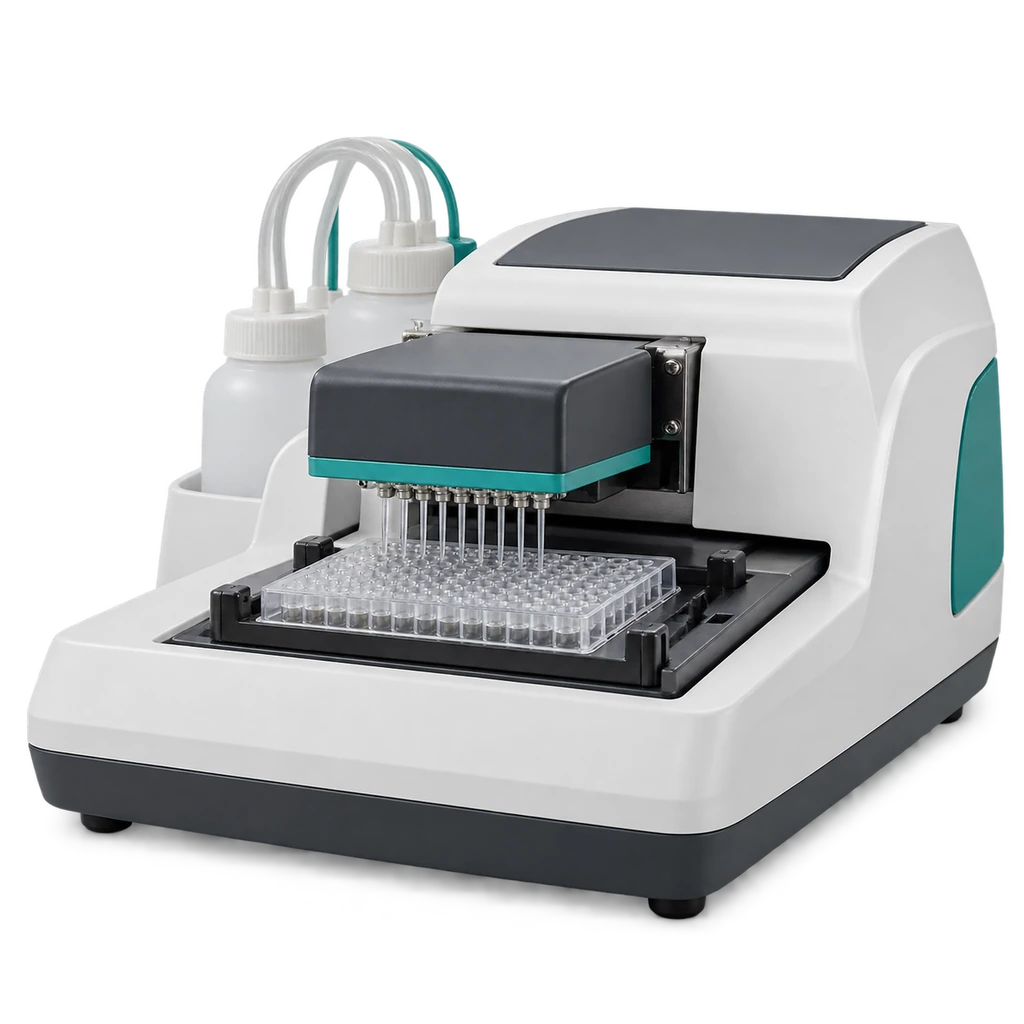
The Agilent BioTek 50 TS listing is specifically the 50TS8 96-well configuration. Agilent publishes wash-volume and cycle capabilities for its washer family, but other 50 TS part numbers may have different plate formats or manifolds. See the ELISA washer category for the three current assignments.
What does an ELISA microplate washer do?
A microplate washer automates dispensing and aspiration steps that remove liquid from wells and add wash solution according to a programmed sequence. In an ELISA workflow, washing is one component of the assay procedure: the plate type, reagent instructions, dispense volume, number of cycles, soak time, aspiration location and residual liquid requirements all matter. The washer does not independently establish that an assay is valid, that a result is accurate or that the selected method is appropriate for a clinical decision.
Before purchasing, identify the assay kits or protocols in use and their current instructions. Record the plate manufacturer and catalogue number, well count, bottom shape, skirt or frame style, required wash solution, volume per well, number of cycles, soak and shake times, and any requirement to leave a residual volume. Confirm that the manufacturer’s supported plate dimensions and offered manifold/head match those needs. Where the intended use is clinical or regulated, the responsible laboratory must evaluate the complete assay system, local requirements, documentation and validation independently.
How do the BIOBASE, Mindray and Agilent washer listings differ?
The main distinction is the physical plate interface and the level of configuration specificity in the catalogue. BIOBASE BK-9622 is listed with 8- or 12-channel heads, while the BK-9613 uses a 96-pin head with single-row control. BIOBASE states that four plate-bottom types are supported and publishes residual-liquid figures for the cited configurations. Ask which head is actually included and what plate dimensions it supports.
Mindray MW-12A uses interchangeable manifolds for 8- and 12-well strips, with two wash modes. Mindray lists flat-, U- and V-bottom plates, automatic bottom detection and collision protection. The available page does not turn every plate or assay into a validated pairing; verify your actual plate and protocol.
Agilent’s 50TS8 is a 96-well-only configuration. Agilent’s technical material identifies 50 TS features and option-dependent functions, while the broader product family includes other part numbers. Do not infer that a 50TS8 includes a 384-well capability, buffer switching, magnetic separation or vacuum filtration unless the exact offered part and options say so. The quote should name 50TS8 and enumerate all supplied heads, bottles, tubing, plates or other accessories.
These three records are not a universal performance ranking. The right comparison uses the same plate, assay protocol and acceptance criteria, with the exact configuration shown for each quote. Published residual volumes or throughput figures are manufacturer test data under stated methods; they should not be treated as guaranteed performance for another plate, reagent, protocol or operating condition.
How do I choose between 8-channel, 12-channel and 96-pin heads?
Match the head to plate geometry and how the laboratory loads and processes strips or whole plates. An 8-channel manifold may address one row of an 8-well strip format; a 12-channel manifold may address a 12-well row. A 96-pin head is a different design intended to align with wells across a 96-well plate, and some systems can control rows individually. The catalogue uses these distinctions for BIOBASE and Mindray, but the exact head and operating pattern must be confirmed on the offered model.
Check that manifold spacing, pin positions, aspiration tips, plate dimensions and bottom profile match the consumable. If your laboratory uses multiple plate brands or formats, list each one by manufacturer and part number rather than saying “standard ELISA plate.” Confirm whether the washer can accommodate the plate height and any lid or frame used in your protocol. A mechanically compatible plate is not automatically validated for a particular assay.
What plate and wash parameters should I confirm?
Build a written method checklist before requesting a quote: 96- or 384-well format; flat, U, V or other bottom; plate dimensions and material; strip or full-plate use; wash buffer type; dispense and aspiration volumes; cycle count; soak and shake settings; aspiration point; cross-contamination controls; and final residual volume where the assay method specifies it. Confirm the platform’s supported range for each setting using the current manufacturer manual or technical sheet.
The BIOBASE page publishes settings for wash count, wash volume, suction point, soak and shaking, and plate-bottom options. The Mindray page highlights variable shaking and soaking, two wash modes and automatic bottom detection. Agilent specifies parameters and residual performance for particular 50 TS configurations. These are model-specific published features. Ask the supplier for the exact current operating manual and a confirmation of available settings for the part number offered.
Plan the cleaning and maintenance workflow as well. Ask which liquids are compatible with the instrument, how wash and waste bottles are monitored, what tubing or manifolds require routine cleaning, what maintenance consumables are needed, and which parts are expected to be replaced. Follow the supplier and manufacturer’s current instructions; do not improvise chemical compatibility or cleaning procedures from another washer model.
What fluid handling and accessories should be included?
Identify the number and type of wash buffers, distilled or purified water, rinse solutions and waste containers used in the workflow. Ask about bottle capacity, bottle-level sensing, waste overflow alarms, tubing routing, priming, washing and soak delivery, and whether separate reagent channels are needed. BIOBASE’s published BK-9622/BK-9613 configuration lists supplied bottle quantities and multiple liquid channels, while Mindray describes two rinse bottles. Confirm what the Nigeria quote includes instead of assuming the displayed family package is complete.
Accessories may include a selected wash head or manifold, tubing, bottles, bottle caps, plate carriers, waste container, software, service tools and power cord. The quote should identify each item and its part number where possible. Confirm whether optional functions are installed, licensed and supported for the exact model. For Agilent BioTek 50 TS, the manufacturer describes some functions as optional and configuration-dependent; they should not be counted as included without written confirmation.
What site, power and data requirements matter?
Check the exact product’s nameplate and current manual for voltage, frequency, current, plug, fuse, phase and environmental requirements. BIOBASE lists AC 220 V ±10%, 50/60 Hz and AC 110 V ±10%, 60 Hz for its two models; this does not mean every market package includes both. The Agilent 50 TS technical sheet describes an external 24 VDC supply compatible with 100–240 VAC, 50–60 Hz. Confirm the actual power supply and plug in the offer. Mindray product overview information should be supplemented with the exact installation specification for the delivered MW-12A.
Provide the laboratory bench dimensions, available clearances, ambient conditions, stable surface, water or wash-solution arrangements, waste disposal plan and any required computer or network connections. If the instrument has a data interface, specify whether results, audit logs or protocol files need to integrate with another system; confirm interface, software and licence scope. Do not assume an instrument is LIS-connected or that software, a computer or network cabling is included.
What should a Nigerian ELISA washer quotation include?
Send the model, quantity, intended plate manufacturer and catalogue number, plate geometry and format, assay/workflow summary, required wash parameters, number of buffers, head/manifold choice, fluid bottles, waste handling, site power and destination city/state. Tell Franance whether the purchase is for research, routine laboratory use or a regulated clinical setting, and identify any documentation or acceptance testing your organisation requires. Do not send patient-identifiable data in a general quotation request.
Ask the written offer to specify the exact manufacturer, model, part number and configuration; supported plate formats; selected head/manifold; included bottles, tubing and other accessories; power supply and plug; current documentation; warranty; availability; delivery conditions; installation and training scope; and itemised commercial terms. If an acceptance test is required, agree in advance which plates, solutions, protocol, performance metrics and report will be used. A generic demonstration does not validate your assay or replace the laboratory’s own method verification.
Franance will follow up on quotation enquiries by phone or email. The site does not take payment or complete an online purchase, and these listings do not confirm Nigerian stock, regulatory approvals, service coverage or lead times. Ask for each of those items to be confirmed in the written offer.
Frequently asked questions about ELISA washers in Nigeria
### Which ELISA washer has a 96-well configuration?
The current Agilent BioTek listing is specifically part number 50TS8 for a 96-well configuration. BIOBASE BK-9613 uses a 96-pin head, while BIOBASE BK-9622 and Mindray MW-12A list channel/manifold options. Confirm the exact plate and head pairing before ordering.
### Can I use any ELISA plate with these washers?
No. Confirm the plate dimensions, well count, bottom profile, frame and wash-head spacing against the exact washer configuration and current manual. Then check the assay instructions for compatibility and required settings.
### Does buying a washer validate an ELISA assay?
No. The washer automates liquid-handling steps. The laboratory is responsible for evaluating its assay, instrument configuration, consumables, method and applicable quality requirements.
### Are buffers, bottles and installation included?
The catalogue does not establish a complete delivered package. Ask the written quotation to list the washer, head, bottles, tubing, buffers if offered, installation, training and exclusions separately.
Manufacturer references
- BIOBASE BK-9622/BK-9613 ELISA microplate washer - Mindray MW-12A microplate washer - Agilent BioTek 50 TS technical details - Agilent BioTek 50 TS washer product sheet
Common questions
Which ELISA washer has a 96-well configuration?
The Agilent BioTek 50 TS record is part 50TS8 for a 96-well configuration. BIOBASE BK-9613 has a 96-pin head; confirm that its specific operating pattern matches the plate and protocol.
Can I use any ELISA plate with these washers?
No. Verify dimensions, well count, bottom profile and manifold or pin spacing against the exact washer manual, then confirm the plate against the assay instructions.
Does buying a washer validate an ELISA assay?
No. The laboratory must evaluate and verify its assay, consumables, instrument configuration and method for its intended use.
Are buffers, bottles and installation included?
The category does not define a complete delivered package. Have the quotation list bottles, tubing, options, documentation and any installation or training separately.
Request an ELISA washer quotation from Franance.
Send the exact washer configuration, plate and protocol requirements, accessories, site power and destination in Nigeria. Franance will follow up by phone or email to clarify the quote order.
Request a washer quoteNeed an equipment quote?
Add the models you need to a quote order, or send us your equipment list.