

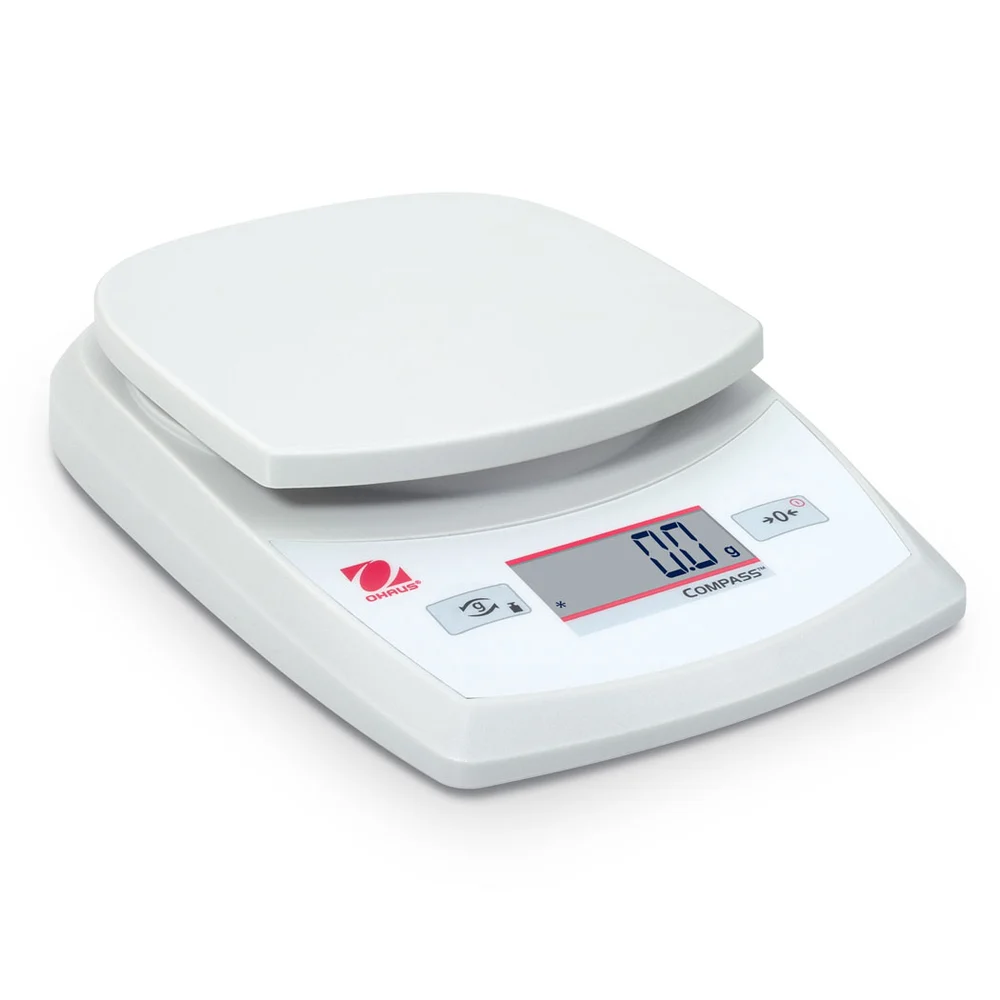
Buy Portable Balances in Nigeria.
Choose a portable balance by the exact OHAUS family, capacity and readability needed, display and control arrangement, power source, weighing surface and intended location. The listed Compass, Navigator, PS and Scout families are distinct portable-weighing choices. Confirm the precise model and any included accessories in a written Franance quotation rather than treating the family names as a complete order specification.
Products
6 models
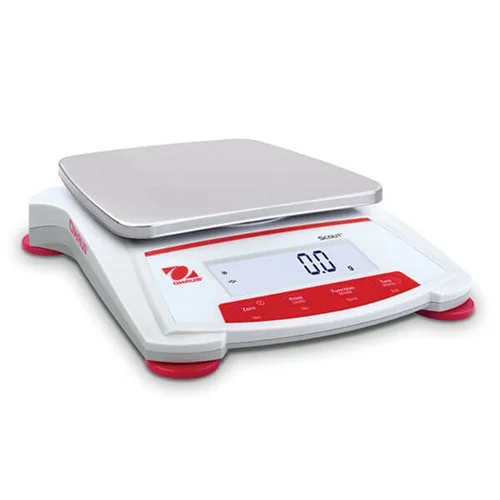
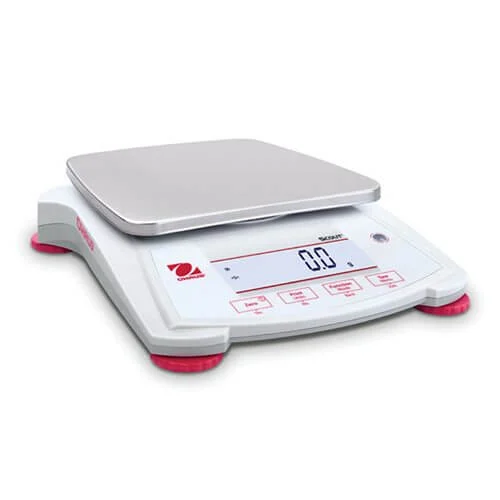
What belongs in a portable balance category?
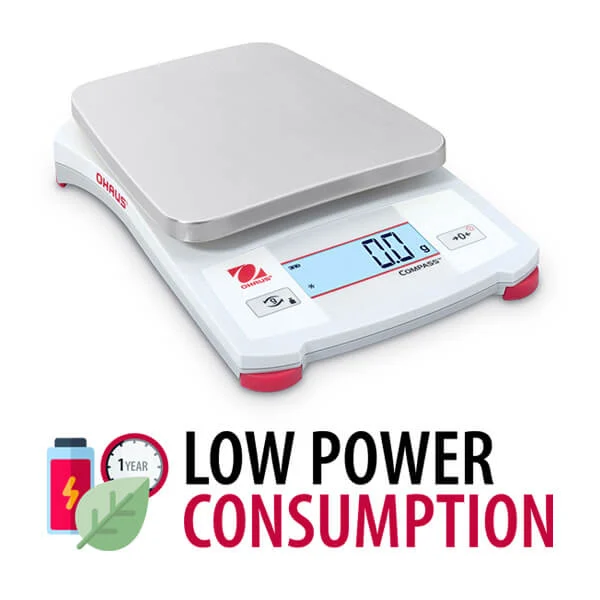
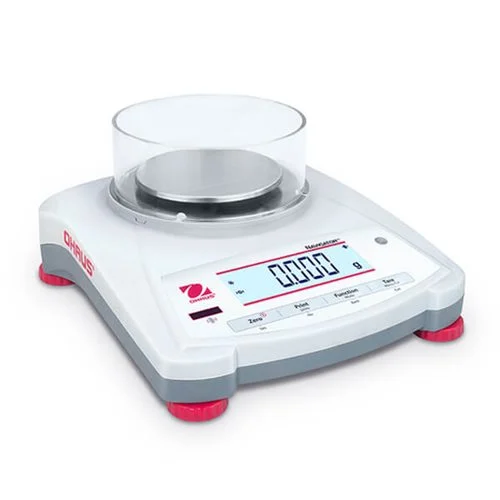
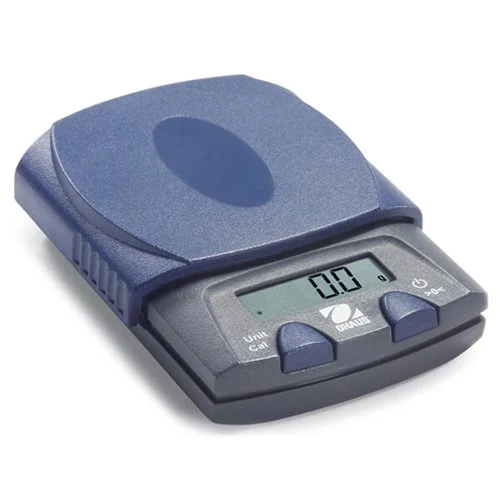
Portable balances are compact weighing instruments intended to be moved or used where a fixed analytical balance may not be suitable. OHAUS product listings distinguish Compass CR and CX, Navigator, PS Series and Scout SKX and SPX families. The exact class and performance still depend on the selected model. These products are therefore grouped separately from analytical and precision balance families.
Read moreWhere can I buy portable balances in Nigeria?
Franance lists OHAUS portable balance families including Compass, Navigator, PS and Scout. Browse the portable-balance category, choose a candidate against the exact load and location, and add its quantity to the quote cart. Include power preference, platform dimensions, required readability, accessories and delivery city/state. Ask the written quotation to identify the exact reference and included items; the cart submits a request and does not take payment.
Read moreWhich portable models suit a basic weighing task versus data capture?
The Compass CR family is described by OHAUS as basic weighing, with no communication interface listed. Other portable families may have different displays, settings or data features. If results need to be transferred or printed, make that requirement a selection criterion and verify the exact model’s documented connections before purchase. A generic portable-balance label does not promise a computer interface.
Read moreBuy portable balances in Nigeria
Choose a portable balance by the exact OHAUS family, capacity and readability needed, display and control arrangement, power source, weighing surface and intended location. The listed Compass, Navigator, PS and Scout families are distinct portable-weighing choices. Confirm the precise model and any included accessories in a written Franance quotation rather than treating the family names as a complete order specification.
What belongs in a portable balance category?
Portable balances are compact weighing instruments intended to be moved or used where a fixed analytical balance may not be suitable. OHAUS product listings distinguish Compass CR and CX, Navigator, PS Series and Scout SKX and SPX families. The exact class and performance still depend on the selected model. These products are therefore grouped separately from analytical and precision balance families.
Portable does not mean that every model has identical portability, capacity, readability, display or power arrangement. Check the product-specific details and clarify whether the balance will be moved between rooms, carried to a field site, or simply occupy limited bench space. Each use creates different requirements for size, power, protection and measurement performance.
Where can I buy portable balances in Nigeria?
Franance lists OHAUS portable balance families including Compass, Navigator, PS and Scout. Browse the portable-balance category, choose a candidate against the exact load and location, and add its quantity to the quote cart. Include power preference, platform dimensions, required readability, accessories and delivery city/state. Ask the written quotation to identify the exact reference and included items; the cart submits a request and does not take payment.
Which portable models suit a basic weighing task versus data capture?
The Compass CR family is described by OHAUS as basic weighing, with no communication interface listed. Other portable families may have different displays, settings or data features. If results need to be transferred or printed, make that requirement a selection criterion and verify the exact model’s documented connections before purchase. A generic portable-balance label does not promise a computer interface.
For simple standalone weighing, compare capacity, readability, pan size, display and battery arrangement. For an instrument expected to create controlled records, specify output format, connection and required identifiers. Ask for the exact manual and accessory references. Do not assume an optional adapter, cable or software is included merely because the model family is sold alongside products that offer connectivity.
How do I select the right portable family?
Start with the load and the location. State the maximum mass, smallest relevant increment, size of the object or vessel, frequency of movement and whether mains power or batteries are expected. Then compare the official details for the exact Compass, Navigator, PS or Scout family. Product family names are useful for finding candidates but do not replace the model’s technical specification.
The OHAUS portfolio includes models described for everyday weighing and portable precision weighing. Those distinctions matter: a low-cost compact scale can serve a different requirement from a portable balance selected for finer readability. Request the source datasheet and quote for the exact model, and do not carry a capacity, accuracy or interface value from one family to another.
What capacity and readability should I request?
Include the heaviest object, container and any weighing accessory that will be on the platform. Specify the required capacity and the smallest change that matters for the decision. A balance with excess capacity may not meet the needed readability, while a model too close to the maximum load may be unsuitable for the complete weighing arrangement.
Ask OHAUS or the supplier to distinguish readability from accuracy, repeatability and other performance terms. If your process has a tolerance, uncertainty or acceptance requirement, state it explicitly and request supporting data for the offered model. Product-family pages can list ranges or multiple configurations; the written offer must identify which one is proposed.
How should I assess display, controls and weighing surface?
Consider how the balance will be used by the intended operator. Check display size and visibility, button arrangement, unit selection, weighing surface dimensions and stability of the object on the pan. If samples are tall or awkward to place, provide their dimensions and request confirmation that the platform and surrounding clearance are appropriate.
A photograph can help identify the product family but does not prove the exact display, pan or accessory included. For shared environments, consider whether the display can be read at the normal working position and whether controls can be used without moving the instrument. Ask the quotation to list any protective cover, tray or other accessory needed for the stated use.
What does the Compass CR example show about portable model choice?
The Compass CR page gives a concrete comparison: CR221 and CR621 are listed at 0.1 g readability with capacities of 220 g and 620 g; CR2200 and CR5200 are listed at 1 g readability with capacities of 2,200 g and 5,200 g. OHAUS lists a 132 mm × 125 mm pan for the family. This is a visible capacity/readability tradeoff, not a specification for every portable family.
CR is presented as an economical everyday weighing series with a two-button design and an enlarged platform. The official page lists three AA batteries and up to 300 hours with disposable batteries; it also identifies an AC adapter as optional rather than included. Confirm these details against the exact model and regional package. Do not assume Compass CX, Navigator, PS or Scout uses the same battery, pan or capacity.
How do I distinguish a compact portable scale from a portable precision balance?
OHAUS places several different products under Portable Balances. Its Compass CR copy describes everyday portable electronic scales, while Scout SKX and SPX are described as portable precision balances and Navigator as a multi-purpose portable balance. The shared catalogue category does not erase these intended differences. Decide whether a general weighing task or finer stated increments matter, then compare each exact model’s capacity, readability, pan and application details.
Do not compare a small pan or a “precision” phrase in isolation. A model must support the full load and required increment while accommodating the sample. For field use, also consider the display, battery or adapter arrangement, transport case, protection and site conditions. Ask for the product-specific data rather than assuming a family-level description establishes performance for every variant.
What do battery life and power accessories change in the purchase?
Portability may depend on battery operation, but quoted battery life is a manufacturer figure tied to a stated configuration and use assumptions. Confirm whether the unit ships with batteries, an AC adapter or both. Consider how the device will be used between charges or battery replacements, how power will be supplied at the measurement location, and whether a spare accessory is required.
The Compass CR page states that three AA batteries are included and an AC adapter is not included. Treat that as a specific CR listing detail, not a portfolio-wide rule. For the exact product selected, ask the supplier to state all power accessories in the quote. If the balance will be used at multiple locations, include the transport and storage arrangement without assuming the instrument is rated for wet or uncontrolled environments.
What carrying, storage and platform details should I confirm?
Measure the object or vessel and compare its footprint with the published pan size. Then assess how the balance will be stored and moved: stackability, overall dimensions, protective cover, carrying case and the stability of the measurement surface. A thin or compact form may help with storage but does not guarantee safe stacking or protection unless OHAUS documents it for that family.
If the balance will travel between work areas, state how it is transported and whether readings are expected immediately after relocation. Follow the manual’s environmental and stability requirements. Ask whether covers, cases or adapters are included or optional, and identify compatible references. A product photo can show a representative accessory but cannot establish the package supplied for the selected order code.
What environment is suitable for a portable weighing task?
Describe the intended surface and surroundings, including vibration, airflow, temperature variation, moisture and movement during weighing. A portable unit still needs to be used within the manufacturer’s stated conditions to produce the intended measurement performance. If measurements are taken at multiple sites, identify those conditions for the technical reviewer.
Avoid assuming that one instrument can be moved immediately between substantially different environments without stabilization or review. Follow the product documentation and your organization’s measurement controls. The quotation can identify the offered model, but laboratory acceptance and the suitability of a work location remain technical decisions for the buyer.
Which calibration or verification records may be required?
Check the applicable quality process before choosing calibration options. Identify whether the purchase requires an initial calibration certificate, documented verification, internal or external calibration features, or other records. Confirm which services are available for the specific offered model and whether they are included in the quotation.
A balance listing or a statement that a model has a calibration function is not a certificate for the delivered serial number. Ask the provider to state the document type, issuing body, scope and any service assumptions. If the record is needed for audit or regulated work, have the quality manager confirm acceptance before ordering.
What accessories and interfaces should be specified?
State any required protective cover, carrying case, tray, cable, printer, computer connection or other accessory by its manufacturer reference when available. Confirm model compatibility and inclusion rather than relying on a product image. If data must be transferred, describe the device or software to which it must connect and the expected output.
Accessories can affect the usable footprint, power needs and quoted scope. Ask for them to be listed separately where possible. Do not assume a common interface or accessory fits every Compass, Navigator, PS or Scout model. The exact product manual and accessory guide are the appropriate sources for compatibility.
Common questions
Does the Compass CR include an AC adapter?
The OHAUS CR page says the AC adapter is not included and lists three AA batteries as included; confirm the exact quoted package.
Are Compass CR models all the same readability?
No. OHAUS lists CR221 and CR621 at 0.1 g, and CR2200 and CR5200 at 1 g. Check the model capacity/readability pair.
Are all portable OHAUS models intended for field conditions?
Do not assume that. Review the exact model’s power and environmental specifications for the intended site.
Does portable mean precision?
No. OHAUS describes some portable families as precision balances and others as everyday portable scales. Compare exact family specifications.
Request an OHAUS portable balances quotation.
Send the exact model, requirements, quantity and delivery destination through the Franance quote cart. Review the written configuration and commercial terms before confirming an order.
Request a quotationNeed an equipment quote?
Add the models you need to a quote order, or send us your equipment list.