

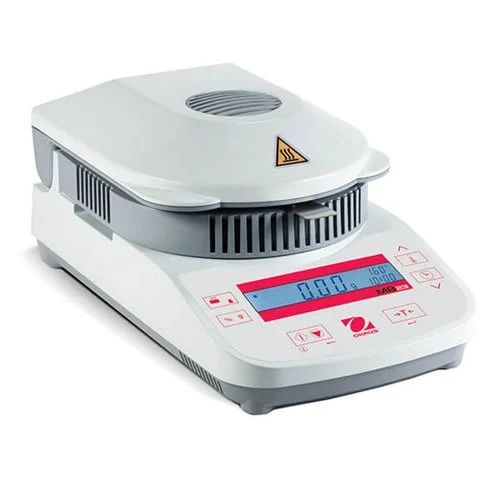
Buy Moisture Analyzers in Nigeria.
Compare OHAUS MB23, MB32, MB62 and MB92 moisture analyzers by the manufacturer’s stated measurement method, capacity, readability, heating arrangement, display, documentation and accessories. The four families are not interchangeable merely because each is described as a moisture analyzer. Identify the sample and the required reporting outcome, then confirm the exact model and package with Franance before ordering.
Products
4 models
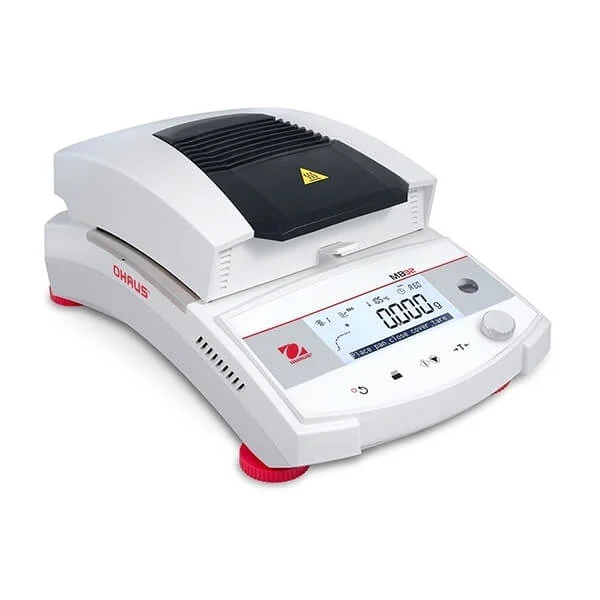
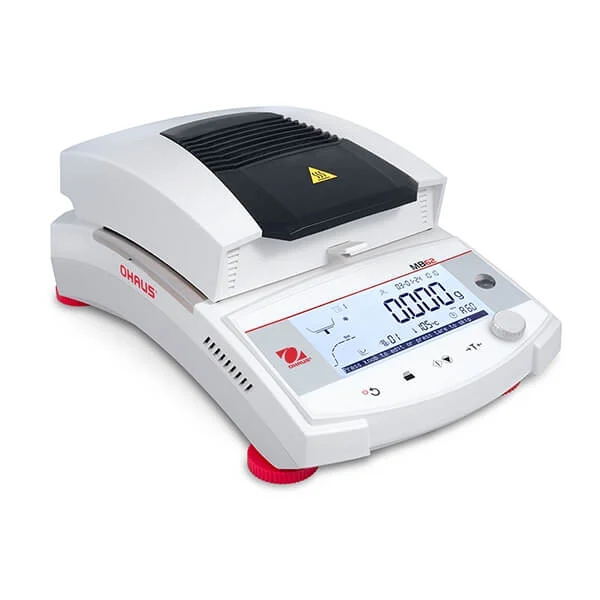
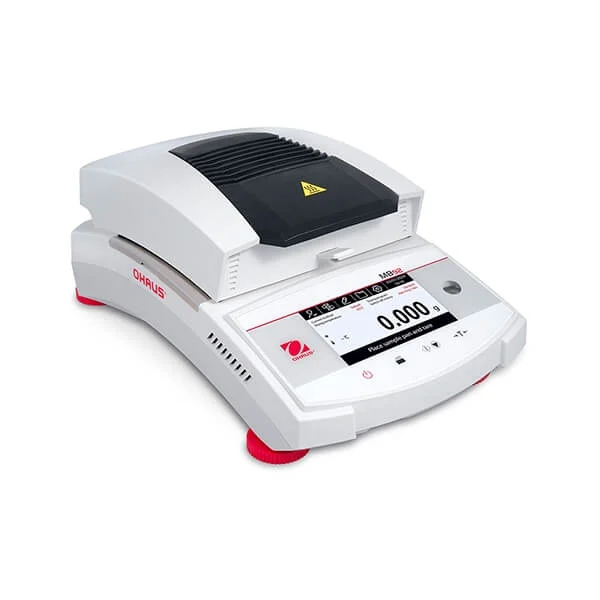
What is a moisture analyzer and what does this category cover?
A moisture analyzer combines weighing with a controlled heating measurement method described by its manufacturer. OHAUS lists the MB23, MB32, MB62 and MB92 under Moisture Analyzers and presents them as distinct product families. Their features and model configurations differ, so the buyer should compare the exact product page rather than infer one specification from the category name.
Read moreWhere can I buy moisture analyzers in Nigeria?
Franance lists OHAUS MB23, MB32, MB62 and MB92 moisture analyzers. Review the moisture-analyzer category, identify the intended measurement and compare the model-specific specifications, then add the chosen listing and quantity to the quote cart. Include the material, required result and documentation, power, accessories and Nigerian delivery destination. Ask for the exact offered model and package in writing; there is no online payment step.
Read moreHow do the MB23, MB32, MB62 and MB92 descriptions guide a shortlist?
OHAUS positions the MB23 around flexible configuration and routine performance, the MB32 for routine moisture testing, the MB62 for durability and flexible performance, and the MB92 for more demanding applications with advanced features. These official summaries can help form a shortlist, but they are not a substitute for comparing the actual product specifications.
Read moreBuy moisture analyzers in Nigeria
Compare OHAUS MB23, MB32, MB62 and MB92 moisture analyzers by the manufacturer’s stated measurement method, capacity, readability, heating arrangement, display, documentation and accessories. The four families are not interchangeable merely because each is described as a moisture analyzer. Identify the sample and the required reporting outcome, then confirm the exact model and package with Franance before ordering.
What is a moisture analyzer and what does this category cover?
A moisture analyzer combines weighing with a controlled heating measurement method described by its manufacturer. OHAUS lists the MB23, MB32, MB62 and MB92 under Moisture Analyzers and presents them as distinct product families. Their features and model configurations differ, so the buyer should compare the exact product page rather than infer one specification from the category name.
For a replacement purchase, give Franance the existing MB model and identify the accessories, interfaces and reporting requirements that must be retained. For several analyzers, state whether each location needs the same configuration. Ask for separate model references and quantities on the offer if different MB families are required. Include any required reference standard or report format so the proposed package can be checked against the laboratory's purchasing specification.
Where can I buy moisture analyzers in Nigeria?
Franance lists OHAUS MB23, MB32, MB62 and MB92 moisture analyzers. Review the moisture-analyzer category, identify the intended measurement and compare the model-specific specifications, then add the chosen listing and quantity to the quote cart. Include the material, required result and documentation, power, accessories and Nigerian delivery destination. Ask for the exact offered model and package in writing; there is no online payment step.
How do the MB23, MB32, MB62 and MB92 descriptions guide a shortlist?
OHAUS positions the MB23 around flexible configuration and routine performance, the MB32 for routine moisture testing, the MB62 for durability and flexible performance, and the MB92 for more demanding applications with advanced features. These official summaries can help form a shortlist, but they are not a substitute for comparing the actual product specifications.
For each candidate, inspect the exact sample capacity, moisture-result readability, heater type, temperature range, profiles, endpoint options, display, storage and interfaces. The intended method may make a routine family more suitable than a feature-rich one, or may require capabilities that eliminate an entry-level model. Ask for the current datasheet and manual for the exact order reference and have the method owner decide whether its functions fit.
Which sample requirements should guide the purchase?
Describe the material category, expected sample mass, range of moisture values and any known constraints that affect the measurement. The technical owner should identify the approved method and the instrument characteristics it requires. Do not assume that a product’s broad “moisture analyzer” description confirms compatibility with every sample or method.
Ask the manufacturer documentation to address the chosen material and measurement method. If the method is not yet established, treat method selection as a separate technical decision; do not choose an instrument based solely on a claimed speed or headline feature. The procurement request should distinguish the instrument specification from consumables, sample preparation or training that may be needed.
Why is a moisture analyzer not simply a precision balance?
A precision balance reports mass. A moisture analyzer combines weighing with a controlled heating and measurement system so the reported result can relate mass change to moisture or another defined result. Selection therefore includes more than capacity and readability: the heating source, temperature range, profile or endpoint capability, result units, sample support, display and record functions may all affect whether the instrument fits an established method.
OHAUS lists MB23, MB32, MB62 and MB92 as moisture-analyzer families and differentiates them by intended level and feature set. Do not substitute a balance because both devices weigh a sample, and do not infer that a moisture analyzer supports a method merely from its range. Identify the approved measurement approach and confirm it against the current manual and datasheet for the exact analyzer.
How do heating profile and stop criteria affect comparison?
A moisture-analyzer result depends on the manufacturer’s supported heating control and the point at which a measurement ends. Compare model-specific temperature capability, profile choices and stop criteria with the organization’s existing method or required reporting. A faster or more programmable instrument is not automatically a better fit if its supported controls differ from the method that must be maintained.
Ask OHAUS for the exact model’s profile, endpoint and temperature information. Keep temperature range separate from temperature accuracy, and confirm how the result is reported. This is a purchasing comparison only: the laboratory should obtain any operating method from current manufacturer documentation and its approved quality process. Do not transfer a saved method or endpoint assumption between models without technical review.
What should I know about sample mass and measurement range?
Specify the expected sample mass and the required result range before comparing an analyzer. A model’s balance capacity, moisture-result readability, pan dimensions and sample-size limits are distinct values. The amount placed in the pan may affect how a measurement represents the material; the method owner should define an acceptable sample and result requirement for the intended material.
Ask for the precise specifications of the MB model being offered and identify the measurement term you need: weight readability, moisture-content readability, range, repeatability or another metric. Avoid comparing a family brochure’s headline value with a different model’s selected configuration. If an existing method depends on a particular result increment or sample range, include those details for the technical reviewer rather than treating the analyzer as a generic weighing instrument.
How should method transfer and records be evaluated?
When moving a method from another analyzer, compare the heating system, temperature control, endpoint criteria, sample support, result calculation, storage and export functions. List which method parameters must remain equivalent and which may be revalidated. Manufacturer claims that an analyzer is suitable for routine or advanced applications do not prove equivalence for a particular material or quality system.
Ask for the current MB-series datasheet, manual and any model-specific method or data-management documentation. Confirm the record fields and export route with the quality owner. If a method-transfer study, calibration certificate, verification record or service is required, identify that work as a separate purchase or validation need. Product selection and analytical-method approval are related decisions, but they are not the same decision.
How should I evaluate the laboratory environment?
Check the instrument’s physical footprint, power requirement and manufacturer-stated environmental limits against the proposed bench and room. Consider ventilation, access for routine cleaning, space for sample handling and clearance for opening or servicing the instrument. The facility should verify that the location meets current documentation.
If the instrument is intended for shared or production space, describe the room conditions and expected workload to the technical reviewer. Do not assume that a larger model or additional feature resolves an environmental issue. Include site constraints in the quotation so the proposed equipment and accessories can be reviewed before purchase.
How should repeatability and result resolution be compared?
Moisture-result readability, repeatability and the method’s expected variation answer different questions. Readability describes the displayed result increment; repeatability concerns consistency under stated conditions; method variation also reflects the sample and approved measurement method. Compare the exact analyzer’s performance statements and the organization’s acceptance requirement rather than assuming the smallest displayed increment guarantees the best result.
Ask the supplier for current model-specific specifications and the conditions associated with any repeatability figure. If comparing two candidate families, keep the sample and method requirements fixed and have the technical owner assess equivalence. Do not transfer a claimed performance value from MB92 or MB62 to MB23 or MB32 without source evidence for the selected model.
How do MB23 and MB32 compare on published capacity and result readability?
The staged OHAUS product pages show a concrete distinction: MB23 is listed with 110 g maximum capacity and moisture-content readability of 10 mg/0.1%; MB32 is listed with 90 g and 1 mg/0.01%. Both listings show a 90 mm pan. Those differences may matter to a shortlist, but they do not determine suitability without the method, sample and performance requirements.
Use the exact family page to verify which specification belongs to the offered reference. Do not infer that MB62 or MB92 shares the MB32 values, even where some listings may show similar figures. Keep maximum weighing capacity, moisture-result readability and analytical repeatability as separate fields in the comparison. Ask the technical owner to judge the application against current manufacturer documentation.
For example, a requirement for 110 g maximum weighing capacity would not be met by substituting the listed 90 g MB32 solely because it has finer result readability. Conversely, a buyer who requires the MB32's listed result increment should not assume the MB23 provides it. State both requirements in the Franance enquiry and ask the written offer to identify the exact model that satisfies the agreed specification.
How do MB62 and MB92 fit the published family distinctions?
OHAUS describes MB62 as designed for durability and flexible performance across moisture applications, while MB92 is positioned as a higher-performance analyzer with advanced features for demanding applications. These are useful portfolio distinctions, not a substitute for a model-by-model feature matrix.
For each candidate, compare the exact capacity, moisture-result readability, heater type, temperature range, profile and endpoint options, display, storage and interfaces stated in its current source. A more advanced description does not automatically improve a routine application or make a different method equivalent. Have the method owner identify which capabilities are required and review the exact model’s manual before purchase.
Common questions
Is a moisture analyzer the same as a precision balance?
No. A moisture analyzer combines weighing with a controlled heating measurement system; a balance reports mass. Confirm the method and result requirement.
Do MB23 and MB32 have the same capacity and result readability?
No. OHAUS lists MB23 at 110 g and 10 mg/0.1%, and MB32 at 90 g and 1 mg/0.01%. Verify current model details.
Can an existing method be assumed to transfer between MB families?
No. Compare heating controls, endpoints, sample capacity, reporting and documentation with the method owner.
Does the product page establish a result method for my material?
No. Confirm the approved method and its model-specific compatibility before purchase.
Request an OHAUS moisture analyzers quotation.
Send the exact model, requirements, quantity and delivery destination through the Franance quote cart. Review the written configuration and commercial terms before confirming an order.
Request a quotationNeed an equipment quote?
Add the models you need to a quote order, or send us your equipment list.