Planning medical equipment installation in Nigeria
How do you request medical equipment installation in Nigeria?
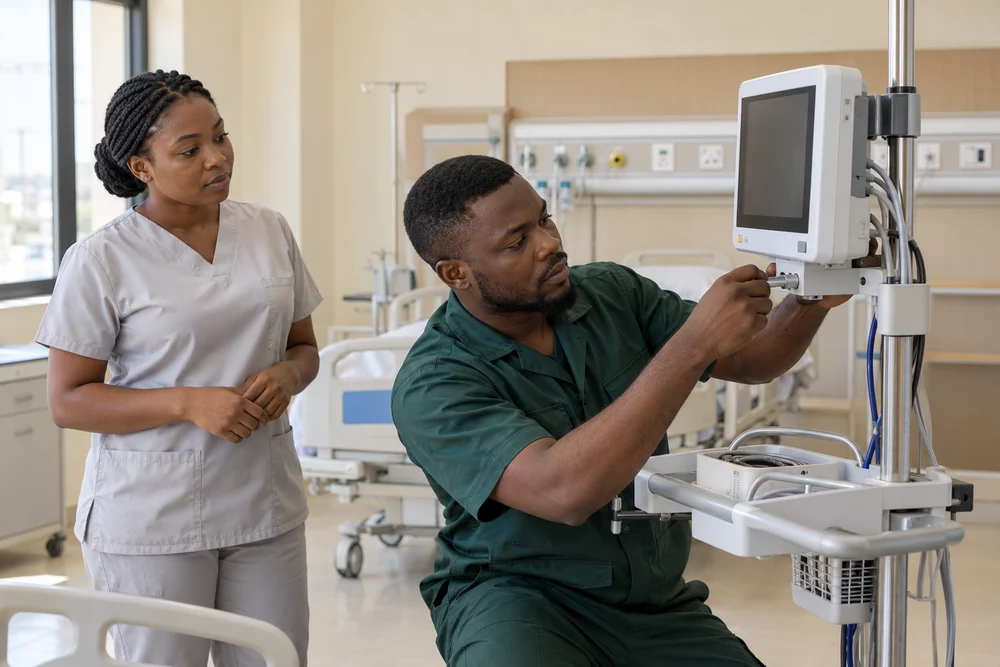
Contact Franance with the exact equipment model, configuration, installation address and your project stage. Include available installation documents and explain the site and handover support you need so a suitable scope can be reviewed.
Start before the equipment arrives when possible. A project can be delayed if the receiving department has not identified its access, utility or space requirements. Share the equipment schedule and available supplier documentation rather than assuming that every model in a category uses the same installation arrangement.
For equipment already at the site, provide its location, packaging or assembly status and the documents that arrived with it. Say whether any work has already been carried out and by whom. If the equipment is being relocated, include the current and proposed locations so de-installation, transport and re-installation can be considered as separate responsibilities.
What site information is needed before medical equipment installation?
The required information depends on the exact device and its installation documentation. Discuss the room, access route, utilities, supporting systems and responsible site contacts with Franance before agreeing the work and schedule.
Relevant interfaces can include electrical supply, network connections, ventilation, water, drainage, medical gases or physical support. Listing an interface here does not establish a specification for your equipment. Use the actual model documentation and qualified project personnel to define what is required and who provides it.
For a hospital project, identify the main contractor, facilities team, IT contact and equipment supplier where those parties are involved. Avoid leaving essential enabling work between scopes. Ask the written proposal to distinguish equipment installation from any building work, utility modifications, specialist testing or third-party approvals needed at the site.
What is the difference between installation, commissioning and acceptance?
Installation places and connects the equipment within the agreed scope. Commissioning concerns the agreed checks and preparation for handover. Acceptance is the purchaser’s defined process for reviewing the supplied equipment and evidence against its requirements.
Define these stages in your project documents rather than treating the terms as interchangeable. A delivery note does not show that every installation activity or acceptance requirement has been completed. Equally, a powered-on device is not by itself evidence that all specified functions, accessories, documentation or project obligations have been reviewed.
Ask which checks are proposed, what resources are needed and who is expected to witness or approve the outcome. Any calibration, performance or safety activity must have a defined scope for the equipment concerned. Agree how incomplete items, defects or additional actions are recorded and who is responsible for closing them.
What affects the cost of medical equipment installation in Nigeria?
The quotation depends on the model, configuration, number of devices, site readiness, installation responsibilities and agreed commissioning or handover activities. Request a written scope that separates equipment work from other project dependencies.
Ask whether transport, handling, specialist lifting, travel, additional accessories, software or interface work are included. If the equipment supplier or manufacturer must carry out a particular activity, identify that dependency. A quotation based on complete site readiness should state that assumption so a later change does not leave the project team uncertain about cost or responsibility.
Describe your target date and any constraints affecting access or room availability. A requested date should not be presented as a confirmed installation slot before the scope and dependencies have been reviewed. Agree the process for rescheduling if equipment delivery, enabling work or required personnel are delayed.
What should a medical equipment installation handover include?
Agree the equipment identity, completed work, relevant checks, supplied documents, outstanding items and the facility’s sign-off requirements. Where user or technical training is part of the offer, define its audience and scope explicitly.
Keep the asset identifiers consistent across the delivery, installation, test and facility inventory records. Confirm which manuals, configuration information and maintenance references should be supplied. If an accessory or project item remains outstanding, record it rather than allowing an overall completion statement to obscure the remaining work.
Training should be described by its actual content and intended participants. A product familiarisation session should not be represented as a professional certification. Discuss how the facility will retain the equipment documents, contact information and service records needed for subsequent operation and maintenance planning.
How should a Nigerian facility plan support after installation?
Record the agreed support contacts, warranty terms and maintenance requirements at handover. Keep the equipment schedule and documentation available so future service requests can identify the correct device and its history.
A project should establish who handles a delivery issue, an installation query, a product fault or a future maintenance request. Those responsibilities may belong to different parties. Request the written arrangement instead of assuming that an installer provides every form of ongoing support or that all accessories have identical warranty terms.
If your facility needs a maintenance proposal, use the installed asset list as the starting point and state when you need the plan reviewed. An installation project can therefore connect to the equipment’s service lifecycle without making an unsupported promise about future response times, parts availability or universal brand coverage.
What should a medical equipment delivery and receiving plan cover in Nigeria?
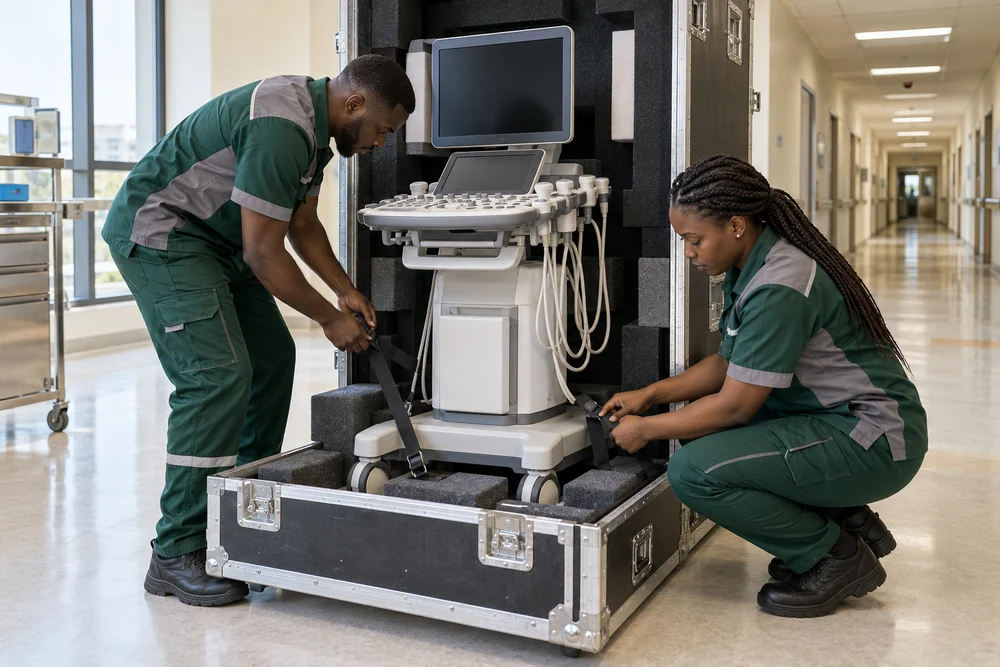
Identify the delivery location, receiving contact, equipment schedule and responsibility for checking the shipment before installation. Discuss access, handling, temporary storage and required documents as part of the project scope so the equipment can move from receipt to the agreed next stage.
Receiving staff need a clear way to identify the equipment and accessories expected against the order. Agree how packaging condition, shortages or visible transport concerns will be recorded and escalated through the supplier’s stated process. Keep delivery records associated with the equipment schedule. Avoid treating the presence of a crate at the hospital as confirmation that every ordered option, document or accessory is present or that the installation stage is ready to begin.
If the installation location is not ready, discuss the required storage and handling arrangements using the relevant equipment instructions and project responsibilities. Name the party coordinating movement from the receiving area to the final room, including any specialist handling needed. Keep the receiving, installation and acceptance records connected but distinguish the sign-off for each stage. A clearly described receiving plan reduces confusion between the delivery team, equipment supplier, installation personnel and the facility’s project coordinator.
How do you coordinate installation across several hospital departments?
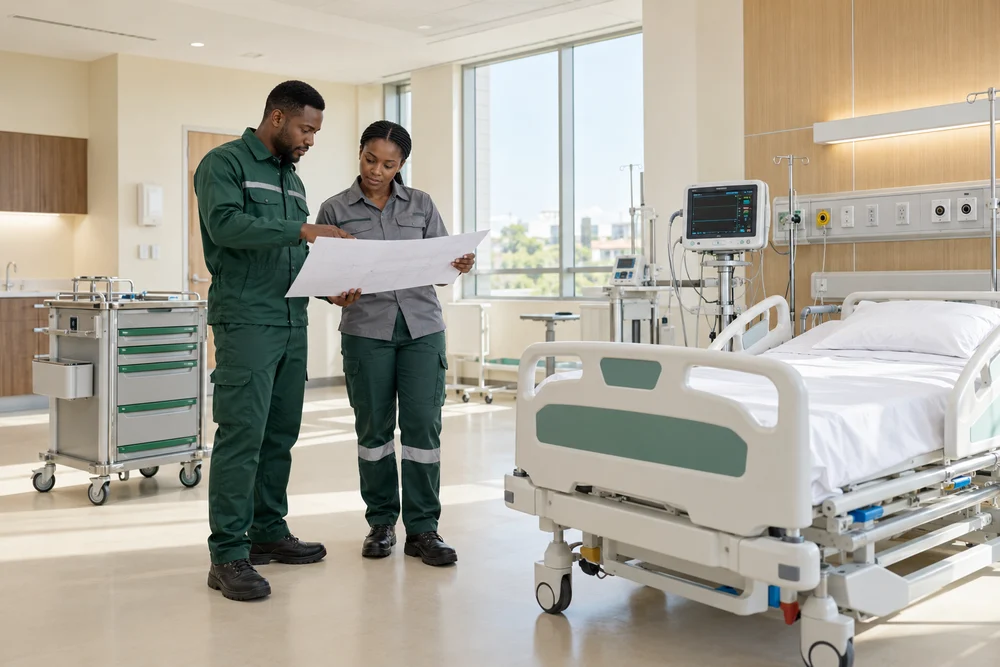
Use an equipment schedule linked to locations, site-readiness information and departmental contacts. Agree the sequence of work and dependencies for each area, and identify who coordinates the overall project. This makes a multi-device installation easier to review than a single undifferentiated completion date.
The same project can include rooms at different readiness stages. Record the equipment assigned to each location, the party confirming the room is ready and the supporting people needed for the proposed work. Where building, utilities, IT or other contractors are involved, identify their interfaces explicitly. Give the installation proposal the latest equipment configuration and room information so that a later change is visible before it affects the schedule.
Plan handover with the departments receiving the equipment. Identify who witnesses agreed checks, receives the documentation and coordinates any included familiarisation or training. Track outstanding items by asset and room so a partial handover is understandable. A consolidated project report can then show the completed work and remaining actions without implying that every department or device has passed the same acceptance stage at the same time.
How should changes to an equipment installation project be agreed?
Record a proposed change before treating it as part of the approved installation scope. Identify the affected equipment, reason for the change, responsibilities, cost and schedule effect, then obtain the facility’s required approval and a revised scope where appropriate.
Changes may involve the equipment configuration, installation location, enabling work, delivery sequence or handover requirement. Update the documents used by the relevant project parties rather than relying on a verbal instruction to one person. If a change affects an agreed check or a supplier dependency, review that consequence explicitly. The completion record should describe the work actually performed against the revised agreement and identify any remaining action, so the facility retains an accurate basis for acceptance and future maintenance planning.
Brand-specific equipment support in Nigeria: A-dec dental chair and operatory equipment services – Medtronic acute-care equipment services
Choose the manufacturer to review its equipment-specific enquiry requirements and available documentation before requesting a written service scope.
The brand pages explain which model, configuration and fault details to include. A listing does not establish that every service, part or manufacturer programme is available for a particular unit; the written response defines the proposed scope.
Brand-specific equipment support in Nigeria: Memmert laboratory incubator and temperature-control equipment services – ZOLL equipment services
Choose the manufacturer to review its equipment-specific enquiry requirements and available documentation before requesting a written service scope.
The brand pages explain which model, configuration and fault details to include. A listing does not establish that every service, part or manufacturer programme is available for a particular unit; the written response defines the proposed scope.
Common questions about installation and commissioning in Nigeria
Can installation be discussed before equipment is purchased?
Yes. Share the proposed model and site details so the installation requirements and responsibilities can be discussed alongside procurement.
Does delivery include installation and commissioning?
Only if the specific offer says so. Ask for delivery, handling, installation, commissioning and acceptance responsibilities to be identified separately.
Can you install an existing device at a different site?
You can request an assessment of relocation and re-installation. Provide both locations, the equipment identity and its current condition so the required scope can be reviewed.
Will staff training be included?
Training is included only where the quotation defines it. State the intended users, training requirement and any documentation you need at the enquiry stage.
Tell us what your facility needs.
Send the equipment details, your requirement and the facility location. We’ll discuss the information needed to review the scope and prepare the next step.
Contact Franance