

Buy Thermal Cyclers in Nigeria.
Browse thermal cyclers and request a quotation for your facility in Nigeria. Include the configuration, quantity and delivery location you need.
Products
7 models
Where can I buy a PCR thermal cycler in Nigeria?
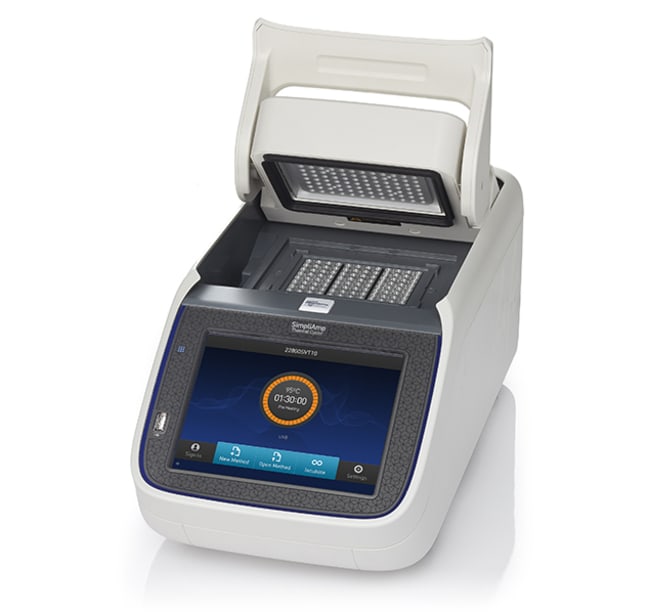
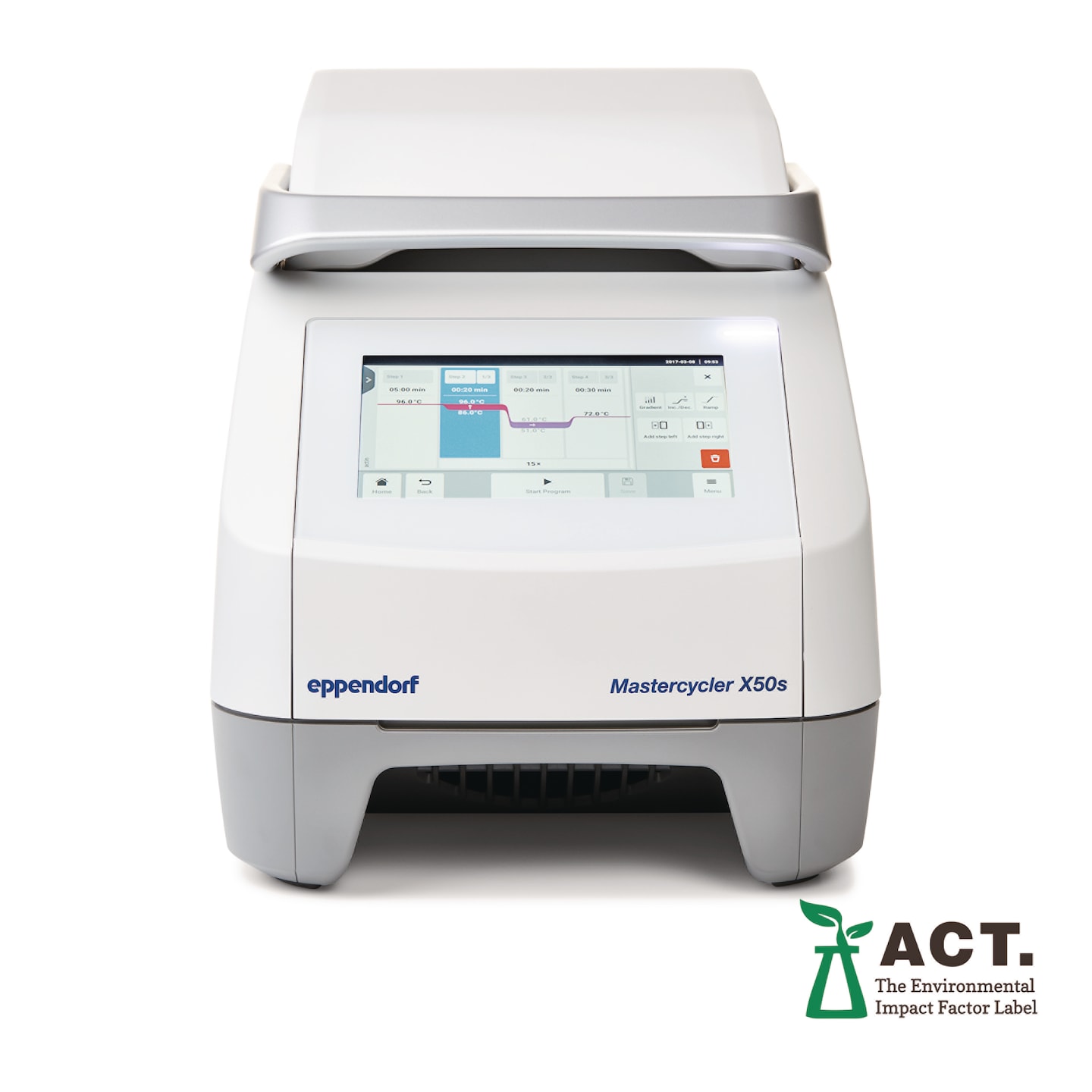
Start with the Thermal Cyclers category, which shows the instruments currently assigned to this catalogue category. Franance lists the Bio-Rad T100 186-1096, Applied Biosystems SimpliAmp A24811 and Eppendorf Mastercycler X50s 6311000010. Brand-specific filtered listings are also available for Bio-Rad, Thermo Fisher / Applied Biosystems and Eppendorf.
Read moreWhich thermal cyclers are currently listed?
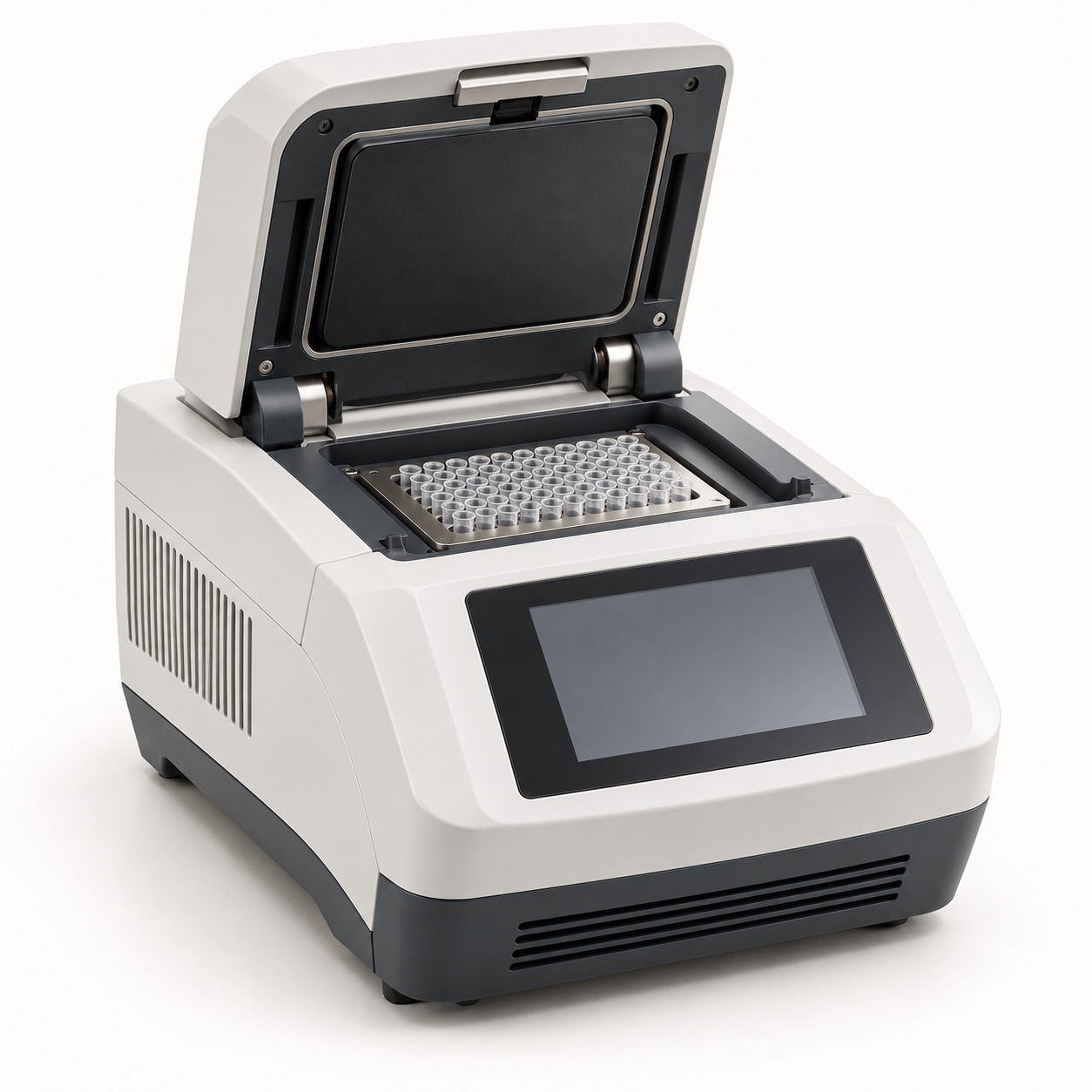
The category currently contains three catalogue records. The Bio-Rad T100 Thermal Cycler is listed under ordering number 186-1096. Bio-Rad's ordering reference describes a 96-well cycler supplied with a power cord and T100 tube support ring; confirm current package details in the quote. Its instrument guide identifies the T100 as for research use only.
Read moreWhat does a PCR thermal cycler do?
A PCR thermal cycler changes sample temperature through programmed steps so a polymerase chain reaction can repeatedly separate DNA strands, allow primers to bind, and extend new strands. A laboratory normally places prepared reactions in tubes, tube strips or a plate that fits the instrument's block, closes the heated lid where fitted, and runs a protocol appropriate to its validated assay and reagents. The cycler supplies thermal control; it does not by itself confirm that an assay is designed correctly or that a result is clinically valid.
Read moreBuy PCR thermal cyclers in Nigeria
Buy a PCR thermal cycler in Nigeria through Franance by matching the instrument to your assay workflow, sample format, laboratory throughput and power requirements. The current Franance category lists three research instruments: the Bio-Rad T100 Thermal Cycler (186-1096), Applied Biosystems SimpliAmp (A24811) and Eppendorf Mastercycler X50s (6311000010). They are not identical configurations: block layout, controls, accessories and networking differ. Review the exact model filters below, then request a quotation that identifies the offered variant and package contents. Franance handles catalogue requests as quotation orders, not online checkout with immediate payment. Send the exact model or catalogue number, quantity and delivery destination; the team follows up by phone or email to clarify the requirement and confirm commercial terms. Manufacturer specifications help define the request, but do not establish Nigerian stock, price, delivery time, distributor status or local service coverage.
Where can I buy a PCR thermal cycler in Nigeria?
Start with the Thermal Cyclers category, which shows the instruments currently assigned to this catalogue category. Franance lists the Bio-Rad T100 186-1096, Applied Biosystems SimpliAmp A24811 and Eppendorf Mastercycler X50s 6311000010. Brand-specific filtered listings are also available for Bio-Rad, Thermo Fisher / Applied Biosystems and Eppendorf.
To get a useful Nigerian quote, identify the instrument and catalogue number, the reaction vessels and any accessories, the number of units, and the facility's city or delivery address. Ask Franance to confirm the quoted item, price validity, availability, warranty terms, import or freight assumptions, taxes and delivery scope in writing. Listing a model on the website does not mean it is physically in stock or available for immediate delivery.
Which thermal cyclers are currently listed?
The category currently contains three catalogue records. The Bio-Rad T100 Thermal Cycler is listed under ordering number 186-1096. Bio-Rad's ordering reference describes a 96-well cycler supplied with a power cord and T100 tube support ring; confirm current package details in the quote. Its instrument guide identifies the T100 as for research use only.
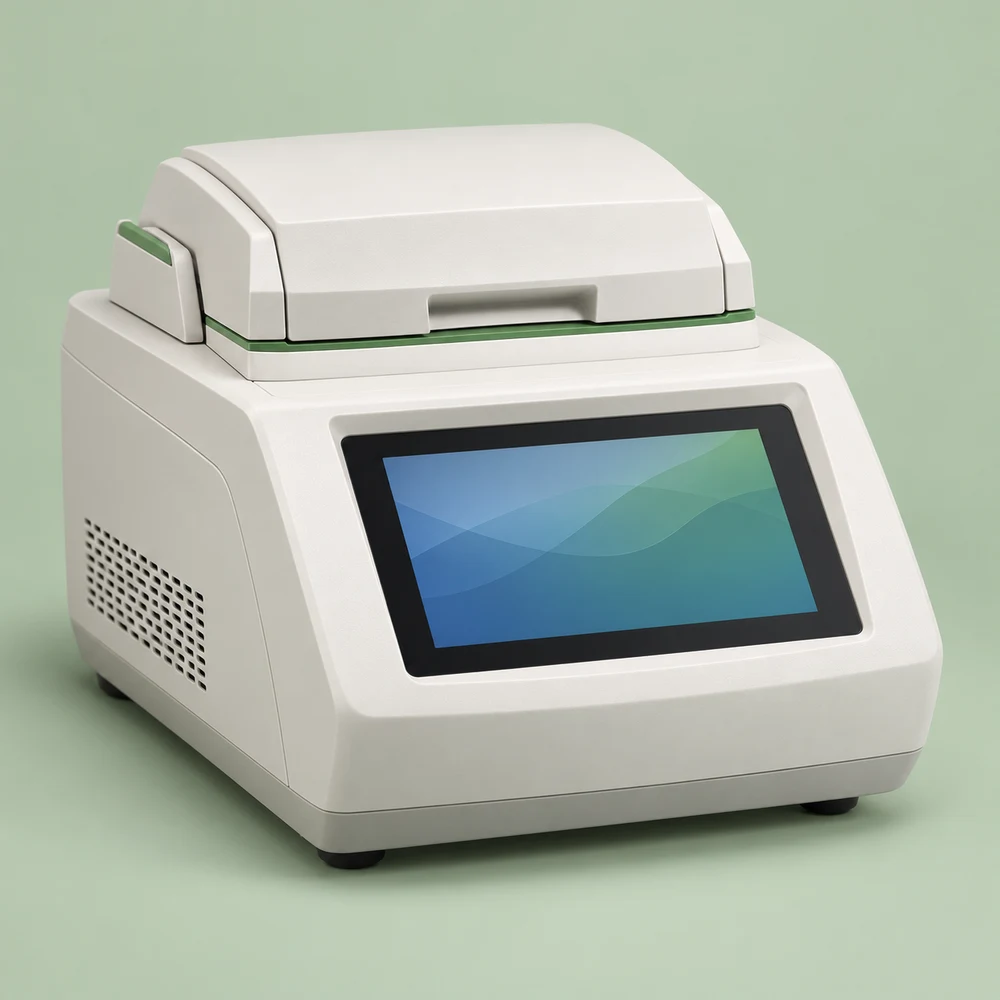
The Applied Biosystems SimpliAmp is catalogue A24811. Thermo Fisher describes a 96-well 0.2 mL VeriFlex block with three independently controlled temperature zones. The Eppendorf Mastercycler X50s, catalogue 6311000010, is a silver-block master variant listed for a 96-well plate or 0.1/0.2 mL tubes. Eppendorf describes its master configuration as able to control compatible connected ECO variants. These are distinct configuration examples, not a complete manufacturer product range or a recommendation that one is best for every laboratory.
What does a PCR thermal cycler do?
A PCR thermal cycler changes sample temperature through programmed steps so a polymerase chain reaction can repeatedly separate DNA strands, allow primers to bind, and extend new strands. A laboratory normally places prepared reactions in tubes, tube strips or a plate that fits the instrument's block, closes the heated lid where fitted, and runs a protocol appropriate to its validated assay and reagents. The cycler supplies thermal control; it does not by itself confirm that an assay is designed correctly or that a result is clinically valid.
For procurement, separate the instrument requirement from the assay workflow. Tell the supplier whether this is endpoint PCR, protocol optimisation, teaching, routine research or another use. Discuss the assay, reagents and validated protocol with the laboratory lead. Confirm that the requested model is intended and labelled for the use planned. For example, the T100 instrument guide and SimpliAmp specification sheet say “For Research Use Only” and exclude diagnostic procedures. Do not treat those research instruments as diagnostic devices based solely on their ability to cycle PCR reactions.
How do I choose a thermal cycler for my laboratory?
Choose by working backward from the laboratory's actual protocols. Count reactions per batch and expected daily or weekly run volume; identify whether operators use individual tubes, strips or plates; check whether temperature optimisation, protocol management, user access, memory, networking or multiple connected units matter. Then compare only the specific instrument variant and block that can support those requirements. A well count alone is not enough: vessel format, reaction volume, consumable compatibility, lid clearance, control interface and service expectations all affect fit.
For three currently listed examples, the T100 is a 96-well instrument with a tube support ring included in the cited Bio-Rad ordering reference; SimpliAmp is a 96-well 0.2 mL VeriFlex configuration with three controlled zones; and the X50s is a silver-block, touchscreen master unit that can control compatible ECO variants. These details may help you frame a shortlist, but the manufacturers' full documentation should be checked before selection. Ask Franance to quote the exact variant and accessories rather than a broad phrase such as “PCR machine.”
What well format and reaction volume do I need?
Specify the physical vessel and reaction volume used by the laboratory before comparing equipment. A 96-well block does not automatically mean every 96-well plate or every tube fits: plate skirt, height, profile, tube capacity, cap or seal, adapter and heated-lid geometry can matter. SimpliAmp's manufacturer sheet identifies a 96-well, 0.2 mL block and a PCR volume range of 10–100 μL. The Bio-Rad T100 product material lists a 96 × 0.2 mL format for tubes, strips or a 96-well plate and a broader supported sample-volume range; review its guide for exact limits and conditions. Eppendorf identifies the X50s silver block for 96-well plates or 0.1/0.2 mL tubes.
Use the exact manufacturer's block and consumable compatibility table when preparing a bill of materials. Do not assume that “96-well” or “0.2 mL” alone proves fit across brands. Include the plate or tube manufacturer and product code if you already standardise on a consumable, and ask the supplier to confirm compatibility in writing. This prevents a quote for an otherwise suitable cycler from omitting a required adapter, compatible seal, tube support or starter consumables.
How should I compare temperature performance and gradient features?
Compare specifications using the same definition and conditions. Manufacturers may publish block ramp rate, sample ramp rate, accuracy, uniformity, range and measurement time differently. Thermo Fisher's SimpliAmp sheet, for example, lists a 0–100 °C block range, accuracy of ±0.25 °C from 35–99.9 °C, uniformity below 0.5 °C at a stated time, maximum block ramp of 4 °C/s and maximum sample ramp of 3 °C/s. Those are published device specifications, not a promise that every assay reaches a particular performance outcome. Review the detailed technical notes and exact variant before comparing another manufacturer's figures.
A gradient feature helps a research laboratory test a range of annealing temperatures during protocol optimisation. It does not remove the need for assay-specific optimisation, controls or validation. The T100 product material describes a gradient-capable model; SimpliAmp uses three independently controlled VeriFlex zones, a different mechanism. These features are not interchangeable marketing labels. Ask your application scientist or assay owner which optimisation approach is required, then include that requirement in the quote. Do not buy a gradient instrument solely because a higher maximum ramp rate appears in a brochure.
What power, installation and service details should I check in Nigeria?
Before ordering for a Nigerian site, check the exact instrument's input-voltage and frequency label, power consumption, supplied power cord and plug, grounding, bench space, ventilation, operating environment and any protection or backup-power arrangement required by the manufacturer. SimpliAmp's published specification lists 100–240 V, 50–60 Hz; Eppendorf lists 100–240 V, 50–60 Hz for the X50s. These broad ranges do not tell you which regional cord or accessories will be supplied. Confirm the specific order code and package on the quote, and have the facility's responsible electrical or biomedical staff assess the installation.
Ask whether installation, user orientation, calibration or temperature verification, maintenance, repair and replacement parts are included, available separately or outside the offer. Do not infer local service coverage or warranty from a manufacturer's international product page. Request the provider, service location, response terms, exclusions and warranty document. If a facility needs a documented service-level agreement, place that requirement in the RFQ so it can be addressed explicitly before procurement approval.
How do I select compatible PCR plates, tubes and seals?
List the vessel formats already validated by your laboratory: plate type and skirt, tube size, strip format, cap style, seal or adhesive film, and reaction volume. Match these against the exact block and heated lid, not just against the model family name. Thermo Fisher maintains a PCR thermal-cycler support area and plastics selection resources; its SimpliAmp guide also documents the instrument's installation and use. Eppendorf's X50 family page distinguishes block variants, another reason to verify the chosen configuration rather than relying on a generic product-family description.
If you are setting up a new workflow, have the technical lead identify and test the intended consumables before placing a bulk order. Ask the quotation to itemise plates, strips, tubes, seals and adapters separately, with manufacturer catalogue references and quantities. This makes it easier to check compatibility and replenish consumables later. A thermal cycler quote should not quietly substitute a different vessel or block configuration from the one used during the laboratory's method validation.
Is a conventional thermal cycler the same as a real-time PCR system?
No. A conventional thermal cycler controls temperature for amplification protocols; it does not necessarily include optical detection for measuring fluorescence during amplification. Real-time PCR, also called qPCR, combines cycling with detection optics and software for monitoring fluorescent signal. The product taxonomy keeps Thermal Cyclers separate from PCR & qPCR Systems so buyers can browse the correct equipment type.
Check the assay requirement before requesting a quote. If a protocol requires fluorescence acquisition, multiple dyes, melt analysis, quantification software or specific optical channels, state those needs and request a qPCR system listing rather than assuming a conventional cycler can provide them. Product labels can be used loosely in conversation, so identify the method and detection requirement explicitly. This distinction also helps avoid comparing prices for instruments with different capabilities as if they were equivalent.
What should I include in a thermal cycler quotation request?
A complete RFQ lets the supplier match an exact instrument and show what the facility will receive. Include: (1) manufacturer and model/catalogue number; (2) quantity; (3) endpoint PCR or other intended research workflow; (4) block and plate/tube format; (5) typical reaction volume; (6) needed accessories, consumables or adapters; (7) network or connected-unit requirements; (8) laboratory power and installation constraints; and (9) Nigerian delivery city or address. If you are replacing an instrument, include its nameplate details and the current block or consumable format. Do not send patient data or confidential assay information unless your organisation authorises it and the details are necessary.
Ask the written quotation to state the exact manufacturer order code, variant and block; package contents; unit price and currency; offer validity; availability; delivery, freight, tax and import assumptions; warranty and service terms; installation or training inclusions; and exclusions. If an alternative is proposed, request a technical comparison against your stated requirements and have the lab owner approve it. You can send the thermal cycler enquiry to Franance after reviewing the current category listing.
How are thermal cycler prices in Nigeria determined?
A Nigerian quote depends on the exact instrument variant and order code, block configuration, included accessories, consumables, quantity, supplier availability and commercial terms. Import freight, insurance, duties or taxes, currency and delivery destination may also affect the final offer. A price found on an overseas catalogue or marketplace is not necessarily a current landed price for a Nigerian facility, and it may describe a different variant or omit service and shipping.
To compare supplier offers, align the RFQ first: same model and block, same accessories, same unit quantity, same delivery destination, same service scope and comparable warranty terms. Ask for a breakdown that separates instrument, optional parts, consumables, freight and other charges. Franance does not publish a live guaranteed stock price on these product records; request a current written quotation and check its validity period before raising a purchase order.
Can Franance supply PCR thermal cyclers online?
Franance uses a quotation order process rather than taking immediate online payment for these instruments. Browse the thermal cycler catalogue, select the relevant model filter—Bio-Rad T100, SimpliAmp or Mastercycler X50s—and send your requirements through the quotation enquiry form. The Franance team follows up by phone or email to clarify the order and commercial details.
Treat the submitted request as the start of a procurement conversation, not an accepted order or delivery commitment. Check the final quotation for the exact instrument and configuration, quantity, availability, payment terms, delivery destination, warranty, service, taxes and validity. If the offer differs from the original request, resolve the difference before your organisation issues an order.
Sources and specification limits
The model details above are based on the manufacturers' documents: Bio-Rad's T100 ordering reference and T100 instrument guide; Thermo Fisher's SimpliAmp specification sheet and user guide; and Eppendorf's X50 family page and brochure. They identify published model characteristics and ordering references; they do not prove that a specific configuration is currently available in Nigeria.
Manufacturer specifications may change with document revision, region, model variant or accessories. Confirm current details against the exact offered catalogue number and installation documentation. The current Franance taxonomy assigns three products to this category, which is a catalogue snapshot rather than a complete census of every thermal cycler. This guide is purchasing guidance, not an operating procedure, PCR protocol, clinical recommendation, regulatory assessment or guarantee of compatibility, performance, local stock or service.
Request a thermal cycler quotation
Send Franance the manufacturer and catalogue number, intended research workflow, well and vessel format, reaction volume, required accessories, quantity, site power details and Nigerian delivery destination. Request a written offer that identifies the exact variant and package, confirms availability and lead-time assumptions, and states price validity, freight or tax exclusions, warranty and service terms. Browse thermal cyclers in the Franance catalogue or submit a quotation enquiry.
Common questions
Which PCR thermal cyclers are currently listed by Franance?
The current category records show the Bio-Rad T100 (186-1096), Applied Biosystems SimpliAmp (A24811) and Eppendorf Mastercycler X50s (6311000010). This is the current catalogue assignment, not a claim that those are the only models available from each manufacturer.
Can Franance confirm stock or delivery time for Nigeria from this page?
No. A listing is not a live stock or lead-time commitment. Send Franance the model, catalogue number, quantity and Nigerian destination; request written confirmation of availability, price validity, delivery terms and exclusions.
Can I use a research-use-only thermal cycler for patient diagnosis?
The cited Bio-Rad T100 and SimpliAmp documents identify their instruments as for research use only, not diagnostic procedures. Follow the manufacturer labeling and applicable requirements for the intended assay; this guide does not authorize diagnostic use.
Can I pay online and receive an immediate order confirmation?
No. Franance receives quote orders and follows up by phone or email to confirm product configuration, quantity, availability and commercial terms.
Request a PCR thermal cycler quotation
Send Franance the manufacturer, exact model and catalogue number, sample format, throughput, required accessories, laboratory power details, quantity and Nigerian delivery destination. Ask the written quotation to state the offered variant, package contents, current availability, warranty terms, price validity and delivery exclusions.
Request a quotationNeed an equipment quote?
Add the models you need to a quote order, or send us your equipment list.