
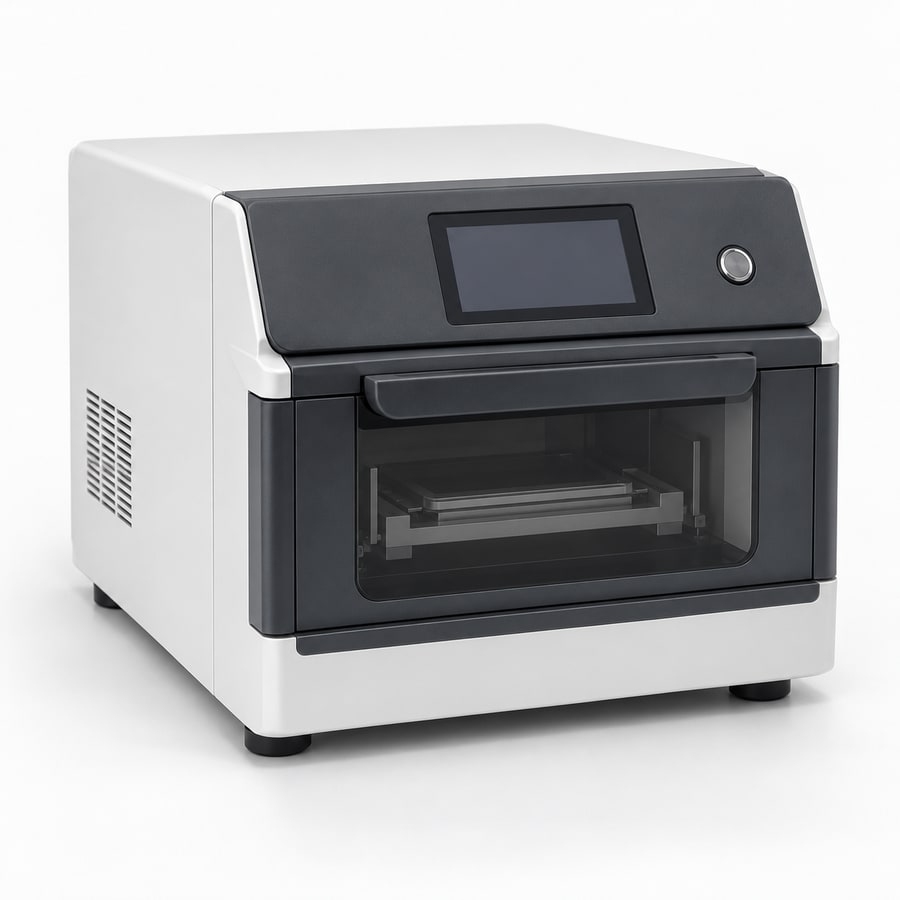
Invitrogen iBlot 3 Western Blot Transfer System
Dry western-blot protein transfer system
Price on request

Medical equipment and biomedical engineering.
Abuja, Nigeria.
Buy western blotting systems in Nigeria through Franance by identifying the exact protein-transfer instrument, gel format, membrane and consumables. This category currently lists the Invitrogen iBlot 3 device IB31001 and Bio-Rad Trans-Blot Turbo system 1704150. Both perform the gel-to-membrane transfer stage; they are not complete western blot assays, electrophoresis systems or imaging platforms. State your lab's workflow, required packs or stacks, existing equipment, quantity and delivery location for a written quote.
2 models
Dry western-blot protein transfer system
Start with the Western Blotting Systems category listing. The two current assignments are the iBlot 3 Western Blot Transfer System from Thermo Fisher Scientific/Invitrogen and the Bio-Rad Trans-Blot Turbo Transfer System. Each link opens a brand-and-category-filtered listing for the exact product record.
Read moreWestern blotting is a laboratory method in which proteins are separated, transferred from a gel onto a membrane and then probed and detected. The National Human Genome Research Institute overview describes this sequence at a high level. The NCBI Bookshelf review likewise discusses electrophoretic separation, membrane transfer and antibody-based detection as parts of the method.
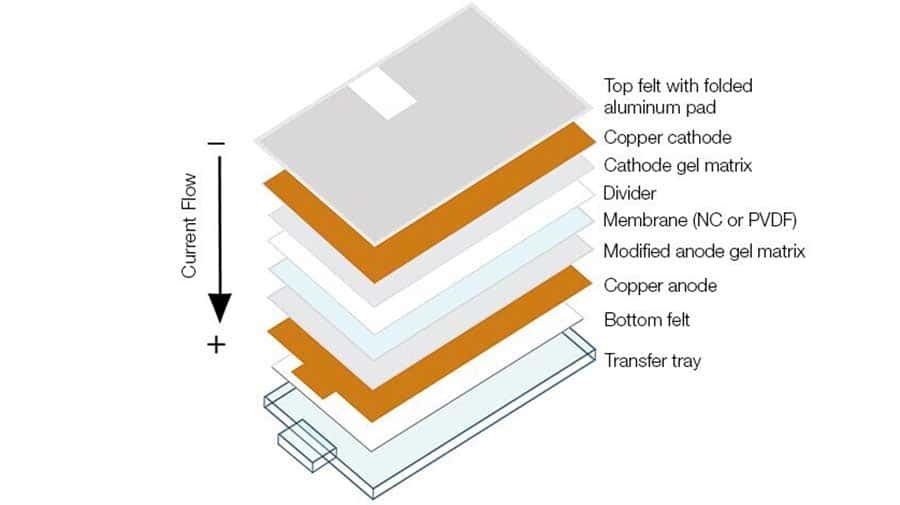
Read moreThe Invitrogen iBlot 3 is a dry protein-transfer system. Thermo Fisher’s product information describes the device as using preassembled transfer stacks that incorporate the membrane and buffer components. The reviewed product record identifies the instrument reference as IB31001 and notes that the transfer stacks are sold separately unless a specific package is quoted. The manufacturer lists two independently controlled transfer stations, with capacity for one to four mini gels or one to two midi gels per run; listed transfer times vary by program. These are manufacturer-stated capabilities, not a promise of a particular assay result. View the iBlot 3 result.
Read moreBuy western blotting systems in Nigeria through a quotation that names the exact transfer instrument, gel format and required consumables. Franance currently lists two protein-transfer systems: Invitrogen iBlot 3, device IB31001 and Bio-Rad Trans-Blot Turbo, model 1704150. Both are instruments for transferring proteins from a gel to a membrane during a western blot workflow. They are not complete assay kits, electrophoresis systems, detection reagents or imaging systems. For your Nigeria enquiry, specify the laboratory’s current gel and membrane formats, expected run pattern, required transfer packs or stacks, existing electrophoresis and detection equipment, power requirements, delivery destination and any setup request. Ask Franance to quote the instrument and recurring consumables as separate lines unless a defined bundle is explicitly offered. Confirm product availability, exact configuration, documentation, price, lead time, warranty and service scope in writing. Franance handles quote orders by phone or email follow-up; online payment is not available.
Start with the Western Blotting Systems category listing. The two current assignments are the iBlot 3 Western Blot Transfer System from Thermo Fisher Scientific/Invitrogen and the Bio-Rad Trans-Blot Turbo Transfer System. Each link opens a brand-and-category-filtered listing for the exact product record.
The catalogue identifies equipment and helps prepare a quote order. It does not confirm local stock, current availability, product status, price, validated laboratory outcomes, regional compatibility or included setup. State whether the request concerns an instrument alone or a specified combination of instrument, cassettes, consumable packs, membranes and other workflow equipment. Franance follows up by phone or email with a written quotation for the confirmed scope.
Western blotting is a laboratory method in which proteins are separated, transferred from a gel onto a membrane and then probed and detected. The National Human Genome Research Institute overview describes this sequence at a high level. The NCBI Bookshelf review likewise discusses electrophoretic separation, membrane transfer and antibody-based detection as parts of the method.
The instruments listed in this category perform the transfer step. The lab first needs a suitable gel and electrophoresis setup to separate proteins. The transfer device moves proteins from that gel onto the selected membrane using its specified format and transfer method. Blocking, antibody incubation, washing and detection happen afterward and may use separate equipment, reagents and protocols. A transfer device does not by itself run the full assay or identify a target protein.
This category is distinct from gel electrophoresis systems, western blot imaging systems, blotting kits, gels, membranes, antibodies, detection substrates and other consumables. Browse the separate gel electrophoresis listings and gel documentation and imaging listings when those instrument roles are also needed; both are within the broader Life Science equipment catalogue. Ask the laboratory which parts it already has and which it needs quoted. A listing for a transfer instrument should not be read as including those separate items unless the exact quotation names them.
The Invitrogen iBlot 3 is a dry protein-transfer system. Thermo Fisher’s product information describes the device as using preassembled transfer stacks that incorporate the membrane and buffer components. The reviewed product record identifies the instrument reference as IB31001 and notes that the transfer stacks are sold separately unless a specific package is quoted. The manufacturer lists two independently controlled transfer stations, with capacity for one to four mini gels or one to two midi gels per run; listed transfer times vary by program. These are manufacturer-stated capabilities, not a promise of a particular assay result. View the iBlot 3 result.
The Bio-Rad Trans-Blot Turbo Transfer System, model/order code 1704150, is a rapid semi-dry protein-transfer system. Bio-Rad’s product information describes transfer packs and supported mini and midi gel arrangements. Its manufacturer page notes that the system is for research use only and not intended for diagnostic purposes. Confirm the current offer, included cassette and accessory configuration, exact packs and membranes, and any product-status or regional details in the quotation. View the Trans-Blot Turbo result.
The two products use different transfer formats and consumable ecosystems. Do not assume that one vendor’s stack or pack fits the other vendor’s system, or that similar gel dimensions make a consumable compatible. Verify all compatibility against the current instructions for use and exact catalogue references.
Begin with the lab’s established protocol and the exact formats it runs. Identify whether the routine workload uses mini or midi gels, how many transfers need to be processed per run, which membrane chemistry and pore specification are required, and which transfer consumables are already stocked. Compare each device’s supported packs or stacks, transfer stations and cassettes with the lab’s real needs and with the specific gel system in use.
The iBlot 3 uses dry transfer stacks described by Thermo Fisher as containing membrane and buffer components. Bio-Rad’s Trans-Blot Turbo uses its specified semi-dry transfer packs or supported transfer kit configurations. These product descriptions help a procurement team distinguish method and consumables; they do not demonstrate equivalent protocol behavior or outcomes across different samples and target proteins. A vendor’s shortest listed transfer time is a program-specific reference, not a guarantee that every sample can use that program.
Ask the laboratory’s method owner to confirm the selected device against the methods already validated or planned by the lab. If changing transfer methods, ask the team to decide what method evaluation and documentation it requires. Procurement should compare current manufacturer documents and exact product references, not infer a technical match from a quick-transfer claim or a shared mini/midi label.
A transfer device is only one stage in a broader workflow. Depending on the lab’s existing setup, the following may be separate equipment or consumables: gel electrophoresis tank and power supply, precast or hand-cast gels, transfer cassettes, transfer stacks or packs, membranes, blotting papers, buffers, molecular-weight markers, protein sample preparation materials, blocking reagents, primary and secondary antibodies, wash solutions, detection substrates and an imaging or film-development system.
Do not assume that a named starter bundle includes everything needed for the laboratory’s intended workflow. Manufacturer packages can vary by country and order code, and bundle contents may change. Ask the quotation to list the base instrument, included cassettes or trays, transfer packs, membrane type, quantities, power cable and any software or accessories as separate named lines. Mark consumables as included, optional or excluded.
Western blot imaging and documentation equipment belongs to a separate equipment role. An imager may capture chemiluminescent, fluorescent or other signals depending on its configuration; it does not replace gel-to-membrane transfer. Similarly, a gel electrophoresis tank separates samples before transfer but does not perform membrane transfer itself. Keep each purchase role explicit in the equipment schedule.
Provide the exact manufacturer and model of the gel electrophoresis equipment, gel dimensions and thickness, mini or midi format, number of gels per run and the membrane types required by the lab’s methods. For the transfer system under consideration, request the current compatibility table and catalogue numbers for stacks, packs, cassettes and membranes. Verify whether one pack supports one gel, multiple mini gels or a midi gel under the proposed arrangement, and identify any transfer tray or cassette needed.
For iBlot 3, the product record identifies compatible transfer stacks for nitrocellulose, PVDF and low-fluorescence PVDF; confirm the exact stack model and intended membrane with the manufacturer’s current documentation. For Trans-Blot Turbo, Bio-Rad lists system-specific pack and kit references for supported membrane and gel formats. The product title or membrane name alone is not proof of physical fit or suitability for the lab’s particular transfer protocol.
List expected usage and replenishment quantities separately from capital equipment. Ask how packs are stored and handled, what consumables are single-use, and whether any components have storage or expiry conditions according to the manufacturer. Confirm local availability and lead time rather than estimating from the manufacturer’s website or assuming a recurring supply arrangement.
Request the current official product page, instructions for use, technical specifications and accessory or consumable compatibility list for the exact model being offered. Thermo Fisher’s iBlot 3 user guide is the reference for that device’s handling and system instructions. For iBlot 3, confirm device reference IB31001, station configuration, supported format, program choices, stacks and compatible membrane references. For Bio-Rad, confirm Trans-Blot Turbo 1704150, current system status, cassette configuration, supported packs or kits, gel arrangements and the research-use-only limitation shown by Bio-Rad. Bio-Rad’s quick-start guide is a manufacturer resource for its transfer pack and cassette arrangements; check the current documentation supplied with the exact offered system.
Use the current manufacturer instructions to determine operating conditions and safety requirements. This guide is not an operating protocol. It does not specify voltages, current, program selection, reagent concentrations or target-specific methods. Transfer parameters and workflows depend on the lab’s protocol and the exact product documentation; they should be selected by trained laboratory personnel.
Ask the supplier to identify the precise region and configuration covered by the documents. Regional product pages may show different bundles, order options, voltage accessories, warranties or availability. Do not transfer terms from a foreign online store into a Nigerian quotation. Have the lab’s technical owner review model-specific documentation before accepting a substitute or bundle.
No. A manufacturer’s listed time describes a particular device program or supported workflow; it does not guarantee a successful transfer, signal strength, sensitivity, specificity, reproducibility or detection of a target in every sample. The assay also depends on sample preparation, gel separation, target properties, membrane and protocol choices, blocking, antibodies, washing and detection. The lab’s method owner remains responsible for deciding whether a procedure is appropriate and for evaluating any changes.
General research-method descriptions, such as the NCBI Bookshelf overview and NIH/NHLBI lab protocol examples, show that transfer is one component among several in western blot workflows. They do not validate either listed system for a particular target or sample. Bio-Rad specifically labels the Trans-Blot Turbo system for research use only, not diagnostic purposes. Use it within the manufacturer’s stated intended-use limits and the lab’s governance.
If the lab is adopting a different transfer method or changing a validated workflow, have its responsible scientific staff determine the evaluation plan and acceptance criteria. Do not rely on a product page, supplier recommendation or a short cycle-time figure as evidence of assay validation.
Name the manufacturer and exact model or order code, the required format, estimated transfer volume, mini/midi gel needs, existing electrophoresis equipment, membrane preferences, required stacks or packs, cassette requirements, quantity and desired delivery date. State whether the request is for the instrument only or for a specific package with consumables. Include the laboratory’s city and full delivery address, access requirements and contact for technical clarification.
Ask the written offer to identify the exact device configuration, voltage and plug arrangement, included accessories, consumable references and quantities, documentation language, warranty, current availability, lead time, freight, import responsibilities, duties, delivery and any requested installation, training or after-sales support. Confirm whether equipment and consumables will ship together and whether recurring consumables can be quoted separately. Do not assume local service, installation or stock from the existence of an online manufacturer page.
If replacing or expanding an existing system, provide its exact model and the consumable references already in use. Ask the supplier to verify compatibility rather than assuming continuity between product generations or different manufacturers. Have laboratory procurement and the method owner review the technical and commercial offer together.
The cost can vary with the instrument model, included transfer stations or cassettes, instrument-only versus starter package, transfer packs or stacks, membrane type, quantities, power accessories, shipping, import handling and the delivery destination. Installation, training, warranty and service may be separate commercial items if available. Recurrent consumables also affect operating costs, so compare the bundle contents and consumable catalogue references rather than only the base instrument price.
Request separate lines for the device and each consumable type, along with pricing validity, currency, taxes, freight, duties, local delivery, warranty and lead time. Confirm what is included, optional or excluded. Franance does not publish guaranteed live stock or fixed prices for these listings; request a current written quotation for the requested Nigerian destination and configuration.
No online payment is available. Use the category and exact brand/model filter to prepare a quote order, and Franance will follow up by phone or email to confirm the system, consumables and scope. The resulting quotation should identify the exact model, configuration, quantity, destination, current price, availability, delivery and terms before your institution places an order.
Submitting an enquiry is not a confirmed purchase or a reservation of stock. Confirm compatibility with the lab’s equipment and protocol, review the manufacturer’s current instructions and intended-use limits, and approve the commercial offer through your institution’s procurement process before ordering.
Browse the Western Blotting Systems category, then open the exact Invitrogen iBlot 3 IB31001 result or Bio-Rad Trans-Blot Turbo 1704150 result. Send Franance the lab’s format and consumables list, existing equipment details, quantity, delivery location and any requested support scope through the quotation enquiry.
Ask for the exact included and excluded items, accessory and membrane compatibility references, current manufacturer documentation, price and delivery terms in writing. Franance will follow up by phone or email. Have the laboratory method owner confirm the selected transfer system and consumables against the lab’s intended protocol before the institution places the quote order.
The category lists Invitrogen iBlot 3 (instrument IB31001) and Bio-Rad Trans-Blot Turbo (model/order code 1704150). Both are protein-transfer instruments, and the exact accessories and consumables must be confirmed in the quote.
Not automatically. The assigned records describe transfer instruments. Gels, electrophoresis tanks, membranes, stacks or packs, antibodies, detection reagents and imaging systems are separate items unless named in the written offer.
Do not assume cross-brand compatibility. Verify the exact consumable, cassette, gel format and membrane against current instructions for the particular instrument.
No. Listed times refer to supported product programs, not guaranteed assay performance. Results depend on the laboratory's sample, gel, membrane, method and downstream detection workflow.
No online checkout is available. Submit a quote order with the model, format, accessories, consumables, quantity and Nigerian destination; Franance follows up by phone or email.
Send Franance the exact iBlot 3 or Trans-Blot Turbo reference, required gel and membrane formats, vendor-specific packs or stacks, existing laboratory equipment, quantity, Nigerian destination and requested support scope. Confirm included accessories, current manufacturer documentation, availability and all commercial terms in the written offer.
Request a western blot quoteAdd the models you need to a quote order, or send us your equipment list.