A buyer’s guide to medical equipment training in Nigeria
How do I request medical equipment training in Nigeria?
Send Franance the equipment models, learner roles, group size, learning goals, site and requested format. We will review the enquiry and confirm whether a specific training arrangement and written quotation can be offered.
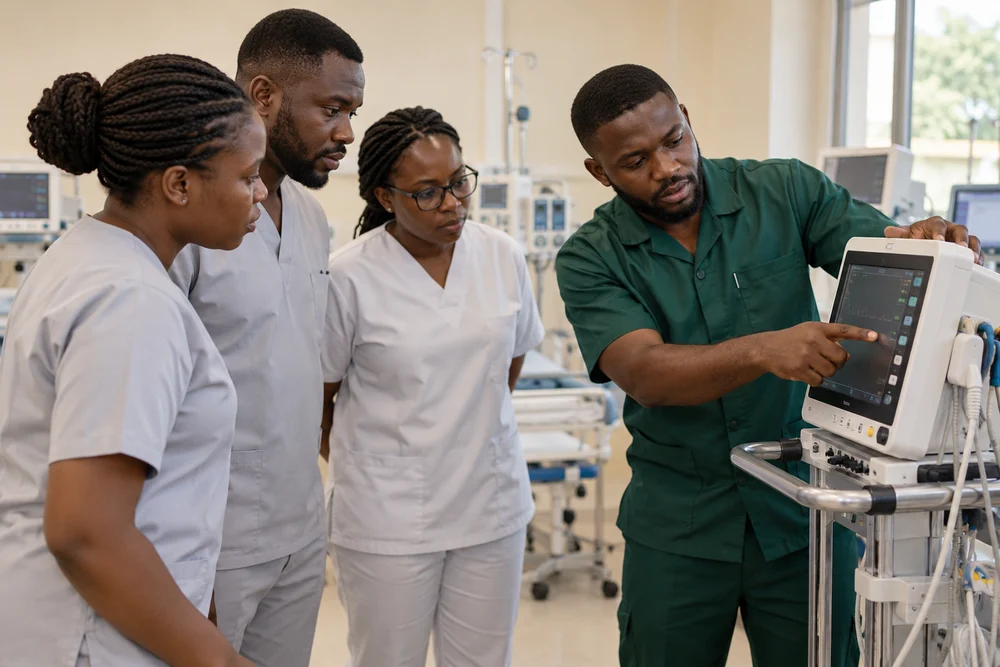
A useful training request starts with what staff need to do and which device they will use. Identify the department, the exact make and model, configuration, software version and accessories. Say whether the device is new, recently installed, unfamiliar to new staff or due for a refresher. List the learner roles and experience level rather than treating every attendee as the same audience. Include how many people need training, their shifts and whether the equipment will be available for a practical session. These details let a provider assess whether the requested course needs a single orientation, separate sessions or specialist input.
Franance can review a defined training enquiry and confirm what scope can be quoted. The response should identify the proposed learning objectives, trainer profile, materials, location or online format, duration, participant limits, prerequisites, assessment, records and commercial terms. If the requested content requires manufacturer credentials, clinical application expertise or regulated professional instruction, that dependency needs to be verified before a commitment.
What is the difference between equipment familiarisation, clinical application training and technical training?
Equipment familiarisation introduces intended users to the specific device and its approved operating information. Clinical application training addresses role-specific use in a clinical workflow. Biomedical technical training concerns maintenance or service knowledge for appropriately qualified technical personnel. Each requires a separate scope.
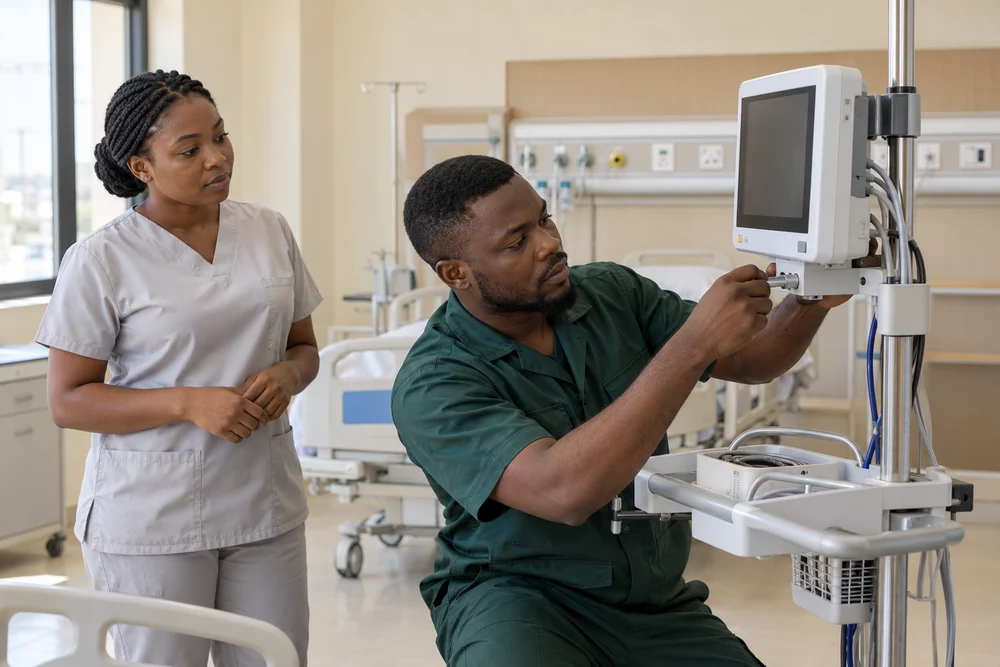
Equipment familiarisation is a bounded orientation: identifying the system and controls, locating manufacturer documentation, understanding routine setup and cleaning information and knowing where to escalate questions. It does not qualify someone for a clinical procedure or grant authority to use a device independently. The content should match the exact system version and accessories. For a complex installation, the facility may want the session to include shift leads, superusers and biomedical staff, but the objectives for each group should be listed separately so that no participant is assumed to have acquired skills that were not taught or assessed.
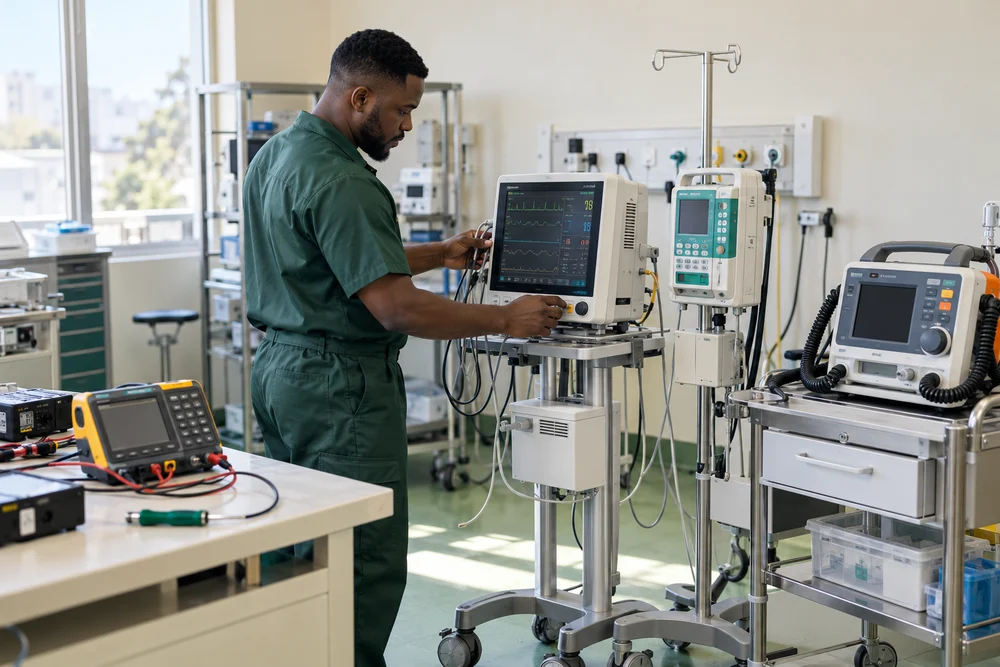
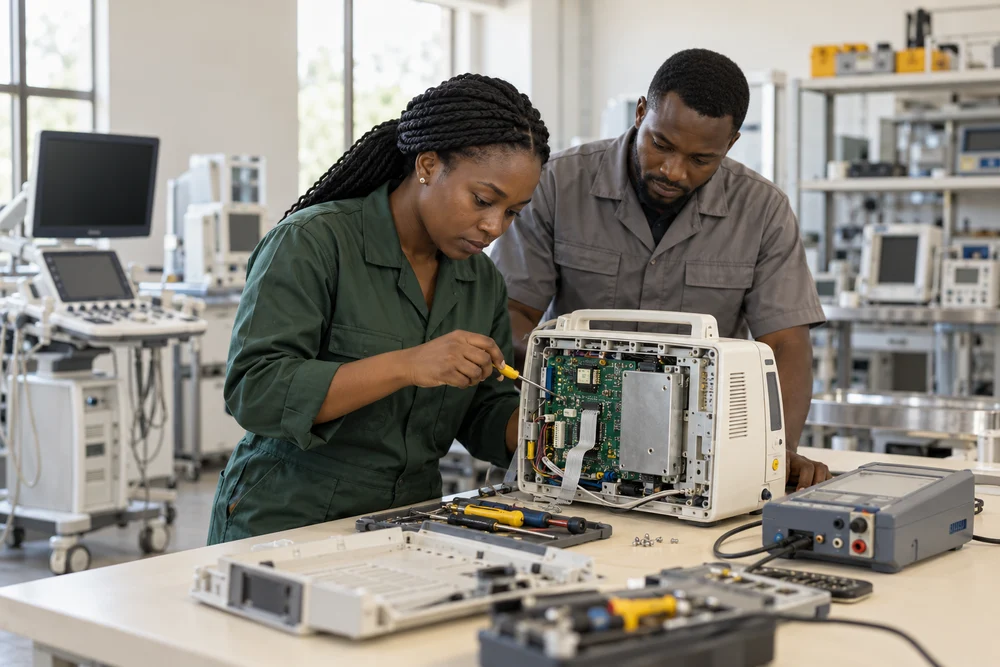
Clinical application training focuses on how the equipment supports a clinical examination or task. It may involve protocols, image acquisition, workflow decisions or interpretation that require appropriately qualified clinicians and manufacturer-specific application expertise. Biomedical technician education is different again: it may address equipment architecture, maintenance concepts or service methods for technical staff, and can require restricted manuals, tools, software access or explicit OEM training. Siemens and GE, for example, distinguish clinical equipment education from technical training in their own portfolios. These manufacturer offerings illustrate the difference in course types; they do not establish that the same training or credentials are available through Franance.
Who should attend hospital equipment user and technical training?
Choose attendees by the task they are authorised to perform. Clinical users, application specialists, biomedical technicians, IT staff and managers may need different learning outcomes; the facility decides professional scope, prerequisites and permission to perform clinical work.
For a user orientation, include the people who will receive, set up, use, clean, store or report problems with the device, but agree precisely which activities are in scope. Some roles only need a short introduction to safe handling and escalation; others may need model-specific practical familiarisation. A clinical application course should be planned with the clinical lead and target the qualified professionals who will perform the relevant workflow. A manager may need operational information about service records, scheduling and handover rather than detailed instrument operation. A biomedical team may need separate technical content and technical prerequisites.
Write measurable learning outcomes in plain language: what a learner should be able to locate, explain, demonstrate or escalate after the session. State any prior qualification or experience needed and the supervisor responsible for approving learners. WHO resources treat training as part of the medical-device lifecycle, with distinct needs for safe use and technical management. That principle supports role-based planning, not a generic promise that one session makes all staff competent. The facility should align any competence decision with its professional requirements, policies and clinical governance, and should arrange supervised practice where its own rules require it.
Why should medical equipment training be tied to the exact model and configuration?
Controls, software, accessories and manufacturer instructions can differ between model families and versions. Provide the exact configuration and define the topics to be covered so the training outline and any practical materials match the equipment available.
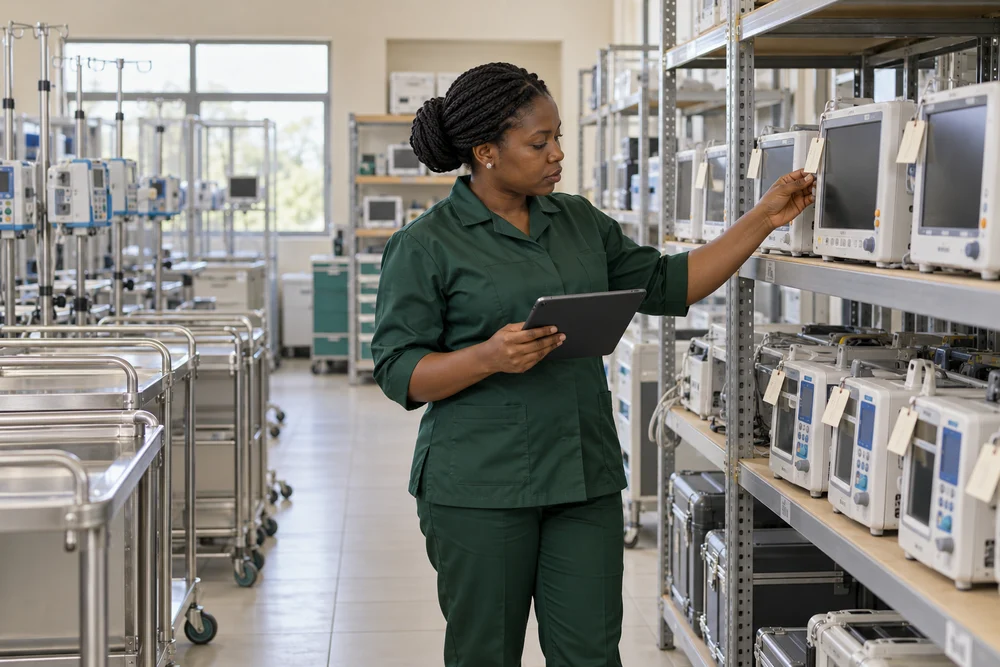
A category name such as “ultrasound”, “patient monitor” or “laboratory analyser” is not enough to design useful equipment training. Different models can use different interfaces, probes, modules, alarm displays, data connections and permitted workflows. Even within one family, software version, installed options, local language, accessories and configuration can change what a user sees. Send the current nameplate or inventory details, software version where available, configuration, user manual revision and any relevant facility procedure. If a model is not known yet, describe the procurement stage and ask for a course outline only after the device has been selected.
Manufacturer documentation is the reference for the device’s intended use, warnings, setup, cleaning and permitted maintenance. WHO training resources also organise information around device lifecycle tasks, including selection, setup, use, decontamination, maintenance and decommissioning. In a paid course, the provider should say which manual or approved materials are used and whether participants receive them. Keep patient cases and screen captures free of identifiable information unless the facility’s approved data process permits their use. A generic slide deck should not be represented as training on a model that was never reviewed or demonstrated.
What should a medical equipment training plan include?
Agree the course outline, language, location, session length, equipment access, class size, learner prerequisites, materials, technical setup and responsibility for rooms or travel. State what happens if the model, site or equipment is unavailable on the scheduled date.
The training format should suit the learning objective and learner group. A briefing or remote webinar may be suitable for general orientation; hands-on familiarisation may require access to the exact system, accessories and a safe practice environment. Clinical application work may require a qualified trainer, department-approved cases and coordination with clinical operations. Technical training may need controlled access to equipment, documentation, approved tools or manufacturer resources. State whether the session is onsite, virtual or at another venue, and whether translation, printed materials, software access or simulation equipment is needed.
For an onsite session in Nigeria, provide the facility address and city/state, room availability, access controls, parking or entry requirements, available power and network, and any rules for external visitors. Plan around clinical operations without exposing patient information or disrupting an active service. Agree a date only after the trainer, device, venue and required approvals are confirmed. The quotation should state travel charges if applicable, cancellation or rescheduling rules, participant limits, language, duration and any excluded costs. Confirm the named provider, delivery arrangement and schedule in the specific training quotation.
Does medical equipment training provide competency certification?
Not by default. An attendance record, knowledge check, practical observation, competency decision, professional credit and manufacturer certificate are distinct outcomes. Name the issuing organisation, assessment method, recognition and limitations before booking.
A training proposal should state whether learners only attend, complete a knowledge check, demonstrate specified skills or receive a formal competency assessment. These outcomes have different evidentiary value. If practical assessment is requested, define the task, pass criteria, assessor qualifications, equipment configuration, repeat opportunity, record retention and how the facility will use the result. A session leader can document participation without certifying professional competence. A provider should not advertise a certificate as accredited, OEM-issued or regulator-recognised unless the relevant authority and scope can be verified.
Ask who issues any certificate or completion record, what it names, which course and version it covers, whether it is transferable and whether it authorises any activity. Manufacturer learning portals and training programmes show that OEM education and technical courses may be linked to specific product families or provider credentials. That does not mean a third-party session carries manufacturer recognition. WHO references provide educational material and lifecycle guidance, but a course based on WHO material is not automatically a WHO-certified course. The facility remains responsible for checking its own professional, employment and governance requirements before relying on a training record.
When should a facility arrange initial or refresher equipment training?
Consider training during procurement and handover, after a model or software change, when new staff join, when a facility identifies a knowledge gap, or when the approved procedure changes. Set refresher timing through the facility’s risk and governance process.
Training is easiest to plan when it is considered before equipment arrives. During procurement, name each audience, required orientation, application or technical course, materials, expected timing and whether any instruction is included in a supplier’s proposal. At installation, confirm that the selected configuration matches the course plan and that the destination is ready. For a new clinical service, training may need to coordinate with credentialing, protocols, staffing and acceptance steps. Do not assume that commissioning automatically includes a practical user course or that a single session covers all shifts and departments.
Refresher needs may arise when new personnel join, equipment configuration changes, software is updated, a workflow changes, an incident or audit identifies a gap, or the facility’s policy calls for repeat learning. WHO guidance discusses training as part of equipment management and for specialized equipment mentions scheduling refreshers; the exact need and interval should be decided by the responsible facility. Build a simple training record that names the model/version, learner roles, date, instructor, topics, format, attendance and any assessment result. Avoid claiming continuing education credit or a nationally recognised certificate unless the relevant issuer and scheme have confirmed it.
What should be confirmed before buying medical equipment training in Nigeria?
Confirm the course category, learner group, exact device, curriculum, named instructor qualifications, format, materials, assessment, records, price, travel, exclusions and any manufacturer or clinical approval. Franance will state only the training arrangement it can verify for the specific enquiry.
Compare training offers by the learning outcome, not only by course title or price. Ask for a concise agenda and identify which tasks are taught, which are excluded and whether the course uses the same device configuration as the facility. Request the instructor’s relevant experience and evidence for any special qualification, manufacturer authorisation or clinical credential that matters to the buyer. Clarify who supplies the system, software access, manuals, consumables, translation and venue. If a clinical application course or restricted technical curriculum must be delivered by the manufacturer, establish that access and the provider’s exact role before approving a purchase.
The written offer should also identify participants, prerequisites, group size, timing, mode, assessment, certificate or record issuer, rescheduling conditions and any travel or setup costs. State whether the facility receives an editable course outline or attendance register and how long records are retained. Send the curriculum and delivery requirements to Franance so the proposed scope and any specialist dependencies can be reviewed for your quotation. A facility’s procurement team can compare the proposal with clinical governance and workforce requirements before committing.
Common questions about clinical and technical training in Nigeria
Can Franance provide clinical application training for any medical equipment brand?
Training depends on the exact model, curriculum, instructor qualifications and any manufacturer access required. Send the device and learning objectives so Franance can confirm what scope can be considered.
Is user familiarisation the same as clinical competency training?
No. Familiarisation introduces equipment features and approved materials; clinical competency involves role-specific professional skills and must follow the facility’s governance and qualification requirements.
Will participants receive an OEM certificate?
Only if the named manufacturer or authorised issuing body confirms that certificate and the delivery arrangement. Attendance at a third-party session does not establish OEM recognition.
Can biomedical engineers be trained to repair equipment?
Technical training depends on the model, learner prerequisites, manufacturer restrictions, documentation and tools. Confirm the curriculum and access before booking; the page does not authorise repair work.
What information should we send for an equipment training quotation?
Provide the model and configuration, learner roles and number, learning objectives, location, dates, language, preferred format and any assessment or documentation requirements.
Tell us what your facility needs.
Send the equipment details, your requirement and the facility location. We’ll discuss the information needed to review the scope and prepare the next step.
Contact Franance