A practical guide to imaging quality assurance and radiation safety in Nigeria
What is imaging quality assurance and radiation safety support in Nigeria?
Imaging quality and radiation safety support involves two related enquiries: defined imaging equipment performance checks, and radiation protection work such as shielding review, surveys or dosimetry. Send Franance the modality, equipment or room details and intended outcome so the work and responsible qualified roles can be clarified in a written scope.
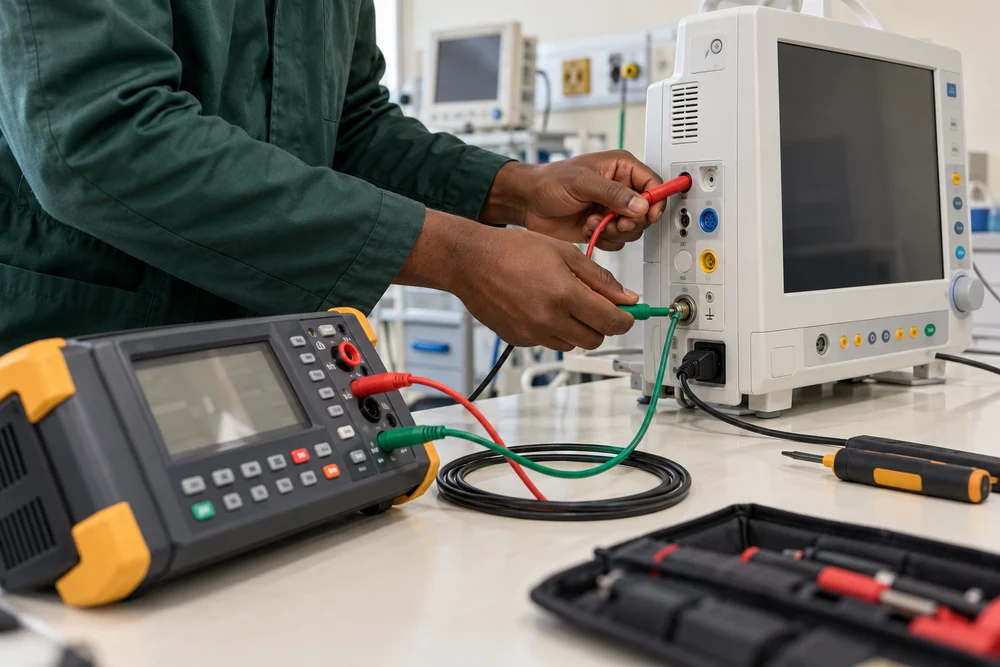
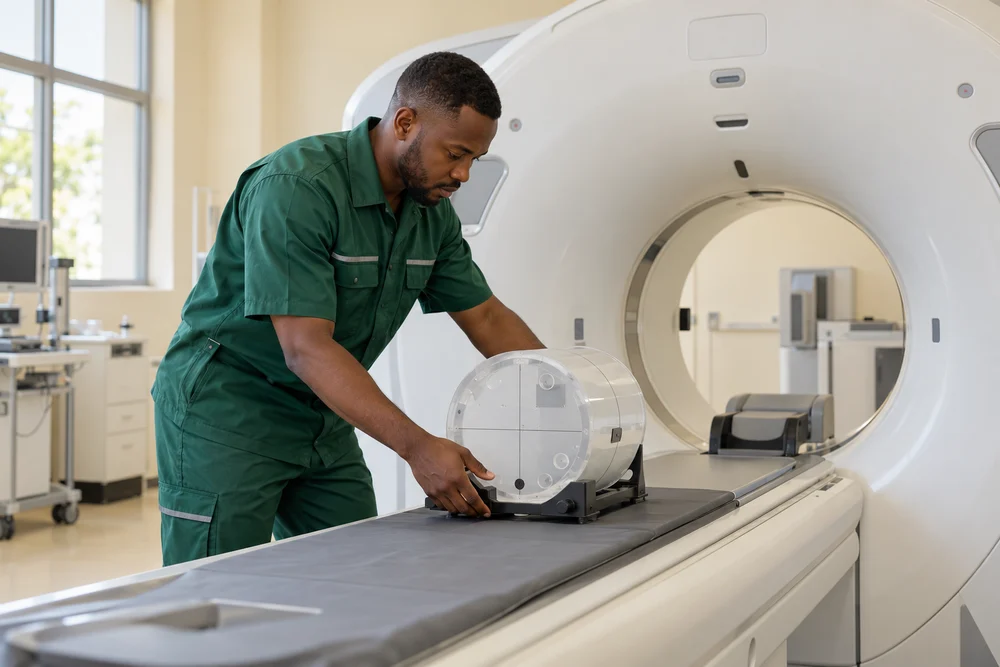
Equipment quality assurance (QA) is a planned set of activities used by a facility to review imaging system performance and maintain records. Depending on the modality and defined programme, the work may include acceptance or commissioning measurements, periodic tests, review of image-quality or output indicators, and post-maintenance checks. The exact parameters, methods and pass criteria must come from the applicable regulations, manufacturer instructions, professional guidance and facility programme.
Radiation protection concerns occupational and public exposure, room shielding, monitoring, dosimetry and the responsibilities attached to the facility’s authorised practice. These scopes may involve the same room and equipment but answer different questions. A calibrated equipment output or image-quality result does not establish that barriers are adequate; a room survey does not demonstrate that the imaging device meets every performance requirement.
Franance’s older Imaging Compliance and Radiation Safety, Shielding & Dosimetry pages describe enquiries for equipment QA, shielding, leakage surveys and dosimetry coordination. They are evidence of the kinds of requirements the business accepts for review, not proof of any specific accreditation, authorization, completed project or universally available service. Send the requested outcome, and Franance can clarify what scope may be quoted.
What should an imaging equipment acceptance and commissioning check cover?
Define the equipment, configuration, test parameters, methods, instruments, acceptance criteria, documentation and approving roles before the unit is placed into clinical use. For diagnostic imaging in Nigeria, the current NNRA requirements and the facility’s qualified medical physics input should guide the scope.
Start with the purchase specification, delivery and installation records, manufacturer manuals, system configuration and any applicable service or regulatory conditions. The test plan should name the parameters to be measured, instrument references and calibration status, test conditions, data to retain and the limits against which results will be evaluated. If the equipment has software options, detector variants, accessories or multiple operating modes, list the actual configuration so the evidence describes the system installed.
For X-ray or CT equipment, facility-defined checks may include mechanical and safety functions, output or imaging performance parameters, image-quality measures and system documentation, as applicable to the chosen protocol. Do not use a generic checklist as a substitute for the modality-specific requirements. A medical physicist, radiological medical practitioner, radiographer, facility engineer and supplier may have different roles in the acceptance and commissioning process.
Nigeria’s 2023 Basic Ionizing Radiation Regulations address calibration, dosimetry and quality assurance for medical exposures, including equipment acceptance and commissioning, and describe medical physicist oversight or documented advice in diagnostic settings according to complexity and risk. The facility should confirm the exact regulatory application and designate who approves the results. Franance can review the requirement and confirm whether a scoped assessment can be offered.
How should a diagnostic imaging QA programme be scoped?
Use the facility’s modality-specific QA programme to define tests, intervals, responsibilities, action limits, records and escalation. The programme should distinguish routine operator checks, technical service work and medical-physics measurements rather than treating them as one generic calibration visit.
Build an equipment register that links each asset to its modality, model, room, baseline results, manufacturer instructions, test schedule, maintenance history and known changes. For each test, record who performs it, the method and tools used, the results, reviewer, comparison criteria, corrective action and closure evidence. When a test falls outside an agreed limit, identify who assesses the finding and who can decide whether the unit is taken out of use or returned to service.
The facility should involve radiology leadership, radiographers, biomedical or clinical engineering, medical physics and its radiation protection roles as appropriate. The IAEA quality-assurance guidance describes facility responsibilities and medical-physicist involvement in image quality, equipment testing and radiation protection. Nigeria’s regulations also call for a comprehensive QA programme for medical exposure with relevant professional participation and records. Apply the current document and local requirements to the facility’s own system; this page does not define a universal interval or acceptance limit.
Franance can review a planned QA or performance-verification enquiry when the modality, equipment identity, programme, previous results and required deliverable are supplied. The quote should identify whether it covers testing, calibration, corrective repair, parts, reporting or a follow-up check, so the facility can distinguish each activity.
When should a facility request radiation shielding design or a room survey?
Request a shielding review before a new imaging installation or a significant room or workload change, and request a survey when the facility needs measured radiation information for a defined condition. The design calculation and the post-installation survey answer different questions and should be separately specified.
A shielding assessment needs the planned equipment and operating assumptions, room drawings, wall and door construction, nearby occupied areas, expected workload, beam directions and relevant use factors. The responsible specialist uses the applicable design method and criteria to evaluate the proposed barriers. If the equipment or layout changes, the original assumptions may no longer represent the installed condition. Do not choose a shielding thickness by copying a different facility’s specification.
A radiation survey records measured conditions at named locations under an agreed operating state. The request should state why the survey is needed, the operating conditions, the locations to be assessed, instrument type and calibration, measurement records and the report audience. A survey result applies to its documented setup and measurement conditions; it should not be presented as general NNRA approval or as proof of compliance for unrelated units or operating states.
NNRA’s diagnostic and interventional radiology authorization information refers to facility layout and shielding assessment among the material for authorization review. The 2023 Nigerian Basic Ionizing Radiation Regulations set duties for licensees and registrants and require the use of qualified expertise appropriate to the risk. Confirm the latest requirements and any approval needed directly with NNRA and the facility’s designated responsible personnel.
What should I confirm for staff dosimetry or radiation monitoring?
Identify the practice, workers or areas to monitor, the facility’s monitoring programme, the dosimeter or survey instrument, calibration and reporting requirements, and who is responsible for review. Confirm that any provider or instrument meets the current NNRA requirements applicable to the facility.
Personal dosimetry and area monitoring are not interchangeable. A personal dosimeter is assigned and managed under a programme for occupational monitoring; a survey meter is used for measurements in specified locations and conditions. The facility’s radiation safety officer and qualified experts should define assignments, wearing and return arrangements, reporting frequency, dose review, investigation thresholds and the action path for unusual readings under the applicable rules.
The inquiry can state the facility, departments, number of staff, work patterns, modality, current monitoring method and reporting needs. For a survey meter, include the instrument type, range or measurement purpose, calibration evidence and the proposed survey conditions. State whether you need supply, calibration, an assessment, a survey or help reviewing a programme. Franance’s legacy page lists TLD badge coordination and radiation leakage surveys among its enquiry tracks, but the exact provider, authorization, instrument and delivery scope must be confirmed before engagement.
NNRA’s authorization information for diagnostic radiology includes requirements related to monitoring personnel and radiation survey instruments. The facility’s licensee/registrant remains responsible for its programme and records, and should check current provider approval and regulatory details directly with the Authority.
Who is responsible for imaging quality and radiation safety in Nigeria?
The facility registrant or licensee and its assigned qualified personnel retain regulatory and operational responsibilities. NNRA regulates radiation safety in Nigeria. External engineering, medical-physics or survey work must have a defined scope and cannot replace the facility’s own authorization, clinical governance or regulator decisions.
The NNRA’s published diagnostic radiology requirements discuss facility authorization, qualified staff, radiation safety roles, survey instruments, equipment quality control, facility layout and shielding information. Its 2023 Basic Ionizing Radiation Regulations describe responsibilities for registrants and licensees, medical physicists, radiological medical practitioners, radiographers, radiation safety officers and qualified experts. The exact duties depend on the applicable regulation, authorization and practice; use the current official requirements and obtain advice from the appropriate qualified person.
For diagnostic imaging QA, NNRA’s 2023 regulations describe medical physicist oversight or documented advice for calibration, dosimetry, QA and acceptance or commissioning, with involvement determined by the complexity of the procedure and associated radiation risk. The IAEA likewise describes the medical physicist’s role in image quality, radiation protection, equipment testing, commissioning and QA. The facility should designate its responsible parties and document delegation rather than assuming a contractor takes over those roles.
Franance can review a service request and identify the proposed work, relevant dependencies and deliverables. This page does not claim that Franance is an NNRA-accredited Radiation Safety Adviser, dosimetry provider or radiation safety licensee, and it does not promise a regulator certificate. Ask for any required credentials or approvals to be shown and independently verify them before authorizing a regulated activity.
What should an imaging QA, survey or shielding report include?
Agree the report contents before the work: equipment or room identity, conditions, methods, measuring instruments, calibration status, results, comparison criteria, limitations, findings, recommendations and reviewer. For work with regulatory or clinical implications, confirm the qualified reviewer and acceptance authority in advance.
An equipment test report should identify the asset and configuration, software state where relevant, date, operating conditions, methods, instruments and calibration status, measured values, criteria, exceptions and disposition. If any corrective work is performed, keep repair and post-repair verification identifiable. The facility should retain the original results and link them to its asset and QA records.
A shielding calculation should identify the plan revision, equipment and workload assumptions, calculation method, barrier details, occupancy and adjacent areas, design criteria, exclusions and who reviewed it. A radiation survey should record measurement locations, equipment operating conditions, instrument identity and calibration, readings, background or comparison information when relevant, and any limitations. These deliverables are distinct and one should not be substituted for another.
Before work starts, agree the person who interprets findings and who can approve corrective action, room use, equipment release or a regulatory submission. NNRA’s 2023 regulations emphasize QA records and defined qualified roles. Franance’s written proposal should make clear what is measured or calculated, what evidence is delivered and what remains the facility’s or regulator’s decision.
How do I request imaging quality or radiation safety support from Franance?
Send the modality and model, facility location, room or equipment context, requested scope, prior records and the responsible facility contacts. Franance can review the enquiry and clarify the information, qualified roles and commercial scope needed for a written assessment or quotation.
For an X-ray or CT performance enquiry, include the model, serial or asset number, room, service history, test programme and specific decision the report must support. For shielding work, add current drawings, equipment specification, room use and adjacent occupancy information. For a radiation survey, say what source or equipment will operate, what locations need measurement and why the survey is needed. For dosimetry, identify the existing programme and the type of provider or monitoring review requested.
Avoid sending patient names, diagnostic images, medical records, passwords or production system credentials in the first enquiry. Equipment rating labels, redacted service documents, facility plans and synthetic test records are more useful for initial review. Identify the person authorized to share each document and the facility’s information-security requirements.
Ask Franance to separate equipment QA, maintenance, calibration, shielding calculation, radiation survey and dosimetry coordination into clear line items where more than one is requested. The proposal should identify assumptions, exclusions, qualifications or approvals required, deliverables, schedule and price. Confirm current NNRA requirements, competent parties and any formal authorization directly with the responsible regulator and facility roles before work proceeds.
Brand-specific equipment support in Nigeria: GMM equipment service enquiries – ZEISS ophthalmic imaging and microscopy equipment services
Choose the manufacturer to review its equipment-specific enquiry requirements and available documentation before requesting a written service scope.
The brand pages explain which model, configuration and fault details to include. A listing does not establish that every service, part or manufacturer programme is available for a particular unit; the written response defines the proposed scope.
Common questions about imaging quality and radiation safety in Nigeria
Does an imaging equipment QA test certify a room’s radiation shielding?
No. Equipment QA, shielding design and radiation surveys are separate scopes. Define the equipment or room question, method, criteria and responsible reviewer for each.
Does Franance provide an NNRA radiation safety certificate?
This page provides an enquiry route and makes no blanket certification or authorization claim. Confirm any required provider approval, qualifications and regulator decisions directly with NNRA.
Who should oversee diagnostic imaging QA in Nigeria?
Check the current NNRA regulations and facility authorization. Nigeria’s 2023 regulations call for medical physicist oversight or documented advice for relevant diagnostic calibration, dosimetry and QA according to complexity and risk.
What information is needed for a shielding assessment?
Provide the equipment specification, current room drawings, proposed layout, workload assumptions, adjacent occupancy, intended use and the criteria or regulatory submission the assessment must address.
What should I send for a radiation survey or dosimetry quote?
Identify the facility, equipment or monitoring programme, locations or staff involved, operating conditions, prior reports, requested evidence and responsible contacts. Confirm the relevant qualified and authorized providers for the work.
Tell us what your facility needs.
Send the equipment details, your requirement and the facility location. We’ll discuss the information needed to review the scope and prepare the next step.
Contact Franance