A practical guide to medical equipment relocation and decommissioning in Nigeria
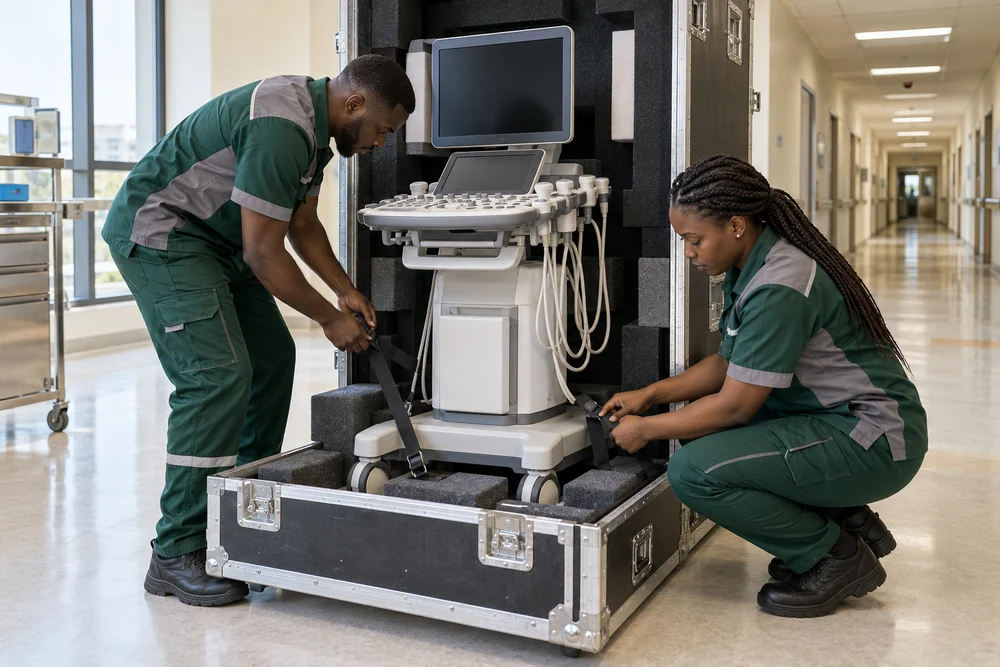
How do I arrange medical equipment relocation in Nigeria?
Send Franance an asset list, the current and destination locations, requested move tasks, site constraints and preferred dates. We will review the information and confirm which assessment or quotation scope can be considered.
Begin with the decision and the equipment, rather than only a moving date. List each device by manufacturer, model, serial number and facility asset number; describe its configuration, major accessories, current condition and whether it is in service, awaiting repair or already retired. Identify the room and facility it is leaving and the proposed destination. If the move is part of a department closure, new installation, building project or equipment replacement, explain that context. It may affect sequencing, temporary storage, commissioning and who is authorised to accept the unit.
Then describe what you want a supplier or service provider to do. A request may involve an initial review, move plan, de-installation, preparation for transport, transport coordination, installation at a new site, checks after the move or end-of-life coordination. These tasks can have different providers, dependencies and costs. Franance can review a defined enquiry and state the scope it can quote; this page does not promise that every task or equipment class is available. The written response should identify included work, exclusions, required information, responsible parties and assumptions before the facility authorises a move.
What is the difference between equipment relocation, de-installation and decommissioning?
Relocation changes an asset’s location; de-installation prepares it to leave a site; decommissioning removes it from service and leads to an approved reuse or end-of-life decision. Transport and re-installation are separate scopes that should be named in the quotation.
The phrase “move the equipment” can hide a long chain of work. Planning identifies the asset, route, destination and dependencies. De-installation is the technical preparation for removal and may require equipment-specific instructions or a qualified provider. Packing and transport concern handling and custody. Unpacking, installation and commissioning happen at the destination and can require site works, utilities, documentation and post-install checks. A facility may ask one provider to coordinate several parts, but the commercial scope should still list the deliverables and the party accountable for each one.
Decommissioning is a lifecycle decision, not a synonym for taking equipment out of a room. WHO describes it as a process for deciding why, when and how a device is removed from service and what should happen next; possible paths can include reuse or permanent elimination, subject to assessment and proper authority. A unit being relocated for continued use is not automatically retired, and a retired asset is not automatically ready to be donated or disposed of. Keep the move plan and the asset disposition decision distinct, with a signed release from the owner.
What information should a hospital record before moving medical equipment?
Record the asset identity, condition, configuration, accessories, ownership or release authority, service status, records and intended destination or disposition. Use a joint inventory to compare what leaves, travels and arrives.
An accurate equipment schedule helps prevent confusion between a main unit and its detachable parts. Record serial and asset numbers, software or configuration details where known, cables, probes, monitors, carts, tools, accessories and storage media. Note visible damage, missing components, faults, maintenance status and any open service issues. Take dated condition photographs only under facility policy and avoid patient-identifiable information. For a multi-room project, assign each asset a move reference and label the matching inventory so that the receiving contact can check the correct equipment and accessories.
Confirm who owns the asset, who can authorise removal and who accepts it at the destination. That authority may need to include the facility’s biomedical team, department lead, procurement or project representative, asset manager and any lender or donor named in the records. WHO lifecycle material treats inventory and management records as part of equipment oversight; a relocation plan should preserve the asset history rather than create an untracked gap. Ask which records will be updated and by whom, including location, status, responsible department, custody changes and any new maintenance or acceptance actions.
How should facilities prepare a site for medical equipment relocation?
Provide the equipment’s current requirements and the destination’s access, room, utility, environment and infrastructure information. The scope should identify any building work, cabling, electrical work, specialist vendor support or other prerequisites that are excluded or assigned to the facility.
Site readiness is specific to the model and planned configuration. Share available manufacturer installation and site-planning documents, room drawings, doorway and corridor dimensions, lift capacity, loading access, floor constraints, room environmental conditions and utility specifications. Identify power, grounding, cooling, ventilation, water, network or structural requirements where relevant to the device. State whether the destination is under construction, whether access routes are shared, and what work is already complete. Do not assume that a unit that fits in the current room can pass through the exit route or enter the new one.
Use manufacturer instructions and project drawings to confirm the required installation sequence and the responsibilities of the equipment provider, facility, construction contractor, electrician, IT team and any specialist mover. Manufacturer relocation terms provide a useful example of the separation between de-installation, transport, room preparation, reconnection and post-install checks; they are not automatically Franance’s terms or applicable to a particular Nigerian project. Ask Franance to identify the dependencies that can be confirmed for the specific model and site. If a readiness check is required, agree who performs it, what evidence is returned and whether a failed check changes the schedule or cost.
How can a facility plan equipment downtime during a move?
Set an agreed outage window with the department and asset owner, identify clinical dependencies and an approved continuity plan, then sequence the move around receiving, installation and any required checks. A move quotation does not itself provide substitute equipment or emergency coverage.
Before a device is removed from a patient-care or diagnostic workflow, the facility should decide when it can be taken out of service and who authorises the outage. Map the affected procedures, users, linked equipment, scheduled patients, laboratory backlog, consumables and service dependencies. Use the facility’s own clinical, operational and escalation processes to arrange alternatives or rescheduling. Do not plan an assumed transfer of an active clinical service simply because the equipment can be physically moved. Complex systems may require a staged shutdown, a separate period for room readiness and a return-to-service decision after work is complete.
Agree a realistic sequence with the facility and every named provider. Include access windows, internal approvals, receiving contact, contingency for a delayed site or missing component, and who communicates status to affected departments. If the equipment supports a critical service, define the decision authority for postponing or stopping the move if the destination is not ready or the observed condition changes. Franance will confirm only the scheduling assumptions in the written proposal; no response time, uninterrupted service, temporary replacement or completion date is promised unless it is specifically agreed.
Who is responsible for packing, transport, insurance and equipment data?
Name the party responsible for each handover, packing standard, transport leg, loading, unloading, insurance or risk of loss, data handling and discrepancy reporting. Confirm these terms for the actual route and device before release.
Create a custody record with the date, asset identity, condition, accessory count, releasing person, receiving person and any carrier or subcontractor involved. State who prepares the device for movement, supplies packaging, secures loose accessories, arranges loading, controls access during transit, unloads and signs for arrival. Agree what happens if the seal, packaging or equipment is damaged, if an item is missing, or if access is refused. Identify who is responsible for insurance, risk of loss and claims, and the deadline and evidence needed to report an incident. Do not assume that responsibility follows the equipment automatically from one contractor to another.
Medical equipment may store configurations, logs, account credentials or patient information. The facility’s data and information-security owners should determine what must be backed up, removed, retained or protected before the device leaves its room. Any data preparation must be performed or authorised by the responsible facility personnel using approved procedures; this guide gives no device-specific data-deletion instructions. Also identify any facility-required cleaning or decontamination status and who verifies it before handling. The move scope should state which party performs each agreed check without implying a generic decontamination or data-wiping service.
What checks are needed after relocating hospital equipment?
Agree model-specific installation and acceptance requirements before the move. Depending on the equipment and work performed, the facility may need installation checks, functional or performance verification, calibration or electrical safety testing, updated records and a separate authorisation to return the device to service.
There is no single post-move test that covers every equipment type or configuration. The plan should identify the manufacturer’s installation instructions, system components and accessories, required utilities, software or network configuration, and the criteria the facility expects before use. For a simple portable device, the agreed check may be different from the specialist sequence needed for fixed imaging equipment. State what the quotation includes and whether calibration, electrical safety assessment, application configuration or performance testing must be procured separately. The scope should also say which party records results and handles any failed or inconclusive check.
The receiving facility should compare the arriving asset with the inventory, record condition and configuration, confirm documentation and open actions, and have its authorised technical and clinical leads decide when the equipment may return to service. Capture installation date, site, identity, work performed, test scope and results, limitations, responsible parties and training needs. A successful check applies only to what was checked; it is not a guarantee of future operation, full regulatory compliance or clinical suitability. Franance can include named post-move tasks when the model, method and delivery arrangement are confirmed in the written quotation.
How should a facility decommission or dispose of medical equipment in Nigeria?
Document why the device is leaving service, its condition, ownership, data and contamination considerations, and the authorised disposition decision. Confirm applicable requirements with the responsible facility and competent local parties; arrange donation, resale, recycling or disposal only through an approved route.
Start with a formal decision about whether the asset is to be reassigned, repaired, refurbished, sold, donated, recycled or disposed of. Consider its technical condition, supportability, intended future use, spare parts, accessories, documentation and any restrictions in a grant, lease, tender or donor agreement. A transfer should include clear ownership and condition records; a device that cannot meet the recipient’s requirements should not be passed on simply because it has been removed from the original facility. WHO’s decommissioning guidance stresses assessing the reason and timing for removal and selecting a suitable end status rather than treating disposal as an afterthought.
Before final disposition, the facility should resolve data, cleaning or decontamination, safety, environmental and asset-register requirements with the staff responsible for those matters. The exact obligations depend on the equipment, materials, transaction and applicable authorities. Franance can review a request for a defined logistics or coordination scope and identify what information is needed; any regulated handling or final treatment must be assigned to the competent party and confirmed in writing. Retain release approval, chain-of-custody and final disposition evidence in the facility record.
Brand-specific equipment support in Nigeria: ATMOS ENT treatment units – seca medical weighing systems
Choose the manufacturer to review its equipment-specific enquiry requirements and available documentation before requesting a written service scope.
The brand pages explain which model, configuration and fault details to include. A listing does not establish that every service, part or manufacturer programme is available for a particular unit; the written response defines the proposed scope.
Common questions about equipment relocation and end-of-life in Nigeria
Does equipment relocation include de-installation and re-installation?
Not automatically. Ask the quotation to list each task, the responsible provider, the required site work, checks and exclusions.
Can Franance move equipment to every state in Nigeria?
Coverage depends on the specific asset, route, site and required specialist support. Share both locations so Franance can confirm whether the requested scope can be considered.
Can an old device be donated after decommissioning?
Possibly, but condition, safety, support, recipient needs, ownership and applicable requirements should be assessed first. Decommissioning does not itself approve a donation.
Does relocation include calibration or post-move testing?
Only when the specific test, method, acceptance criteria and reporting responsibility are included in writing. Installation, functional checks and verification are distinct scopes.
What should we send for an equipment relocation quotation?
Send the asset list, manufacturer and model, current and destination sites, requested tasks, site drawings or requirements, condition, dates and responsible facility contacts.
Tell us what your facility needs.
Send the equipment details, your requirement and the facility location. We’ll discuss the information needed to review the scope and prepare the next step.
Contact Franance