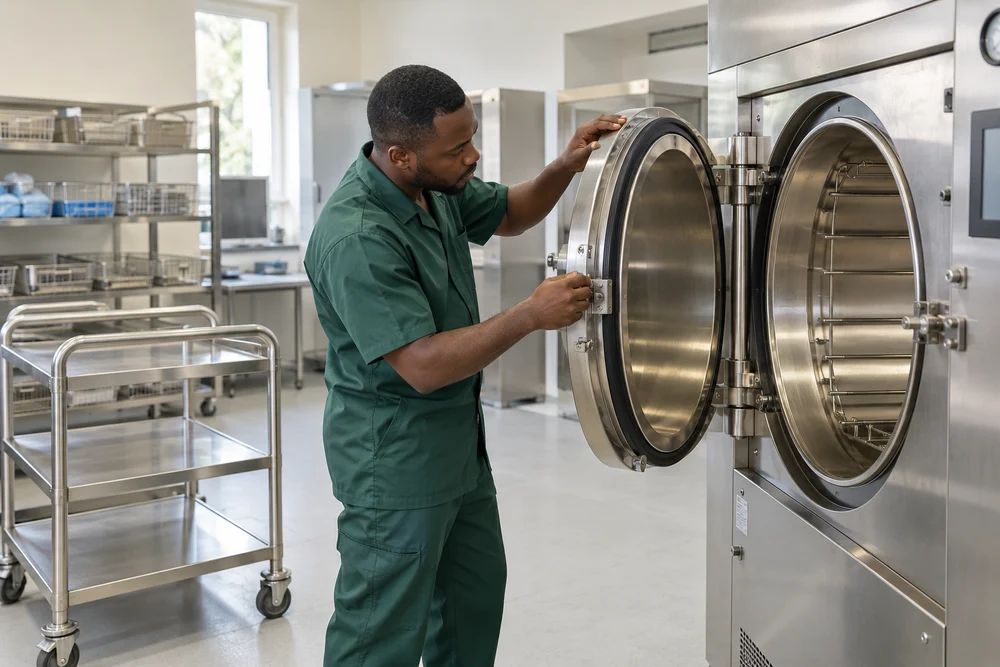
A practical guide to CSSD and sterilization equipment support in Nigeria
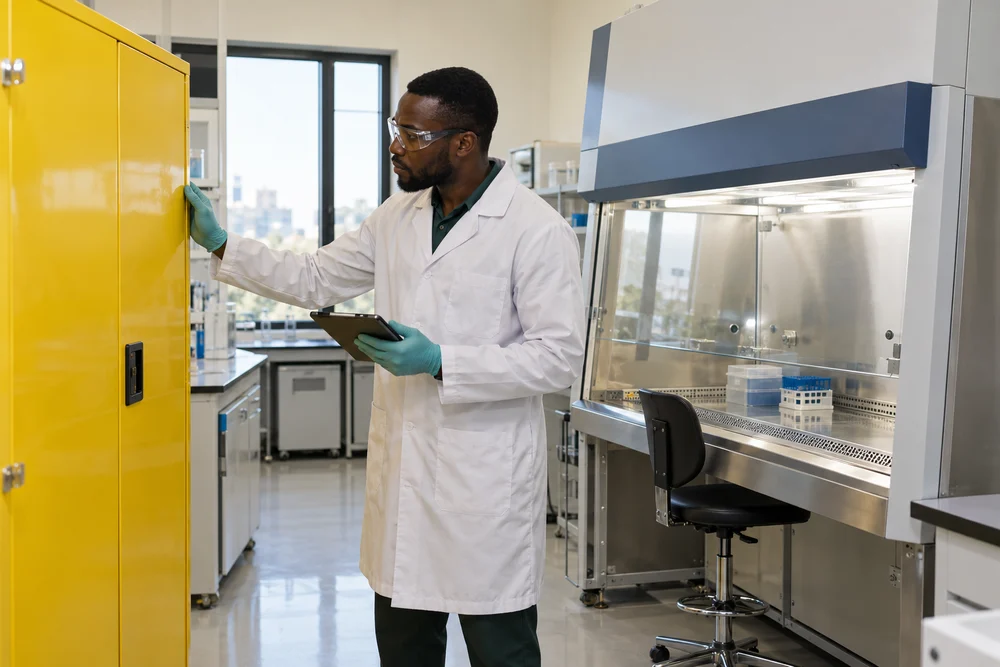
What CSSD and sterilization equipment support can Franance assess in Nigeria?
Franance can review enquiries involving central sterile services department (CSSD) equipment such as steam sterilizers, washer-disinfectors and related devices, and discuss a specific procurement, installation, repair, maintenance or testing requirement. The exact work, site, responsible parties and deliverables must be agreed for each request.
A CSSD depends on a connected set of rooms, equipment, staff responsibilities and records. Equipment engineering support can help a facility assess the condition or requirements of a named asset, plan a repair or maintenance visit, discuss installation constraints, or define a technical check. It does not replace the facility’s infection-prevention programme, device reprocessing policy, manufacturer instructions or decision about whether a processed load may be released for use.
Use your enquiry to identify whether the requirement concerns autoclave maintenance, washer-disinfector commissioning, endoscope reprocessing equipment, reusable-equipment decontamination or a defined validation-support task. Send the equipment identity and the intended outcome. Franance can review the request, clarify the engineering work and identify the facility personnel or specialist parties who need to participate.
What should a hospital assess before buying or servicing a steam sterilizer in Nigeria?
Start with the exact sterilizer model, intended department, workload, load types, chamber capacity, utilities, installation environment and the facility’s documented process requirements. Ask for the current manufacturer documentation and an equipment-specific assessment; a chamber size or cycle label alone cannot establish suitability.
Facilities may compare tabletop, vertical and horizontal steam sterilizers, including single-door or pass-through arrangements. The procurement brief should record approximate daily workload and peak demand, the types and dimensions of loads, loading and unloading space, staff movement, and how clean and contaminated flows are separated. The facility’s infection-prevention and sterile-services leads should define what the equipment must process; engineering review then checks whether the named configuration and proposed installation can support the documented requirement.
Record the required electrical supply, water quality, drainage, ventilation, chemical storage and safe access for loading and service. Confirm who supplies detergents, racks, adaptors and monitoring equipment. Check each requirement against current manufacturer documents.
Distinguish installation and functional checks from process validation. A cycle name does not prove performance for the facility’s actual load or intended use. The facility’s process owner should agree any validation or test protocol with the responsible competent parties.
What matters when assessing a CSSD washer-disinfector?
Check device and load compatibility, chamber and rack configuration, water and drainage requirements, detergent arrangements, documented cycle controls and service access for the exact model. A washer-disinfector performs a cleaning and disinfection function; it is not a sterilizer and should not be selected as a substitute for one.
The facility should list the reusable devices, trays, containers and accessories it expects to process, together with the applicable manufacturer instructions for those items. Confirm that the washer’s load carriers, connectors, spray arrangements and documented programme options match those requirements. A product photograph or general capacity statement cannot establish compatibility with a specific instrument or load. When comparing machines, ask for the relevant instructions for use, technical data, utilities schedule and the scope of any site commissioning checks.
Record water supply and quality information, drainage, electrical requirements, ventilation, chemical storage and dosing, and safe access for loading and service. Confirm who supplies detergents, racks, adaptors and monitoring equipment. Check each requirement against current manufacturer documents rather than a generic category description.
ISO 15883-1 describes general requirements for washer-disinfectors and their accessories, including performance, validation and routine control. The published standard’s scope is distinct from sterilizer standards and is a technical reference, not a certification claim about a device or service. The facility and its designated competent personnel should establish which requirements and acceptance criteria apply to their intended process and jurisdiction.
How should CSSD workflow and site requirements shape equipment selection?
Map the whole movement of reusable devices through receipt, cleaning, inspection, packaging, processing, storage and dispatch before choosing equipment or placing it in a room. Confirm the facility layout, utilities and staff workflow with the responsible CSSD and engineering teams.
WHO guidance describes reprocessing as a sequence of linked stages, with quality controls throughout and a preferred unidirectional flow from contaminated to clean areas. This provides a useful planning framework, but local regulations, facility procedures and manufacturer instructions determine the applicable requirements for a particular site. The equipment enquiry should state where dirty items arrive, how they are transferred, where cleaning and inspection occur, how packaged goods move to processing, and where sterile or otherwise processed items are stored and issued.
Map workload, trolley and rack movement, door widths, pass-through arrangements, adjacent services and storage. Confirm whether construction, utilities or network work is expected from the facility or a contractor. Include any required site survey or drawing review in the quotation; this page does not certify layouts, building-code compliance or infection-control zoning.
Identify who can approve access and coordinate departments during installation or maintenance. Explain whether the equipment can be taken out of service, what temporary workflow the facility has approved, and how deliveries and waste will be handled. These are planning inputs, not clinical instructions. The facility remains responsible for continuity of care, staff assignments and authorization of its reprocessing workflow.
What records and site checks should be agreed for installation or commissioning?
Agree the installed asset identity, site readiness checks, work included, commissioning evidence, open issues and handover records before the work begins. Specify which party provides each document and who accepts the installation on behalf of the facility.
For a new installation, retain the purchase specification, exact manufacturer and model, serial number, accessories, software or control version where shown, delivery record and current installation instructions. Confirm that the intended room and utilities meet the manufacturer’s documented conditions before the equipment arrives. If changes to the room or services are needed, list them as separate responsibilities with an owner and completion date instead of assuming that they are included in an equipment quotation.
Define the commissioning activity in plain terms. It may include equipment identity and condition checks, review of installation against the agreed scope, basic operational checks and a record of unresolved items, depending on the model and contract. Do not use ‘commissioned’ as an undefined promise covering process validation, full qualification or approval to process clinical loads. Those activities require a specific protocol, configuration, test evidence and identified responsible parties.
Specify the handover pack: installation report, manuals received, utility information, tests performed, included training record and outstanding actions. The facility retains these records and decides what further evidence it needs before operational approval.
Who is responsible for sterilizer validation, requalification and routine monitoring?
The facility must identify the responsible process owner and agree the applicable protocol, load configuration, acceptance criteria, records and approvals with the qualified parties undertaking the work. Equipment service or functional testing is not automatically process validation or authorization to release a load.
ISO 17665 sets out requirements for developing, validating and routinely controlling moist-heat sterilization processes. It is a framework for the process, not a certificate that a particular sterilizer, load or service is compliant. Whether and how it applies depends on the facility’s process, current standards and regulatory obligations. For a washer-disinfector, ISO 15883-1 provides a separate general requirements framework. The facility should consult its responsible quality, sterile-services and infection-prevention personnel when defining a suitable protocol.
Before requesting validation or requalification support, write down the exact equipment and configuration, software or control version, load families, packaging and accessories, specified utilities, test instruments, acceptance criteria and required report. Establish who prepares and approves the protocol, who performs each measurement, who interprets results, how deviations are managed and who makes the final process decision. When essential repairs, changes to a load, relocation or significant equipment changes occur, ask the responsible process owner to determine whether further assessment is required under the applicable framework.
Franance can review an enquiry for equipment testing, repair-related checks, commissioning support or a specifically defined validation-support requirement. The proposal must confirm the work, available competence, instruments, scope, limitations and responsible signatories for that particular request. A technical check of an equipment function should be described as that check, not represented as process validation if it does not cover the agreed process protocol and approvals.
What maintenance records should a CSSD keep for sterilizers and washers?
Keep an asset-level record of the model and serial number, service history, maintenance and repair work, tests actually performed, findings, parts and software changes, unresolved issues and approvals. Follow the current equipment instructions and the facility’s own document-control rules.
A useful asset file helps the facility connect daily operational concerns with planned maintenance and technical service. Record reported faults and dates, the equipment status decided by the facility, work authorizations, inspection and repair findings, parts fitted, measurements taken, test equipment identification where relevant, and the outcome of post-work checks. Keep a separate record for each asset even when several units share a model. Track open actions and follow-up dates so a handover does not imply that unfinished work has been resolved.
For process traceability, the facility’s sterile-services and quality systems determine what cycle, load, monitoring, release and distribution records must be retained. Equipment service records can support this system but do not replace its process records or release controls. Agree how service work will be identified against the asset and whether the facility needs a report in a particular format. Avoid including patient identifiers in service requests or documents unless a separate, approved need exists.
Base maintenance tasks and intervals on the applicable manufacturer documents and written service plan. A maintenance visit does not validate every cycle or load. If periodic testing is included, specify the test, reference condition and report. Franance can review a maintenance or repair enquiry and propose a scope for approval.
What information should you send for a CSSD equipment quotation in Nigeria?
Send the manufacturer, exact model, serial or asset number, location, equipment condition, requested work, load or throughput context, available site information and the responsible facility contact. Franance can then review whether an assessment is needed and prepare a written scope for the request.
For procurement, include the equipment type and function, intended workload, chamber or rack requirements, facility drawings or room measurements where available, utility information and the required delivery or installation location. Tell us whether you need equipment supply only, installation, commissioning support, training, maintenance or a defined testing activity. If the facility has a technical specification, attach it and identify any requirements that are mandatory versus preferred. This helps avoid an unclear quote that assumes accessories, site works or validation activities the buyer did not request.
For an existing asset, attach the rating plate, serial number, error messages, recent service reports and a concise statement of the issue. State whether the equipment is available for inspection, whether the department has restricted access hours, and who can authorize downtime. Do not send patient data. If the request involves process or load testing, say which protocol, load family, acceptance criteria and responsible approvers the facility expects to use, or ask for a preliminary discussion to define what information is missing.
Franance will review the requirement and clarify the next step, terms, exclusions, schedule and deliverables before work is authorized. Any dependence on specialist competence, manufacturer access, instruments, parts or another party must be confirmed. Use the enquiry form to discuss your CSSD equipment requirement in Nigeria.
Common questions about cssd and sterilization equipment support in Nigeria
Does equipment commissioning mean the sterilization process is validated?
No. Commissioning and process validation are distinct scopes. Agree the process protocol, configuration, evidence, competent parties and approvals separately with the facility’s responsible process owner.
Can Franance assess an existing autoclave or washer-disinfector?
Send the exact make, model, serial number, site and work requested. Franance can review the enquiry and confirm whether an assessment and written service scope can be offered for that equipment.
What information is needed for a CSSD equipment quotation?
Include equipment identity, location, requested work, operating context, site or utility information and relevant service records. For procurement, describe the intended workload and required configuration.
Does a washer-disinfector sterilize instruments?
A washer-disinfector supports cleaning and disinfection; it is not a sterilizer. The facility should follow device instructions and its approved reprocessing workflow.
Does Franance certify infection-control compliance for a CSSD?
This page offers an equipment-support enquiry route, not a blanket compliance certificate. Any specific assessment, testing or support scope and its responsible parties must be confirmed in writing.
Tell us what your facility needs.
Send the equipment details, your requirement and the facility location. We’ll discuss the information needed to review the scope and prepare the next step.
Contact Franance