Hazardous material handling in Nigeria: laboratory equipment and project planning
What does hazardous material handling support in Nigeria cover?
A laboratory project can cover the equipment, storage, containment and facility interfaces needed to support safer work with identified hazardous materials. Contact Franance with the requirement so the assessment, equipment package and specialist responsibilities can be scoped before a proposal is prepared.
Describe the activities that prompted the enquiry: a new laboratory, changed workload, equipment replacement, a storage problem or a documented assessment finding. Distinguish routine project planning from an immediate incident. A general equipment enquiry is not an emergency response service; the facility should use its established incident arrangements when urgent action is required.
Define the boundary of the requested work. Equipment supply, ventilation design, occupational assessment, staff training and waste services involve different responsibilities. Listing them separately helps the project team identify what Franance is being asked to coordinate and which services require another qualified provider. This also makes omissions and assumptions visible before procurement begins.
What information should inform the laboratory risk assessment?
The assessment should consider the actual material hazards, quantities, activities, exposure routes and existing controls. The facility’s responsible safety and technical specialists should determine the required controls; equipment should then be specified against that assessment rather than chosen from a generic safety label.
Organise an inventory and the relevant supplier safety information for review through the appropriate project channel. Include how materials are received, stored, used and transferred between areas. General categories are enough for an initial enquiry, but the detailed design requires reliable information about the actual substances or agents and the work undertaken.
Record existing controls and the reasons they may be insufficient. A changed process, higher workload or different material can alter the suitability of an established arrangement. WHO’s laboratory biosafety approach and the NIOSH hierarchy of controls provide useful planning references; neither replaces the project-specific assessment or the local obligations that the responsible facility must establish.
How should laboratory containment equipment be selected?
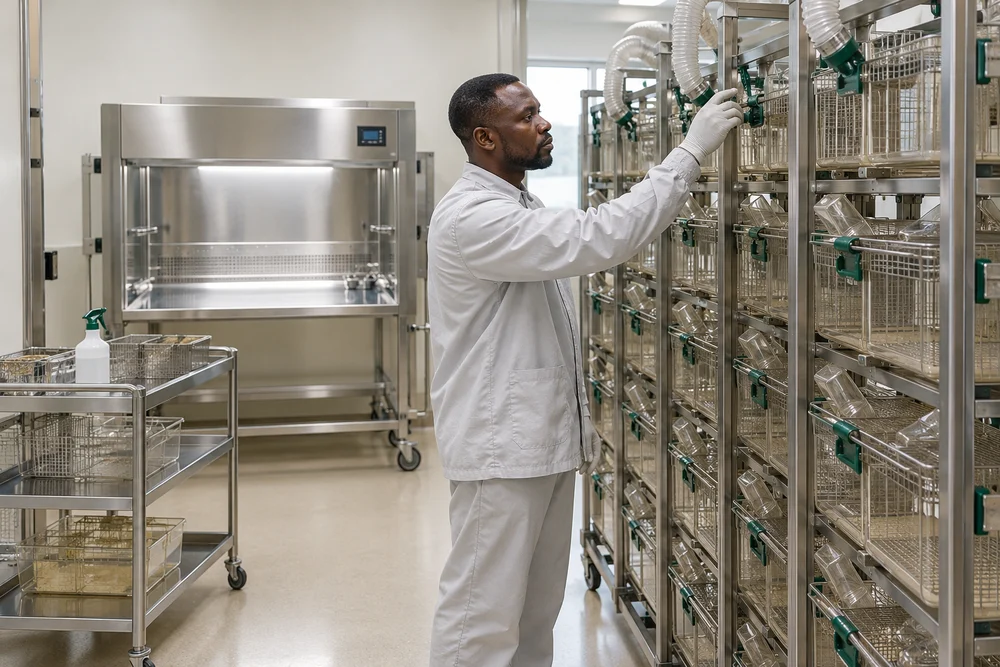
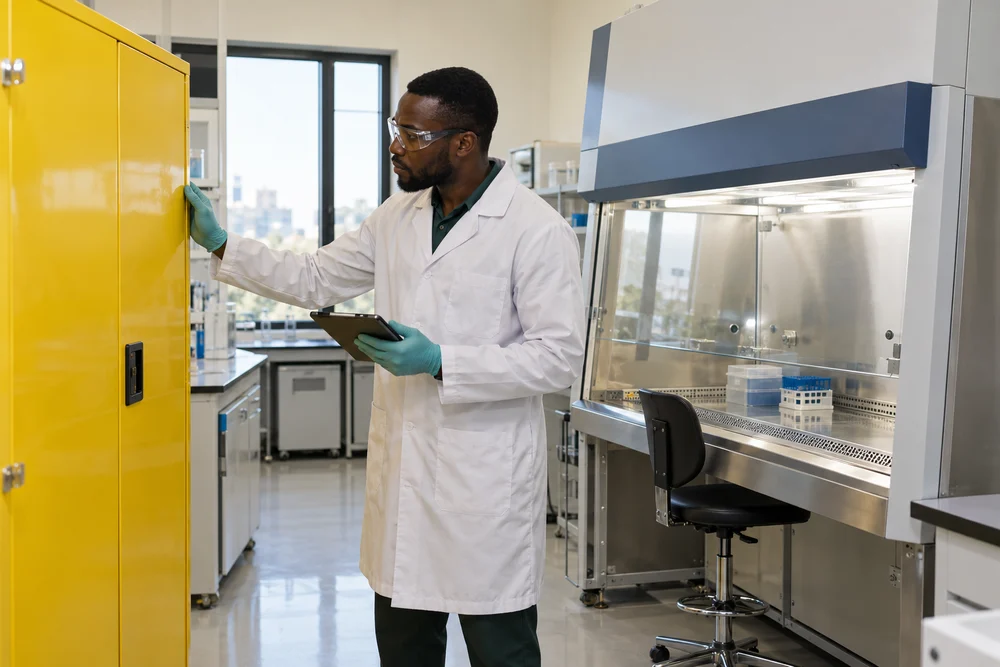
Select containment equipment for the identified hazard and activity. Chemical fume cupboards, biological safety cabinets and clean-air workstations have different protective purposes; their names and similar appearances do not make them interchangeable. Franance can help organise the equipment comparison around the documented requirement.
Ask the technical reviewer to define what must be protected: the user, the product, the surrounding environment or a combination of these. Record the relevant performance requirements, installation conditions and checks for the proposed equipment. An enclosure marketed for cleanliness should not be assumed to provide containment for a hazardous activity.
Review the complete configuration, including working space, connections, exhaust or filtration arrangements where applicable, alarms and service access. Compare the manufacturer’s intended use with the planned activity and document any unresolved questions. Include commissioning and periodic checks in the quotation discussion so the equipment’s suitability is not judged solely by successful delivery or a fan starting.
What should a hazardous material storage project consider?
Storage planning should follow the materials’ hazards, compatibility requirements, quantities and the facility’s risk assessment. Define the required cabinets, storage locations, access arrangements and supporting equipment with the responsible specialist rather than treating one cupboard as suitable for every material.
Identify how deliveries arrive, who checks them and where materials move before use. Distinguish working quantities from longer-term stores and clarify how containers, labels and inventory records will be managed. These operational responsibilities influence the equipment brief, but they should not be replaced by an equipment supplier’s generic layout.
Ask for the proposed storage equipment’s documented intended use, capacity and installation requirements. Consider access for inspection, cleaning and maintenance as well as the space occupied by the cabinet itself. Where changes to a room or building are needed, identify the design and approval responsibilities explicitly and include the interfaces in the project programme.
Which facility interfaces matter for laboratory handling equipment in Nigeria?
Review the proposed equipment against the real room, ventilation, power, utilities, access and maintenance arrangements. Qualified facility designers and the equipment supplier should resolve the interfaces before installation so the supplied system can meet its intended performance in its final location.
Provide room drawings where available and identify existing equipment that may affect the proposed installation. Record who will verify the manufacturer’s site requirements and who will perform any enabling work. Do not assume a free wall socket or an existing ventilation connection establishes that the room is suitable for the selected equipment.
For Nigerian sites, make practical access and service continuity part of the brief. Confirm delivery routes, equipment movement, work scheduling and any restrictions on interrupting laboratory operations. State what must be ready before installation and how readiness will be accepted. Franance can help turn these dependencies into a clearer equipment and project schedule.
Does the project include hazardous material transport or disposal?
Transport and disposal must be expressly scoped with appropriately qualified providers and the applicable requirements confirmed. Do not assume that a quotation for laboratory equipment includes collecting, transporting, treating or disposing of hazardous materials. Ask Franance to identify these boundaries in the project discussion.
Identify the parties responsible for materials before, during and after the installation work. Equipment servicing or replacement may require the facility to prepare an item for safe access and provide relevant information to the service team. Any required decontamination or specialist clearance should be agreed before engineers or delivery personnel attend.
If transport or waste services are required, request a separate, reviewable scope that identifies the provider, responsibilities, documentation and handover arrangements. The initial enquiry should describe the need without assuming a particular licence or capability. Keep equipment procurement decisions connected to the facility’s approved material and waste-management arrangements throughout the project.
What should commissioning and handover include?
Agree the installation checks, performance evidence, documentation, user familiarisation and maintenance requirements before accepting the project. The required checks depend on the equipment and its intended use; a delivery note alone does not establish that a containment or storage installation is ready for the planned work.
Request the relevant manuals, equipment identification, configuration details and completed check records. Clarify the acceptance criteria, who witnesses the checks and how outstanding issues are recorded and closed. Where an independent specialist assessment is needed, identify that requirement in advance rather than discovering it after the installation team has left.
Plan how users will understand equipment limitations, alarms, routine checks and the route for reporting faults. Facility procedures and emergency arrangements remain the responsibility of the appropriate local team. Include maintenance access, replacement items and service intervals in the handover discussion, with the manufacturer’s instructions and assessment findings informing the ongoing plan.
How do I request hazardous material handling support from Franance?
Send Franance a short description of the laboratory, its location, the general hazard categories and the equipment or facility problem to resolve. We can help organise the next discussion, identify missing project information and prepare a scope for the requested equipment and supporting work.
State whether the requirement is a new installation, replacement, upgrade, inspection-related action or a broader laboratory project. Identify the responsible technical contact and any assessment or user requirement already available. Start with non-sensitive information; detailed inventories, incident records or confidential research information should use a separately agreed channel when needed.
Ask the proposal to separate equipment, enabling works, installation, checks, training and recurring maintenance. Confirm exclusions, assumptions and responsibilities alongside the price and programme. A clear scope lets your team compare quotations on the same basis and decide which actions belong to the supplier, facility management and external safety or regulatory specialists.
Common questions about hazardous material handling in Nigeria
Can Franance supply every type of hazardous material handling service in Nigeria?
The available scope must be agreed for the particular project. Contact Franance about laboratory equipment and supporting requirements; specialist assessment, transport, treatment or disposal responsibilities should be identified separately and confirmed with the appropriate providers.
Is a biological safety cabinet the same as a chemical fume cupboard?
No. These equipment types have different intended protective functions and installation requirements. The responsible technical reviewer should specify the appropriate equipment for the actual hazard and activity before procurement.
Can you help upgrade an existing laboratory?
Discuss the current equipment, documented concerns and proposed changes with Franance. An upgrade brief should consider existing facility interfaces, the assessment findings and how installation work will affect ongoing laboratory operations.
What determines the project price in Nigeria?
The equipment configuration, site conditions, enabling work, installation, required checks, training and maintenance scope affect the quotation. Share the requirement with Franance so these items can be identified rather than relying on a generic cabinet price.
Should I send a detailed hazardous inventory in the first enquiry?
Start with the facility type, location, general hazard categories and project requirement. Detailed or sensitive information can be shared through an agreed channel once the appropriate technical review and information needs are clear.
Build a clearer laboratory safety brief.
Talk to Franance about your containment, storage or laboratory equipment project. We will help organise the scope, specialist questions and equipment information needed for a practical proposal.
Contact Franance