
Teleradiology in Nigeria: remote reporting, secure workflow and service planning
What are teleradiology services in Nigeria?
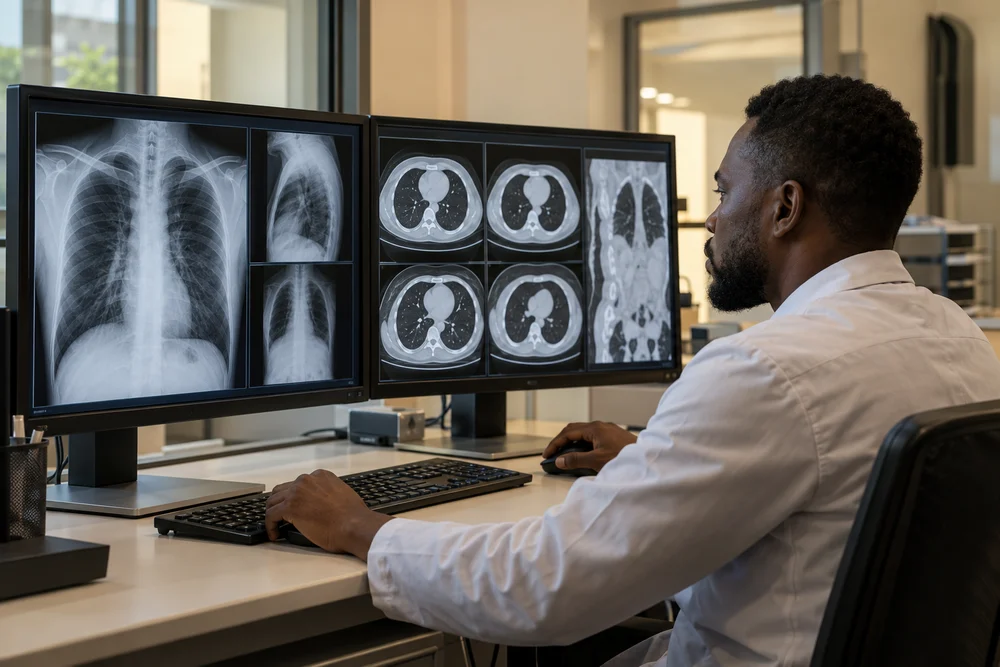
Teleradiology is a reporting arrangement in which imaging examinations are interpreted away from the acquisition site through an agreed information and clinical workflow. Discuss the requirement with Franance as both a reporting-service brief and a technical integration project.
The useful starting point is the problem your facility needs to solve: a reporting gap, a defined backlog, access to an agreed scope of expertise or coordination between sites. Describe how examinations are acquired and reported today. A remote connection can move images, but it does not by itself create a clinically governed reporting service or identify who is responsible for each report.
Define the intended service before selecting a transfer tool. Identify modalities, study mix, proposed hours, report destinations and the facility’s clinical lead. That brief allows reporting arrangements, system access and commercial responsibilities to be reviewed together. The general website enquiry is not a route for submitting examinations or obtaining urgent clinical interpretation.
Which remote reporting model does my facility need?
Specify whether you need defined routine reporting, temporary coverage, backlog work or another clearly bounded arrangement. The proposed reporting expertise, workload, hours and clinical escalation should be matched to that requirement rather than assumed to be unlimited.
Separate current workload from the additional work you expect the service to handle. Provide a realistic modality and examination breakdown, with any exclusions or specialist cases identified. State whether prior studies and relevant clinical information are available. This helps the responsible reporting team decide what can be accepted and what needs a different route.
Agree how the model changes when demand changes. A short backlog project has a different end point from an ongoing reporting agreement, and temporary cover needs a defined handover. Ask how additional volumes, changed hours or new examination types would be reviewed. Coverage and turnaround should be written for the actual service, not borrowed from a generic marketing promise.
How should clinical responsibility be defined for teleradiology?
Identify the appropriately authorised reporting professionals, the facility’s clinical lead and the responsibility for each stage of the service. Confirm credential review, reporting scope, communication and quality oversight before remote reporting begins.
The facility should know who reports the examinations and how the author is identified on the authorised report. Review relevant professional status and competence for the agreed study mix through the appropriate channels. In Nigeria, MDCN provides a route to confirm a doctor’s status. Any cross-border element should be reviewed by the responsible clinical and organisational teams rather than assumed acceptable because a connection works.
Clarify the boundary between reporting, image acquisition, clinical management and technical support. The reporting arrangement should identify how questions reach the referrer, how studies outside scope are handled and who authorises amendments. Franance’s initial coordination discussion can help expose these interfaces, but it should not replace the clinical decisions and approvals required for the proposed service.
What should a PACS or RIS integration brief contain?
List the participating systems, organisations, study and report flows, identity fields and technical owners. Specify how examinations reach the reporting environment and how authorised reports return to the correct facility record, with exceptions and reconciliation included.
Name the PACS, RIS, acquisition systems and reporting tools actually involved, including versions or interface information where available. Identify who can provide their current documentation and approve configuration changes. Support for a standard or a file format does not establish that two systems share every required function; the intended workflow needs to be checked against the actual implementations.
Describe the full journey of a case rather than only the image upload. Include request information, prior-study access where required, reporting status, report return and later corrections. Define who resolves duplicate identities, incomplete transfers or a report that arrives at the wrong destination. A separate integration scope may be needed where the existing systems cannot support the proposed workflow without modification.
How should connectivity and patient-data access be planned?
Plan connectivity, individual access, approved transfer channels and data responsibilities around the actual participating sites. The responsible IT, clinical and privacy teams should agree the operating arrangements before patient information is introduced into the workflow.
Assess the type and volume of studies, the available connection and the operational consequences of interruption. Avoid promising a particular reporting performance from a headline internet speed alone. Identify technical support contacts, monitoring expectations and an agreed fallback so the facility understands what happens when a transfer or reporting system is unavailable.
Document who may access patient information, why access is needed, where information is handled and how access ends. Agree retention, incident handling and any onward transfer with the appropriate organisational reviewers, taking account of the applicable Nigerian data-protection requirements. Use the first Franance enquiry for service-level information; it should not contain named patients, scans or copied clinical records.
How do teleradiology reports reach the right clinical team?
Specify the authorised report destination, status handling and communication process, including urgent findings and amendments. Agree the responsible clinical contacts and acknowledgement or follow-up arrangements instead of assuming a successful transfer proves that a report has been acted on.
The workflow should show how a report is matched to the correct examination and how preliminary and final versions are distinguished. Identify how a later correction is communicated and which record is authoritative. These details matter when multiple systems or organisations participate because a report can be technically delivered while still being unclear to the receiving team.
Ask the responsible clinicians to define escalation for time-sensitive or unexpected findings, including what happens when the usual contact is unavailable. Record the communication and its ownership within the agreed service. A remote-reporting contract should support the facility’s clinical pathways; it should not leave an unattended general email address as the only plan for important findings.
How should a new teleradiology workflow be tested?
Agree a controlled test and acceptance plan covering study routing, identity matching, reporting, return of reports, corrections and interruption scenarios. The facility’s clinical and technical owners should review the relevant results before routine reporting starts.
Use an agreed test process and appropriate test information rather than sending real patient records through an unapproved demonstration. Check both normal and exception paths: incomplete information, a failed transfer, a duplicate identifier, a report amendment and an unavailable receiving system. Define how findings are recorded, corrected and retested.
Set a review rhythm for the operating service as well as the initial connection. Consider workload, communication, report-quality feedback and recurrent exceptions within the roles agreed by the participating teams. A technically successful launch does not remove the need for continuing clinical oversight, account management, change control and an understood support route.
How do I request a teleradiology proposal from Franance?
Send a brief describing your facility, modalities, approximate volumes, required hours, current systems and clinical and IT contacts. Explain the reporting or workflow gap and any existing provider arrangement that the proposed service must work alongside.
If the project includes several sites, identify where images are acquired, where reports need to return and who manages each location. State which systems and relationships are already confirmed and which remain open. This allows the next discussion to distinguish clinical reporting, interface work, connectivity, user access and ongoing support rather than quoting an undefined all-in-one solution.
The written proposal should identify the agreed scope, responsible parties, reporting coverage, credential review, access arrangements, testing, quality review and commercial assumptions. Franance follows up to clarify those requirements. No patient study needs to be submitted with the initial enquiry, and no reporting availability or turnaround commitment is created by completing the website form.
Common questions about teleradiology services in Nigeria
Is teleradiology the same as transferring DICOM images?
No. Image transfer is one technical part of the workflow. A teleradiology service also needs appropriately authorised reporting professionals, clinical responsibility, report return, quality review and communication arrangements. Franance can help organise the service and integration brief so those requirements are considered together.
Can I discuss teleradiology for CT, MRI or X-ray?
Yes. Identify the modality, examination mix, approximate volumes and required coverage when contacting Franance. The proposed reporting professionals, competence, availability and exclusions must be confirmed for the actual service. Do not assume every examination type or urgency is included automatically.
Does this page offer a twenty-four-hour reporting guarantee?
No universal coverage or turnaround is stated here. Tell Franance the reporting hours and service level your facility needs. Any commitment should be defined in a specific agreement with the responsible reporting provider, alongside the clinical escalation and technical support arrangements.
Can I upload a scan for an urgent report?
The website enquiry is for planning a service and does not accept patient studies or provide an urgent clinical reporting pathway. Use your facility’s established clinical arrangements for a current patient. Initial enquiries should contain only service-level information, with authorised study transfer agreed separately.
What should I send with a teleradiology enquiry?
Send the facility location, modalities, approximate workload, proposed reporting hours, current PACS/RIS environment and responsible clinical and IT contacts. Describe the main workflow problem and any existing reporting arrangements. Franance will follow up to clarify the scope and the next discussion.
Plan the reporting service and its connections together.
Tell Franance where your imaging and reporting workflow needs support. We will help organise the clinical, technical and commercial questions into a defined teleradiology enquiry.
Contact Franance