A practical guide to theatre electrical safety testing enquiries in Nigeria
How can a hospital request electrical safety testing in Nigeria?
Send Franance the asset identity, equipment class, location, service history and applicable facility procedure. Franance can review whether an assessment scope can be defined, including method, instruments, personnel, logistics and report; an enquiry is not confirmation of testing capability or a booking.
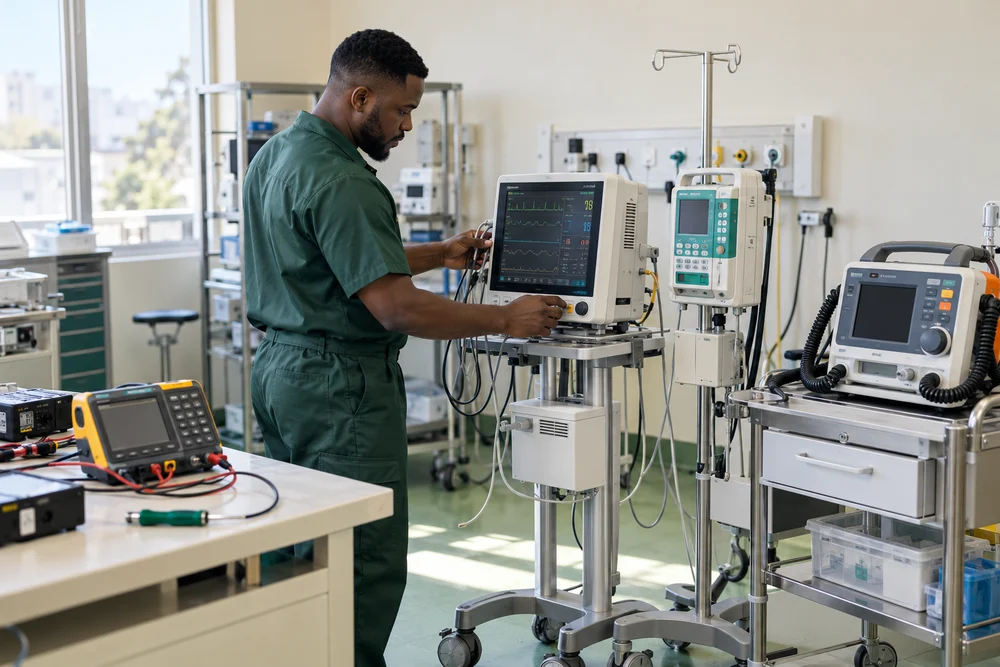
A useful request lists each asset separately: anaesthesia workstation, operating table or light, electrosurgical unit, or defibrillator. Include manufacturer, exact model, serial or asset number, department, power arrangement, accessories and any recent repair or fault. A mixed theatre fleet may contain equipment with different electrical classifications, applied parts, operating conditions and manufacturer instructions. One generic check cannot be assumed to cover every model or accessory.
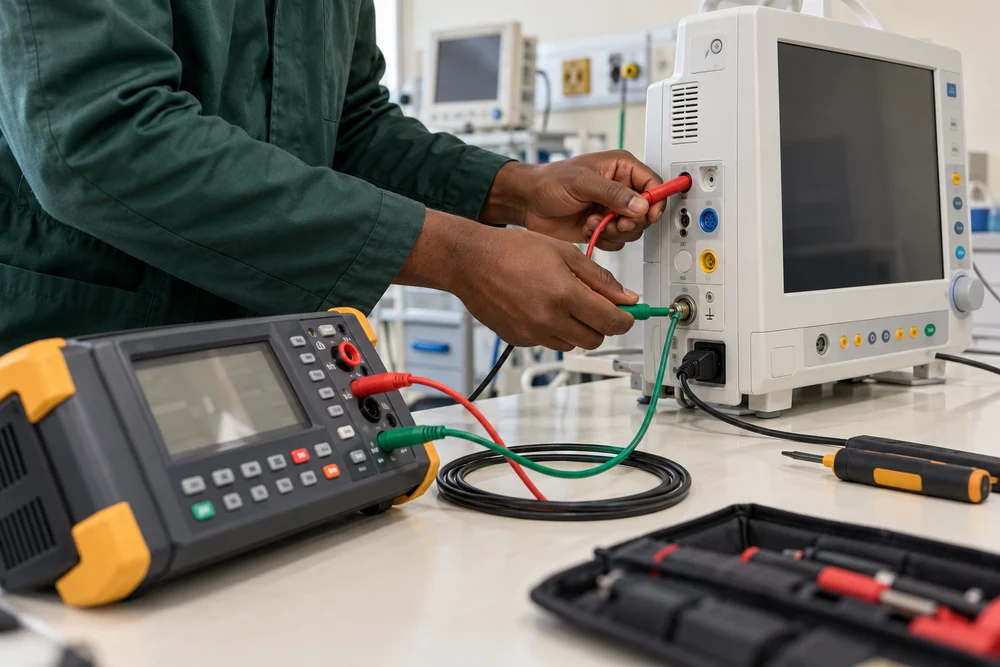
Electrical safety testing is distinct from functional checks, preventive maintenance, calibration and repair. Tell the reviewer which question the facility needs answered and provide the applicable procedure or service documentation. The proposed scope should identify the test basis, method, test instrument, acceptance criteria, report, exclusions and location before work is authorised. Franance has not stated here that it holds a particular safety analyser, qualified personnel for every device family or an accredited testing scope.
Use the on-page Franance enquiry form to request an assessment or callback. A callback request opens a discussion; it does not confirm an on-site visit, timing, delivery capacity or a pass result. Confirm these points in writing for the specific device and facility before arranging access or removing equipment from service.
Does IEC 62353 prove that a device complies with IEC 60601-1?
No. IEC 62353 addresses recurrent and post-repair testing of medical electrical equipment. IEC describes it as distinct from design-compliance evaluation under IEC 60601-1. The applicable method and criteria depend on the equipment and agreed scope.
IEC 62353 provides a framework for recurrent testing and testing after repair of medical electrical equipment. IEC's published scope explains that such testing assesses safety in service; it is not a design evaluation or a substitute for applicable IEC 60601 requirements. IEC 60601-1 addresses basic safety and essential performance, while particular and collateral standards may add or modify requirements for specific equipment. The relevant standard set must be identified for the device and purpose rather than inferred from a broad category name.
A theatre includes equipment classes with different intended use and configurations. An anaesthesia workstation, operating table, electrosurgical unit and defibrillator do not automatically share one procedure. Manufacturer instructions, device classification, applied parts, power supply, accessories, facility environment and applicable standard editions affect the test basis. The quotation should identify the chosen basis and explain any exclusion or limitation.
Do not interpret a recurrent-test result as certification of original design compliance, regulatory approval, clinical performance or suitability for every use. Franance's enquiry page does not promise compliance certification or accreditation. If the facility requires a specific standard, edition, accreditation or scope, provide that requirement so it can be assessed before a quotation is accepted.
What should be included when scoping an anaesthesia workstation safety test?
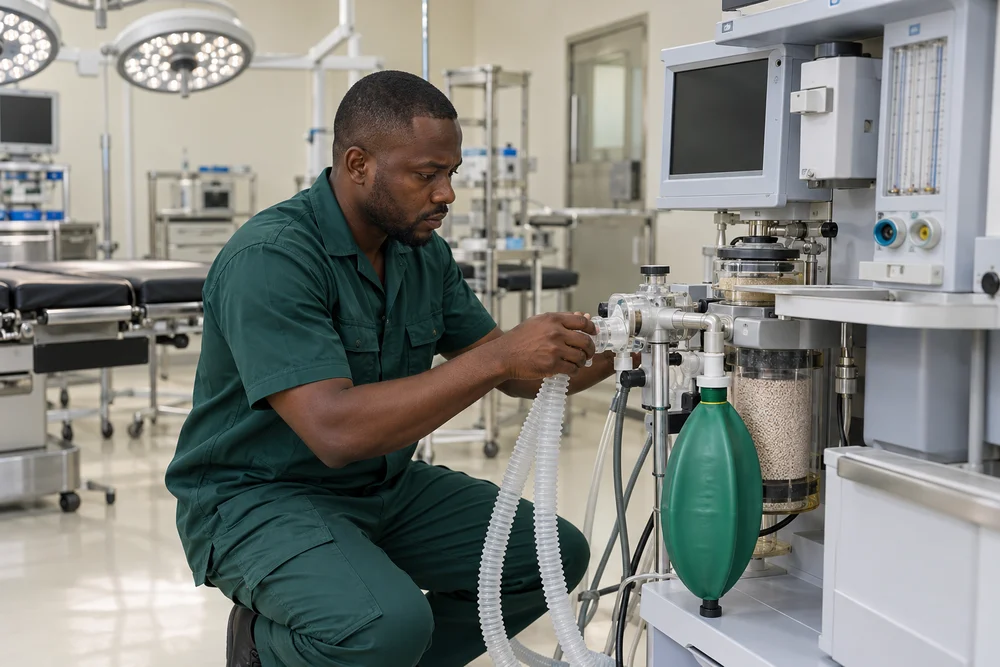
Identify the workstation model, serial number, mains configuration, modules, applied parts and accessories. State whether the requested scope is electrical safety only or also includes separate functional or gas-delivery verification.
Record the anaesthesia workstation and its configuration as actually used: manufacturer and model, serial, installed modules, power supply and relevant patient-connected accessories. Include the operating department, site conditions, service history, recent repair details and manufacturer documentation. If the workstation has been moved, say whether this is a post-installation assessment or a scheduled recurrent check. These facts help determine the applicable testing method and access requirements.
Keep electrical safety distinct from checks of ventilation, gas delivery, vaporizers, alarms and other clinical functions. A request for electrical testing does not automatically include performance testing of gas pathways or ventilation. If the facility needs both, list each outcome separately and ask how method, references and criteria differ. The written scope should name the electrical test basis, configuration, instrument and report, along with any modules or accessories excluded.
Because a workstation is used in a critical clinical environment, agree scheduling and access with the facility's responsible staff. The facility determines when equipment may be unavailable and what operational arrangements are appropriate. No test result on one setup should be presented as covering untested options or all workstations in a fleet. Confirm whether a model-specific manufacturer procedure is required and how it will be obtained before work is approved.
Which details matter for operating table and theatre light testing?
Provide the exact model and electrical configuration, power or control accessories, location, service history and facility test basis. Identify each table or light separately and state whether functional checks are also requested.
Operating tables and theatre lights may include powered movement, control systems, separate power supplies and accessories. Share the make, model, serial or asset number, controls and accessories in use, plus any recent repair or modification. Note whether the unit is fixed or mobile and where installed. These details support a scoped enquiry; they do not establish that every configuration can be tested under one method.
Separate electrical safety questions from movement, load, illumination, positioning or other functional requirements. A safety test is not automatically a performance inspection of lifting, articulation, light output or mechanical condition. If the facility wants those checks too, define them separately and provide the procedure or acceptance criteria. Ask the proposed provider to state what instrument and test method apply to the electrical scope and which components were included.
The access plan should account for the clinical area, equipment availability, power isolation arrangements and facility procedures. Franance can review those requirements as part of the enquiry, but site access, equipment downtime and a test schedule must be confirmed with the facility and in the written scope. Any finding should identify the asset and test performed; it should not imply that a related device or untested accessory was assessed.
Why do electrosurgical units and defibrillators need a device-specific scope?
Their intended functions, patient connections, accessories and particular safety requirements differ. Identify model, applied parts, leads, accessories, requested test and manufacturer procedure; do not treat a generic electrical check as comprehensive.
Electrosurgical equipment and defibrillators involve specialized outputs and patient connections. The exact variant, electrodes or paddles, leads, cables, accessories and operating modes can affect the applicable test setup. Provide the equipment identity and facility procedure or manufacturer instructions, and specify whether the enquiry concerns recurrent safety testing, a post-repair check, output performance or another defined task.
IEC 60601-1 is a general standard; applicable particular standards address specific equipment. IEC 62353 concerns in-service recurrent and post-repair testing rather than proving design compliance. A suitable scope must identify which standards and methods apply to the exact device, and which high-frequency output or defibrillation performance checks, if any, are separate. This page does not provide test limits or instructions for staff to carry out electrical testing themselves.
Ask the proposed provider to describe instrument suitability, identification and calibration evidence, test setup, criteria and report. The result should state the device and configuration tested, exclusions and exceptions. Franance has not represented that it holds a particular analyser or has a verified service capability for every electrosurgical or defibrillator model. These points need confirmation for the specific request.
What evidence should a facility request about instruments and personnel?
Ask for instrument identity and suitability for the proposed method, calibration or traceability evidence where applicable, and the responsible personnel's relevant competence for that scope. Confirm the evidence before accepting a delivery claim.
A report should let the facility understand what instrument and method supported the result. Ask for analyser make, model, serial number, applicable calibration status or supporting records, and test configuration. Verify that the proposed instrument suits the equipment and measurement in scope; an instrument name alone does not demonstrate range or method suitability. Where traceability matters, ask how it is documented and whether uncertainty or a decision rule affects interpretation.
Personnel competence is specific to tasks and equipment. Ask who will conduct the work and what training, experience or authorization is relevant to the proposed device class and method. If the facility requires an accredited laboratory, specific competence record or manufacturer authorization, state that clearly. Accreditation claims must be tied to the provider and exact scope; a certificate for another test or organization does not establish coverage here.
Franance's service scope and evidence must be confirmed for each enquiry. This page does not claim accreditation, OEM appointment, instrument inventory or named technical qualification. If a partner or external laboratory is involved, request its identity, role, scope and reporting responsibility in the written quotation. Do not accept a broad assurance in place of evidence that relates to the exact test.
What should the electrical safety report record?
Agree a report identifying asset, configuration, method and standard basis, instrument, conditions, results, acceptance criteria and exclusions. The facility remains responsible for equipment and clinical-use decisions.
Before work, agree report fields and how exceptions will be handled. A useful record identifies device and asset number, test date and location, configuration, method or standard edition, instrument identity, measured results, comparison criteria and the person or organization responsible for the work. It should make clear whether accessories, cables or patient-applied parts were included and name any limitations. A simple pass without the criterion and scope may be difficult to interpret later.
Where a result does not meet agreed criteria, it should be reported clearly and referred to the facility's designated personnel. Testing does not determine clinical suitability, establish the history of a fault, or decide whether equipment should remain in use. The facility follows its own risk, maintenance and clinical governance processes. Repair, replacement, retesting and parts are separate activities that need approval and defined scope.
Use the Franance enquiry form to request a review or callback and share facility location, equipment list, required evidence and preferred contact. Ask for written scope, price, timing, logistics and deliverables before authorising work. The facility should coordinate access and operational decisions; a service enquiry is not a substitute for its procedures or manufacturer instructions.
Common questions about theatre electrical safety enquiry in Nigeria
Does an IEC 62353 test certify IEC 60601-1 design compliance?
No. IEC describes recurrent and post-repair testing as distinct from design-compliance evaluation. Ask which test basis and report apply to the specific request.
Can one electrical safety method cover all theatre devices?
Do not assume so. Anaesthesia workstations, tables, lights, electrosurgical equipment and defibrillators have different configurations and applicable requirements.
Does the enquiry include functional testing or repairs?
Not automatically. List these separately and request a written scope, method and quotation for each additional task.
What evidence should accompany a test report?
Agree asset identity, method and standard edition, test instrument, results, criteria, exclusions and relevant instrument or personnel evidence.
Can I book an on-site test through the form?
The form requests an assessment or callback. Site, timing, capability, price and deliverables require confirmation in a written offer.
Tell us what your facility needs.
Send the equipment details, your requirement and the facility location. We’ll discuss the information needed to review the scope and prepare the next step.
Contact Franance