
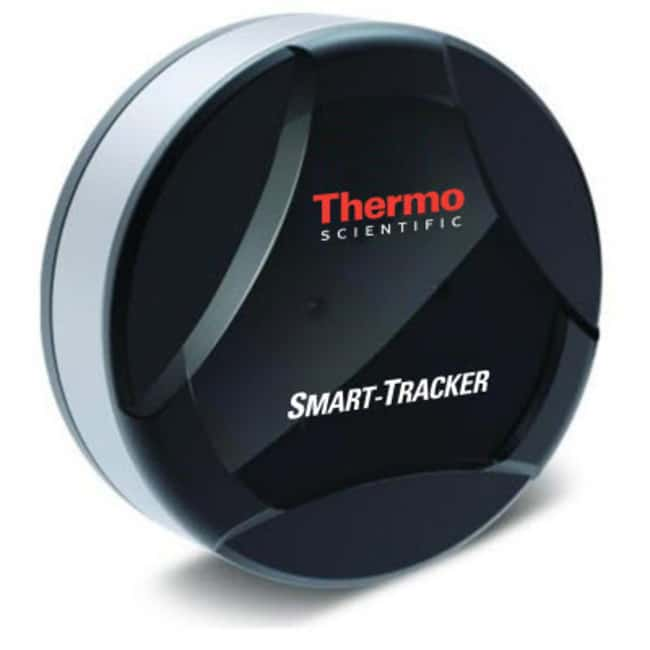
Thermo Scientific Smart-Tracker Wireless Temperature Data Logger ST100-101
Wireless temperature data logger with internal probe
Price on request

Medical equipment and biomedical engineering.
Abuja, Nigeria.
Franance lists Haier Biomedical HETL-01 and Thermo Scientific Smart-Tracker ST100-101 temperature data loggers for quotation in Nigeria. Compare the monitoring job, alarm and data workflow, probe, calibration information and current procurement requirements before requesting a quote.
2 models
Wireless temperature data logger with internal probe
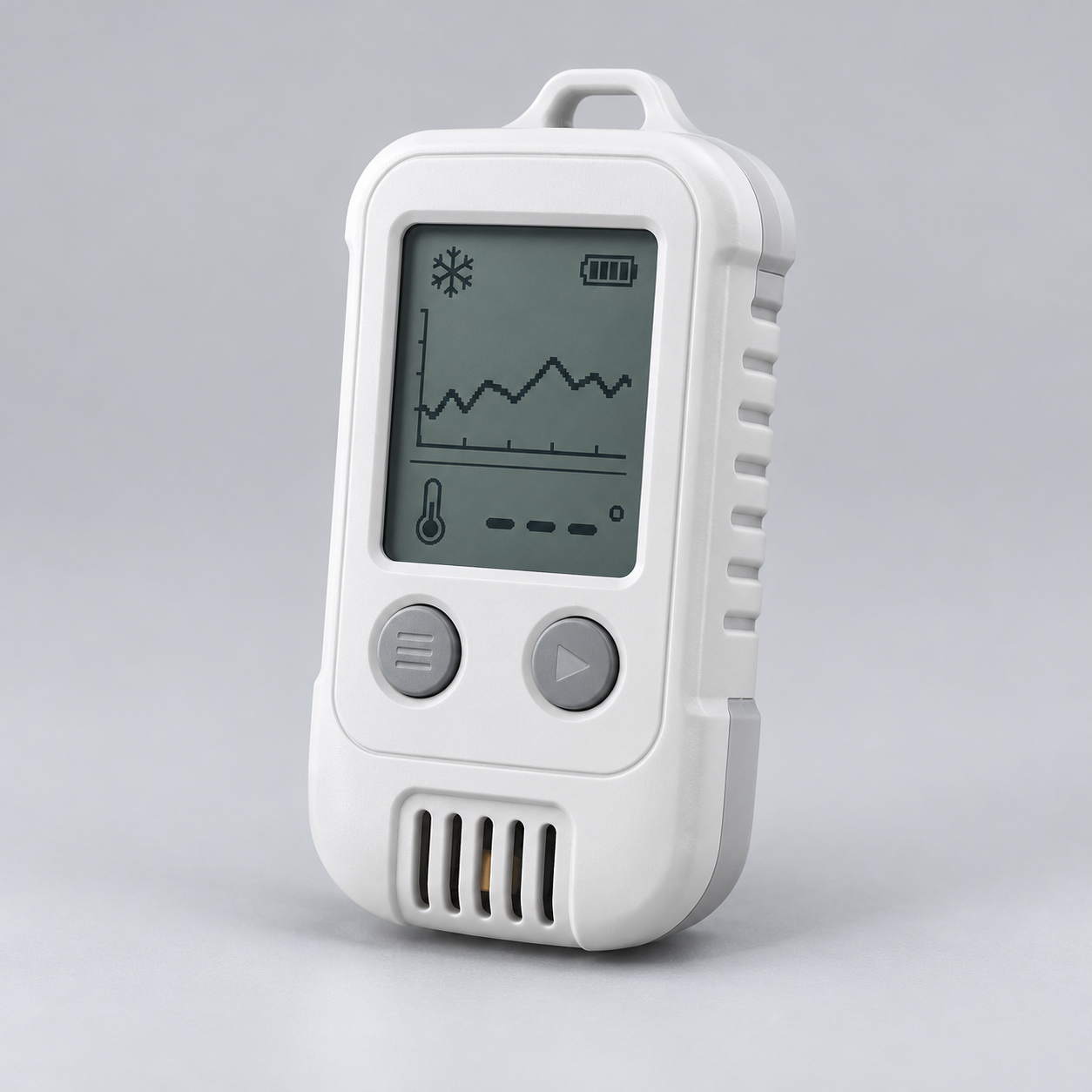
Electronic temperature data logger for vaccine cold-chain monitoring
Start with the Franance temperature data logger category. The current leaf has two assigned models, both with exact catalogue filters: Haier Biomedical HETL-01 and Thermo Scientific Smart-Tracker ST100-101. Their applications and data workflows differ, so confirm the intended use before requesting a quote.
Read moreThe catalogue contains two devices:
Read moreHaier’s product page describes the HETL-01 as a 30-day electronic temperature logger for vaccine safety storage. It lists a measurement range of −20°C to +50°C, 0.1°C resolution, an LCD and a six-minute logging interval. Haier describes high/low visual alarms, an integrated sensor, IP65 protection, USB export to a computer and temperature CSV data with a graph generated through data-management software. The product is reusable; the listed battery is built in and non-replaceable.
Read moreFranance lists two temperature data loggers for quotation in Nigeria: Haier Biomedical HETL-01 and Thermo Scientific Smart-Tracker ST100-101. The HETL-01 is a stand-alone 30-day electronic refrigerator logger with a display, visual temperature alarms and USB data export. The ST100-101 is a wireless Smart-Tracker module that stores readings for smartphone retrieval over Bluetooth. Choose by monitoring job, alarm and reporting needs, device configuration and the rules that govern the stored product—not by the word “logger” alone. You can browse temperature data loggers, open the HETL-01 listing or the ST100-101 listing, then request a quotation from Franance. It is a quote order: Franance follows up by phone or email. Online payment is not available.
Start with the Franance temperature data logger category. The current leaf has two assigned models, both with exact catalogue filters: Haier Biomedical HETL-01 and Thermo Scientific Smart-Tracker ST100-101. Their applications and data workflows differ, so confirm the intended use before requesting a quote.
Include your organization, stored product or equipment, monitoring location, required range, logging interval, alarm and reporting requirements, quantity and Nigerian destination. Ask the quote to state the exact model, sensor supplied, calibration information, software or app dependencies, battery, memory, accessories, availability, price, lead time, delivery, warranty and support. Franance’s catalogue does not confirm stock, delivery timing, installation, local service or commercial terms until the team provides a written response.
The catalogue contains two devices:
- Haier Biomedical HETL-01: Haier identifies this as a 30-day electronic temperature logger for vaccine refrigerator monitoring. Its listed features include an LCD, visual high/low alarms, six-minute logging, USB computer export and a built-in sensor. WHO’s live product record identifies HETL-01 as a prequalified 30-day electronic temperature logger, code E006-042.
- Thermo Scientific Smart-Tracker ST100-101: Thermo Fisher describes this as a wireless data-logging module with an internal temperature probe, Bluetooth smartphone access and memory for 4,000 readings. Its catalogued temperature range is −40°C to +85°C and the ST100-101 variant is calibrated at 5°C.
The first model emphasizes local display, visual alarms and a rolling record that can be downloaded by USB. The second emphasizes wireless readout and a phone-based workflow. A feature comparison is not an interchangeability claim. Confirm whether either model meets the monitoring programme, product specification, or procurement requirement at your site.
Haier’s product page describes the HETL-01 as a 30-day electronic temperature logger for vaccine safety storage. It lists a measurement range of −20°C to +50°C, 0.1°C resolution, an LCD and a six-minute logging interval. Haier describes high/low visual alarms, an integrated sensor, IP65 protection, USB export to a computer and temperature CSV data with a graph generated through data-management software. The product is reusable; the listed battery is built in and non-replaceable.
WHO’s live E006-042 product profile identifies HETL-01 as a prequalified 30-day electronic temperature logger and, at the time checked for this guide, lists validity through 31 May 2027. That status applies to the exact PQS reference and may change. Check WHO’s current product profile when procurement requires PQS status, then confirm that the offered item and specification match the record. A manufacturer page, saved PDF or catalogue listing is not a substitute for the live WHO entry.
The WHO profile gives additional details including a six-minute minimum logging interval, maximum recording time of 30 days, integrated sensor, LCD, visual alarm, IP65 rating, 8,192 readings and ±0.5°C accuracy. Haier’s web page and WHO record express storage details differently (“over 30 days” versus maximum 30 days); use the currently supplied manual and WHO data sheet for the precise programmed model rather than promising a fixed retention span beyond the specification.
Open the Haier Biomedical HETL-01 listing and ask Franance for the current device manual, battery and software details, PQS reference, accessories and quote scope.
Thermo Fisher describes ST100-101 as a Smart-Tracker wireless data-logging module with an internal temperature probe. The product page lists a −40°C to +85°C temperature range, calibration at 5°C, memory for 4,000 readings and Bluetooth connection to the Smart-Tracker smartphone application. Thermo says readings can be checked wirelessly by phone, the module can monitor refrigeration, blood-bank refrigerators, cold storage and transport, and information can be shared through the cloud subject to network speed and availability.
Thermo’s product page lists the package as a module with an internal sensor, lithium battery, two colored sensor rings and two side magnetic mounts. Its sensor-type list also references external PT100 sensors, but that does not mean one is included with this ST100-101 package. If you need an external probe, confirm the compatible sensor, ordering code, range, calibration and included accessories in writing. The page states that warranty varies by country; it does not establish Nigerian warranty or support.
ST100-101 is not described by Thermo as a dedicated 30-day vaccine refrigerator logger. Its 4,000-reading capacity, wireless app workflow and calibration point are different from HETL-01’s 30-day record and display/alarm package. Confirm the sampling interval, temperature-alert behavior, export/report features, battery replacement and connectivity in the current manual and quote before relying on the device for a monitoring SOP.
Open the Thermo Scientific ST100-101 listing and ask whether the quoted variant includes only the internal probe or any additional sensor or software access.
Match the logger to a defined monitoring job. For a vaccine refrigerator that needs a local LCD, visible high/low alarm and recent 30-day history with USB download, HETL-01’s published feature set is the closer fit. If staff need to retrieve readings wirelessly by smartphone from storage or during transport, ST100-101’s Bluetooth module and phone application may be relevant. This is a feature-based comparison, not a recommendation to use either device without checking the procedure and product requirements.
Cold rooms, refrigerators, freezers and shipments can require different sensor placement, alarm escalation and reporting. A probe near the cooling outlet may not represent the warmest or coldest product location. For a newly installed or modified room, ask whether temperature mapping and multi-point monitoring are needed; WHO’s guidance treats loggers as one part of cold-chain monitoring and commissioning, not as a substitute for a monitoring system with alarms where required.
For a shipment, define the route, trip duration, logger activation and placement, hand-off responsibilities, alarm or excursion review, data download and release decision before dispatch. Ensure the selected logger’s range, memory, sampling and battery suit the entire trip. Do not treat a storage logger as proof that a shipment stayed compliant unless the complete validated procedure says so.
No single logger automatically replaces the facility’s approved procedure. WHO’s E006 guidance distinguishes ordinary temperature data loggers, 30-day electronic refrigerator loggers and equipment-monitoring systems. It notes that data loggers have limited functionality compared with 30-day electronic refrigerator loggers, and describes the latter as a way to review refrigerator temperatures over a rolling 30-day period with a visual alarm on some models.
WHO’s current E006 page also describes a 2026 requirement for equipment-monitoring systems (EMS) in vaccine refrigerators. If you are procuring a vaccine refrigerator, check the current WHO PQS requirements and the national or programme procurement specification for the complete refrigerator and monitoring configuration. Do not assume that purchasing a separate HETL-01 or ST100-101 alone satisfies the requirements for an EMS-equipped refrigerator.
Write down who checks the reading, at what interval, which alarm needs action, whom staff call, what happens after an excursion, where stock is moved and which record is retained. The device records readings; trained staff and an approved response procedure determine what those readings mean for the product. Follow the medicine or vaccine’s approved storage information and the facility’s governing protocol.
Ask the supplier to identify the exact model and supplied sensor, the measurement range, accuracy and calibration point, resolution, logging interval, memory capacity, retention or overwrite behavior, display, alarm types and thresholds, power source, battery life, ingress protection, data interface and compatible software. Clarify which points are manufacturer specifications, which are set at the factory and which can be changed by the user.
For an alarmed device, confirm whether the alarm is visible, audible, remote or app-based; whether it works during a power or network outage; how users acknowledge it; and whether the alert is available at the actual placement site. For a connected logger, check the phone and operating-system compatibility, Bluetooth access, account or cloud needs, data-sharing controls, network availability and export format. “Wireless” does not mean that a remote user receives an alert regardless of connectivity.
Request sample reports or data exports, the manual, calibration certificate or traceability information if required, battery replacement instructions and service contacts. A displayed resolution such as 0.1°C is not the same as measurement accuracy. Compare the logger’s full specification with the tolerance and excursion rules written by the quality or cold-chain lead.
Use the manufacturer’s instructions and the site’s written procedure. Record the device identity, model, serial number, calibration status, location and sensor position. Set or verify the interval and alarms if the device allows it; check the clock and time zone; confirm the unit is recording; and document who is responsible for routine reviews, download, escalation and archiving.
Place the sensor at the location specified by a risk assessment or temperature-mapping study. Avoid assumptions that the display temperature equals the temperature of every stored product. Keep cables, probes and devices positioned so they do not compromise door seals, shelving, airflow or cleaning. Follow the manufacturer’s approved placement method rather than routing an unapproved wire through a refrigerator gasket.
When a reading is outside limits, follow the facility’s excursion procedure: protect the contents, keep the data, notify the responsible lead, assess the event using the approved product guidance and document the decision. A logger does not decide whether a vaccine, medicine, blood component or specimen is safe to use. Do not erase, overwrite or reset relevant records before they have been reviewed and retained according to policy.
For HETL-01, Haier describes computer connection through USB and CSV export. For ST100-101, Thermo describes wireless reading through its smartphone app and cloud sharing subject to connectivity. Confirm the data-retention, backup, report and audit-trail arrangements your organization requires before choosing a workflow.
The two devices have different dependencies. HETL-01 uses a built-in, non-replaceable battery according to Haier; WHO’s record lists a non-rechargeable lithium battery and an activated battery life of two years. Confirm the manufacturing date, shelf life, activation process and replacement plan for the supplied logger, especially if devices will be stored before deployment. Do not treat the host refrigerator’s power supply as the logger’s battery supply.
ST100-101 uses a lithium battery and Bluetooth phone connection. Thermo says cloud information sharing depends on network speed and availability. Test the actual phone model and connectivity at the refrigerator or route location, and define what staff can do when the phone, Bluetooth link, network or cloud service is unavailable. Confirm whether app installation, cloud accounts, internet service or software terms are required for your workflow.
Provide the delivery city and state, quantity, usage location, and any site-specific access or temperature conditions. Ask Franance to confirm product availability, delivery timing, warranty territory, replacement battery or device support, software access, and the route for technical assistance in writing. Its listings do not establish nationwide stock or service coverage.
Tell Franance the model you want, or describe the monitoring task if you need help comparing the two listings. State what is being monitored, whether it is a refrigerator, blood bank refrigerator, cold room, freezer or transport shipment, your required range, sampling interval, alarm response, report or data export needs, sensor location and number of devices.
For HETL-01, include whether the WHO E006-042 listing is a procurement requirement and ask the supplier to identify the current WHO record and exact offered device. For ST100-101, specify whether you need only the internal sensor or another compatible probe, who will use the phone application, what connectivity exists and what export or cloud workflow is expected. Include destination, quantity, requested documentation, calibration evidence, training, warranty and service requirements.
Use the temperature data logger category, then open the exact HETL-01 or ST100-101 listing. Submit a temperature logger quote enquiry. Franance will follow up by phone or email to confirm the order details; there is no online checkout.
The model details were reviewed on 20 October 2026 against Haier Biomedical’s HETL-01 30-day electronic temperature logger page, the WHO live E006-042 HETL-01 record, and Thermo Fisher’s Smart-Tracker ST100-101 product page. Guidance on device roles and current vaccine refrigerator equipment-monitoring requirements comes from WHO’s E006 temperature-monitoring devices page and its Vaccine Management Handbook: How to monitor temperatures in the vaccine supply chain.
WHO product status and specifications can change. Confirm the live E006 record and current programme rules when PQS or vaccine-monitoring requirements affect procurement. Manufacturer features do not establish that a device satisfies a particular national policy, monitoring SOP, validation plan or audit requirement. This page does not establish Nigerian stock, price, service, delivery, calibration support or regulatory approval for a particular quotation.
The current leaf category lists Haier Biomedical HETL-01 and Thermo Scientific Smart-Tracker ST100-101. Confirm current availability and the exact variant in a written quote.
WHO's live E006-042 profile identifies HETL-01 as prequalified and lists validity through 31 May 2027 as checked on 20 October 2026. Recheck the live WHO record at procurement and match the offered model and specification to it.
Do not assume so. WHO E006 distinguishes 30-day refrigerator loggers from equipment-monitoring systems and describes an EMS requirement for vaccine refrigerators in 2026. Check the current requirements for the complete refrigerator and monitoring configuration with the procuring authority.
No. Franance uses quotation enquiries and follows up by phone or email; the catalogue does not offer online checkout.
Thermo's listed package includes an internal sensor. Its product page references external PT100 sensor types, but you should confirm compatibility, ordering code and whether an external probe is separately supplied.
Tell Franance the monitoring job, model preference, required interval and range, sensor and alarm needs, data workflow, destination, quantity and documentation requirements. The team will follow up by phone or email to confirm a quotation order.
Request a logger quoteAdd the models you need to a quote order, or send us your equipment list.