
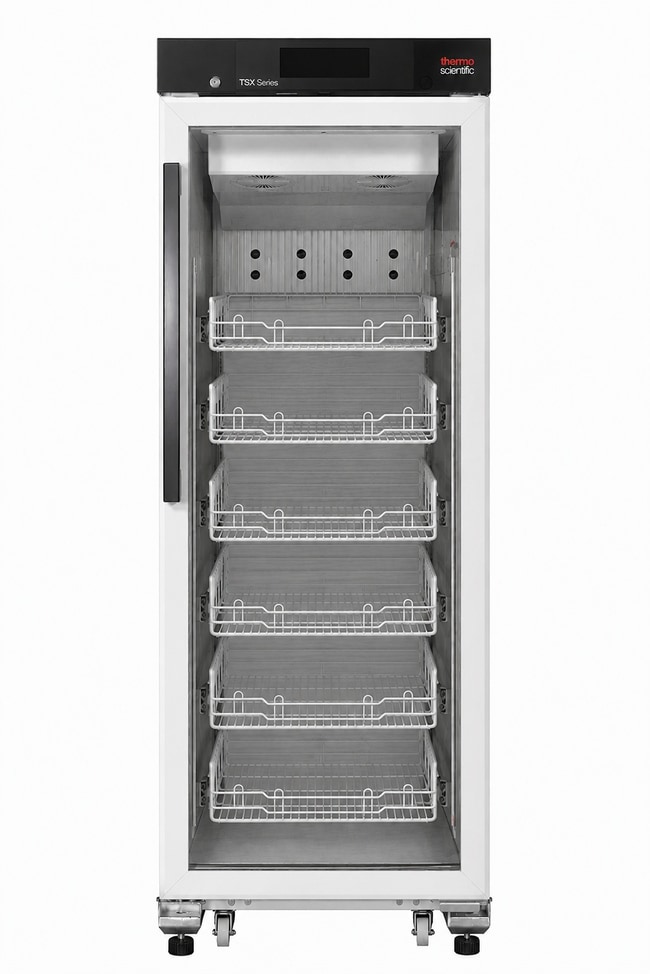
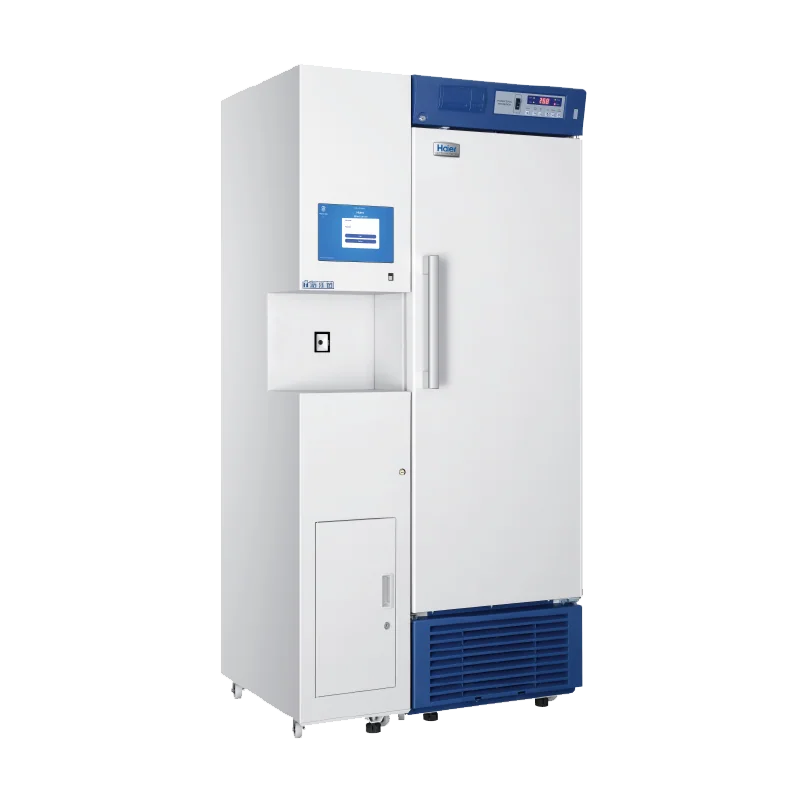
Thermo Scientific TSX Assure 341 L Pharmacy Refrigerator TSX2-1205PV
High-performance pharmacy refrigerator for vaccine and pharmaceutical cold storage
Price on request

Medical equipment and biomedical engineering.
Abuja, Nigeria.
Compare three pharmacy refrigerator models currently listed in Franance's Vaccine Refrigerator category: Haier Biomedical HYC-509T, Haier Biomedical HYC-1099T and Thermo Scientific TSX2-1205PV. Specify intended contents, usable capacity, monitoring, power, installation and destination, then request a written quotation. Solar direct-drive models are listed separately.
6 models
High-performance pharmacy refrigerator for vaccine and pharmaceutical cold storage
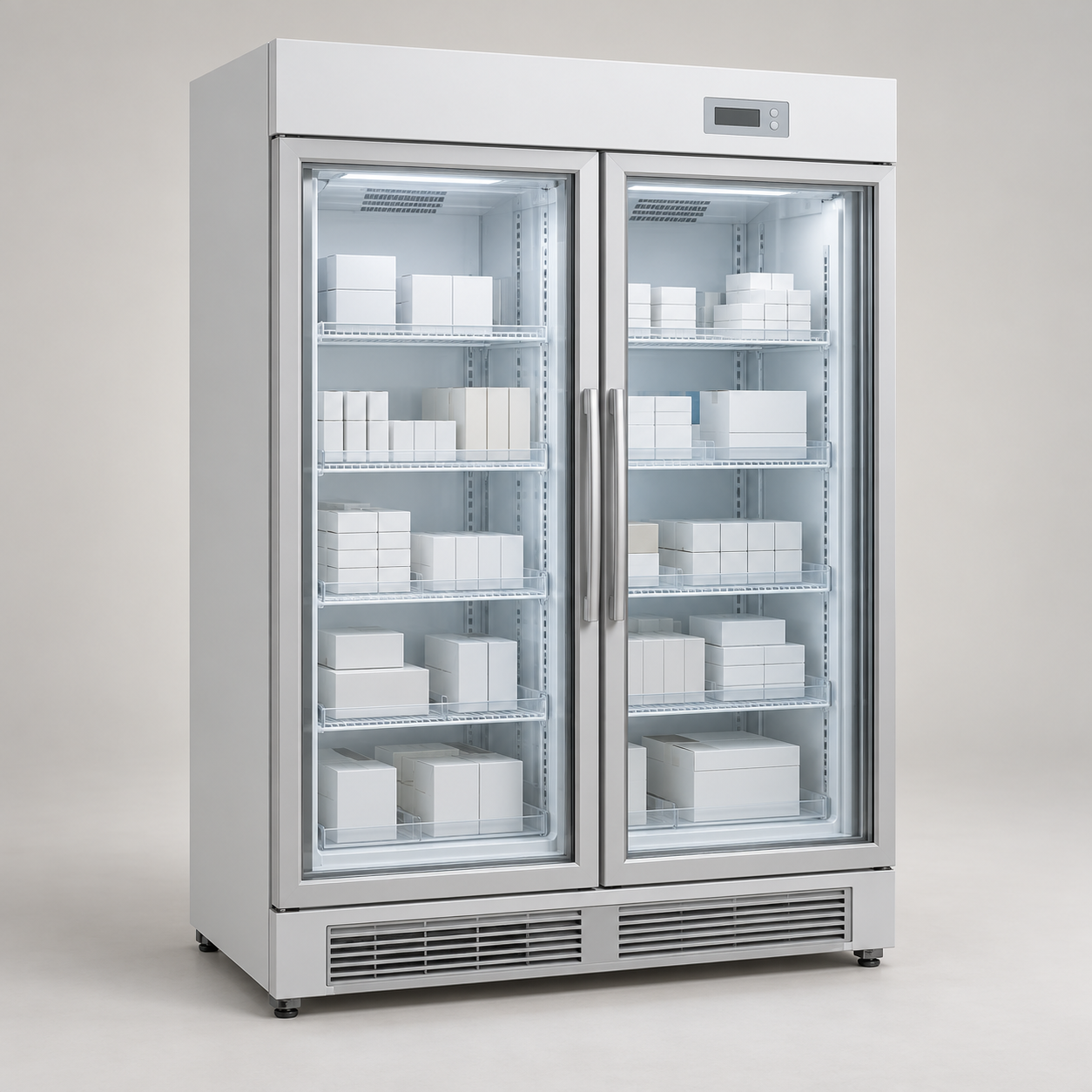
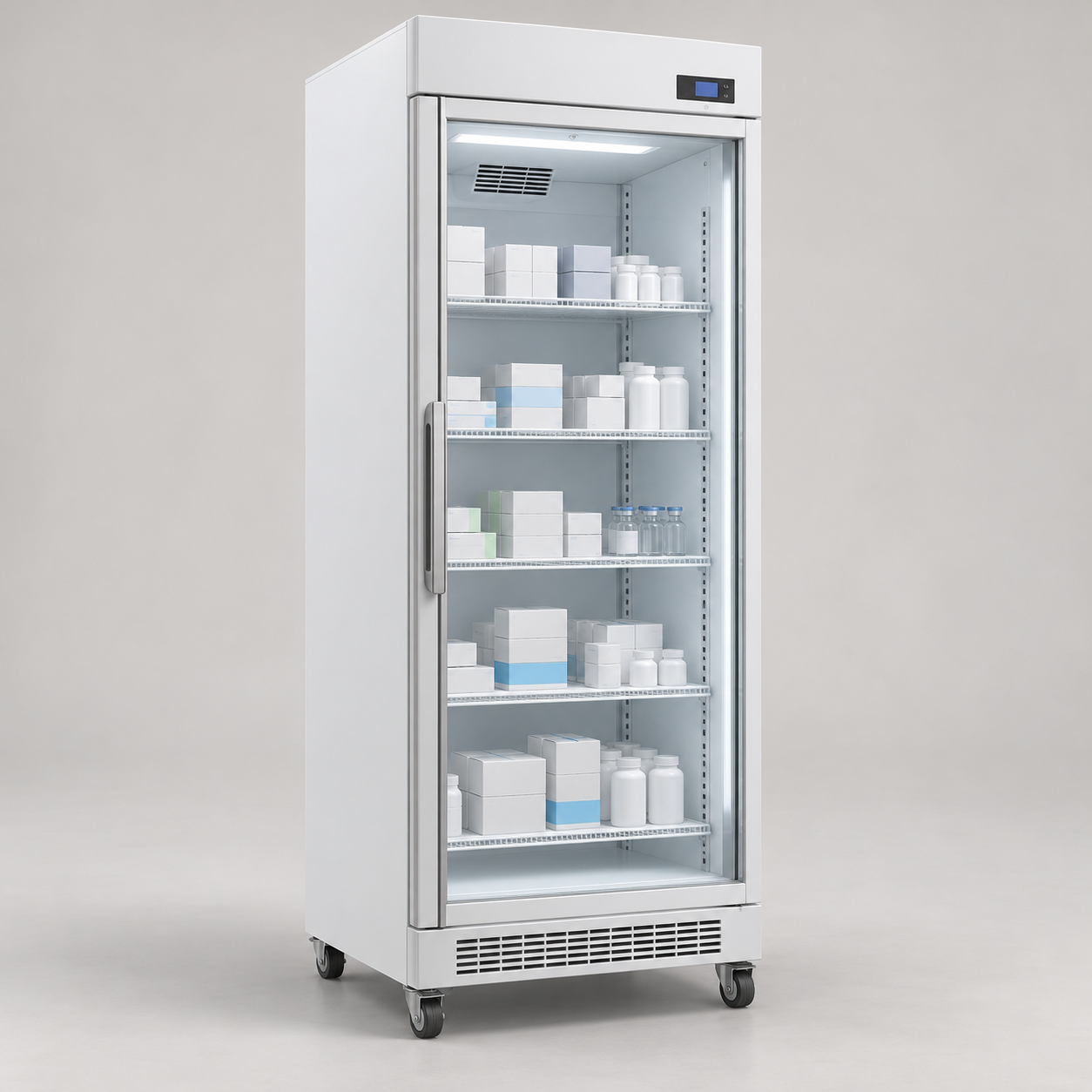
Advanced pharmacy refrigerator with LCD touchscreen
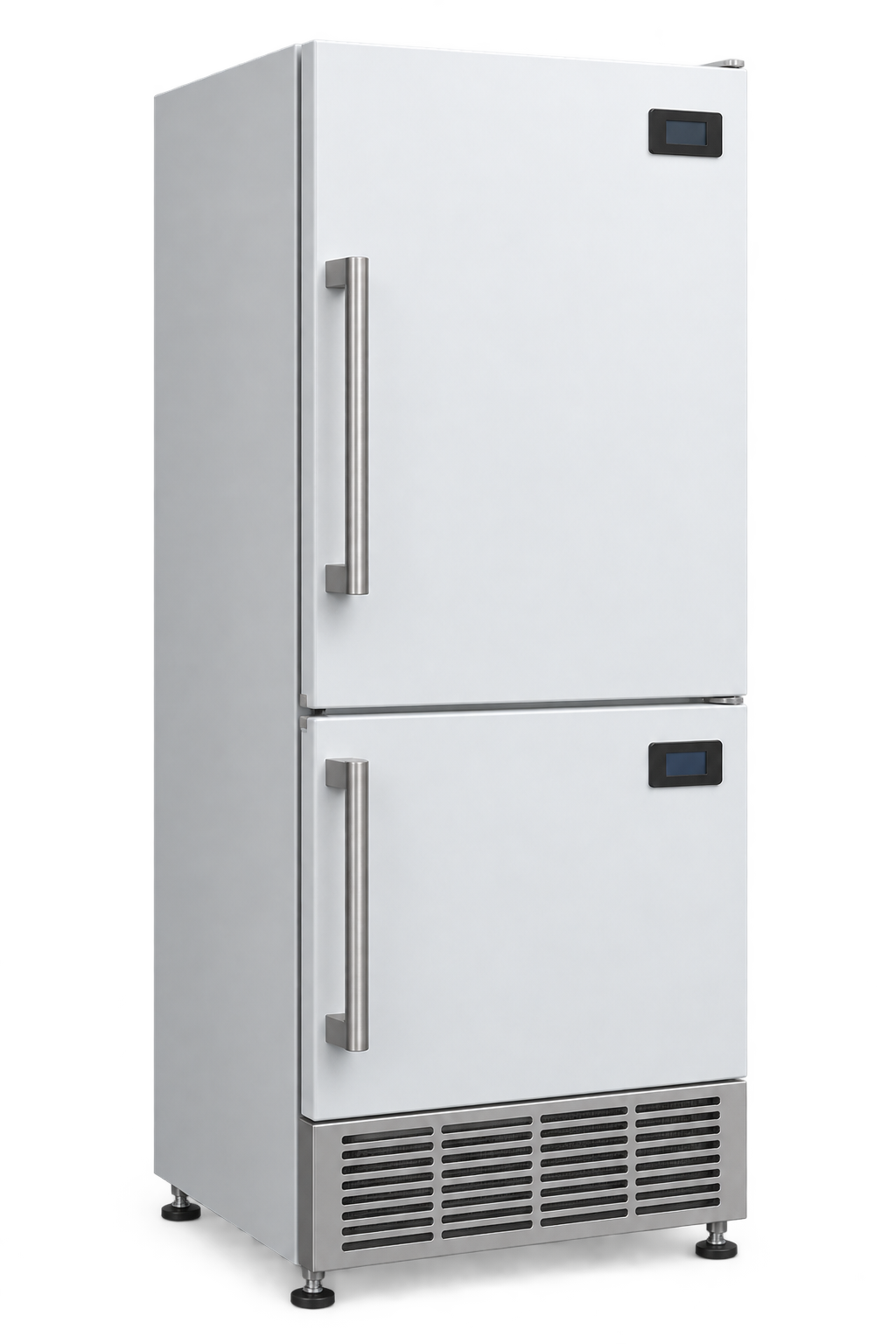
MPR-N650FH Pharmaceutical Refrigerator with Freezer
The current category contains three products, all described by their manufacturers as pharmacy refrigerators:
Read moreThe three products assigned to this category are electrical pharmacy refrigerator models. Haier lists 220–240 V, 50/60 Hz for the HYC-509T and HYC-1099T. Thermo Fisher lists 220 V for TSX2-1205PV. Confirm the regional nameplate, frequency, plug and configuration in the quotation; do not assume a product code alone confirms what will be delivered.
Read moreSelect capacity from the actual stock profile rather than the gross litre figure alone. Estimate the peak quantity held at the facility, packaging dimensions, frequency of replenishment, separation or access requirements, future demand and space available. Ask the supplier for the exact usable storage volume and storage basket or shelf layout for the proposed model. The manufacturer’s listed 341 L, 509 L and 1,099 L values are cabinet capacity figures, not a calculation of how many vaccine packs or product cartons will fit safely.
Read moreBuy vaccine refrigerators in Nigeria through Franance by specifying the stored products, required storage conditions, usable capacity, exact model, monitoring plan, power supply and destination. Franance’s Vaccine Refrigerator category currently lists three pharmacy refrigerator records: Haier Biomedical HYC-509T, Haier Biomedical HYC-1099T and Thermo Scientific TSX2-1205PV. They are conventional electrical pharmacy refrigerators in the catalogue. The solar direct-drive Haier HTC vaccine refrigerators sit in the separate Solar Vaccine Refrigerator category, so do not treat them as the same configuration. Use the model links to narrow the catalogue to the assigned item: Haier HYC-509T, Haier HYC-1099T and Thermo Scientific TSX2-1205PV. Each listing is a quotation enquiry, not online checkout. Product records and manufacturer pages do not confirm Nigerian stock, price, lead time, warranty, installation, service, local registration or WHO PQS status for a particular proposed unit. Obtain the exact model and terms in writing.
The current category contains three products, all described by their manufacturers as pharmacy refrigerators:
- Haier Biomedical HYC-509T: single glass door, 509 L listed capacity, six shelves, 2–8°C range and 220–240 V, 50/60 Hz power supply in Haier’s specification table.
- Haier Biomedical HYC-1099T: double glass door, 1,099 L listed capacity, twelve shelves, 2–8°C range and 220–240 V, 50/60 Hz in the same manufacturer table.
- Thermo Scientific TSX2-1205PV: TSX Assure single-door pharmacy refrigerator, 341 L and 220 V according to Thermo Fisher’s catalogue entry.
These catalogue facts are a starting point for a quote. They do not show how much usable capacity remains after shelves, baskets and air circulation are considered, whether a monitoring device is included, or whether the exact model is qualified for a programme’s vaccine storage requirements. Ask for the current datasheet, exact product code, included accessories and required documentation for the offered unit.
The three products assigned to this category are electrical pharmacy refrigerator models. Haier lists 220–240 V, 50/60 Hz for the HYC-509T and HYC-1099T. Thermo Fisher lists 220 V for TSX2-1205PV. Confirm the regional nameplate, frequency, plug and configuration in the quotation; do not assume a product code alone confirms what will be delivered.
Solar direct-drive (SDD) units are a different technology and are listed separately at Franance. WHO E003 guidance distinguishes mains-powered refrigeration from solar appliances and states that a solar appliance requires a matched, manufacturer-certified solar power system. It also recommends a site assessment for solar conditions and ensuring qualified installation and long-term service. A mains refrigerator with a separate generic solar panel is not automatically an approved SDD system. If the facility’s grid or generator power is unreliable, compare the exact solar category and assess the site, solar resource, installation, security and maintenance before selecting equipment.
WHO guidance also warns that domestic refrigerators should not be used to store vaccines. Use equipment intended for the appropriate cold-chain role, and have the responsible programme or quality owner verify that the specific model and configuration meet the applicable requirements. This category label alone does not establish WHO prequalification or suitability for any vaccine.
Select capacity from the actual stock profile rather than the gross litre figure alone. Estimate the peak quantity held at the facility, packaging dimensions, frequency of replenishment, separation or access requirements, future demand and space available. Ask the supplier for the exact usable storage volume and storage basket or shelf layout for the proposed model. The manufacturer’s listed 341 L, 509 L and 1,099 L values are cabinet capacity figures, not a calculation of how many vaccine packs or product cartons will fit safely.
The TSX2-1205PV is the smaller single-door product in this current category at 341 L. The HYC-509T is a single-glass-door cabinet with 509 L listed capacity. The HYC-1099T is a larger double-glass-door cabinet with 1,099 L. These differences can help frame a shortlist, but door count, loading pattern, number of users, product separation and cold-air circulation all matter. Do not pack a refrigerator to the nominal maximum without checking the current operating and loading instructions.
Share a representative inventory, carton dimensions, expected maximum load, access frequency and room layout with Franance. Ask for drawings, shelf/basket arrangements, usable capacity and any installation clearances. If products must be segregated or access restricted, identify the requirement early and confirm the exact options. Haier describes NFC access control on its HYC touchscreen family and optional fingerprint functionality; Thermo Fisher describes features for its TSX Assure line. Confirm what is present on the exact catalogue number and what is an option before comparing systems.
Haier lists 2–8°C for the HYC-509T and HYC-1099T. Thermo Fisher describes TSX Assure pharmacy refrigerators for controlled refrigerated storage, including vaccines and pharmaceuticals, and its product information should be checked for the specific TSX2-1205PV operating range and installed configuration. A stated range is a manufacturer specification; it does not demonstrate that a loaded cabinet at your facility has been qualified, mapped or proven to maintain every location within a programme’s limits.
Confirm the current technical document for the exact model, including operating and ambient conditions, alarm functions, sensor position, recovery behaviour, power failure response and permitted loading. Ask whether the range is a setpoint range, a control range or a tested performance result, and what the manufacturer’s test conditions were. Do not apply one HYC or TSX product-family statement to all models or regional variants.
Vaccine and other pharmaceutical storage requirements come from the product label, approved procedure and applicable programme guidance. Have the responsible pharmacist, vaccine programme, quality manager or regulatory owner confirm that the proposed appliance and storage plan are appropriate. A refrigerator listing cannot authorize a product’s storage or determine whether stock remains usable after an excursion.
Treat refrigeration and monitoring as related but distinct parts of a cold-chain system. NAFDAC’s cold-chain guidance discusses temperature recording, digital thermometers and data loggers, trained personnel, maintenance and written response procedures. WHO E003 also describes monitoring-device requirements within its immunization-device procurement guidance. Those standards are relevant to programme planning, but they do not prove that one of the three Franance models includes a required logger, thermometer, alarm output or communication feature.
For the quote, list the required monitoring method, probe location, sampling interval, data retention, local display, high/low alarms, audible or remote notification, USB or network export, calibration documentation and backup monitoring. Haier describes touchscreen graphs, event/alarm records and standard USB storage for the HYC family, with a printer optional. Thermo Fisher describes touchscreen controls and onboard USB data logging for TSX Assure. Confirm the exact product code’s scope, alarm thresholds, included sensor, export format, licence or software, remote features and any external logger separately.
Define who reviews records, who receives alarms after hours, what action follows an excursion, how the response is documented and who decides product disposition. Monitoring hardware alone does not create an effective response process. Do not assume the user interface is an independent, calibrated reference thermometer or that a dashboard constitutes a validated cold-chain record.
Confirm the supplied electrical version before delivery. The Haier models in this category are manufacturer-listed at 220–240 V and 50 or 60 Hz; Thermo lists TSX2-1205PV as 220 V. Ask for the nameplate, current installation manual, current draw, plug type, circuit requirements, protective earth and any approved stabilizer or backup-power recommendations for the exact configuration. The product pages do not establish that a refrigerator will tolerate every voltage fluctuation or generator transfer at a Nigerian site.
Record the facility’s actual voltage and frequency, outages, generator arrangements and intended backup supply. WHO E003 notes that a voltage regulator may be needed for mains or generator-powered cold-chain appliances unless mains electricity is highly reliable; it also says to confirm whether the stabilizer is integrated or bundled. Ask the supplier whether a stabilizer, UPS or other backup unit is recommended and compatible, and whether it is included. Have a qualified electrician review the circuit, grounding and changeover arrangement.
Plan the room as well as the electrical point. Check doorway and corridor access, floor and bench loading, door swing, service clearance, ventilation, ambient temperature, humidity, dust, drainage where relevant, heat load and space for monitoring or backup equipment. Avoid siting the appliance where direct sun or nearby heat sources compromise the installation. Ask for manufacturer clearance dimensions and installation instructions; have the site team verify them before confirming delivery.
The HYC and TSX products in this leaf are upright pharmacy refrigerators. Solar vaccine refrigerators are listed in a different category and have different energy-system, site-assessment and service requirements. A walk-in medical cold room is a project-specific installation with separate design, capacity, power, monitoring, commissioning and maintenance considerations. Choose among these equipment types based on stored materials, site power, required inventory capacity, workflow and the responsible programme’s requirements rather than treating the product formats as interchangeable.
For an off-grid or weak-grid site, the solar vaccine refrigerator category is the relevant Franance route to review alongside a site evaluation. For larger central storage, browse medical cold rooms. For monitoring-only needs, see temperature data loggers. A logger does not cool products; a cold room is not a plug-in cabinet; a solar-ready label does not prove the site kit is complete.
WHO and UNICEF procurement guidance emphasize matching the equipment to the supply chain and site, and planning installation, service, spare parts and training. Request a complete scope that identifies what Franance is quoting and what the facility must provide. If a specific vaccine programme requires WHO PQS status, verify the exact model and product data sheet in the current WHO catalogue; do not infer qualification from a broad product-family page, the 2–8°C range, or a similar model name.
Before placing an order, agree who will deliver, position, install, commission and hand over the equipment. Request the current installation instructions, site-readiness checklist, model and serial details, declared electrical requirements, accessory schedule, manuals, alarm test scope, training and warranty documents. Confirm the responsibilities and exclusions for electrical work, backup power, temperature mapping, logger setup, calibration, network access and ongoing maintenance.
Temperature mapping and acceptance should follow the facility’s approved quality system and applicable guidance. Define the loaded or empty test condition, mapping method, probe placement, duration, acceptance limits, alarm challenge, power interruption test where required, record review and approval roles with qualified staff. The equipment supplier’s startup demonstration does not itself qualify the room or establish ongoing compliance. Document deviations and corrective actions before the responsible quality owner releases the cabinet for intended use.
For Nigerian vaccine and biopharmaceutical workflows, check the currently applicable NAFDAC cold-chain guidance and any programme-specific requirements at the time of procurement. NAFDAC’s published cold-chain information stresses trained personnel, monitoring, maintenance, repair, storage procedures and response to handling or storage problems. This guide does not set an excursion limit or determine the usability of a vaccine or medicine; follow the applicable product and facility procedures.
Send Franance the exact model or capacity target, intended contents, required storage conditions, peak inventory, vessel or carton dimensions, access-control needs, monitoring and alarm requirements, power and backup details, room layout, destination city and state, quantity, installation expectations and requested documentation. If you are comparing a conventional electrical unit with a solar option, provide site electricity and solar assessment information so the quote can address the correct equipment class.
Ask for an itemized offer showing the exact manufacturer catalogue number, voltage/frequency, usable capacity, shelving or baskets, monitoring hardware, data-export features, optional accessories, stabilizer or backup requirements, delivery, installation, commissioning, mapping or qualification scope, training, warranty, service and exclusions. Ask whether any claimed WHO PQS or other certification applies to the exact model and configuration, and request current supporting documentation. Require price, availability, delivery timing and service terms to be confirmed for the Nigerian destination.
Franance treats this as a quotation order and follows up by phone or email. Begin with one of the exact filtered model listings or request a vaccine refrigerator quotation. A catalogue record is not a stock reservation or a confirmed delivery commitment.
### Does Franance list solar vaccine refrigerators in this category?
No. The current Vaccine Refrigerator category lists the HYC-509T, HYC-1099T and TSX2-1205PV pharmacy refrigerators. Solar direct-drive Haier HTC models are in the separate Solar Vaccine Refrigerator category.
### Are the listed HYC models rated for vaccine storage?
Haier identifies these HYC models as pharmacy refrigerators and lists a 2–8°C range. Whether the exact model and configuration meet a vaccine programme’s requirements must be checked against current manufacturer information, programme rules and WHO PQS requirements if applicable.
### Does 2–8°C mean the appliance is WHO prequalified?
No. A stated temperature range does not establish WHO PQS status. Check the exact model and current product data sheet in the WHO catalogue if PQS status is required.
### What is the difference between HYC-509T and HYC-1099T?
Haier lists the HYC-509T as a 509 L single-glass-door model with six shelves and the HYC-1099T as a 1,099 L double-glass-door model with twelve shelves. Confirm usable capacity, options and included configuration in the quote.
### Is TSX2-1205PV the 220 V Thermo Scientific unit?
Thermo Fisher lists TSX2-1205PV as a 341 L, single-door TSX Assure pharmacy refrigerator at 220 V. Confirm the exact regional product code, frequency and supplied configuration before ordering.
### What monitoring equipment comes with the refrigerator?
Manufacturer descriptions include certain display, data and alarm features, but the exact quote must specify the included logger, sensor, calibration records, export method, alarm outputs and software. Provide any separate programme or quality-system requirements.
### Can Franance guarantee installation or service in my state?
The catalogue does not establish local availability or service. Give Franance the delivery address and requested work, then confirm the written price, schedule, installation, warranty and support arrangements for that order.
Product details were checked against Haier Biomedical’s Advanced Pharmacy Refrigerator with LCD Touchscreen information and Thermo Fisher’s TSX2-1205PV catalog entry. Procurement context was checked against WHO E003: Refrigerators and Freezers, the WHO prequalified immunization devices catalogue, and NAFDAC cold-chain guidance. Sources reviewed 20 October 2026.
This guide covers only the three products currently assigned to the Vaccine Refrigerator category. The current entries are pharmacy refrigerator records; solar direct-drive models, cold rooms and temperature loggers are separate product types and are not treated as included here. Manufacturer-listed capacity, range, power and feature details must be checked against the exact offered model and current documentation. No WHO PQS status, NAFDAC registration, local availability, price, installation, warranty, service coverage, site qualification, temperature-mapping result or product suitability is asserted. The facility and applicable programme remain responsible for verifying intended use, monitoring, response procedures and acceptance.
No. The current leaf lists Haier HYC-509T, Haier HYC-1099T and Thermo Scientific TSX2-1205PV pharmacy refrigerators. Solar direct-drive Haier HTC units are listed separately.
The reviewed Haier page describes the models as pharmacy refrigerators and lists a 2–8°C range; that does not establish WHO PQS status. Check the exact model and configuration in the current WHO catalogue if required.
Manufacturer listings show TSX2-1205PV at 341 L, HYC-509T at 509 L and HYC-1099T at 1,099 L. Ask for usable capacity, interior layout and current product-code documents before selecting.
No. A manufacturer range does not demonstrate loaded-site temperature mapping, programme qualification, monitoring response or acceptance. Confirm requirements with the responsible quality owner and verify the installed configuration.
Those terms are not established by the catalogue entry. Provide the destination and requested scope, then confirm price, availability, delivery timing, installation, warranty and service in the written quotation.
Share the exact model or capacity, stored products, monitoring and power requirements, quantity and Nigerian delivery destination. Franance will follow up by phone or email to confirm the requested quotation details.
Request a quotationAdd the models you need to a quote order, or send us your equipment list.