
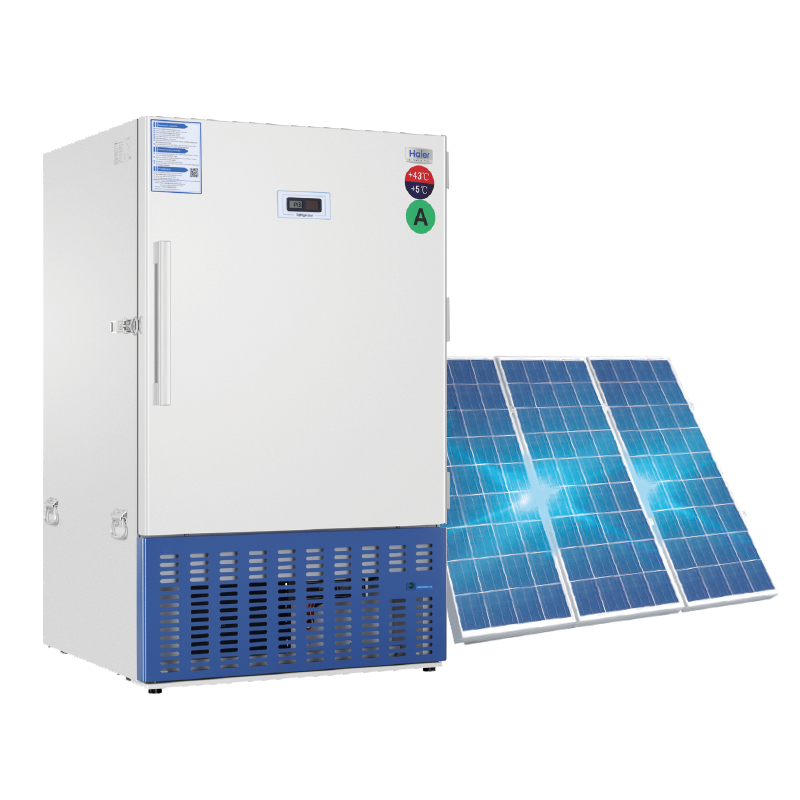
HTC-120 Solar Direct Drive Vaccine Refrigerator
Solar direct drive upright vaccine refrigerator
Price on request

Medical equipment and biomedical engineering.
Abuja, Nigeria.
Compare three Haier Biomedical solar direct-drive vaccine refrigerators listed with Franance: HTC-40, HTC-120 and HTC-240. Specify vaccine volume, site solar conditions, PQS requirement, solar system scope, installation and destination, then request a written quotation.
3 models
Solar direct drive upright vaccine refrigerator
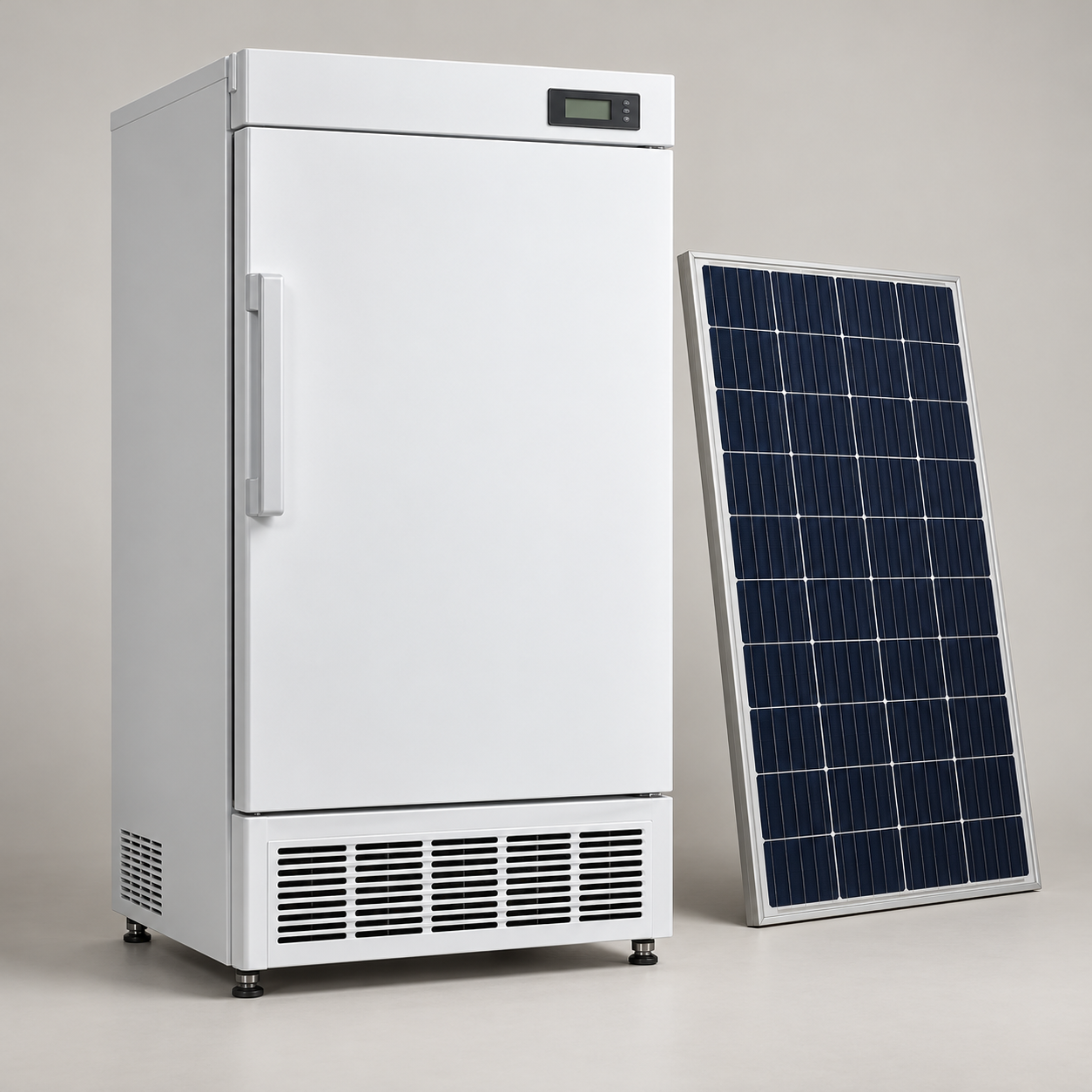
Upright solar direct drive vaccine refrigerator
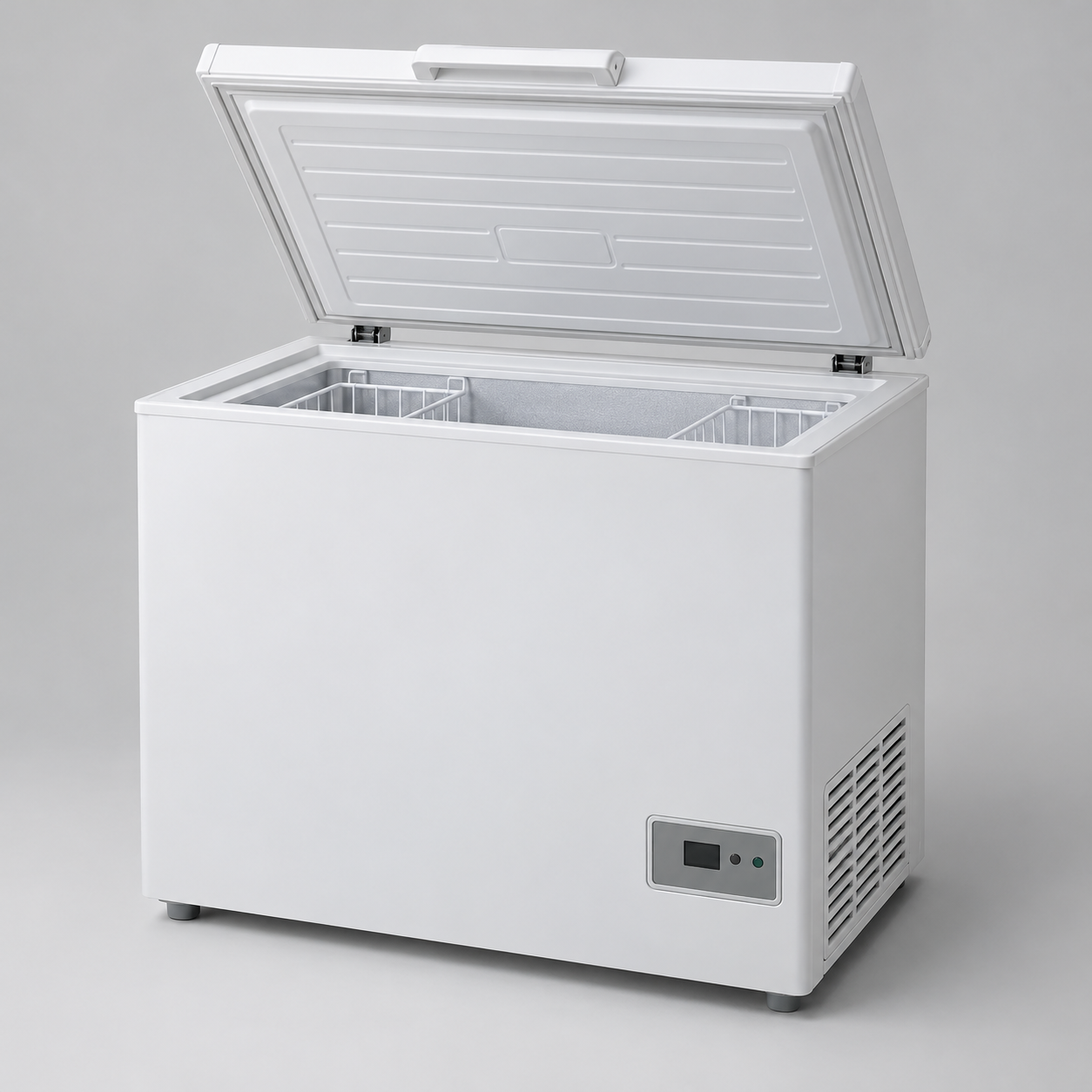
Chest-format solar direct-drive vaccine refrigerator
The category contains three Haier Biomedical models. All are listed by the manufacturer as solar direct-drive vaccine refrigerators with a 2–8°C range.
Read moreCheck the exact model, not the category. WHO's Performance, Quality and Safety (PQS) programme lists refrigerators and freezers under category E003. When this guide was reviewed on 20 October 2026, WHO's E003 product records showed all three Haier models as prequalified solar direct-drive refrigerators from Qingdao Haier Biomedical:
Read moreA solar direct-drive (SDD) refrigerator runs from solar panels through a controller. WHO's records for the three Haier models list the energy source as solar direct drive, and the manufacturer's tables for the HTC-120 and HTC-240 give a 24 V power specification. Confirm with Haier or Franance whether any battery or other energy storage is part of a given offer rather than assuming either way.
Read moreBuy solar vaccine refrigerators in Nigeria through Franance by naming the exact model, the vaccine volume you must store, the site's solar and ambient conditions and the solar system scope you expect. Franance's Solar Vaccine Refrigerator category currently lists three Haier Biomedical solar direct-drive records: the HTC-40 chest refrigerator, the HTC-120 upright and the HTC-240 upright. Each listing is a quotation enquiry, not online checkout. The catalogue does not establish Nigerian stock, price, lead time, installation, warranty, training or service for a particular order. Those terms must appear in Franance's written quotation. This guide separates what the manufacturer and WHO publish from what still has to be confirmed for your clinic, store or state programme.
The category contains three Haier Biomedical models. All are listed by the manufacturer as solar direct-drive vaccine refrigerators with a 2–8°C range.
- HTC-40: chest cabinet, 40 L gross volume, 22.5 L vaccine storage capacity, Haier-listed holdover of 122 hours 18 minutes at 43°C.
- HTC-120: upright cabinet, 120 L gross volume, 100 L vaccine storage capacity, holdover of 112 hours 24 minutes at 43°C.
- HTC-240: upright cabinet, 240 L gross volume, 200 L vaccine storage capacity, holdover of 95 hours 23 minutes at 43°C.
Haier gives a 24 V / 5 A power specification for the HTC-120 and HTC-240, and its HTC-40 page says that model works in ambient conditions of 5–43°C. The upright page describes anti-freeze protection and patented heat-pipe technology for temperature uniformity. The chest page describes a lockable cabinet with an inner lid, baskets, a solar temperature display and a USB charging port.
These are specifications to quote against, not a guarantee of performance at your site. Franance can quote one model or compare all three. Ask for the current Haier datasheet for the exact product code offered.
Check the exact model, not the category. WHO's Performance, Quality and Safety (PQS) programme lists refrigerators and freezers under category E003. When this guide was reviewed on 20 October 2026, WHO's E003 product records showed all three Haier models as prequalified solar direct-drive refrigerators from Qingdao Haier Biomedical:
- HTC 40 SDD, code E003-075e, accepted 6 June 2016.
- HTC-120-SDD, code E003-116e, accepted 6 September 2020.
- HTC-240-SDD, code E003-117e, accepted 6 September 2020.
The records we read showed "Valid until 31 May 2027". WHO's records are revised, and older versions of the same product pages show earlier validity dates, so confirm the live record when you order and again before delivery. WHO's own guidance is that a device with a suspended or withdrawn status should not be purchased.
Three cautions apply:
1. A WHO listing is not a Franance or Nigerian approval. It does not prove NAFDAC registration, Nigerian stock, a particular shipment's configuration or a programme's acceptance. Franance does not claim any of these on this page.
2. Haier's own product pages did not mention PQS. The listing evidence comes from WHO's records, so ask for the PQS code and a specification that matches the WHO record in the quotation.
3. PQS applies to the specified product and system. WHO's E003 guidance expects solar appliances to include a manufacturer-certified solar power system that complies with the relevant PQS solar specification. A refrigerator quoted without that system, or with substituted panels, is not the same offer.
If a donor, ministry, state primary health care board or programme requires PQS equipment, put that requirement in the enquiry and ask Franance to state the PQS code, the offered configuration and any difference from the WHO record.
A solar direct-drive (SDD) refrigerator runs from solar panels through a controller. WHO's records for the three Haier models list the energy source as solar direct drive, and the manufacturer's tables for the HTC-120 and HTC-240 give a 24 V power specification. Confirm with Haier or Franance whether any battery or other energy storage is part of a given offer rather than assuming either way.
Conventional mains-powered refrigerators depend on grid or generator supply. They sit in a separate catalogue category, the Vaccine Refrigerator category, which currently lists pharmacy refrigerators. WHO also warns that domestic refrigerators and freezers should never be used to store vaccines.
Solar direct-drive is worth quoting when a facility has unreliable or no grid power and a secure location with good sun exposure. A facility with dependable mains supply and generator back-up may be better served by a conventional unit. The decision belongs to the programme's cold-chain officer, who can weigh the site's power record, the available service network and the lifetime cost.
Start with peak vaccine stock, not gross volume. Haier lists vaccine storage capacity separately, and the difference is large: the HTC-40 stores 22.5 L in a 40 L cabinet.
- HTC-40 (22.5 L): suits a small post or outreach-linked site holding a small working stock. The chest format is lockable and has an inner lid.
- HTC-120 (100 L): suits a primary health centre with routine immunization volume. Upright access makes stock handling quicker.
- HTC-240 (200 L): suits a larger facility or a supply point serving several clinics. Its array sizing needs careful matching with Haier and the solar supplier.
To size correctly, list each vaccine presentation, the doses you hold at peak, the interval between deliveries and the carton dimensions. Include diluents and cool or water packs only if the programme stores them in the same cabinet. Ask for the usable shelf or basket layout, because stated litres are not the same as a packed cabinet.
Holdover is how long a refrigerator keeps its contents in range when energy supply stops. For solar units this matters at night, in cloudy or harmattan-haze periods and during a controller or panel fault.
Haier lists holdover at 43°C of 122 hours 18 minutes (HTC-40), 112 hours 24 minutes (HTC-120) and 95 hours 23 minutes (HTC-240). WHO's records list "autonomy" figures of 117 hours for the HTC-40, 112:24 for the HTC-120 and 95:23 for the HTC-240, each with a solar radiation reference period of 3.5 kWh/m²/day. The HTC-40 record also lists a hold-over time of 122 hours. The WHO records give the climate zone as hot, the minimum rated ambient temperature as 5°C and freeze protection as Grade A.
Use these figures to compare models, not to promise an outcome. The manufacturer's page and WHO's record use different terms, so ask the supplier which test condition each figure represents. A fully stocked cabinet in a hot room does not behave like a test chamber. Plan for a named person to check the display and respond to an alarm daily, with a written procedure for moving vaccines if the cabinet drifts out of range.
They can, if the site is assessed and the system is sized for it. The WHO records classify the three models as hot-climate appliances with a 43°C test temperature. Neither Haier's pages nor the WHO records establish performance at a particular Nigerian site, and hot-season temperatures, cloudy rainy-season periods and dusty harmattan air all affect solar supply and room conditions. Check local climate data for your location rather than relying on a national average.
Before ordering, collect:
- Location and any shading from trees, walls or buildings.
- Roof or ground mounting options for the panels, and how they will be secured. WHO's E003 guidance says solar modules must be physically secured against theft.
- Dust exposure and cleaning access for the panels.
- Ambient temperature and ventilation in the room that houses the refrigerator.
- Cable route length from array to appliance.
WHO's records warn that solar array sizing for a specific site is complex and must be agreed with the appliance manufacturer and the qualified supplier of the solar energy system at the time of ordering. The HTC 40 SDD WHO record's comments describe a 24 V system with two 180 W panels or one 360 W panel. That is a WHO record note, not a Franance quotation. Ask for the panel wattage, panel count, controller, mounting kit and cable length in writing.
Treat the refrigerator and the solar kit as one scope. A quotation for "HTC-120" without the array leaves the buyer with an appliance that cannot run. Ask Franance to state, line by line:
- Refrigerator model and product code, with the PQS code if relevant.
- Solar panels, controller, mounting structure, cabling and protective devices.
- Whether batteries or other energy storage are included.
- Accessories. WHO's records list keys, a handle component and a 30-day data logger for the HTC-120 and HTC-240, and baskets, manuals and keys for the HTC 40 SDD. Your offer's contents must be confirmed.
- Site survey, installation, commissioning and a handover test.
- Training for staff who read the display and respond to alarms.
- Spare parts, warranty and who services the unit in your state.
WHO's guidance expects a qualified servicing network for on-site assessment, installation and long-term maintenance, and says replacement of components must be anticipated and funded. If the quotation cannot name the service route for your state, treat that as a gap to resolve before purchase.
A built-in display is not a monitoring programme. Specify how temperatures will be recorded, who reads them, how often and what happens when a reading is out of range. WHO's records list a 30-day data logger with the HTC-120 and HTC-240 and mention optional remote temperature monitoring. Confirm whether either is in your offer.
For continuous records, consider a separate temperature data logger. For a regional store that needs a walk-in room rather than cabinets, see medical cold rooms. NAFDAC publishes cold chain management guidance on trained personnel, monitoring and maintenance, and your facility should check the requirements that currently apply to it.
Send one enquiry through the contact form with:
1. The model, or the vaccine volume you need to store.
2. Whether PQS prequalification is required, and by whom.
3. Facility name, city, state and type of site, such as a health post, primary health centre or state store.
4. Solar exposure, shading, ambient conditions and whether any grid or generator supply exists.
5. Quantity and delivery address, including road access. WHO's records list shipping weights of 160 kg for the HTC-120 and 185 kg for the HTC-240, so check current packed dimensions and weight.
6. Installation, commissioning, training, warranty and service expectations.
7. Monitoring and alarm needs.
You can open the exact model listings to confirm the record before you write: HTC-40, HTC-120 and HTC-240. The Haier Biomedical hub shows the other cold-chain records, and the vaccine and pharmacy cold chain guide places this category beside logger, cold-room and pharmacy refrigerator options.
Franance will follow up to confirm the exact configuration. Price, availability, delivery time and service terms are given only in its written quotation.
This guide was reviewed on 20 October 2026 against Haier Biomedical's upright solar direct-drive vaccine refrigerator page and chest solar direct-drive page, and WHO's E003 refrigerators and freezers page with product records E003-075e, E003-116e and E003-117e.
Limits: the Haier pages did not state PQS status, and the upright page did not list an ambient range or panel details. WHO's records can change. Nothing here establishes Nigerian stock, price, NAFDAC registration, delivery, installation, warranty, local service or site performance. Confirm the exact model, configuration and current WHO status at procurement.
The category lists Haier Biomedical HTC-40, HTC-120 and HTC-240 solar direct-drive records. Each is a quotation enquiry; confirm availability and terms in writing.
WHO's E003 records read on 20 October 2026 list HTC 40 SDD, HTC-120-SDD and HTC-240-SDD as prequalified, valid until 31 May 2027. Recheck the live record and the offered configuration at procurement; Haier's product pages did not state PQS status.
No. A WHO record does not establish NAFDAC registration, stock, price, delivery, installation or service for a Franance order.
Haier lists holdover at 43°C of 122 h 18 min (HTC-40), 112 h 24 min (HTC-120) and 95 h 23 min (HTC-240); WHO lists autonomy at a 3.5 kWh/m²/day reference. These are test-based comparison figures, not site guarantees.
Do not assume so. WHO expects a certified solar system with the appliance, but the panels, controller, mounting, cabling and any storage in your quotation must be stated line by line.
Share the model or vaccine volume, PQS requirement, site solar and ambient conditions, quantity, scope and Nigerian destination. Franance will follow up to confirm the quotation details.
Request a quotationAdd the models you need to a quote order, or send us your equipment list.