
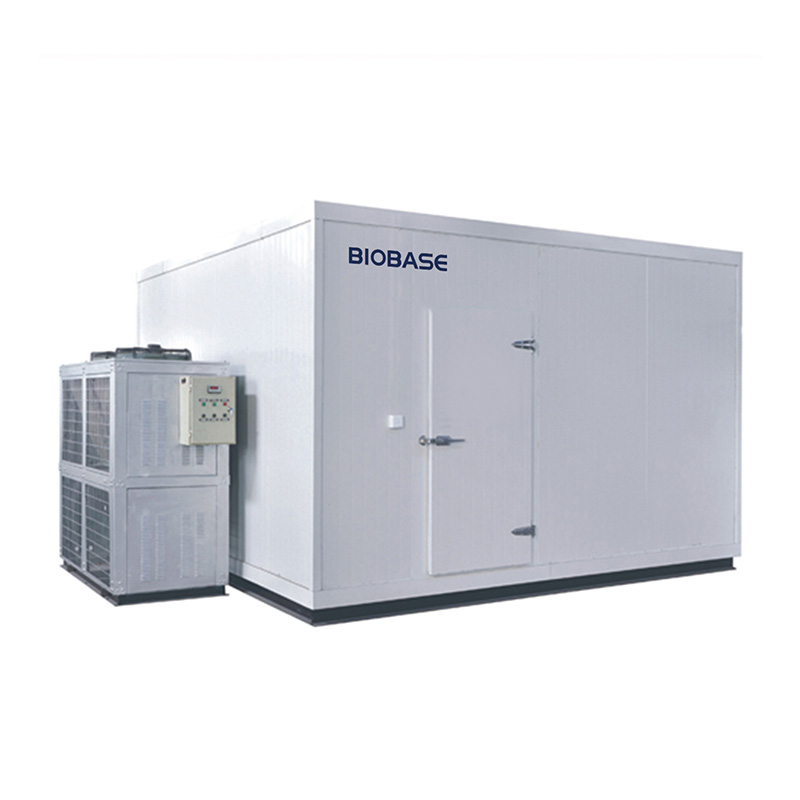
Modular Cold Room for Medicine Storage
Configurable modular cold-storage room for medicine storage
Price on request

Medical equipment and biomedical engineering.
Abuja, Nigeria.
Compare the two medical cold-room records currently listed by Franance: Haier Biomedical HRZK-10G and BIOBASE Modular Cold Room. Start with the stored products, required temperature profile and net usable capacity, then provide site drawings, power, access, monitoring and installation needs for a project-specific quotation.
2 models
Configurable modular cold-storage room for medicine storage
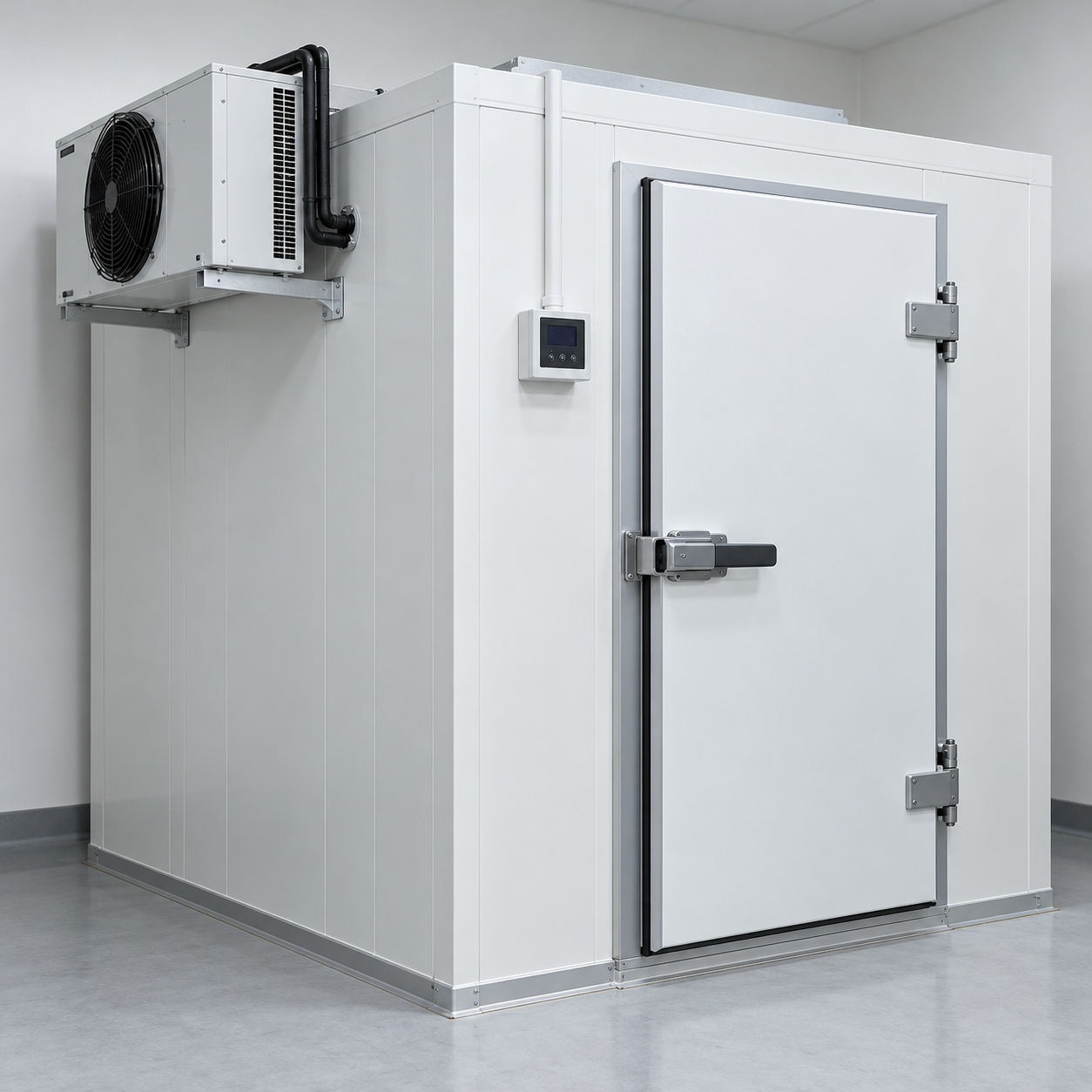
Modular medical cold room for vaccine and medicine storage
The current medical cold-room category contains two product records:
Read moreThe Haier record is a named 10 m³ model for a listed 2–8°C range, whereas the BIOBASE page describes a modular product with no fixed model or target temperature. Haier also describes automatic main/standby refrigeration-machine switching through its PLC system. BIOBASE describes modular panel construction and several panel thickness choices. These published facts help you frame an enquiry, but they do not establish which complete system is the better choice for your application.
Read moreCalculate net usable storage capacity from the actual inventory and expected peak stock. Do not order using the gross cubic-metre figure alone. WHO's E001 guidance explicitly warns against using a room's gross capacity as the order basis before verifying net capacity with the supplier. Shelving, circulation gaps, door clearance, evaporator placement, stock arrangement and safe access all affect how much product can be held and retrieved.
Read moreBuy medical cold rooms in Nigeria through Franance by defining the products to be stored, their approved temperature conditions, the net usable capacity and the facility where the room will be installed. Franance currently lists two medical cold-room records: Haier Biomedical HRZK-10G and BIOBASE Modular Cold Room. The Haier model table lists one 10 m³ configuration; the BIOBASE page describes a configurable system without one fixed capacity or target temperature. They are not interchangeable specifications. A walk-in cold room is a project, not a refrigerator cabinet delivered with a plug. The building, access, electrical supply, refrigeration equipment, monitoring, installation and maintenance have to fit together. Start with the intended application and a written site brief, then request a Franance quotation for the exact configuration. A catalogue record is not a stock reservation or a promise of Nigerian delivery, installation or service; confirm those terms for your location in writing.
The current medical cold-room category contains two product records:
Haier Biomedical HRZK-10G: Haier lists this model at 10 m³, an internal temperature range of 2–8°C and a 220 V / 50 Hz supply. The manufacturer describes its cold-room system as modular and customized. Its page describes PLC control for refrigeration start/stop, scheduled rotation between main and standby machines and fault changeover.
BIOBASE Modular Cold Room: BIOBASE describes a configurable modular room for applications that include medicine storage. It lists polyurethane panel thickness options of 75, 100, 150 and 200 mm. Its product page does not give one fixed model number, room capacity, setpoint or complete package for a specific site.
These are different levels of published detail. HRZK-10G has a model-table capacity, range and supply listing. BIOBASE describes a configurable product family, so its actual design must be defined in the quotation. In either case, ask for the exact offered product code, drawings, refrigeration and control schedule, included components, current manuals and exclusions. A written design should state the values and responsibilities that matter to your facility; do not fill gaps by assuming the two manufacturers' products share one configuration.
The Haier record is a named 10 m³ model for a listed 2–8°C range, whereas the BIOBASE page describes a modular product with no fixed model or target temperature. Haier also describes automatic main/standby refrigeration-machine switching through its PLC system. BIOBASE describes modular panel construction and several panel thickness choices. These published facts help you frame an enquiry, but they do not establish which complete system is the better choice for your application.
Compare the written project proposal on equivalent terms: required operating range and allowable variation; net product capacity; room dimensions; panel, floor and door construction; refrigeration arrangement; control and alarm functions; power supply; monitoring and recording; energy use; service access; installation and acceptance tests. If one offer states only a room volume and the other includes system details, ask both suppliers to clarify the same requirements before comparing cost. Do not interpret the BIOBASE panel options as a temperature or performance rating, and do not interpret the Haier product-family description as proof that every requested accessory is included in the specific quotation.
Haier's product table has a certificate column that reads “WHO; PQS.” The current WHO E001 catalogue lists products by manufacturer and product record. Before making a procurement decision that requires PQS, check the current WHO record for the exact product reference and scope, then confirm the offered configuration matches it. A manufacturer's certificate-column entry alone does not prove current prequalification for the exact room being quoted, nor does it establish NAFDAC registration or local approval.
Calculate net usable storage capacity from the actual inventory and expected peak stock. Do not order using the gross cubic-metre figure alone. WHO's E001 guidance explicitly warns against using a room's gross capacity as the order basis before verifying net capacity with the supplier. Shelving, circulation gaps, door clearance, evaporator placement, stock arrangement and safe access all affect how much product can be held and retrieved.
Prepare an inventory worksheet with product or package type, package dimensions, peak quantity, expected growth, replenishment interval and stock rotation. Identify whether the room will hold vaccines, medicines, reagents or other biological products, and keep application-specific storage needs distinct. Include how stock will be arranged, received and issued, whether cartons must remain in original packaging, and any segregation rules established by your quality system. Ask the designer to show the net capacity calculation and proposed shelving or racking plan against those requirements.
For a 10 m³ HRZK-10G, regard 10 m³ as the manufacturer's listed model capacity, not a guaranteed amount of usable vaccine volume. For the BIOBASE modular room, the product page publishes no fixed capacity at all; request the required internal and external dimensions and the calculated usable volume in the design. Ask how the stated capacity was calculated and which layout, temperature zone, shelving, clearances and stock assumptions it includes. A project proposal should not leave “capacity” undefined.
If a store serves multiple facilities, include future programme introductions and seasonal or campaign peaks in the demand estimate. WHO E001 identifies future vaccine introductions as part of capacity planning. A qualified cold-chain manager or inventory owner should validate the assumptions; the cold-room supplier should translate them into a room design. Do not inflate the room based on a guessed growth rate or assume a larger room will automatically improve stock handling, temperature performance or operating cost.
There is no single temperature that is right for every medical cold room. The setpoint and allowable variation depend on the stored product, its approved label, programme procedures and facility quality requirements. Write those conditions into the design brief and request a system whose documented operating and performance envelope matches them. Do not choose a room by a broad “medical” or “cold-chain” label.
Haier lists HRZK-10G at 2–8°C. That published model range can be considered only for an application whose responsible technical and quality owners confirm it is suitable. It does not establish that the room can maintain every point within the range under your room load, ambient conditions, door openings and power interruptions. The BIOBASE product page says it covers a wide temperature range but does not specify one target or model-specific range. It must not be described or used as a validated 2–8°C vaccine room unless a project-specific design and evidence support that requirement.
Ask the supplier to state the setpoint, control limits, permitted operating variation, design ambient conditions, pull-down expectation, alarm thresholds and recovery criteria for the exact proposed system. Clarify where the temperature sensors sit and whether performance applies to empty or loaded conditions. Have a qualified person review the design, test protocol and acceptance limits before procurement. The product page, quote or display reading cannot determine whether a stored medicine or vaccine remains usable after an excursion; follow the product's approved procedures and the facility's quality system.
Check the live WHO E001 record for the exact manufacturer reference and configuration if the tender or programme requires WHO prequalification. The WHO product listing is searchable by E001 code, manufacturer and manufacturer's reference. Match the record to the model named in the offer; check its status and any applicable validity information at the time you procure. Ask the supplier to identify the exact listing and provide supporting documentation.
This check is separate from Nigerian registration, stock, delivery and installation. WHO's catalogue is a prequalification reference for immunization-device procurement; it does not establish that the specific quotation is NAFDAC registered, available locally, configured as required or acceptable to a particular Nigerian buyer. Haier's page includes “WHO; PQS” in a model-table certificate column, but this guide does not independently establish the current status and exact scope for the proposed HRZK-10G configuration. The BIOBASE product page does not claim an E001 prequalification. Do not transfer a certificate or listing from a manufacturer, product family or other model to a different configuration.
If PQS is not a requirement, still specify performance, electrical, installation, monitoring and acceptance evidence appropriate to the application. If it is a requirement, make the exact code and required documentary evidence part of the quotation request and purchase review. The tender and final schedule should list the submitted product model rather than saying only “medical cold room.”
Prepare the building and delivery route before confirming the room. WHO E001 calls for a site-ready space with the required power, wiring and services; UNICEF also recommends checking room fit, access and ventilation. Share a measured plan covering footprint, ceiling height, doors, corridors, floor, equipment location and installation route. Confirm where refrigeration equipment rejects heat, required clearances and the access needed for staff and maintenance. Have building and refrigeration teams assess drainage, humidity, environmental exposure and any structural work.
Record actual site voltage, frequency, phase, circuit capacity, grounding, outage pattern and backup supply. Haier lists 220 V / 50 Hz for the HRZK-10G but not complete site wiring or demand; obtain current installation data for the exact offer. BIOBASE does not specify a particular system's electrical supply. WHO E001 identifies generators and stabilizers as project considerations, not automatic requirements. Ask the supplier and a qualified electrical engineer whether backup generation, changeover or protection is needed, and assign responsibility for wiring and connection in the quotation.
Treat monitoring as a designed operating process, not an optional line that can be inferred from the controller. Specify temperature sensors, display, recording interval, data retention, alarms, alarm routing, access to records, calibration documents and communication requirements. Identify who checks the room, at what interval, who receives an out-of-range alert, how after-hours escalation works and which person has authority to assess stock after an excursion.
Request the sensor layout and explain how it relates to the room geometry and intended stock arrangement. Ask which monitoring device is included, its range and accuracy documentation, calibration and recalibration plan, data export method, alarm functions and any software or network dependency. The Haier page describes PLC system control; that alone does not show which independent temperature monitoring, records or alarm-routing components are included in the HRZK-10G offer. The BIOBASE product listing likewise does not define site monitoring. Get the specific schedule in writing.
Before placing an order, agree the commissioning and temperature-mapping scope with the responsible quality owner and a competent supplier. Define empty or loaded test conditions, sensor count and placement, test duration, operating conditions, door-opening or power-failure tests if required, acceptance criteria, report format, deviations and corrective actions. Mapping results apply to a defined configuration and protocol; they do not replace ongoing monitoring, maintenance or a written response plan. WHO E001 includes guidance on cold-room temperature mapping and says monitoring equipment must be recalibrated annually. Confirm the schedule and responsibility with the facility's applicable procedures.
NAFDAC's cold-chain information provides national guidance and links on equipment handling, storage and monitoring. Check the current materials and the requirements that apply to your facility and products. Neither this guide nor a catalogue listing establishes qualification or release of a room for regulated storage.
Ask for one written project scope that names the equipment and every service boundary. WHO E001 says delivered cold rooms must be assembled and commissioned by a competent installer, with installation supervised and user training provided. The site must be prepared with the utilities and services required by that installer. Ask who supplies and installs each part: insulated panels, floor and door, refrigeration equipment, controls, electrical works, monitoring, alarm communication and any backup-power equipment.
Require the quote to distinguish manufacturer-supplied components from site works and separately priced options. Ask whether it includes a site survey, design review, delivery to the facility, installation, startup, commissioning checks, temperature mapping, training, operating manuals, as-built drawings, spare parts, warranty, maintenance visits and response arrangements. Do not assume these are included because a page describes a modular, “smart” or complete system. Each promised component, activity, exclusion and acceptance document should be named.
Maintenance planning starts before purchase. Identify who can inspect the refrigeration circuit and controls, maintain the room enclosure and door seals, test alarms, review logs and source replacement parts. Ask the supplier to state the available service route for your destination and the proposed response arrangements, then confirm them in the order documents. A catalogue entry does not prove there is a local engineer, service centre or spare part in your state. Franance must confirm whether any installation, training, warranty or service is available for the exact project and what it costs.
Send Franance enough detail to develop a comparable, technically reviewable offer:
1. The exact model, if known, or whether you are requesting the Haier HRZK-10G, BIOBASE Modular Cold Room or a comparison.
2. The stored product types, approved storage conditions, target temperature and allowable variation.
3. A peak-inventory schedule with package dimensions, planned growth and the net usable capacity required.
4. Site drawings, internal and external dimensions, access route, installation location, ambient conditions and available ventilation or heat rejection.
5. Supply voltage, frequency and phase, measured power conditions, generator or backup plan and existing electrical works.
6. Shelving or racking, refrigeration redundancy, controller functions, monitoring devices, data records, alarm recipients and network needs.
7. Required site survey, engineering review, delivery, installation, commissioning, temperature mapping, training, maintenance and service scope.
8. Quantity, facility name, contact, destination city and state, receiving access and any procurement documentation or PQS requirements.
Use the Haier HRZK-10G filtered listing and BIOBASE Modular Cold Room filtered listing to identify the current catalogue records. Then send a medical cold-room quotation request. Franance will follow up by phone or email. The order is a quote enquiry, not an online purchase; price, availability, delivery, installation and support are confirmed only in the written offer.
### Does the Haier HRZK-10G hold 10 m³ of vaccine stock?
Haier lists HRZK-10G at 10 m³, but WHO cautions buyers to calculate and verify net vaccine capacity rather than use gross room volume as the order basis. Ask for the usable-capacity calculation and shelving layout for your room and stock profile.
### Is the BIOBASE Modular Cold Room suitable for 2–8°C vaccine storage?
The referenced BIOBASE page does not publish a fixed temperature or model configuration. Request a project-specific design that states the target range, allowable variation, usable capacity, monitoring and qualification evidence. Do not assume suitability from the product name.
### Does WHO PQS status mean the cold room is approved in Nigeria?
No. WHO PQS status and Nigerian registration or facility acceptance are distinct checks. Verify the exact current WHO E001 record if required, and separately confirm applicable Nigerian requirements, offered configuration and documentation with the responsible authorities and supplier.
### Can the cold room be delivered and installed anywhere in Nigeria?
The catalogue does not establish delivery or installation coverage. Provide the exact destination, access route and requested works, then ask Franance to confirm availability, transport, competent installation, commissioning and service arrangements in its written quotation.
### How should I compare two cold-room quotations?
Compare them against the same specification: net capacity, dimensions, operating range, refrigeration and controls, power, monitoring, included equipment, site work, commissioning, mapping, training, maintenance, warranty and exclusions. Obtain clarification where one offer omits a requirement rather than comparing different scopes as though they were equivalent.
The product descriptions were checked against Haier Biomedical's Cold Room / Freezer Room page and BIOBASE's Modular Cold Room page. Procurement and technical planning references were checked against WHO E001 cold-room guidance, the WHO E001 product listing, UNICEF E001 procurement guidelines and NAFDAC Cold Chain Management guidance. Reviewed 20 October 2026.
This guide covers only the two products currently assigned to Franance's medical cold-room category. Haier's model-table figures do not establish net usable capacity, site performance or the full offered configuration; BIOBASE's page does not specify one fixed temperature, capacity or model. The Haier certificate-column wording has not been treated as proof of current model-specific WHO prequalification. No Nigerian stock, price, delivery, installation, warranty, service coverage, regulatory status or facility acceptance is asserted. Confirm the current manufacturer and WHO documentation, applicable requirements and all project terms before ordering.
The current category lists Haier Biomedical HRZK-10G and BIOBASE Modular Cold Room. Both are quotation enquiries. Franance must confirm the offered configuration, availability and terms in writing.
Haier's model table lists HRZK-10G at 10 m³, 2–8°C internal temperature range and 220 V / 50 Hz. That is not the same as net usable storage capacity or proof of performance at your site; ask for a project-specific design and current documentation.
The referenced BIOBASE page does not publish a fixed model number, target temperature or capacity. Do not assume it is a qualified 2–8°C room. Obtain a written temperature, capacity, monitoring and qualification specification for your intended application.
No. Gross room volume does not equal net usable product capacity. WHO advises calculating the net vaccine capacity and checking it with the supplier before ordering.
The catalogue does not establish Nigerian delivery, installation, warranty or service coverage. Include your city, state and site scope in the enquiry and confirm all terms in Franance's written quotation.
Send the required temperature profile, net storage capacity, room drawings, site and power details, monitoring requirements, destination and installation scope. Franance will follow up by phone or email to confirm the quotation details; no online payment is taken.
Request a quotationAdd the models you need to a quote order, or send us your equipment list.