

Philips Radiology Information System RIS Platform
Radiology information application platform with server deployment
Price on request

Medical equipment and biomedical engineering.
Abuja, Nigeria.
Buy radiology information system software in Nigeria through Franance. Compare four RIS-category records from AGFA HealthCare, GE HealthCare, Philips and RamSoft, including one combined RIS/PACS platform. These are software records, not a bundle of physical servers. Submit the exact release, workflow, sites, integrations and deployment requirements as a quote order.
4 models
Radiology information application platform with server deployment
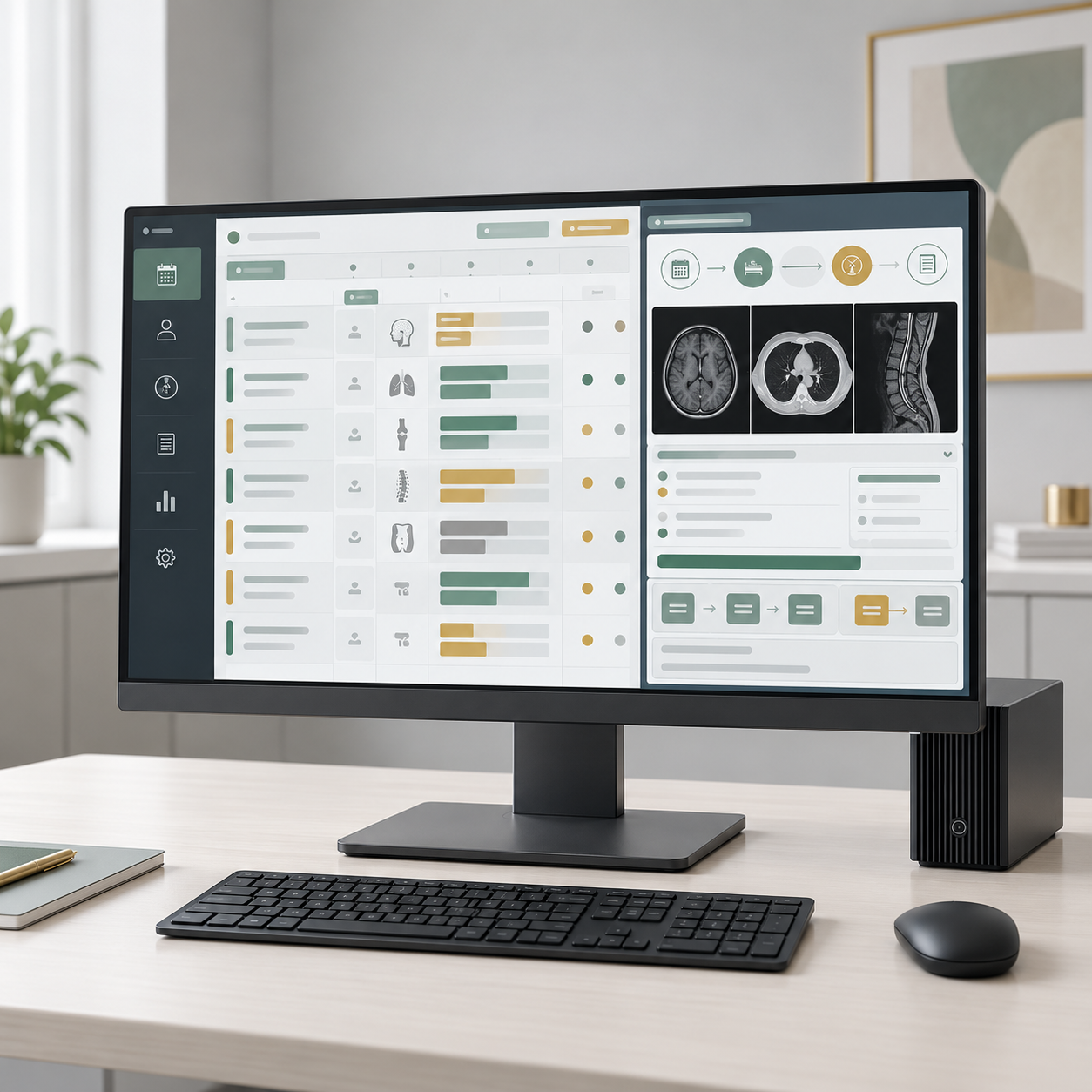
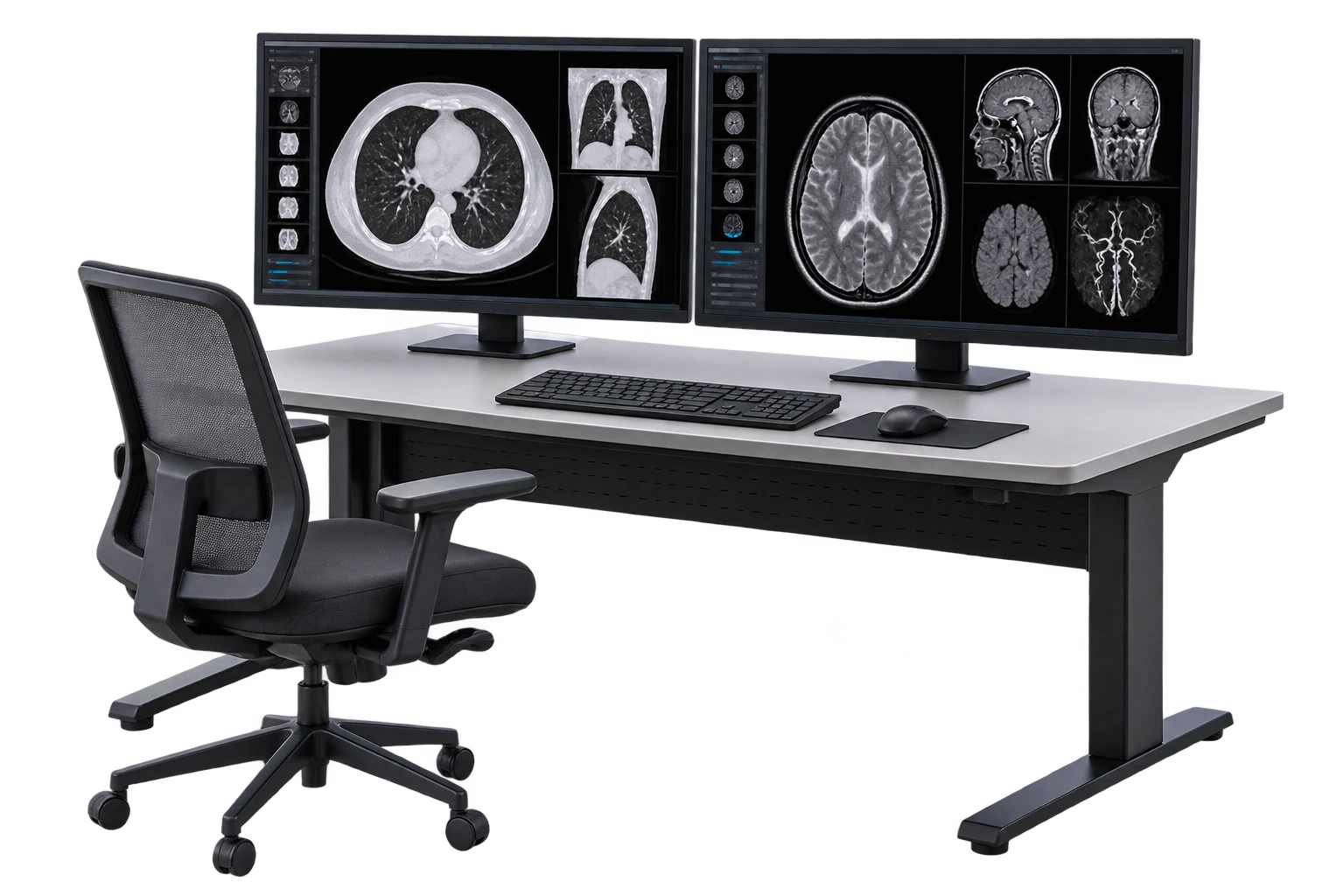
Radiology information and picture archiving and communication software platform
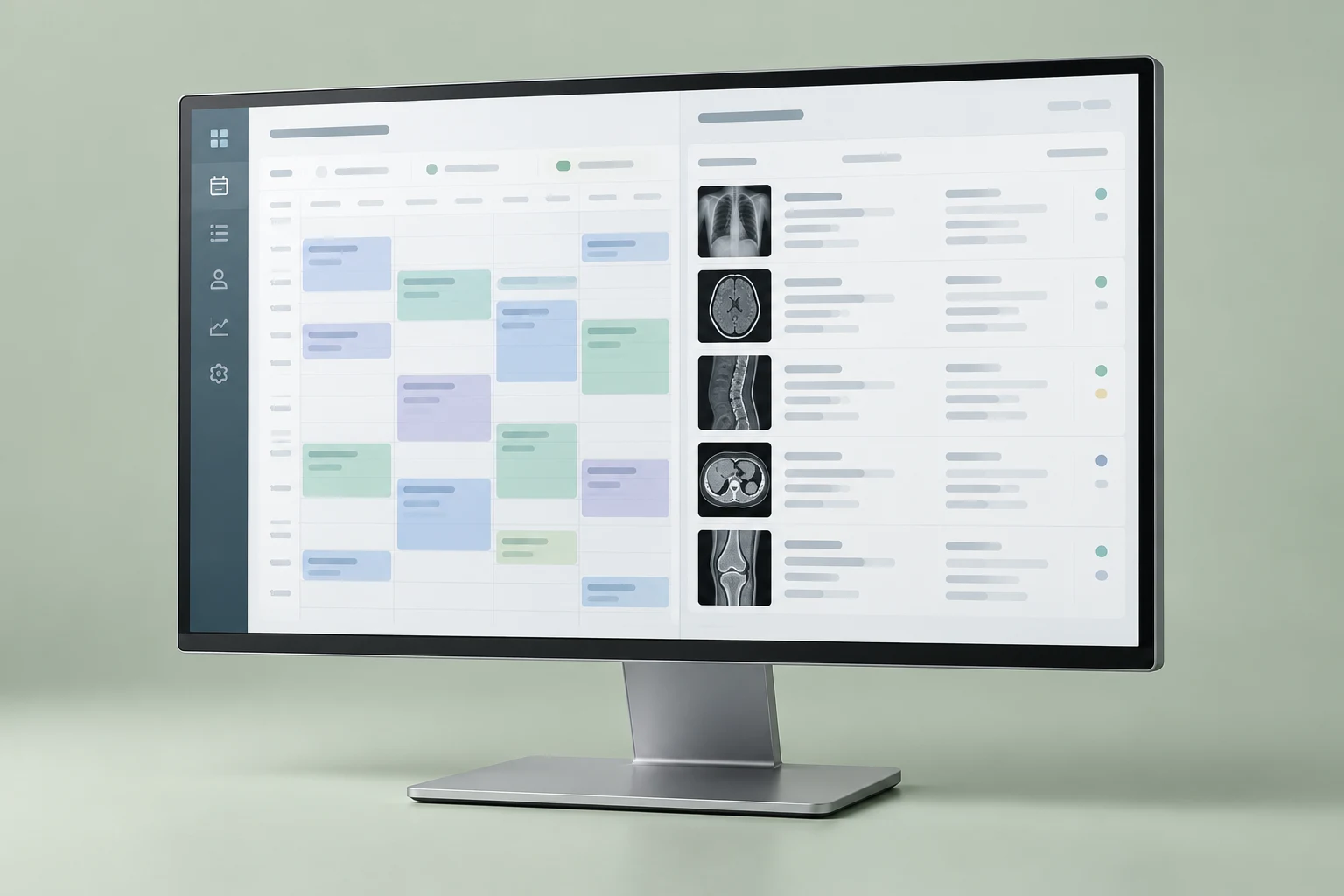
Radiology information system and imaging scheduling software
Start with the RIS server category and its filtered product listing. The category contains four software platform records. Despite the slug containing “server,” these entries describe radiology information or workflow software, including one combined RIS/PACS platform. They are not four preconfigured physical server appliances. The required server, database, operating environment, storage and other infrastructure must be specified as part of the implementation plan and confirmed for the exact software release.
Read moreA RIS supports administrative and operational workflows for imaging departments. Depending on product, version, modules and configuration, those workflows can include receipt of imaging orders, patient registration, appointment scheduling, procedure and worklist management, examination status, reporting, result distribution, billing and records. Philips’ RIS documentation describes a patient journey from order receipt and scheduling through registration, examination, documentation and reporting. GE describes Centricity RIS-i as configurable radiology workflow software for patient data, exam planning, workflow monitoring and result presentation. AGFA describes Enterprise Imaging Scheduling as bringing appointments, staff, departments and resources into coordinated workflows. These examples illustrate product capabilities, not a promise that a selected license includes every workflow.
Read moreThe four assigned records cover different software families. AGFA HealthCare Enterprise Imaging RIS and Scheduling is catalogued as an enterprise imaging and scheduling offering. AGFA’s current material describes Enterprise Imaging Scheduling as coordinating imaging appointments and related department resources; confirm the exact product naming and module included in the quote because vendor portfolios evolve.
Read moreBuy radiology information system software in Nigeria through Franance by defining the radiology workflows, integrations and deployment scope your facility needs—not by selecting a server specification alone. Franance currently lists four RIS-category records: AGFA HealthCare Enterprise Imaging RIS and Scheduling, GE HealthCare Centricity RIS-i 7.0 SP6, Philips Radiology Information System, and RamSoft PowerServer RIS/PACS. Compare the RIS software listings, then send the exact product, version, sites, interfaces, users and implementation requirements as a quote order. Franance follows up by phone or email; a listing does not confirm Nigerian availability, a fixed price, a server bundle or local implementation support.
Start with the RIS server category and its filtered product listing. The category contains four software platform records. Despite the slug containing “server,” these entries describe radiology information or workflow software, including one combined RIS/PACS platform. They are not four preconfigured physical server appliances. The required server, database, operating environment, storage and other infrastructure must be specified as part of the implementation plan and confirmed for the exact software release.
To shortlist a record, review the exact filtered AGFA Enterprise Imaging RIS listing, GE Centricity RIS-i 7.0 SP6 listing, Philips RIS listing, and RamSoft PowerServer RIS/PACS listing. Franance’s listing is a starting point for a quotation request, not confirmation that a release is licensed, available or supported for a particular Nigerian facility.
A RIS supports administrative and operational workflows for imaging departments. Depending on product, version, modules and configuration, those workflows can include receipt of imaging orders, patient registration, appointment scheduling, procedure and worklist management, examination status, reporting, result distribution, billing and records. Philips’ RIS documentation describes a patient journey from order receipt and scheduling through registration, examination, documentation and reporting. GE describes Centricity RIS-i as configurable radiology workflow software for patient data, exam planning, workflow monitoring and result presentation. AGFA describes Enterprise Imaging Scheduling as bringing appointments, staff, departments and resources into coordinated workflows. These examples illustrate product capabilities, not a promise that a selected license includes every workflow.
RIS and PACS have related but distinct roles. A RIS manages workflow and information around imaging services; PACS manages medical images and related image exchange and viewing functions. A product may combine both roles—as RamSoft PowerServer RIS/PACS does in its product family—but a RIS label alone does not imply image archive, diagnostic viewing, reporting tools, modality worklists, or integration to every other hospital system. Define what the hospital expects the system to do and ask the proposal to map each requirement to the exact module, license, interface and responsible party.
The four assigned records cover different software families. AGFA HealthCare Enterprise Imaging RIS and Scheduling is catalogued as an enterprise imaging and scheduling offering. AGFA’s current material describes Enterprise Imaging Scheduling as coordinating imaging appointments and related department resources; confirm the exact product naming and module included in the quote because vendor portfolios evolve.
GE HealthCare Centricity RIS-i 7.0 SP6 is a version-specific software record. GE’s May 2026 brochure describes RIS-i 7.0 SP6 as modular RIS software and discusses workflows, server configurations and listed integrations. Philips Radiology Information System is the Philips product record; the exact release, regional scope, modules and current commercial availability require confirmation. RamSoft PowerServer RIS/PACS is a combined RIS/PACS software platform. RamSoft describes cloud and on-premises implementation approaches, but the implementation, licensing, infrastructure and interfaces must be scoped to the actual project.
These products are not interchangeable just because they share a category. Compare their supported workflows, interface scope, deployment requirements, lifecycle and support terms using current version-specific documentation. Do not assume that a vendor’s broader platform capabilities are included in the listed record or the eventual quotation.
Begin with a workflow map. Identify the departments and sites, referring locations, imaging modalities, exam types, patient and order sources, scheduling roles, reporting teams, result recipients, billing requirements and handoffs to emergency, outpatient or inpatient services. Specify current pain points as observable needs—for example, which worklists are needed, who updates examination status, what information is returned to the ordering system, and how a final report reaches its intended users. Avoid buying to a feature checklist without stating who will use each feature and what workflow it must support.
Then document scale and operating assumptions: number of sites, users and concurrent users; expected daily studies and growth; peak scheduling periods; languages and local workflow variations; network conditions; hours of operation; downtime expectations; and required recovery processes. Ask the vendor to size the exact release against these assumptions and provide the architecture, prerequisites and capacity limits in writing. GE’s current brochure gives version-specific server and concurrent-user information for RIS-i 7.0 SP6; that must not be generalized to other RIS products or treated as a sizing recommendation for your facility.
Finally, decide whether this procurement is for new deployment, replacement, upgrade or expansion. Identify the system owner, clinical and administrative stakeholders, IT and biomedical engineering contacts, procurement lead and implementation authority. Agree on who approves the workflow, interfaces, data migration, user acceptance and operational handover before comparing commercial offers.
List every system that must exchange data with the RIS: hospital information system or electronic medical record, PACS, modalities, reporting or speech tools, billing, patient portals, identity services and any national or institutional services. For each connection, describe the source and destination, data exchanged, triggering event, direction, expected timing, error handling, ownership and acceptance test. Identify the exact product and version on both sides, and request the interface specification and any required licenses or middleware.
Standards names such as HL7, DICOM, FHIR or IHE do not prove that a particular interface, workflow or profile is included or will work end to end. GE’s RIS-i brochure lists HL7, DICOM and IHE profiles for a particular release. RamSoft publishes conformance and integration documents for particular product versions. AGFA describes standards-based APIs across its Enterprise Imaging ecosystem. These sources are useful starting points; request the current conformance statements for the offered versions and map them to your use cases. A project should test the actual interfaces with representative messages, workflows and error conditions before acceptance.
Only if the exact proposal includes and licenses the relevant functions. Franance’s category includes three RIS records and one combined RIS/PACS product. The RamSoft PowerServer record explicitly combines the two terms, while GE, Philips and AGFA product information describes workflow and RIS capabilities with varying platform boundaries. Reporting, scheduling, image storage, diagnostic viewers, teleradiology, dictation and analytics may be separate modules, options or connected systems depending on the product and release.
Request a scope matrix that marks each required workflow as included, optional, third-party, excluded or requiring customization. Ask for module names, version numbers, user or site licensing basis, concurrent-use limits, any separate PACS or reporting dependency, and the systems integrator responsible for each interface. If your requirement includes image management as well as RIS, compare the PACS server listings and PACS workstation listings alongside RIS. Their category relationship does not itself establish interoperability or a bundle.
Treat “RIS server” as a software deployment question unless the quote explicitly lists physical hardware. Ask whether the proposed system is cloud-hosted, on-premises or hybrid; which party hosts and operates each component; the supported release; server and database prerequisites; client operating systems and browsers; network and remote-access requirements; storage and retention assumptions; backup and disaster recovery; monitoring; cybersecurity responsibilities; and upgrade process. For on-premises projects, request the full bill of materials and sizing basis for servers, storage, network, power and any redundancy. For cloud projects, request the hosting region, data location, service levels, connectivity assumptions, backup, restoration and exit arrangements.
Confirm the scope of installation and commissioning. Software deployment, data migration, interface configuration, user setup, workflow design, testing, training and go-live support are distinct work packages. Clarify which are included in the vendor or integrator proposal, what the hospital must supply, what third parties must do, and who signs off each deliverable. A product category assignment does not include a server, cloud account, database license, connectivity, data migration or implementation service by default.
If replacing or consolidating a system, identify the records and workflows to migrate: patient demographics, orders, appointments, procedure catalogs, reports, attachments, billing data, audit history, user accounts and any relevant links to stored images. Define what remains accessible in a legacy system, what must be converted, who performs mapping and reconciliation, how exceptions are handled, and how the hospital verifies completeness. Ask for a test migration and a documented sign-off before cutover.
Build an acceptance plan around the hospital’s real workflows. Test order creation and updates, scheduling changes, registration, patient and procedure matching, modality/worklist behavior, exam status, report authoring and distribution, billing handoffs, interface downtime, user permissions, audit trails, backup restoration and agreed performance under expected load. Use anonymized or approved test data and involve the relevant hospital teams. Establish defect severity, resolution ownership, retest requirements, rollback conditions and the support plan for go-live. These are project-specific acceptance topics, not functions guaranteed by any catalogued RIS.
The Franance catalogue does not publish fixed prices for the four RIS records. Software proposals may depend on selected modules, sites, users, concurrent access, interfaces, hosting, infrastructure, migration, implementation, training and ongoing support. A combined RIS/PACS scope can differ materially from a workflow-only license, while an on-premises deployment may require infrastructure and recurring maintenance that are separate from software licensing. Compare offers against the same requirement and scope matrix.
Ask for an itemised quote separating one-time software or implementation charges from recurring subscriptions, maintenance, hosting, interface licenses, hardware, migration, training and support. Ask the provider to identify currency, taxes and other charges, payment milestones, quotation validity, renewal terms, upgrade rights, data export and exit costs. Franance will need the exact product, version, sites and project scope to follow up with a meaningful quotation; no price or availability is confirmed by this guide.
Provide the facility’s city and state, number of sites, contact person and intended deployment model. The catalogue does not confirm location-specific licensing, hosting, delivery of hardware, implementation coverage, training dates or local support for a particular product. Ask Franance to confirm the supplier and implementation responsibilities, eligible locations, any travel or connectivity requirements, schedule, fees and service terms in writing.
For software, “delivery” may mean license provisioning rather than a physical shipment. “Implementation” may involve remote or on-site work by the manufacturer, a local partner, an integrator or hospital IT staff. The proposal should identify each party and contact, service hours and escalation path, language, training audience, maintenance window and any exclusions. Do not interpret a product listing or another country’s manufacturer page as proof that the same commercial or support arrangement applies in Nigeria.
No. Franance accepts quote orders, not online payment. Select the exact listed platform and submit the project context so the team can clarify licensing, deployment, integrations, sites and implementation scope. Franance then follows up by phone or email. Sending an enquiry is not a completed purchase, license activation, stock reservation, implementation booking or delivery commitment.
Choose a model from the RIS listing, then send Franance the product name and exact version, facility city and state, number of sites and users, RIS workflows, PACS/HIS/EMR and modality systems, interface requirements, preferred hosting model, infrastructure assumptions, migration scope, training, acceptance tests and support expectations. Include any known hardware or cloud requirements, target timeline and project contact.
Ask the written proposal to show the software modules and licenses, interfaces and responsibilities, hosting or server prerequisites, implementation deliverables, migration assumptions, acceptance criteria, training, support, recurring charges, exclusions and confirmed commercial terms. Franance can follow up by phone or email to clarify the quote order. Request an RIS software quotation from Franance.
This guide covers the four product records currently assigned to the RIS category, including RamSoft PowerServer RIS/PACS, which is also assigned to PACS. Manufacturer materials establish product-family descriptions and version-specific claims only; they do not establish Nigeria availability, price, licensing, local implementation, data hosting or support. Verify all specifications and interface claims against current documents for the release quoted. This guide is procurement information, not clinical, cybersecurity, privacy, engineering, legal or regulatory advice.
- AGFA HealthCare Enterprise Imaging platform and Enterprise Imaging Scheduling
- GE HealthCare Centricity RIS-i and RIS-i 7.0 SP6 system overview and architecture brochure
- Philips Radiology Information System user documentation
- RamSoft PowerServer and PowerServer conformance and technical documents
- DICOM standard PS3.1: Introduction and Overview
- WHO user guide to technical specifications for medical-device procurement
No. The four RIS category records are software platforms. Any server, storage, database, cloud hosting, infrastructure and implementation scope must be specified and confirmed separately in the quotation.
The category currently lists AGFA HealthCare Enterprise Imaging RIS and Scheduling, GE HealthCare Centricity RIS-i 7.0 SP6, Philips Radiology Information System and RamSoft PowerServer RIS/PACS.
No. RIS and PACS have related but distinct functions. The RamSoft record is a combined RIS/PACS platform; confirm the exact licensed modules and interfaces for any product in the written proposal.
No. Standards references do not establish the required interface, profile, version, license or end-to-end workflow. Request version-specific conformance documents and test the actual systems and data flows.
No. Franance accepts quote orders and follows up by phone or email to clarify project requirements and commercial terms.
Include the exact facility location and ask Franance to confirm licensing, implementation, hosting, training and local support responsibilities for the requested product in writing.
Share your exact product and version, facility sites, workflows, users, connected systems, interfaces, hosting or server assumptions, migration, acceptance and support needs. Franance will follow up by phone or email to clarify the quote order.
Request an RIS quoteAdd the models you need to a quote order, or send us your equipment list.