

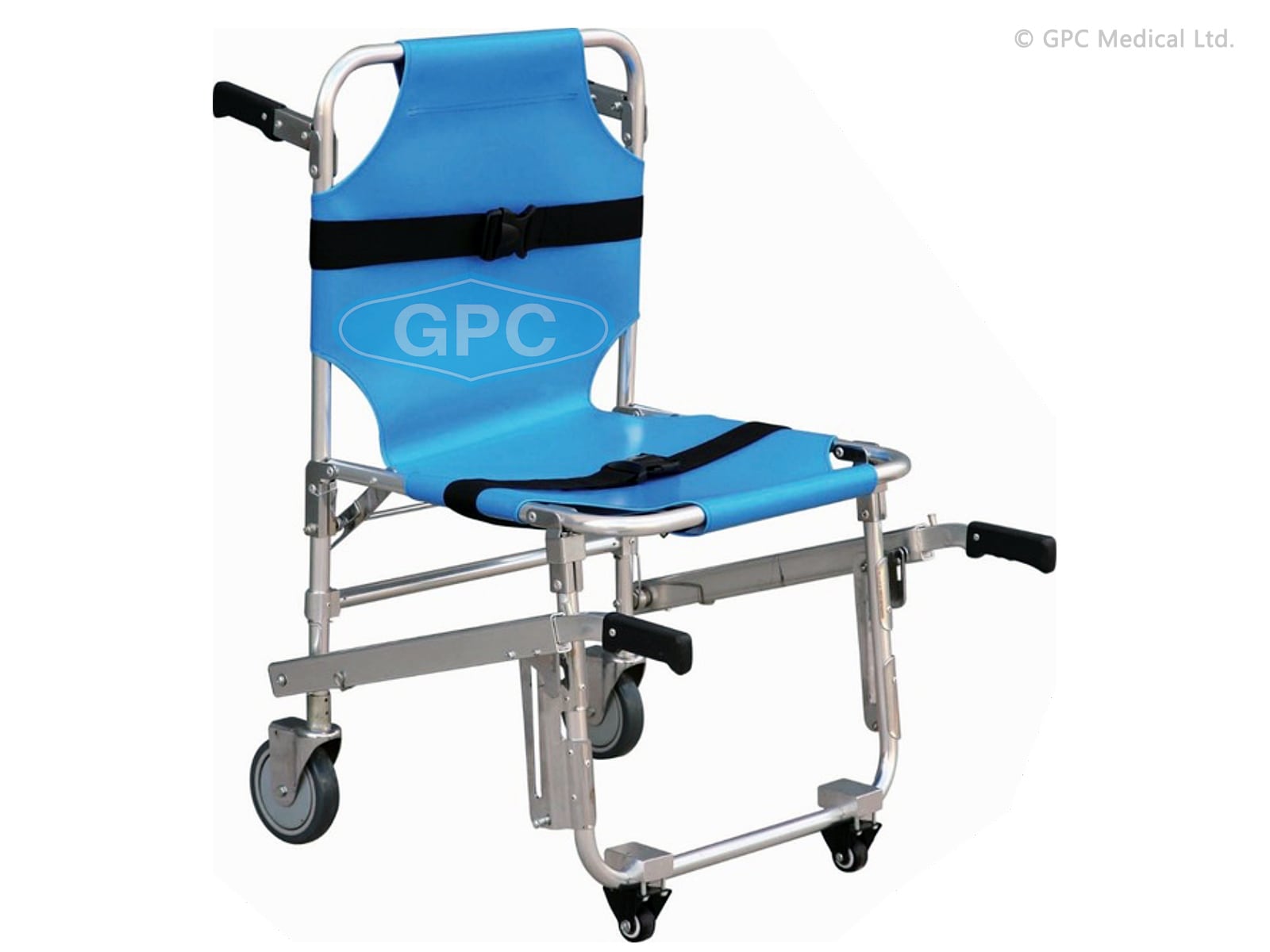
Buy Wheelchair Stretcher in Nigeria.
Buy wheelchair stretchers in Nigeria through Franance. Browse six current Human Care, GIMA and GPC models, confirm the exact product role and configuration against your approved facility or fleet specification, then request a quotation with quantity and delivery destination. Franance follows up by phone or email; online checkout is not available.
Products
7 models
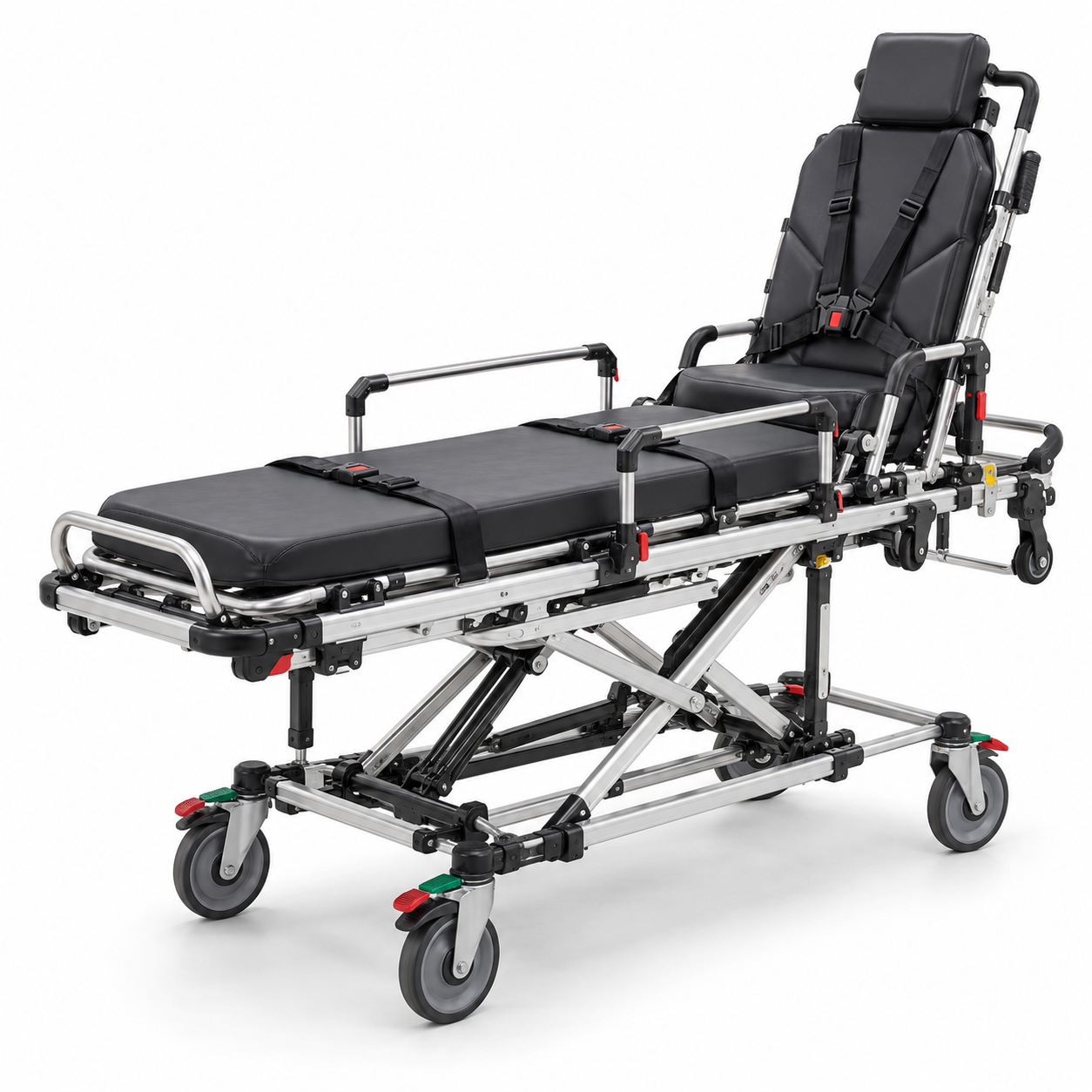
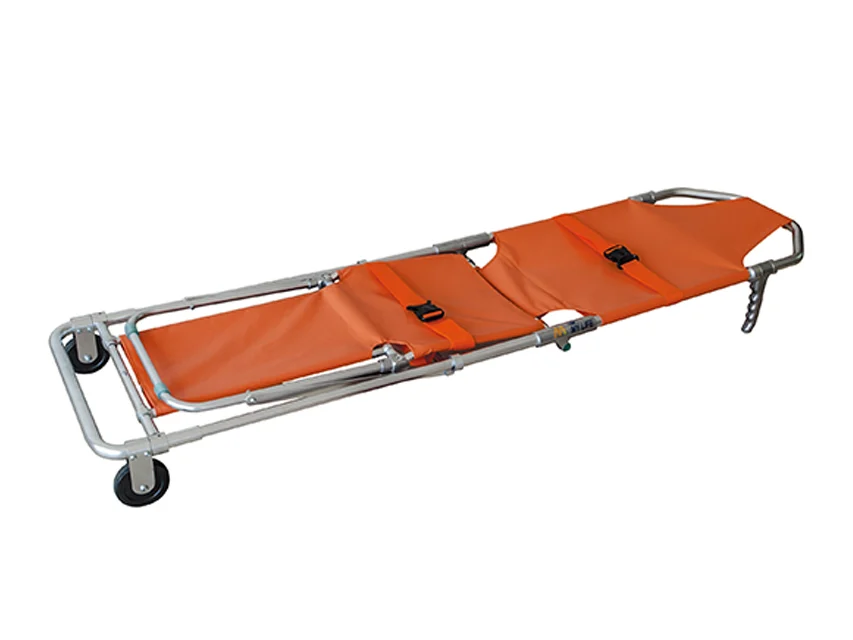
34057 Multiposition Auto Stretcher-Wheelchair
Multiposition ambulance stretcher with wheelchair-convertible upper section
Price on request
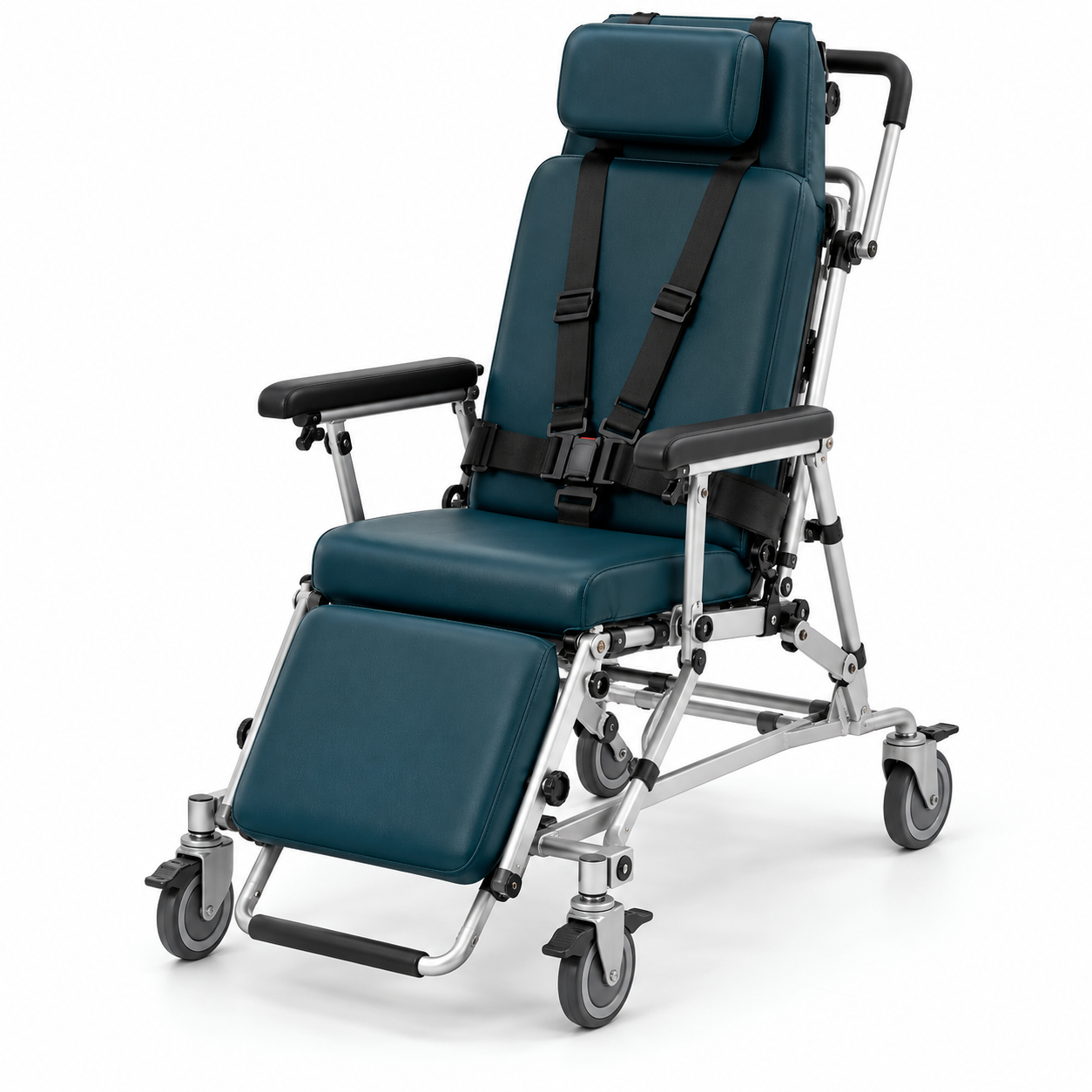
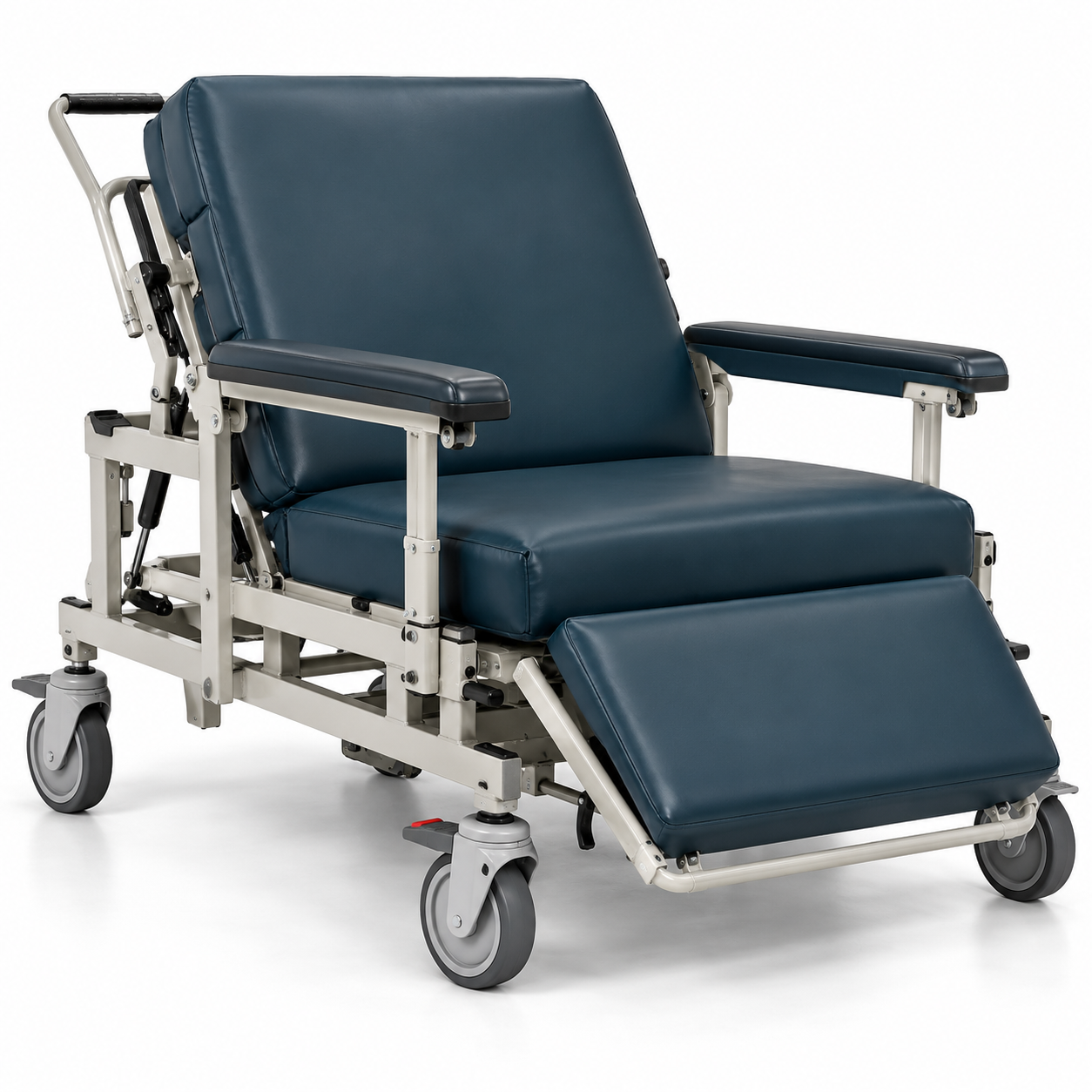
Barton H-250 Convertible Chair
Compact convertible stretcher-chair for patient transfer
Price on request
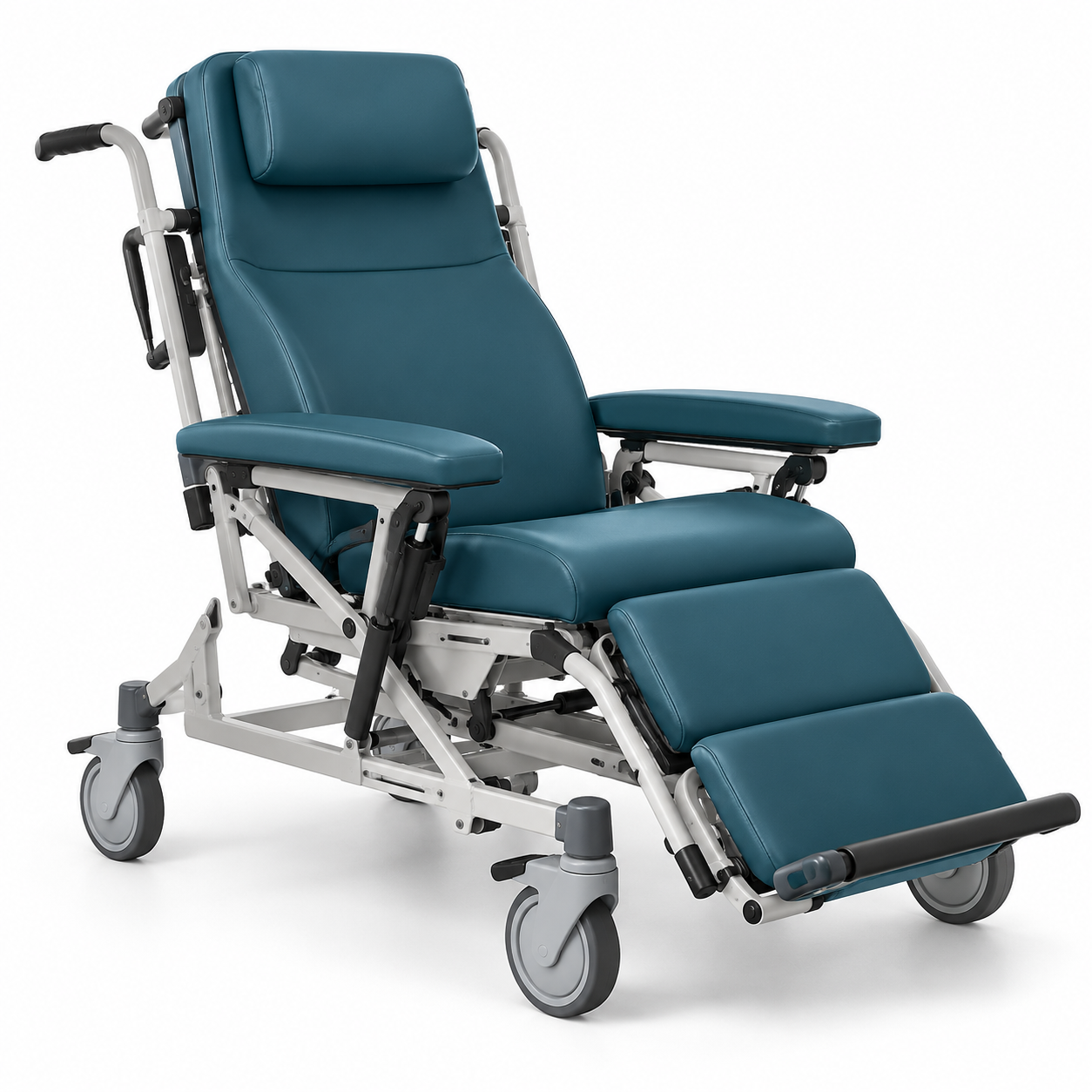
Where can I buy wheelchair stretchers in Nigeria?
Browse the wheelchair stretcher listings in Nigeria to see the six models currently assigned to this category. Use the filtered links below to identify the exact catalogue record, then send Franance the manufacturer, model, quantity, requested configuration and delivery destination. Include the facility or fleet context so the quotation can address the right equipment role.
Read moreWhich wheelchair stretcher models are listed?
The current Human Care records are Barton H-250, Barton I-400, Barton I-400X and Barton I-700. The other assigned listings are GIMA 34057 Multiposition Auto Stretcher-Wheelchair and GPC Medical GHF62.05 Wheel Chair Stretcher.
Read moreWhat is the difference between a convertible chair and an ambulance stretcher-wheelchair?
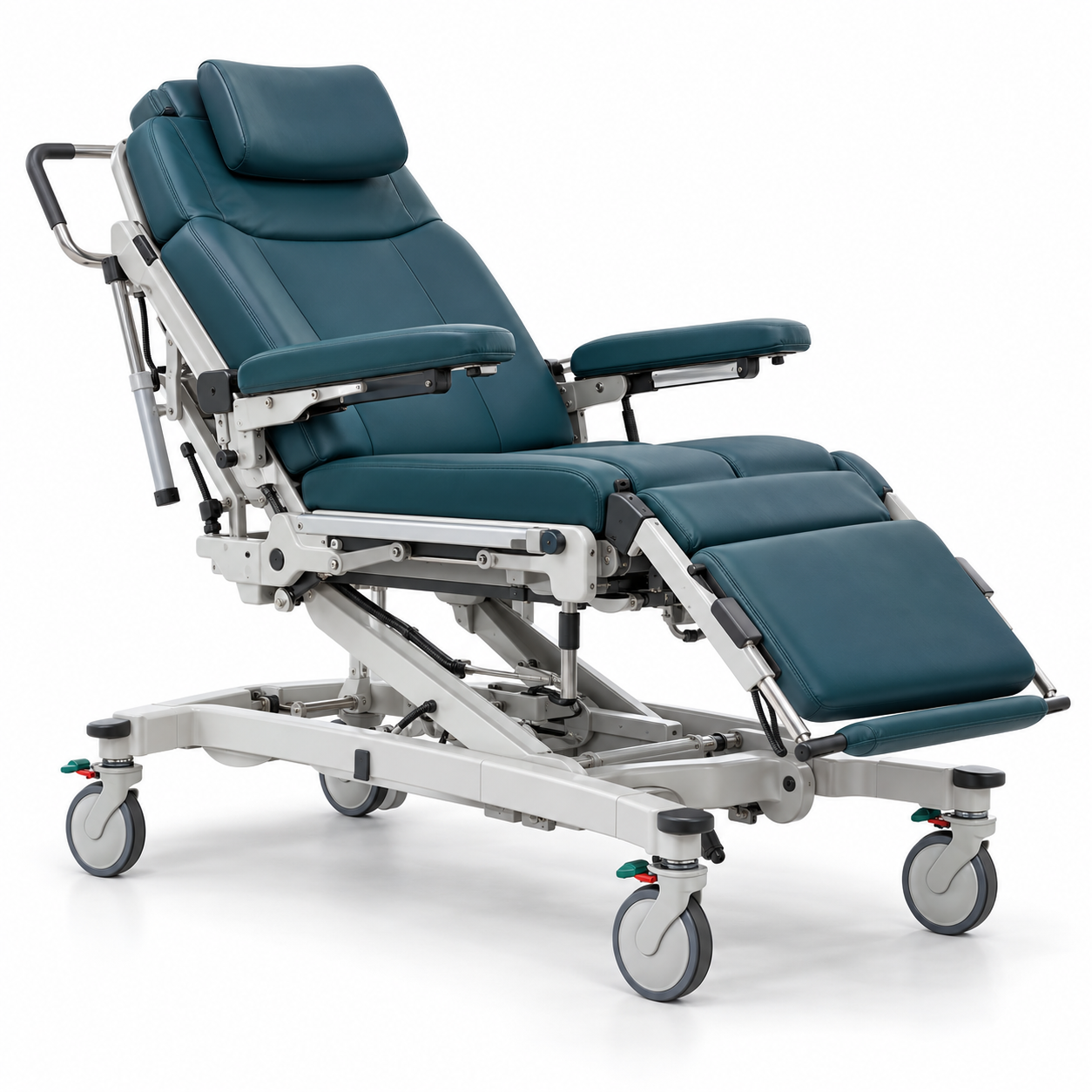
A convertible chair is designed to support a particular care workflow that involves changing configuration between a stretcher-like and seated chair position. Human Care describes its Barton chairs as convertible products for patient transfer, repositioning and mobility within care settings. The models differ: Human Care describes H-250 for early mobilization and use across settings including post-acute and home care; I-400 as an acute-care chair with central brakes and steer-locking features; I-400X as a height-adjustable chair with tilt and a forward-tilt option; and I-700 as a higher-capacity convertible chair. Confirm current specifications, exact package and local support for the proposed model.
Read moreBuy wheelchair stretchers in Nigeria from Franance
Buy wheelchair stretchers in Nigeria through Franance by matching the exact model and equipment role to your facility’s approved patient-handling and transport specification. The current Franance wheelchair stretcher category lists six products: Human Care Barton H-250, I-400, I-400X and I-700 convertible chairs; GIMA 34057 Multiposition Auto Stretcher-Wheelchair; and GPC Medical GHF62.05 Wheel Chair Stretcher. Review the exact listings below, provide your quantity and Nigerian delivery destination, and request a quotation. Franance follows up by phone or email; the catalogue does not offer online checkout. “Wheelchair stretcher” covers more than one configuration in this catalogue. Four listings are Human Care convertible chairs, a category of transfer and positioning products that convert between a stretcher-like and seated configuration. GIMA 34057 is identified by its manufacturer as a multiposition auto stretcher-wheelchair in its ambulance-stretcher range. GPC lists GHF62.05 as a wheel-chair stretcher. These product families have different intended workflows and should not be assumed to be interchangeable, suitable for every patient or compatible with every vehicle. This guide helps hospitals, clinics, patient-transport teams and procurement departments prepare an accurate quote request. It does not provide patient-handling instructions, determine clinical suitability, certify a vehicle fit or replace the manufacturer’s instructions and assessment by the facility’s qualified clinical, manual-handling, biomedical and fleet teams.
Where can I buy wheelchair stretchers in Nigeria?
Browse the wheelchair stretcher listings in Nigeria to see the six models currently assigned to this category. Use the filtered links below to identify the exact catalogue record, then send Franance the manufacturer, model, quantity, requested configuration and delivery destination. Include the facility or fleet context so the quotation can address the right equipment role.
Franance treats these catalogue items as quote orders. The team will contact you by phone or email to clarify the request and prepare a quotation. A listing or starting price, if displayed, does not confirm stock, a particular configuration, delivery date, installation, warranty or local service. Ask for availability, quote validity, included accessories, delivery arrangements and requested support to be confirmed in writing for your city and state.
The wider emergency transport and stations category also separates ambulance stretchers, patient stretchers and crash carts and emergency trolleys. Use the wheelchair-stretcher category when you are evaluating a convertible chair or stretcher-wheelchair product. If you need a conventional ambulance cot or a ward stretcher instead, review its separate category rather than treating all transport products as one group.
Which wheelchair stretcher models are listed?
The current Human Care records are Barton H-250, Barton I-400, Barton I-400X and Barton I-700. The other assigned listings are GIMA 34057 Multiposition Auto Stretcher-Wheelchair and GPC Medical GHF62.05 Wheel Chair Stretcher.
These links isolate six catalogue records, not six interchangeable specifications. Confirm the exact article or model number, offered condition, accessories, configuration and manufacturer documentation for the unit in the quote. Human Care’s product pages provide different product information for each Barton model; the GIMA manufacturer page identifies the 34057 as a multiposition auto stretcher-wheelchair, and GPC identifies GHF62.05 as a wheel-chair stretcher. The category record alone does not establish a locally available option, a feature included in a quote or the product’s current regional order code.
What is the difference between a convertible chair and an ambulance stretcher-wheelchair?
A convertible chair is designed to support a particular care workflow that involves changing configuration between a stretcher-like and seated chair position. Human Care describes its Barton chairs as convertible products for patient transfer, repositioning and mobility within care settings. The models differ: Human Care describes H-250 for early mobilization and use across settings including post-acute and home care; I-400 as an acute-care chair with central brakes and steer-locking features; I-400X as a height-adjustable chair with tilt and a forward-tilt option; and I-700 as a higher-capacity convertible chair. Confirm current specifications, exact package and local support for the proposed model.
GIMA describes model 34057 as a multiposition auto stretcher-wheelchair, listed within its ambulance stretcher range. Its product information describes ambulance fixation points and a top section that converts to a wheelchair. That makes vehicle compatibility a specific procurement check: confirm the exact stretcher, restraint and fixing arrangement against the fleet’s vehicle, loading system, available dimensions and operating procedure. Do not assume that a chair designed for internal patient transport can be secured or used in an ambulance, or that an ambulance-listed model fits a particular vehicle.
GPC Medical’s GHF62.05 product name is “Wheel Chair Stretcher.” The manufacturer’s broader stretcher-trolley listing places it among its hospital and medical furniture models. Ask for the current technical sheet, dimensions, capacity, accessories and stated use for the exact offered version. A similar name does not make the GPC product equivalent to a Barton chair or ambulance stretcher-wheelchair. Compare function, intended setting, configuration and available documentation rather than the catalogue label alone.
How should I compare the Human Care Barton H-250, I-400, I-400X and I-700?
Begin with the manufacturer-approved requirement and intended workflow, then ask the clinical and manual-handling leads to identify which product characteristics matter. The Human Care convertible-chair range presents the H-250, I-400, I-400X and I-700 as distinct models. Human Care’s individual pages provide product information and manuals. For example, the H-250 page describes conversion between stretcher and upright mobile chair configurations and lists article number B1002-BL. The I-400 page lists article B1041-TS-GEL and describes central brakes and steer locking. The I-400X page lists article B1042-TS-GEL and describes height adjustment and forward tilt. The I-700 page lists article B1071-TS-GEL and describes a higher weight capacity than the other models.
Those manufacturer descriptions help identify product differences; they are not a recommendation for a particular patient or department. Request the current product sheet and user instructions for the exact variant, then verify dimensions, seat width, stretcher length, user-weight rating, brakes, castors, tilt or positioning features, accessories and cleaning instructions against the need. If the proposed order includes a patient-transfer system, transfer sheet, belt, head support or other accessory, ask the supplier to list its article number and confirm compatibility with the selected model.
The H-250 page notes its use across care settings including post-acute and home contexts, while the I-400 page identifies acute-care use. I-400X and I-700 add distinct height, tilt or capacity characteristics described in their respective product materials. Ask the responsible team to state whether the requirement is for bedside-to-chair transfer, in-department repositioning, early mobilization or another defined workflow. Do not use model features as a substitute for the facility’s patient-handling assessment, staffing plan or training.
What should I verify before ordering GIMA 34057 or GPC GHF62.05?
For GIMA 34057, request the manufacturer’s current operator manual, data sheet and declaration of conformity for the exact unit. GIMA product information identifies it as a medical device and describes a multiposition stretcher whose upper section can become a wheelchair. The manufacturer also lists ambulance fixation and included items such as mattress, belts, side rails, IV stand and fixing device. Confirm those inclusions against the unit and package actually offered, and have fleet/biomedical personnel validate the fixing system, vehicle, loading interface, transport restraints and operating requirements before purchase.
For GPC Medical GHF62.05, request the current model-specific technical sheet rather than relying on its title or a general stretcher brochure. Confirm whether its configuration matches the planned environment, and check its dimensions, load rating, frame, mattress or support surface, restraints, brakes, castors, included accessories and any compatibility requirements. These details must come from the current documentation for the actual offered model; do not infer them from the GPC model code or compare an unverified value from another stretcher in the manufacturer’s range.
For both products, ask Franance to state the exact model and order reference, country or regional version, new or other condition, included parts, quotation assumptions, required documents, availability and service terms. Request a written response if the model requires ambulance mounting or a particular accessory package. The buying team can then give that offer to the facility’s qualified technical, clinical and fleet reviewers for acceptance.
What dimensions, capacity and accessories belong in a wheelchair-stretcher specification?
Write down the operating environment and constraints before requesting offers. For a care facility, consider room and doorway clearances, bed height, lift access, storage, turning space and the route between the patient’s current and destination locations. For an ambulance, the fleet team should supply vehicle make/model and year, patient-compartment dimensions, loading-system details, mounting and restraint requirements, and any verified compatibility documentation. A product photograph or “ambulance stretcher” label cannot establish vehicle fit.
Ask the manufacturer or supplier to provide the exact model’s overall dimensions in each configuration, product weight, stated user-weight capacity, seat dimensions, mattress/support surface details, castor and brake arrangements, height adjustment, conversion steps, accessory compatibility and packaging dimensions. Confirm whether measurements refer to the product, the package or the usable patient area. Compare units only on the same stated measurement basis. Facility engineering should review doorway, lift, storage and floor requirements; fleet engineering should review vehicle loading and securement.
List required accessories as separate line items. These may include transfer systems, compatible transfer sheets, positioning belts, head supports, mattresses, restraints, side rails, IV stands, fixing devices, replacement castors or other manufacturer-approved parts. Ask which components are included in the quoted package and whether they have separate cleaning, inspection, replacement or training requirements. Do not assume that a component from one family fits another model, or that every pictured item is included.
How should a hospital plan cleaning, training and maintenance?
Include cleaning, inspection, training and maintenance in the purchase plan. WHO’s technical specification guidance for medical devices explains that specifications can support procurement, implementation planning and resource management. WHO’s medical-device inventory and maintenance guidance describes management from procurement and receipt through incoming inspection, inventory, safe-use training, maintenance and eventual decommissioning. These are lifecycle procurement references, not a product-specific instruction manual.
Ask for the manufacturer’s current user manual, cleaning and disinfection directions, maintenance schedule, inspection criteria, spare-parts information and warranty terms for the offered model. Identify who will receive the equipment, perform acceptance checks, maintain the inventory record and arrange servicing. If staff training or commissioning is required, specify the audience, location and requested scope; confirm whether it is included and how it will be documented. Follow the manufacturer’s directions and facility infection-prevention policies for the exact product and use environment.
For a convertible patient-handling product, specify which staff roles need operational training and whether accessories such as a transfer system have separate instructions. For an ambulance product, include the vehicle-mounted restraint and loading arrangement in fleet acceptance and staff familiarization. Do not treat delivery as proof of installation, training or fit testing; request explicit confirmation of these services in the quotation.
What should I include in a Nigerian wheelchair-stretcher quote request?
Send Franance the exact model link or manufacturer reference, quantity, the approved intended workflow, required dimensions or capacity, accessory schedule, requested product condition, facility or fleet details, city and state, delivery timeline, technical documents and any requested training or service scope. For GIMA 34057, attach the ambulance and mounting information needed for compatibility review. For Human Care models, identify the exact article number and whether a transfer system or accessories are part of the requirement. For GPC GHF62.05, request a model-specific data sheet if you are preparing a tender comparison.
Ask the written quotation to distinguish the base unit from accessories and consumables, state exact model and order codes, show price and validity, confirm availability or lead time, identify delivery and installation assumptions, list supplied documents, and describe any warranty, maintenance, training or after-sales terms. If a supplier proposes an alternative, obtain its technical documentation and require the facility’s qualified reviewers to compare the offered function, dimensions, load rating, accessories and environment before acceptance. A request for a quote does not constitute product selection or an order commitment.
Can Franance deliver wheelchair stretchers to my state in Nigeria?
Include the full facility address, city and state, access details and requested date. For ambulance equipment, also include the fleet location and whether delivery, fitting or acceptance is requested. Franance will confirm destination-specific availability, delivery timing, charges and any site requirements in its quotation. The category listing does not promise stock or the same delivery and support scope in every state. For a multi-site purchase, identify each destination and quantity so the offer can state applicable arrangements separately.
Can I buy a wheelchair stretcher online from Franance?
No. These products are quote orders; Franance does not offer online checkout or payment. Review the wheelchair-stretcher category, choose the exact model record and submit a wheelchair stretcher quotation request with your quantity, approved requirements, accessories and destination. Franance will follow up by phone or email to clarify the quote order. Confirm the final model, configuration, included components, delivery and commercial terms in writing before placing an order.
Common questions
Which wheelchair stretcher products does Franance list?
The current category lists Human Care Barton H-250, I-400, I-400X and I-700, GIMA 34057 Multiposition Auto Stretcher-Wheelchair, and GPC Medical GHF62.05 Wheel Chair Stretcher. Confirm exact model, package and availability in the written quotation.
Are wheelchair stretchers the same as ambulance stretchers?
No. This category includes convertible transfer chairs and stretcher-wheelchair models with different roles. GIMA 34057 is identified by its manufacturer in its ambulance-stretcher range; check exact vehicle compatibility with fleet and technical teams. Conventional ambulance cots are listed separately.
Does Franance confirm a model will fit my ambulance or facility?
No. Provide the vehicle or facility details and request model-specific documentation. Qualified fleet, biomedical, clinical and manual-handling reviewers must assess fit, compatibility and the intended workflow.
Can I buy a wheelchair stretcher online from Franance?
No. Submit a quote order with the exact model, quantity, accessories and destination. Franance will follow up by phone or email and confirm configuration and commercial terms in writing.
What should the quote include?
Request the exact model and order code, included and optional parts, documentation, availability, price validity, destination delivery, warranty and any requested training, installation or service scope.
Request a wheelchair-stretcher quotation from Franance.
Send the exact model and article number, quantity, approved workflow, accessories, facility or vehicle details, technical documents and delivery destination in Nigeria. Franance will follow up to clarify the quote order and confirm configuration and terms in writing.
Request a wheelchair-stretcher quoteNeed an equipment quote?
Add the models you need to a quote order, or send us your equipment list.