

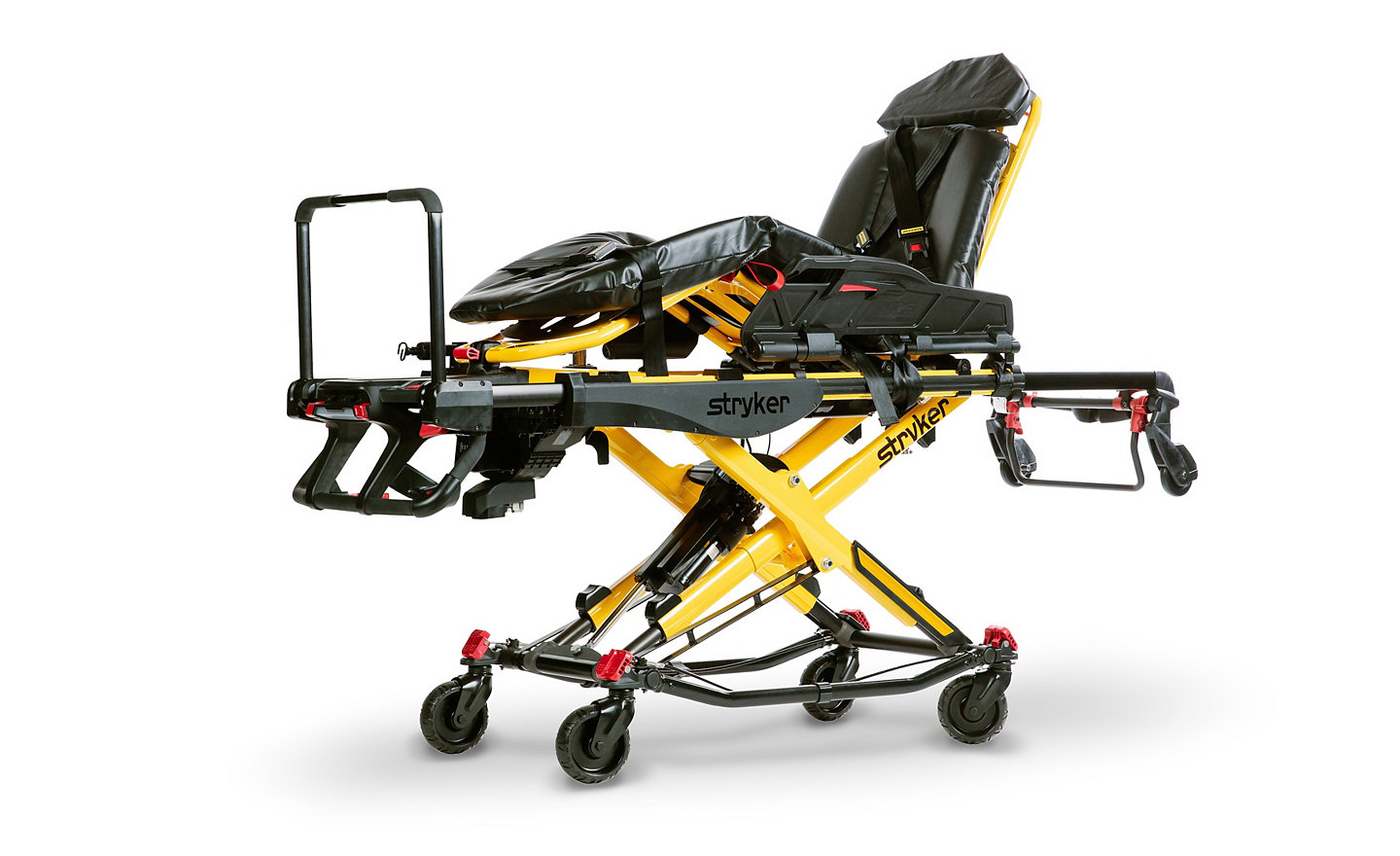
Buy Ambulance Stretchers in Nigeria.
Buy ambulance stretchers in Nigeria through Franance. The current category lists four Stryker ambulance cots: powered Power-PRO 2 and Power-PRO XT, manual Performance-PRO XT, and manual bariatric MX-PRO. Compare the exact model, safe working load, vehicle fastener, loading height, restraints and ambulance fit, then request a quotation. Franance follows up by phone or email; there is no online checkout.
Products
5 models
Which ambulance stretcher models can I buy in Nigeria?
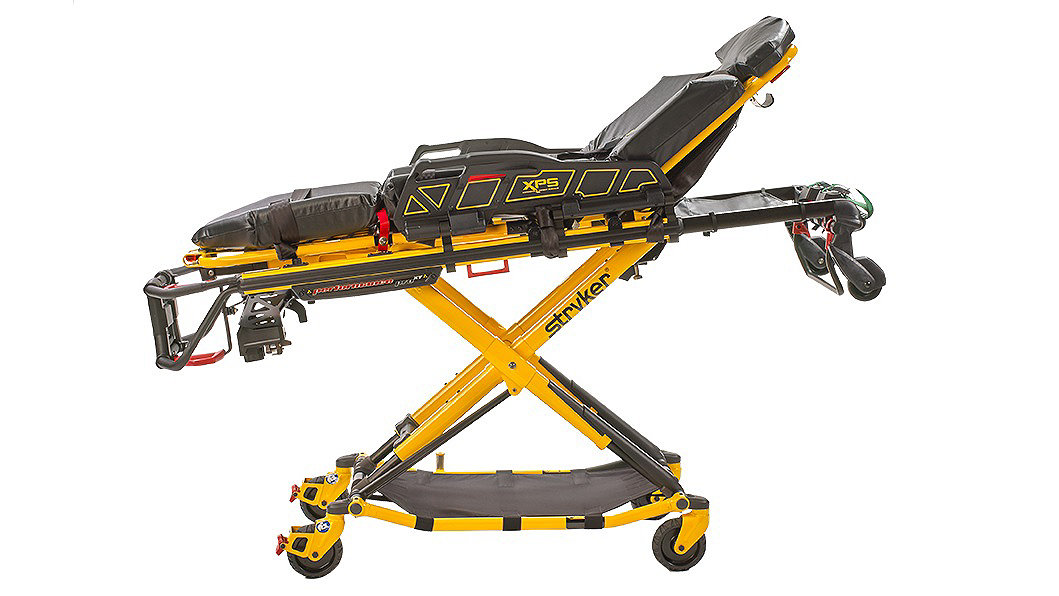
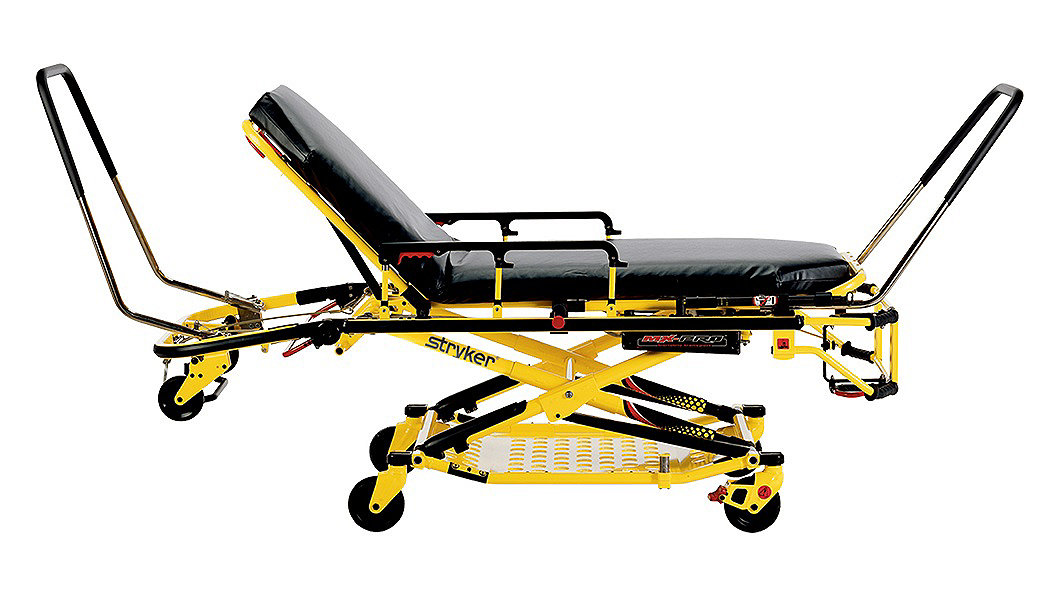
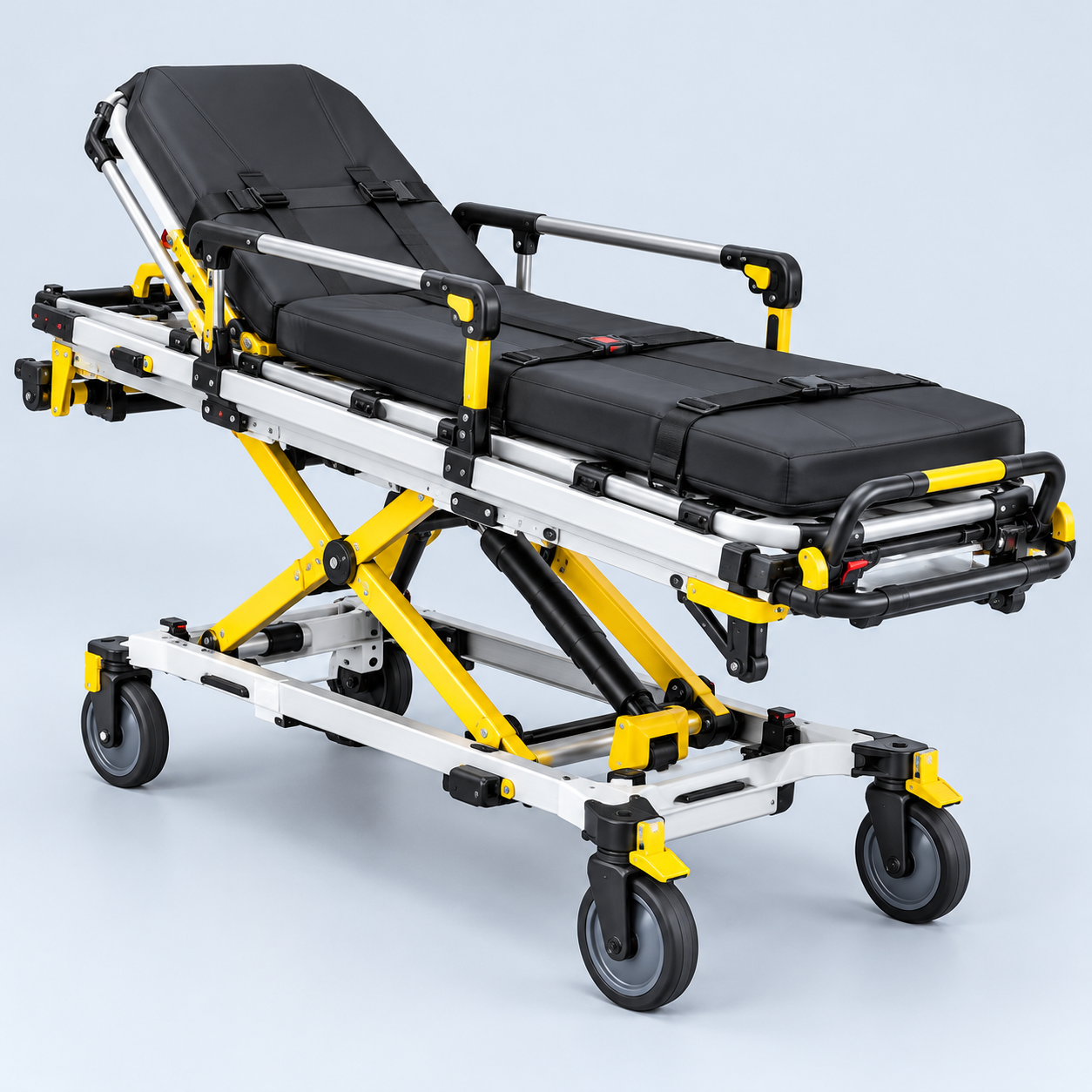
The current Franance category contains exactly four Stryker ambulance cots. The Power-PRO 2 is a powered cot, model number 6507; Stryker describes powered height adjustment, a lithium-ion battery, and a 318 kg (700 lb) maximum supported and transported weight. The Power-PRO XT is a powered cot, model 6506; the manufacturer describes a battery-powered hydraulic lift with manual backup. The Performance-PRO XT, model 6086, is a manual X-frame cot with three-position adjustable load height. The MX-PRO Bariatric Transport, model 6083, is a manual bariatric ambulance cot with a wider patient surface and wheelbase.
Read moreWhat makes an ambulance cot different from a hospital stretcher?
An ambulance cot is designed as part of a vehicle patient-transport system. It must be handled with a compatible cot fastener or loading system, ambulance floor interface, restraints and vehicle loading geometry. A hospital stretcher or transfer trolley may move a patient within a facility but is not automatically designed, tested or compatible for crash-secured ambulance transport. A generic “stretcher” description is not enough to establish that an item is suitable for road transport.
Read moreHow do the powered and manual Stryker models differ?
The Power-PRO 2 (6507) and Power-PRO XT (6506) use powered lifting systems. They may be relevant where the service wants powered height adjustment, but this choice adds battery, charging, maintenance and compatibility questions. Stryker states that the Power-PRO 2 uses a lithium-ion battery and supports up to 318 kg (700 lb); its published compatibility list names Power-LOAD, Performance-LOAD and other specified fasteners. Confirm which fastener, floorplate, restraints, battery, charger and accessories are actually offered together for the destination vehicle.
Read moreBuy Ambulance Stretchers in Nigeria
Franance lists four Stryker ambulance cots for quotation in Nigeria: the powered Power-PRO 2, powered Power-PRO XT (model 6506), manual Performance-PRO XT (model 6086), and manual bariatric MX-PRO (model 6083). These are ambulance-loading cots, not generic hospital transfer trolleys. The right configuration depends on the vehicle, fastener, loading height, patient requirements, operators, accessories and service plan. Send Franance the exact model and site details; Franance follows up by phone or email to complete the quote order. There is no online checkout.
Which ambulance stretcher models can I buy in Nigeria?
The current Franance category contains exactly four Stryker ambulance cots. The Power-PRO 2 is a powered cot, model number 6507; Stryker describes powered height adjustment, a lithium-ion battery, and a 318 kg (700 lb) maximum supported and transported weight. The Power-PRO XT is a powered cot, model 6506; the manufacturer describes a battery-powered hydraulic lift with manual backup. The Performance-PRO XT, model 6086, is a manual X-frame cot with three-position adjustable load height. The MX-PRO Bariatric Transport, model 6083, is a manual bariatric ambulance cot with a wider patient surface and wheelbase.
Use the assigned product links to review each Franance record and request its quote:
- Stryker Power-PRO 2, model 6507
- Stryker Power-PRO XT, model 6506
- Stryker Performance-PRO XT, model 6086
- Stryker MX-PRO Bariatric Transport, model 6083
These names identify the currently assigned records; they do not establish local stock, market authorization, final price or delivery date. Confirm the exact offered item code, serial-generation compatibility, options and current manufacturer documentation in the written quotation.
What makes an ambulance cot different from a hospital stretcher?
An ambulance cot is designed as part of a vehicle patient-transport system. It must be handled with a compatible cot fastener or loading system, ambulance floor interface, restraints and vehicle loading geometry. A hospital stretcher or transfer trolley may move a patient within a facility but is not automatically designed, tested or compatible for crash-secured ambulance transport. A generic “stretcher” description is not enough to establish that an item is suitable for road transport.
All four products in this category are described by Stryker as ambulance cots. The assignment does not include a standard ward trolley, patient-transfer board, scoop stretcher or evacuation chair. Do not substitute one of those equipment classes based only on similar wording or a photograph. If the intended use is hospital transfers, ward care, inter-facility transport or ambulance loading, state that explicitly so the quote matches the intended role.
Vehicle fit is a system-level question. Check the cot’s overall and minimum length, width, transport and loading heights, wheelbase, undercarriage clearance, loading track or fastener, ambulance deck, door opening and turning space. Confirm whether any required powered loader, floorplate, wall mount, restraint system or structural modification is included. The ambulance builder or qualified vehicle upfitter should verify the specific vehicle configuration and installation; a product-page compatibility statement alone is not a site-fit approval.
How do the powered and manual Stryker models differ?
The Power-PRO 2 (6507) and Power-PRO XT (6506) use powered lifting systems. They may be relevant where the service wants powered height adjustment, but this choice adds battery, charging, maintenance and compatibility questions. Stryker states that the Power-PRO 2 uses a lithium-ion battery and supports up to 318 kg (700 lb); its published compatibility list names Power-LOAD, Performance-LOAD and other specified fasteners. Confirm which fastener, floorplate, restraints, battery, charger and accessories are actually offered together for the destination vehicle.
The Power-PRO XT is a separate product generation and model number. Manufacturer materials describe a battery-powered hydraulic lift and manual backup; the current manufacturer specification should be used for the exact offered version, since configurations and accessories can change. Do not assume Power-PRO 2 batteries, chargers, fasteners, parts or options are interchangeable with the 6506 just because both are powered Stryker ambulance cots.
The Performance-PRO XT (6086) is manual. Stryker describes three adjustable load-height positions and a 700 lb / 318 kg safe working load, with details depending on configuration and current instructions. A manual cot avoids a powered lifting battery system but still needs a suitable loading height, approved vehicle fastener and trained operators. The MX-PRO (6083) is also manual, specifically a bariatric cot. Its published specification gives 850 lb / 385.6 kg capacity in most positions and a higher stated capacity at the lowest position; check the current specification and labeling for the exact configuration rather than treating the larger figure as available at every height.
These are procurement distinctions, not a recommendation for a patient or crew. EMS leadership and qualified clinical and vehicle-safety personnel should determine the required model and operating configuration.
What measurements and compatibility details should I check?
Before ordering, match the complete cot and loading system to the actual ambulance. Record the make, model, year, body builder, interior deck height and existing fastener or loader part number. Provide usable door opening, aisle and loading-space dimensions, the deck or floorplate layout, and any restrictions from cabinets, oxygen mounts, seats or equipment rails. Ask the upfitter and supplier to document a fit check for that vehicle, cot, restraint and fastener combination.
Compare the manufacturer’s dimensional drawing for the exact offered model: full and minimum length, width, wheelbase, folded or collapsed footprint where relevant, caster and undercarriage clearance, low/high cot surface height, and compatible loading-height range. Add the height of the mattress, patient restraints and accessories to calculations where the manufacturer directs. Confirm whether the quoted model needs a separate powered loader or a different fastener from the one already installed. Do not assume that a cot can be used with a competitor’s fastener unless the exact combination is listed and validated in current manufacturer instructions.
For Stryker’s published standards or crash-test statements, read the complete conditions. For example, Stryker’s Power-PRO 2 page ties its listed dynamic crash tests to particular fasteners, X Restraints and a Universal Floorplate. That statement is not proof that any cot, vehicle, retrofit or restraint combination meets the same test. Request the evidence applicable to the configuration being quoted and confirm the vehicle installation against applicable local requirements with the responsible specialist.
How should I compare safe working load and bariatric configurations?
Use the precise capacity term in the manufacturer’s current instructions. Safe working load may include the patient, mattress and accessories, and may vary with cot position or configuration. Do not compare an equipment capacity figure with patient weight alone unless the manufacturer explicitly defines it that way. The MX-PRO product sheet lists 850 lb (385.6 kg) and 1,600 lb (725.7 kg), with the larger capacity applying at the lowest position. Franance’s assigned product record highlights 850 lb; the quote must confirm the current labeling and how the selected configuration is rated.
Also consider the cot’s width, door clearance, vehicle interior and loader capacity when reviewing a bariatric model. A higher cot rating does not establish that the ambulance chassis, fastener, floor, loader, restraints or crew workflow supports the same load. Ask for each system component’s rating and for written confirmation of the complete compatible arrangement. Check whether the mattress, lap and shoulder restraints, extensions and other options are included and suited to the intended fleet configuration.
Do not choose a capacity or bariatric option based solely on the product title. Have the organization’s clinical and EMS leadership define the intended patient and fleet requirements, then have a qualified vehicle integrator verify vehicle and fastener limits. Follow current manufacturer labeling, operator training and maintenance requirements.
What should an ambulance stretcher quotation in Nigeria include?
Send Franance the exact product name and model number, quantity, and the Nigerian facility and delivery location. For a fleet replacement or new build, include the ambulance make, model, year, body builder, deck height and existing fastener or loader model. State whether the vehicle is already built or being specified, and attach dimensions, drawings or photos of the loading bay only if they are approved for sharing. Name the intended vehicle installer or upfitter so compatibility questions can be resolved before order confirmation.
Ask the quotation to itemize the cot and every required component: fastener, floorplate, loader, restraints, mattress, battery and charger, accessories, installation or vehicle modification, delivery, staff training and any maintenance or warranty option. Request current manufacturer datasheets and instructions, the applicable compatibility and crash-test documentation, capacity conditions, offered configuration, country of origin where needed, availability, estimated lead time, quote validity, payment terms, warranty scope and service arrangements. Ask Franance to identify any component that must be purchased separately or confirmed by the ambulance builder.
Do not infer Nigerian stock, registration, standards compliance, import status or after-sales coverage from an international manufacturer webpage. Ask Franance to state what is confirmed for the requested destination and what remains subject to supplier or vehicle-upfitter confirmation. This makes a quotation useful for procurement review without implying a final offer or vehicle approval.
How do I order an ambulance stretcher in Nigeria through Franance?
Franance’s catalogue uses quote orders: there is no online purchase or checkout. Choose the matching cot record, prepare the vehicle and configuration details above, then submit a quotation request. Franance will contact you by phone or email to clarify specifications and commercial terms. The quote should identify the supplied model and package clearly so the receiving team can review the stretcher, loading system, delivery and requested support as one procurement requirement.
For an ambulance fleet, group models by vehicle configuration rather than requesting a generic “stretcher” quantity. A clear enquiry can list the vehicle count, each vehicle’s make and installation state, preferred model, existing fastener, patient-load requirement, destination, accessories, delivery timing and training or service requests. Ask Franance to resolve any uncertain compatibility with the supplier and vehicle integrator before you approve the quote. Browse all ambulance stretcher models listed by Franance or request an ambulance stretcher quotation.
What training, warranty and maintenance should I confirm?
Ask whether the quotation includes operator familiarization for the exact cot, fastener or powered loader, and who will deliver it in Nigeria. The responsible EMS service should arrange initial and refresher training under the manufacturer’s instructions and its own operational procedures. Confirm the maintenance schedule, inspection checklist, battery care where applicable, spare-part source, technical contact route and expected service response. A powered cot needs a practical charging and battery-replacement plan; a manual cot still requires scheduled inspection of its frame, wheels, controls, fastener engagement and restraints by qualified personnel.
Request the warranty period and what it covers in writing, including parts, labour, shipping, travel and exclusions. Ask whether service is performed locally, remotely or by referral, and whether travel to the destination is included. Confirm warranty start date, required preventive maintenance, replacement parts availability and what the facility must document to maintain coverage. Do not assume that a manufacturer program shown on an international site is available in Nigeria or included in Franance’s price. Franance can state what is included in its proposed quote, while the supplier or authorized service provider should confirm the applicable terms for the exact cot and destination.
Common questions
Where can I buy an ambulance stretcher in Nigeria?
Browse Franance’s ambulance stretcher category, select the required Stryker model and submit a quote order with the ambulance, loading system, configuration, quantity and delivery details. Franance follows up by phone or email; there is no online checkout.
Which Stryker ambulance cot models are listed?
The current category assigns Power-PRO 2 (6507), Power-PRO XT (6506), Performance-PRO XT (6086) and MX-PRO Bariatric Transport (6083). Confirm exact configuration and model/serial applicability in a current quotation.
Can I use a hospital stretcher in an ambulance?
A hospital transfer trolley is not automatically designed, crash-tested or compatible for road transport. Confirm that the exact cot, ambulance fastener or loader, restraints, floorplate and vehicle installation are approved together for the intended use.
What is the difference between powered and manual ambulance cots?
The Power-PRO 2 and Power-PRO XT have powered lift systems; Performance-PRO XT and MX-PRO are manual models. The appropriate choice depends on fleet requirements, vehicle interface, operator training, power and service planning, and the exact offered configuration.
Does the MX-PRO support 1,600 lb?
Stryker’s published specification sheet lists 1,600 lb at the lowest position and 850 lb in other positions. Confirm the current model label, safe working load conditions and the exact offered configuration; do not interpret the highest figure as applying in all positions.
What details should I send with my quote request?
Include exact model and options, ambulance make/model/year and builder, deck height, current fastener or loader, clearances, restraints, required capacity, quantity and Nigerian destination. Request compatibility documents, itemized accessories, availability, lead time, warranty and service terms.
Are installation, training and service included?
The catalogue listing does not establish that they are included. Ask Franance to itemize installation or vehicle modification, operator training, warranty and local service coverage in the written quotation.
Can I pay online for an ambulance cot?
No. Franance accepts quotation enquiries for catalogue products and contacts the requester by phone or email to confirm details and terms.
Request an ambulance stretcher quotation from Franance.
Send the exact model, ambulance and fastener details, required configuration, quantity and Nigerian delivery location. Franance will follow up by phone or email to clarify your quote order.
Request an ambulance stretcher quoteNeed an equipment quote?
Add the models you need to a quote order, or send us your equipment list.