

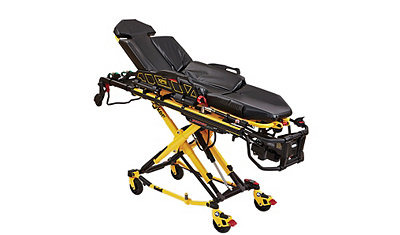
Buy the Stryker Power-PRO XT Powered Ambulance Stretcher in Nigeria
Buy the Stryker Power-PRO XT in Nigeria by confirming the exact 6506 configuration, ambulance loading interface, cot fastener, restraints, battery system, accessories and service scope before you approve a quotation. Stryker describes the Power-PRO XT as a powered ambulance stretcher with a battery-powered hydraulic lift and manual backup. Franance lists this model for quotation; submitting an order request starts a phone or email follow-up, not an online payment or an automatic confirmation of stock, price, delivery or vehicle compatibility.
Where can I buy a Stryker Power-PRO XT ambulance stretcher in Nigeria?
You can request a quote for the Stryker Power-PRO XT, model 6506 through Franance. Compare it with ambulance stretchers listed in Nigeria and see the Stryker ambulance stretcher selection. These catalogue routes identify the product and its category and brand context. They do not prove current Nigerian availability, price, regulatory status, delivery time or local service entitlement.
For a useful enquiry, provide your organisation, contact name, preferred phone or email, quantity, destination city and state, required timeline and ambulance details. State whether the vehicle is new or already in service, its make and model, loading-deck height, existing cot fastener and floorplate, and any fleet-standard restraints or other interface equipment. Include the expected patient-load range, intended operating environment, storage and charging arrangements, requested accessories, training and service needs. If the vehicle or fastener information is incomplete, say so and ask for compatibility review before final approval.
Franance handles this as a quote order: its team follows up by phone or email to clarify the request and prepare a written quotation. Ask the quote to identify the exact model and configuration, part or option codes, compatible interface components, included and excluded items, availability, price basis, delivery assumptions, regulatory documentation and warranty or service terms. A quote request does not place a paid online order and does not guarantee that a particular configuration is available.
What is the Stryker Power-PRO XT model 6506?
The Power-PRO XT is a powered ambulance stretcher—also commonly called an ambulance cot—intended for patient loading and transport in an emergency medical services context. Stryker identifies the product as model 6506. The manufacturer’s current regional product page describes a battery-powered hydraulic system that raises and lowers the stretcher at the touch of a button, with a manual backup system. It also lists a retractable head section, an automatic high-speed retract feature, Steer-Lock and the SMRT battery kit. Some regional Stryker pages also list XPS side rails. Confirm which features and options apply to the exact model and regional offer being quoted.
The term “powered” describes the lift assistance and does not mean every movement, loading step or patient-handling task is automatic. Operators still need to follow the current instructions for use, local ambulance procedures, safe patient handling practices and training for the cot and its companion loading equipment. The stretcher must be configured and used as specified by its manufacturer and only with interface components approved for the proposed combination.
Stryker publishes information across regional product pages, brochures and technical resources. Those materials may describe different options, revisions, labels, standards, batteries or market availability. The product name alone is not enough to identify every supplied component. Before procurement, match the offer to model number 6506, the current manufacturer documentation and the actual configuration schedule. Do not infer a certification, warranty, accessory inclusion or local availability from another Power-PRO generation or a different model in the Stryker range.
How does the powered lift and manual backup work?
Stryker describes the Power-PRO XT’s lift as a battery-powered hydraulic system operated through controls on the stretcher. The system is intended to assist operators when raising and lowering the cot. Stryker also identifies a manual backup system. These are model-specific manufacturer descriptions; they should not be treated as a guarantee of performance under every load, battery condition, maintenance state or operating environment.
Ask the supplier to explain the offered battery and charging arrangement, how battery condition is indicated, which charger and power accessories are included, how backup operation is performed, and what inspection or maintenance tasks apply. Confirm the battery model, charging input, regional plug or power supply, spare-battery availability and charging location in writing. A 2016 Stryker ANZ specification sheet describes the SMRT power system and listed 12 V DC, 120 V AC and 240 V AC options, but that historical regional sheet is not proof that those choices are included or current for a Nigerian offer. Use the current technical documents tied to the quoted configuration.
Before deployment, the EMS provider should establish a practical routine for charging, battery checks, cleaning, inspection, fault reporting and planned maintenance. Confirm who is responsible for those activities and whether Stryker documentation or training is supplied. If the battery is discharged, damaged or otherwise unavailable, operators must follow the manufacturer’s backup and safety instructions. Do not improvise a workaround or assume that the stretcher can continue to be used in a powered mode.
Powered lift assistance can be relevant to a service evaluating the physical demands of cot handling, but it does not remove the need for trained operators, sound lifting technique, adequate staffing, compatible vehicle equipment and safe procedures. The facility should assess the complete workflow—from the patient’s location to loading, transport and unloading—rather than treating the lift mechanism as a substitute for operational planning.
Which ambulance fastener and vehicle interface should I specify?
Vehicle compatibility is a configuration question, not something this listing can determine from the ambulance brand or the words “Power-PRO XT.” Specify the exact cot model, ambulance make and model, model year or generation, loading-deck height, existing floorplate and fastener model, restraints and any loading system already installed. Give the supplier clear photographs or technical drawings of the compartment and interface only through an approved procurement channel, and ask for written confirmation from the responsible manufacturer or vehicle integrator before purchase.
Stryker’s historic Power-PRO XT ANZ sheet lists recommended fastener systems and a loading-height range, while its official pages and documents can describe Power-LOAD compatibility options. These statements are configuration- and market-specific. They do not establish that a particular Power-PRO XT unit will fit every ambulance, that a fastener is included, or that a compatibility option is currently available in Nigeria. Avoid relying on a generic claim of compatibility with “competitive fasteners.” Request the exact approved cot/fastener/floorplate combination and the documents that support it.
Ask the quote to separate the cot from the fastener, floorplate, vehicle-side installation, restraints and any powered loading system. Confirm who supplies each part, who verifies installation, whether vehicle modification is needed, and which party signs off on the final fit. If the fleet has multiple ambulance models, prepare a vehicle-by-vehicle compatibility schedule instead of assuming that one solution fits all units.
The loading deck height deserves particular attention. The cot may have adjustable load heights, but the usable range and safe loading procedure depend on the actual configuration and vehicle geometry. Request the current specification for the offered 6506 and compare it with measured deck height and clearance. Have a qualified installer or vehicle integrator confirm the dimensions and operation under the manufacturer’s requirements. Do not use an older datasheet, a different model’s specification or an unverified online statement as sole evidence for fit.
What specifications and accessories should I check on a quote?
Request the current manufacturer data sheet for the exact Power-PRO XT configuration and have the supplier identify the version or revision. Stryker’s older ANZ specification sheet lists model 6506, a maximum weight capacity of 318 kg (700 lb), an approximate cot weight of 57 kg with one battery but without mattress and restraints, a 58 cm width, and a standard/shortened length of 206 cm/160 cm. It also lists a height range and details such as backrest articulation. These are published in a historical regional document and can differ by option or revision. They are reference points for verification, not guaranteed specifications for a current Nigerian quotation.
Confirm whether the weight limit refers to patient weight or another defined load, which accessories are installed during any stated measurement, and whether an option changes the figure. Ask the manufacturer or supplier to explain the load rating and any applicable test or use limitations. Do not substitute the Power-PRO 2 or another cot’s values. Use current product labels and instructions for use for deployment decisions.
Build an itemised accessory checklist around the service’s requirements. It may include the mattress and restraints, side rails, battery and charger, IV pole, oxygen-cylinder holder, storage accessories, head extension or other manufacturer-listed options. This is a request checklist, not a claim that those items are included or available. Ask for the exact part numbers, quantities, compatibility statements and price for every required accessory. If the cot is to use XPS side rails or a powered loading system, confirm that the selected option is supported by the quoted 6506 revision and the chosen vehicle interface.
Clarify the delivered configuration: new or other condition, base unit, battery quantity, charger, mattress, restraints, selected accessories, documentation, installation, handover, training, warranty and service. The written offer should distinguish standard equipment from options and separately identify any items supplied by a third party. Record any exclusions, site prerequisites, maintenance intervals and spare parts recommended by the manufacturer.
How should an EMS team evaluate a Power-PRO XT for its fleet?
Start by documenting the fleet’s patient transport workflow and operational requirements. Include ambulance types, loading heights, crew numbers, patient populations, expected case volume, service environment, cleaning process, storage space, route and access constraints, existing fasteners, restraint approach and electrical support. Have the EMS clinical lead, fleet or vehicle engineer, biomedical/maintenance staff, procurement team and operators contribute to the requirements. This makes it easier to compare a powered cot with manual alternatives without assuming that one model is suitable for every response team.
Ask for a structured demonstration of the exact proposed model and options. The team should review controls, adjustment range, head-section retraction, manual backup, steering and movement, restraint attachment, loading steps, cleaning access, battery handling, inspection points and the cot’s interaction with the intended ambulance interface. Use trained staff and follow the current manufacturer instructions; a demonstration should not be an improvised patient transfer. Record what was demonstrated and which equipment, fastener and vehicle were used.
WHO’s 2025 operational guidance for prehospital emergency care includes guidance on ambulance equipment and operational standards, emphasizing that equipment should be considered within the wider ambulance system. For the Power-PRO XT, that means reviewing the stretcher alongside staff training, vehicle readiness, patient safety, infection prevention, handover and maintenance—not as an isolated device. Local protocols and the manufacturer’s instructions govern use.
When comparing models, use the same written requirements and identify differences in powered/manual operation, load ratings, dimensions, backup procedures, compatible accessories, vehicle interface, battery maintenance, service and total lifecycle cost. Request evidence for each claim and mark it included, optional, excluded or awaiting confirmation. A lower purchase price may not include a required fastener or installation, while a feature that sounds attractive may not match the fleet’s vehicle or training capability. Make the comparison at the configuration level, not just by model name.
What regulatory and service documentation should I request in Nigeria?
Ask for documents that identify the manufacturer, model 6506, configuration, intended use and destination market. Request the current instructions for use, technical specification, maintenance instructions, labels, applicable conformity or registration documents, battery and charger documentation, and warranty and service terms. Check that the paperwork corresponds to the exact unit and options being quoted. A general brand catalogue or another market’s brochure does not establish the Nigerian regulatory status or the documentation included with the equipment.
NAFDAC’s medical-device registration guidance states that applicable registration requirements cover medical devices imported, advertised, sold, distributed or used in Nigeria. Ask the supplier to clarify the product’s regulatory documentation for the exact transaction and verify any required status with NAFDAC or a qualified Nigerian regulatory adviser. This catalogue page does not assert that a specific Power-PRO XT unit is registered or that any required approval has been granted.
For post-sale support, ask who handles installation and acceptance, operator and maintenance training, warranty claims, inspection, preventive maintenance, troubleshooting, parts and battery replacement. Request response expectations and geographic coverage in the written proposal, and distinguish manufacturer-backed service from third-party support. Franance’s listing alone does not establish an authorised distributor relationship or a local service entitlement. Confirm the responsible service provider and its scope before procurement.
At delivery, match model and serial labels to the quotation, inventory the included components and accessories, inspect documentation, and record the condition of the cot and battery. Have qualified personnel complete acceptance and interface checks before operational use. Set up an asset record with user instructions, training, maintenance schedule and service contact information. Follow the applicable manufacturer instructions and local governance for inspection and return-to-service decisions.
What affects the price of a Stryker Power-PRO XT in Nigeria?
The price depends on the exact cot revision and configuration, battery and charger, mattress and restraints, side rails, accessories, fastener and floorplate, loading system, vehicle integration, quantity, destination, delivery terms, training, warranty and service. Import, currency and lead-time assumptions may also affect a written offer. Franance’s catalogue provides no live price, stock status or delivery guarantee for the model. A cot-only price cannot be compared fairly with an offer that includes a vehicle interface, installation and handover.
Request an itemised quotation in the intended currency and ask it to state the validity period, availability basis, delivery point, estimated timing and exclusions. Have the supplier identify any third-party equipment and who is responsible for compatibility. Ask whether local taxes, import charges, site work, installation, operator instruction, maintenance and spare batteries are included or separately priced. If the ambulance interface requires survey or engineering review, ask when that work will be completed and whether it affects the final configuration or price.
For a fleet, provide quantities by ambulance model and destination rather than a single undifferentiated total. Ask suppliers to quote the same configuration schedule so the team can compare lifecycle scope, not just initial equipment cost. Include a written service and consumables plan where relevant, and confirm how replacement batteries, repairs and scheduled maintenance will be obtained. Treat any estimate as provisional until the written configuration and commercial terms have been reviewed.
How do I request a Power-PRO XT quote from Franance?
Open the Stryker Power-PRO XT product listing or browse Stryker ambulance stretchers filtered to model 6506. Submit a quote order with the model number, quantity, organisation, contact details, destination city and state, timeline and required support. Include ambulance make/model/year, measured deck height, fastener and floorplate details, restraint requirements, current battery or charging needs, required accessories, installation, training, service and any known project constraints.
If you are unsure about the vehicle interface or configuration, state the uncertainty clearly and request confirmation before approval. Ask Franance to return a written offer naming the exact Power-PRO XT revision, included components, option codes, compatibility evidence, regulatory documentation, price and currency, availability, delivery assumptions, warranty, service scope and exclusions. Arrange review by your EMS lead, fleet engineer, biomedical team and procurement approver as appropriate.
Franance will follow up by phone or email to clarify the quote order. There is no online checkout, and the enquiry itself does not confirm an order, Nigerian stock, product registration, compatibility, warranty, installation or delivery date. To begin the conversation, request a Stryker Power-PRO XT quotation.
Common questions
What is the model number of the Stryker Power-PRO XT?
Stryker identifies the Power-PRO XT as model 6506. Confirm the exact model, revision and configuration on the written quotation and device label.
Does the Power-PRO XT fit every ambulance?
No universal vehicle compatibility is established here. Provide the ambulance make, model, year or generation, measured loading height, fastener, floorplate and restraints, then obtain written confirmation for the exact cot and interface combination.
What is included with the Power-PRO XT?
The listing does not define a final shipment configuration. Ask the quotation to itemise the cot, battery and charger, mattress, restraints, fastener, floorplate, side rails, accessories, installation and service inclusions.
Is the Stryker Power-PRO XT available from stock in Nigeria?
The catalogue does not confirm stock, delivery timing or local service coverage. Submit a quote order so Franance can follow up and confirm the commercial and configuration details in writing.
Can I buy the Power-PRO XT online from Franance?
No. Franance accepts quote orders and follows up by phone or email; there is no online checkout.
Request your 6506 quotation from Franance.
Send Franance the model 6506, quantity, destination, intended timeline, ambulance make/model/year, measured loading height, existing cot fastener and floorplate, restraints, battery and charger requirements, accessories, and requested installation, training or service scope. Ask for a written configuration-specific quotation with compatibility evidence, regulatory documents, availability, price basis, delivery terms, warranty, service coverage, inclusions and exclusions. Franance will follow up by phone or email; a quote request is not an online purchase or confirmation of stock.
Choose quantity