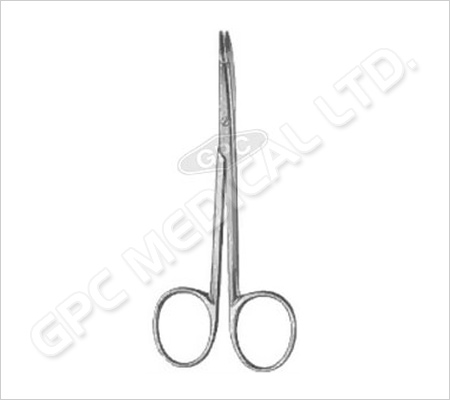
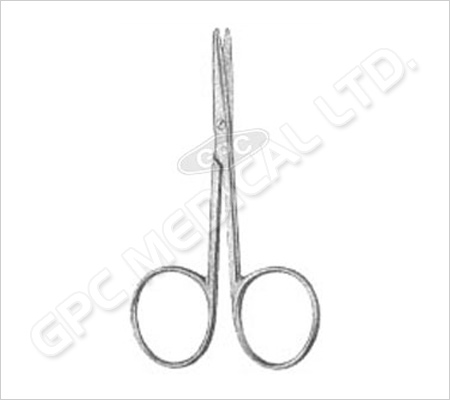
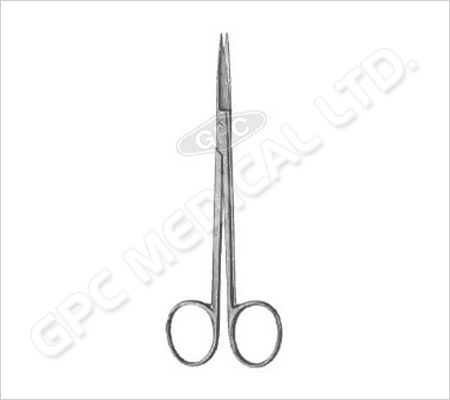
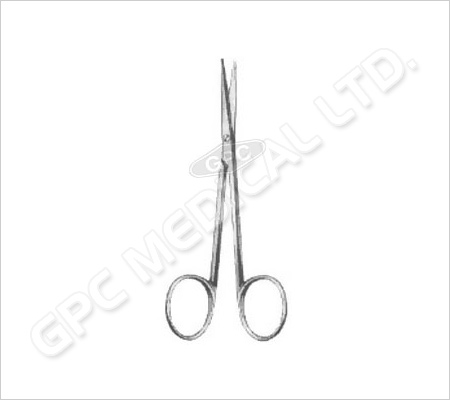
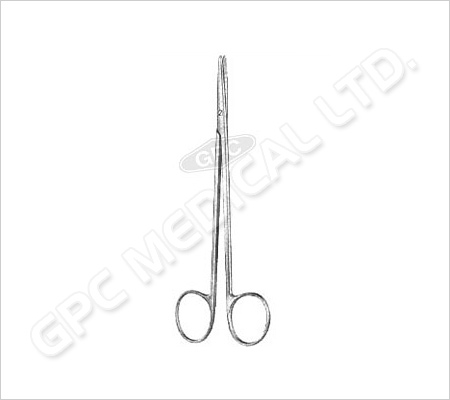
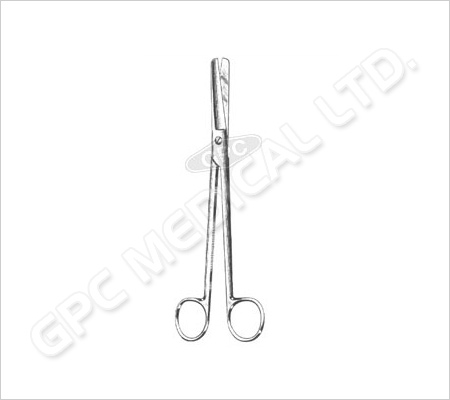
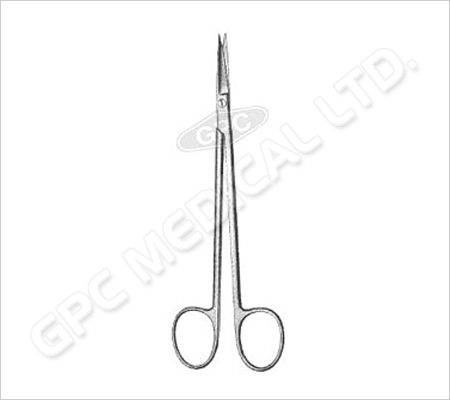
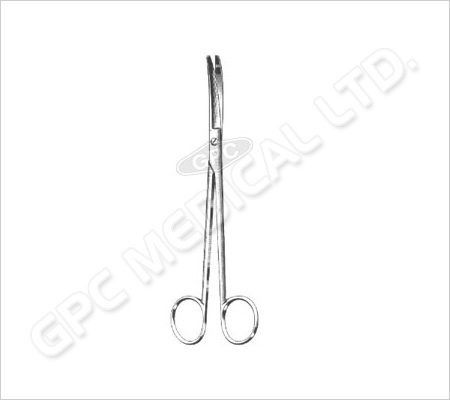
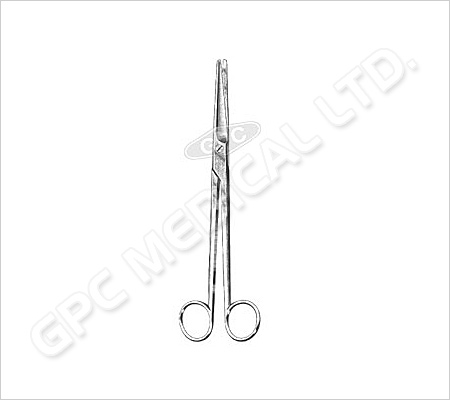
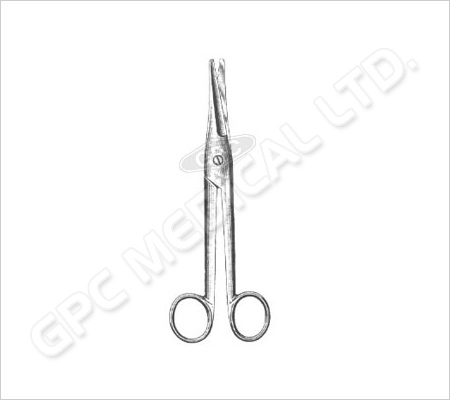
Browse surgical scissors in Nigeria through Franance. Compare the exact family and catalogue reference against your approved specification, then request an itemized quotation.
Buy surgical scissors in Nigeria by specifying the exact instrument family, manufacturer code, length, blade pattern, tip, finish and reusable-device documentation. GPC Medical’s official catalogue organizes scissors across dissecting, operating, ligature and wire-cutting, micro and gum, umbilical, and bandage, plaster and utility categories. The names are not interchangeable. A request for “scissors” alone does not identify the offered pattern or configuration; the person responsible for the clinical specification should approve the selected instrument before procurement.
Which surgical-scissors families are listed?
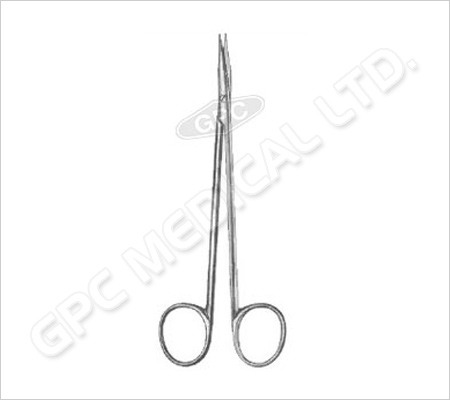
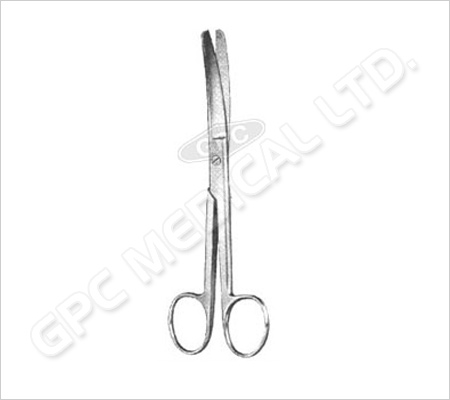
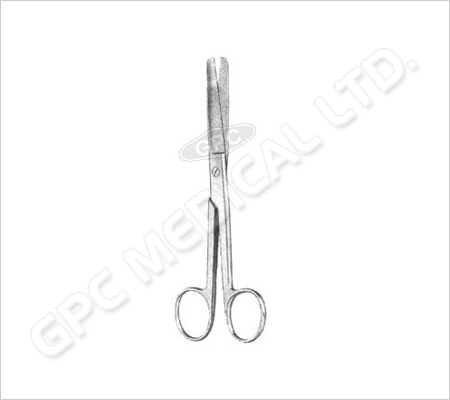
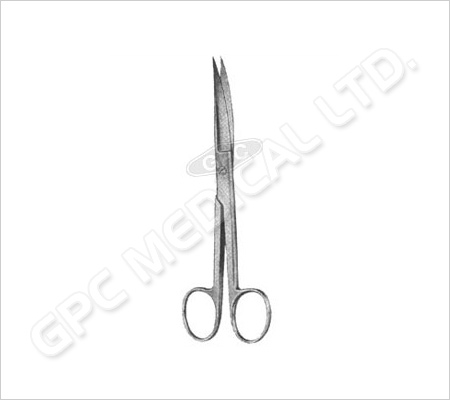
GPC Medical lists named patterns including Kilner, Lexer Baby, Joseph and Reynolds dissecting scissors; Kelly, Mayo-Noble and Metzenbaum operating scissors; Spencer scissors; Lister bandage scissors; and plaster shears. The catalogue also separates straight and curved variants and lists specialist types. Use the family and model reference to identify the item in a quotation, then confirm the exact supplied pattern and configuration. A manufacturer catalogue name is a useful reference; it does not by itself confirm Nigerian availability or commercial terms.
How should I specify the required pattern and size?
Start with the instrument name and manufacturer code from the approved schedule. Add the requested overall length and any stated cutting-edge length, blade or tip shape, straight or curved orientation, and handle pattern. Manufacturer catalogue names can overlap or use legacy terms; keep the facility’s approved wording and the manufacturer’s exact product description together so a reviewer can reconcile them.
If the clinical specification lists only a family name, have the responsible user identify the required pattern and dimensions. Procurement should not choose a scissors type for a procedure or treat an eponym as a complete technical specification. Ask the manufacturer for the current drawing, dimensions and product code when the listing is ambiguous. A product image can help with identification, but perspective, scale and photography do not establish working length or exact blade geometry.
For multiple sizes, make a separate quote line for each code and quantity. Do not compress a size range into a single generic line if the facility expects specific instruments. If a named code is unavailable, request a proposed alternative with its own manufacturer data and obtain approval from the specification owner before changing the schedule.
Which blade, tip, joint and handle details should be compared?
Compare the exact product description and dimensions rather than assuming that two scissors with similar names share the same working end. The approved specification may need to distinguish straight from curved blades, pointed from blunt tips, blade length, overall length, serration or other manufacturer-listed features, ring size, shank form and other product-specific details stated by the manufacturer. Include only details that the end user or manufacturer has specified for the requested item; this guide does not recommend a blade pattern for a clinical task.
Ask the manufacturer to confirm whether a feature is present on the quoted code and whether any accessory is included. Have the quotation identify the exact code and selected configuration. For a family with variants, use the current manufacturer catalogue to prevent an item-name-only substitution. If a dimension or design detail is not stated, request the current product document instead of estimating from a photograph.
In a comparison sheet, keep separate columns for family, code, overall length, working-end dimensions, blade shape, tip, joint or lock details, material, finish, quantity and documentation. That makes technical differences visible before price comparisons and helps receiving staff match the supplied label to the approved line.
What material, finish and handling characteristics should I verify?
Request the exact manufacturer-stated material and finish for the offered item. Do not assume every instrument in a scissors family uses identical stainless-steel grade, surface treatment or construction. If the facility’s specification requires a material grade or finish, ask for product-specific evidence and compare it against the manufacturer’s document. Broad labels such as “surgical grade” should be supported by a precise model specification rather than treated as a substitute for one.
Confirm the ring and handle form, joint construction and any inserts, coating or surface treatment if these matter to the approved schedule. Ask whether lubricant, cleaning accessories or other parts are supplied only when the manufacturer specifies them. A family description or catalogue image does not establish that the scissor is suitable for every cleaning agent, washer or sterilizer in a facility.
For a reusable item, request instructions covering care, inspection, cleaning and reprocessing for the exact instrument or a clearly applicable family. If the scissors include a joint, textured surface, dissimilar material or other feature that affects cleaning, the facility’s sterile-services lead should check the manufacturer’s instructions before purchase. Do not infer that two instruments can use the same process solely because both are metal scissors.
What reprocessing instructions should accompany reusable scissors?
Reusable scissors require manufacturer-specific instructions. The US FDA’s reprocessing guidance discusses the manufacturer’s validation of instructions and labeling, including the materials and equipment users need. FDA also notes that design features such as mated articulating surfaces can make cleaning more challenging. The WHO manual on decontamination and reprocessing covers facility infrastructure, cleaning, preparation and packaging, disinfection, sterilization and transport. These references help frame procurement questions; they do not supply one universal process for scissors.
Before ordering, request the current instructions for use and reprocessing that apply to the exact code or family. Confirm which product versions they cover, whether disassembly is required, which cleaning accessories or supplies are specified, how the item is inspected, and what restrictions apply. The facility’s sterile-services and infection-prevention teams should verify that their equipment, staff, materials and workflow can follow the manufacturer’s instructions.
Do not substitute a generic temperature, exposure time, chemical, cycle or reuse limit into a purchase specification. Those parameters must come from the product’s own instructions and the facility’s validated process. If instructions are not available for review, note that gap and request the documentation before acceptance rather than extrapolating from another scissor or surgical instrument.
What quality and traceability documents should I request?
Ask the supplier to identify the manufacturer, model or catalogue code, exact description, quantity, lot or batch details where applicable, packaging and available labeling. Request current product documentation and any conformity or registration documents that are relevant to the specific product and destination. A document for another model, a broad company certificate or a generic image is not proof for the quoted scissors.
For Nigeria, have the responsible regulatory and institutional teams confirm applicable import and medical-device requirements. This guide does not determine registration status or make a legal claim. Ask what documentation accompanies the exact offered item, whether a market-specific variant is involved, and which party is responsible for any required approvals or costs. Keep the supplier’s answer with the quote and purchase record.
At receiving, compare the delivered label and item code with the approved schedule and retain lot or batch identifiers supplied with the product. If the code, dimensions, material or packaging differs from the offer, pause acceptance and request written clarification. Traceability makes it easier to investigate a mismatch without assuming that a similar name means the same instrument.
How should a facility compare sets, packs and substitutions?
If the request is for individual scissors, specify unit count per code. If it is for a set, ask for an itemized contents list that states each family, code, size and quantity. Confirm whether any storage tray or holder is included or sold separately. “Instrument set” or “scissors set” is not sufficiently detailed for approval unless the manufacturer’s contents schedule is attached and matches the facility’s requirement.
Have the supplier state whether instruments are reusable, how they are packaged and whether the line is sold individually or in a pack. Do not infer a standard pack quantity from the catalogue category. For recurring procurement, record the manufacturer code and accepted dimensions in the item master so subsequent orders can be compared against the first approved supply.
Treat a proposed substitution as a new technical item. The supplier should provide its exact product code, dimensions, pattern, material, finish and applicable reprocessing documentation. The clinical specification owner should review the alternative before procurement approves it. Similar appearance, a lower price or a nearby catalogue number does not establish equivalence. Keep the original and revised schedules so the decision remains clear.
How do I request a surgical-scissors quote from Franance?
Add the required scissors products to the Franance quote cart, enter a quantity for each exact code and put dimensions, finish, documentation or accessory needs against the relevant item. Review the selected model names and quantities in the cart, then submit the request with the facility name, delivery destination, contact details and desired timeline. This is an equipment enquiry: there is no online payment, and the submission does not confirm Nigerian stock or reserve an item.
Ask Franance to return an itemized quotation that repeats the manufacturer and code, requested size or configuration, quantity, documentation, price basis, delivery terms and exclusions. If the exact scissors are not easy to find, provide the official manufacturer page or catalogue reference and ask Franance whether they can be quoted. A catalogue page does not establish local stock or price.
Franance follows up by phone or email to discuss the quotation. Before approval, the responsible end user should review the instrument specification, sterile-services staff should review applicable reprocessing information, and procurement should confirm commercial and regulatory documentation. For other instrument families, return to the general surgical-instruments parent category.
Are Kilner, Lexer Baby, Joseph and Reynolds scissors interchangeable?
They are distinct named manufacturer catalogue families. The specification owner should confirm the intended pattern and dimensions; procurement should not substitute by name similarity.
Do straight and curved versions count as different catalogue families?
They may be separate configurations within a family. List the exact code and orientation required rather than counting each size or orientation as a separate family.
Does the catalogue name establish the material or dimensions?
No. Request the exact manufacturer specification or drawing for the offered code and confirm the dimensions, construction, finish and supplied quantity.
Can I use one sterilization cycle for every pair of scissors?
Do not assume so. Obtain the current reprocessing instructions for each applicable product and have the sterile-services team confirm the facility can follow them.
Can Franance confirm stock or payment through the quote cart?
The quote cart collects products, quantities and requirements for a quotation request. Franance follows up by phone or email; the cart is not an online payment or stock reservation.
Request a surgical-scissors quotation from Franance.
List the manufacturer code, pattern, dimensions, quantity, documentation needs and delivery destination. Franance will follow up to discuss the quotation.