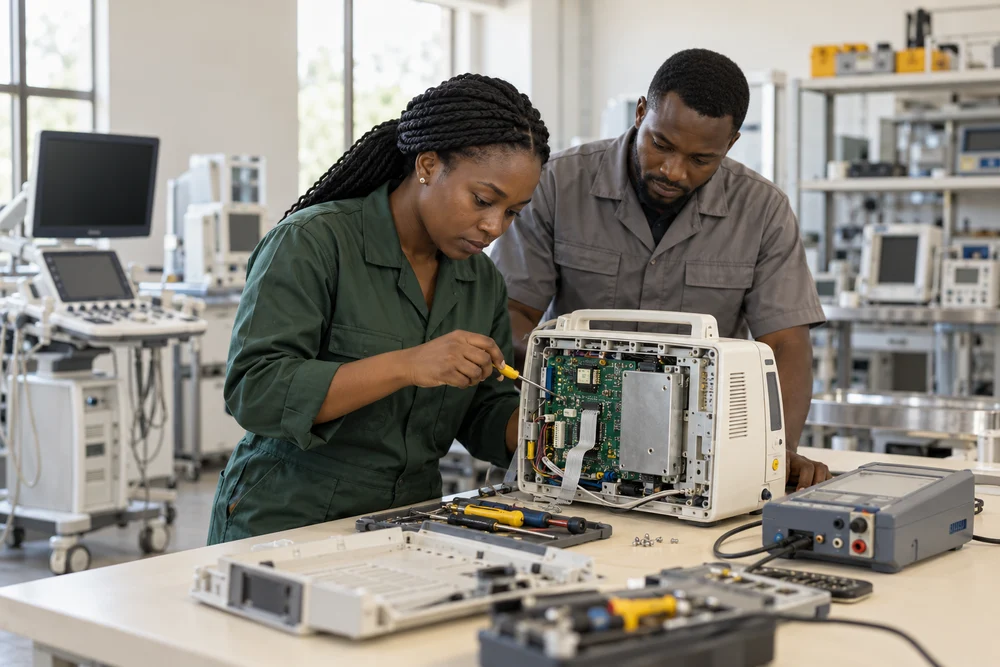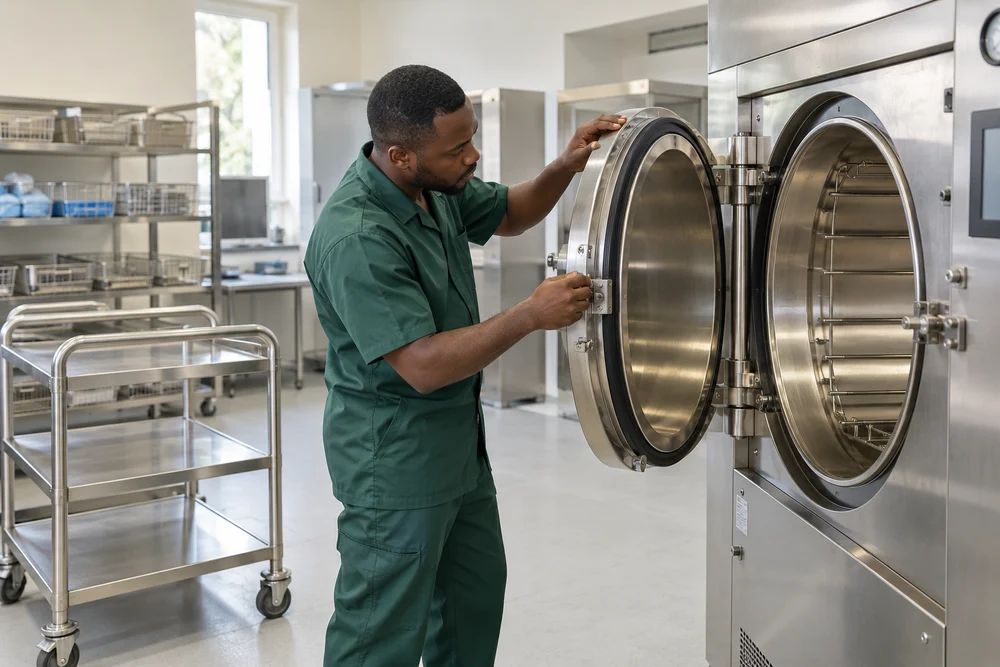
Autoclave and sterilizer repair assessment in Nigeria
How do I request autoclave or sterilizer repair in Nigeria?
Use Request an assessment or Request callback and list each sterilizer separately. Include manufacturer, full model, serial number, asset tag, type of process, chamber size or configuration, department and site contact. State whether it is a tabletop, vertical, horizontal, low-temperature or other sterilizer, and whether the request is a breakdown assessment, repair quotation or post-repair check.
Attach the latest service record and a short description of the issue. If the facility has recent cycle printouts, alarm history or maintenance records relevant to the fault, include them after removing patient or instrument identifiers. State when the problem began and whether the equipment is available for review under the facility's approved process.
Keep washer-disinfectors distinct from sterilizers. They perform different processing functions and use different equipment standards and acceptance evidence. If both are involved, create separate lines with model, process and reported issue for each.
Also distinguish the sterilization technology and configuration. A tabletop steam unit, a large horizontal steam chamber and a low-temperature system can differ in cycle controls, utilities, door arrangement, chamber options and parts. Record the installed version and any accessories or water-treatment equipment that are part of the fault report. This allows a reviewer to use the correct manufacturer documentation and avoids treating every machine in the CSSD as the same service task.
Which sterilizer details help identify the fault?
Record the exact model and configuration, software or controller version where shown, chamber number, installed options, date of installation if known and maintenance history. For a multi-unit CSSD, identify the room and asset tag so reports and access plans can be tied to the right equipment.
Describe what the operator observed without interpreting the cause: displayed alarm text, incomplete cycle indication, leak report, door or control issue, a failed facility test, or a recurring interruption. Include dates and the relevant non-identifying record. Do not provide step-by-step cycle settings or ask a vendor to infer a sterilization result from a product family.
For washer-disinfectors, state the type of loads and accessories the unit is configured to process, such as racks or load carriers, and the facility's issue category. ISO 15883-1:2024 covers performance requirements for washer-disinfectors and accessories; it is distinct from standards governing sterilizers.
How should facilities separate equipment repair from sterilization validation?
Equipment repair addresses a mechanical, electrical, control or component fault. Sterilization validation and routine process monitoring assess whether a defined process meets its requirements for the relevant load and facility. A repaired sterilizer may require additional checks or requalification specified by the applicable procedure, but the repair report alone is not a validation record.
WHO Africa's 2023 CSSD guidance treats technical maintenance, process monitoring and record-keeping as related but distinct facility responsibilities. ISO 17665:2024 addresses development, validation and routine control of moist-heat sterilization processes. The responsible CSSD and quality leads should identify which technical and process deliverables the facility requires.
In the enquiry, specify whether you need equipment fault repair, a post-repair engineering check, process validation or monitoring support. Ask the quotation to name the responsible party, method, reference document and record for each item. This makes the boundary clear for both the vendor and CSSD team.
For a washer-disinfector, ISO 15883-1:2024 covers general performance requirements and test methods for washer-disinfectors and their accessories. It is not a sterilizer standard. For moist-heat sterilization, ISO 17665:2024 addresses process development, validation and routine control. Referencing these titles helps the facility describe the evidence it needs; it does not by itself determine applicable national requirements or who is qualified to perform the work.
What records should accompany a sterilizer repair enquiry?
Provide the asset register entry, recent service reports, maintenance schedule, relevant manufacturer documentation and a brief fault timeline. Include cycle or alarm records only where they help explain the equipment issue, and remove patient, instrument-set or traceability details that are not required for vendor review.
For repeated interruptions, list the dates, exact displayed messages and any maintenance or component replacement since the last successful operation. Avoid editing or summarizing a record in a way that changes its meaning. If a CSSD quality lead has classified the concern as a process failure, state that so the request can be routed separately from a mechanical repair.
Agree the handover record before work begins. Ask for equipment identity, reported fault, scope, findings, components changed, tests completed, limitations and open actions. The CSSD should retain its own process and batch records under facility policy.
Keep the service report linked to the unit without merging it into cycle records. If a fault interrupted a cycle, the CSSD team should handle the affected load and process record under its approved procedure. A repair report can document the equipment work, while responsible quality personnel decide what further monitoring or requalification is required before the device returns to routine use.
How can the CSSD plan access and service continuity?
Identify which unit is affected, its role in the department and available access windows. State any facility rules for contractor access, clean and restricted areas, infection prevention, utilities shutdown, isolation and coordination with maintenance staff. Do not include patient lists or instrument traceability identifiers in a general enquiry.
The CSSD lead should coordinate any equipment downtime with the hospital's clinical, infection-prevention and biomedical engineering teams. A supplier should not set the department's processing or patient-care contingency arrangements. Include whether the unit is available for inspection and whether alternative equipment or a temporary service arrangement is handled by the facility.
For sites with more than one sterilizer or a washer-disinfector fleet, send an asset schedule and identify the priority order. Franance can review the location, equipment and requested window, then state the access assumptions and timing included in a written quotation.
How do manufacturer instructions and parts affect a repair scope?
Provide the manual for the exact model and revision, plus equipment data plates and service history. Tuttnauer publishes installation, service and maintenance information for its own products; the scope and regional terms shown on a manufacturer's site should not be assumed to apply to Franance or to another brand.
If you require original parts, manufacturer-authorized service, warranty-preserving work or proprietary software access, state that explicitly and ask for documentation showing how the proposed work meets the requirement. Part references and compatibility can vary by model and generation. Ask that parts, labour and any related testing be identified separately.
Do not assume a listed autoclave or washer-disinfector model is serviceable by a particular provider. Franance should confirm the exact equipment, available service path, parts source and any limitation in the written response before work is approved.
What should the repair quotation include?
Check the model and reported issue, proposed assessment or repair, reference documents, parts, test scope, access requirements, downtime assumptions, charges, exclusions and expected report. Separate a repair quote from process validation, routine biological or chemical monitoring, operator training and regulatory acceptance unless those services are explicitly described with responsible personnel and evidence.
Ask how new findings, an unavailable part, a failed post-repair check or a need for requalification will be handled. Confirm whether additional work requires separate approval. If your procurement requires ISO, national standard or accreditation evidence, identify the exact edition and deliverable rather than asking for an unspecified “certification.”
Before approving work, compare the proposal with the equipment manual, CSSD procedures and facility requirements. Confirm who is allowed to return the unit to service and who records any required process validation. That release decision belongs to the facility's responsible personnel.
The proposal should also state whether consumables, replacement parts, software access, inspection fees, travel and follow-up are included. If the unit is beyond a documented service life or parts are no longer available, ask for the assessment criteria and alternatives in writing. A repair decision can then be compared with the facility's maintenance history, downtime needs and replacement planning rather than being based only on the immediate fault.
How do we request a sterilizer repair quote in Nigeria?
Use the on-page assessment or callback controls and give the city and state, site contact, equipment list and current status. Attach only the relevant service and alarm information. Franance can review the exact model and fault, clarify the requested technical work and prepare a written scope with any parts, checks, access and exclusions identified.
If the request covers more than one brand or technology, separate each unit by exact model. Include preferred access dates and any restrictions on moving the equipment or shutting down utilities. Ask that travel and third-party work be stated separately.
Use the written quote order to confirm the final scope and price before authorizing work. Keep the facility's operator and quality procedures in force while equipment status, repair evidence and any further process qualification are reviewed.
Common questions about autoclave and sterilizer repair assessment in Nigeria
Can a repair report replace a sterilization validation record?
No. Equipment repair and process validation answer different questions. Ask who will perform each required activity and what record the facility will receive.
Are washer-disinfectors included in autoclave repair?
They are different equipment classes. Identify each unit and process separately so the quotation can address the correct model and standard.
What should we send if a cycle was interrupted?
Provide the equipment identity, exact displayed message, date and relevant non-identifying record. Keep patient and instrument traceability information within the facility's own quality process.
Does the manufacturer's service page define Franance's service terms?
No. Manufacturer materials describe that manufacturer's products and service channels. Franance should confirm its exact role, model scope and parts path in a written response.
How do we request an assessment in Nigeria?
Use Request an assessment or Request callback and provide the model, fault history, location and relevant service documentation.
Tell us what your facility needs.
Send the equipment details, your requirement and the facility location. We’ll discuss the information needed to review the scope and prepare the next step.
Contact Franance