

Buy Medical Vacuum Pump System in Nigeria.
Buy medical vacuum pump systems in Nigeria through Franance by comparing the three current manufacturer references against a project-specific engineering brief. Request a quote for the exact configuration, and confirm capacity, resilience, electrical/site requirements and whether pipeline, installation, testing and commissioning are included.
Products
3 models
Which medical vacuum pump systems can I buy in Nigeria?
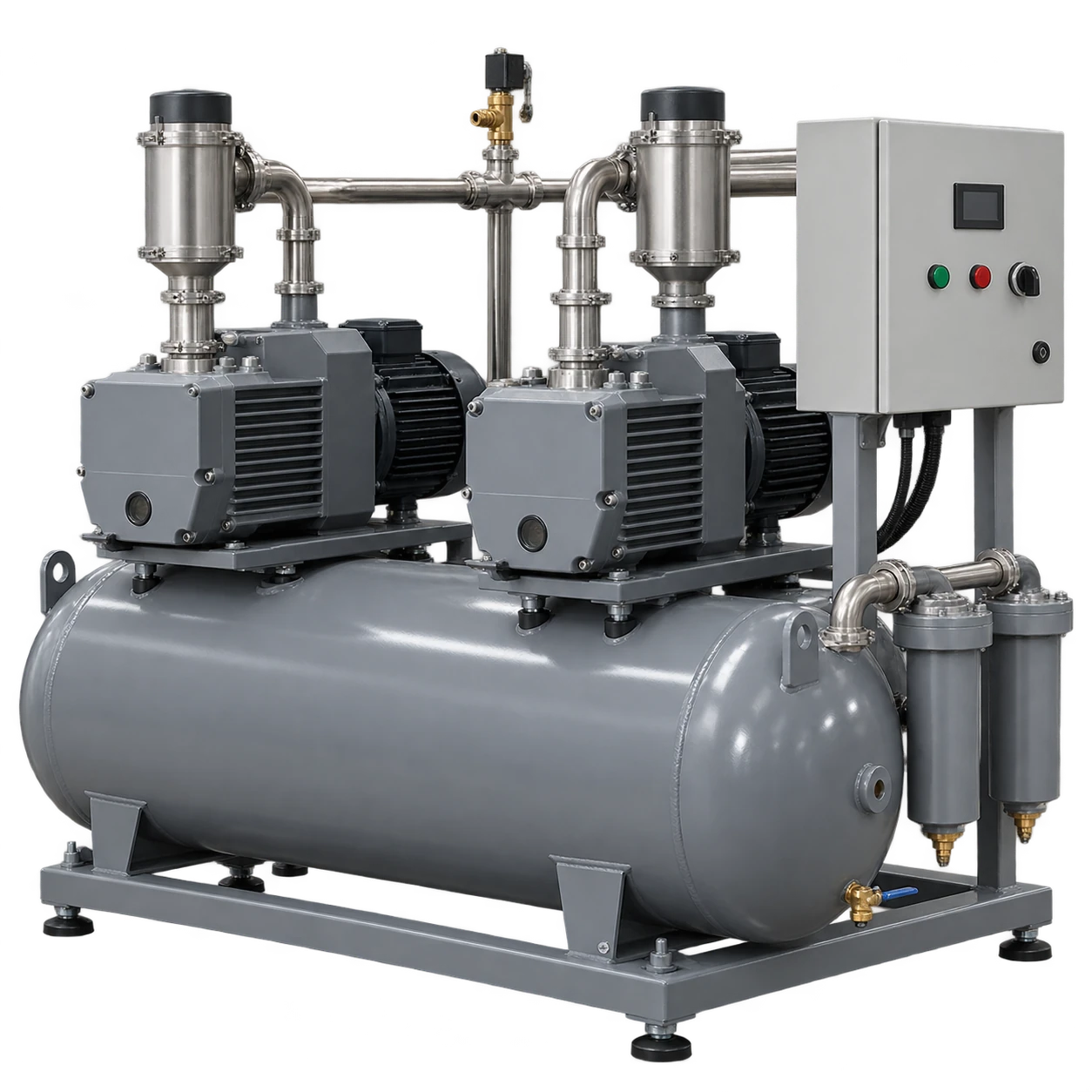
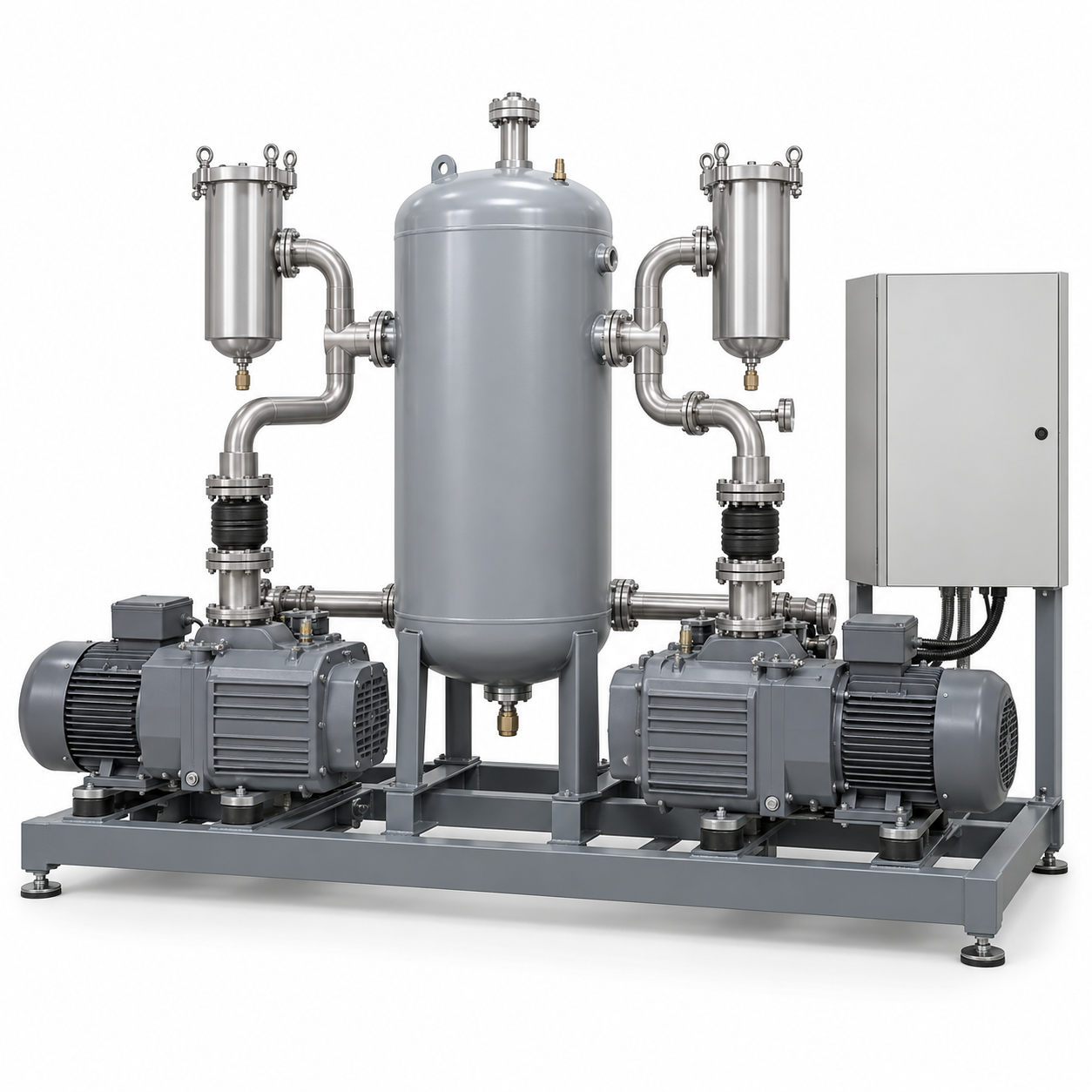
The current category contains three product references. Compare the BeaconMedaes Magnis MSV system, the BeaconMedaes mVAC-2560-Q-HTM02-01 system, and the Dräger Medical Vacuum System. See the full medical vacuum pump system listing for the category.
Read moreWhat is a medical vacuum pump system used for in Nigeria?
A central medical vacuum source produces suction service for the hospital’s designed medical vacuum pipeline. The plant and pipeline are part of a managed system: the plant creates vacuum, while the distribution network conveys it to intended areas through correctly identified components. ISO 7396-1 covers medical gas pipeline systems for compressed medical gases and vacuum, including supply systems, pipeline distribution, controls, monitoring, alarms, testing, commissioning and documentation. It is not a substitute for site-specific design or local approvals.
Read moreHow does Magnis MSV differ from the mVAC medical vacuum system?
BeaconMedaes Magnis MSV is described by the manufacturer as a rotary-screw medical vacuum system for medical and laboratory settings. BeaconMedaes identifies oil-sealed screw technology, variable-speed drive and set-point control, sound-insulated canopies, and central control. Its documentation lists duplex MSV models from MSV007D-240V through MSV050D-400V; horsepower and voltage differ by selected model. Those range endpoints do not tell you which size the project needs, or which model/configuration is offered in a quote.
Read moreBuy medical vacuum pump system in Nigeria
Buy a medical vacuum pump system in Nigeria through Franance by matching a verified plant configuration to the facility’s engineering brief, then requesting a written quotation. The current catalogue lists three options: BeaconMedaes Magnis MSV rotary-screw vacuum systems, the BeaconMedaes mVAC-2560-Q-HTM02-01 configured system reference, and Dräger Medical Vacuum Systems, a project-configured plant offer. Their labels identify different product families; they do not establish capacity, a complete plant schedule, installation scope, Nigerian stock or suitability for a particular hospital. Medical vacuum plant creates the vacuum source. A medical gas pipeline system distributes that service through engineered pipework, isolation and alarm arrangements to designated points of use. A pump-system quotation alone should not be treated as a complete pipeline project. Franance accepts quote orders rather than online payment and follows up by phone or email. For a useful request, have the facility’s responsible medical-gas engineers define demand, performance, resilience, site interfaces, applicable requirements and handover before a model is selected.
Which medical vacuum pump systems can I buy in Nigeria?
The current category contains three product references. Compare the BeaconMedaes Magnis MSV system, the BeaconMedaes mVAC-2560-Q-HTM02-01 system, and the Dräger Medical Vacuum System. See the full medical vacuum pump system listing for the category.
These are not three directly comparable fixed-capacity machines. Magnis MSV is a product family with multiple documented models. The mVAC reference is an identified system configuration appearing in BeaconMedaes material, while the manufacturer’s broader mVAC description covers configurable arrangements. Dräger describes a medical vacuum plant planned around the hospital project rather than one universal pump SKU. Ask for a project-specific technical schedule before comparing price, claimed output, pump count or redundancy.
What is a medical vacuum pump system used for in Nigeria?
A central medical vacuum source produces suction service for the hospital’s designed medical vacuum pipeline. The plant and pipeline are part of a managed system: the plant creates vacuum, while the distribution network conveys it to intended areas through correctly identified components. ISO 7396-1 covers medical gas pipeline systems for compressed medical gases and vacuum, including supply systems, pipeline distribution, controls, monitoring, alarms, testing, commissioning and documentation. It is not a substitute for site-specific design or local approvals.
The equipment is for facility infrastructure planning, not for choosing a patient treatment or bedside suction setup. The source plant may be specified for a new hospital, a new department, a replacement or an extension, but each case has different interfaces. For an existing site, the engineering team should establish whether current plant, receiver, filtration, pipeline, alarms and terminal units can be retained or require modification. Do not infer the end-use capability, required vacuum level or required flow from a catalogue title.
NHS England’s HTM 02-01 provides guidance for medical gas pipeline design, installation, validation, verification and operational management in its own health-system context. It can inform technical discussions, but it is not Nigerian law. The project team should identify the Nigerian rules, authority requirements and adopted editions that apply to the facility.
How does Magnis MSV differ from the mVAC medical vacuum system?
BeaconMedaes Magnis MSV is described by the manufacturer as a rotary-screw medical vacuum system for medical and laboratory settings. BeaconMedaes identifies oil-sealed screw technology, variable-speed drive and set-point control, sound-insulated canopies, and central control. Its documentation lists duplex MSV models from MSV007D-240V through MSV050D-400V; horsepower and voltage differ by selected model. Those range endpoints do not tell you which size the project needs, or which model/configuration is offered in a quote.
The mVAC-2560-Q-HTM02-01 listing is identified by its exact code in a BeaconMedaes hospital-upgrade case study. BeaconMedaes describes its mVAC family as air-cooled, oil-lubricated rotary-vane pumps managed centrally, with modular floor- or tank-mounted arrangements. Its product description discusses systems combining up to six pumps, a vacuum vessel, controls and bacterial filters. These family-level statements must not be read as the bill of materials, output, pump count or options for the exact case-study code. Request the current proposed configuration and supporting documents.
The families differ in manufacturer-described pump technology and system approach. Technology alone does not determine lifecycle cost or suitability. Compare verified offered models against the same engineering requirements, local maintenance plan, power conditions, replacement parts, service access and lifecycle assumptions. Do not transfer a performance figure or feature stated for one family to another.
What does the Dräger Medical Vacuum System listing include?
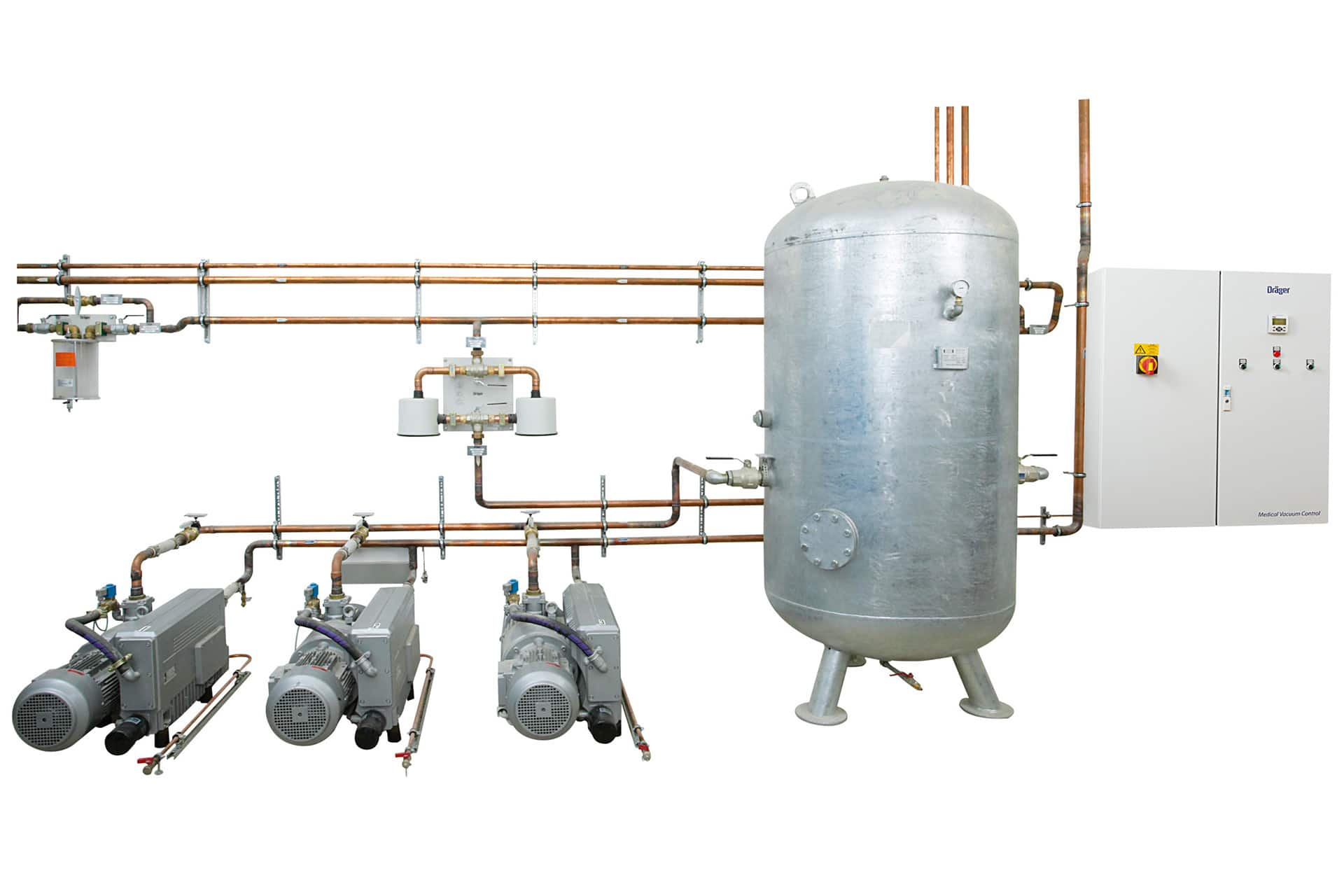
The Dräger Medical Vacuum System is a configurable hospital vacuum plant, not a named single pump model. Dräger describes system monitoring through Medical Vacuum Control SE, system alarms and redundant key components. The manufacturer also states that its vacuum systems meet ISO 7396-1 requirements. Treat that as the manufacturer’s system statement, not independent proof that a particular Nigerian installation is compliant or that a quoted scope has completed project validation.
Ask Dräger or the quoting supplier to identify exact pump models and number, control and alarm package, vessel and filtration selections, accessories, electrical details, intended site, and every included or excluded work package. The product-information document describes planning and configuration around the application. The quote must make the proposed configuration assessable by the hospital’s responsible designer and operator.
Because it is project-configured, a brand-family label cannot answer the practical questions: what equipment is supplied, what demand it was sized for, what happens during maintenance or fault, how alarms are routed, how the system ties to the building, and who validates it. Request those in the technical submission rather than filling gaps with assumptions.
How should I specify vacuum capacity, reserve and continuity?
Capacity must come from a qualified design process. Provide the facility’s approved demand basis: connected departments and outlets, design assumptions, simultaneous-use or diversity basis, peak profile, future phases, required vacuum conditions at points of use, expected pipeline losses, and existing measured performance. The responsible engineer should determine how these inputs translate into source capacity and system performance. This guide does not calculate a flow rate, vacuum set point, pump size or receiver volume.
State the required resilience explicitly. Ask the design team and supplier to show the proposed duty/standby or other reserve philosophy, available capacity during planned service or a credible fault, common components shared between trains, isolation and changeover behaviour, alarms, receiver role and monitoring. A product description mentioning multiple pumps or redundancy does not establish that a particular configured system can maintain the facility’s required service under every failure scenario.
For BeaconMedaes mVAC, the manufacturer describes a vessel as a buffer for peak demand and backup if all pumps are down, and provides central monitoring of pump status, vacuum level, alarms and filter-service warnings. For Magnis MSV and Dräger, request the exact offer’s configuration and documentation; do not assume mVAC vessel or filter features carry over. Specify how the proposed plant behaves if mains power fails, a pump is isolated, a common control fails, or a filter reaches its service limit. The project engineer must decide which scenarios belong in the design basis.
What should a medical vacuum plant site survey check?
Before specifying the plant, arrange a survey by qualified project personnel. Record plant-room location, dimensions, access route, lifting and maintenance clearances, floor and structural constraints, environmental conditions, ventilation or heat-removal arrangements, drainage where applicable, noise limits, and any separation or fire requirements. Check whether equipment can be delivered, installed and serviced in the intended location. Final requirements depend on selected equipment documents and building design.
Confirm the power supply from verified site information: voltage, frequency, phase, available load, protection, motor starting characteristics and generator or alternate-supply behaviour. A family model code is not proof that it matches the facility’s electrical system. Ask the technical proposal to state the exact electrical configuration, full-load and starting data, protection needs and any required transfer or backup interface.
For a replacement project, gather current plant schedules, drawings, controls and alarm diagrams, receiver and filter information, maintenance records, commissioning or test reports, known faults, and constraints on service interruption. Verify pipeline condition and point-of-use performance through the responsible engineering process. A new pump-room plant cannot correct an unknown leak or an undersized or damaged distribution network by assertion alone.
In Nigeria, document actual site location and readiness, environmental conditions, utility reliability, generator arrangement, access for deliveries and maintenance, and the planned source of service parts. Ask the supplier to state availability and service arrangements in the quote; this guide does not claim local stock, a local service centre, delivery schedule or warranty coverage.
Where does the pump system stop and pipeline design begin?
The source plant is one part of a medical gas pipeline system. Separate the proposal into the vacuum source package and downstream works: plant connections, headers, distribution pipework, isolation valves, area alarms, terminal units, controls, monitoring, interfaces and commissioning. Whether any are included must be written down. Do not assume a pre-piped plant package includes building distribution or installation throughout a hospital.
For a new build, identify source-to-terminal scope and the design organization responsible for the whole system. For an extension, provide existing as-built information and define the tie-in boundary. For a replacement, clarify what will be isolated, removed, reused, recommissioned and tested, and who manages continuity while work is undertaken. Preserve vacuum identity and non-interchangeability requirements; changes to medical gas pipework should be designed and executed by qualified parties under applicable standards and authority controls.
ISO 7396-1’s scope demonstrates why plant selection and pipeline engineering cannot be collapsed into one catalogue decision: it includes supply equipment and distribution, controls, alarms, verification, commissioning and documentation. Request system design basis, drawings, equipment schedules, risk and alarm information, test/commissioning records, operating instructions and handover documents appropriate to the project. A pump manufacturer’s statement about its equipment is not evidence that the installed network has been tested or accepted.
What should a medical vacuum quotation in Nigeria include?
Send Franance the project location and facility type, new-build/replacement/extension scope, served areas and outlet schedule, demand and performance basis from the design team, preferred standards and authority requirements, expected future expansion, and existing plant/pipeline records. Include plant-room survey, verified electrical supply and backup arrangement, layout drawings, delivery access and installation constraints. The request concerns facility engineering data, not patient information.
Ask the written offer to identify manufacturer, exact model/configuration, pump technology and count, designed operating envelope and capacity evidence, controller, vessel, filters, alarms, monitoring, connections, electrical schedule, accessories, dimensions, utilities, excluded items, delivery and installation boundaries. Request the duty/reserve philosophy, documentation, testing and commissioning responsibilities, operator training scope, maintenance requirements, consumables, spare parts, warranty terms and service coverage as explicit quote lines. If a detail is not confirmed, require it to be marked as an assumption or pending clarification.
For the mVAC-2560-Q-HTM02-01 reference, specifically ask whether the cited configuration is currently orderable and what current model schedule corresponds to requested demand. For Magnis MSV, identify the exact MSV model and voltage rather than relying on the family label. For Dräger, require a project equipment schedule because the catalogue entry is an engineered system offer. None of these checks implies Nigerian availability; the supplier must confirm commercial terms.
Franance’s process is quotation-led: submit a quote order, then the team follows up by phone or email to clarify requirements and next steps. There is no online purchase/payment checkout for these plant systems. Before acceptance, have facility engineering and procurement stakeholders review scope, standards, configuration, responsibilities, commercial terms and handover obligations.
How do I request a medical vacuum system quote from Franance?
Start with the medical vacuum pump system category, compare the three current system references and choose the closest manufacturer family for technical discussion. Send one project brief with site survey and demand information rather than selecting by brand name alone. Franance can follow up by phone or email to clarify the request; the final offer must confirm model, system configuration, scope and availability.
For a wider medical-gas project, review the parent medical air and vacuum category and relevant pipeline and bedhead interface equipment. Coordinate those packages through the project’s responsible designer so plant and distribution interfaces are explicit. Contact Franance to request a medical vacuum system quotation.
Frequently asked questions about medical vacuum systems in Nigeria
### Can I choose a pump from the model name alone? No. Use the listing to identify a manufacturer family or configuration reference. A qualified project design must define demand and site requirements, and the written offer must identify exact capacity, pump arrangement, controls, filtration, vessel and electrical configuration.
### Does the vacuum plant include pipework to hospital outlets?
Not automatically. Ask the quote to state whether distribution pipework, valves, alarms, terminal units, installation, testing and commissioning are included or excluded. The plant source and pipeline system are related but distinct work scopes.
### Is the mVAC-2560-Q-HTM02-01 guaranteed available in Nigeria?
The exact code appears in BeaconMedaes manufacturer material, including a hospital case study. That does not establish present availability, lead time, price or Nigerian supply scope. Ask Franance to confirm the current quote configuration and commercial terms.
### Does Dräger's ISO statement certify my installed system?
No. Dräger describes its vacuum systems as meeting ISO 7396-1 requirements. The project still needs applicable standards confirmation, appropriate system design, installation, site testing, verification, commissioning and documentation by responsible qualified parties.
### Can Franance provide a price without a site brief?
A preliminary enquiry can start discussion, but a responsible plant quotation requires enough project information to identify the intended system and scope. Share the demand basis, plant room, electrical supply, pipeline boundary and required handover rather than expecting a catalogue family to resolve them.
### Is the system purchased online?
No. These products are quote-order items. Submit the request and Franance will follow up by phone or email. Online card payment is not the purchase flow described for this catalogue.
Sources and technical limitations
Manufacturer references reviewed: BeaconMedaes Magnis MSV product information, Magnis MSV model documentation, BeaconMedaes mVAC product information, BeaconMedaes mVAC documentation, BeaconMedaes hospital-upgrade case study, Dräger Medical Vacuum Systems and its medical vacuum plant information PDF. Standards and engineering context: ISO 7396-1:2016 and NHS England HTM 02-01.
No capacity, flow, vacuum level, redundancy adequacy, pipeline size, compliance determination, Nigerian availability, price, delivery, warranty or local service coverage is established here. Verify current manufacturer documentation and the exact quoted schedule. The facility’s qualified design team must confirm applicable Nigerian rules, adopted standards, site suitability, installation, testing, validation/verification, commissioning and operational procedures.
Common questions
Can I choose a pump from the model name alone?
No. The listing identifies a manufacturer family or configuration reference. A qualified project design must define demand and site requirements, and the written offer must identify exact capacity, pump arrangement, controls, filtration, vessel and electrical configuration.
Does the vacuum plant include pipework to hospital outlets?
Not automatically. Ask the quote to state whether distribution pipework, valves, alarms, terminal units, installation, testing and commissioning are included or excluded.
Is the mVAC-2560-Q-HTM02-01 guaranteed available in Nigeria?
No availability is implied. The code appears in BeaconMedaes manufacturer material, including a hospital case study; ask Franance to confirm current orderability, configuration and commercial terms.
Does Dräger's ISO statement certify my installed system?
No. It is a manufacturer statement about its systems. The project still needs applicable standards confirmation, design, installation, site testing, verification, commissioning and documentation by responsible qualified parties.
Can Franance provide a price without a site brief?
A preliminary enquiry can start discussion, but a responsible plant quotation needs enough project information to define intended system and scope, including demand, plant room, electrical supply, pipeline boundary and handover.
Is the system purchased online?
No. These products are quote-order items. Submit the request and Franance follows up by phone or email; the catalogue does not use online payment checkout for these systems.
Request a medical vacuum system quotation from Franance.
Send the facility demand basis, site survey, verified power information, pipeline boundary, required resilience, applicable standards and delivery location so the exact configuration and scope can be reviewed.
Request a medical vacuum system quoteNeed an equipment quote?
Add the models you need to a quote order, or send us your equipment list.