
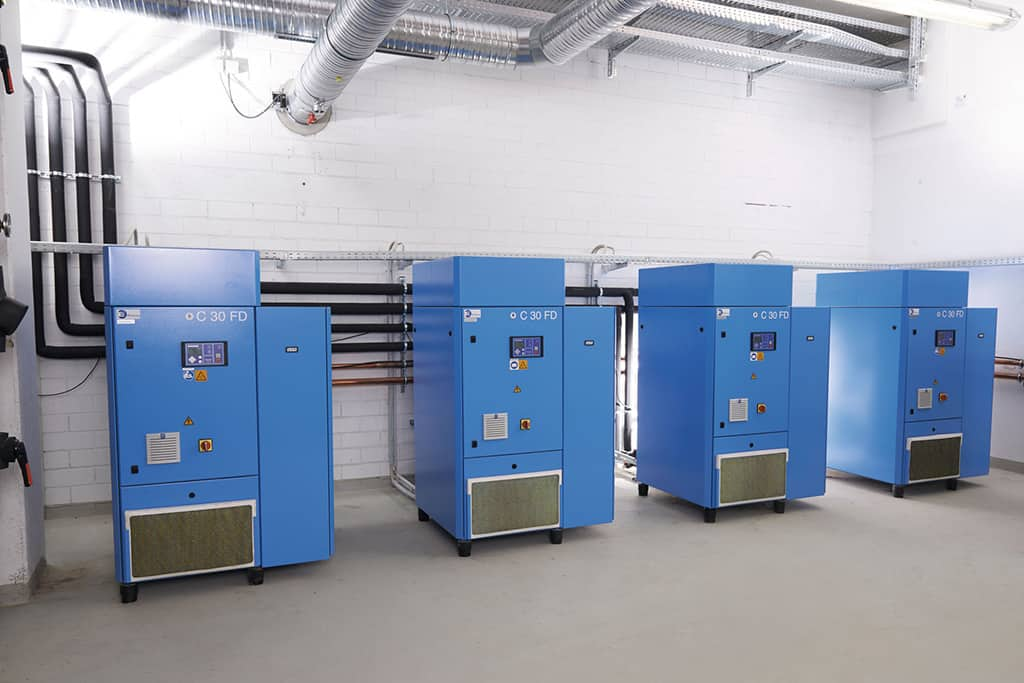
Medical Compressed Air System
Configured central medical compressed-air supply system
Price on request

Medical equipment and biomedical engineering.
Abuja, Nigeria.
Buy medical air compressor systems in Nigeria through Franance by defining the facility’s air service, demand, quality specification and project boundary, then requesting an engineered quotation. Compare the Dräger configurable system, BeaconMedaes PMA XL1 purification configuration and BeaconMedaes TMA integrated package against the facility’s approved requirements.
4 models
Configured central medical compressed-air supply system
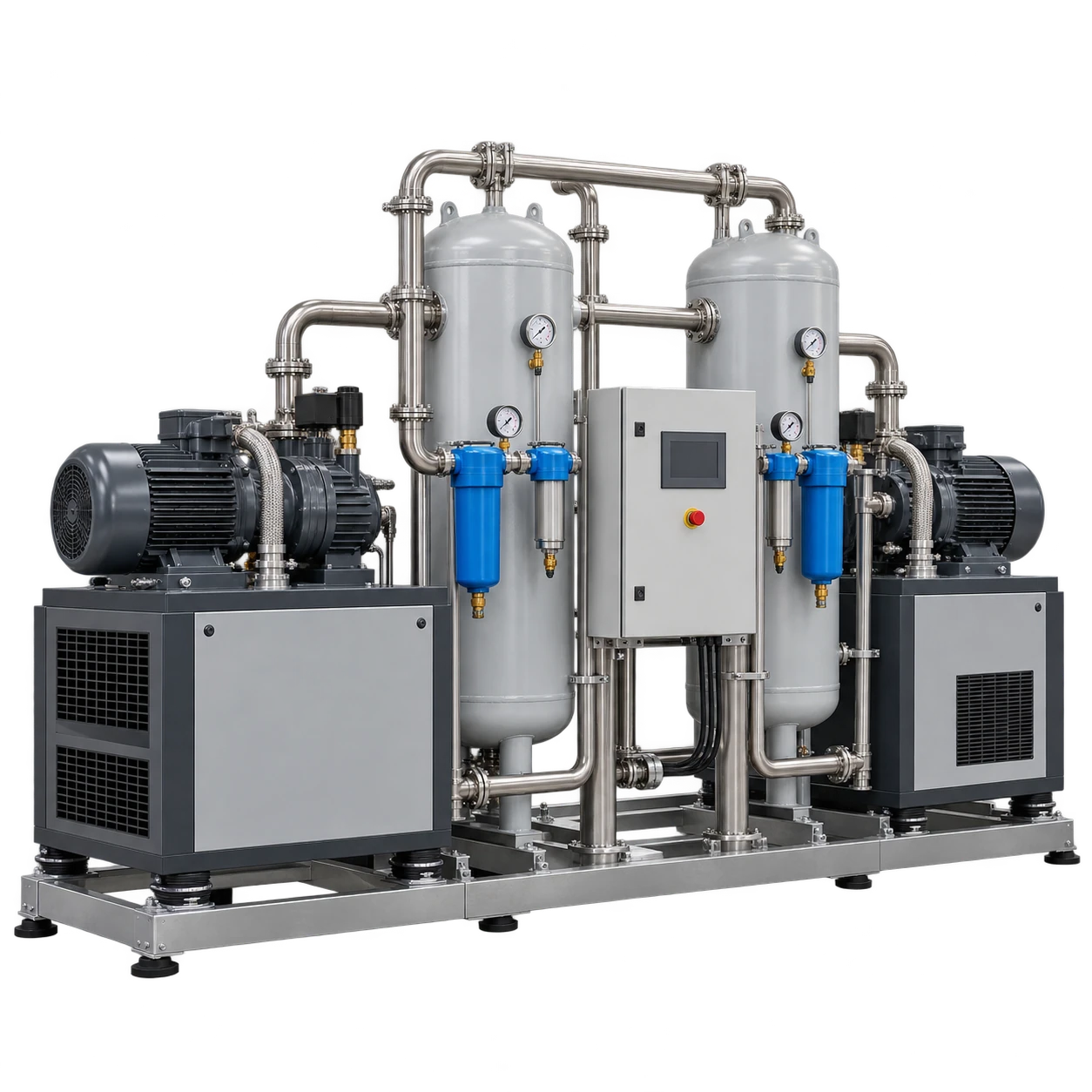
Configured medical air supply system with PMA XL1 purification module
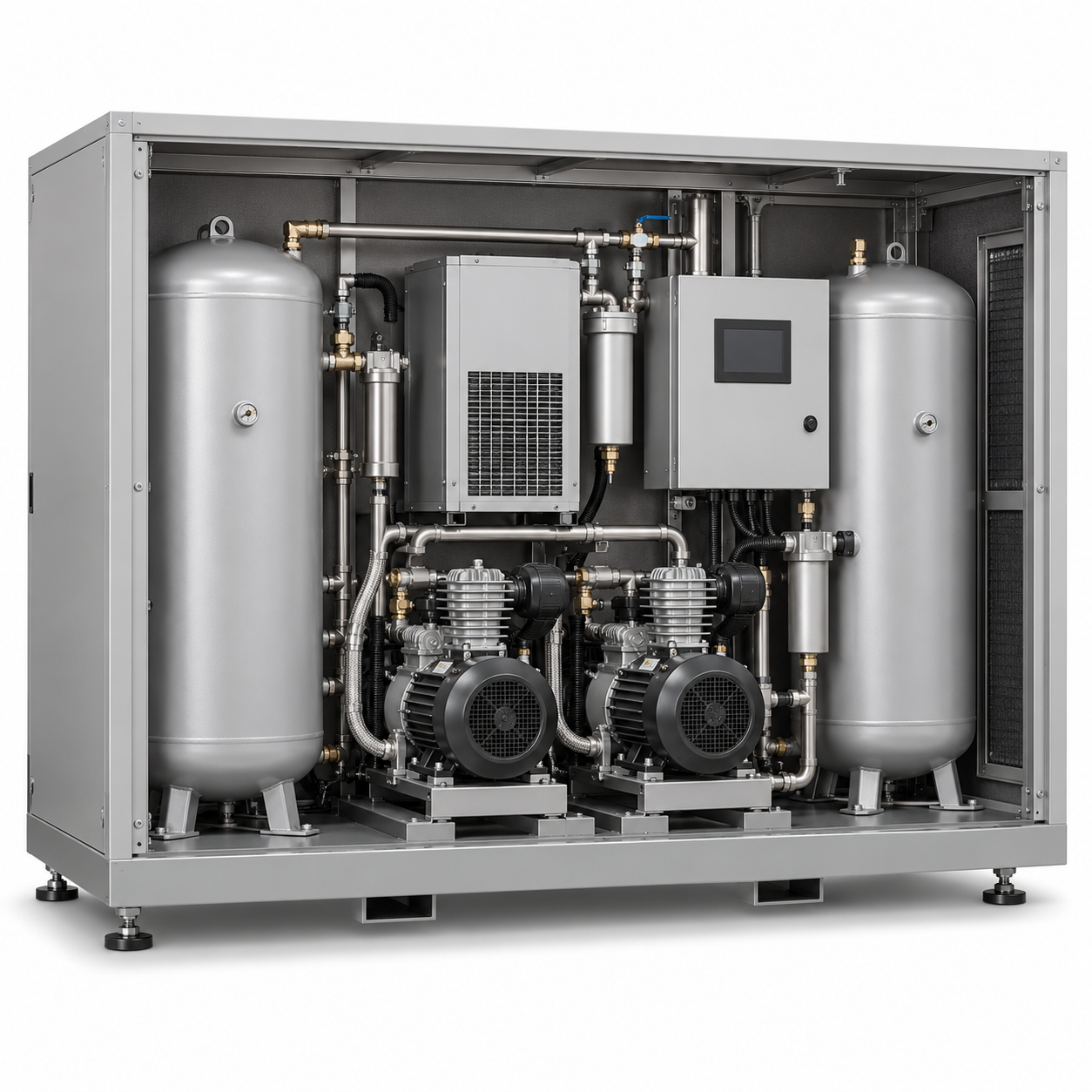
The three assigned catalogue references are Dräger Medical Compressed Air System, BeaconMedaes PMA XL1 Medical Air System, and BeaconMedaes TMA Medical Air System. The full medical air compressor system category lists all three.
Read moreThe plant compresses air, treats it to the project’s required specification, controls and monitors supply, and connects to the medical gas pipeline system. The facility distribution system then carries the designated service to intended points of use. ISO 7396-1 covers pipeline systems for compressed medical gases and vacuum, including source systems, distribution, controls, monitoring and alarms, as well as design, installation, testing, commissioning and documentation. It provides a framework for the complete system; it does not size a project without facility data.
Read moreBeaconMedaes PMA XL1 is not simply a standalone compressor. BeaconMedaes describes PMA as a modular medical air system built around duplex purification, central control and a selected compressor technology. Its 2025 PMA XL range announcement identifies XL1 as using an Atlas Copco QD+ activated-carbon line filter without a Hopcalite catalyst; XL2 is a distinct configuration. The PMA purification module is matched with the chosen Atlas Copco compressor type and size.
Read moreBuy a medical air compressor system in Nigeria through Franance by defining the facility’s air service, demand, quality specification and project boundary, then requesting an engineered quotation. The current catalogue includes three distinct offers: Dräger Medical Compressed Air System, BeaconMedaes PMA XL1 Medical Air System, and BeaconMedaes TMA Medical Air System. Dräger is a project-configured central or compact system; PMA XL1 is a purification module configured with a selected compressor; TMA is described as an integrated all-in-one package. None should be sized from its name alone. Medical compressed air is a facility utility, not a generic workshop compressor. The required source and treatment depend on the designated service and the project’s performance and quality criteria. A quotation for the source plant does not automatically include building distribution, terminal units, alarms, installation or commissioning. Franance handles quote orders: the team follows up by phone or email, with no online checkout. Have the facility’s qualified medical-gas engineering team set the design basis and identify applicable Nigerian requirements before comparing offers.
The three assigned catalogue references are Dräger Medical Compressed Air System, BeaconMedaes PMA XL1 Medical Air System, and BeaconMedaes TMA Medical Air System. The full medical air compressor system category lists all three.
These product records do not represent three identically specified compressors. Dräger describes a configurable system with central and compact arrangements. PMA XL1 identifies a purification configuration in BeaconMedaes’ modular PMA system, where the compressor technology and size are selected to suit the project. TMA is described as a complete package with duplex compressors and treatment components integrated in a canopy. Compare the quoted system schedules, not just category names or isolated compressor figures.
The plant compresses air, treats it to the project’s required specification, controls and monitors supply, and connects to the medical gas pipeline system. The facility distribution system then carries the designated service to intended points of use. ISO 7396-1 covers pipeline systems for compressed medical gases and vacuum, including source systems, distribution, controls, monitoring and alarms, as well as design, installation, testing, commissioning and documentation. It provides a framework for the complete system; it does not size a project without facility data.
The phrase “medical air” should not be used to conceal different engineering requirements. The facility should state whether its brief concerns medical air, surgical air, instrument air or another technical service, and identify relevant outlets, users and applicable quality criteria. Requirements can differ by intended service, standard and jurisdiction. Do not assume a package marketed for one service automatically satisfies another. BeaconMedaes describes TMA for medical/surgical and instrument-air contexts in its launch material, but the offered configuration and project requirements still need confirmation.
This category is about central compressed-air source equipment. It is separate from oxygen-generation plants, vacuum pumps and downstream pipeline components. If the project needs more than one gas service, list each system and interface separately. The related medical vacuum pump system category and pipeline and bedhead interfaces have distinct design and procurement scopes.
BeaconMedaes PMA XL1 is not simply a standalone compressor. BeaconMedaes describes PMA as a modular medical air system built around duplex purification, central control and a selected compressor technology. Its 2025 PMA XL range announcement identifies XL1 as using an Atlas Copco QD+ activated-carbon line filter without a Hopcalite catalyst; XL2 is a distinct configuration. The PMA purification module is matched with the chosen Atlas Copco compressor type and size.
For a useful proposal, specify the required service, design flow and outlet pressure, treatment/quality criteria, compressor technology preference if any, reserve strategy, controls and monitoring interfaces. Ask the quote to name the compressor manufacturer and model, purification configuration and included filter stages. Do not assume that XL1 alone defines a complete plant or that the PMA family’s range statements apply to a selected package’s delivered performance.
The exact assigned record is PMA XL1. The source material establishes the manufacturer’s described filter arrangement and modular concept; it does not establish a Nigeria-ready configuration, included installation or performance for your facility. Ask for current technical documentation and a schedule tied to the actual project. If a proposed air quality criterion or standard is important, request the supporting compliance and test documents for that specific offer and installed system.
BeaconMedaes TMA is described as an all-in-one medical air supply system. The manufacturer lists duplex compressors, dryers, coolers, controls and instrumentation integrated in one canopy. Its product page describes redundant duplex components and factory integration, wiring, connection and testing. Launch material names Atlas Copco oil-injected screw compressors, an optional variable-speed drive, desiccant dryers and touchscreen central control. Treat these as manufacturer statements about the TMA offering; request the actual configuration and its datasheet in the quote.
BeaconMedaes also describes isolated compartments to support servicing one side while the other continues operating, and optional CO/CO2 sensors. Those features do not establish that a particular offered system has every sensor, capacity, connection or required reserve. Ask which compressors, dryer arrangement, receiver(s), sensors, monitoring, controls and alarms are included, what is optional, and how the specified arrangement meets the project’s demand and redundancy criteria.
An integrated canopy may simplify equipment coordination, but it does not prove that site access, building electrical work, exhaust/heat management, pipeline tie-in, installation or commissioning are included. Request dimensions and service clearances early, and define responsibility for every off-skid interface. Verify the project’s applicable standard rather than treating manufacturer claims about other markets as Nigerian approval.
The Dräger Medical Compressed Air System is an engineered system rather than one fixed catalogue-numbered compressor. Dräger describes central or decentral configurations and also compact packages. Its product information describes a system architecture with three separate compressors, pressure tanks, filters, compressed-air conditioning and pressure-reduction stations; exact equipment and arrangement vary by offer. It also describes automatic monitoring and alarms that can be transmitted to a building management system.
Ask the supplier to identify the selected compressor models and quantities, treatment stages, dryer and receiver arrangement, pressure reduction, monitoring and alarms, power requirements, and interfaces. Dräger’s stated system description references European Pharmacopoeia requirements and ISO 7396-1. These are not a determination that a specific proposed configuration or an installed system meets every current Nigerian project requirement. Request the exact technical file, intended service, design assumptions and evidence appropriate to the offer.
The configured nature of this record makes a project equipment schedule essential. A general brand page cannot confirm the exact capacity, installation boundary, local service coverage, delivery time or included commissioning. Ask for these items to be confirmed in writing, with any assumptions clearly identified.
Begin with the facility design brief, not a guessed compressor size. List the intended air service and departments, outlets or equipment to be served, approved demand calculations, simultaneous-use assumptions, peak profile, operating pressure at relevant points, quality criteria, present system measurements and planned future phases. The qualified designer should translate these data into source requirements and verify performance across the complete network. This guide does not prescribe flow, pressure, purity limits or equipment capacity.
Make the air-quality requirement explicit. Identify the adopted standards and specification, required treatment, monitoring and acceptance tests. Ask the supplier to show how the offered compressor, filters, dryer, receiver, drains/condensate management, pressure conditioning and alarms relate to that brief. For PMA XL1, distinguish the carbon-filter variant from a full purification train and selected compressor. For TMA, identify which treatment and sensing elements are included. For Dräger, request the complete designed system schedule rather than extrapolating from a brochure.
Continuity is a design property, not a pump-count slogan. State the facility’s required primary, reserve and contingency approach. Ask the proposal to explain what capacity remains during planned maintenance or a defined fault, which components are duplicated, what is common, how alarms and changeover work, and what utility backup is required. A manufacturer’s duplex or redundancy description is not proof of adequacy for a specific hospital or of resilience through power, control or pipeline failures.
ISO currently lists ISO 7396-1:2016 as published, with an amendment and revision underway. Confirm the edition and amendments adopted for the project rather than treating this guide as a compliance interpretation. NHS England’s current HTM 02-01 provides guidance for medical gas pipeline design, installation, validation, verification and operational management in England; it is a useful technical reference only where the project team chooses to consult it, not Nigerian law.
Have qualified project personnel survey the proposed plant room and existing network. Record room dimensions, access and lifting route, door openings, service clearances, floor/structural constraints, ambient environment, ventilation and heat removal, noise expectations and any drainage or room-safety requirements. Check whether a packaged system can reach the location and be maintained. Final installation conditions depend on the selected equipment and building design.
Verify site power: voltage, frequency, phase, available capacity, protection, motor starting requirements and generator/alternate-supply behavior. Ask the supplier for the exact electrical schedule, starting/full-load data and any transfer or monitoring interface. Nigeria’s utility and generator conditions must be recorded for the actual site; do not assume a system includes a generator-ready configuration or voltage variant based on its product family.
For existing facilities, collect as-built pipeline drawings, source and outlet schedules, zone/alarm diagrams, air-quality records, equipment maintenance logs, past test/commissioning documents and known pressure or quality issues. Define whether this is a new source, replacement, extension or temporary changeover. The pipeline’s integrity and performance need qualified assessment; installing a larger compressor does not by itself resolve leaks, poor treatment, unsuitable distribution or an incorrect gas-service designation.
Separate source equipment from downstream scope. Define who supplies and installs headers, distribution pipework, isolation valves, alarms, terminal units, BMS interfaces, electrical feeders, drains and building modifications. Include testing, commissioning, validation/verification and handover documents as explicit work packages. Avoid cross-connections by preserving system-specific identification and components under the project’s engineering process.
Send Franance the facility location, project type, intended air service, departments and outlet schedule, design demand and quality criteria, applicable standards and authority requirements, existing plant records, pipeline drawings, room survey, verified power and backup details, future expansion, and target scope. Identify whether you want equipment only or a complete project proposal that includes installation and commissioning. Technical requirements should come from the responsible designer, not be guessed in the enquiry.
Ask the written quotation to identify exact compressor manufacturer/model/count, selected purifier/dryer and filter configuration, air receiver(s), controls, alarms, monitoring, sensors, operating range, electrical data, dimensions, utility requirements, supplied accessories, installation and pipeline boundaries, delivery, testing and commissioning. Request a clear duty/reserve description, expected maintenance, consumables and spare-parts recommendations, operator training, documentation, warranty and local service terms. Have the supplier mark unconfirmed or optional features as such.
For PMA XL1, ask which compressor is paired with the purification module and what treatment train is included. For TMA, request the selected capacity and exact duplex components, sensors and interfaces. For Dräger, request the project system schedule because the record represents configurable plant. Ask each supplier to state current availability, quote validity, delivery assumptions, installation responsibility and commercial terms; this guide makes no availability, price or service claim.
Open the medical air compressor system category, review the three available product references and submit a quote order with the engineering brief. Franance will follow up by phone or email to clarify the project and next steps. The order is not an online payment transaction. Before acceptance, make sure the technical schedule and exclusions have been reviewed by facility engineering, procurement and the parties responsible for the complete pipeline system.
If the project also needs suction source equipment, review medical vacuum pump systems. For the downstream interfaces, see pipeline and bedhead equipment. Keep the scopes distinct, then coordinate plant tie-ins, alarms, testing and handover through the project design. Contact Franance about a medical air system quotation.
### Can I use a general-purpose air compressor for medical air? Do not make that substitution based on pressure or compressor type alone. Medical air requires a specified source, treatment, monitoring and pipeline system designed for its intended service and applicable project requirements. Have the facility’s qualified designer define the system and ask the supplier for evidence against that specification.
### Is PMA XL1 a complete compressor package?
The PMA XL1 record describes a BeaconMedaes PMA medical air system with an XL1 purification configuration. BeaconMedaes says PMA is matched with a selected compressor technology and size. Confirm the compressor and all included treatment components in the actual quote.
### What is the difference between PMA XL1 and TMA?
PMA XL1 describes a modular purification configuration paired with a selected compressor; TMA is presented as an integrated all-in-one system with duplex compressors, dryers, controls and instrumentation. Compare exact offered schedules and project requirements, not labels alone.
### Does Dräger’s standards statement prove my Nigerian plant is compliant?
No. A manufacturer description does not establish local approval or system compliance for a particular offer and installation. Confirm current Nigerian requirements, applicable standards, configuration documents and site testing/commissioning with the responsible project parties.
### Does the equipment quote include the medical air pipeline?
Not automatically. Require the quotation to identify whether plant, pipework, isolation, terminal units, alarms, BMS links, electrical/building works, installation and commissioning are included or excluded.
### Can I buy and pay for the plant online?
No. The catalogue flow is a quote order. Franance follows up by phone or email to clarify requirements and commercial terms.
Manufacturer sources reviewed: Dräger Medical Compressed Air Systems and its product information PDF; BeaconMedaes PMA Medical Air System; BeaconMedaes PMA XL range extension; BeaconMedaes TMA Medical Air System and its launch documentation. Engineering context: ISO 7396-1:2016 and NHS England HTM 02-01.
No compressor capacity, flow, pressure, medical-air quality result, redundancy adequacy, pipeline sizing, project compliance, Nigerian availability, price, lead time, warranty or local service coverage is established here. Manufacturer standards claims are not independent determinations for a particular installation. Confirm current documentation and commercial terms for the exact quote; the facility’s qualified design team must approve site-specific design, applicable Nigerian requirements, installation, testing, validation/verification and commissioning.
Do not make that substitution based only on pressure or compressor type. The intended air service requires specified source, treatment, monitoring and pipeline design under applicable project requirements.
PMA XL1 is a purification configuration in the BeaconMedaes PMA system. The manufacturer describes PMA as matched with selected compressor technology and size; confirm the complete package in the quote.
PMA XL1 describes a modular purification configuration paired with a selected compressor; TMA is presented as an integrated package with duplex compressors, dryers, controls and instrumentation. Compare exact schedules against the project brief.
No. A manufacturer description does not establish local approval or compliance for a particular offer and installation. Confirm current Nigerian requirements, applicable standards, configuration documents and site testing/commissioning with responsible project parties.
Not automatically. Require the quotation to identify whether plant, pipework, isolation, terminal units, alarms, BMS links, electrical/building works, installation and commissioning are included or excluded.
No. This catalogue uses quote orders. Franance follows up by phone or email to clarify requirements and commercial terms.
Send the facility demand brief, air-quality criteria, site survey, verified power information, pipeline boundary, applicable standards and delivery location so the exact configuration and scope can be reviewed.
Request a medical air system quoteAdd the models you need to a quote order, or send us your equipment list.