

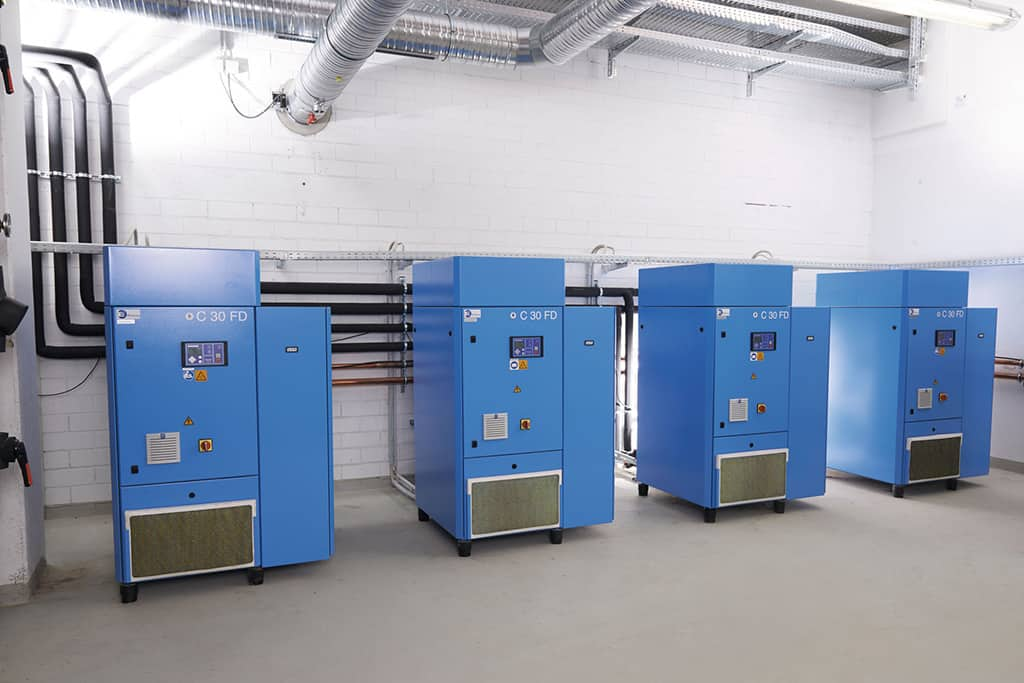
Buy Dräger Medical Compressed Air System in Nigeria
To buy a Dräger medical compressed-air system in Nigeria, request a project quotation through Franance with the facility’s design basis, peak and coincident demand, gas-quality requirements, plant-room survey and pipeline interface. This catalogue item represents a configured medical-air plant system, not a single fixed compressor SKU. Dräger describes central and compact arrangements, compressor and pressure-vessel packages, air treatment, controls and monitoring; the actual equipment count, filtration, dryer, alarm interfaces, installation and commissioning scope must be engineered and stated in the offer. There is no online purchase, and the listing does not confirm a Nigerian project price, stock, installation entitlement, approval or service commitment.
Where can I request a Dräger medical air project quote in Nigeria?
Start with the Dräger medical compressed-air system listing filtered to its category and the medical-air compressor system category. To begin a project enquiry, use the Franance quotation request for Dräger Medical Compressed Air System. Send the project location, facility type, stage of design, services requested and a contact for the engineering team.
Franance follows up by phone or email after receiving an enquiry. This is not a checkout for a ready-to-install standard unit. Ask the quotation to distinguish design, equipment supply, installation, pipeline connection, testing, commissioning, training, documentation and after-sales scope. The facility should appoint qualified medical-gas design and engineering professionals to define and review the project requirements. A catalogue description or manufacturer brochure cannot replace a site survey or project-specific design.
What is included in a Dräger medical compressed-air system?
Dräger markets “Medical Compressed Air Systems” for hospitals, clinics and practices, with central or compact solutions. Manufacturer product information describes assemblies that can include compressors, compressed-air tanks, filters, air conditioners or dryers, pressure-reduction stations and a control unit. Dräger’s product page also describes Medical Air Guard as a separate purity monitoring system. These references describe system families and options; they do not establish that every component is included in the Franance catalogue item or a future Nigerian quote.
Dräger’s product information describes one system design using three separate compressors and two redundant pressure tanks per compressor, with filtration, air conditioning and pressure reduction. The same material describes a compact configuration with system components mounted on a pressure tank. These are manufacturer examples, not a universal bill of materials or a guaranteed configuration. Ask the proposal to list each compressor, vessel, dryer, filter stage, pressure regulator, controller, sensor, alarm output and accessory by model or specification, and clearly mark included, optional and excluded items.
The system’s engineering boundary also matters. Clarify whether the offer ends at a plant outlet, includes source-room controls and alarms, extends to a pipeline connection, or covers distribution and terminal units. Do not assume the category listing includes the facility’s complete medical gas pipeline or equipment at care points.
How should a Nigerian facility calculate medical-air demand?
The first design input is a documented demand schedule prepared for the specific hospital project. List every point of use and its intended function, design flow, operating pressure, expected simultaneity and anticipated hours of use. Separate medical air from air for driving surgical tools or other compressed-air services where the design standards and clinical application require different systems. The engineering team should identify the governing requirements and avoid combining loads merely because both use compressors.
For a new facility, provide room-by-room schedules for wards, intensive care, emergency, operating theatres, recovery, respiratory therapy and any other department using the gas. For an extension, provide verified drawings, measured demand where available, the existing source capacity and configuration, operating logs, pressure complaints and planned additional outlets. State which departments may operate at the same time and identify future expansion assumptions separately from current demand. These are inputs for the designer to assess; they are not compressor-sizing values supplied by this guide.
Ask the engineering proposer to show the basis of its capacity calculation, including diversity assumptions, peak flow, operating and alarm limits, reserve capacity, pressure losses, expected expansion and the consequence of taking a component out of service. Have the facility’s responsible medical-gas and clinical engineering leads review the demand assumptions. Do not select plant size from the number of beds alone or from an unverified rule of thumb.
What redundancy and continuity should the design address?
Medical-air continuity must be assessed across the system, not inferred from a compressor count. Dräger describes arrangements with multiple compressors, redundant pressure tanks and parallel or redundant air-treatment equipment; its newer instructions warn that a plant with only one compressed-air tank does not provide safe operation according to the referenced ISO design and calls for an emergency procedure and reserve source in that case. The applicable design and current manufacturer documentation should govern the actual project.
For the quotation, request a clear operating narrative: normal duty/standby sequence, what happens when a compressor or treatment train is unavailable, how the system responds to a power loss, how maintenance is performed without disrupting supply, how alarms are raised, and what reserve source or contingency plan is required. Ask the designer to identify single points of failure in the proposed arrangement, including electrical feed, control equipment, pressure vessels, dryers, filters and room environment. The answers should reference the project design documents, not a generic brochure statement.
Redundancy does not mean every project needs the same number of units or the same layout. System size, criticality, governing standard, facility risk assessment and maintenance plan influence the arrangement. No particular redundancy level is promised by the catalogue entry. The written proposal should identify its basis and any departures from the facility’s required design criteria for review before procurement.
What medical-air purity, filtration and drying must I specify?
The facility must identify the required medical-air quality and the applicable pharmacopoeial, national and project criteria before plant selection. Dräger describes a pressure-conditioning unit with multiple filtration phases and adsorption drying in its product information, and describes air quality against European Pharmacopoeia requirements. An older product-information document gives one five-phase filtration and adsorption-dryer arrangement, while a current Dräger instruction for use distinguishes refrigeration dryer and adsorption dryer capabilities and warns that a refrigeration dryer with a filter unit may not achieve every referenced medical-air moisture requirement. The actual train and applicable limits must be confirmed for the offered equipment and the site.
Provide the designer with the intended source-air intake location, nearby exhausts or combustion sources, environmental contaminants, temperature and humidity conditions, and any site risks identified by the facilities team. Ask the manufacturer or supplier to state the offered compressor technology, intake treatment, filtration stages, dryer type, condensate management, monitoring scope, alarm thresholds and maintenance intervals. Require the quality limits and verification procedure to be named in project documents rather than relying on a general statement that output is “medical grade.”
If continuous quality monitoring is required, specify which contaminants are to be monitored, where sampling occurs, how alarm thresholds are set, how alarms reach staff and how values and events are recorded. Dräger describes Medical Air Guard as a continuous monitoring option; the listing does not establish it as included. Confirm monitoring and reporting components as distinct line items and verify the operational responsibility for routine air-quality checks.
How should plant capacity and plant-room size be determined?
Plant capacity should follow the approved demand basis and applicable design requirements. Plant-room planning should account for the chosen compressors, pressure vessels, dryers, filters, control panels, maintenance clearances, access doors, ventilation, heat rejection, noise, condensate discharge and any required separation between equipment. Dräger describes compact systems as space-saving, but “compact” does not establish that a specific package will fit a particular Nigerian plant room or be serviceable once installed.
Provide scaled room drawings, access dimensions, floor and structural information, existing service routes, drainage, ventilation, electrical supply, standby power arrangements and environmental conditions. Identify whether the facility will place the system in a new plant room, modify an existing room, or use a separate equipment room. Ask for equipment arrangement drawings, point loads, service clearances, ventilation and heat-load data, acoustic information and delivery/rigging dimensions for the exact proposed configuration.
The design team should coordinate medical air with other gas sources, electrical and building systems. Confirm whether room ventilation and intake placement will prevent the plant from drawing contaminated air. A plant layout must consider safe access for replacing vessels, compressors, filter elements and dryer components. Ask the quotation to state what civil works, electrical work, ventilation, drainage, lifting, penetrations and builder’s works are excluded so that project costs are not hidden in assumptions.
How does the plant connect to the medical-gas pipeline?
The source plant is only one part of a medical gas pipeline system. ISO 7396-1 describes requirements across supply systems, distribution pipelines, monitoring and alarm systems, testing, commissioning and documentation for medical air and vacuum among other services. The facility should establish the project’s governing standards, applicable Nigerian requirements and authority approvals with its qualified designer and responsible stakeholders. Mention of ISO or European Pharmacopoeia in manufacturer materials does not establish compliance of a specific Nigerian installation or satisfy local regulatory obligations.
At the interface, the design must coordinate the required delivery pressure and flow, isolation points, gas-specific connections, control and alarm signalling, pipe materials, routing, identification and testing responsibilities. Ask for a responsibility matrix showing where the Dräger plant scope ends and where the pipeline contractor, hospital facilities team, commissioning body and clinical engineering team take over. If the existing pipeline is being extended, have its capacity and condition assessed rather than assuming it can accept the new source.
Where BMS or alarm integration is required, define the signals and receiving location in advance. Dräger’s compressed-air information describes automatic monitoring and the possibility of transmitting malfunctions to a hospital BMS. The exact interface, points, wiring, protocol, testing and licensing are project-specific. Obtain a signal list and interface drawings, and schedule joint review by the medical-gas designer, controls contractor and hospital IT/building-management personnel.
What site survey and Nigerian utilities information should I provide?
For a Nigerian quotation, identify the state and city, site access, facility operating status, construction or refurbishment stage, expected survey dates and the decision-making contacts. Send current plans and elevations, plant-room location, intake route, floor access, equipment delivery path and known restrictions. If the hospital remains operational, explain access windows and any constraints on shutdowns or tie-ins. A site visit may be needed to confirm the design basis; do not treat plans alone as proof of actual conditions.
Provide electrical information such as supply voltage and frequency, available phase, motor starting constraints, short-circuit and protective-device information, earthing, standby generator/UPS arrangement and load shedding history as available. Also provide ventilation, drainage, ambient temperatures, humidity, dust, flood exposure, security, noise-sensitive areas and maintenance access information. Dräger’s product family includes different system configurations; the actual motor loads and power requirements must be derived from the proposed component schedule, not guessed from another installation.
Ask the supplier to state which site data are assumed, which were verified through a survey and which remain outstanding. Request all identified civil and electrical changes in the offer or a clear exclusion list. This guide does not claim local inventory, an existing Dräger installation team, Nigerian approval, or a service partner for this project.
What commissioning, testing and documentation belong in the project?
Commissioning should be scoped as a coordinated project activity. ISO 7396-1 covers design, installation, performance, testing, commissioning and documentation of medical gas pipeline systems. Request a project commissioning plan that states the tests, sequence, responsible persons, witnessing, acceptance criteria, records and interfaces between the plant supplier and pipeline installer. The responsible engineer should confirm how system verification will be undertaken against the current applicable standard and local requirements.
For the plant, ask for manufacturer test reports, equipment serial numbers, certificates or declarations applicable to the offered configuration, manuals, preventive-maintenance schedule, filter and dryer replacement requirements, recommended spare parts, alarm descriptions and control settings. For the overall pipeline, clarify who tests cleanliness, pressure, gas identity, quality, flow, alarms and terminal points where required by the project. These activities and documents should be defined by the design and commissioning authority; a quote guide cannot substitute for the standard or certify an installation.
Require a handover package with as-built drawings, test records, operating procedures, asset register, training attendance, alarm response instructions and the facility’s assigned responsibility for routine quality monitoring. Define whether operator and biomedical/facilities training is included, its format and language, who delivers it and whether it is on-site or remote. Obtain warranty scope and service response terms specifically for Nigeria in writing; do not infer them from Dräger’s general product pages.
How should I compare central and compact medical-air configurations?
Dräger describes systems built from separate components as well as compact packages with necessary components mounted on a pressure tank. A compact system may help where room space or installation sequencing is constrained, while a separately arranged plant can provide different layout and maintenance choices. These are planning considerations rather than a recommendation that one arrangement fits a particular hospital. Compare only project proposals based on the same demand schedule and quality criteria.
Ask each proposal to show the number and type of compressors, design capacity, duty rotation, reserve source, pressure-vessel arrangement, treatment train, monitoring, alarms, BMS interface, sound and heat data, footprint and service clearances. Compare installation and commissioning responsibilities, required building works, lifecycle consumables, maintenance access, utility loads and expansion plan. Have the designer explain how the configuration maintains required supply during a planned service or a component failure.
If evaluating non-Dräger alternatives, do not use the brand or family name as a proxy for equivalence. Compare the documented system design, compliance evidence for the exact offered configuration and the ability to support the facility’s design and quality-control processes. Require suppliers to identify assumptions and exclusions and have the facility’s medical-gas engineering lead review the response.
What should a Nigerian Dräger medical-air quotation include?
Provide a written project brief with facility type, departments and outlet schedule; demand calculations or the current design basis; required gas quality; continuity and reserve expectations; plant-room plans; utility data; pipeline boundary; BMS/alarm requirements; delivery state and city; construction schedule; and scope expected for survey, design, equipment, installation, testing, commissioning, training and service. Identify the parties responsible for design review and acceptance.
Ask Franance to obtain an itemized project offer that distinguishes plant components, controls, monitoring, accessories, installation materials, pipeline work, civil/electrical work, shipping, commissioning and training. Require the offer to identify the exact configuration, capacities and assumptions, manuals and compliance documents proposed, warranties and service terms applicable to the transaction, and any dependencies on site readiness. Request a written statement of exclusions and unresolved design questions.
Use the Dräger system’s exact category and model filter and the Franance medical compressed-air quotation form to start the discussion. A complete, site-specific engineering proposal and facility review should precede purchase commitment. No price, delivery lead time, stock, Nigerian installation, certification, regulatory approval or service availability is implied here.
What is verified about this Dräger system and what remains open?
Dräger’s Medical Compressed Air Systems product page describes central and compact configurations, monitoring, alarms and system components. Its product information document describes a multi-compressor arrangement, redundant pressure tanks, filtration, conditioning, pressure reduction and BMS signal transmission. Dräger’s current medical compressed-air plant instructions for use discuss tank redundancy, treatment trains and air-quality limits, while cautioning that dryer configurations differ in their ability to meet referenced moisture-quality requirements. These materials do not establish the configuration sold for a specific Nigerian site.
The ISO 7396-1 overview describes the standard’s scope for supply, distribution, monitoring, testing, commissioning and documentation of medical gas pipeline systems, including medical air. It is a purchased standard and project-specific conformity must be established by responsible professionals. ISO’s catalogue notes that the 2016 edition is under revision; the design team should verify the applicable current edition, amendments and local requirements when the project is specified.
Franance’s record identifies a project-configured Dräger Medical Compressed Air System under the medical-air compressor system category. It does not define a fixed model, capacity, serial number, component schedule, site survey, regional availability, Nigerian approval, installation, commissioning or service package. Confirm all of those items in the project quotation and its supporting design documents.