Spacelabs Healthcare patient monitoring and ambulatory cardiology equipment service enquiries in Nigeria
Monitor and module inventory in Nigeria
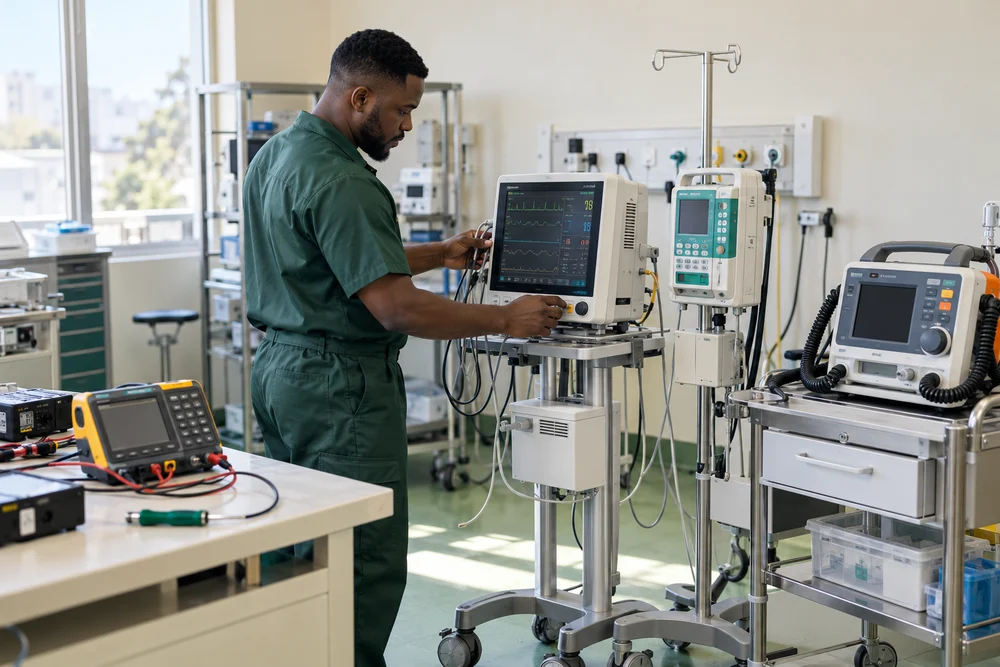
List each Spacelabs monitor by model, serial, room and asset number, then record modules, cables, sensors and software versions.
OnTrak 90227, Qube Mini, Xprezzon, C50 and DM4 describe different equipment roles; do not combine their accessories or service histories under a generic monitor label.
The portfolio combines ambulatory and bedside equipment. Make an asset list with one line per monitor and include serial, model, department, module configuration and attached accessories. This is especially useful where the facility has OnTrak recorders and several bedside monitor families; their service history and replacement parts should remain individually traceable.
Bedside, transport and ambulatory monitoring are separate equipment contexts. Provide the monitor model, modules, accessories and software details, and split the request by asset if several devices are involved.
A monitor inventory should include model, installed modules, cables, mounting hardware and central-station association. This helps scope the exact configuration under review.
Bedside and transport monitor assessment in Nigeria
For Qube Mini, Xprezzon 91393, C50 or DM4, state the exact model, installed modules, battery or power concern, display message and whether the issue follows a particular accessory.
Avoid patient observations or settings; request technical review of the monitor and listed components.
For bedside and transport systems, report what the equipment does or displays rather than a clinical event. Note whether the monitor powers on, whether a module is recognized, whether the problem follows a cable or battery, and when it began. Ask the assessment to identify the configuration reviewed and any additional test needed before a repair or replacement is quoted.
Qube Mini and the listed bedside monitors have different configurations. Identify the module set and observed display or connection issue; do not infer a failed measurement channel from a single observation.
Describe whether the displayed issue follows a module, connection or device restart, if known. Keep the observations factual and include the time of occurrence.
OnTrak ambulatory monitor records in Nigeria
Identify the OnTrak 90227 unit, recorder and cuff references, software or workstation used for the workflow and service history.
Describe the equipment issue without sending patient data. Ask whether the proposed work covers the recorder, accessory identification, data transfer or equipment inspection.
OnTrak 90227 is an ambulatory blood-pressure monitor family. Give recorder and cuff references and identify the workstation or software path used to retrieve data. Keep patient identifiers and readings out of the first request; if a functional issue requires evidence, ask what de-identified device log or service record is appropriate.
OnTrak 90227 is an ambulatory blood-pressure monitor. Identify the device and its accessories, charging or transfer concern, and the record needed; keep patient readings and identifiers out of the initial enquiry.
Record the monitor’s current accessory set and transfer method. Ask whether the proposed assessment includes the data-transfer interface or only the ambulatory device.
Central station and network dependencies in Nigeria
Name the bedside monitor, central station or receiving system, software version and network contact if the enquiry involves connectivity.
Share no credentials or patient identifiers. Request that equipment inspection and IT integration be separately described, including the boundary between hardware and network responsibilities.
Where monitors communicate with a central station, name the networked devices and software version. Ask the hospital IT contact to confirm connection details and change windows. A monitor hardware visit does not automatically include network design, cybersecurity review or integration; request separate responsibilities and deliverables in writing.
A central station or network concern should name the connected monitor, central system version and facility IT contact. Ask for separate lines for monitor assessment and any interface or network coordination.
Identify the central station and affected monitor group. Ask for separate equipment and network tasks where different facility teams need to participate.
Planned maintenance and support coverage in Nigeria
Spacelabs describes regional service plans and differing coverage types.
State the facility's asset count and desired maintenance interval, then ask for available service scope, response assumptions, included labour or parts, exclusions and service records. Do not infer that a support plan from another country applies locally.
Spacelabs publishes different support plans and indicates that coverage is region-specific. Ask for the offered Nigerian scope, service hours, response basis, included parts, loan equipment terms if any, and exclusions. Do not copy a US or UK plan description into a local purchase decision without confirming the applicable service contract.
Spacelabs describes service contracts and technical support separately. Provide any contract or prior service reference and ask the written response to identify the proposed coverage, exclusions and report for this exact asset.
Compare the written proposal with any existing service contract identifier and asset list. Confirm the exact covered device and documentation before scheduling.
Calibration, electrical checks and evidence in Nigeria
State the monitoring parameter or facility document requirement that prompts the request.
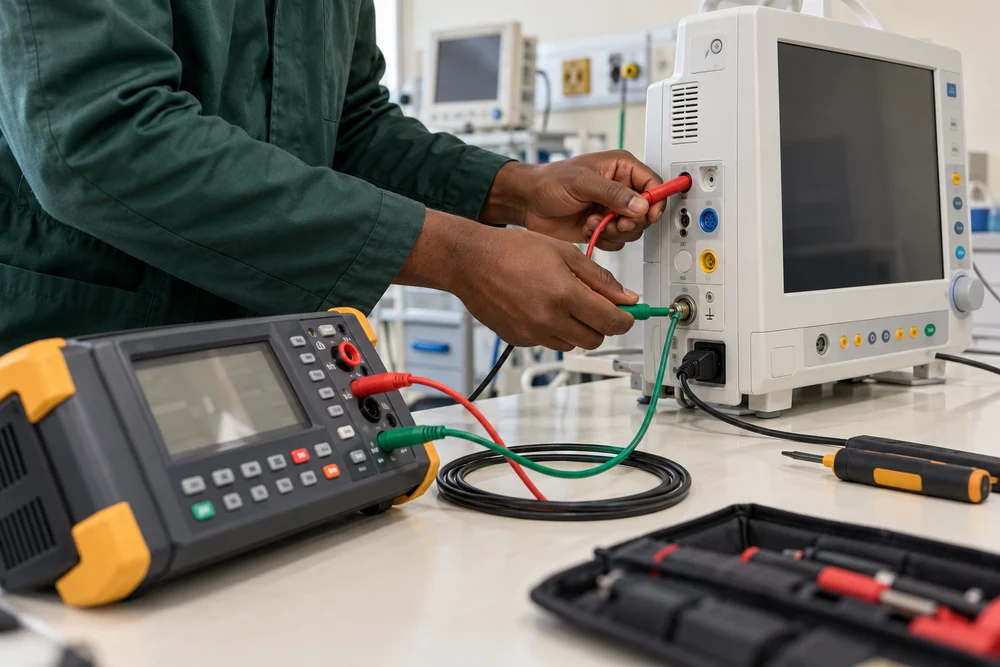
Ask what reference equipment, electrical-safety checks, test conditions and returned records are included. Keep clinical validation, alarm-policy decisions and patient-use protocols separate from equipment verification.
A verification request should name the parameter, reference, facility acceptance requirement and record needed. Ask for electrical safety, functional checks and calibration-related work to be separately identified. A maintenance summary should describe what was checked; it should not be represented as clinical validation of monitoring settings or alarm policies.
For calibration or electrical documentation, name the record the facility needs and the monitor or module it applies to. Request the method, reference and delivered report rather than assuming routine maintenance includes it.
State the required electrical or measurement record and the device/module it applies to. Ask for a separate line if multiple monitor types need evidence.
Accessories, cleaning records and handover in Nigeria
List each cable, sensor, cuff, module and battery by reference where possible.
Spacelabs publishes product-specific cleaning instructions, so identify the device and accessory rather than assuming one approved method applies to every component. Request compatibility and any post-work documentation in writing.
Spacelabs has specific cleaning instructions for patient monitors, modules, cables, leadwires, sensors and OnTrak equipment. Use the applicable manufacturer guidance for the exact component and share only the model/accessory references in the enquiry. A service request can ask for inspection of damage or compatibility without improvising cleaning or disinfection methods.
Use the manufacturer’s cleaning guidance for the specific device and accessory. For a service request, describe any damage or operational concern and ask which items require inspection or replacement before return to use.
List the accessory and cleaning product references when there is a material or enclosure concern. Ask what inspection or replacement is proposed.
Spacelabs assessment and quote in Nigeria
Request a written Franance assessment naming each monitor, modules, accessories, network dependencies, requested work, maintenance or verification records, exclusions and commercial terms.
Ask whether the quotation covers one asset or an installed system and compare each device as a separate line.
Before purchase approval, compare the monitor list, modules, support region, repair or maintenance scope, service records, parts assumptions, connectivity dependencies and commercial validity. Have clinical engineering and IT review their respective responsibilities. Retain the quotation and returned service report with each device's asset record.
An asset-level quotation should list monitor, modules, accessories, software dependencies, planned tasks, access needs, downtime assumptions and returned records. Keep each monitor’s proposal and history distinct.
For a department-wide request, group assets by room and model, then ask the quote to show downtime assumptions and handover records by unit.
Common questions about spacelabs healthcare patient monitoring and ambulatory cardiology equipment services in Nigeria
Which Spacelabs Healthcare equipment can I enquire about?
Franance can review a request concerning OnTrak 90227 ambulatory blood pressure monitor, Qube Mini transport monitor, Xprezzon 91393, C50 bedside monitor and DM4 dual-mode monitor. Include the exact model and serial or asset reference so the response addresses the installed unit rather than a broad product family.
What should I include for OnTrak 90227?
Identify the ambulatory monitor and accessory set, then describe the device or transfer concern. Keep patient readings and identifiers out of the initial request.
Can a service enquiry include the central station?
Yes. Name the central system, software and affected monitor group. Ask for separate scope lines for device assessment and any network coordination.
How do I confirm service-contract coverage?
Provide the contract or prior service reference and exact asset. Ask the written response to identify coverage, exclusions and the report for that unit.
How do I request a written assessment in Nigeria?
Use the Franance technical-support contact flow and request a Spacelabs Healthcare equipment assessment or quotation. Include the exact unit and callback details; review the proposed scope and commercial terms before approval.
Tell us what your facility needs.
Send the equipment details, your requirement and the facility location. We’ll discuss the information needed to review the scope and prepare the next step.
Contact Franance