

Buy Oxygen Manifold System in Nigeria.
Buy an oxygen manifold system in Nigeria through Franance by specifying the facility’s peak oxygen demand, required pipeline pressure, cylinder-bank arrangement, changeover behaviour, alarms, pipeline interface and installation scope. The current category lists Dräger Gas Control System Vi, BeaconMedaes Lifeline HTM, BeaconMedaes MAT-S HTM and Amico Dome Loaded NEMA 4 NFPA Digital. These are quote-order records; they do not confirm stock or guarantee supply.
Products
4 models
Which oxygen manifold systems are listed by Franance?
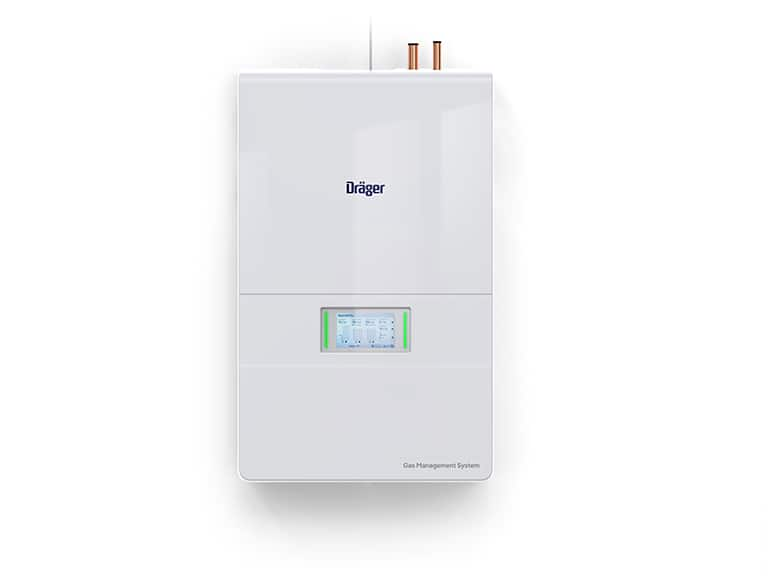
The current category assigns four products. Dräger Gas Control System Vi is a configurable gas-control station and cylinder-manifold system. BeaconMedaes Lifeline HTM is an automatic manifold with manufacturer-described high-flow capacity and pressure indication. BeaconMedaes MAT-S HTM is a digital automatic manifold with selectable flow/changeover configurations and remote-monitoring features. Amico’s Dome Loaded NEMA 4 NFPA Digital is an automatic dome-loaded manifold in a NEMA 4 cabinet, which the manufacturer describes for outdoor use. Use the model-filtered category links in the introduction to check each record.
Read moreWhat does an oxygen manifold do, and what is outside its scope?
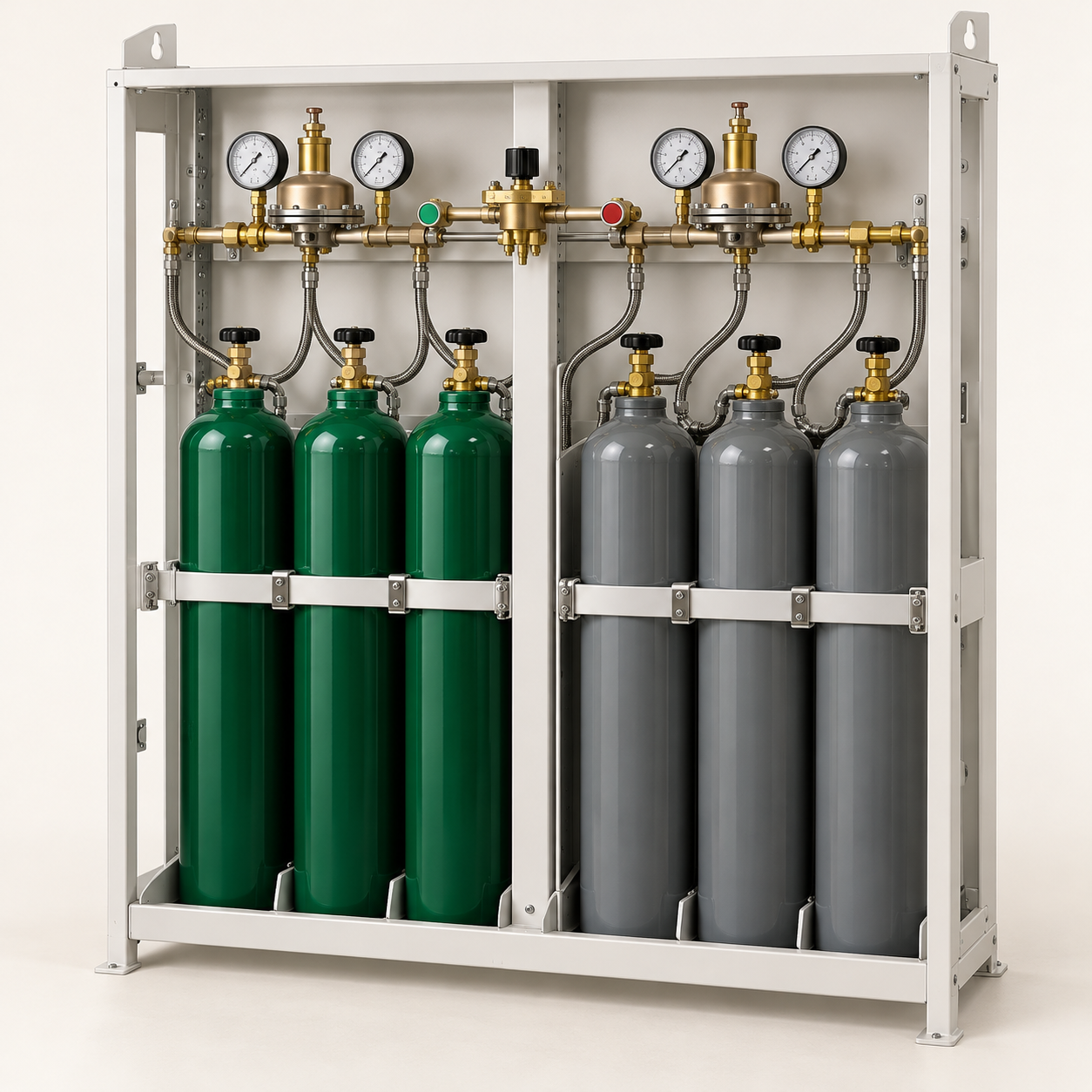
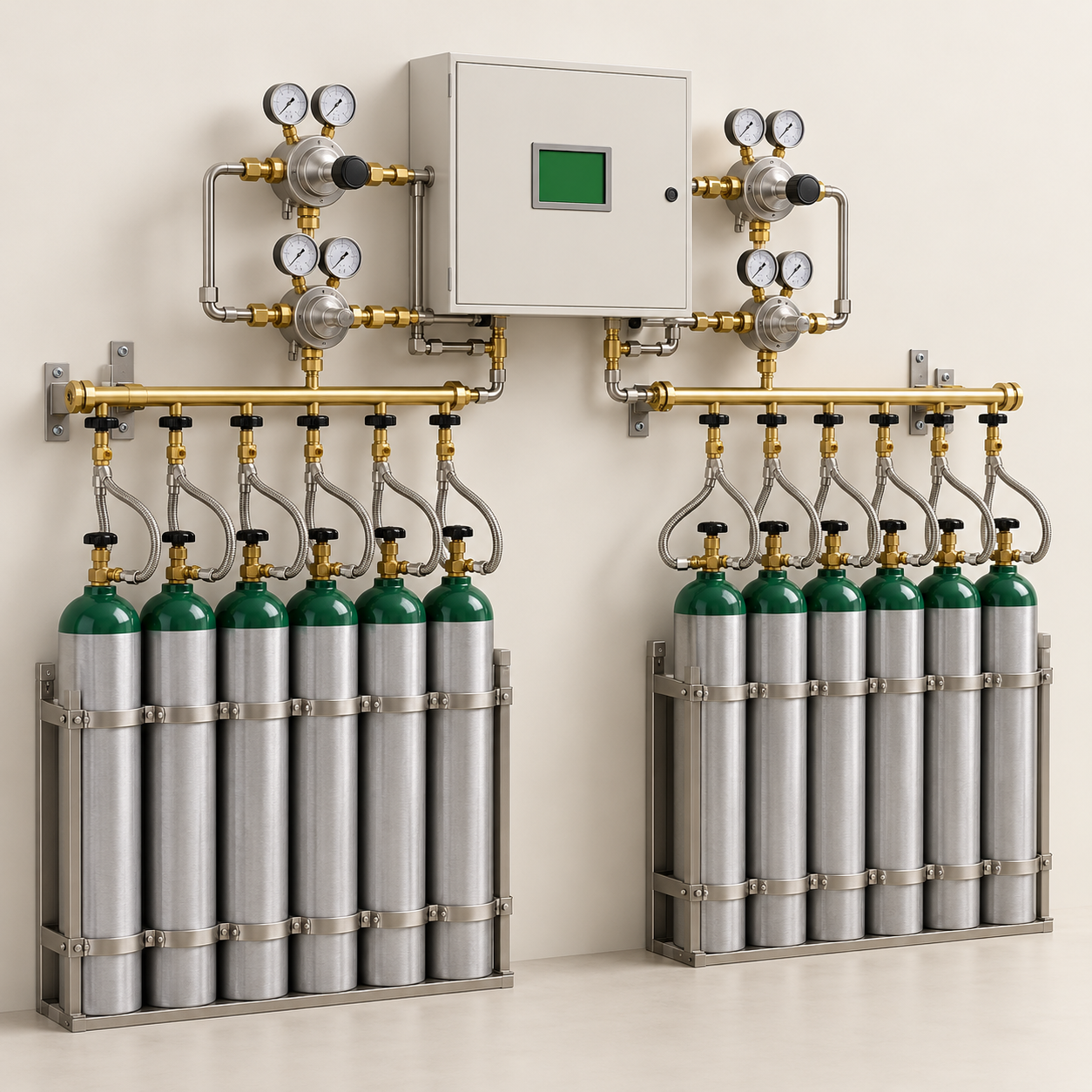
A cylinder manifold connects one or more cylinder banks to a medical gas pipeline. A typical automatic arrangement has a duty bank supplying the pipeline while a reserve bank is available; a control panel monitors source and line conditions and changes banks according to its configured logic. Downstream, the pipeline distributes oxygen to area valves, alarms and terminal units, and clinical equipment provides the final flow control at the point of use. The exact architecture varies by facility and applicable standard.
Read moreHow do I size manifold capacity and cylinder banks?
Begin with a demand schedule prepared or approved by the facility’s medical-gas design engineer. Include each department and outlet group, expected simultaneous demand, future expansion, the required line pressure and the design allowance for flow and pressure drop. The manifold must be capable of meeting the specified pipeline demand at the required pressure under the intended operating conditions. A manufacturer’s headline flow rate is a product capability, not proof that the complete hospital system will achieve that flow.
Read moreBuy Oxygen Manifold Systems in Nigeria
Buy an oxygen manifold system in Nigeria through Franance by specifying the facility’s peak oxygen demand, required pipeline pressure, cylinder-bank arrangement, changeover behaviour, alarms, pipeline interface and installation scope. The current oxygen manifold category lists four products: Dräger Gas Control System Vi, BeaconMedaes Lifeline HTM Automatic Manifold, BeaconMedaes MAT-S HTM Automatic Manifold and Amico Dome Loaded NEMA 4 NFPA Digital Manifold. Compare the Dräger GCS Vi, BeaconMedaes Lifeline HTM, BeaconMedaes MAT-S HTM and Amico Dome Loaded NEMA 4 NFPA Digital listings. These are quote-order catalogue records; they do not confirm stock or guarantee a project can be supplied. An oxygen manifold is part of a wider medical gas pipeline system. It controls a source such as cylinder banks and provides regulated gas to the pipeline; it does not generate oxygen, fill cylinders, design every pipeline component or replace terminal units and point-of-use flow controls. The correct configuration depends on a site-specific engineering design. Franance can receive a quote request and follow up by phone or email to clarify the proposed scope; price, availability, delivery, installation and local service must be confirmed in a written offer.
Which oxygen manifold systems are listed by Franance?
The current category assigns four products. Dräger Gas Control System Vi is a configurable gas-control station and cylinder-manifold system. BeaconMedaes Lifeline HTM is an automatic manifold with manufacturer-described high-flow capacity and pressure indication. BeaconMedaes MAT-S HTM is a digital automatic manifold with selectable flow/changeover configurations and remote-monitoring features. Amico’s Dome Loaded NEMA 4 NFPA Digital is an automatic dome-loaded manifold in a NEMA 4 cabinet, which the manufacturer describes for outdoor use. Use the model-filtered category links in the introduction to check each record.
These are not interchangeable names for one standard product. Dräger presents the GCS Vi as a configurable facility system for several medical gases and flow rates. BeaconMedaes identifies Lifeline HTM and MAT-S HTM as HTM product variants. Amico’s record explicitly names an NFPA Digital model and NEMA 4 enclosure. A project should choose its design basis and required code framework with its qualified medical-gas designer and the responsible authorities; do not assume that choosing a product with “HTM,” “ISO” or “NFPA” in its name establishes compliance for a Nigerian installation.
What does an oxygen manifold do, and what is outside its scope?
A cylinder manifold connects one or more cylinder banks to a medical gas pipeline. A typical automatic arrangement has a duty bank supplying the pipeline while a reserve bank is available; a control panel monitors source and line conditions and changes banks according to its configured logic. Downstream, the pipeline distributes oxygen to area valves, alarms and terminal units, and clinical equipment provides the final flow control at the point of use. The exact architecture varies by facility and applicable standard.
An automatic cylinder manifold is not an oxygen generator, concentrator plant, liquid oxygen vessel, cylinder filling plant or a complete MGPS by itself. It cannot compensate for undersized piping, insufficient source storage, incompatible outlet fittings, excessive pressure loss or absent downstream alarms. The BeaconMedaes MAT-S product specification explicitly describes its manifold as working with other MGPS equipment and controlling the gas pressure for the pipeline, while downstream devices control final patient delivery parameters. Scope boundaries matter when comparing proposals: request a drawing showing what is included from the cylinder connection through the manifold outlet and what remains with the pipeline contractor or facility.
WHO treats oxygen as a system involving source, storage, distribution, regulation and delivery. Its facility-based oxygen specifications cover source, storage and distribution products, including cylinder manifolds and medical gas pipeline components. Use that systems view when planning: a manifold selection must align with actual source logistics and the downstream distribution network, not just a model label or advertised maximum flow.
How do I size manifold capacity and cylinder banks?
Begin with a demand schedule prepared or approved by the facility’s medical-gas design engineer. Include each department and outlet group, expected simultaneous demand, future expansion, the required line pressure and the design allowance for flow and pressure drop. The manifold must be capable of meeting the specified pipeline demand at the required pressure under the intended operating conditions. A manufacturer’s headline flow rate is a product capability, not proof that the complete hospital system will achieve that flow.
Then define cylinder bank arrangement and autonomy. Tell the designer which cylinder type, water capacity, working pressure, valve connection and gas supplier are available for the site. Estimate consumption from realistic clinical loads and resupply intervals, and state how much reserve the facility requires during weekends, public holidays, transport disruption or supplier delays. Bank size and cylinder count should follow the risk assessment, demand profile and refill logistics—not a generic rule copied from another installation.
The selected manifold must match the cylinder connection and pressure range, bank count, required changeover arrangement, regulator design and calculated peak demand. Ask the manufacturer or project engineer to document capacity at the required line pressure, including operating assumptions such as incoming cylinder pressure, number of connected cylinders and allowable pipeline losses. If the facility expects later expansion, provide that load now so the design can assess whether the manifold, headers, regulators and pipeline can support it.
What automatic changeover and reserve logic should I specify?
State which bank is primary or duty, which is standby, how the system should behave when the duty bank reaches its changeover condition, and how staff will know a change has occurred. Ask for normal operating, low-bank, reserve-in-use, line-pressure and emergency alarm points, visible indicators and any remote alarm outputs. Define whether the required arrangement is two banks, additional reserve, a separate emergency supply or a connection to another oxygen source; those are engineering and risk-management decisions for the facility.
Changeover pressure influences cylinder utilization and remaining reserve, but the setpoint must follow the system design and source characteristics. BeaconMedaes publishes MAT-S variants for different 4-bar output and changeover settings, including a high-flow option and a lower-changeover option. These figures describe manufacturer configurations, not a recommendation for every hospital. Ask the vendor to identify the exact pressure class, rated flow, changeover setting and performance curve in the quotation, then have the MGPS engineer verify it against demand and local cylinder supply conditions.
Do not confuse an automatic changeover with guaranteed uninterrupted service. Availability depends on a correctly sized system, connected and serviceable cylinders, correct installation, alarms being monitored and a reliable refill/replacement process. A written operating procedure should define who responds to low-bank alerts, how replacement cylinders are ordered and how a bank is changed without unsafe cross-connection. The facility, medical-gas contractor and oxygen supplier need clear responsibilities for both normal operation and contingency planning.
What regulators, line pressure and alarms should be included?
Confirm the gas service and pressure design before choosing regulators. Specify the incoming cylinder pressure range, target delivery pressure to the pipeline, required peak flow, regulator stages, relief or vent arrangements, isolation valves, non-return features and test points. Every pressure and flow figure must be referenced to the intended configuration and the facility design. A two-stage or dome-loaded regulator description alone does not prove that the model meets the project’s pressure, capacity, oxygen-cleanliness, connector or code requirements.
Ask for both local indication and alarm interfaces. Clarify whether bank and line pressures are visible on gauges, digital displays or both; which alarms are local; whether common operating and emergency signals can be sent to a continuously monitored location; and whether building-management or medical-gas alarm integration is included. Dräger describes GCS Vi alarm management integration and pressure monitoring, BeaconMedaes MAT-S includes a digital controller with additional monitoring features, and Lifeline provides pressure indication in the headers and line. The exact sensor, relay, communication, power and remote-monitoring package should be listed in the offer.
Where a controller, solenoid or remote alarm requires electrical power, specify the facility supply and behaviour on power failure. Manufacturers describe different fail-safe provisions: Dräger says its GCS versions are pneumatically controlled, while Lifeline describes fail-safe solenoid valves. Verify the exact model’s control architecture and alarms from the current instructions. Do not infer that all indicators, displays, data links or notifications continue to function during a power outage simply because the gas switching mechanism has a fail-safe feature.
How must the manifold connect to the existing medical gas pipeline?
Share the medical-gas schematic and identify the pipeline design basis, gas-specific pipe and fittings, inlet and outlet pressures, connection types, line size, required flow, isolation arrangement, alarm points and terminal-unit standards. Confirm which parts of the system are in this project scope: cylinder headers and pigtails, manifold panel, pressure relief exhaust, outlet isolation and non-return valve, test terminal, pipeline tie-in, zone or area alarms, electrical supplies and remote monitoring. Ask for a marked-up P&ID and connection schedule before accepting a quote.
Gas identity and connector compatibility require explicit verification. An oxygen manifold must be configured for oxygen service and the cylinder valves and pigtails must match the locally supplied oxygen cylinders. Do not adapt a fitting based only on appearance or use a component specified for a different medical gas. State whether the facility has an existing pipeline and provide drawings, commissioning records, operating pressure, recent modification history and any known alarms or leaks for the designer’s review.
If the manifold is being added to an existing pipeline, request an interface assessment covering pressure drop, capacity, backflow prevention, isolation during tie-in, alarm transmission, existing source arrangements and how the works will be tested and handed over. A manifold may include an outlet test terminal or test point, but that is not equivalent to the commissioning and verification of the complete pipeline. Define which contractor owns pipeline design, copper installation, brazing, purging, testing, validation, documentation and final acceptance.
What site survey and cylinder-room details should I prepare?
Arrange a site survey by competent medical-gas personnel before finalizing equipment or commercial scope. Provide a scaled site plan, room dimensions, access route, ceiling and wall conditions, cylinder bank positions, manifold mounting location, pipeline entry, exhaust routing, electrical supply, earthing, alarm repeater locations, drainage or environmental concerns, and the distance to the pipeline tie-in. Include site photographs and any restrictions on working hours, deliveries or access to clinical areas.
The survey should document cylinder storage, handling and replacement access; ventilation and exposure; protection from vehicle impact and unauthorized access; safe separation from ignition sources and incompatible materials; and local emergency arrangements. Oxygen supports combustion and can intensify fire hazards if mishandled. WHO’s medical-gas safety material highlights the oxidizing hazard and need for safety measures. The site design and operating procedure must be prepared by qualified personnel against the applicable local requirements and manufacturer instructions.
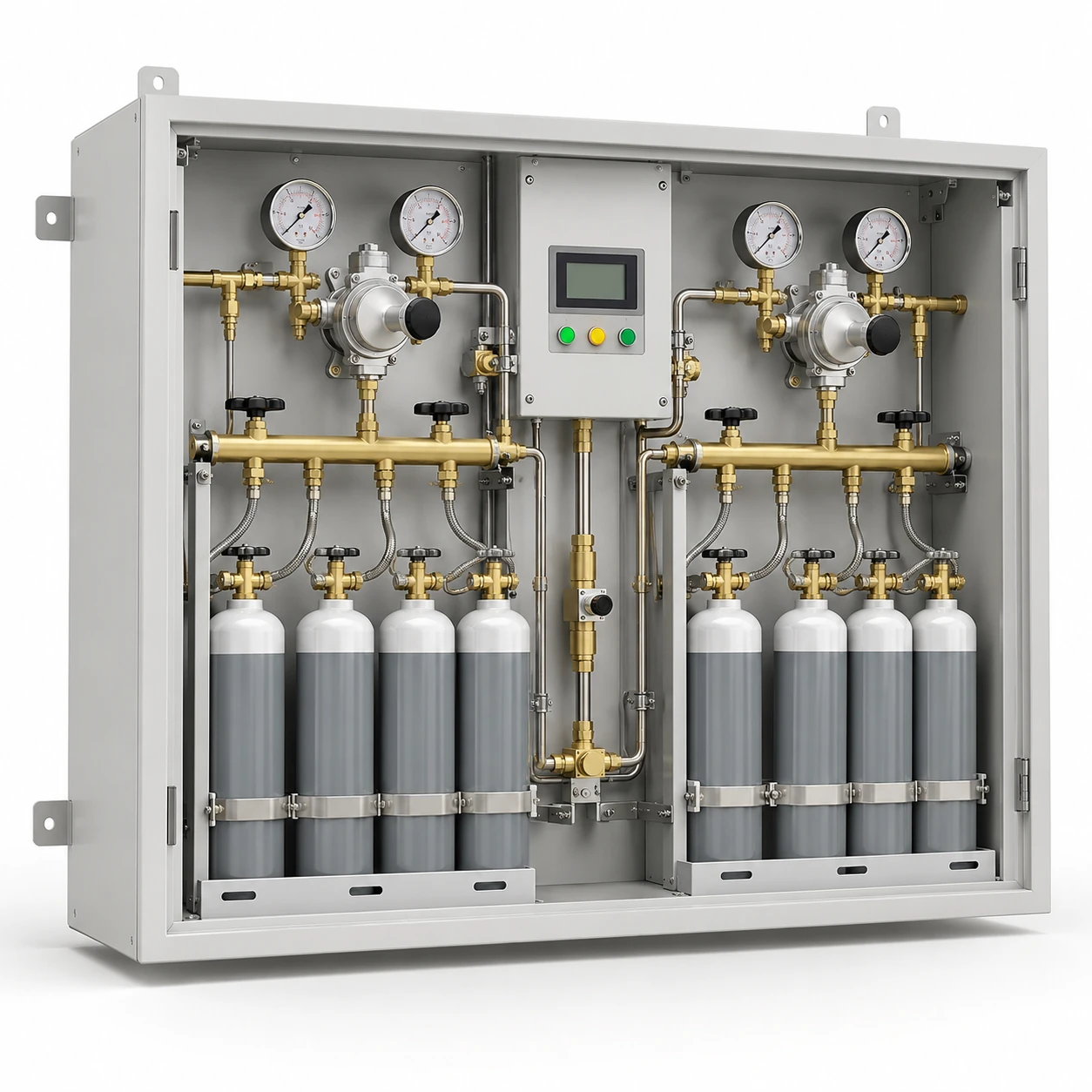
If the equipment will be outdoors or in a humid, dusty or coastal environment, state those conditions. Amico describes the NEMA 4 enclosure as intended to protect against dust, dirt, oil and water for outdoor use; the precise enclosure rating and installation suitability must still be verified against local exposure, mounting and maintenance needs. Do not assume another model has the same outdoor rating. Record the delivery route and lifting access, and ask for packaged dimensions and weight so the vendor can confirm logistics and placement method.
What installation, commissioning and maintenance scope should the quote include?
Ask the supplier to state whether the quotation covers only the manifold equipment or also cylinder headers, pigtails, regulators, isolation valves, exhaust, test point, remote alarms, pipeline work, control wiring, delivery, mounting, assembly, commissioning, validation, training and handover documents. Identify every excluded item. If the project includes an existing system, define who isolates and reconnects it and who is responsible for verifying the completed MGPS before clinical use.
Medical gas installation, oxygen cleanliness, pressure testing, purging, alarm checks, flow verification, gas identity tests and system validation must be planned and performed by suitably competent personnel using approved procedures. The exact test plan and documentation depend on the design basis, applicable code and facility requirements. Request commissioning certificates, test records, updated P&IDs, as-built drawings, operating and maintenance manuals, alarm setpoints, spare-parts schedule and staff training records as handover deliverables.
Plan maintenance and cylinder logistics as part of the lifecycle cost. Request manufacturer-recommended inspection and service intervals, regulator servicing requirements, replacement parts, technical support channel, travel or callout charges and response expectations for the destination. Ensure the hospital assigns responsible staff to monitor alarms, manage cylinder changes, keep maintenance records and coordinate refills. A high-flow or digital manifold still depends on trained operators, maintained components and functioning backup arrangements.
What should I send for an oxygen manifold quotation in Nigeria?
Send the facility name, state and city, site address, project contact, delivery access information, required gas and intended source arrangement. Include the demand schedule, required pipeline pressure and peak flow, cylinder type and pressure, cylinder-bank count and autonomy target, changeover preference, alarm and remote-monitoring needs, existing MGPS drawings, site survey information and applicable project design basis. If you are replacing equipment, include manufacturer, model, serial number, photos, current settings, connection details and service history where available.
Ask for an itemized proposal that identifies the exact product and variant, cylinder headers, compatible pigtails, regulator configuration, rated flow and pressure, bank logic, alarm package, electrical requirements, outlet connections, test facilities, enclosure rating, installation responsibilities, commissioning, validation, training, spares, warranty and service. Request a marked-up scope boundary between manifold, pipeline, cylinder supply and downstream distribution. Ask the supplier to state assumptions, deviations and unresolved site inputs so the facility can arrange an engineering survey before order.
For Nigeria delivery, specify state and city rather than a national destination alone. Ask whether freight, customs and duties, unloading, installation travel, local certification or inspection, warranty coverage, consumables and emergency service are included or excluded. Confirm lead time, currency, quote validity and payment terms in writing. Franance receives quote orders and follows up by phone or email, but this catalogue page does not confirm stock, supply capability, price, import status, delivery dates or installation coverage for a given project. Submit an oxygen manifold quotation request with the technical brief; the final offer must confirm what can actually be quoted for your site.
Buy oxygen manifold systems in Nigeria from Franance
Franance lists Dräger, BeaconMedaes and Amico oxygen-manifold configurations for hospitals and healthcare projects in Nigeria. Start with the oxygen manifold category, compare the four filtered model listings, and prepare your site and demand details before requesting a proposal. Have your medical-gas designer verify the system capacity, source, pipeline interface, applicable standards and installation plan. Franance will follow up by phone or email on the quotation request; a listing is not a promise of supply or a substitute for site-specific design.
Common questions
Does an oxygen manifold generate oxygen?
No. A cylinder manifold connects and controls gas from cylinder banks to a medical gas pipeline. It does not produce oxygen or fill cylinders. Confirm source, storage, distribution and downstream patient-delivery scope separately.
What capacity should I request for a hospital oxygen manifold?
Use a site-specific demand calculation that defines peak simultaneous flow, required pipeline pressure, cylinder bank and refill assumptions, pipeline losses and planned expansion. Have the medical-gas designer verify rated capacity at the actual operating conditions; a catalogue maximum is not a system sizing recommendation.
What is the difference between HTM and NFPA manifold configurations?
They identify different product/design bases and should not be treated as interchangeable. The project designer and responsible authorities must establish applicable local requirements and confirm that the offered system, components, alarms and installation meet the approved project basis.
Does a manifold quote include the pipeline installation?
Not necessarily. Request a marked-up scope covering headers, pigtails, regulators, exhaust, alarms, pipeline tie-in, valves, testing, validation, commissioning and handover. The proposal must state included and excluded work explicitly.
Can I order an oxygen manifold online from Franance?
No. Submit a quote order with the facility demand brief, selected model or design basis, site details and installation scope. Franance will follow up by phone or email; availability, price, delivery and service must be confirmed in a written offer.
Request an oxygen manifold quotation from Franance.
Send the facility demand schedule, required line pressure and peak flow, cylinder types and bank arrangement, changeover and reserve logic, alarms and remote interfaces, existing pipeline drawings, site-survey details, Nigerian destination, and installation/commissioning scope. Request a written offer that confirms the exact model variant, assumptions, included components, exclusions, availability, delivery and service terms. Listing a product does not guarantee supply.
Request an oxygen manifold quoteNeed an equipment quote?
Add the models you need to a quote order, or send us your equipment list.