
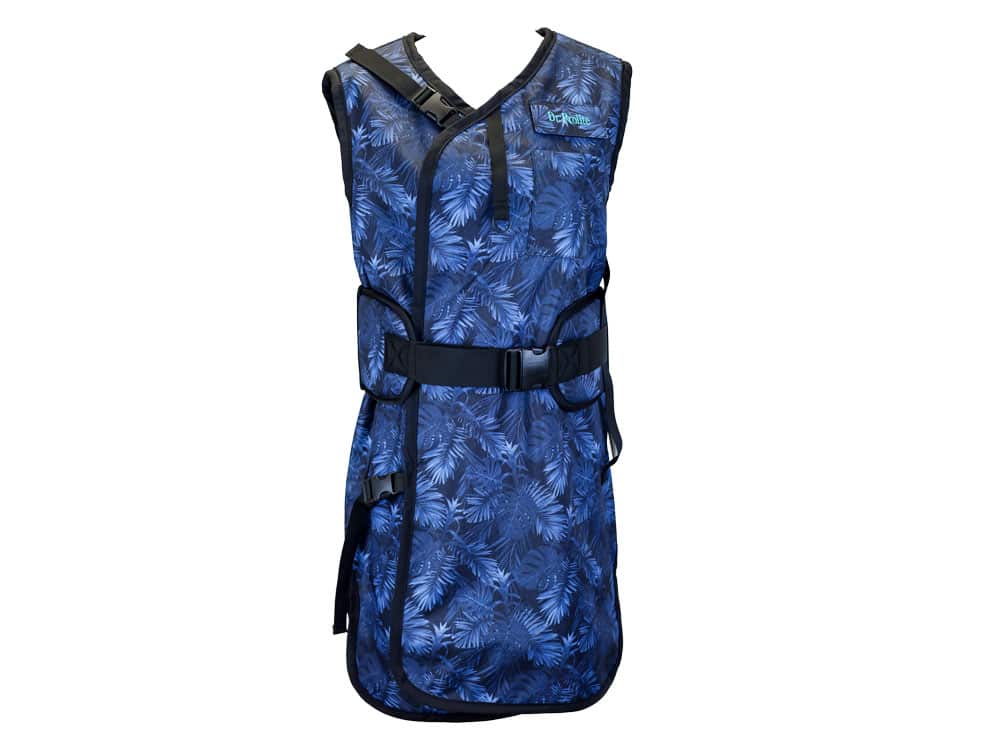
AP-WAQ Essential Wraparound Back Relief Lead Apron
Wraparound radiation protection apron
Price on request

Medical equipment and biomedical engineering.
Abuja, Nigeria.
Buy lead aprons in Nigeria through Franance by requesting a quotation for the exact garment and protective configuration approved by your facility. The category currently lists two Protech Medical models: Flexback AP-FB, a frontal apron, and Essential Wraparound Back Relief AP-WAQ, a front-and-back garment. Their coverage, sizes and options differ. Have the RSO or medical physicist define the requirement; a product listing does not prescribe a lead-equivalence rating or replace a radiation-protection programme.
2 models
Wraparound radiation protection apron
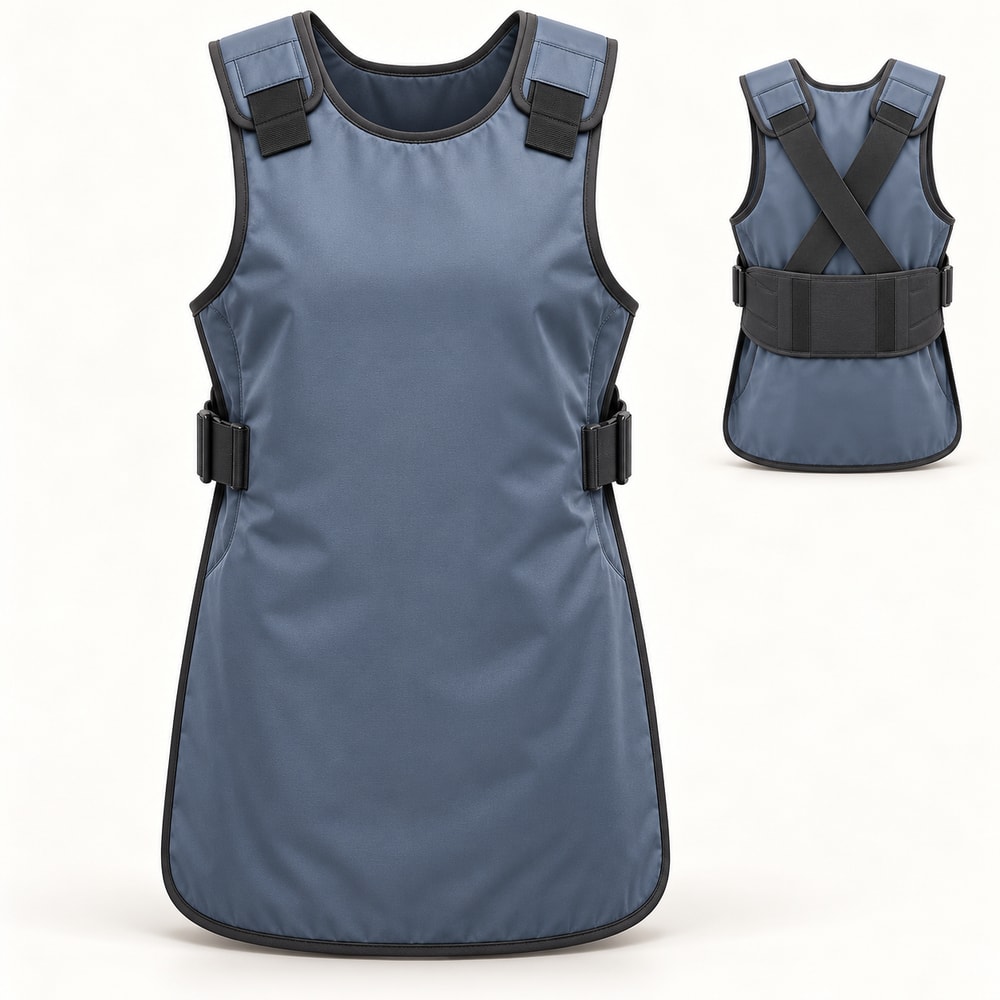
Review the two models in Franance’s Lead Apron category, then request a quotation against the approved requirement. AP-FB is frontal; AP-WAQ is a wraparound garment with front and back coverage. Open the AP-FB filtered listing or AP-WAQ filtered listing to identify the exact catalogue item. The parent Radiation Protection category has separate thyroid collar, glove, eyewear, dosimeter, barrier and installed shielding listings; those are not included in the two apron records.
Read moreThe category has two Protech Medical products. Flexback Apron, SKU AP-FB, is a frontal X-ray protection garment. Protech describes elastic criss-cross back straps, a shoulder-area strap and front-only protection. Its current product page lists front-protection options and several core materials. Franance’s product record states sizes XS through 2XL and custom-fitting options listed by Protech. Confirm the actual size, options and current specification for the quote. View AP-FB.
Read moreStart with the wearer’s role, position, procedure pattern and facility policy. Ask the RSO or medical physicist to review expected scatter geometry and required coverage. A frontal garment and a front-and-back wrap garment do not cover the same areas. AP-FB is lighter in design but has no back protection; do not choose it where the approved programme requires back or side coverage. AP-WAQ is a wraparound option, but fit, coverage and correct use still matter.
Read moreBuy lead aprons in Nigeria through Franance by requesting a quotation for the exact garment and protective configuration your facility has approved. The category lists two Protech Medical models: Flexback AP-FB, a frontal apron, and Essential Wraparound Back Relief AP-WAQ, a front-and-back garment. Their coverage and sizing differ. Have the Radiation Safety Officer (RSO) or medical physicist define the requirement; this page does not prescribe a lead-equivalence rating or replace a radiation-protection programme. For a Nigeria quote, state the procedure setting, approved specification, wearer measurements, quantity by size and facility address. Ask the offer to name the exact model and options, documents, availability, delivery and terms. Franance handles quotation orders with follow-up by phone or email; there is no online payment. Browse the Lead Apron category or the broader Radiation Protection range before submitting your schedule.
Review the two models in Franance’s Lead Apron category, then request a quotation against the approved requirement. AP-FB is frontal; AP-WAQ is a wraparound garment with front and back coverage. Open the AP-FB filtered listing or AP-WAQ filtered listing to identify the exact catalogue item. The parent Radiation Protection category has separate thyroid collar, glove, eyewear, dosimeter, barrier and installed shielding listings; those are not included in the two apron records.
The category identifies products, not stock, approved use or a complete staff protection plan. Include your delivery city and state, but provide the full facility address for the written offer. Franance follows up on the quote order by phone or email to clarify the model and commercial terms. Confirm the quoted product and included options in writing before your organisation places an order.
The category has two Protech Medical products. Flexback Apron, SKU AP-FB, is a frontal X-ray protection garment. Protech describes elastic criss-cross back straps, a shoulder-area strap and front-only protection. Its current product page lists front-protection options and several core materials. Franance’s product record states sizes XS through 2XL and custom-fitting options listed by Protech. Confirm the actual size, options and current specification for the quote. View AP-FB.
Essential Wraparound Back Relief Apron, SKU AP-WAQ, is described as a front-and-back garment with extended front panels, a three-quarter overlap, six-inch lumbar support belt, padded shoulders and Velcro and buckle closures. Protech says this Essential model uses standard sizing and is not custom fitted. The product page lists model-specific front and back lead-equivalence options; the current Franance record identifies front/back pairs of 0.25/0.25 mm LE or 0.50/0.25 mm LE. Verify the exact material and offered configuration with the quote and your safety reviewer. View AP-WAQ.
These are the two current assignments, not a claim that every Protech style is available. If you need a vest-and-skirt, maternity, dental or another design, describe it in your enquiry and ask Franance to confirm it before treating it as part of an offer.
Start with the wearer’s role, position, procedure pattern and facility policy. Ask the RSO or medical physicist to review expected scatter geometry and required coverage. A frontal garment and a front-and-back wrap garment do not cover the same areas. AP-FB is lighter in design but has no back protection; do not choose it where the approved programme requires back or side coverage. AP-WAQ is a wraparound option, but fit, coverage and correct use still matter.
IAEA SSG-46 says personal protective equipment should be selected for the intended use with advice from an RSO or medical physicist. For image-guided interventional procedures, it discusses wraparound coverage and body areas to cover. That is guidance for professional review, not a universal prescription for every X-ray procedure or Nigerian facility. Have the local radiation-safety professional apply current Nigerian requirements to the work. An apron is one component of protection alongside room shielding, distance, time, positioning, equipment controls and dosimetry; it cannot guarantee a particular dose or replace those controls.
Include standing, sitting and moving postures in the fit review. Check coverage and closures while the apron is worn as intended. Do not assume a model described as “full protection” covers every body surface or includes a thyroid collar, eyewear or room shield.
AP-FB is a frontal garment with no back protection. Protech’s current information describes elastic criss-cross back straps intended to distribute garment weight toward the hips, a shoulder-area strap, padded shoulders and a pocket. The manufacturer lists front options of 0.25, 0.35 or 0.50 mm lead equivalent, and lead, Prolite, Premier or Nano core materials. These options describe AP-FB only; they do not recommend what your staff should wear or prove that an exact combination is included in a Franance quotation.
Have the facility specify the required protection. In an AP-FB enquiry, state the approved front rating and material, wearer measurements and work position. Protech lists sizes XS–2XL and custom-fitting options for this model. Ask which option can be supplied and whether the current measurement instructions apply. “Custom fitting available” does not establish a Nigerian fitting service, delivery time or local stock.
Review the manufacturer’s AP-FB product information, current specification and instructions for use. Confirm the offered SKU, material, front rating, seams, closure, fit, options and documentation before acceptance.
AP-WAQ is Protech’s Essential Wraparound Back Relief model. Its extended front panels overlap by three quarters; it also has a six-inch lumbar support belt, shoulder padding, a pocket and adjustable Velcro and buckle closures. Protech publishes front and back lead-equivalence options. The Franance record identifies pairs of 0.25/0.25 mm LE or 0.50/0.25 mm LE. Ask Franance to confirm the offered core, each value and the expected coverage with panels overlapped and closures fastened. Do not assume an option from the AP-FB range applies to AP-WAQ.
Protech states that the Essential Wraparound is standard-size only and cannot be custom fitted. Obtain its current size chart and measurement instructions; record measurements for each wearer rather than choosing from a generic label or photo. If available sizes do not achieve the approved fit and coverage, ask the RSO or medical physicist to review another suitable option before proceeding.
The belt and overlap are construction details, not proof of a dose reduction. Verify fit and coverage on receipt. Review Protech’s AP-WAQ product details and care information and include the model code in the Franance enquiry.
Lead equivalence is a specified comparison under stated test conditions, not a stand-alone rating detached from the exact garment. Ask current manufacturer documents to identify the model, core, front and back values and applicable test basis. IAEA SSG-46 advises care when interpreting lead-equivalence claims for non-lead materials and recommends expert advice from the RSO or medical physicist. Do not compare different materials by one number without comparable documentation and review.
The two listings have different option sets: AP-FB is front-only, while AP-WAQ has front-and-back construction. Read any stated values with the exact chosen core and garment configuration. Do not assume one model’s options transfer to the other or that a front value describes the back. Have the responsible professional define the requirement and verify the exact offer against it.
Ask the quote to state the SKU, core, front and back specification, areas covered and documents for the proposed configuration. If a required value is absent, ask for confirmation rather than selecting a default. A heavier, lighter or more costly material is not automatically appropriate for your use.
Fit matters because the garment must cover the areas identified by the facility while the wearer works. Use the current model-specific sizing chart and measurement instructions. Do not infer size from height, another brand’s chart or a catalogue image. Record the measurements requested by the manufacturer and prepare a wearer-by-wearer schedule so the quoted quantities correspond to staff who will use them.
During a fit review, check coverage while fastened, movement when standing and sitting, panel closure and overlap where applicable. Have the user and safety reviewer sign off on the acceptance requirements before ordering. The models differ: Protech lists custom-fitting options for AP-FB, but says AP-WAQ Essential is standard-size only. A manufacturer’s custom option does not establish local measurement service or supply timing. Resolve any gap between measurements and available sizes before approving the quote.
No. A thyroid collar, radiation-protection gloves and eyewear are separate protective products. Neither apron record should be assumed to include them. The parent Radiation Protection catalogue has separate Thyroid Shield and Lead Gloves listings. Ask the facility’s radiation-safety lead which accessories are appropriate and list them separately in the enquiry.
IAEA SSG-46 discusses aprons, thyroid shields, eyewear and gloves as distinct equipment types. It also describes limitations of protective gloves during fluoroscopy: hands entering an automatic brightness or dose-rate control sensor area may increase exposure for both staff and patient, and reduced tactile sensitivity can prolong a procedure. This supports task-specific professional guidance rather than universal glove selection.
A full protection plan may also use table-mounted curtains, ceiling-suspended screens, mobile barriers, room shielding, equipment settings and dosimetry. These are not apron accessories and are not included in this category’s two product assignments. Browse the broader Radiation Protection range and coordinate the plan with the RSO or medical physicist.
An apron belongs within an occupational radiation-protection programme. IAEA SSG-46 discusses personal protective and in-room devices where structural shielding and administrative controls alone are insufficient, with the need established by the facility’s RSO or medical physicist. The programme also considers shielding, time, distance, positioning, equipment controls, training and staff dose monitoring. Staff should follow local procedures and avoid placing any part of the body in the primary beam.
The NNRA’s diagnostic-radiology authorization requirements identify an RSO, personnel and area monitoring policies, local rules, safety equipment such as lead aprons and a room shielding assessment by a qualified medical physicist. Buying an apron alone does not meet those facility responsibilities. Coordinate the garment with the approved protection programme, equipment and work practices.
Follow the facility’s dosimetry policy and the monitoring provider’s directions. IAEA SSG-46 describes dosimeter positions according to whether aprons are worn and whether one or two dosimeters are used. In interventional procedures where a worker always wears an apron, it describes two dosimeters: one outside at collar level and one under the apron. Apply current NNRA rules and the facility’s dosimetry instructions; a dosimeter measures exposure and is not shielding.
Ask the RSO or medical physicist to define the facility’s written inspection and testing procedure. Follow the exact garment instructions and current Nigerian requirements. Record a unique garment identifier, model, purchase and issue information, user, test history, damage and retirement decision. This guide does not set a universal test interval.
Before issue, staff can look for outer-cover damage, loose seams or closures, tears, creases and fit or overlap problems. Visual inspection cannot prove that the shielding material is intact. IAEA SSG-46 recommends periodic fluoroscopic or radiographic examination to confirm shielding integrity. Have the designated competent person perform and document the facility’s approved test. A manufacturer’s material report is not an inspection of a garment after use.
Remove damaged or failed garments from service under facility policy. Do not patch or repair them unless the manufacturer and radiation-safety professional approve a method and the repair is verified. Imaging screening can reveal defects; do not describe it as a lead-equivalence measurement unless the method measures that property. Record the test method, findings and who authorized return to use or retirement.
Use instructions for the exact manufacturer and model. Protech’s current product pages advise avoiding sharp folds and creases, protecting garments from prolonged extreme heat and direct sunlight, and using an appropriate hanger or laying the garment flat when one is unavailable. They describe model-specific cleaning instructions. Do not apply those steps to another brand or material without its own instructions.
Provide a designated place that supports the garment without sharp bends, crushing or contact with equipment edges. Train staff to hang or lay it flat after use and to transport it without folding or pinching the protective material. If an apron is creased, dropped, crushed, wetted or mishandled, report it and have the designated person assess it before reuse. Careful storage reduces avoidable damage but does not replace periodic integrity testing.
Storage accessories are not included in these two apron records. If a hanger or transport bag is required, list it separately and ask whether it is available and included in the quote. Keep care and inspection records with the facility’s garment register.
Send enough detail to identify both the garment and the approved requirement:
- Protech SKU AP-FB or AP-WAQ, or both if comparing them.
- Procedure setting, wearer roles, work position and intended coverage as reviewed by the RSO or medical physicist.
- Approved protective specification, core and front/back requirements, with manufacturer documentation requested.
- Wearer measurements, size, quantity per size, closures and any approved customization.
- Separately required thyroid collars, gloves, eyewear or storage; do not presume these are included.
- Facility name, complete delivery address, city and state, project timing and procurement-document needs.
Ask the written offer to identify manufacturer, SKU, garment design, core, front/back values, sizes, included components, options, exclusions, documents, availability, price validity and delivery terms. Resolve any unspecified option before approval. Have the safety reviewer compare the offer with the approved schedule. Request a Franance lead-apron quotation.
The live category does not show a verified starting price for either apron, so this guide does not publish an amount. The final quote depends on the exact model and configuration, quantity, sizes, approved options and destination. AP-FB and AP-WAQ differ in coverage and design, so compare offers only when their stated specifications and inclusions are clear. Confirm currency, taxes, price validity, availability, shipping and delivery terms in writing rather than estimating from a generic online price.
Franance does not accept online payment for these products. Start with the Lead Apron category, open the AP-FB listing or AP-WAQ listing, and send the model, wearer schedule and approved requirement in a quotation order. Franance follows up by phone or email. Confirm the exact product, price, availability and delivery before proceeding.
The current Lead Apron category lists Protech Flexback AP-FB, a frontal apron, and Essential Wraparound Back Relief AP-WAQ, a front-and-back model. Ask Franance to confirm the exact model and available configuration in a written quote order.
No. Protech identifies AP-FB as a frontal protection apron with no back protection. Have your facility's RSO or medical physicist confirm whether that coverage meets the intended work requirements.
No. Protech says the Essential Wraparound AP-WAQ uses standard sizing and is not custom fitted; AP-FB has custom-fitting options listed. Confirm current options, measurements and exact offered model in the quote.
There is no rating prescribed by this category guide. The facility's RSO or medical physicist should specify the requirement for the intended work and review the exact material, front/back values and manufacturer documents for the offered configuration.
Follow the current Nigerian requirements, manufacturer's instructions and your facility's written radiation-protection quality-control procedure. IAEA SSG-46 recommends periodic fluoroscopic or radiographic examination of protective equipment to confirm integrity, but this guide does not set a universal interval for Nigeria.
No. Franance accepts quotation orders and follows up by phone or email. Confirm the exact model, price, availability and delivery terms in the written quotation before placing an order.
Add the models you need to a quote order, or send us your equipment list.