

Buy Open MRI Scanner in Nigeria.
Buy open MRI scanners in Nigeria through Franance. Compare the Fujifilm APERTO Lucent 0.4T and AIRIS Vento 0.3T by their exact design, applications, coils, software and facility requirements, then request a quote for your project. Franance follows up by phone or email; online checkout is not available.
Products
2 models
Where can I buy an open MRI scanner in Nigeria?
You can ask Franance for a quote on the two open MRI systems in its current category: Fujifilm APERTO Lucent 0.4T and AIRIS Vento 0.3T. Use the filtered APERTO Lucent result or AIRIS Vento result to review the matching catalogue item, then send Franance the model and your facility’s location in Nigeria.
Read moreWhich open MRI scanners does Franance list?
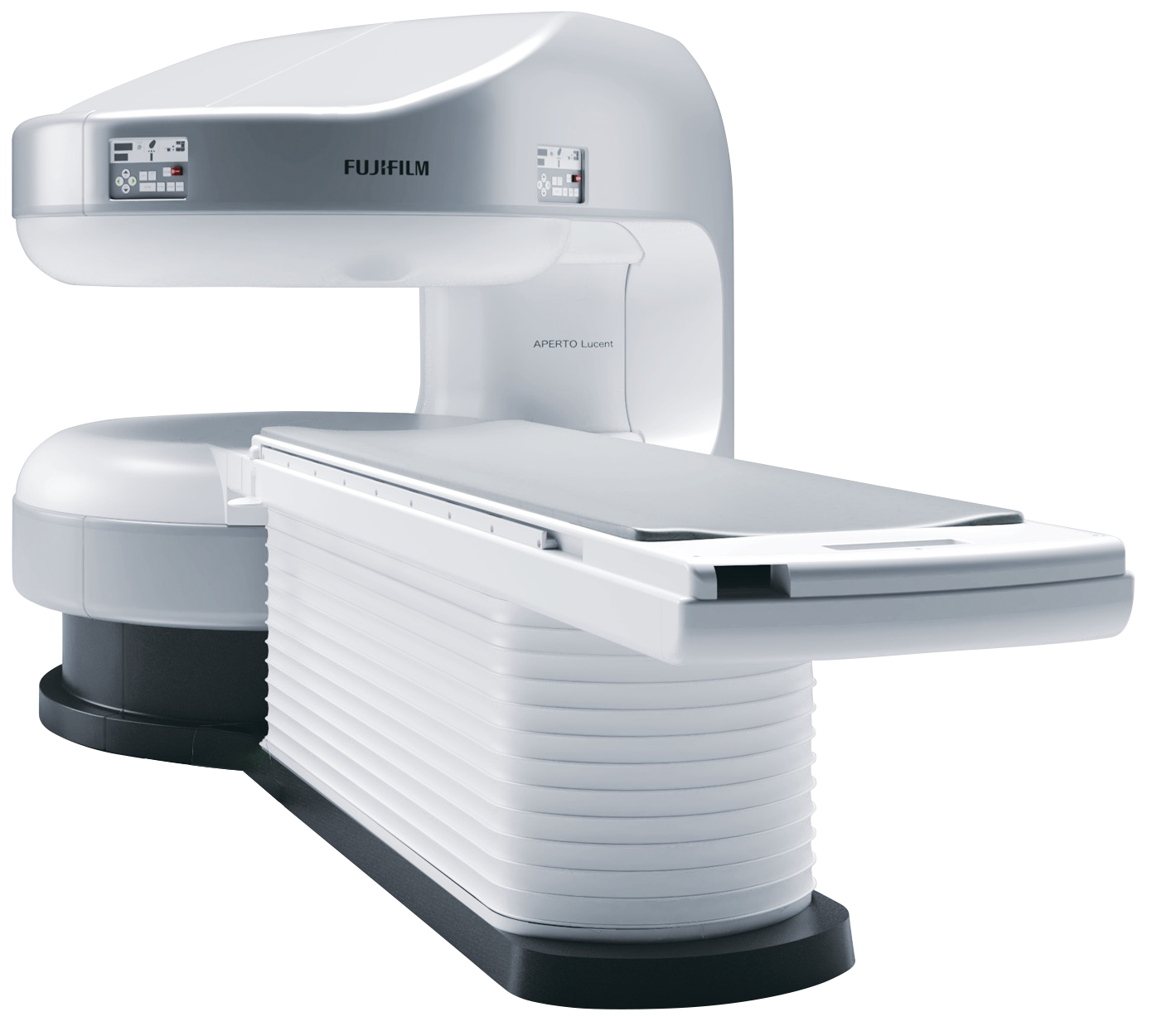
The category currently assigns two Fujifilm products. The first is the APERTO Lucent, listed as a 0.4T open MRI scanner. Fujifilm Healthcare Americas describes it as a 0.4T permanent-magnet system with a streamlined single-pillar design, lateral table shift, a floating table, RADAR motion-compensation sequences and IP-RAPID reconstruction. Its US page describes helium-free technology and air cooling. These are manufacturer statements about the product family; they do not confirm that every feature or accessory is included in an offer for Nigeria.
Read moreWhat does open MRI mean when choosing equipment?
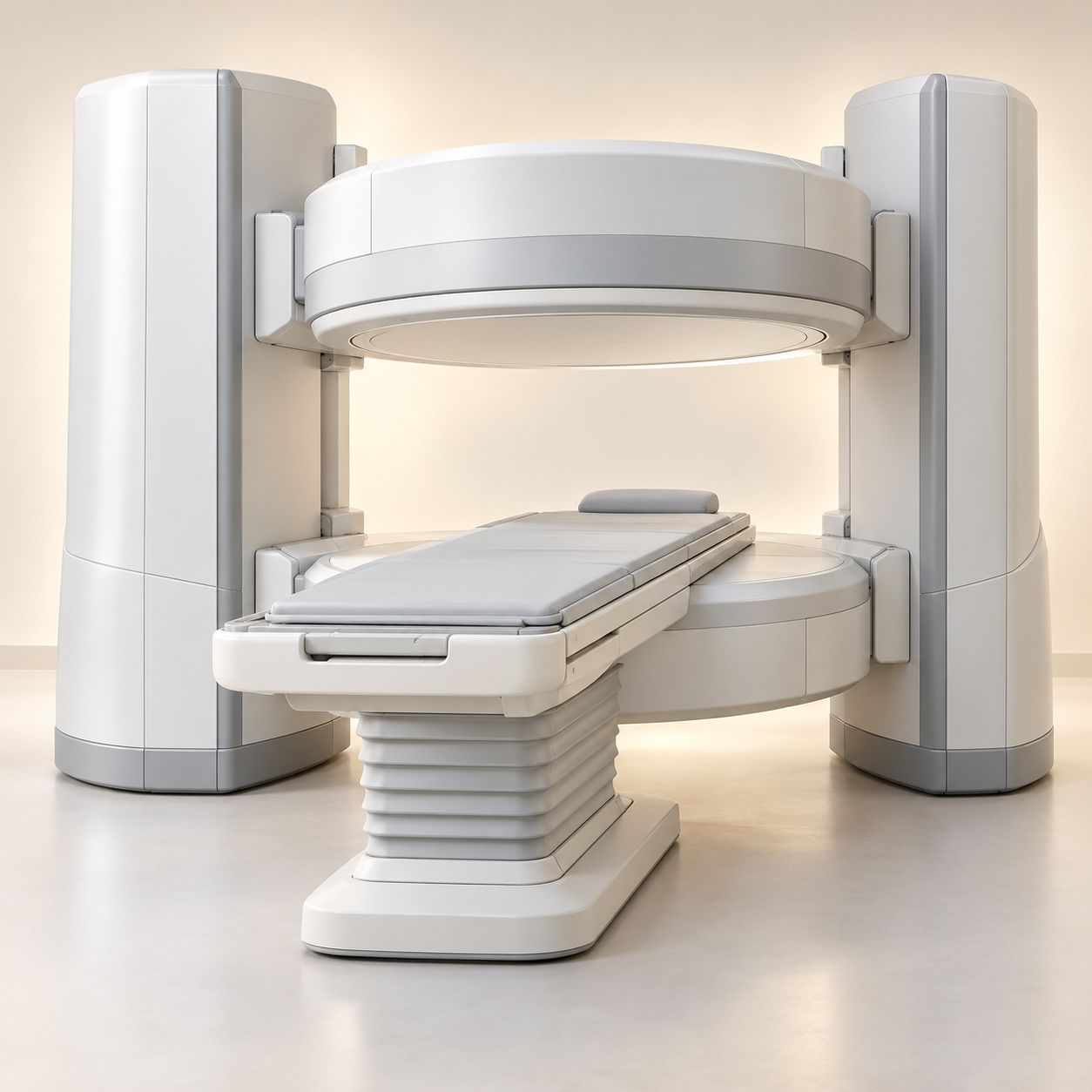
“Open MRI” describes a patient-access and magnet arrangement that differs from a conventional cylindrical-bore design. It is not a single technical specification, and the phrase does not mean that every side is unobstructed, that every patient will find the scan comfortable, or that the system can perform every examination. Fujifilm describes AIRIS Vento as a wide-open gantry and APERTO Lucent as an open-sided, single-pillar design. Their exact geometry, table movement and usable patient access should be assessed from the current model-specific documentation and, where possible, a physical demonstration.
Read moreBuy open MRI scanners in Nigeria
Franance lists two open MRI scanner models for Nigerian facilities to review: the Fujifilm APERTO Lucent 0.4T and Fujifilm AIRIS Vento 0.3T. Both are permanent-magnet systems described by Fujifilm as open designs, but their field strengths, layouts, available configurations and manufacturer documentation differ. The right choice depends on the clinical team’s approved examination plan, the offered coils and software, patient-positioning needs, site design, safety programme and whole-project quotation. You can request a quotation from Franance for either listing. Share the exact model, intended applications, facility address and project scope; the team can follow up by phone or email. These are quote-order items, not online purchases. A listing does not confirm current stock, Nigerian registration, price, installation coverage, warranty or service terms. Start with the open MRI scanner category, review the APERTO Lucent listing and AIRIS Vento listing, and compare them with the wider MRI systems category. Confirm the exact regional model and all included options in a written offer.
Where can I buy an open MRI scanner in Nigeria?
You can ask Franance for a quote on the two open MRI systems in its current category: Fujifilm APERTO Lucent 0.4T and AIRIS Vento 0.3T. Use the filtered APERTO Lucent result or AIRIS Vento result to review the matching catalogue item, then send Franance the model and your facility’s location in Nigeria.
The process is a quotation enquiry. There is no online checkout for MRI systems. The catalogue is not a stock feed or a promise of availability, delivery date, local authorisation, installation or a complete ready-to-scan package. Ask for the proposed manufacturer model code, system condition, configuration, commercial validity and project assumptions to be stated in the written quote.
Open MRI is one option within diagnostic imaging, not a substitute for defining the service the facility intends to deliver. The requesting radiologist, medical physicist, biomedical engineering team, procurement group and facility planners should agree on the requirements before a model is selected. Franance can review those requirements as part of a quotation discussion; clinical decisions and site approvals belong to qualified professionals.
Which open MRI scanners does Franance list?
The category currently assigns two Fujifilm products. The first is the APERTO Lucent, listed as a 0.4T open MRI scanner. Fujifilm Healthcare Americas describes it as a 0.4T permanent-magnet system with a streamlined single-pillar design, lateral table shift, a floating table, RADAR motion-compensation sequences and IP-RAPID reconstruction. Its US page describes helium-free technology and air cooling. These are manufacturer statements about the product family; they do not confirm that every feature or accessory is included in an offer for Nigeria.
The second listing is the AIRIS Vento, identified in the Franance catalogue as a 0.3T open MRI scanner. Fujifilm’s UK page describes a wide-open gantry and compact arrangement, while its EMEA information describes a two-pillar vertical-field design, permanent magnet and motorised patient table. Fujifilm also publishes model-family information about image-sharing, automation and motion-related technologies. Confirm which generation, software, coils and options are being offered; product-family descriptions can vary by market and configuration.
The two listings are intentionally separate from 1.5T and 3T MRI scanners. They are not a complete MRI department by themselves: coils, software, workstations, accessories, site works, shielding, utilities, delivery, installation and training must be scoped as applicable. See the parent MRI systems category, plus the separate 1.5T MRI scanner and 3.0T MRI scanner categories.
What does open MRI mean when choosing equipment?
“Open MRI” describes a patient-access and magnet arrangement that differs from a conventional cylindrical-bore design. It is not a single technical specification, and the phrase does not mean that every side is unobstructed, that every patient will find the scan comfortable, or that the system can perform every examination. Fujifilm describes AIRIS Vento as a wide-open gantry and APERTO Lucent as an open-sided, single-pillar design. Their exact geometry, table movement and usable patient access should be assessed from the current model-specific documentation and, where possible, a physical demonstration.
The FDA explains that an open MRI may be an option for some patients who find a confined scanner uncomfortable, but also cautions that not all MRI systems can perform all examinations. A facility should therefore start with its service plan: which examinations are required, which body regions and patient positions are expected, what image quality and workflow the clinical team needs, and which limitations would make a system unsuitable for its intended workload. A general preference for an “open” design is not enough to decide.
Field strength also needs context. The catalogue’s 0.3T and 0.4T labels identify the listed systems’ nominal magnetic field strengths as recorded in their product data. They do not provide a standalone ranking of clinical quality, speed or suitability. Evaluate the complete system, available applications, coils, image reconstruction, patient positioning, staffing, throughput assumptions and service plan against the approved requirements. Do not infer a clinical outcome from a field-strength number or from a manufacturer’s comfort claim.
Open designs do not remove MRI hazards. A permanent magnet produces a magnetic field that must be controlled even when scanning is not underway. Every proposed scanner needs an MR safety programme, restricted access and screening appropriate to the installed model and facility. The magnet type changes project considerations, but it does not make a room or operating process automatically safe.
How do APERTO Lucent 0.4T and AIRIS Vento 0.3T differ?
The clearest verified distinction in the current catalogue is the nominal field strength and the manufacturer-described physical design. Fujifilm describes APERTO Lucent as a 0.4T permanent magnet in a single-pillar, open-sided configuration. Its US product page identifies lateral table shift and a floating table that lowers for patient access, along with RADAR and IP-RAPID technologies. The current Franance record also describes helium-free technology and air cooling, based on the manufacturer page.
Fujifilm describes AIRIS Vento as a 0.3T permanent-magnet open system with a two-pillar, vertical-field design and a motorised patient table. Its UK/EU product information discusses compact siting and operation. These regional pages are not a guarantee that the same feature set, accessories or service arrangement applies to a proposed Nigerian system.
This is not enough evidence to declare one model superior. Compare the requested examination list against the manufacturer’s current application and coil matrix for the exact system generation. Request a side-by-side schedule showing field strength, magnet and gantry arrangement, table travel and load limits, available coils, applications, software versions and licences, image reconstruction, DICOM and network interfaces, power and environmental needs, supplied accessories, warranties and service. Ask the supplier to flag any required option that is not included.
Use the category’s direct APERTO Lucent result and AIRIS Vento result as catalogue entry points. For technical comparison, consult Fujifilm’s APERTO Lucent product page and AIRIS Vento product information. The pages serve different markets; request the exact local model documentation before relying on specific numbers or options.
Which applications, coils and software should be specified?
Ask the clinical team to create an examination and workflow schedule before comparing quotations. List the intended body regions and examinations, patient groups, positioning needs, required sequences, image-transfer and reporting processes, expected workload and operating hours. A supplier can then identify the relevant applications and system configuration for review. This guide does not prescribe clinical protocols or determine which examinations a particular facility should perform.
Request a coil matrix with manufacturer references, quantities, anatomical coverage, compatibility and any required storage or positioning accessories. Do not assume an open scanner includes all coils or that coils for another model are compatible. Ask for the supported software versions, application packages, licences, upgrades, workstations, image reconstruction and any workflow automation to be itemised. Specify how images, worklists and reports must move between the scanner and the facility’s PACS, RIS or other systems; identify who configures, tests and signs off each interface.
The quote should distinguish standard equipment from optional items and state each configuration dependency. Ask for the exact manufacturer model code and current configuration, not only a family name. If the facility requires a feature named in a brochure, request its option identifier and written confirmation that it is part of the offered configuration. This is particularly important when manufacturer pages from different countries describe different generations or selectable technologies.
Also define the service scope: site survey, installation, commissioning, acceptance testing, clinical applications training, operator training, handover documentation, preventive maintenance, corrective support, spare parts and software support. Clarify the responsible party for each activity, required local resources, response arrangements and exclusions. Franance can follow up on a quote request and help clarify the proposed scope; no service or support package should be assumed until it is written into the offer.
What facility and site planning matters for open MRI?
Do not select a scanner from its brochure footprint alone. Obtain current installation-planning documents for the exact model and have qualified project professionals review the site. Planning can involve room dimensions and clearances, the magnet’s field boundary, RF shielding, structural floor capacity, vibration, HVAC and environmental limits, electrical supply, equipment-room needs, patient and service access, delivery route, lifting or rigging, network connections and emergency arrangements. Requirements differ between models and can change with configuration.
Fujifilm’s AIRIS Vento regional pages describe compact layouts and reduced infrastructure compared with superconducting MRI systems. Its UK page states that shielding is still required across planes, including ceiling and floor, and gives a standard scan-room area as an example while noting that the actual layout varies by installed environment. Do not use those regional figures as a Nigerian design approval or assume that any named RF or magnetic shielding is unnecessary. Obtain the current model-specific site plan and shielding requirements from the manufacturer or appointed project team.
APERTO Lucent’s US material describes a compact single-pillar system, helium-free technology and air cooling. These statements do not establish the exact room plan, utility load, shielding design, environmental range, transport requirements or Nigerian construction scope for the quoted unit. Ask for the applicable planning manual, equipment weights and clearances, field-contour information, shielding plan, delivery dimensions, utility schedule and site-readiness checklist. Have local architects, structural and electrical engineers, HVAC specialists, RF-shielding experts and the facility’s MR safety lead review the documents.
For a replacement project, provide existing MRI-room drawings, prior shielding or field measurements, renovation history and utility information. Do not assume that an existing suite is suitable for a different model. Verify the intended equipment path from the delivery vehicle to the room, including doors, corridors, lifts, turning space and any lifting equipment. Record who is responsible for the survey and what is excluded from the equipment quotation.
How should MR safety, staffing and commissioning be planned?
MRI safety requires an operational programme, not only equipment features. The FDA identifies hazards from static magnetic fields, time-varying gradient fields and radiofrequency energy, including projectile risk, noise, heating and interactions with implants and other devices. Screening of people and objects entering the MR environment is essential. The same guidance notes that MR-conditional devices can only be used under their stated conditions, and an unknown device status should not be treated as safe.
Before purchase, assign responsibility for MR safety governance, access control, screening, staff roles, patient preparation, emergency response and control of equipment brought into the magnet area. Confirm the current manufacturer field information and room-planning documents for the specific model. Define who will approve magnetic-field boundaries, signage, shielding and the operating layout. An open patient-access design does not remove the need to verify implant status, manage ferromagnetic objects or follow the system’s instructions for use.
Plan staffing and training around the intended service. Identify the radiology, radiography, medical physics, biomedical engineering, IT and facilities personnel who will participate in configuration, acceptance and day-to-day operation. Ask which training is included, who delivers it, what prerequisites apply, how competency and handover will be documented, and whether refresher training or application support is separately available.
Define commissioning and acceptance in the contract before delivery. The plan should state site readiness, installation checks, software and licence verification, coil and accessory checks, image-transfer testing, user training, documentation, acceptance criteria, sign-off roles and resolution of outstanding defects. Request a written list of dependencies and who supplies each item. Qualified clinicians and technical professionals must determine operational readiness; this guide does not certify the suitability or safety of any facility.
What Nigerian regulatory documents should I request?
Ask the supplier to identify the exact manufacturer and model, the proposed Nigerian supply route and the applicable current regulatory documents. NAFDAC’s 2025 guideline for registration of medical devices, including IVDs and related products, states that medical devices placed on the Nigerian market must meet applicable requirements. Confirm the current rules and the status of the exact device through NAFDAC or qualified local regulatory advisers.
Request applicable registration evidence, manufacturer declarations and technical dossier references for the proposed model, along with product labelling and instructions for use. Confirm that names, model identifiers and configuration correspond to the equipment being quoted. A registration application or a foreign market clearance is not proof that the particular device is registered for Nigerian supply. A Fujifilm product page from the United States, United Kingdom or another market cannot establish Nigerian registration or local availability.
For procurement and project review, request the current system specifications, installation manual, site drawings, shielding information, power and environmental requirements, accessory and software schedule, delivery plan, installation method, commissioning and acceptance protocol, training plan, warranty conditions and service exclusions. Use the written quote to identify who is responsible for each document and project task. This is a procurement checklist, not legal advice or a statement that either listing already satisfies a Nigerian requirement.
What should I include in an open MRI quotation request?
Send Franance the model or performance specification, intended examinations, required patient positioning, coil and software schedule, and the facility’s full address in Nigeria, including city and state. State whether the project is a new imaging service, replacement, expansion or evaluation. Include the target procurement and installation timeframe, project contact, procurement method and any tender or documentation requirements.
Attach available room drawings, dimensions, access route, floor and building information, existing shielding records, electrical and HVAC details and site-survey status. If the drawings are preliminary or unavailable, say so; do not guess technical requirements. Ask which manufacturer planning files and survey information are needed before the quote can be firmed up.
List installation, acceptance, training, service, warranty and maintenance needs separately. Ask for an itemised offer that identifies the exact model code and condition, the included coils and accessories, software and licences, workstations, delivery and installation tasks, site work, taxes or duties where applicable, exclusions, assumptions, quote validity and lead-time basis. Ask the supplier to confirm current availability and applicable regulatory documents in writing.
Use the open MRI category, choose the relevant model listing and contact Franance for an open MRI quotation. Franance handles this as a quote order and follows up by phone or email. Submitting an enquiry does not confirm a product order or final project scope.
Can Franance deliver and install an open MRI scanner anywhere in Nigeria?
The catalogue does not confirm nationwide delivery, installation coverage, site readiness or a delivery date for either model. Include the destination so Franance can review the requested location and confirm the available supply, transport, site review, installation and support arrangements in the quotation. Do not treat the existence of a national website or catalogue listing as evidence that a specific service is available in every state or city.
For facilities outside a major urban centre, provide the full address, road access, delivery restrictions, building entrance and internal route, lifting assumptions, local project contacts and the dates when the site may be surveyed or prepared. Large imaging equipment can require careful delivery and installation planning even when the scanner’s manufacturer describes its layout as compact. Ask which tasks require manufacturer or appointed-engineer involvement and whether local contractors must be engaged.
Before accepting a proposal, have the written scope specify destination, transport, offloading, equipment movement, installation responsibilities, commissioning, training, site-work exclusions, travel assumptions and the conditions that affect the schedule. Franance should confirm any coverage and timing in the quote; this guide cannot promise availability in a specific location.
Can I buy an open MRI scanner online from Franance?
No. The open MRI systems are quotation items, not online purchases. Choose APERTO Lucent or AIRIS Vento from the Fujifilm open MRI listing, provide the configuration and destination details, and request a quotation from Franance. The team will follow up by phone or email. A purchase is confirmed only through the final written offer and agreed commercial and project terms.
Sources and evidence limits
- Fujifilm Healthcare Americas: APERTO Lucent - Fujifilm Healthcare: AIRIS Vento, United Kingdom - Fujifilm Healthcare: AIRIS Vento, EMEA - NAFDAC: Guidelines for Registration of Medical Devices Including IVDs and Related Products, effective 10 April 2025 - WHO: Procurement and technical specifications for medical devices - U.S. FDA: MRI benefits and risks - U.S. FDA: MRI information for professionals
The Fujifilm product pages are market-specific. They support the named model-family descriptions in this guide but do not establish the exact Nigerian configuration, registration, price, stock, delivery, installation, warranty or service arrangements. Confirm all of those against current model-specific documentation and a written Franance quotation. Check current NAFDAC requirements and registration status with the responsible Nigerian authorities; clinical or engineering decisions belong to qualified professionals.
Common questions
Which open MRI scanners does Franance list?
The current category assigns Fujifilm APERTO Lucent 0.4T and Fujifilm AIRIS Vento 0.3T. Request the exact regional configuration, coils, software, installation and support scope in a written quote.
Does open MRI mean a scanner can perform every examination?
No. Open describes a magnet and patient-access design, not a complete clinical capability statement. Ask qualified clinicians to define examinations, then compare them with the exact model’s current applications, coils and software.
Is 0.4T automatically better than 0.3T?
No. Field strength alone does not establish image quality, throughput or clinical suitability. Compare the complete offered system, applications, coils, workflow and facility requirements against an approved service plan.
Does the catalogue confirm NAFDAC registration or local availability?
No. Ask for documents for the exact proposed model and verify the current Nigerian requirements and registration status with the relevant authorities.
Can I buy an open MRI scanner online from Franance?
No. Open MRI scanners are quote-order items. Submit the model, configuration needs and Nigerian facility location; Franance follows up by phone or email and confirms any order through written commercial and project terms.
Request an open MRI scanner quotation from Franance.
Send APERTO Lucent or AIRIS Vento as your preferred model, the examination and coil schedule, software needs, available site drawings, facility address, city and state, target timeline and requested installation, acceptance, training and service scope. Franance will follow up to clarify the quote order and confirm configuration and project terms in writing.
Request an open MRI quotationNeed an equipment quote?
Add the models you need to a quote order, or send us your equipment list.