

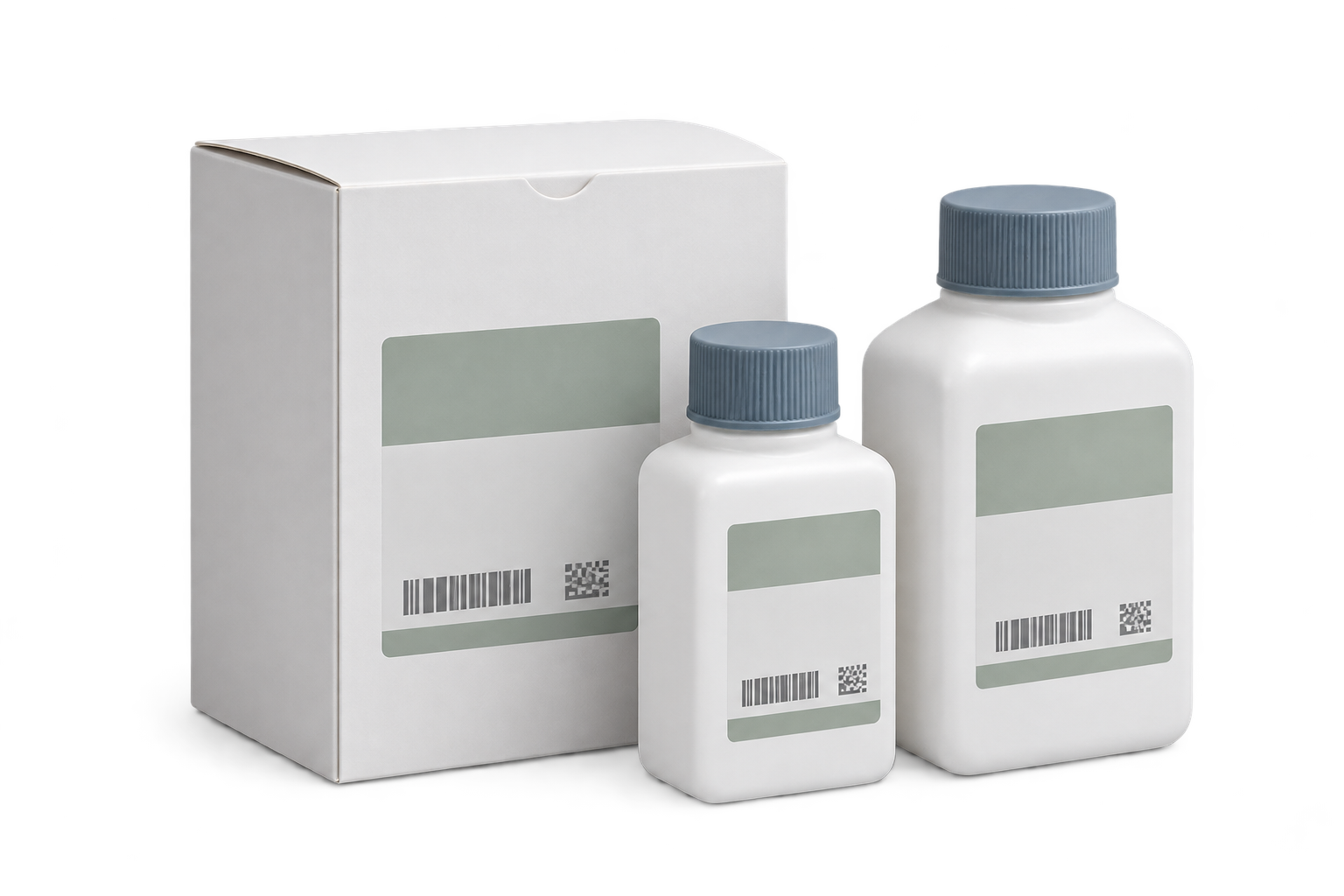
Buy Clinical Chemistry Reagents in Nigeria.
Buy clinical chemistry reagents in Nigeria through Franance by specifying the exact chemistry analyser, approved assay and method, manufacturer reference, requested package and quantity. Mindray describes its chemistry reagents for BS-series automatic chemistry analysers, but the exact model and application must be confirmed before quotation. Send a reagent schedule and Nigerian delivery location; Franance follows up by phone or email with a quotation order. This catalogue page does not confirm stock, regional compatibility or registration.
Products
146 models
What are clinical chemistry reagents?
Clinical chemistry reagents are prepared materials associated with defined analytical methods on chemistry analysers. They are distinct from the analyser, sample collection products, reaction vessels, wash solutions, calibrators and quality controls, even where a manufacturer groups them in the same laboratory portfolio. A reagent name alone does not establish that a package can be loaded on a particular instrument or that it is the correct item for a laboratory's validated method.
Read moreHow to buy clinical chemistry reagents in Nigeria from Franance
Send Franance a quotation request with your facility name, delivery city and state, an equipment schedule, and the name of a laboratory contact who can confirm technical details. Include the exact chemistry analyser model and, where available, its serial or configuration information. List each required assay by the laboratory's approved name and method, plus the exact manufacturer code or a clear image of the current package label if the code is uncertain.
Read moreWhich Mindray chemistry reagents are listed?
Mindray's India chemistry-reagent page describes system-pack chemistry reagents developed for BS-series automatic chemistry analysers and says that a bulk package is also available. It lists assay groups including hepatic, renal, lipid, cardiac, diabetes, anemia, pancreatitis, inorganic, immune and rheumatism panels, as well as additional items. Its global page uses a related, but not identical, panel menu and marks some parameters as under research and development. The catalogues are manufacturer sources for product-family context; the regional difference means a web list should not be read as a promise of a Nigerian assortment.
Read moreBuy Clinical Chemistry Reagents in Nigeria
Clinical chemistry reagents are assay-specific materials used with a compatible chemistry analyser to measure defined constituents in patient specimens. To buy clinical chemistry reagents in Nigeria through Franance, send the analyser manufacturer and exact model, the required assay names and methods, the current reagent references, quantities, and delivery destination. Franance handles quotation orders: the team reviews the request and follows up by phone or email; the website does not take online payment. This page is for laboratory procurement teams comparing clinical chemistry reagent ranges, including Mindray chemistry reagents. The Mindray manufacturer describes its chemistry reagents as developed for its BS-series automatic chemistry analysers, with system-pack and bulk-pack options described on its India page. That is useful manufacturer context, not blanket compatibility for every BS model, every assay, or every market. Ask the manufacturer or supplier to verify the exact reagent application, analyser model, package code, regional offer and supporting documents for the proposed order.
What are clinical chemistry reagents?
Clinical chemistry reagents are prepared materials associated with defined analytical methods on chemistry analysers. They are distinct from the analyser, sample collection products, reaction vessels, wash solutions, calibrators and quality controls, even where a manufacturer groups them in the same laboratory portfolio. A reagent name alone does not establish that a package can be loaded on a particular instrument or that it is the correct item for a laboratory's validated method.
Mindray's official chemistry reagent catalogues list assay families such as hepatic, renal, lipid, cardiac, diabetes, anemia, pancreatitis, inorganic, specific-protein and rheumatism or inflammation panels. The lists include familiar assay names such as ALT, AST, albumin, total protein, urea, creatinine, glucose, cholesterol, triglycerides, calcium and C-reactive protein. Panel labels are a catalogue-organizing aid. They are not a clinical testing recommendation and do not determine which assays a facility should provide.
This distinction matters when a quotation contains many lines. A chemistry analyser is a capital item; reagents are consumables associated with individual methods and packages; calibrators and controls support different quality activities; and other consumables may have their own model and application restrictions. Keep each requested class separately identified so that the response does not silently substitute a reagent, control or accessory for another line.
How to buy clinical chemistry reagents in Nigeria from Franance
Send Franance a quotation request with your facility name, delivery city and state, an equipment schedule, and the name of a laboratory contact who can confirm technical details. Include the exact chemistry analyser model and, where available, its serial or configuration information. List each required assay by the laboratory's approved name and method, plus the exact manufacturer code or a clear image of the current package label if the code is uncertain.
For each line, state the number of packages or the manufacturer's quoted purchasing unit, the required quantity, and any requested calibrator, control or associated item as a separate line. Attach the current analyzer and reagent application documents if available. Identify any alternative references that the laboratory has already approved, and say whether the quotation must exclude substitutions. Franance can then follow up by phone or email to clarify the request and return a quotation for review.
A catalogue page is not a live inventory statement. The written quote should confirm the exact item, market-specific reference, package configuration, quantity basis, current availability, delivery assumptions, any applicable documentation and commercial terms. Do not treat a foreign manufacturer page or a search result as proof that a particular pack is available in Nigeria, registered for a specific transaction, or suitable for a named laboratory method.
Which Mindray chemistry reagents are listed?
Mindray's India chemistry-reagent page describes system-pack chemistry reagents developed for BS-series automatic chemistry analysers and says that a bulk package is also available. It lists assay groups including hepatic, renal, lipid, cardiac, diabetes, anemia, pancreatitis, inorganic, immune and rheumatism panels, as well as additional items. Its global page uses a related, but not identical, panel menu and marks some parameters as under research and development. The catalogues are manufacturer sources for product-family context; the regional difference means a web list should not be read as a promise of a Nigerian assortment.
Examples on the India page include ALT, AST, GGT, ALP, albumin and total protein in the hepatic group; urea, uric acid, microalbumin and cystatin C in the renal group; total cholesterol, HDL-C, LDL-C and triglycerides in the lipid group; and glucose, HbA1c and fructosamine in the diabetes group. The page also identifies analytes across cardiac, anemia, pancreatitis, inorganic, immune and rheumatism groupings. These names help buyers prepare a schedule, but the laboratory should rely on its own approved test menu and current technical documentation.
Some catalogue entries are method variants for the same analyte. For example, Mindray lists direct and total bilirubin methods identified as DSA and VOX; creatinine variants identified as modified Jaffe and sarcosine oxidase; and glucose variants identified as GOD-POD and HK. These distinctions should remain visible in a procurement schedule because they may correspond to different methods, applications or references. They should not automatically become separate generic category pages or be presented as interchangeable products. Where the exact reference or method is not confirmed, group the inquiry by analyte and ask the supplier to verify the offered configuration against the analyzer and approved laboratory method.
Mindray also presents chemistry calibrators and controls as their own reagent-portfolio class. Keep them as separately specified quote lines rather than assuming a reagent package includes them. The current manufacturer item file and instructions, not a generic panel name, should define the identity and application of each requested line.
How do I confirm chemistry reagent and analyser compatibility?
Start with the exact analyser model in the facility, then match the proposed reagent by the manufacturer's current application information for that model. Mindray describes its chemistry reagents as designed to form a system with BS-series automatic chemistry analysers, but the series-level statement does not prove every assay and pack is supported on every model. Models, software versions, application parameters, package types and regional line-ups can differ. Ask for model-specific confirmation before ordering.
Have the laboratory's responsible technical personnel check the exact item code, assay method, application sheet, package presentation, calibration requirements and any specified consumables or controls. If the analyser is not Mindray, do not assume that a Mindray reagent can be used on it just because both are clinical chemistry products. Likewise, a system-pack description does not establish open-system compatibility. Any cross-platform or alternative-reagent decision belongs to the laboratory's qualified method owner under its quality system and the applicable manufacturer instructions.
When an analyzer is being procured at the same time as reagents, list the two scopes separately and ask the supplier to document the proposed combination. Request the exact analyser model, included options and software context, then obtain reagent compatibility confirmation for the assays and packages requested. This keeps the instrument proposal, reagent menu and commercial offer aligned while the facility reviews them.
What should a laboratory compare before requesting a quote?
First, define the approved assay menu. A panel label may contain more tests than the facility intends to run, while one analyte can appear under more than one method or product reference. Use the laboratory's own assay names and method requirements, and identify any reference that must be quoted exactly. Ask the method owner to resolve differences between an internal schedule and a manufacturer catalogue before procurement.
Second, establish the operational quantities and purchasing basis. Give expected quantities by exact package or manufacturer unit, not an assumed number of tests per pack. Pack designations can be market-specific, and a web page may not explain the physical quantity or the exact reference behind a shorthand package name. Ask the quote to state the full part number, package description and count basis. If the laboratory needs a forecast for more than one site, provide an allocation by site and period.
Third, identify quality and documentation needs. If calibrators, controls, item files or other associated materials are required, list them explicitly and ask the supplier to confirm their relationship to the proposed reagent and analyser. Identify the documents your laboratory's quality process needs and let its designated reviewer assess them. A product listing alone does not certify a facility's method, performance, accreditation, regulatory status or acceptance of an item.
Finally, compare like-for-like commercial responses. Keep exact references, quantities, package descriptions, availability, destination, delivery terms, documents, exclusions and commercial validity visible. If an alternative is proposed, ask the supplier to identify it separately and obtain the laboratory's approval before treating it as equivalent. This approach makes a quotation useful to both the laboratory and purchasing team without making the supplier responsible for clinical or method decisions.
What information should I include in a Nigerian chemistry reagent order?
Use a simple schedule with one line per approved item. Include manufacturer, product or catalogue reference, full assay name, method variant, requested package, quantity and any linked calibrator or control reference. Add the exact analyzer make and model, and attach the relevant application list or identify its document revision. If you cannot confirm a code, mark it for supplier verification rather than guessing from a shortened assay name.
Add the facility's legal or purchasing name, contact details, delivery address, city and state, receiving restrictions and requested timing. For multiple branches or laboratories, show which products and quantities belong at each location. State document requirements and any internal review criteria, but keep clinical acceptance and method validation with qualified laboratory personnel.
Franance can use this information to clarify the requested items and provide a quote order for the team to review. Ask the written response to distinguish confirmed product identity from pending compatibility, availability, documentation or delivery questions. No online checkout or instant purchase is offered on this page; Franance follows up on quotation enquiries by phone or email.
How should I plan delivery, receiving and reagent storage?
State the delivery location, receiving hours, storage capability and any laboratory dating or lot-documentation requirements in the enquiry. Ask the quotation to identify the exact reagent reference and package, plus the manufacturer's current label or instructions for use covering storage temperature, expiry, open-container stability and transport conditions. Mindray notes that these conditions vary by reagent and points users to the item label; do not infer one temperature, shelf life or transport condition for the whole chemistry range.
Have the supplier state the transport and delivery arrangements it can confirm for the Nigerian destination, and have the laboratory's designated quality staff review the supplied product documents and decide whether the proposed conditions meet its receiving requirements. A product page does not validate a cold chain, and this guide does not provide handling or storage instructions.
Where can I find clinical chemistry analysers and related categories?
Clinical chemistry reagents belong in a laboratory procurement plan alongside, but separate from, the compatible analyser and other laboratory materials. Franance's clinical laboratory equipment categories provide the wider category context. The core analyser category includes chemistry analyser types. Buyers specifically considering Mindray can also review the Mindray equipment catalogue, then ask for model-specific chemistry reagent compatibility in the quotation.
These links are starting points for finding related catalogue pages; they do not imply that a particular chemistry reagent, analyser or package is currently in stock. The laboratory should define the required method and compatible system, while Franance confirms the exact proposed supply and terms in writing.
How should I compare Mindray and Siemens chemistry reagent listings?
Franance’s clinical chemistry reagent catalogue now includes named Mindray and Siemens Healthineers families. These are separate manufacturer ranges, and the existence of both on one category page does not imply that a reagent is interchangeable or compatible across analysers. Mindray’s catalogue describes its own BS-series reagent families; Siemens’ U.S. Atellica Solution menu groups its Chemistry Test Menu separately from its Immunoassay Test Menu.
The Siemens Chemistry menu contributes 43 named assay families across General Chemistry and Diabetes, plus 42 across Drugs of Abuse/Toxicology, Specific Proteins and Therapeutic Drug Monitoring. These names help a laboratory prepare an enquiry, but the menu does not establish a Nigerian orderable reference, analyzer/module match, package, local availability or registration. Start with the exact system and reagent name, then have the laboratory’s authorized staff and Franance confirm the specific manufacturer reference and documented compatibility in writing. Do not select a substitute from a similar assay name alone.
Browse the Siemens Atellica clinical chemistry listing alongside the full clinical chemistry reagent category. For a quotation, provide the analyzer model, approved assay list, requested method or version only where specified by the laboratory, references if known, quantities and Nigerian destination. Ask the written offer to identify unresolved compatibility or supply details rather than treating a catalogue label as confirmation.
Common questions
Can I use Mindray chemistry reagents on any chemistry analyser?
No. Mindray describes its chemistry reagents for BS-series analysers, but the exact model, assay, method and package must be verified against current manufacturer application information.
Are reagent pack sizes the same in every country?
Not necessarily. Regional catalogues may differ, and shorthand package labels may not show the complete purchasing unit. Confirm the full reference and package description in the quote.
Does a reagent panel tell my laboratory which tests to run?
No. Panel names organize a catalogue. The laboratory's qualified personnel determine its approved test menu and validated methods.
Can Franance confirm Nigerian stock or registration from this page?
No. Ask Franance to confirm the exact reference, current availability, applicable documents, delivery and commercial terms for the destination in the written quotation.
Can I buy clinical chemistry reagents online?
No. Submit a quotation order to Franance. The team follows up by phone or email; the site does not collect online payment.
Request a clinical chemistry reagent quotation from Franance.
Send the exact analyser model, approved assay and method schedule, manufacturer references, package quantities, associated calibrators or controls and delivery location in Nigeria. Ask Franance to confirm item identity, compatibility, availability, documentation and commercial terms in the written quotation.
Request a reagent quoteNeed an equipment quote?
Add the models you need to a quote order, or send us your equipment list.