
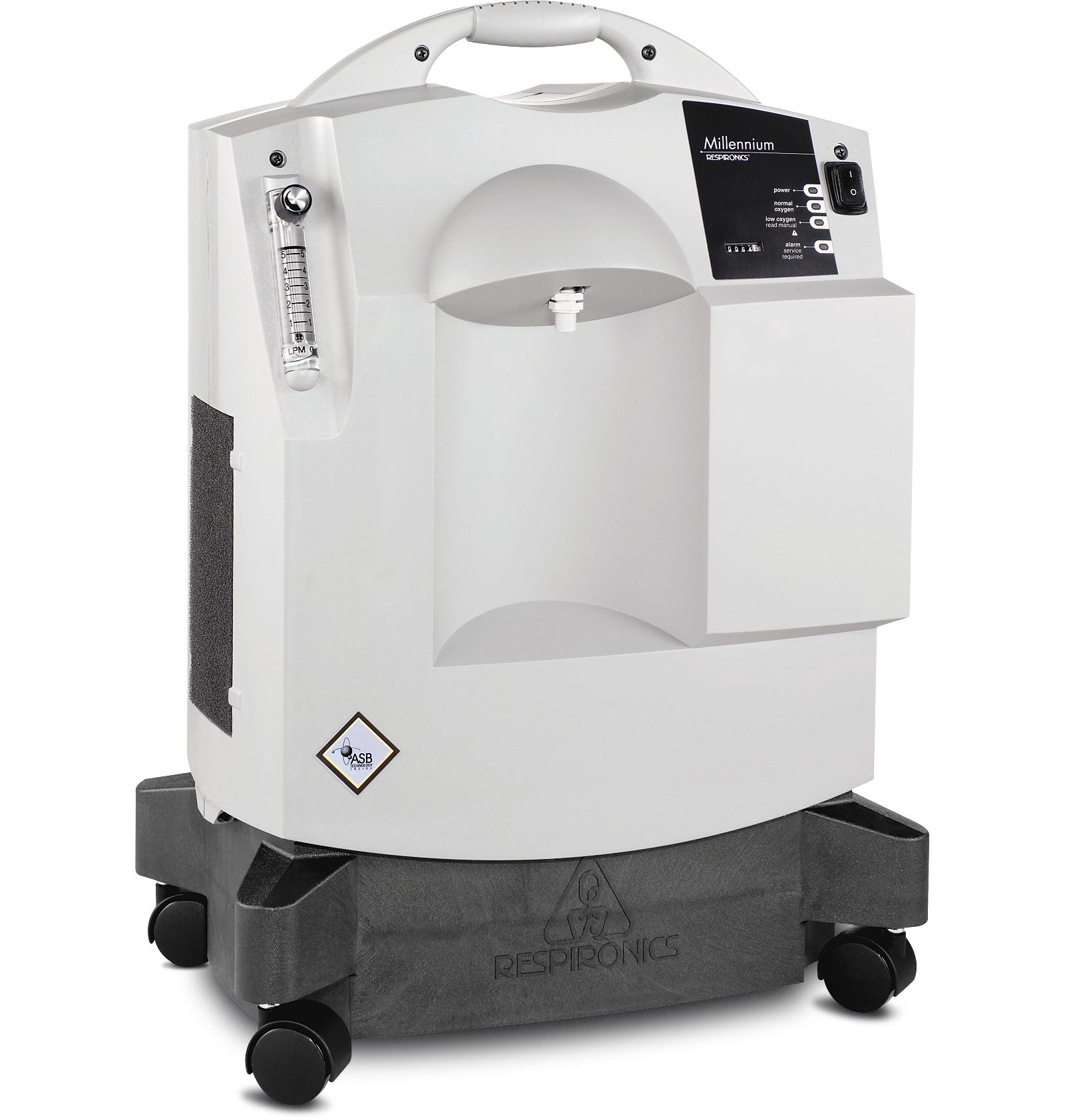
Philips Respironics Millennium M10 10 LPM Oxygen Concentrator
Stationary oxygen concentrator
Price on request

Medical equipment and biomedical engineering.
Abuja, Nigeria.
Buy 10 LPM oxygen concentrators in Nigeria through Franance. The category lists Philips Respironics Millennium M10, Drive DeVilbiss 1025KS and CAIRE AirSep NewLife Intensity 10 single-flow. Compare each exact model’s flow-dependent oxygen output, outlet pressure, electrical rating, alarms and condition before requesting a quotation. Franance follows up by phone or email; there is no online checkout.
3 models
Stationary oxygen concentrator
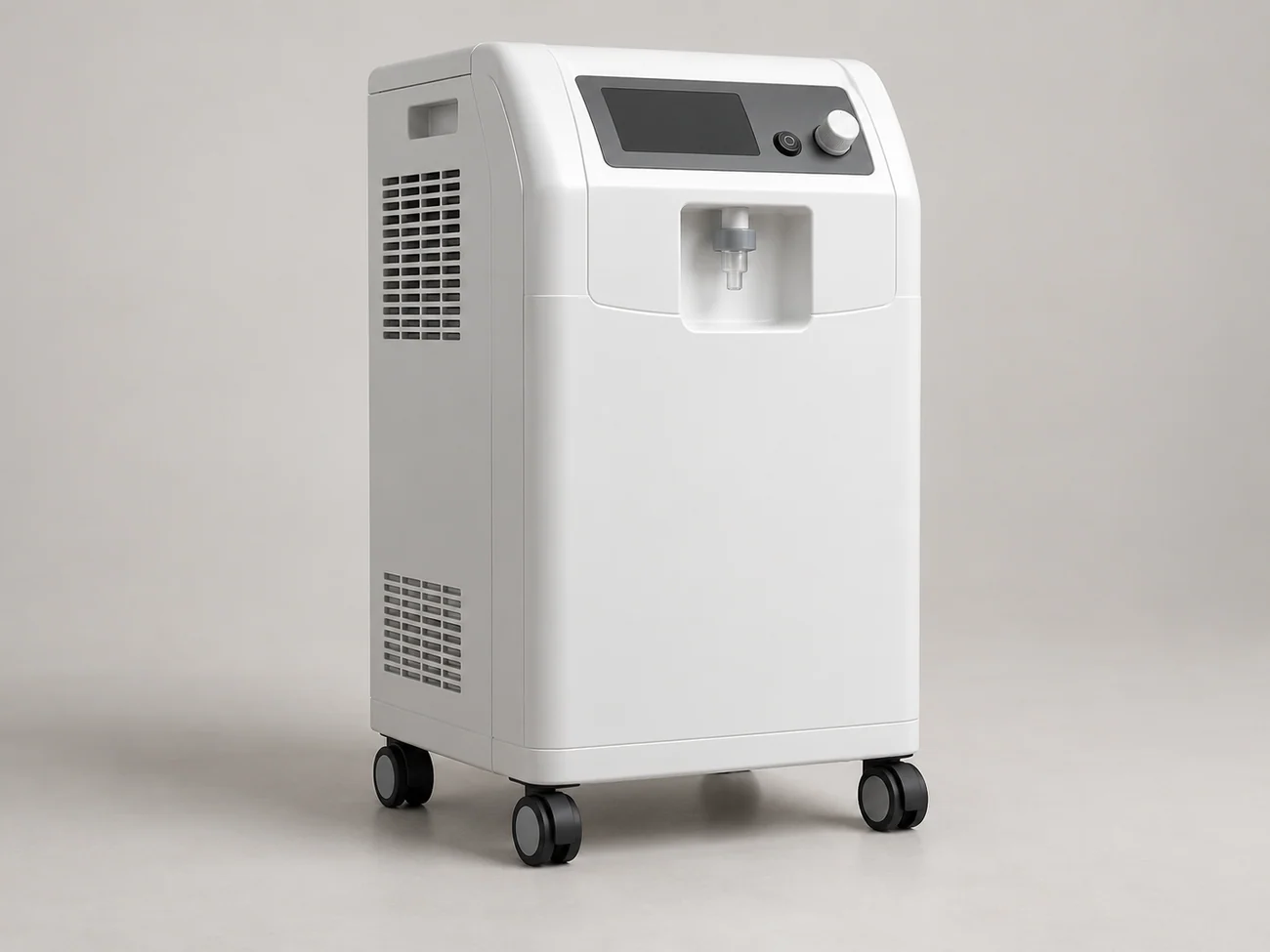
High-flow stationary oxygen concentrator
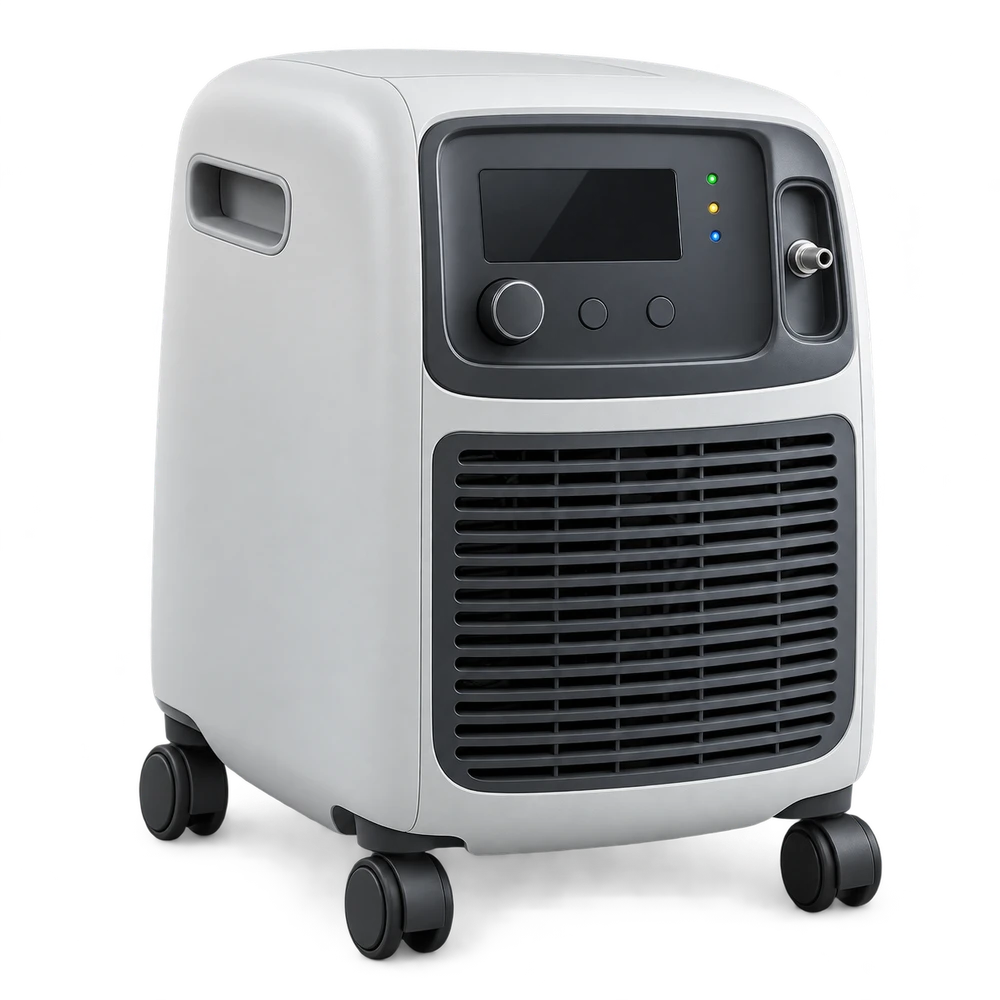
High-flow stationary oxygen concentrator
The current Franance category assigns three models. Philips Respironics Millennium M10 is listed as M10600 without an oxygen percentage indicator (OPI) or M10605 with OPI; its manufacturer sheet specifies up to 10 LPM in 1 LPM increments. Drive DeVilbiss 1025KS is a stationary concentrator with a manufacturer-listed flow range of 2–10 LPM and 230 V, 50 Hz electrical rating. CAIRE AirSep NewLife Intensity 10, reference AS099-101, is the assigned single-flow model, with continuous 2–10 LPM output, 20 psi outlet pressure and 600 W power draw.
Read more“10 LPM” describes a maximum flow capability under the manufacturer’s stated operating conditions. It is not a prescription, a guarantee of a specific oxygen concentration at every setting, or proof that one unit can supply an entire ward or multiple users. The concentration may change as flow rises, and the output pressure, tubing length, connector and downstream equipment affect whether the device is appropriate for a particular setup.
Read morePhilips Millennium M10’s historical product sheet gives these oxygen concentration ranges: 92% ±4% at 8–10 LPM, 94% ±2% at 3–7 LPM, and 92% ±4% at 1–2 LPM. OPI is optional and identified with M10605. The same sheet lists alarms, 120 V / 60 Hz input and a 53 lb weight. Those specifications make checking the exact M10600 or M10605 and local electrical version essential; the product’s discontinued US sales status also makes unit condition and service support a procurement gate.
Read moreFranance lists three stationary oxygen concentrators rated for flows up to 10 litres per minute (LPM): Philips Respironics Millennium M10, Drive DeVilbiss 1025KS and CAIRE AirSep NewLife Intensity 10. Their maximum flow label does not make them interchangeable. Model variants differ in oxygen concentration across flow settings, outlet pressure, alarms, electrical input and product lifecycle. The Philips M10 is discontinued for US sales and shipments according to Philips, so confirm exact condition and support before considering it. For all three, match the device to a clinician-approved oxygen requirement, facility power and delivery system, then request a quote from Franance. Franance follows up by phone or email; there is no online checkout.
The current Franance category assigns three models. Philips Respironics Millennium M10 is listed as M10600 without an oxygen percentage indicator (OPI) or M10605 with OPI; its manufacturer sheet specifies up to 10 LPM in 1 LPM increments. Drive DeVilbiss 1025KS is a stationary concentrator with a manufacturer-listed flow range of 2–10 LPM and 230 V, 50 Hz electrical rating. CAIRE AirSep NewLife Intensity 10, reference AS099-101, is the assigned single-flow model, with continuous 2–10 LPM output, 20 psi outlet pressure and 600 W power draw.
Review the exact assigned Franance product records and request the model that matches the facility requirement:
- Philips Respironics Millennium M10
- Drive DeVilbiss 1025KS
- CAIRE AirSep NewLife Intensity 10, AS099-101
Philips published documentation identifies the M10’s 120 V / 60 Hz electrical requirements and a 2004 product datasheet; Philips’ portfolio notice lists US sales and shipments discontinuation on January 25, 2024, with end of service on January 25, 2029. The date is US-market information, not confirmation of stock or service in Nigeria. Request a written statement of the proposed M10’s condition, region, supportability and electrical configuration before procurement.
“10 LPM” describes a maximum flow capability under the manufacturer’s stated operating conditions. It is not a prescription, a guarantee of a specific oxygen concentration at every setting, or proof that one unit can supply an entire ward or multiple users. The concentration may change as flow rises, and the output pressure, tubing length, connector and downstream equipment affect whether the device is appropriate for a particular setup.
Clinical staff should specify the required flow range and oxygen delivery arrangement for the intended service. Biomedical engineering and facility operations should check whether a bedside unit, a fixed oxygen pipeline, cylinders or a larger oxygen plant is the appropriate source for that workload. Do not extrapolate patient count from the number “10” or divide the outlet between users unless the exact device, flow-splitting accessory and quality-monitoring arrangement are designed and verified for that use. The CAIRE page describes separate dual-flow and SureFlow offerings, but the Franance assignment here is specifically the single-flow AS099-101 model. A different CAIRE configuration is not included by implication.
For clinical decisions, follow current Nigerian clinical guidance and the facility’s oxygen protocols. This page supports equipment comparison and procurement; it does not prescribe oxygen, select a patient flow, or replace clinical monitoring.
Philips Millennium M10’s historical product sheet gives these oxygen concentration ranges: 92% ±4% at 8–10 LPM, 94% ±2% at 3–7 LPM, and 92% ±4% at 1–2 LPM. OPI is optional and identified with M10605. The same sheet lists alarms, 120 V / 60 Hz input and a 53 lb weight. Those specifications make checking the exact M10600 or M10605 and local electrical version essential; the product’s discontinued US sales status also makes unit condition and service support a procurement gate.
Drive DeVilbiss’ 1025 series instructions list 2–10 LPM for the 1025KS, 230 V / 50 Hz, average power consumption of 664 W, and oxygen percentage of 93% +3% / −6% over the listed flow range. The same manual lists audible and visual alarms and operating conditions. Confirm that the offered device is truly the 1025KS regional version, not 1025DS (120 V / 60 Hz) or 1025UK (240 V / 50 Hz), and review the current manual for alarms, operating environment and maintenance.
CAIRE’s NewLife Intensity 10 single-flow AS099-101 is specified for 2–10 LPM, 20 psig output pressure, 600 W power, and a 58 lb weight. CAIRE separately describes a dual-flow 10 LPM configuration, but that is not the model assigned in this category. Confirm whether a humidifier bottle or other accessories, filters, maintenance items or any outlet adaptation are included; do not assume they are part of the concentrator package.
The manufacturer documentation is the reference for each precise model and current production revision. Compare the full technical conditions, not just maximum flow, headline purity, product photograph or brand name.
Nigeria’s electricity installation standards specify nominal single-phase supply at 230 V and 50 Hz, with allowed voltage ranges defined in the regulation. A concentrator must still be matched to the facility’s measured power quality and to its own nameplate. The Drive 1025KS is documented at 230 V / 50 Hz. The Philips M10 sheet cited here is 120 V / 60 Hz; do not plug that version into Nigerian mains using only a socket adapter. Ask the supplier and manufacturer to confirm an approved local variant or a formally specified conversion arrangement before considering the quote. CAIRE’s published listing gives wattage but the facility should obtain the exact offered unit’s voltage, frequency, current and plug specification.
Ask a qualified facility electrical professional to assess the outlet, earthing, circuit capacity, voltage stability and expected generator or inverter supply at the installation point. Use the exact model’s starting/current and power data to size any stabilizer, UPS, inverter or backup generator; a rough wattage estimate or household device rating is not enough. Request confirmation from the manufacturer or authorized technical provider about any recommended power-conditioning or backup setup. Do not improvise transformers, extension wiring, adapters or backup circuits for a medical device.
Power continuity is a system requirement. Plan how the facility will maintain oxygen availability during outages and what alarms or contingency oxygen source staff will use under approved procedures. The equipment quote should state whether backup power is included; concentrators do not store oxygen when the electricity fails.
Before ordering, identify the room and service point. Confirm a stable, ventilated placement area, adequate clearance around air intake and exhaust, ambient temperature and humidity limits, floor loading, noise tolerance and access for cleaning and maintenance. Keep the device away from dust, heat sources, obstructed vents and locations where liquid spills or impact are likely. The exact manufacturer instructions determine clearances, operating conditions and cleaning steps; facility engineering should confirm the proposed site against those instructions.
State whether the concentrator will serve one point of use, feed a specific delivery circuit or connect to a larger distribution system. Include oxygen outlet type, pressure requirements, tubing run length, fittings, humidification requirements and downstream device requirements in the design review. A machine’s outlet pressure is not a substitute for verifying that the flow, connector, distribution resistance and monitoring system suit the complete installation. Piped oxygen or multi-patient distribution requires competent system design and commissioning, rather than a simple hose connection.
For a facility installation, request a documented commissioning plan: placement and electrical check, verification of oxygen concentration at required flow settings using a suitable analyzer, alarm checks, output pressure check if applicable, accessory inspection, staff orientation and handover of manuals. The Nigerian Ministry of Health’s oxygen-system guidance assigns suppliers and contractors responsibilities for installation, testing, commissioning, manuals, training, warranties and after-sales support. Agree who performs each item and who signs off before the equipment is accepted.
Start with a written technical requirement from the facility’s clinical and biomedical teams. Define the required continuous flow range, oxygen concentration at relevant flow points, outlet pressure, monitoring and alarm needs, intended service environment, operating hours, duty cycle and any connection to an existing distribution system. Review these alongside the manufacturer’s data. For example, the Philips M10 sheet reports different concentration values at 1–2, 3–7 and 8–10 LPM. A single “93%” figure would hide that flow-dependent detail.
Check how concentration will be monitored and what the device’s indicators actually show. Philips’ OPI measures oxygen output and has a model-specific alarm feature; Drive lists oxygen monitoring (OSD) and low-oxygen alerts; CAIRE lists technical specifications and product manuals for its model. Ask for the included alarm/indicator options, thresholds, test procedure and required analyzer or service tools. Confirm whether the proposed product is intended for the application and patient population with clinical staff; product range alone does not establish suitability.
WHO guidance treats oxygen concentrators as part of an oxygen system that includes source, distribution, conditioning, delivery and patient monitoring. It recommends adapting generic equipment specifications to local voltage, language, accessories and connectors. For a multi-outlet or pipeline arrangement, get the facility’s oxygen-system designer to verify the concentrator’s continuous capacity and quality under the complete operating load. Do not connect several care points or promise simultaneous service based only on a concentrator’s maximum flow.
Send Franance the exact manufacturer, model, reference and requested configuration: Millennium M10 M10600 or M10605; Drive DeVilbiss 1025KS; or CAIRE AS099-101 single-flow. State the intended care area, clinician-approved flow and oxygen-output requirement, continuous operating schedule, whether the device is standalone or part of a distribution system, required accessories and the facility electrical supply. Include the Nigerian delivery city and address, quantity, requested delivery date and contact for clinical engineering or facilities engineering.
Ask Franance to itemize the concentrator, regional voltage/frequency version, power cord, filters, humidifier bottle or adaptor, tubing/connectors, analyzer or commissioning tools, installation, testing, training, warranty, parts and maintenance options. For the Philips M10, require an explicit statement of new, used, refurbished or other condition, the exact part number, remaining manufacturer or supplier support, and the electrical solution approved for the Nigerian site. For the 1025KS, ensure the quote is not for a 1025DS or UK variant. For CAIRE, confirm single-flow AS099-101 rather than a dual-flow model and specify the exact electrical variant.
Request current manuals, product datasheets, serial or lot details as applicable, conformity and registration documents required by the purchaser, warranty terms, stock status, lead time, quote validity, delivery and service conditions in writing. Do not infer local stock, regulatory status, installation, NAFDAC registration, support or warranty from a manufacturer page. Ask Franance to identify what is verified and what needs confirmation from the manufacturer, supplier or facility engineer before approval.
Franance uses quote orders for catalogue equipment; there is no online buying or payment flow. Select the exact model, provide your requirement and site details, then submit the request. Franance will call or email to clarify the configuration and commercial terms. A complete request helps the team distinguish the 230 V / 50 Hz Drive 1025KS from related regional models, identify a viable power option for the Philips M10 if it is proposed, and confirm that the CAIRE single-flow version matches the planned connection.
For multiple units or a facility oxygen-system project, attach a schedule by location, electrical variant, output requirement, accessories and service needs. State whether the purchase is for a standalone patient-care point or a professionally designed distribution system. Keep clinical prescription and installation sign-off with the facility’s qualified clinical and engineering teams. Browse all 10 LPM oxygen concentrators listed by Franance or request an oxygen concentrator quotation.
Browse the Franance 10 LPM oxygen concentrator category and submit a quote order with the exact model, flow requirement, electrical supply, accessories, quantity and delivery destination. Franance follows up by phone or email; there is no online checkout.
The current category assigns Philips Respironics Millennium M10, Drive DeVilbiss 1025KS and CAIRE AirSep NewLife Intensity 10 single-flow AS099-101. Confirm exact part number and configuration in the written quotation.
Philips lists US sales and shipments discontinuation on January 25, 2024, with US end of service on January 25, 2029. These are US lifecycle dates. Ask Franance to state the offered M10’s condition, part number, regional availability, electrical configuration and support arrangements.
Do not connect a 120 V/60 Hz model to a nominal 230 V/50 Hz supply using only a plug adapter. Ask the manufacturer or authorized supplier to confirm a regionally approved version or formally specified power arrangement, and have a qualified facility electrical professional assess the site.
The maximum output alone does not establish multi-patient suitability. Confirm total flow, concentration, pressure, split-flow accessories and monitoring with the manufacturer, facility oxygen-system designer and clinical team. The assigned CAIRE model is the single-flow AS099-101.
No. Output concentration can vary with flow setting and operating conditions. Compare each exact model’s manufacturer data at the required flow range and request the current instructions and appropriate commissioning verification.
Specify exact model and regional electrical version, required flow and output, site power and backup, standalone or distribution use, accessories, quantity and destination. Ask for itemized installation, commissioning, training, warranty, service, availability and current product documents.
No. Franance accepts quotation requests and contacts the requester by phone or email to confirm product configuration and commercial terms.
Send the exact model, required flow/output, regional power version, facility setup, accessories, quantity and Nigerian destination. Franance will follow up by phone or email to clarify your quote order.
Request an oxygen concentrator quoteAdd the models you need to a quote order, or send us your equipment list.