

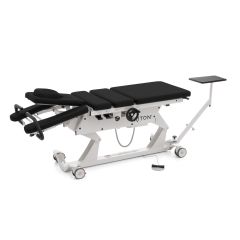
Buy Traction Table in Nigeria.
Browse traction table and request a quotation for your facility in Nigeria. Include the configuration, quantity and delivery location you need.
Products
4 models
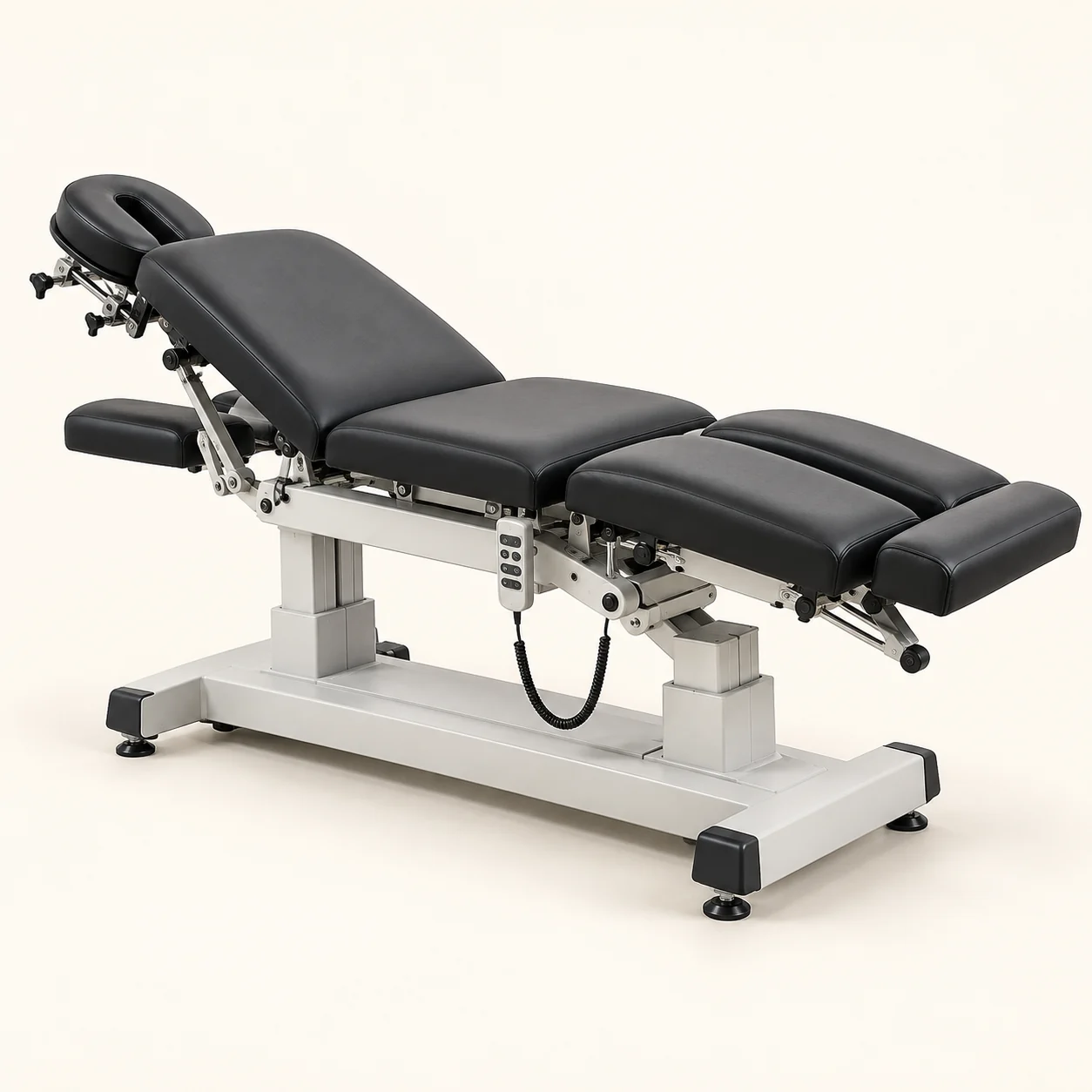
Triton DTS 6E Electric Traction Table
Six-section electric physiotherapy traction table
Price on request
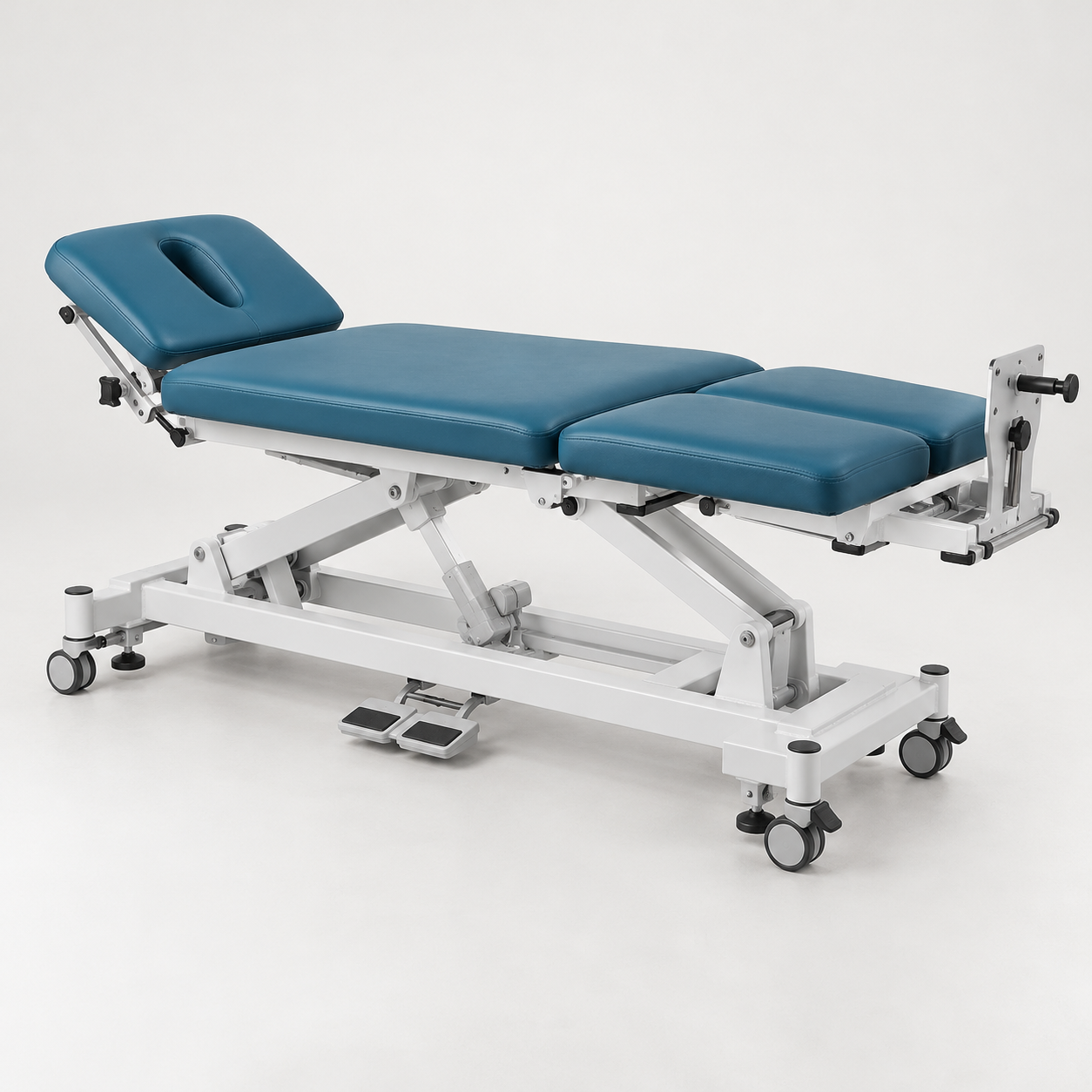
AM-BA400 Bar Activated Traction Table
Bar-activated electric physiotherapy traction table
Price on request
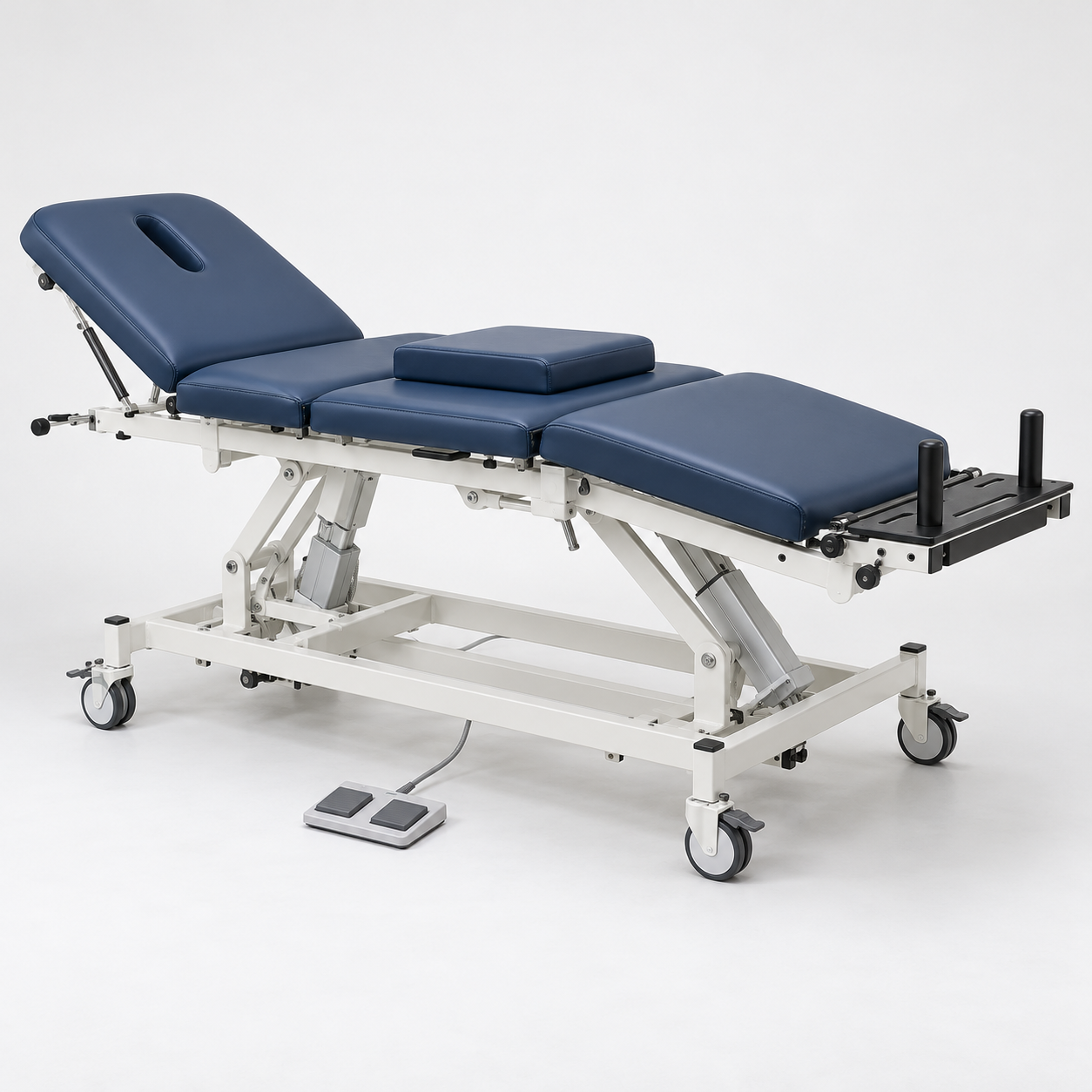
Cardon Traction Treatment Table (TTT)
Four-section electric physiotherapy traction treatment table
Price on request
Where can I buy a traction table in Nigeria?
Start with Franance’s traction table listing. The exact brand and model-filtered routes are Chattanooga Triton DTS 6M, Chattanooga Triton DTS 6E, Armedica AM-BA400 and Cardon TTT. The links help identify current catalogue records; they do not confirm stock or that a traction unit is bundled. Ask Franance for a quote that lists the table, traction controller or device, attachments, power variant and requested services as separate line items.
Read moreWhat does a traction table do, and what does it not do?
A traction table provides a stable patient support surface and positioning features. A mechanical traction unit produces and controls the pulling force. Some tables include mounting points or movable sections to help configure a system, but that does not mean they generate force or include compatible equipment. Before purchase, identify the table and the traction unit as separate components, verify manufacturer compatibility, and list the cervical or lumbar harnesses and accessories needed for the clinician’s intended workflow.
Read moreHow do cervical and lumbar traction configurations differ?
Cervical and lumbar configurations use different patient supports, attachments and setup. The clinician specifies the intended region and compatible device accessories; the buyer should not assume that a table’s adjustable head section means a cervical traction unit or harness is included. For a cervical setup, confirm the compatible cervical traction attachment, head and neck positioning support, table geometry and patient transfer/access requirements. For a lumbar setup, confirm pelvic or trunk support and belt compatibility, the table’s relevant section movement, the traction unit’s permitted force and motion modes, and how the patient is positioned for the clinician-approved protocol.
Read moreBuy Physiotherapy Traction Tables in Nigeria: Compare Cervical and Lumbar Setups
To buy a physiotherapy traction table in Nigeria, compare the table’s section layout and patient positioning, adjustment controls, dimensions and load limits, then confirm whether the traction unit, harnesses and accessories are actually included. Franance currently lists four models: Chattanooga Triton DTS 6M, Chattanooga Triton DTS 6E, Armedica AM-BA400 and Cardon Traction Treatment Table (TTT). Browse the traction table category and request an itemised quote for the exact configuration, facility destination and power requirements. Franance takes quote orders and follows up by phone or email; there is no online checkout. A traction table is not necessarily a complete traction system. The two Chattanooga tables, the Armedica AM-BA400 and the Cardon TTT are sold as tables in the listed records; the traction device or machine must be specified separately unless a quotation explicitly bundles one. A table listing also does not determine whether spinal traction is appropriate for a particular patient. A qualified clinician must assess treatment indication, alternatives, precautions and contraindications against current guidance and the exact traction device’s instructions for use.
Where can I buy a traction table in Nigeria?
Start with Franance’s traction table listing. The exact brand and model-filtered routes are Chattanooga Triton DTS 6M, Chattanooga Triton DTS 6E, Armedica AM-BA400 and Cardon TTT. The links help identify current catalogue records; they do not confirm stock or that a traction unit is bundled. Ask Franance for a quote that lists the table, traction controller or device, attachments, power variant and requested services as separate line items.
What does a traction table do, and what does it not do?
A traction table provides a stable patient support surface and positioning features. A mechanical traction unit produces and controls the pulling force. Some tables include mounting points or movable sections to help configure a system, but that does not mean they generate force or include compatible equipment. Before purchase, identify the table and the traction unit as separate components, verify manufacturer compatibility, and list the cervical or lumbar harnesses and accessories needed for the clinician’s intended workflow.
Triton DTS 6M and 6E are six-section Chattanooga tables designed to pair with a separate Triton DTS traction unit. Chattanooga states that the unit and accessory packages are sold separately. The Armedica AM-BA400 and Cardon TTT are also table records rather than complete traction-system packages; Armedica’s traction table line states the traction device is sold separately, and Cardon explicitly says its traction machine is not included. Make the supplier confirm the complete bill of materials before comparing price or planning treatment.
How do cervical and lumbar traction configurations differ?
Cervical and lumbar configurations use different patient supports, attachments and setup. The clinician specifies the intended region and compatible device accessories; the buyer should not assume that a table’s adjustable head section means a cervical traction unit or harness is included. For a cervical setup, confirm the compatible cervical traction attachment, head and neck positioning support, table geometry and patient transfer/access requirements. For a lumbar setup, confirm pelvic or trunk support and belt compatibility, the table’s relevant section movement, the traction unit’s permitted force and motion modes, and how the patient is positioned for the clinician-approved protocol.
The Triton table product pages describe adjustable head and pelvic sections and positioning for cervical, thoracic or lumbar regions, while the separate Triton unit is marketed with cervical and lumbar applications. Its 6M and 6E tables are not themselves traction force generators. Chattanooga’s Advanced Accessory Package is one separately sold system package and includes components such as a Triton DTS traction unit and a Saunders cervical unit. Confirm whether any such package is actually included in a Franance quotation; do not infer it from the table model name.
Cardon TTT includes an adjustable traction mounting board that the manufacturer says can be tailored to a traction unit, but the traction machine is not included. Armedica’s traction table line similarly requires the traction device to be specified separately. For either brand, have the clinical and technical teams confirm the exact compatible unit and cervical or lumbar attachments before ordering. Ask the supplier to state the intended setup in writing.
Which traction tables are listed by Franance?
Chattanooga Triton DTS 6M is a six-section table with gas-spring-assisted section movement and head and pelvic positioning. Chattanooga’s US page lists a 120 V, 50/60 Hz power configuration, 363 lb patient weight limit, 440 lb dynamic lifting capacity and 605 lb maximum workload. These are different ratings and should not be treated as interchangeable. The listing also describes height adjustment via a foot or hand controller and a separate Triton traction unit. Check the exact regional model code and electrical version; the product record uses model code 4769M-INT while the US page displays SKU 4769M108US.
Chattanooga Triton DTS 6E is a fully electric six-section table with six actuators for powered section adjustment and a hand remote. Chattanooga’s US listing specifies 120 V, 50/60 Hz, maximum 2 A, a 440 lb dynamic lifting capacity and 605 lb maximum workload. The traction unit is sold separately. Confirm any patient weight limit stated for the offered regional model rather than substituting the table’s dynamic lifting or workload rating.
Armedica AM-BA400 has a four-section top and bar-activated height adjustment reachable around the table. The manufacturer lists dimensions of 27 × 76 inches, height adjustment from 18 to 37 inches and 500 lb load capacity. Confirm the exact control, electrical variant, base and caster options, and any separate traction device needed for the intended system.
Cardon Traction Treatment Table (TTT) is a four-section electric hi-lo table with a soft-touch footswitch, adjustable head and leg sections, and a movable traction mounting board. Cardon lists dimensions of 28 × 77 inches, height range 19–35.25 inches, 500 lb weight capacity and 120 V AC, 60 Hz, maximum 2.5 A. The traction machine is not included. Confirm the regional power model, upholstery and frame, optional accessories and compatible separate traction equipment.
| Current model | Key listed distinction |
|---|---|
| Chattanooga Triton DTS 6M | Six sections, gas-spring section adjustment; traction unit separate |
| Chattanooga Triton DTS 6E | Six sections, six powered actuators; traction unit separate |
| Armedica AM-BA400 | Four sections, height bar control; specify traction device separately |
| Cardon TTT | Four sections, hi-lo footswitch and traction mounting board; machine not included |
What patient-fit and control details should I compare?
Compare the actual usable surface width and length, minimum and maximum height, section dimensions, face opening or head support, transfer space, patient weight rating, lift rating and maximum workload as separate measures. Ask the manufacturer or supplier which rating governs the intended patient and whether it changes with a selected option. Do not compare Chattanooga’s 363 lb patient limit on the 6M with its 440 lb dynamic lift or 605 lb maximum workload as though these were equivalent capacity figures. For the 6E, request the precise patient weight limit for the offered model if it is not stated in the quote documentation.
Match the controls to the clinic’s workflow. The Triton 6M uses gas-spring-assisted adjustment of table sections and a hand or foot height controller; the 6E uses powered actuators and a hand remote for section movement. Armedica AM-BA400 uses a bar control around the table for height adjustment. Cardon TTT uses a soft-touch footswitch for hi-lo adjustment. Ask for a demonstration or current user manual to clarify which control moves the table height, which adjusts the head or pelvic sections, how controls lock, and how the table is secured during transfers. Include clinician reach, patient access, cleaning and safe operator posture in the room review.
Consider patient comfort and positioning aids without assuming the accessory set. Specify cushions, head supports, face openings, pillows, belts, harnesses and any transfer or mobility aids. Have the intended users check whether the table supports their prescribed patient positions and whether the available range fits the facility’s patient population. A listed load rating is only one part of fit; dimensions, stability, access and compatible supports also matter.
What indications and contraindications should be considered?
Treatment indication is a clinical decision, not a feature of the table. Chattanooga’s Triton traction-unit information describes its intended use and lists conditions for which the manufacturer says the traction device may be used. That is device labeling, not proof that traction is effective or appropriate for every patient with those diagnoses. Guidance differs by condition: the WHO guideline for chronic primary low back pain recommends against routine traction, and NICE says not to offer traction for low back pain with or without sciatica. A facility should follow current evidence, local clinical governance and professional judgment rather than rely on catalogue copy.
Contraindications and warnings depend on the exact traction unit and current instructions for use. Chattanooga’s Triton IFU lists examples including pregnancy, osteoporosis, vascular compromise, spinal joint instability, some acute inflammatory or injury states, and certain cardiac or pulmonary conditions. This is not a complete clinical screening checklist and must not be applied to other devices by assumption. Before use, the licensed clinician must review the current device IFU, relevant patient history, risks, alternatives and monitoring requirements. The table purchase guide cannot diagnose, prescribe traction or clear an individual for treatment.
What room, power and service needs should I plan for?
The US-listed Chattanooga Triton DTS 6M and 6E tables specify 120 V, 50/60 Hz; Cardon TTT lists 120 V AC, 60 Hz. These specifications are not proof that those US variants are suitable for a Nigerian installation. Armedica’s public AM-BA400 page describes its controls and options but does not give the specific power rating in the product information reviewed here. Ask Franance to confirm the exact 230 V / 50 Hz or other compatible regional variant, plug and circuit requirements, electrical safety documentation and any installation prerequisites. Do not assume a transformer is included or suitable.
Measure the table footprint and the full room arrangement, including its traction arm or attached equipment, clinician working space, wheelchair or stretcher approach, electrical outlet location, cleaning access and storage for belts and accessories. For heavy tables, confirm shipping dimensions, door and corridor clearances, lifting arrangements, floor capacity where relevant and the receiving route. Ask what setup or assembly is required and whether installation, commissioning, training, inspection or after-sales support is included for your state and city.
Confirm who will train clinicians and technical staff, who handles maintenance, the parts and warranty scope, service response expectations, and whether a compatible traction unit has a separate warranty or service route. Request current manuals and cleaning instructions for the exact table and traction unit. A combined system can involve separate manufacturers, SKUs, power requirements and support arrangements, so have each responsibility written into the quotation.
What should a traction table quote in Nigeria include?
Send the model or approved specification, quantity, full destination address, state and city, facility type, delivery timeline, power supply details, room access and requested services. State whether you need a table only or a complete traction package. For a complete package, name the separate traction unit, cervical and/or lumbar attachments, harnesses, table accessories and any installation, commissioning and staff training. Ask the offer to show each included and excluded component, compatible-model confirmation, electrical version, patient and workload ratings, product documentation, warranty and service responsibilities.
Franance should confirm the proposed supply route, current availability, delivery terms, local documentation, price and location-specific installation or support scope in writing. Product pages from overseas markets do not establish stock, registration, local price or service in Nigeria. The applicable Nigerian medical-device documentation should be requested and verified for the precise product and route. Do not send patient-identifiable details in a quote enquiry.
How much does a physiotherapy traction table cost in Nigeria?
The catalogue does not provide a fixed price for a complete traction system. A quotation can vary according to table model, power configuration, accessories, whether the traction unit is separate or bundled, harnesses, delivery location, installation, training, warranty and support. A table-only price is not comparable with a quote that includes a traction unit and accessory package. Request an itemised offer for the exact room and workflow before comparing proposals.
How do I request a Franance traction table quotation?
Choose the table from the traction table listing and send the exact model, quantity, required cervical or lumbar configuration, separate traction-unit and accessory needs, facility state and city, power details and requested service scope. Franance will follow up by phone or email to clarify the order and discuss a quotation. Request a traction table quote from Franance.
Common questions
Does a traction table include the traction machine?
Not automatically. Chattanooga lists the DTS traction unit separately, Armedica says the traction device is separate in its traction-table line, and Cardon explicitly excludes the traction machine from TTT. Ask Franance to itemise any complete system package.
Can these tables be used for both cervical and lumbar traction?
The compatible traction unit, harnesses, table setup and clinical indication determine the configuration. Confirm the exact device and accessories with the manufacturer and supplier; the table alone does not establish both treatment capabilities.
Is spinal traction appropriate for every patient with back pain?
No. Patient selection is a clinical decision. WHO recommends against traction as routine care for chronic primary low back pain, and NICE advises against traction for low back pain with or without sciatica. Follow current guidance and the device IFU.
Are the listed U.S. power ratings suitable for Nigeria?
Do not assume so. Chattanooga and Cardon pages list 120 V variants. Ask Franance to confirm the exact regional power configuration, frequency, plug and installation requirements before ordering.
What should I include in a Nigeria quote request?
Provide model, quantity, table and traction-unit scope, cervical or lumbar attachments, patient-fit requirements, facility power, delivery state and city, room access, training, installation, warranty and service needs.
Request a physiotherapy traction table quotation from Franance.
Send the exact table model, whether a separate traction unit and attachments are required, patient-fit specifications, power configuration, quantity, destination and requested services. Ask the written offer to confirm included equipment, compatibility, regulatory documents, delivery, training and support.
Request a traction table quoteNeed an equipment quote?
Add the models you need to a quote order, or send us your equipment list.