
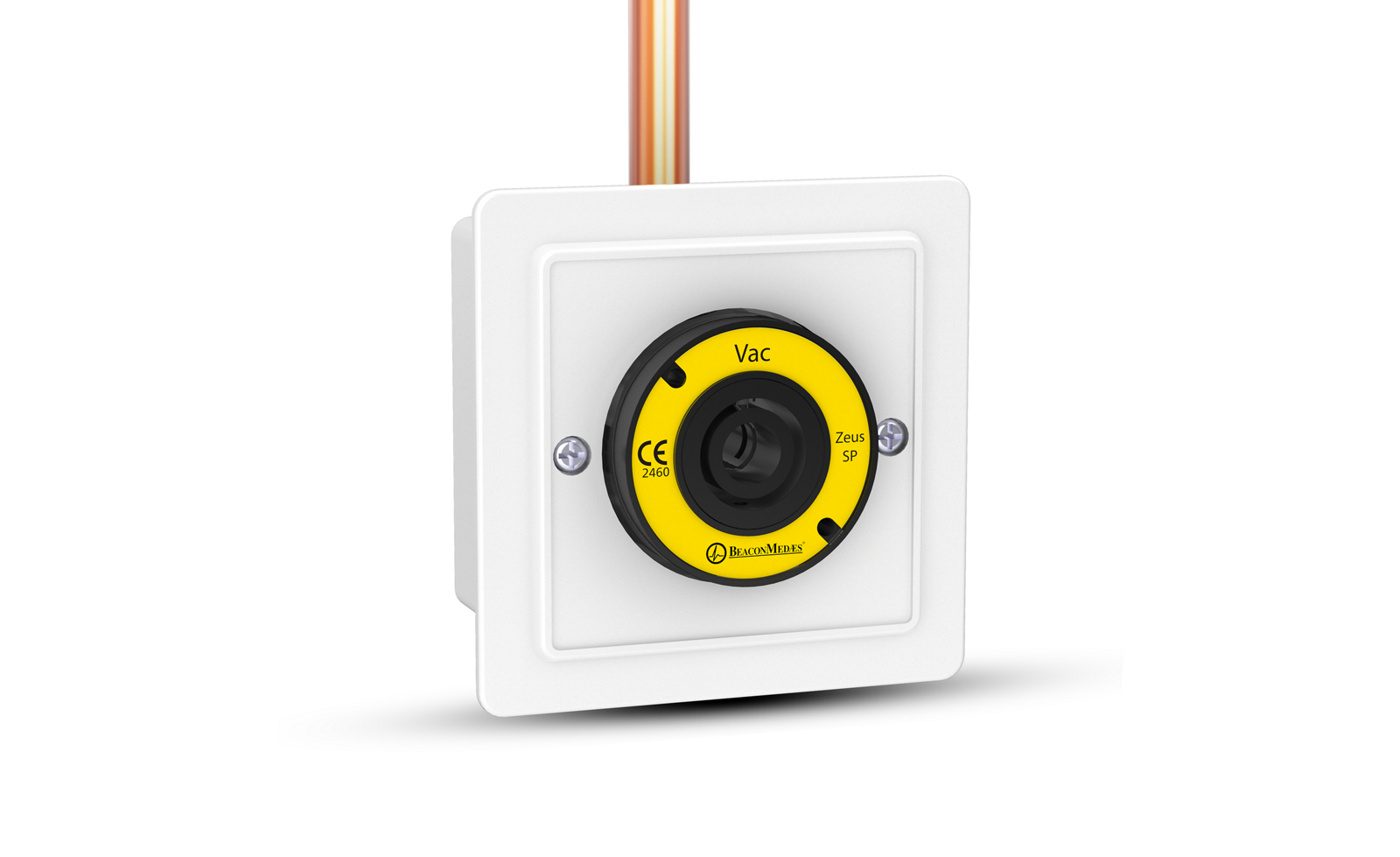
Zeus SP BS 5682 Medical Gas Terminal Unit
British Standard gas-specific medical gas terminal unit
Price on request

Medical equipment and biomedical engineering.
Abuja, Nigeria.
Buy medical gas outlets in Nigeria through Franance by specifying the gas service, exact probe and terminal-unit standard, mounting location and project scope. This category currently lists three British Standard outlet families: BeaconMedaes Zeus SP BS 5682, BeaconMedaes GEM Shield BS and Amico British Standard. Request a written quote for the exact gas-specific configuration and matching probe; Franance follows up by phone or email.
3 models
British Standard gas-specific medical gas terminal unit
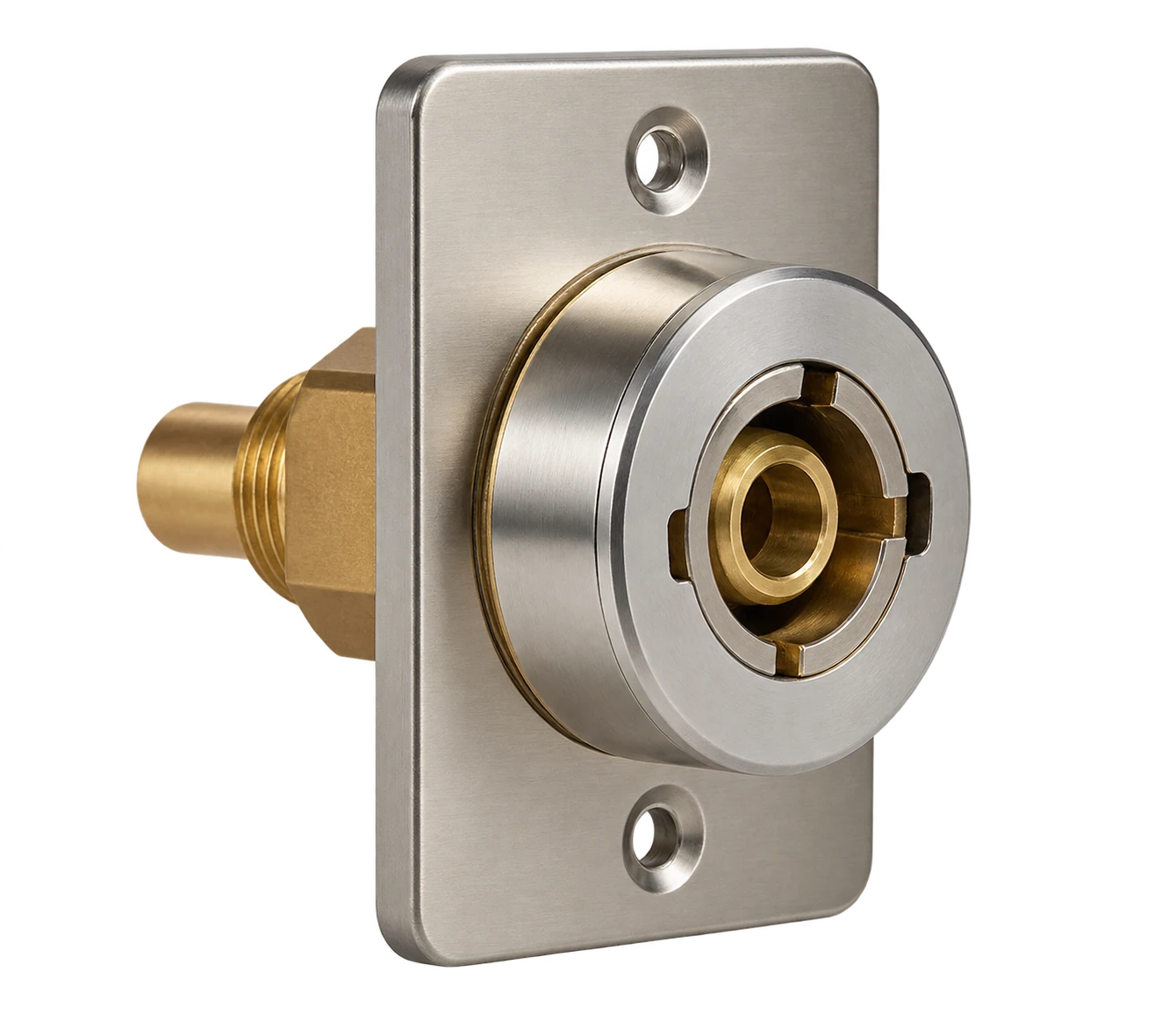
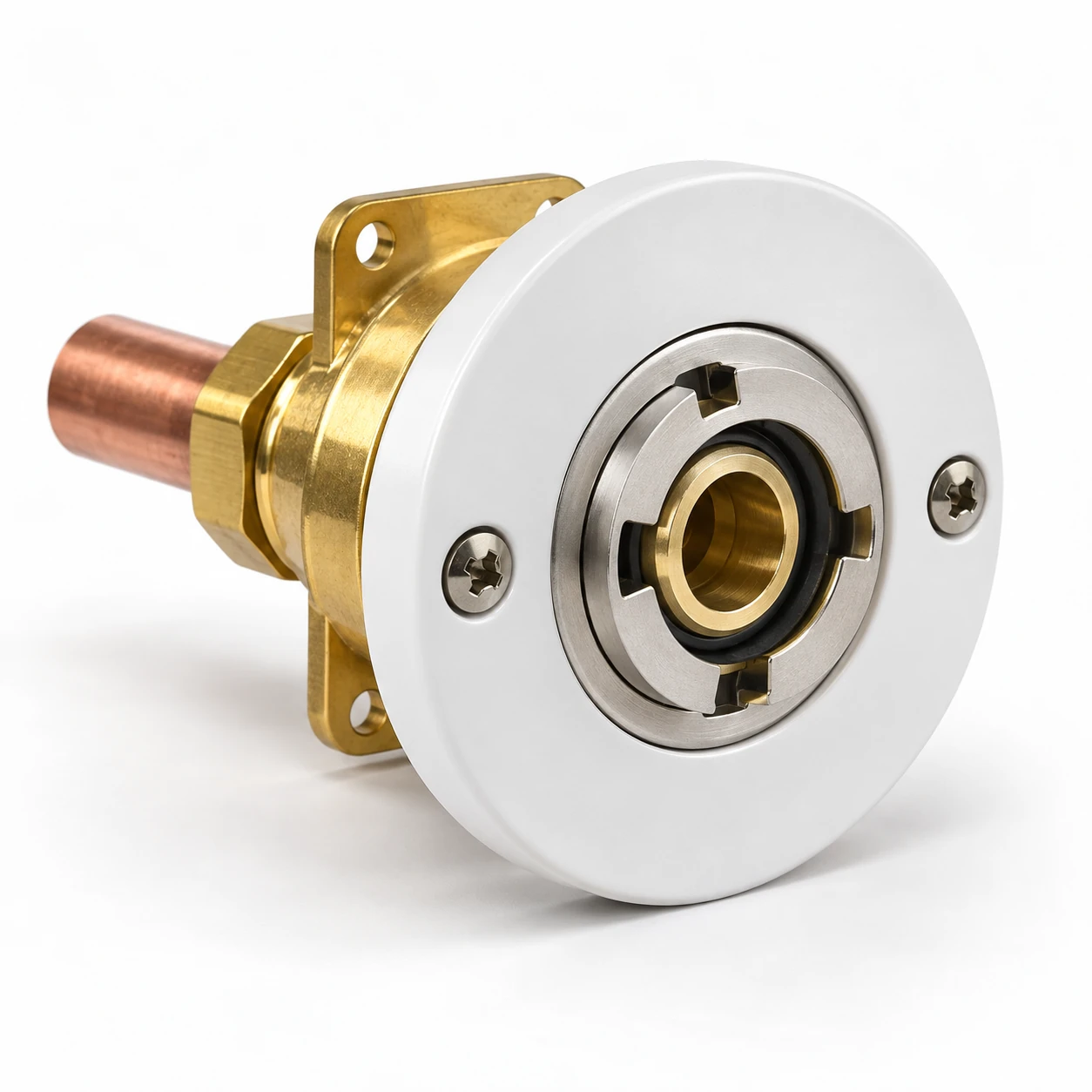
The live medical gas outlet category has three assigned products. Open their exact model-filtered listings: BeaconMedaes Zeus SP BS 5682 terminal unit, BeaconMedaes GEM Shield BS outlet, and Amico British Standard Medical Gas Outlet. The catalogue assignments identify product families, not a universal connector or a complete pipeline package.
Read moreBSI identifies BS 5682:2015 as the current British Standard specifying dimensions for probes and terminal units used with medical gases, including vacuum. Its published scope names services such as oxygen, nitrous oxide, medical air, helium/oxygen mixtures and vacuum, while excluding some other services. Check the standard itself and the project design for the precise gas and service; do not infer that every outlet sold as “British Standard” covers every gas or application.
Read more“Schrader” is often used loosely in conversations about quick-connect couplings. It should not be treated as a complete specification for a medical gas terminal unit. Connector families may differ in dimensions, indexing, probe construction, gas assignment and the equipment or regional design they serve. The present category assignments explicitly identify British Standard outlets; they do not provide an independently verified Schrader-only SKU. If the project requires a Schrader interface, ask for the exact outlet and probe standard, manufacturer part references and documentation before assuming the listed British Standard models meet it.
Read moreFor a Nigerian hospital project, specify a medical gas outlet by its gas service, the exact national probe/terminal-unit interface, installation location and project standard—not by the word “Schrader” alone. Franance currently lists three British Standard outlet families in this category: BeaconMedaes Zeus SP BS 5682, BeaconMedaes GEM Shield BS and Amico British Standard. Tell Franance which gas or vacuum service is required, which probe standard the approved system uses, how the outlet will mount, and whether the quote covers first fix, second fix or supply only. Franance will follow up by phone or email to clarify a quotation; these are quote-order listings, not an online checkout. The category name includes “BS-Schrader”, but the current assigned models are described by their manufacturers as British Standard or BS 5682 products. British Standard is a specific connector convention with gas-specific probes and terminal units. The informal “Schrader” label does not identify a model, gas, dimensions or an approved mating interface by itself. Keep the terms distinct in the equipment schedule, and never assume that an outlet, probe or hose connection fits because the names sound similar. Final selection, installation and testing belong within the approved medical gas pipeline system design and applicable local requirements.
The live medical gas outlet category has three assigned products. Open their exact model-filtered listings: BeaconMedaes Zeus SP BS 5682 terminal unit, BeaconMedaes GEM Shield BS outlet, and Amico British Standard Medical Gas Outlet. The catalogue assignments identify product families, not a universal connector or a complete pipeline package.
Ask for the complete ordering reference for each outlet: manufacturer, family, gas service, probe/terminal-unit standard, first-fix body, second-fix/socket, mounting and accessories. If replacing or extending an existing installation, document the installed outlet and probe references, gas identification, bedhead or wall arrangement, and the facility’s approved drawings. Provide photographs only as supporting information; appearance alone cannot establish the connector standard or gas identity. Have the project’s medical gas design authority confirm the specification before ordering.
The purchase decision should also state whether the requirement is for an isolated terminal unit or part of a larger project involving the pipeline, valves, alarms, headwall, installation, testing or handover. A catalogue page does not establish that a selected outlet is sufficient for the facility, available in Nigeria, or approved for a particular project. Request a written quotation that names the exact configuration and exclusions.
BSI identifies BS 5682:2015 as the current British Standard specifying dimensions for probes and terminal units used with medical gases, including vacuum. Its published scope names services such as oxygen, nitrous oxide, medical air, helium/oxygen mixtures and vacuum, while excluding some other services. Check the standard itself and the project design for the precise gas and service; do not infer that every outlet sold as “British Standard” covers every gas or application.
BS 5682’s connector dimensions are distinct from the general safety and performance requirements of terminal units. ISO 9170-1 addresses terminal units for compressed medical gases and vacuum, including gas-specific construction intended to prevent interchange between different gases/services, and does not itself define the dimensions of each national probe connection. National standards provide those dimensions. Therefore a statement that a unit is designed to ISO 9170-1 does not, by itself, tell a buyer whether it accepts a BS 5682, Schrader, DIN, DISS or other probe.
In a specification or request for quotation, name the standard and the actual mating probe type together. If an existing facility informally calls a connection “Schrader,” ask the engineer or supplier to identify the exact national interface, gas-specific configuration and approved equipment reference. Do not use “BS”, “Schrader” or “quick connect” as interchangeable shorthand. A matching connection is only one part of a valid, designed and tested service installation.
“Schrader” is often used loosely in conversations about quick-connect couplings. It should not be treated as a complete specification for a medical gas terminal unit. Connector families may differ in dimensions, indexing, probe construction, gas assignment and the equipment or regional design they serve. The present category assignments explicitly identify British Standard outlets; they do not provide an independently verified Schrader-only SKU. If the project requires a Schrader interface, ask for the exact outlet and probe standard, manufacturer part references and documentation before assuming the listed British Standard models meet it.
The reason for this distinction is practical: medical gas outlets are service-specific connection points. The interface is intended to help ensure that a device for one gas cannot be connected to a different service. A connector that appears to fit, or can be made to fit with an adaptor, is not evidence that a conversion is safe or accepted by the design. Avoid improvised adapters and mixed-standard installations. Any transition between an existing interface and a newly specified one must be reviewed and documented by the responsible design authority, with the complete system tested under its approved procedures.
For projects in Nigeria, record the design standard basis in the request and identify what is already installed. If legacy records use “Schrader,” preserve that wording in the site notes while explicitly requesting confirmation of the actual terminal-unit standard. This avoids silently translating a local name into BS 5682 or another connector family. Require the proposal to name gas-specific outlet references and compatible probes for each service, not just a generic label.
BeaconMedaes describes Zeus SP as a family of gas-specific terminal units. Its technical datasheet identifies probes to BS 5682 and gas/vacuum indexing, with separate first- and second-fix configurations. For example, the datasheet distinguishes an oxygen second-fix reference from a medical-vacuum second-fix reference; those are not interchangeable. The manufacturer illustration shown in the catalogue represents a vacuum configuration, so it should not be used as proof that the pictured arrangement is the required gas or included installation kit. Review the Zeus SP model listing and request the exact datasheet reference.
BeaconMedaes describes GEM Shield BS as a configurable outlet with gas-specific probe acceptance and mounting options that can include wall, bed-head, pendant or ceiling-column arrangements, subject to the selected configuration. The manufacturer also describes a replaceable capsule assembly. Confirm the model-level details, exact gas, compatible probe, mounting, and the first- and second-fix parts in the offer. The GEM Shield BS listing is a family filter, not a claim that every option is part of one item.
Amico describes its British Standard outlet as gas-specific, with British Standard gas-specific adapters, and offers flush, console, surface and pendant mounting configurations. Its product page says its outlets exceed ISO 9170 flow-rate requirements and are cleaned and tested for medical gas service. These are manufacturer statements for Amico’s product range; confirm the exact selected configuration, documents and project acceptance criteria. Do not generalize one brand’s construction, test claims or mounting options to another brand.
Compare the models against the project’s compatibility and mounting needs, documentation, maintenance approach, available replacement parts, installation scope and quotation. The page titles do not confirm a complete part number or local availability. Ask the supplier to identify any options that alter the connection, socket, body, inlet, fascia or mounting, and to state what is supplied separately.
Start with a room-by-room outlet schedule. For each point list the service (for example oxygen, medical air or vacuum), expected location, patient/clinical use context, required quantity, installed pipeline standard, outlet family and gas-specific probe requirement. The design authority should confirm the service and interface rather than rely on colour alone. Colour coding and labels are aids to identification; they do not replace the approved gas-specific connection, drawings or installation checks.
Then match the physical installation: flush or surface wall, console, bed-head, pendant or ceiling column; orientation and access; first-fix body; second-fix terminal unit; inlet route; surrounding equipment; and any interface with a headwall or building finish. Check dimensions and mounting details from the selected manufacturer’s current drawings. State whether the existing wall box, pipe stub, support, fascia or terminal unit is being reused, replaced or supplied. If the outlet must connect to an installed legacy system, provide verified site information and obtain written confirmation of the exact mating parts.
Do not specify outlet flow or pressure by borrowing an advertised figure from a different family or variant. Match the project design and equipment requirements against the manufacturer’s technical data. Ask the supplier to identify the outlet’s service, nominal operating conditions, applicable test documentation and limitations for the exact product. Confirm any required accessories, hose assemblies, probes and terminal-unit accessories separately. A probe may connect to the terminal unit, but downstream flow-control devices or hoses are separate items with their own compatibility requirements.
For an existing hospital, begin with a survey by appropriately qualified project personnel. Record facility location and room/bed identifiers, installed gases and vacuum services, existing outlet make and reference where readable, probe standard, bed-head/pendant type, pipeline and zone information, available drawings, maintenance history and any known modifications. Record unresolved assumptions. Do not open or alter a live system to identify a fitting; inspection and isolation must follow the facility’s authorized procedures.
For new construction or renovation, provide room plans and elevations, bed numbers, outlet schedule, gas schedule, headwall/pendant coordination, architectural details, pipeline drawings and project design criteria. Identify installation phases and work windows, shutdown constraints, access and handover requirements. The responsible design authority should confirm the local code and standards basis, define commissioning and acceptance checks, and coordinate the terminal unit with the complete medical gas pipeline system. NHS England’s HTM 02-01 provides detailed UK guidance on medical gas pipeline design, installation, validation, verification and operational management; it is a reference and does not establish Nigerian law or project approval.
Define responsibility for supply, design, installation, testing, verification, commissioning, training and maintenance in the project documents. Ask who will provide material traceability, as-installed drawings, test records, labeling, handover documents and ongoing support. A terminal unit product record cannot demonstrate that the entire pipeline is suitable, commissioned or compliant. That determination belongs to the project and its competent technical authorities under the applicable requirements.
Send Franance the facility name, full delivery location, city and state, project phase, quantity by gas and room, required outlet family, probe/interface standard, mounting arrangement, existing system information and requested scope. Attach a marked-up outlet schedule and relevant drawings. If this is a replacement, identify the original model and confirmed interface; do not rely only on “Schrader” or “BS” as an abbreviated description. State whether the request is supply-only or includes survey, engineering coordination, installation, testing, commissioning, handover or maintenance.
Ask for a line-by-line written quotation showing each manufacturer, model and configuration; exact gas; probe and terminal-unit standard; first-fix and second-fix references; mounting and inlet details; included components; accessories; exclusions; documentation; delivery destination; lead time; price and currency; quote validity; taxes or import charges; warranty; and service responsibilities. Ask the supplier to flag any unclear compatibility assumptions before the quote is finalized. For multiple outlet types, request a schedule that maps every room and service to the exact part reference.
The category provides product and model filters, not confirmed stock, pricing, delivery date, installation coverage, Nigerian approvals or manufacturer-authorized service. Franance will contact the requester to clarify a quotation. Have the design authority review the exact offer and documents before purchase or installation, and retain written decisions about the connector standard and system compatibility.
### Can a British Standard outlet accept any Schrader probe?
No. Confirm the exact manufacturer, probe standard, gas service and matching terminal-unit reference. The current catalogue models are described as British Standard/BS 5682; the name “Schrader” alone does not prove compatibility.
### Are all medical gas outlets in this category interchangeable?
No. The assigned records are configurable families and must be selected by gas service, matching probe interface, mounting and installation configuration. Different gases and vacuum use service-specific connections and references.
### Does ISO 9170-1 specify the BS 5682 dimensions?
ISO 9170-1 addresses terminal-unit requirements and gas-specific safety/performance objectives; it does not itself define national probe dimensions. BSI identifies BS 5682 as the standard specifying the dimensions of its probes and terminal units.
### Does a product listing confirm Nigerian approval or availability?
No. Confirm the applicable requirements, approvals, stock, delivery, warranty, installation and local service in the written project proposal. Manufacturer documentation is not proof of Nigerian project acceptance.
Standards references reviewed: BSI, BS 5682:2015; ISO 9170-1; BSI, BS EN ISO 9170-1:2020; and NHS England HTM 02-01. Full standards may require purchase or subscription; consult the applicable edition and project standards register.
Manufacturer sources reviewed: BeaconMedaes Zeus SP; Zeus SP technical datasheet; BeaconMedaes GEM Shield; BeaconMedaes terminal unit declaration; Amico British Standard Outlet; and Amico British Standard outlet specifications.
This guide describes the three currently assigned Franance category records and public manufacturer/standards information reviewed for them. Manufacturer pages may describe configurable families, options, claims or market-specific documents rather than the exact configuration available for a Nigerian project. Verify model references, current specifications, compatible interfaces, applicable local requirements and commercial/service terms in writing. Do not infer that BS 5682 and Schrader are synonymous, that any outlet can be adapted, or that a listed component proves a complete system is compliant, safe, available or ready to install.
No. Confirm the exact manufacturer, probe standard, gas service and matching terminal-unit reference. The assigned Franance records are described as British Standard or BS 5682; the name Schrader alone does not prove compatibility.
No. The assigned records are configurable families, and each must be selected for its gas, matching probe interface, first- and second-fix arrangement and mounting.
No. ISO 9170-1 covers terminal-unit requirements and gas-specific safety/performance objectives; national standards specify probe dimensions. BSI identifies BS 5682:2015 as the British dimensional standard.
No. Confirm applicable local project requirements, approvals, stock, delivery, warranty, installation and service in the written proposal.
Provide the gas schedule, outlet quantities and locations, confirmed connector standard, matching probes, mounting, existing system details, project drawings and requested supply, installation, testing and handover scope.
Send Franance the gas and outlet schedule, exact probe/interface standard, room and mounting details, drawings, quantities and requested project scope. Franance will follow up by phone or email to clarify the quotation.
Request a medical gas outlet quoteAdd the models you need to a quote order, or send us your equipment list.