

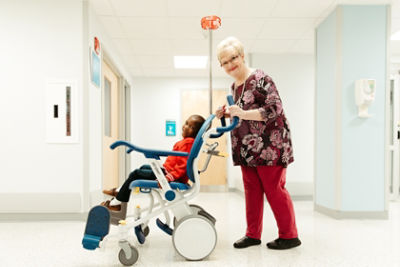
Buy Patient Transfer Chair in Nigeria.
Browse patient transfer chair and request a quotation for your facility in Nigeria. Include the configuration, quantity and delivery location you need.
Products
6 models
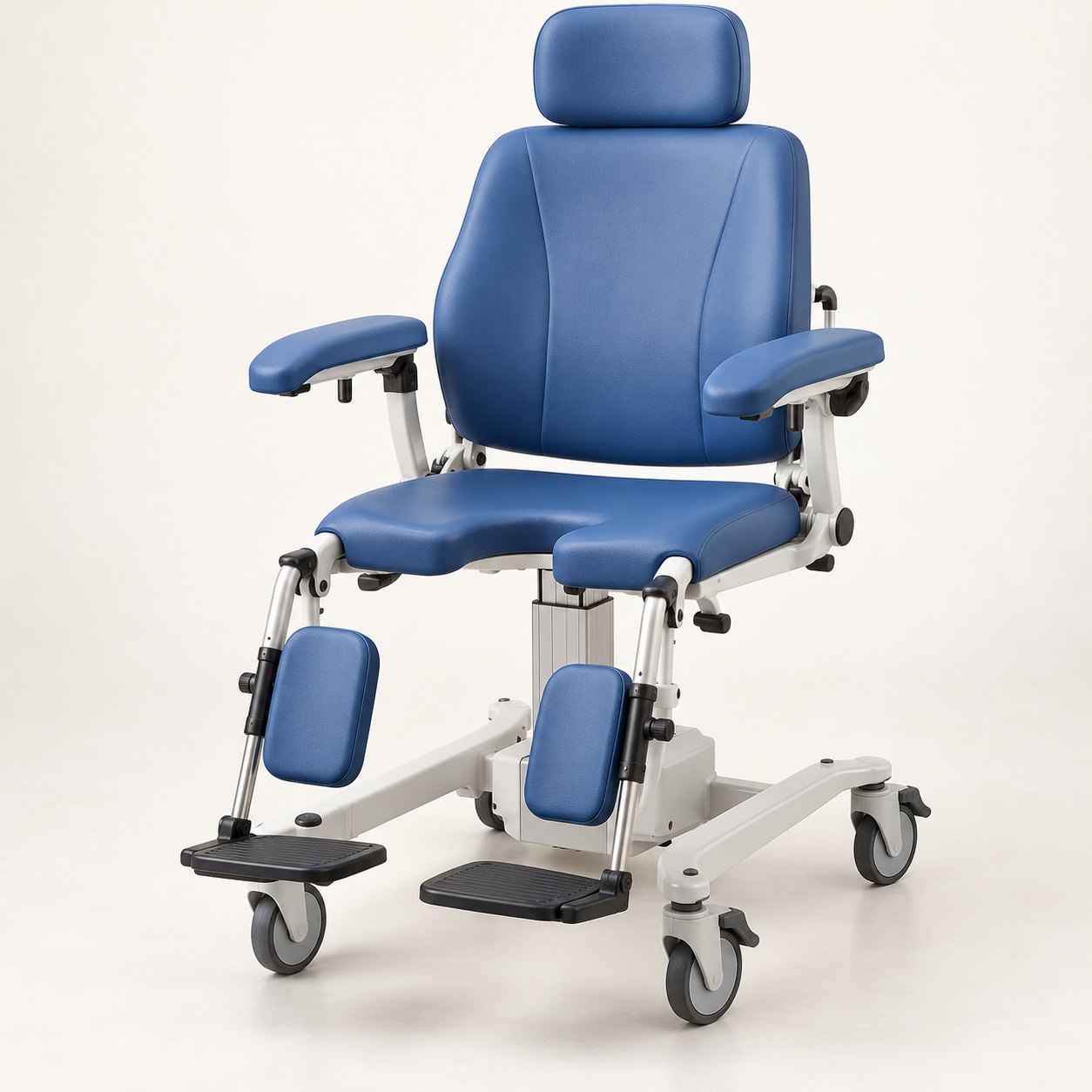
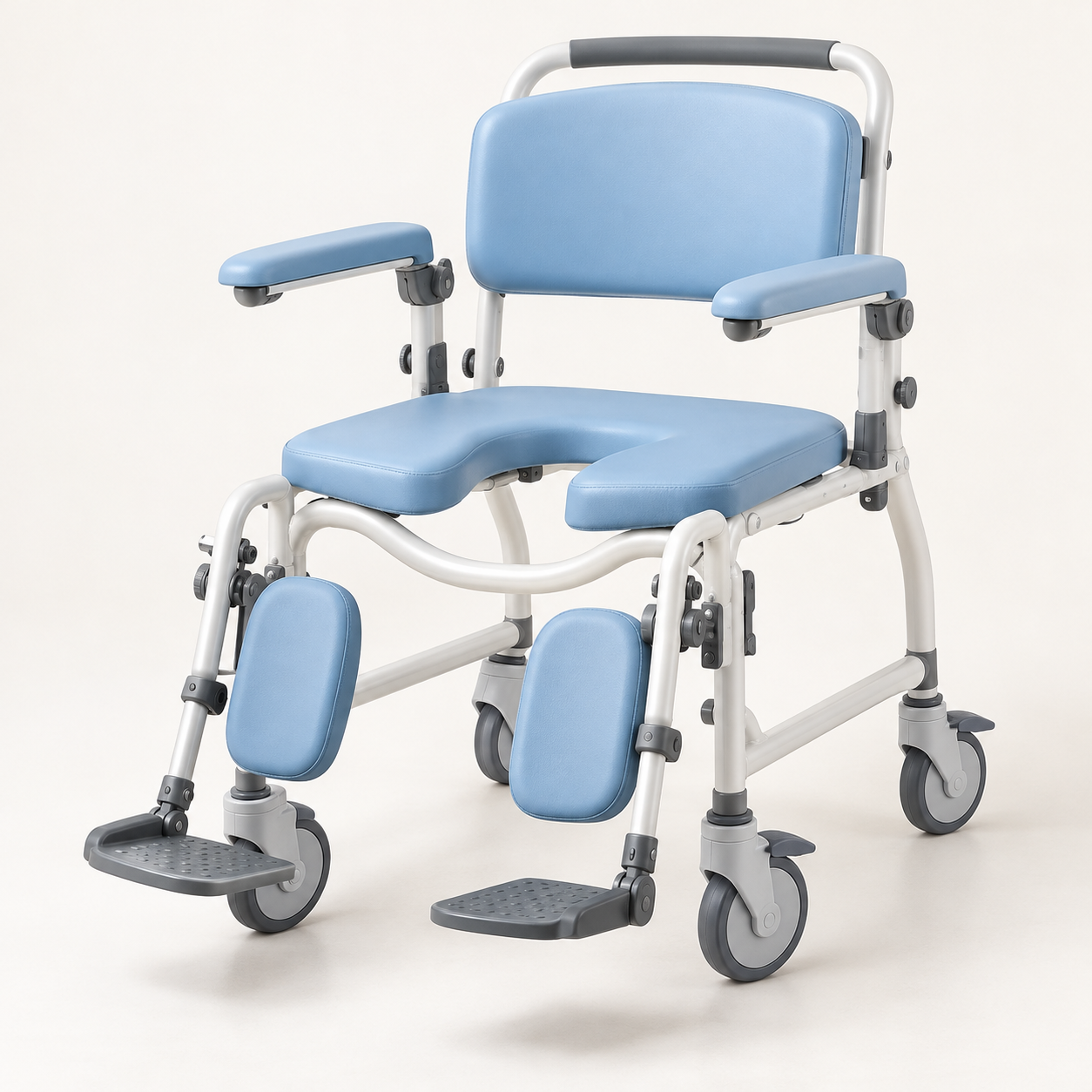
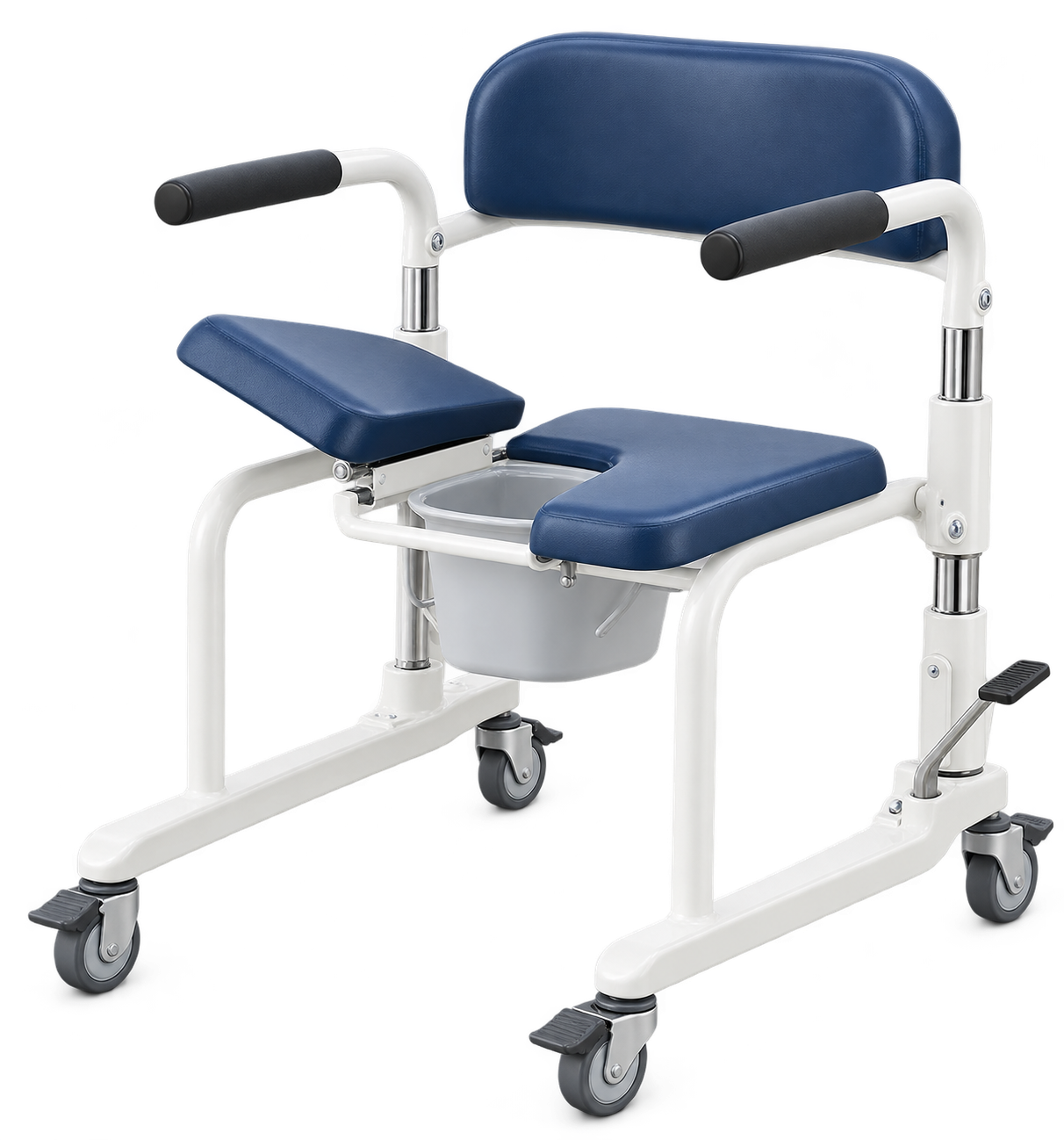
Carino Height-Adjustable Shower and Hygiene Chair
Height-adjustable shower and hygiene chair
Price on request
Where can I buy a patient transfer chair in Nigeria?
Browse Franance’s patient transfer chair listing. Its currently assigned product records are Stryker Prime TC, model 1460, Arjo Carendo, Arjo Carino and Arjo Sara Stedy. These links filter the current catalogue by brand, category and a model identifier. They do not confirm inventory, Nigerian regulatory status, delivery lead time or that a particular configuration is available locally.
Read moreWhich of the four listed models is a transport chair?
Stryker describes the Prime TC as a seated patient transport chair. Its model number is 1460. The manufacturer lists a 226.8 kg (500 lb) safe working load, a 54.6 cm (21.5 in) seat width and a 71.8 cm (28.3 in) overall width. Listed standard features include stand-assist armrests, flip-up footrests, a one-touch central brake, anti-tip wheels and a nesting frame. Confirm the regional product configuration and accessories with the supplier; the specifications are not a promise that every option is included in a Nigerian quote.
Read moreHow is a transport chair different from a wheelchair or stretcher?
A transport chair is generally pushed by a caregiver for short seated moves within a facility. The particular chair’s operating instructions, occupant assessment and staff procedure determine how it may be used. Do not assume it is designed for independent self-propulsion, long-term mobility, outdoor use or continuous sitting. If the patient needs an independently propelled mobility device or a prescribed mobility aid, specify a wheelchair and its use requirements instead.
Read moreBuy Patient Transfer Chairs in Nigeria: Compare Transport, Hygiene and Transfer Aids
To buy a patient transfer chair in Nigeria, first define the job: seated transport through a facility, assisted showering and toileting, or helping a patient move from sitting to standing. These are different equipment roles. Franance’s current category contains four assigned models: Stryker Prime TC, Arjo Carendo, Arjo Carino and Arjo Sara Stedy. Only Prime TC is explicitly a general seated patient transport chair; Carendo and Carino are hygiene chairs, while Sara Stedy is a non-powered sit-to-stand transfer aid. Compare the patient transfer chair category, then ask Franance for a written quote. Requests are quote orders, not online checkout; the team follows up by phone or email. The category label should not be read as proof that these four products are interchangeable. A transport chair moves a seated patient along a route. A hygiene chair supports a defined showering or toileting workflow. A sit-to-stand aid helps an appropriately assessed and trained person rise and transfer while actively participating. None should automatically be substituted for a wheelchair, stretcher or full-body mechanical lift. Confirm the purpose, patient fit, staff workflow and included configuration before comparing prices.
Where can I buy a patient transfer chair in Nigeria?
Browse Franance’s patient transfer chair listing. Its currently assigned product records are Stryker Prime TC, model 1460, Arjo Carendo, Arjo Carino and Arjo Sara Stedy. These links filter the current catalogue by brand, category and a model identifier. They do not confirm inventory, Nigerian regulatory status, delivery lead time or that a particular configuration is available locally.
Franance can help prepare a quotation for the model and scope your facility specifies. Send the model or required function, quantity, delivery state and city, destination facility, accessories, dimensions, power or charging requirements if applicable, and any requested delivery, setup, training or maintenance. Ask the offer to state what is included, what is optional, the exact regional variant, applicable documents, warranty and service arrangements. Confirm price, availability and fulfilment in the written quotation before placing an order.
Which of the four listed models is a transport chair?
Stryker describes the Prime TC as a seated patient transport chair. Its model number is 1460. The manufacturer lists a 226.8 kg (500 lb) safe working load, a 54.6 cm (21.5 in) seat width and a 71.8 cm (28.3 in) overall width. Listed standard features include stand-assist armrests, flip-up footrests, a one-touch central brake, anti-tip wheels and a nesting frame. Confirm the regional product configuration and accessories with the supplier; the specifications are not a promise that every option is included in a Nigerian quote.
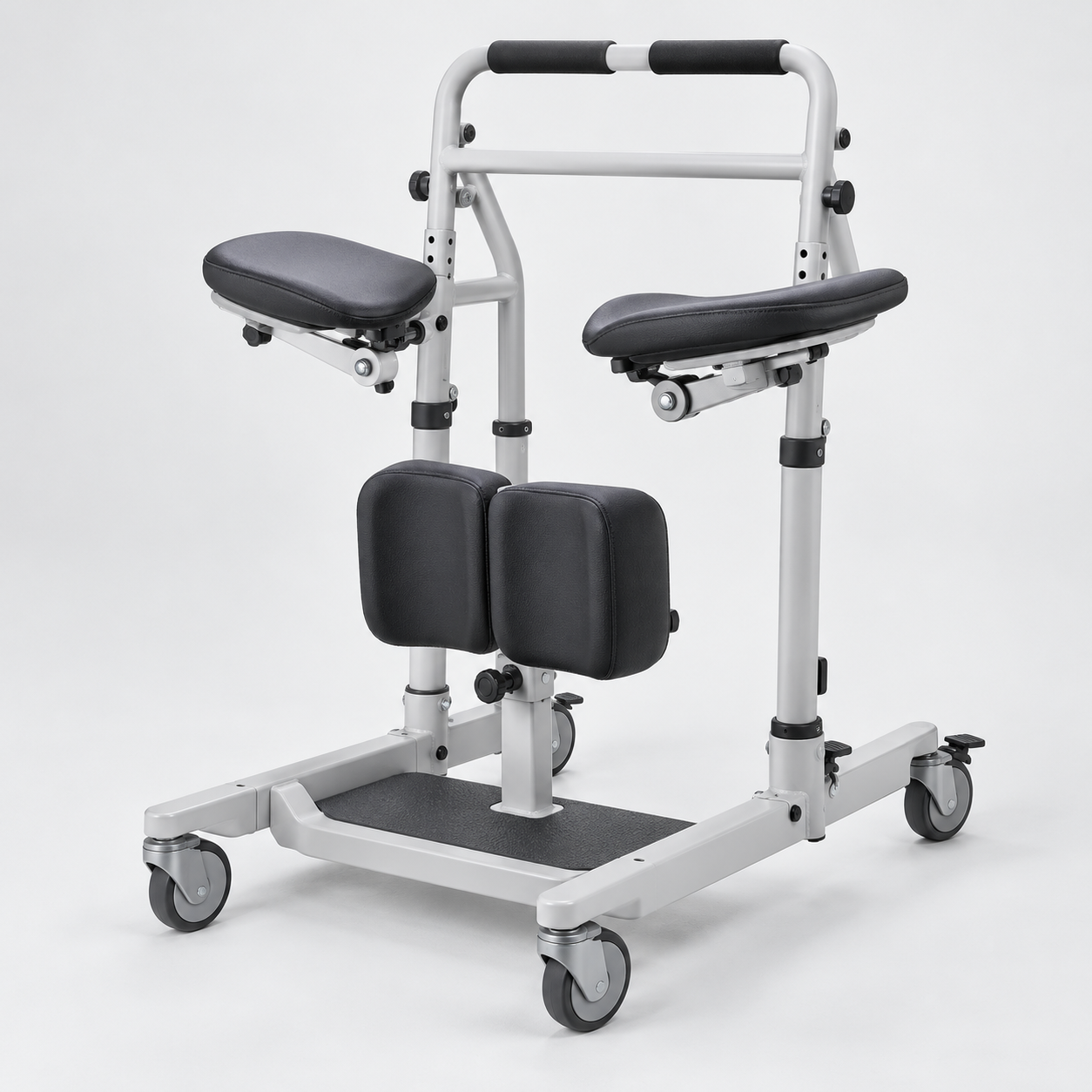
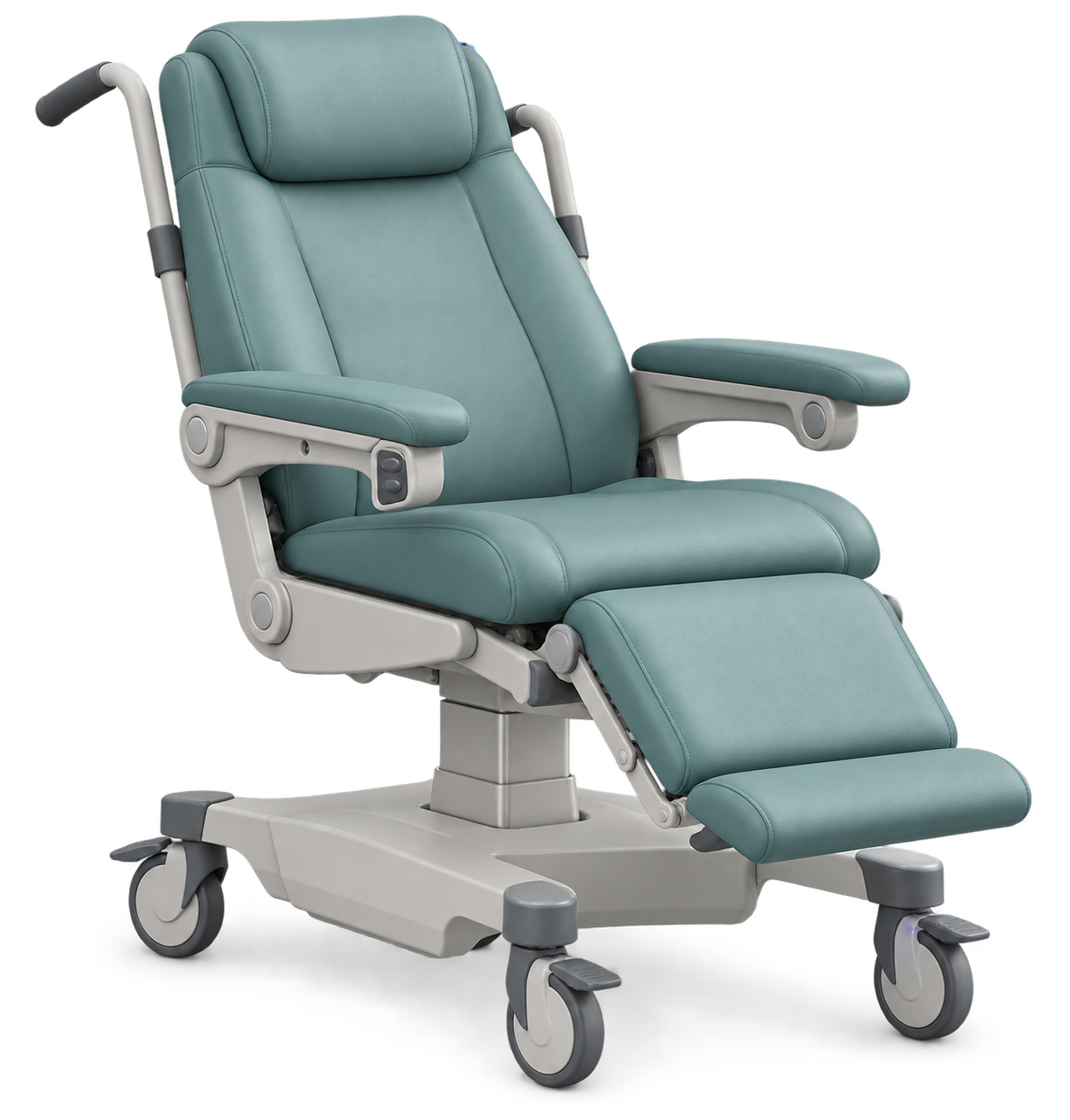
Arjo Carendo is a multipurpose height-adjustable and reclining hygiene chair for tasks such as dressing, toileting and showering. Arjo lists 136 kg safe working load. Carino is a height-adjustable shower and hygiene chair; Arjo lists 140 kg safe working load and describes transport between rooms as part of its hygiene workflow. Those intended roles differ from an everyday hospital transport chair. Sara Stedy is a non-powered sit-to-stand aid with a chassis, knee support, crossbar handle and pivoting seat supports. Its listed safe working load is 182 kg, but that number alone does not establish patient suitability or capability to use it.
The live assignments therefore span several adjacent product classes rather than four equivalent transport chairs. If your requirement is strictly a seated transport chair, treat Prime TC as the direct match among the listed models. If your requirement is bathing or toileting, compare the hygiene chairs. If you need assisted standing transfers, evaluate the Sara Stedy workflow. Ask Franance to confirm the model selection against your clinical and operational brief rather than inferring equivalence from this category page.
How is a transport chair different from a wheelchair or stretcher?
A transport chair is generally pushed by a caregiver for short seated moves within a facility. The particular chair’s operating instructions, occupant assessment and staff procedure determine how it may be used. Do not assume it is designed for independent self-propulsion, long-term mobility, outdoor use or continuous sitting. If the patient needs an independently propelled mobility device or a prescribed mobility aid, specify a wheelchair and its use requirements instead.
A stretcher supports a patient in a lying or reclined position and is selected for a different transport and care workflow. It may need height adjustment, side rails, transfer surfaces, braking and compatibility with beds, lifts or imaging equipment. A seated transport chair cannot replace a stretcher where the patient cannot safely sit or the workflow requires a supine position. A sit-to-stand aid is different again: Sara Stedy supports a transfer task for patients able to participate in the manner described in its current instructions for use. It is not a chair for wheeling a patient through corridors, and it is not a full-body patient lift.
These boundaries matter when teams specify fall precautions, transfer staffing, patient positioning and infection-control steps. Include the movement route and task in the procurement request—bed to chair, chair to toilet, ward-to-department transport, or shower-room use—so the supplier can quote the appropriate equipment class and accessories.
What should I check about brakes, rails and transfer features?
Brakes are safety-critical, but controls vary by model. The Prime TC specifications describe a one-touch central brake and anti-tip wheels. Before accepting a unit, have the receiving team verify brake engagement, release, access from the intended caregiver position, wheel condition and operation on the facility’s actual floors and ramps within the manufacturer’s limits. Confirm how the chair is secured before a patient sits, stands or is transferred, and follow the operating manual rather than relying on a visual feature list.
“Side rails” can mean different things across equipment. A transport chair may have armrests or side supports, a hygiene chair may have patient supports, and a stretcher may use side rails intended for another purpose. Check the exact item, its intended position, locking mechanism, gap dimensions and instructions. Never assume that an armrest or support is a restraint, transfer handle or approved fall-prevention device. Ask whether armrests lift, swing or remove for lateral transfer and whether that feature is standard or optional on the quoted model.
For sit-to-stand aids, confirm the chassis clearance around the source and destination seat, the knee-support adjustment, the handles and any supplied seat supports. The device’s instructions and staff training determine how it is positioned and operated. Do not use a rated load as a substitute for checking the patient’s ability to participate or the device’s fit with the care environment.
How do weight capacity and seat dimensions affect selection?
Compare the safe working load with the patient and all equipment carried on the chair, following the manufacturer’s definition. For Prime TC, Stryker’s operating manual says the 226.8 kg safe working load includes occupant and accessory weight. The 54.6 cm seat width and 71.8 cm overall width are separate measurements: seat fit is not determined by the overall width alone. Check usable seat width, seat depth and height, armrest spacing, footrest position, turning clearance, door widths and storage space against the intended users and route.
For Carendo, Carino and Sara Stedy, do not use the product name or the rated load as a substitute for full fitting information. Ask for the current manufacturer dimensional drawing, patient-fit guidance and maximum load for the exact configuration and market. Confirm how any optional supports, cushions or accessories affect available dimensions or the rated load. A model’s maximum load is a limit, not a target patient size or a clinical suitability decision.
Have clinicians, patient-handling leads and facilities staff review the requirement together. Test access to the bed, chair, toilet or shower area; maneuvering room for the device and assisting staff; thresholds, lift doors and corridor turns; and storage when not in use. Where a patient’s size, posture or transfer needs fall outside published limits, seek a different equipment class and obtain manufacturer or clinical guidance.
What infection-control and cleaning details should I specify?
Ask for the manufacturer’s current cleaning and disinfection instructions for the exact model and its materials. Confirm which hospital-approved products are compatible, required wet-contact times, whether any parts can be removed for cleaning, and how to handle cushions, straps, controls, casters, seams and hard-to-reach areas. Do not infer “easy to disinfect” or wash-down compatibility from appearance alone. Stryker’s Prime TC information describes a seamless molded design and power-washable construction, while noting that a version with the optional padded seat is not power washable; verify the selected configuration and its current instructions.
CDC global environmental-cleaning guidance treats shared transport equipment and other noncritical patient-care equipment as items that should be cleaned and disinfected between patients, with responsibilities clearly assigned. The facility should set a written process for who cleans the chair, when, with which compatible product and how completion is recorded. Include equipment used in isolation or contact-precaution workflows in the facility’s infection-prevention procedure. Follow manufacturer instructions and local infection-prevention policy; this guide does not prescribe a disinfectant or a clinical protocol.
Ask for instructions in a language and format staff can use, including any pictorial steps, and include cleaning training during commissioning if requested. Confirm whether the chair can be cleaned in the facility’s available wash area and whether electrical controls or batteries on hygiene equipment impose additional restrictions. A procurement decision should account for the complete cleaning process, not just the purchase price.
What should a Nigerian facility consider before ordering?
Map the intended workflow and destination first. A high-volume outpatient department moving ambulant patients between waiting, examination and diagnostics may prioritize maneuverability, queue turnover and storage. A shower or toileting room may need a purpose-built hygiene chair with appropriate height adjustment and access. A ward supporting active sit-to-stand transfers may assess a transfer aid and staff training. These are examples of different operational needs, not clinical recommendations for an individual patient.
Measure doorways, corridors, lift cars, turning areas, storage locations and the destination room. Record whether floors are level, ramps exist, and the route includes thresholds or outdoor surfaces; confirm acceptable operating conditions with the manufacturer. For powered or battery-equipped hygiene chairs, specify supply voltage and frequency, plug, charging method, battery and charging location, and whether the exact offered variant is suitable for the Nigerian installation. Do not assume that a product shown on a foreign manufacturer site is approved, stocked or configured for Nigeria.
For an imported medical device, request the documentation and registration details that apply to the exact device, importer and intended Nigerian supply. NAFDAC publishes guidelines for registration of medical devices in Nigeria. A product listing does not establish that a specific unit or shipment is registered or cleared. Ask Franance to state the applicable documentation and supply scope in writing and verify regulatory questions with the relevant authority or qualified compliance personnel.
What should I include in a patient transfer chair quote request?
To help Franance prepare a useful quote, provide the manufacturer and exact model (for example, Prime TC 1460, Carendo, Carino or Sara Stedy), intended task, quantity, delivery facility and Nigerian state and city. Specify seat width and patient-fit requirements, armrests or supports, brake requirements, footrests, IV or oxygen accessories, hygiene accessories, spare parts and any required cleaning documentation. Ask for the exact regional product code and a list of included and optional items.
Add site details such as doorway and lift dimensions, floor surfaces, intended storage, available power and charging arrangements, wash-area access and the receiving department. Request itemised pricing for equipment and accessories, delivery, installation or commissioning, staff orientation, warranty, preventive maintenance, repair response and spare-parts availability, as applicable. Ask which services are actually available for your destination and the expected lead time; do not assume those terms from the brand’s overseas service page.
For Sara Stedy, specifically ask for the standard or Compact variant, patient-fit requirements, correct documentation and training scope. For Carendo or Carino, identify bathing, toileting or room-to-room hygiene needs and ask which supports and accessories are included. For Prime TC, state whether the chair must include an IV pole, oxygen holder, padded seat, lap belt or other option and confirm any cleaning implications. A complete request lets the supplier distinguish the equipment role instead of quoting a superficially similar chair.
What is the price of a patient transfer chair in Nigeria?
The current Franance records do not provide a verified Nigerian price for these models. Price can depend on the exact model and regional variant, accessories, quantity, shipping, documentation, installation, training and service scope. Ask for a current written quote and compare the same bill of materials and fulfilment terms across alternatives. “Price on request” or a manufacturer specification is not a confirmed offer, stock position or delivery commitment.
Which model should my facility request a quote for?
Use the task to narrow the shortlist: request Prime TC if you need a manually pushed seated transport chair; compare Carendo or Carino if the requirement is specifically assisted showering, toileting or hygiene workflow; and evaluate Sara Stedy if the requirement is an active sit-to-stand transfer aid and the patient and staff workflow meet its current instructions. Ask the clinical and patient-handling leads to confirm fit, transfer method and training before procurement. Franance can then quote the specified model, accessories, quantity and Nigerian destination.
Request a patient transfer chair quote from Franance
Send Franance your required equipment role, exact model or patient-fit specification, quantity, accessories, delivery city and state, room and route constraints, and requested training, installation, warranty or service scope. Ask the written quotation to confirm the regional model, included components, price, availability, regulatory documents, delivery and support terms. Request a patient transfer chair quotation and the team will follow up by phone or email.
Common questions
Are all four products listed as patient transfer chairs the same type of equipment?
No. Stryker Prime TC is a seated transport chair; Arjo Carendo and Carino are hygiene chairs; Arjo Sara Stedy is a sit-to-stand transfer aid. Match the model to the task and verify the current instructions and patient-fit requirements.
Can a patient transfer chair replace a wheelchair or stretcher?
Not automatically. A transport chair is generally caregiver-pushed for seated movement; a wheelchair may serve a different mobility role, while a stretcher supports a lying or reclined patient. Confirm the appropriate class with the facility team.
What patient weight can the Stryker Prime TC carry?
Stryker lists a 226.8 kg (500 lb) safe working load for model 1460 and states that the total includes the occupant and accessories. Use the current manual and confirm the exact offered model and configuration.
Are the listed models confirmed available in Nigeria?
The catalogue and manufacturer references do not confirm local stock, registration, price, delivery or service. Ask Franance to confirm the exact model, applicable Nigerian documentation, availability and terms in a written quotation.
What details help Franance quote the right chair?
Provide the equipment role, exact model or required fit, quantity, accessories, delivery facility and destination, route and room dimensions, electrical needs, cleaning documentation and requested training, installation, warranty or service scope.
Request a patient transfer chair quotation from Franance.
Tell us whether you need seated transport, hygiene support or a sit-to-stand transfer aid. Include the exact model, patient-fit requirements, accessories, quantity, facility and destination, route and room dimensions, power or charging needs, cleaning documentation and requested delivery, training or service scope. Ask the written offer to confirm included items, regional configuration, availability, regulatory documentation and fulfilment terms.
Request a patient transfer chair quoteNeed an equipment quote?
Add the models you need to a quote order, or send us your equipment list.