
ERAGONmodular Configured Laparoscopic Instrument Set
Configured modular laparoscopic hand-instrument set
Price on request

Medical equipment and biomedical engineering.
Abuja, Nigeria.
Buy laparoscopy instrument sets in Nigeria through Franance. The category lists Richard Wolf ERAGONmodular and the 3.5 mm ERAGONmodular mini system; both are configured component by component, so request an itemised quotation for your procedures, number of sets and Nigerian destination. Franance follows up by phone or email; there is no online checkout.
2 models
Configured modular laparoscopic hand-instrument set
Configurable 3.5 mm minilaparoscopic hand-instrument system
Request a laparoscopy instrument set quotation from Franance by selecting Richard Wolf ERAGONmodular or ERAGONmodular mini and sending an itemised instrument schedule, the number of sets and your Nigerian delivery address. Franance reviews the quote order and follows up by phone or email; nothing is paid online.
Read moreFranance currently lists two Richard Wolf systems in this category: the ERAGONmodular Configured Laparoscopic Instrument Set and the ERAGONmodular mini 3.5 mm Laparoscopic Instrument System. Both are modular hand-instrument systems whose contents are chosen for the intended procedures, so neither record defines a fixed number or type of pieces.
Read moreThe clearest published difference is diameter: ERAGONmodular mini is Richard Wolf's 3.5 mm minilaparoscopy system with 240 mm or 330 mm working lengths, while the ERAGONmodular configured set is assembled from the wider modular range, where the diameter and working length are chosen for each instrument. Both depend on an itemised schedule for their actual contents.
Read moreBuy a laparoscopy instrument set in Nigeria by defining the procedures, instrument roles, handles, jaw patterns, diameters, working lengths, trays and reprocessing workflow before you request a price. Franance currently lists two Richard Wolf modular hand-instrument systems in this category: the configured ERAGONmodular laparoscopic instrument set and the 3.5 mm ERAGONmodular mini system. Neither record is a fixed-piece kit, so every quotation needs an itemised component schedule. Review the laparoscopy instrument set category, open the ERAGONmodular listing or the ERAGONmodular mini listing, then send a quote order for your facility. Franance follows up by phone or email; the catalogue has no online checkout or payment.
Request a laparoscopy instrument set quotation from Franance by selecting Richard Wolf ERAGONmodular or ERAGONmodular mini and sending an itemised instrument schedule, the number of sets and your Nigerian delivery address. Franance reviews the quote order and follows up by phone or email; nothing is paid online.
Both records appear on the canonical laparoscopy instrument set page and in the Richard Wolf instrument-set listing. Use the exact model links to keep enquiries separate: the ERAGONmodular configured set and the ERAGONmodular mini 3.5 mm system. Each listing card opens a quotation request carrying that product's name, so the enquiry starts from the correct record.
State the facility, theatre or department, the procedures the set must support, the number of complete sets, any spare components, and the delivery state and city. If the surgical team has already chosen manufacturer references, list them. If it has not, describe the approved requirements and ask Franance to propose references for review. A listing on this page does not confirm Nigerian stock, a fixed price, product registration, distributor status, a delivery date, warranty cover or local service; ask for each of those terms in writing for the actual offer.
If your theatre requires a set from another manufacturer, send its exact name and references. That is a request for Franance to review, not a confirmed catalogue item.
Franance currently lists two Richard Wolf systems in this category: the ERAGONmodular Configured Laparoscopic Instrument Set and the ERAGONmodular mini 3.5 mm Laparoscopic Instrument System. Both are modular hand-instrument systems whose contents are chosen for the intended procedures, so neither record defines a fixed number or type of pieces.
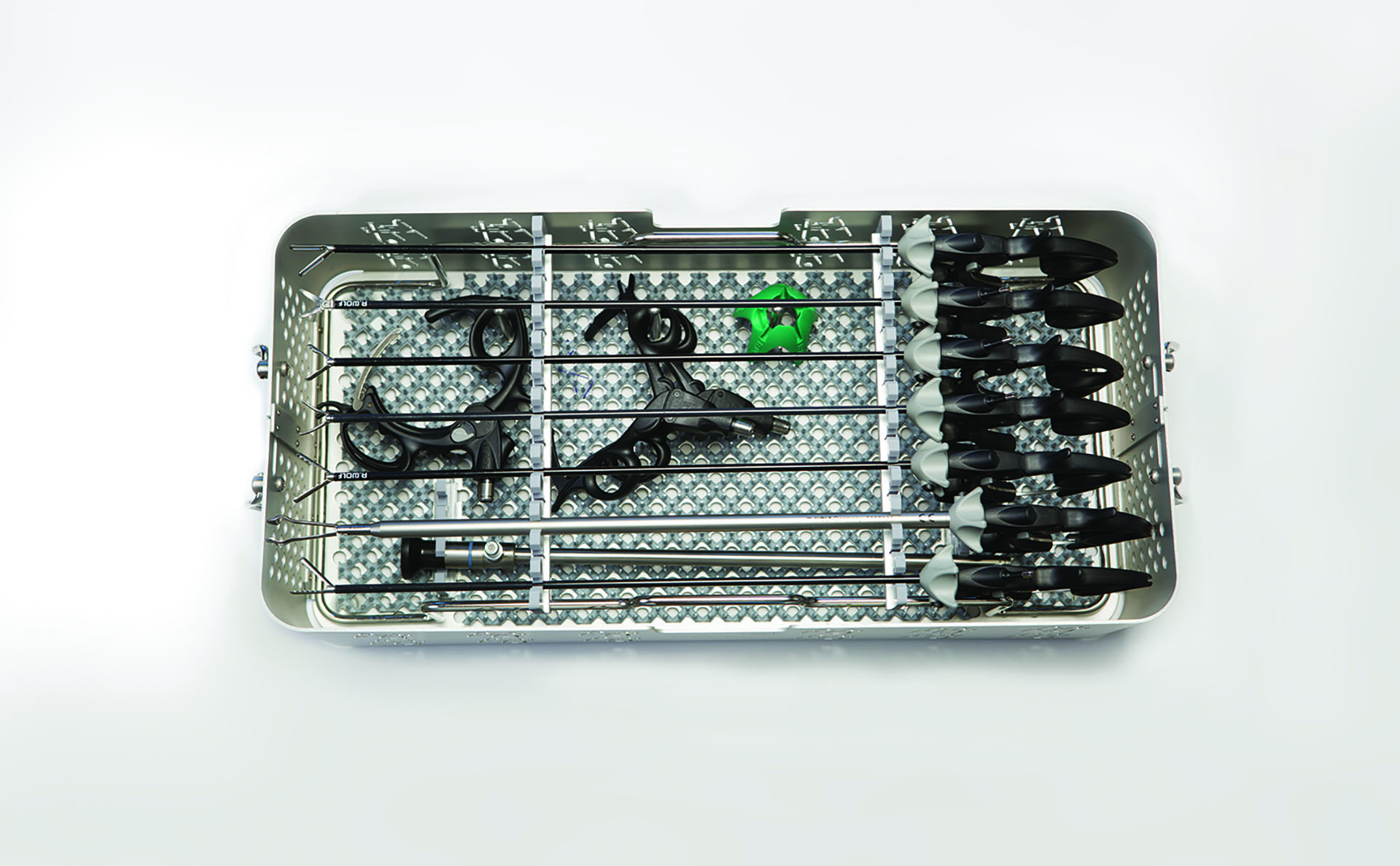
Richard Wolf describes ERAGONmodular as a laparoscopic hand-instrument system and explicitly refers to configuring an individual laparoscopic instrument set or tray. Its product page describes a modular three-piece design with click-it locking for assembly and disassembly, Halar-coated instrument sheaths, and a selection of jaw patterns and handle configurations, with interchangeable handles, sheaths and inserts across several diameters and working lengths. The image on the Franance record is the manufacturer's photograph of a configured ERAGONmodular toolbox; it illustrates a tray, not the contents of your offer.
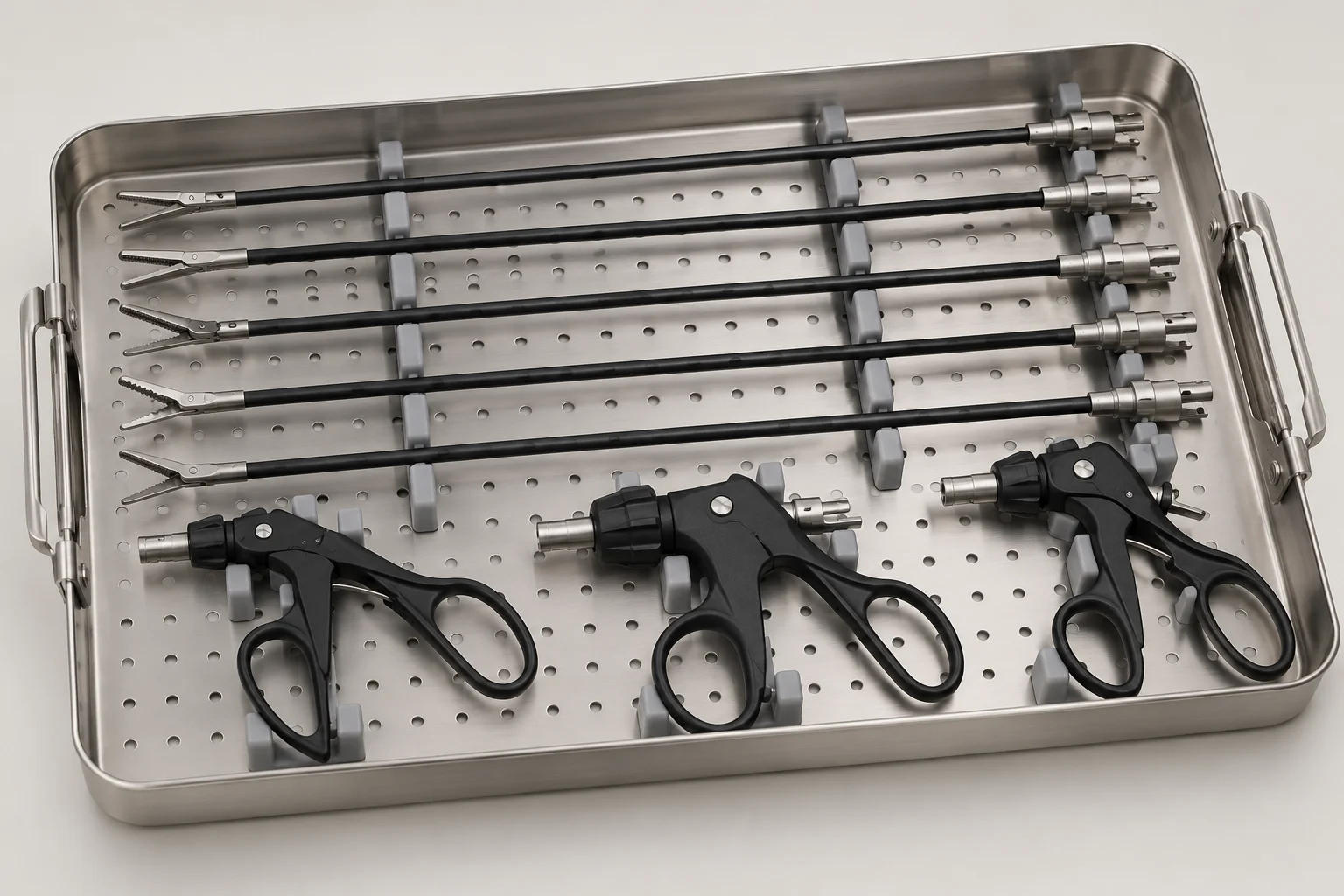
Richard Wolf identifies ERAGONmodular mini as a 3.5 mm modular instrument system for minilaparoscopy, with working lengths of 240 mm and 330 mm. The manufacturer states that the mini instruments are compatible with ERAGONmodular and ERAGONaxial handles, offers a selection of jaw patterns, and describes modular assembly that supports disassembly for reprocessing. The image on this Franance record is a generic, unbranded generated rendering, not a manufacturer photograph, so it does not show actual parts or package contents.
These two records reflect Franance's current catalogue. They are not the full Richard Wolf portfolio or every instrument set available in Nigeria. Read the Richard Wolf ERAGONmodular page and the ERAGONmodular mini page for the manufacturer's own descriptions.
The clearest published difference is diameter: ERAGONmodular mini is Richard Wolf's 3.5 mm minilaparoscopy system with 240 mm or 330 mm working lengths, while the ERAGONmodular configured set is assembled from the wider modular range, where the diameter and working length are chosen for each instrument. Both depend on an itemised schedule for their actual contents.
Handle compatibility is the main link between them. Richard Wolf describes the mini instruments as compatible with ERAGONmodular and ERAGONaxial handles, which matters to a theatre that already uses, or plans to buy, those handles. It does not mean that every insert, sheath, tray or accessory in one family fits every part of the other. Ask for each proposed combination to be confirmed against current manufacturer documentation and listed by reference.
Do not transfer published figures from one record to the other. The 3.5 mm diameter and the 240 mm and 330 mm lengths describe the mini system, not the configured ERAGONmodular set, whose diameters and lengths must be stated line by line. If a department wants a standard set and a group of mini instruments, request them as separate quotation lines and say whether shared handles are intended. The ERAGONmodular mini brochure and the ERAGONmodular Toolbox brochure give model-specific background.
| Model record | Published points and what to confirm |
|---|---|
| ERAGONmodular configured set | Three-piece click-it design, Halar-coated sheaths, selectable handles and jaw patterns; confirm every diameter, working length and reference by line |
| ERAGONmodular mini | 3.5 mm minilaparoscopy system, 240 mm or 330 mm working length, compatible with ERAGONmodular and ERAGONaxial handles; confirm each handle and insert reference |
| Both records | No fixed piece count; tray, quantities and documentation confirmed in the itemised quotation |
Start from the procedures the surgical team plans to perform, list each instrument role those procedures require, then specify the handle, jaw pattern, diameter, working length and quantity for every line. A schedule written this way lets Franance seek an itemised configuration instead of quoting an undefined set.
Describe each required function in the surgical team's own terms and ask Franance to identify the manufacturer reference proposed for it. Separate essential items from preferences, such as an alternative jaw pattern requested by one surgeon. Mark which lines belong in every set and which are spares or occasional-use instruments that can be stored separately. Clinical choices about instruments remain with the responsible surgical team; this guide does not recommend a configuration for any procedure.
Decide how many complete sets are needed. That number depends on the facility's theatre schedule and on how long its sterile-processing cycle takes to return a set, so involve the theatre manager and the sterile services lead. Ordering one set for a list that needs two in rotation creates a supply gap that a technical specification will not reveal.
If the theatre already holds Richard Wolf instruments, record the references of existing handles, sheaths and trays so that new parts can be checked against them. Ask Franance to confirm references against current manufacturer documentation, such as the Richard Wolf general surgery catalogue, rather than relying on a description or photograph.
In a modular system the handle, sheath and working insert are separate parts, so each must be named, quantified and checked for compatibility. Richard Wolf describes ERAGONmodular as a three-piece design with click-it locking, which means a quotation should give the reference for every piece rather than one description of the assembled instrument.
Handles. Richard Wolf offers a selection of handle configurations. Ask the surgical team which configuration each line needs and whether one handle type should be standardised across the set. For ERAGONmodular mini, confirm the manufacturer's stated compatibility with ERAGONmodular and ERAGONaxial handles for the exact handle references proposed.
Sheaths. The manufacturer describes Halar-coated sheaths for ERAGONmodular. Confirm the selected sheath reference, its diameter and working length, and any intended energy connection against the current instructions for that part. A coating description on a product page is not a substitute for the component documentation.
Inserts and jaw patterns. The working insert carries the jaw pattern. List the required pattern for each line and ask the quotation to name the insert reference. Ask whether individual handles, sheaths and inserts can also be quoted as separate spare parts, and record those references so that later replacements can be matched to the original set.
Treat the imaging tower, telescope, camera, light source, insufflator, trocars and any high-frequency electrosurgical generator as separate requirements unless a quotation names them. The ERAGONmodular records describe hand-instrument systems, so every other item of theatre equipment needs its own line.
Franance lists the Richard Wolf INSUFFLATOR Highflow 45 BASIC and EVAC in the Richard Wolf insufflator listing and a PANOVIEW ULTRA 5.5 mm, 30°, 300 mm laparoscopic telescope in the Richard Wolf telescope listing. These are separate catalogue records. Adding them to an instrument-set enquiry is a choice to quote, not something supplied with the set.
If any instrument will be connected to an electrosurgical unit, state the generator model in use or planned, and ask for the required cable and connection to be identified and checked against the current instructions for both the selected instrument and the generator. Do not assume that an instrument is suitable for monopolar or bipolar use unless its documentation says so. The electrosurgical unit category covers generators as a separate purchase.
Facilities equipping a complete laparoscopy theatre can use the endoscopy tower category to plan the imaging chain on its own terms. Keep one equipment schedule with each item on a separate line so that nothing is assumed to be bundled.
Ask the sterile-processing team to review the manufacturer's current instructions for disassembly, cleaning, inspection, reassembly, packaging and sterilisation for every quoted component, and include a compatible tray in the schedule. Richard Wolf's ERAGONmodular materials address assembly, disassembly and reprocessing, but the instructions supplied for the exact references purchased govern how those parts are processed.
Richard Wolf publishes an ERAGONmodular sterile-processing perspective for the instrument series. Use it as background when the sterile services lead reviews the proposed set, and request the current instructions for use for each component with the quotation. Do not assume that one cleaning or sterilisation method applies to every handle, sheath and insert, or that a method validated for other instruments in the facility also applies to these.
Specify the tray as its own line: which instruments it must hold, how many trays are needed, and any labelling, wrapping or container requirements of your sterile-processing workflow. Richard Wolf describes configuring an individual set or tray, so ask for the tray reference and confirm that its layout matches the itemised instrument list. The instrument tray system category covers trays purchased separately.
If the new sets will add load to the facility's processing equipment, review capacity with the sterile services team. Washer-disinfectors and ultrasonic cleaners are separate purchases; see the washer-disinfector category and the CSSD ultrasonic cleaner category. Ask the quotation to state whether any reprocessing training or documentation is included; Franance confirms what it can provide for the specific request.
A useful quotation names the exact manufacturer reference, description and quantity for every handle, sheath, insert and tray, and lists what is excluded. It should also state price, currency, validity, availability, delivery, documentation and warranty terms in writing, so the offer can be checked against your schedule.
When comparing offers, check that each one prices the same schedule. A lower total may reflect fewer components, a different diameter or working length, or a missing tray, rather than a better price for the same set. Ask for a line-by-line response to your schedule and for any substitution to be clearly marked with its reason.
Before approving the order, have the surgical team, sterile services and procurement each review the lines they are responsible for. Keep the accepted schedule, because it becomes the reference for receiving checks, future spare-part orders and any support discussion.
| Quotation line | What to confirm in writing |
|---|---|
| Handles | Manufacturer reference, configuration and quantity for each set |
| Sheaths | Reference, diameter, working length and any intended energy connection |
| Inserts and jaw patterns | Reference and jaw pattern for each schedule line |
| Tray | Tray reference and confirmation that its layout fits the itemised set |
| Spares | Separate references and quantities for spare handles, sheaths or inserts |
| Documentation | Current instructions for use, including reprocessing, for every component |
| Commercial terms | Price, currency, validity, availability, delivery, warranty and exclusions |
Price depends on the number and type of components, the system chosen, the diameters and working lengths, the trays, the number of complete sets, documentation, the delivery destination and any requested service. Franance does not publish a fixed price for either listed system, so request a written quotation for your exact itemised schedule.
Modular sets vary more than single devices. Two quotations both described as an ERAGONmodular laparoscopic set can contain different handles, inserts and jaw patterns, so the description alone is no basis for comparing prices. The same applies to ERAGONmodular mini: the choice between 240 mm and 330 mm working lengths, or the number of handles shared across instruments, changes what is being priced.
Ask for prices to be itemised, with spares, trays, delivery and any training or documentation shown separately. Confirm the currency, the period for which the price is valid and the payment terms in the written quotation. The Franance website is for quotation requests; it does not take online payment.
Give the complete facility address, state and city with your request, and Franance will confirm delivery terms, timing and any charges for that destination in the quotation. No delivery date, lead time or local stock is assumed for either listed system.
Name the person who will receive the consignment and any access or delivery-hour restrictions at the facility. Instrument sets contain many small parts, so ask for the packing list to match the itemised schedule, and plan a receiving check in which theatre or sterile-services staff count and identify each component against the accepted quotation.
Before first clinical use, follow the processing steps required by the manufacturer's instructions for the delivered components and by the facility's own validated procedures. Report any missing, damaged or substituted item to Franance promptly, quoting the schedule line and reference concerned.
Open the exact model listing, select its quotation link, and attach your itemised instrument schedule, quantities and Nigerian delivery details. Franance follows up by phone or email to clarify the request and confirms the offer in writing; you do not pay online.
Use the ERAGONmodular quotation request or the ERAGONmodular mini quotation request so that the enquiry names the correct product. Include the procedures, the schedule with one line per handle, sheath, insert and tray, the number of sets, any existing Richard Wolf references, energy-connection requirements, reprocessing and documentation needs, and your decision deadline.
Attach tender documents or approved specifications if your institution uses them. Franance reviews the request and confirms which items, services and terms it can offer. Approve the order only when the written quotation matches your schedule and commercial requirements.
This guide was reviewed on 20 October 2026. Its technical statements come from Richard Wolf's own ERAGONmodular and ERAGONmodular mini product pages and brochures, as recorded in Franance's product research, and it covers only the two systems currently assigned to this category.
Manufacturer sources: the ERAGONmodular product page, the ERAGONmodular and mini product page (UK), the ERAGONmodular Toolbox brochure, the ERAGONmodular mini brochure and the ERAGONmodular sterile-processing perspective. Manufacturer pages and regional brochures describe the product family; they do not establish Nigerian availability, registration, Franance's distributor status or the contents of a particular offer.
No price, stock, lead time, warranty, certification, regulatory status, local service arrangement or clinical outcome is stated in this guide. Instrument selection, use and reprocessing follow the responsible clinical team, the current manufacturer instructions and the facility's validated procedures. This is purchasing guidance, not clinical or sterile-processing instruction.
The category currently lists Richard Wolf ERAGONmodular, a configured laparoscopic instrument set, and ERAGONmodular mini, a 3.5 mm minilaparoscopy system. Request a written quotation that itemises every handle, sheath, insert and tray.
No. Richard Wolf describes configuring an individual set or tray, so the contents depend on the schedule you specify. Ask for each component to be listed by manufacturer reference and quantity.
Not unless the quotation names them. Request each as a separate line, and confirm any energy connection against the current instructions for the exact instrument and generator.
No. Franance accepts quotation requests and follows up by phone or email. The written quotation confirms price, availability and terms before an order is approved.
No stock, lead time or delivery date is confirmed on the catalogue. Ask Franance to confirm availability, delivery terms and required documentation for the exact offer.
Send the ERAGONmodular or ERAGONmodular mini system, your itemised schedule of handles, sheaths, inserts and trays, the number of sets, reprocessing requirements and the complete Nigerian delivery address. The written quotation confirms each reference, price, availability, delivery and warranty terms.
Request an instrument set quoteAdd the models you need to a quote order, or send us your equipment list.