

Buy C-Arm Fluoroscopy System in Nigeria.
Compare four assigned mobile C-arm systems in Nigeria: Siemens Cios Select image-intensifier configuration, Angell HUA II dynamic flat-panel, GE HealthCare OEC 3D and Philips Zenition 70 flat-detector. Review the exact configuration, workflow, room requirements, integration and service scope, then request a written quote from Franance.
Products
4 models
Angell HUA II Series Mobile Dynamic Flat-Panel C-Arm
Mobile dynamic flat-panel C-arm fluoroscopy system
Price on request
Philips Zenition 70 Mobile C-Arm with Flat Detector
Mobile C-arm fluoroscopy system with flat detector
Price on request
What is a mobile C-arm fluoroscopy system?
A mobile C-arm is an X-ray imaging system built around a C-shaped support that positions an X-ray source and detector on opposite sides of a patient or object. It is designed to move around a procedure table and provide imaging during a procedure. The “mobile” form factor separates it from fixed-room fluoroscopy or radiography systems, which are installed as dedicated room equipment and have different space, workflow and project requirements.
Read moreWhich C-arm fluoroscopy systems can I request a quote for in Nigeria?
Franance currently assigns four model records to this category. Use each brand-and-category filtered listing to inspect the exact assigned record:
Read moreHow do the four listed models differ?
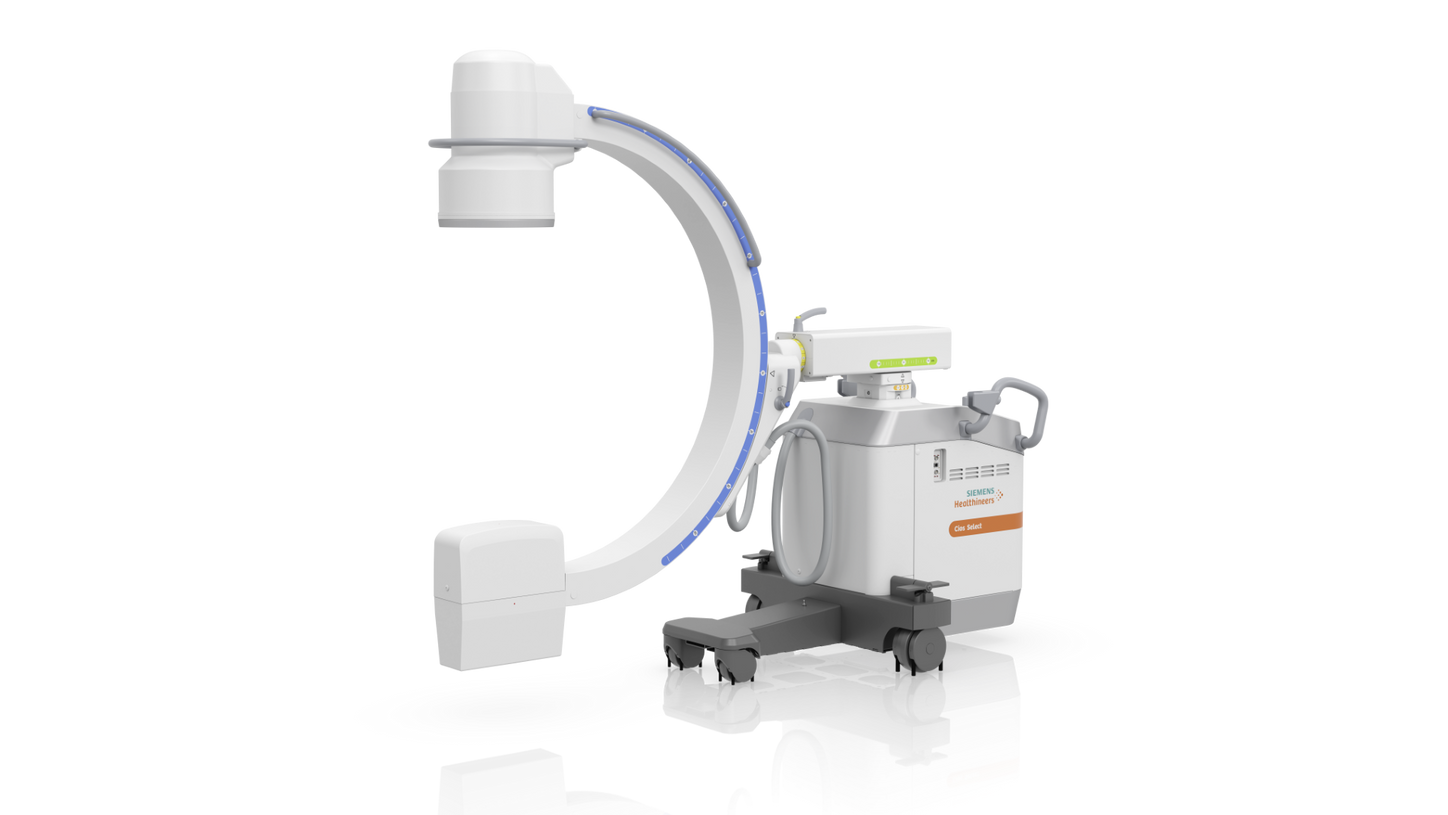
The Siemens listing is specifically the Cios Select image-intensifier version. Siemens’ product material describes Cios Select as a mobile 2D intraoperative C-arm and publishes specifications for its image-intensifier configuration. Siemens also describes a separate flat-detector Cios Select version; do not assume that features, performance or accessories listed for that version are included in this category’s image-intensifier record. Ask Franance to identify the detector type and exact configuration on the quotation.
Read moreBuy C-Arm Fluoroscopy Systems in Nigeria
Franance lists four mobile C-arm fluoroscopy systems in this category: a Siemens Healthineers Cios Select image-intensifier configuration, Angell Technology HUA II Series dynamic flat-panel C-arm, GE HealthCare OEC 3D mobile C-arm, and Philips Zenition 70 flat-detector C-arm. Their detector types, 2D/3D imaging capabilities, configurations and included options differ. Compare the exact model and offered configuration against your approved procedural workflow, room plan, image-transfer needs and service requirements, then send Franance a quote-order enquiry. These are catalogue listings, not a statement of Nigerian stock, country authorization, regulatory status, delivery timing or local service coverage. Franance does not take online payment for equipment orders: after receiving an enquiry, the team follows up by phone or email and confirms the offer in writing. This guide is procurement information, not clinical advice, a site design or a radiation-safety procedure. Have qualified clinical, biomedical engineering, medical-physics and facilities personnel review the proposed system and installation.
What is a mobile C-arm fluoroscopy system?
A mobile C-arm is an X-ray imaging system built around a C-shaped support that positions an X-ray source and detector on opposite sides of a patient or object. It is designed to move around a procedure table and provide imaging during a procedure. The “mobile” form factor separates it from fixed-room fluoroscopy or radiography systems, which are installed as dedicated room equipment and have different space, workflow and project requirements.
The product name alone does not tell you the detector, image modes, field of view, geometry, software, data interfaces, accessories or country-specific configuration. A mobile C-arm may use an image intensifier or a flat-panel detector. Some systems provide 2D imaging; the GE HealthCare OEC 3D listing is a mobile system with 2D and 3D imaging capabilities. These are meaningful differences to evaluate against a written technical requirement rather than infer from a broad search term.
Which C-arm fluoroscopy systems can I request a quote for in Nigeria?
Franance currently assigns four model records to this category. Use each brand-and-category filtered listing to inspect the exact assigned record:
- Siemens Healthineers Cios Select image-intensifier version)
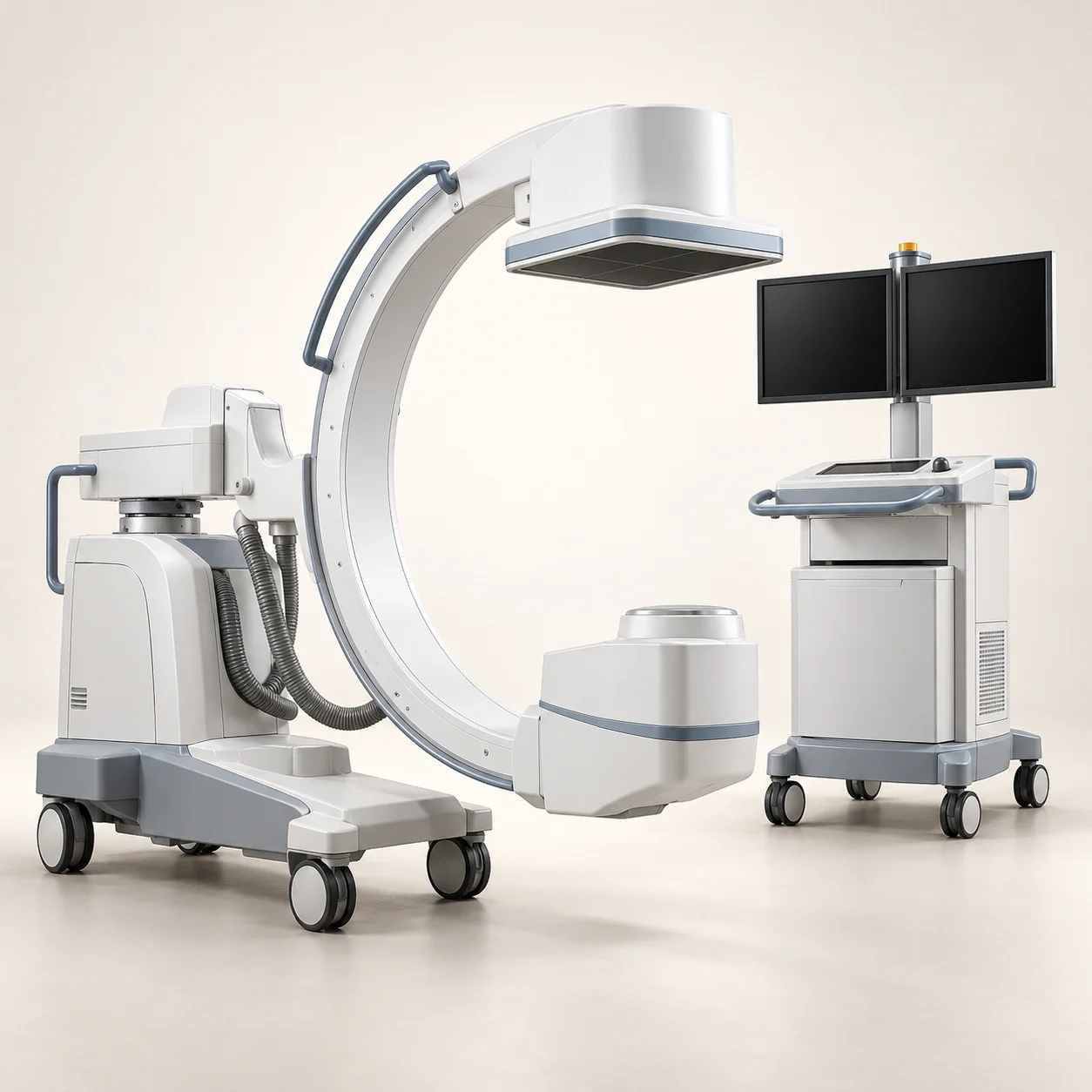
- Angell Technology HUA II Series mobile dynamic flat-panel C-arm
- GE HealthCare OEC 3D mobile C-arm imaging system
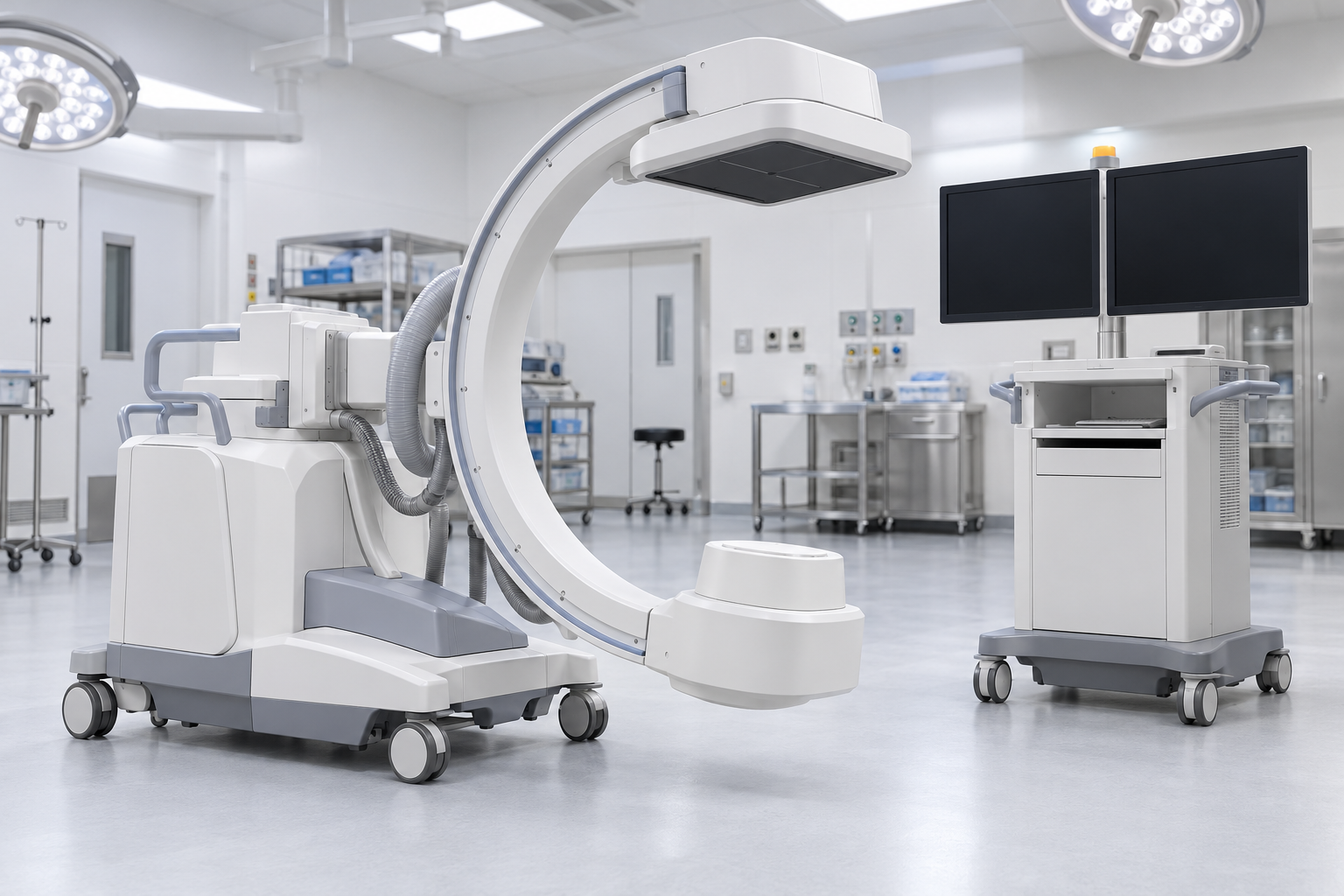
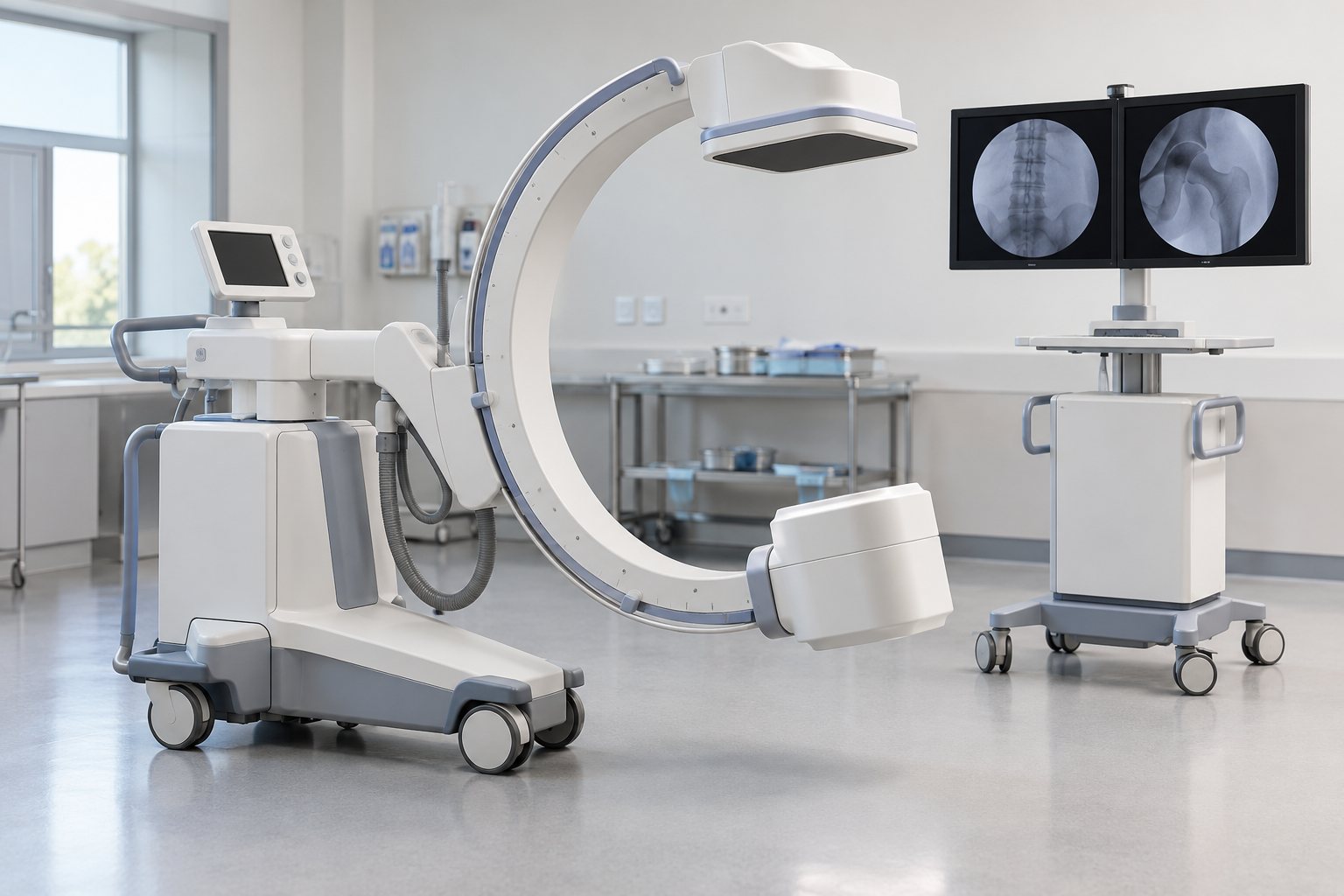
- Philips Zenition 70 mobile C-arm with flat detector
The filters narrow the listing by both brand and the exact category, then by model text. They do not imply that the manufacturer has confirmed a current offer for Nigeria. Franance should confirm the requested model, configuration, availability, commercial terms and delivery destination in its response.
How do the four listed models differ?
The Siemens listing is specifically the Cios Select image-intensifier version. Siemens’ product material describes Cios Select as a mobile 2D intraoperative C-arm and publishes specifications for its image-intensifier configuration. Siemens also describes a separate flat-detector Cios Select version; do not assume that features, performance or accessories listed for that version are included in this category’s image-intensifier record. Ask Franance to identify the detector type and exact configuration on the quotation.
Angell describes HUA II as a mobile dynamic flat-panel C-arm. Its official material describes an all-in-one and split configuration, with system layout choices that may matter to room movement and display sightlines. Confirm which configuration, detector size, workstation, software, data interfaces and accessories are actually offered; a family-level product page does not identify every included option.
GE HealthCare describes OEC 3D as a mobile C-arm with 2D and 3D imaging. Its product information describes a 19 × 19 × 19 cm volume and a volume viewer with multiple perspectives. These are manufacturer-published attributes of the named system, not a guarantee of suitability for a particular procedure or that options shown are included. Ask for the exact hardware and software package and its interoperability details.
Philips describes Zenition 70 as a mobile C-arm with a flat detector and lists detector-size options. The manufacturer notes that Zenition systems are sold in a limited number of countries and advises checking local availability. Treat country availability, detector configuration, optional features and support as quote-stage questions rather than assumptions.
For direct manufacturer references, review the Siemens Cios Select documentation, Angell HUA II Series product information, GE HealthCare OEC 3D information, and Philips Zenition 70 product page.
Should I choose an image intensifier, flat panel, or 3D C-arm?
Start with the imaging requirement and approved workflow, not a general claim that one detector type is always better. Compare the exact field of view, image quality documentation, acquisition modes, geometry, maneuverability, display arrangement, image storage, connectivity and service terms for the configuration being quoted. Determine whether the team needs only 2D mobile fluoroscopy or has a documented requirement for 3D volume acquisition. The OEC 3D is the only one of these four records identified as a 2D/3D system; the other records in this category are described as image-intensifier or flat-panel mobile C-arms. For the broader taxonomy, browse fluoroscopy and C-arm systems.
Detector choice can affect image presentation and workflow, but a detector label by itself does not establish which system will satisfy a facility’s requirements. Compare the manufacturer’s current technical documents for the exact model, software release and options. If you are comparing a mobile C-arm with a room-based system, use the separate fixed fluoroscopy system category. For dedicated detector-class browsing, review the flat-panel detector fluoroscopy category and image-intensifier fluoroscopy category.
What should a Nigerian hospital compare before requesting a quote?
Prepare a short requirements schedule for procurement and biomedical review. Include the expected procedural workload and room context at a high level, preferred detector technology if already specified, need for 2D or 3D, detector dimensions or field-of-view criteria, desired monitor arrangement, image storage and export requirements, and any named PACS, DICOM, navigation or other integration requirements. State which features are mandatory and which can be offered as options.
For the physical site, have facility engineering and the relevant qualified teams assess the movement path, doorways, lift capacity, turning space, storage and parking, table and accessory compatibility, power supply, network access and installation constraints. Give Franance the facility name, city and state so the quotation can address the actual destination. Do not use a generic internet specification as a room plan or electrical design.
Ask the supplier to itemize the system configuration and included components: C-arm, detector, monitor cart or split workstation, displays, footswitch or hand controls, software licenses, image storage, connectivity, cables, accessories, manuals, training, installation, acceptance checks, warranty and service options. Require exceptions and optional items to be identified clearly. This lets the hospital compare equivalent offers rather than compare model names alone.
How do radiation safety and commissioning affect procurement?
C-arm systems use ionizing radiation. A purchase decision therefore needs a facility review that addresses applicable local requirements, operator responsibilities, training, quality assurance, radiation-protection arrangements and the proposed room and workflow. These matters depend on the actual facility, equipment, use and jurisdiction. This guide does not give shielding dimensions, exposure settings, operating instructions or site-specific safety advice.
The IAEA’s Safety Guide SSG-46 says that acceptance checks should verify equipment specifications and features. It also says commissioning should be completed after acceptance and before clinical use, by or under the supervision of a medical physicist; for fluoroscopy, the medical physicist should be directly involved in measurements, calculations and interpretation to characterize performance. Ask the hospital’s qualified team to plan acceptance and commissioning in its project scope, and request documentation needed for that work. The supplier quote should state what installation and acceptance support is included and what remains the facility’s responsibility. For procurement specification planning, see the WHO guide to technical specifications for medical devices.
Radiation safety and commissioning are not substitutes for verifying local licensing, registration or import requirements. Ask Franance for the documentation associated with the exact offered system and have the hospital verify applicable Nigerian requirements with the appropriate authorities and qualified advisers before commitment. The IAEA SSG-46 recommendations for diagnostic radiology and image-guided procedures are a useful reference for planning these professional reviews.
What should be included in a C-arm quotation request?
Name the product and manufacturer model, the detector type, required configuration, quantity, destination facility, city and state. Attach or summarize the hospital’s approved technical schedule, expected power and integration requirements, room and movement constraints already reviewed by the facility team, and the required installation, training, acceptance and service scope. If you are open to more than one model, state which criteria are mandatory so alternatives can be compared transparently.
Ask the quotation to confirm current availability, exact part numbers and options, price and currency, taxes or other applicable charges, delivery estimate, warranty, installation and commissioning responsibilities, training, local technical support, spare-parts pathway, payment terms and offer validity. Request current manufacturer datasheets and manuals for the exact configuration. Ask explicitly whether image storage, DICOM services, monitor cart, footswitch, accessories and software licenses are included or priced separately.
Submit the details through Franance’s C-arm fluoroscopy quote-order enquiry. Franance follows up by phone or email after receiving the request; the online catalogue is not a checkout or confirmation of stock. Review the written response with the hospital’s procurement, clinical, biomedical, medical-physics and facilities stakeholders before placing an order.
Can Franance quote delivery to any state or city in Nigeria?
Send the actual destination in your request, including facility, city and state, so Franance can confirm delivery and any installation or service scope for that location. A general statement that a company serves Nigeria would not establish that a particular heavy imaging system can be delivered, installed or supported at every site. Confirm access, transport, installation, training and after-sales arrangements for the quoted configuration and destination in writing.
The category and product guides are written for nationwide Nigerian procurement intent; they are not separate claims of stock or service in every state. Franance can confirm the practical details against each enquiry. You can start with the C-arm fluoroscopy category listing and provide your destination in the quote request.
Can I buy a C-arm online from Franance?
No online payment or instant purchase is offered for these equipment listings. Select the model, submit a quote order with the configuration and destination details, and Franance will follow up by phone or email. Before accepting an offer, confirm the exact system, options, availability, price, delivery, warranty and service scope in the written quotation.
Request a C-arm fluoroscopy system quotation
Share your preferred model or approved specification, detector and imaging requirements, quantity, destination, integration needs and project scope. Franance can follow up on the request and confirm the available configuration and commercial terms in writing. Begin with the C-arm fluoroscopy quote-order form.
Common questions
Which mobile C-arm models are listed in this category?
The current seed assigns Siemens Healthineers Cios Select in its image-intensifier configuration, Angell HUA II Series, GE HealthCare OEC 3D and Philips Zenition 70. Confirm the exact offered configuration and current availability in Franance's written quotation.
Which listed model includes 3D imaging?
GE HealthCare describes OEC 3D as a mobile C-arm with 2D and 3D imaging. Confirm the exact software, accessories and options in the quotation; the product family description alone does not confirm what is included.
Does Cios Select only come with an image intensifier?
No. Siemens publishes Cios Select configurations with image-intensifier and flat-detector technology. This category's assigned product record names the image-intensifier version, so ask Franance to identify the detector and exact part configuration.
Can Franance confirm installation and radiation safety for my hospital site?
Franance can state what delivery, installation and support scope it is quoting. The hospital's qualified local clinical, biomedical, medical-physics and facilities teams must review site requirements, applicable rules, acceptance checks and commissioning.
Can I pay online for a C-arm system?
No. Submit a quote order; Franance follows up by phone or email and confirms configuration and commercial terms in writing.
Request a C-arm fluoroscopy system quotation from Franance.
Send the exact model or approved specification, required detector and imaging configuration, quantity, facility, city and state, integration needs and requested project scope. Franance will follow up by phone or email and confirm availability and commercial terms in writing.
Request a quotationNeed an equipment quote?
Add the models you need to a quote order, or send us your equipment list.