

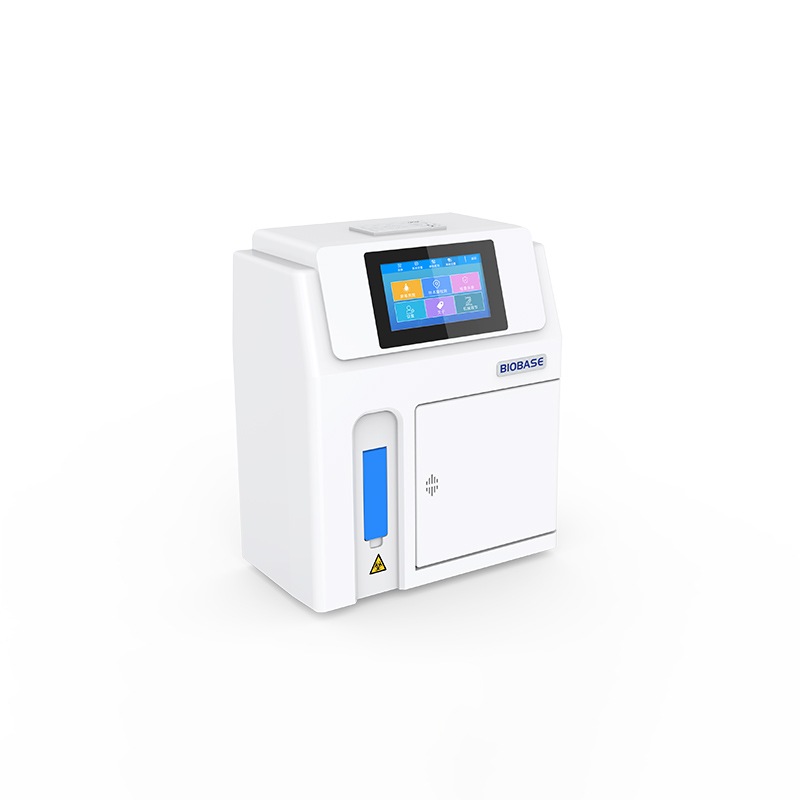
Buy Electrolyte Analyser in Nigeria.
Buy electrolyte analysers in Nigeria through Franance. Compare the listed BIOBASE BKE-A and BKE-D references by their manufacturer-listed test menus, sample-handling configuration, workload and laboratory requirements, then request a quotation for the exact model and package.
Products
2 models
Where can I buy an electrolyte analyser in Nigeria?
Request an electrolyte-analyser quotation from Franance and identify the exact manufacturer and model you want reviewed. The current category contains two direct BIOBASE references: BKE-A and BKE-D. You can also browse the complete electrolyte-analyser category or its BIOBASE-filtered range.
Read moreWhich electrolyte analysers are listed in this category?
The category currently has two direct product records, both from BIOBASE: the BKE-A and BKE-D. BIOBASE describes the BKE series as using ion-selective electrode (ISE) measurement. The two references have different manufacturer-listed menus and sample-handling configurations, so they should not be treated as interchangeable by default.
Read moreShould I choose the BIOBASE BKE-A or BKE-D?
Start with the test items and sample workflow your laboratory has approved. BIOBASE lists K+, Na+ and Cl- for BKE-A. It lists those items plus calcium forms and pH for BKE-D. If the approved requirement includes items that BIOBASE does not list for BKE-A, ask for a model whose manufacturer documentation explicitly supports the required menu. Do not assume that a series-level feature or a broader sibling model's menu applies to BKE-A.
Read moreBuy Electrolyte Analysers in Nigeria: models, test menus and quotation guide
Buy electrolyte analysers in Nigeria through Franance. Compare the listed BIOBASE BKE-A and BKE-D references against your approved test menu, sample workflow, workload and laboratory requirements, then request a quotation for the exact model and package. Franance handles product enquiries as quote orders: the team receives your request and follows up by phone or email with a quotation. The catalogue does not represent an online purchase or confirmed stock position. An electrolyte analyser is not selected by its name alone. First define which measured items the laboratory requires, which specimens the selected model is documented to accept, how samples are introduced, what supporting reagents and quality materials are needed, and how results should be reported. This guide describes the two direct category listings and the questions to resolve before procurement. The laboratory's authorised professionals must assess method suitability, use, verification and acceptance; this buying guide is not a clinical testing protocol.
Where can I buy an electrolyte analyser in Nigeria?
Request an electrolyte-analyser quotation from Franance and identify the exact manufacturer and model you want reviewed. The current category contains two direct BIOBASE references: BKE-A and BKE-D. You can also browse the complete electrolyte-analyser category or its BIOBASE-filtered range.
When you contact Franance, include the analyser model, required electrolytes, anticipated sample workload, specimen types for the institution's review, reagent and quality-material schedule, reporting requirements, quantity and delivery address. If you are comparing a different instrument, send its exact manufacturer, model and current documentation. A broad request for an “electrolyte machine” does not tell the responding team which menu, workflow or supporting materials should be quoted.
Franance can review the requirements and follow up on the quote order by phone or email. Ask the written proposal to identify the exact instrument version and what is included. Confirm availability, delivery timing, warranty terms, installation or orientation, after-sales support and all other commercial conditions directly in that response; these terms are not established by a product page or manufacturer webpage.
Which electrolyte analysers are listed in this category?
The category currently has two direct product records, both from BIOBASE: the BKE-A and BKE-D. BIOBASE describes the BKE series as using ion-selective electrode (ISE) measurement. The two references have different manufacturer-listed menus and sample-handling configurations, so they should not be treated as interchangeable by default.
BIOBASE lists potassium (K+), sodium (Na+) and chloride (Cl-) test items for the BKE-A. Its BKE-D table lists those items along with ionised, normalised and total calcium forms and pH. This is a distinction in the manufacturer's published model table, not a recommendation that one menu is clinically appropriate for every facility. The laboratory should specify its required items and have the exact offered model and documentation reviewed by the responsible professionals.
The list is a snapshot of catalogue references, not a claim to include every electrolyte-analyser brand, model or configuration in Nigeria. It also does not establish that a listed unit is physically available now. If your approved equipment schedule specifies another manufacturer or a different model, send that exact identity to Franance for review instead of substituting one of these records based only on a similar product name.
Should I choose the BIOBASE BKE-A or BKE-D?
Start with the test items and sample workflow your laboratory has approved. BIOBASE lists K+, Na+ and Cl- for BKE-A. It lists those items plus calcium forms and pH for BKE-D. If the approved requirement includes items that BIOBASE does not list for BKE-A, ask for a model whose manufacturer documentation explicitly supports the required menu. Do not assume that a series-level feature or a broader sibling model's menu applies to BKE-A.
The sample handling also differs. BIOBASE lists manual injection and no sample tray for BKE-A. Its BKE-D model table lists a sample tray, 30 sample positions and five emergency positions. The BKE-series page describes manual or automatic injection options for some models, including BKE-D; ask the quotation to identify the offered injection configuration and confirm it against the model's current technical documentation. A tray may affect how your team organises work, but the listed position count by itself does not determine whether the analyser fits a particular service's workload.
Compare the exact menu, specimen acceptance and handling method, sample introduction, batch pattern, operator steps, materials and reporting needs. If the laboratory requires a particular interface, analyzer footprint, sample tray or reporting output, make it an explicit acceptance criterion. Request a written, model-specific response that addresses each criterion. Franance can help structure the enquiry around these requirements, but the laboratory's authorised team determines the clinical and technical acceptability of the proposed configuration.
What electrolytes and specimen types should I specify?
Provide a required test-item schedule rather than relying on the broad category label. Separate the electrolyte items that are mandatory from optional items and identify any reporting format or reference requirements that the laboratory must assess. BIOBASE's series page lists K+, Na+, Cl-, calcium forms and pH across the family; its model table differentiates which are listed for BKE-A and BKE-D. Use the model-specific table when comparing those two products.
BIOBASE describes serum, plasma, whole blood, cerebrospinal fluid and diluted urine at BKE-series level. That is not a reason to assume every specimen is suitable for every exact model, local workflow or intended use. Before requesting supply, ask for the current model instructions and the manufacturer's statement of accepted specimen types. The laboratory should review matrix, collection, handling, validation and professional requirements using its own authorised procedures. This guide does not advise on collection or testing procedures.
For the quotation, identify whether your requirement concerns one or more laboratory locations and whether the named specimens and test items must be available on the exact proposed configuration. If the product response refers to a wider series, ask the supplier to map the claim to the model code being offered. Preserve this correspondence with the final equipment documentation. That approach helps prevent a family-level page from being mistaken for proof about a specific model or its acceptance in your institution.
How do I compare workload and sample-handling workflow?
Estimate routine and peak work using your laboratory's own activity data. Include expected samples by shift, periods of concentrated demand, urgent-work requirements and how samples are currently received and organised. These figures help compare a manual workflow with a tray-based one; they do not establish that a particular analyser will achieve a specific throughput in your facility.
BIOBASE lists a measuring speed of up to 25 seconds for the BKE-A/B/C/D group and a sample volume of 60–150 μL for that group. Treat these as manufacturer-listed specifications that require review against current instructions and the offered model. They are not the same as total end-to-end turnaround for a laboratory process: staff preparation, calibration, quality checks, workload variation, reruns, reporting and other workflow steps are separate. Do not translate an instrument measurement time into a guaranteed number of reportable patient results per hour.
For BKE-A, account for manual sample injection and the absence of a sample tray as listed by BIOBASE. For BKE-D, consider the listed tray and positions and confirm the exact injection arrangement. Ask for a demonstration or workflow review if your procurement process requires it, and specify who is responsible for any proposed orientation. Ensure the bench, operator access, power supply and placement are assessed against the current manufacturer installation requirements and the actual room. No installation or acceptance service is assumed to be part of the product listing.
Which reagents, calibration and quality materials should be included?
Request a full materials schedule alongside the instrument quotation. Identify reagent references and pack units, calibration or correction materials, quality-control products, required quantities and any storage or expiry information in the current manufacturer documents. Confirm compatibility with the exact model. A low base-unit amount can be difficult to compare if one proposal omits materials needed for the institution's intended workflow.
BIOBASE separately lists electrolyte-analyser ISE reagents for BKE models and names drift-correction and slope-correction solutions. The manufacturer page describes calibration functions at series level. Confirm the current offered reagent references, the models to which each applies, the quantity basis and any other supporting material in writing. Do not assume a product's presence in a broad family page means every item is bundled with an analyser or currently supplied into Nigeria.
Plan the materials around the laboratory's authorised quality system and purchasing period. WHO's Laboratory Quality Management System resources address equipment management, purchasing and inventory as distinct parts of laboratory management. Apply your own approved quality procedures and professional requirements; this guide does not prescribe QC frequency, acceptance limits or testing actions. Ask the quote response to distinguish analyser, initial reagents, quality materials, consumables, optional items and any separate recurring-supply discussion.
Does an electrolyte analyser connect to an LIS?
BIOBASE lists an RS232 port for LIS among BKE-series specifications. That interface statement does not prove that a particular instrument will exchange data successfully with your laboratory information system. Before ordering, identify your LIS vendor, version and responsible technical contact, the desired direction and content of data exchange, required identifiers and the institution's acceptance process.
Ask the quotation to state whether an interface cable, software, licence, configuration, installation, testing or third-party work is included. Have the relevant information-system and laboratory stakeholders confirm what they need to assess interoperability. A serial port alone does not establish compatibility, a completed interface, cybersecurity acceptance or successful deployment. Clarify who supplies, configures and supports each element and keep any exclusions visible.
If connectivity is not required, state that as well and specify the intended reporting and result-record workflow for institutional review. BIOBASE also lists an integrated thermal printer and result storage for the series; confirm the exact offered configuration and associated consumables. Use the exact model-specific manufacturer documents and quotation rather than assuming that all family listings carry identical accessories or settings.
What is the price of an electrolyte analyser in Nigeria?
There is no single reliable category price to apply to every analyser and package. Request a current quotation from Franance for the exact model, quantity, reagent schedule and destination. Ask the response to separate instrument cost from optional components, initial materials, quality supplies, reporting or installation work and delivery terms, where applicable.
Compare like with like. For example, a proposal for BKE-A should be evaluated against the institution's required test items and its manual, no-tray configuration as listed by BIOBASE. A BKE-D proposal should identify its own menu, tray and injection configuration. Do not compare two totals without checking the model, included materials, technical scope and written exclusions.
The final quote should confirm the currency, validity period, taxes or charges, payment conditions and commercial terms. Manufacturer webpages, catalogue prices or regional statements do not establish a current Franance offer, Nigerian availability or an agreed delivery date. Franance follows up after receiving the enquiry so the offered scope and commercial details can be clarified directly.
How can I request delivery and a complete quotation across Nigeria?
Send Franance the exact delivery destination and the quantities intended for each facility. Include state and city for logistics planning, but do not assume a specific delivery time or coverage commitment until the written offer confirms it. For multi-site purchasing, provide a site-by-site schedule with model, quantity, required materials, receiving contact and any requested technical work.
WHO's equipment-management materials emphasise keeping an equipment register and considering procurement, maintenance and equipment records. Use the procurement process approved by your institution: identify who will review the specification, receive the instrument, record its identity and serial number, assess installation requirements and document acceptance. Ask Franance to state whether any delivery, installation, familiarisation, warranty or support activity is included and who is responsible for each task.
Before confirming an order, reconcile the quotation with the approved model and test-item schedule, current manufacturer instructions, reagent and quality-material references, power and room requirements, reporting scope and all commercial terms. If a substitution is offered, request an explicit model comparison for review rather than treating it as equivalent by name. This makes it easier for Franance and your institution to resolve open questions before proceeding with a quote order.
What should I include in an electrolyte-analyser quote request?
Send a concise schedule that identifies the model and explains what your laboratory needs. A complete request should state:
- BIOBASE BKE-A, BIOBASE BKE-D or the exact alternative manufacturer and model;
- required test items and sample types for technical review;
- routine and peak workload and the expected sample-introduction workflow;
- reagent, calibration and quality-material references or requirements;
- LIS, printer, documentation and any requested installation or orientation scope;
- quantity, facility name, delivery address, city and state; and
- tender format, requested response date and any mandatory acceptance criteria.
Attach approved technical schedules when available, and identify items that are requirements versus preferences. Franance can then follow up by phone or email about the equipment and quotation. If your exact requirement is not reflected in the current two listings, include the full source identity and documentation so it can be reviewed without assuming unsupported compatibility or availability.
For related critical-care laboratory equipment, see the blood gas analyser guide and the critical-care laboratory category. For broader department equipment, return to the clinical laboratory category. The goal is a model-specific request Franance can quote and your laboratory team can assess against its approved requirements.
Common questions
Where can I buy an electrolyte analyser in Nigeria?
Request a quotation from Franance with the exact model, test menu, sample types, workload, reagent and quality-material requirements, quantity and delivery destination. The current category lists BIOBASE BKE-A and BKE-D references.
What is the difference between the listed BIOBASE BKE-A and BKE-D?
BIOBASE lists K+, Na+ and Cl- for BKE-A, with manual sample injection and no sample tray. Its BKE-D table adds calcium forms and pH and lists a sample tray with 30 positions plus five emergency positions. Confirm the exact offered configuration and intended use in current manufacturer documents.
Does this category show every electrolyte analyser sold in Nigeria?
No. It shows the two current direct product listings. Send Franance an exact additional manufacturer and model for review rather than assuming the listing covers every manufacturer or available configuration.
Request an electrolyte analyser quotation from Franance.
Specify BKE-A or BKE-D, required analytes, sample types, workload, reagents and quality materials, reporting needs, quantity and destination in Nigeria.
Request a laboratory quoteNeed an equipment quote?
Add the models you need to a quote order, or send us your equipment list.