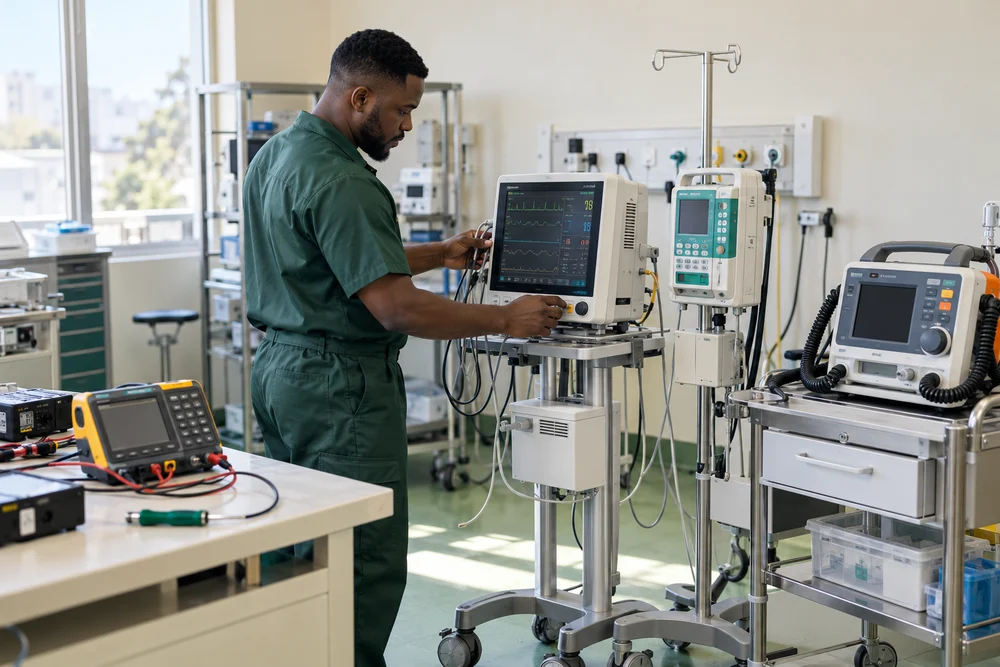
Infusion and syringe pump repair assessment in Nigeria
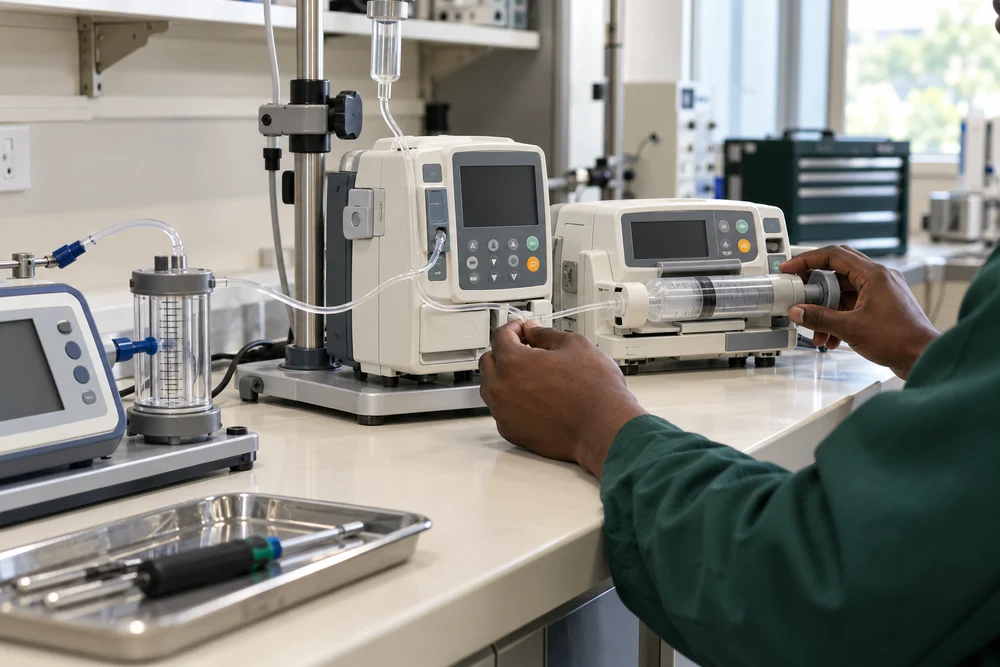
How do I request an infusion pump repair assessment in Nigeria?
Use Request an assessment or Request callback and list every pump by manufacturer, full model, serial number, asset tag and department. Distinguish volumetric infusion pumps from syringe pumps, and note whether units are standalone, mounted in a docking or communications system, or used with a particular accessory configuration.
Describe the observed fault in plain equipment terms: exact display message, alarm code, power or battery issue, door or drive concern, communication interruption or reported failure during a facility check. Include when it began, whether it recurs and any service history. Do not include patient names, medication charts, infusion settings or records linked to a patient.
State the outcome you need: fault assessment, repair proposal, post-repair check or documentation review. If the pump remains in use, the facility's clinical and biomedical leads decide its status under local policy. Send only equipment information and relevant non-identifying records.
Which pump details affect a repair quote?
Identify the pump type and exact model before discussing a fault. A syringe pump and volumetric pump use different mechanisms and compatible disposables; pump families may also differ by software generation, library version, communication features, docking station and accessory set.
List the accessories that may be part of the request: docking or carrier systems, power supply, battery, communications module, pole clamp, syringe or administration-set references, and any central management connection. Provide the part or catalogue reference where available rather than guessing compatibility from a brand name.
For a fleet, create one row for every model and configuration. Include quantity, location, asset ID, installation date if known and maintenance history. The infusion pump category, syringe pump category and volumetric pump category help separate those equipment types.
What should a pump fault report include?
Record the displayed message exactly, date and time, pump identity, whether it was connected to a docking system and the circumstances reported by staff. If the facility has a service log or battery record, attach the relevant non-identifying information. Avoid diagnosing the failure or naming a replacement component before inspection.
Where a problem is intermittent, list each occurrence and any recent transport, cleaning or software change recorded by the facility. Do not send medication orders, patient identifiers, dosing settings or clinical charts. Those details are not needed to establish the equipment identity and can create unnecessary privacy risk.
Keep the device's own reported status separate from its clinical use decision. The hospital follows its incident reporting and removal-from-service procedures; Franance can review the technical information and state what assessment or repair it can quote.
How do compatible sets and accessories affect service?
Pump accessories and disposables can be model-specific. B. Braun identifies dedicated administration lines for certain Infusomat and Perfusor models and describes product-level compatibility in its catalog. That example illustrates why the exact pump, accessory and reference should be stated; it does not establish that one line or syringe fits another pump.
If a reported issue may involve a set, syringe, docking interface or communications system, list the exact reference and the pump model. Do not change clinical consumables or settings based on this page. Follow the manufacturer's instructions and the facility's approved clinical procedures.
Tell Franance whether you want the pump itself assessed or whether accessories, docking equipment or connectivity are part of the request. A repair quote should list the equipment boundary and identify any compatible parts or consumables separately.
For a mixed fleet, note which pump models share a docking station and which operate independently. Include the dock model, station identity, power supply and communications module that may be involved in the fault. A pump that operates alone and one managed through a fleet system can require different access and documentation. Keep each configuration in a separate row so the quote does not imply that the same part, software or test applies to every unit.
Is pump repair the same as performance verification?
Repair addresses an identified equipment fault. Preventive maintenance, electrical-safety testing and performance verification may be separate tasks with their own methods, criteria and records. If your facility needs a post-repair performance check, state the required test procedure and documentation before the work is quoted.
Do not use a generic “calibration” label without explaining the required result. Identify the method, reference equipment or test standard if your quality system specifies one, and ask whether the proposed scope includes the corresponding evidence. A repair record and an accredited calibration certificate are not interchangeable.
If the pump is part of a software-managed fleet, state whether the request includes device configuration, drug-library review, software updates or network integration. These can have different access, authorization and cybersecurity requirements from a hardware assessment. Include them only when needed and ask for separate scope.
Where a post-repair check is required, agree the acceptance criteria and report before the work starts. State the pump model, applicable procedure, reference equipment and whether the check covers the pump alone or a connected dock. Keep clinical dose limits and drug-library decisions under the hospital's governance. A technical review can identify device configuration and firmware details without making treatment recommendations or changing a clinical protocol.
How should a hospital plan pump downtime?
Give the department, preferred access window, number of affected pumps and whether units are part of a mounted fleet. The hospital's clinical and biomedical teams decide how equipment is covered during downtime. Do not include patient treatment schedules or medication information in a vendor enquiry.
For pumps in critical-care, neonatal, oncology or other specialized departments, identify the department and device role so the right units can be listed separately. This is equipment context for planning access, not a request for clinical advice or a recommendation about therapy.
Ask the quotation to state whether work is on site or workshop-based, what transport or access arrangements are needed, whether a loan unit is included, and how discovered faults or unavailable parts will be handled. Do not assume a loan pump, replacement or response time unless it is stated in writing.
What records should accompany the repair and handover?
Provide the asset-register entry, service history, relevant manufacturer instructions, exact reported fault and any previous repair report. If the device is part of a fleet system, identify the dock, software version and the responsible facility contact.
Ask for a report tied to model, serial number and asset ID, with the fault reported, scope performed, reference documentation, findings, parts or software changes, checks completed and remaining actions. Confirm whether the record is suitable for the facility's maintenance system and who receives it.
B. Braun's published information distinguishes technical service from user operation and describes trained personnel requirements for certain service activities. For any brand, ask for evidence that the proposed work and personnel fit the exact model and task. Keep device service records separate from patient records.
If the pump belongs to a networked fleet, capture whether the service changed a software version, library file or communications setting and who approved that change. If no such work was included, ask that the report say so. These details make later fault comparisons more useful and prevent a hardware repair note from being mistaken for a configuration or clinical-library review.
What should the quotation confirm before approval?
Check that the pump type, exact model and configuration match the request. The quote should state the reported fault, proposed assessment or repair, included parts, test scope, access assumptions, travel, charges, exclusions and deliverable. Confirm whether software, library configuration, docking equipment and accessories are included or separately scoped.
Where the facility requires OEM service, a particular credential, warranty-preserving work or accreditation, ask for the current evidence relevant to that model and activity. A manufacturer page that describes its own service network does not define Franance's role or service terms.
Agree how the service will handle an unrepairable unit, discontinued parts, repeat fault, failed verification or additional work. Use Request an assessment or Request callback to send the asset list and preferred window. Franance can review the requirement and reply with a written scope for approval.
Brand-specific equipment support in Nigeria: ICU Medical infusion pump equipment service enquiries – Moog Medical CURLIN PainSmart infusion pump equipment services
Choose the manufacturer to review its equipment-specific enquiry requirements and available documentation before requesting a written service scope.
The brand pages explain which model, configuration and fault details to include. A listing does not establish that every service, part or manufacturer programme is available for a particular unit; the written response defines the proposed scope.
Common questions about infusion and syringe pump repair assessment in Nigeria
Can Franance quote for both volumetric and syringe pumps?
List them separately by pump type and exact model. Franance can review each configuration and confirm which equipment and work it can include.
Should we include medication or patient information?
No. Provide equipment identity, fault messages and service records, with patient identifiers, medication charts and treatment settings removed.
Does a repair include calibration or electrical-safety testing?
Those are distinct tasks. State the required method and record so the quotation can show whether a separate verification is included.
Can the pump be serviced while connected to a dock or fleet system?
Include the dock model, communications arrangement and software revision in the request. Franance can identify the access and configuration dependencies for the proposed scope.
What is the fastest way to request an assessment?
Use the on-page Request an assessment or Request callback controls and send the model list, fault history, facility location and preferred access window.
Tell us what your facility needs.
Send the equipment details, your requirement and the facility location. We’ll discuss the information needed to review the scope and prepare the next step.
Contact Franance