Erba Mannheim clinical laboratory analyser service enquiries in Nigeria

Erba analyser identity and configuration in Nigeria
Separate each Erba analyser by model, serial, asset number and department. State whether the request concerns Chem 5X, XL-180 / XL-1000 chemistry or H360 / H560 hematology; these are different analyser families, so a shared brand name does not establish common parts or workflow.
Use the equipment label to distinguish a Chem 5X from XL-180 / XL-1000 and an H360 from H560. Record manufacturer, model, serial, asset ID, software version and room; attach only the relevant non-sensitive service documents. If the exact model text is uncertain, mark it as uncertain and ask which identifier is needed before parts or work are quoted.
For a procurement comparison, keep semi-automated Chem 5X separate from the XL chemistry systems. Give each unit its current software and accessory record, then ask the quote to name the exact system and scope. If the facility is considering an upgrade or replacement, state whether the request concerns supply, transition planning, installation coordination or post-install documentation. Ask that these appear as distinct tasks rather than assuming a hardware quote includes all project support. This lets laboratory management compare the proposed platform and included work with its documented requirement.
Chemistry analyser service assessment in Nigeria
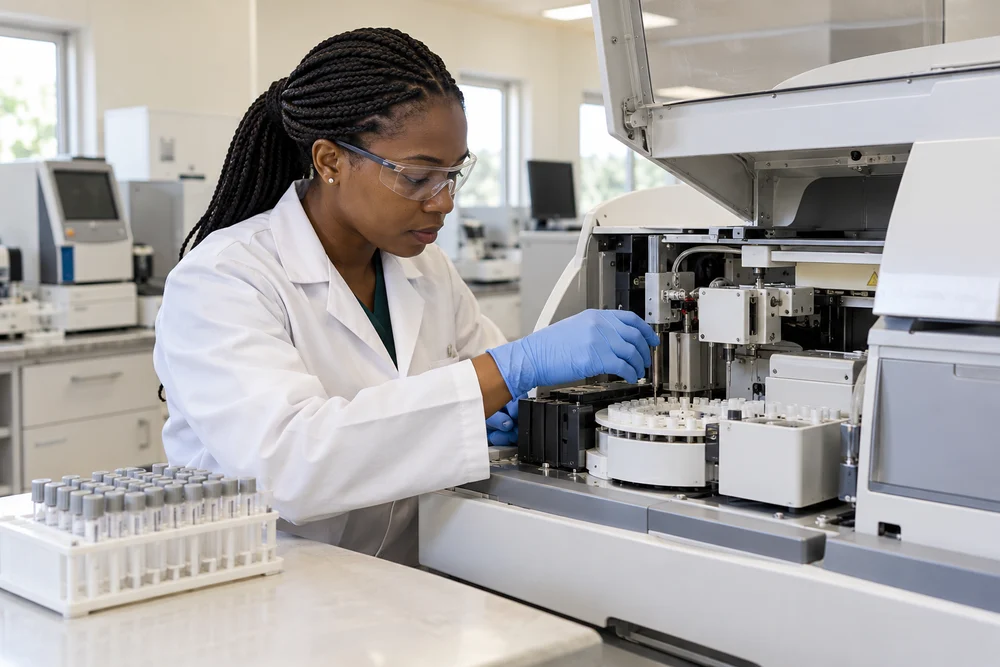
For Chem 5X, XL-180 or XL-1000, identify the exact platform and provide its available installation, service and software records. Describe the reported instrument status and any displayed message in its own words; do not infer a failed component or submit patient results in an initial enquiry.
Chemistry systems differ in automation and product generation. For a concern, note the date, visible alarm text, affected hardware or interface and whether the condition repeats, but do not diagnose from a code alone. A useful assessment request asks the responder to identify what evidence is needed, what work is proposed and whether any consumable or software dependency is part of that scope.
When reporting an instrument concern, include the exact displayed message, date, pattern and unit identity, then attach a non-sensitive service note if one exists. Avoid turning a code into a diagnosis or sending patient results. If the issue seems to involve a connected workstation or interface, name that endpoint separately. Ask for the written response to say whether it proposes instrument assessment, software review or a separate connection task. That distinction makes it easier to route the enquiry and keeps a possible data-flow issue from being priced as an analyser repair without evidence.
H360 and H560 hematology records in Nigeria
H360 is listed as a 3-part differential analyser and H560 as a 5-part differential analyser. Include the exact model and applicable service documents so a proposal is matched to the correct analytical platform rather than treating the two instruments as interchangeable.
The Erba catalogue distinguishes H360 3-part differential from H560 5-part differential and lists differing aspiration volumes and parameter counts. Use those model identifiers to route a service question, not as a basis to compare clinical performance. Provide asset history and stated operational symptoms, then ask the response to confirm the exact platform and applicable service documents.
H360 and H560 belong to different hematology configurations: the catalogue identifies a 3-part versus 5-part differential distinction and different aspiration volumes. Those specifications can help staff confirm which manual and service records match the unit, but they do not determine clinical suitability. Record the model, software, serial, analyzer location and available accessories, then ask the reviewer to verify the applicable document. For a multi-instrument laboratory, make a separate service line for each platform so a report for one model is not attached to another analyzer’s asset file.
Reagent, accessory and software dependencies in Nigeria
List the manufacturer references for installed accessories and relevant software or interface versions. If a workflow relies on a specific consumable family, identify it as context only and ask for the equipment compatibility question to be answered separately from reagent supply or laboratory-method decisions.
An analyser service request can be confused with a reagent complaint or assay question. Keep the instrument model, accessory, software and reagent reference in separate fields. Ask whether the quotation covers the analyser itself, a peripheral or a data connection; do not assume that a reagent issue proves a hardware fault or that an instrument visit includes assay validation.
Keep the instrument enquiry distinct from a reagent, control or assay question. If the laboratory suspects both, provide separate descriptions and references for the analyser and the consumable. Ask the quotation to name whether it covers only hardware assessment, an accessory, a connection or another defined task. Avoid assuming that a reagent issue proves an equipment fault or that a service visit includes assay verification. This separation helps procurement route the request correctly and gives laboratory staff a written scope that does not promise clinical or method validation.
Performance verification and calibration request in Nigeria
State the facility's required check or documentation outcome and ask for the proposed verification scope, reference equipment and returned record to be described. Calibration, maintenance and repair are distinct tasks; the quotation should say which are included and what acceptance evidence the facility will receive.
If the laboratory needs a documented calibration or verification record, specify the measured parameters, site requirement and any reference procedure already required by its quality system. Request the scope, traceability information and report format in writing. A generic maintenance visit should not be presented as calibration unless the quotation explicitly names the check and evidence supplied.
If the laboratory requires a calibration, verification or quality record, identify the named check, parameters, reference method or facility policy already in force and report format needed. Ask the proposal to specify what evidence will be produced and any traceability information. The service request should not simply say “calibrate the analyser” if the expected check is undefined. This allows the quality lead and procurement team to compare the requested record with the actual quote and decide whether the stated activity meets their internal requirement before authorizing the work.
Laboratory connectivity and data handling in Nigeria
Name the receiving laboratory information system, interface, analyser connection and software version where known. Ask the technical teams to identify the data path and required coordination in writing. Keep passwords, patient identifiers and unredacted result files out of the first contact.
For LIS or middleware questions, identify both endpoints, interface version, communication method if known and the technical owner at the facility. Explain the intended data-flow change without sending credentials or patient data. Ask whether the proposal addresses configuration review, interface work or only the physical analyser, so the project responsibility remains clear.
For an LIS or middleware project, identify the analyser, destination or source endpoint, interface version and technical owner. Describe the desired data-flow change without sharing credentials, personal data or results. Ask whether the proposed scope covers physical analyser review, interface assessment, configuration work or only documentation. A facility may need separate approval for a network change or third-party system, so request that responsibilities and dependencies be named. This gives the IT and laboratory teams a practical coordination record rather than implying that an equipment service quote automatically includes integration work.
Maintenance planning around workload in Nigeria
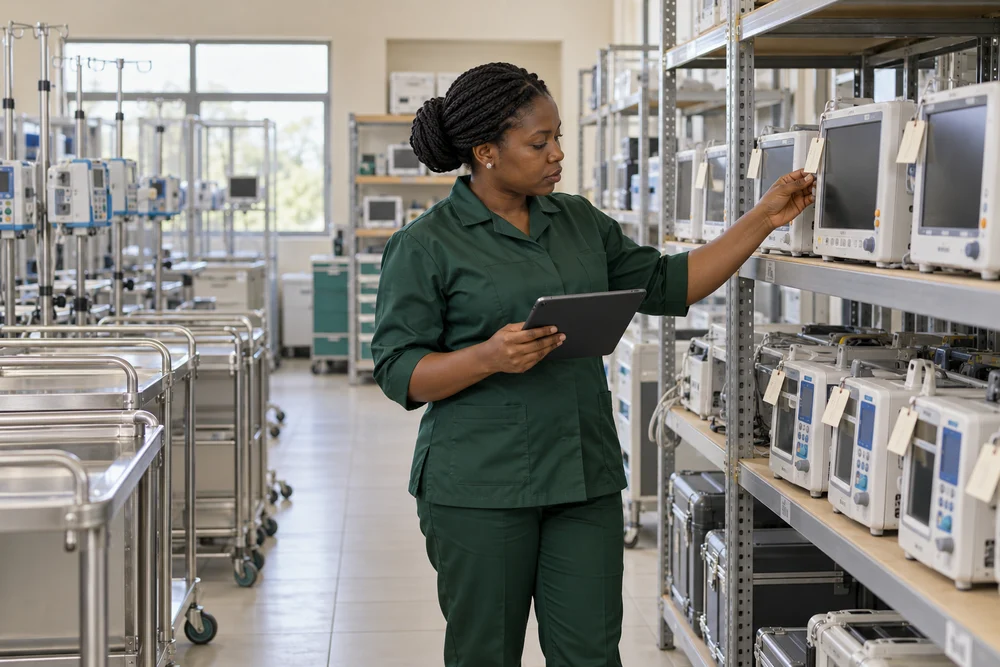
For a multi-analyser laboratory, provide model, location, service history and preferred access period for each unit. Ask the proposal to schedule each instrument separately and identify any dependencies, duration assumptions or records required, allowing the laboratory to plan continuity without an assumed service timetable.
Plan around each unit's role and the facility's workload. List the instrument, location, operating window, service status and any previous downtime individually. Request a schedule proposal and ask it to state any required shutdown, access, parts lead-time or customer preparation as assumptions rather than relying on a family-level estimate.
For multiple analyzers, submit an asset list with model, serial, location, service status, preferred access window and most recent service record. Identify any unit that has a downtime constraint and ask the proposal to describe its schedule assumptions. If a part or document is needed before work, ask for that dependency to be listed. A request for five instruments should not be treated as a generic family-level visit: each model may have its own documentation, accessories and timing question. A written asset-level plan is more useful for laboratory operations and purchasing approval.
Erba assessment and quotation in Nigeria in Nigeria
Request a written Franance assessment naming the exact Erba model, requested task, parts assumptions, laboratory access needs, verification records, exclusions and commercial terms. Compare separate lines for inspection, planned maintenance, calibration or repairs so the lab can approve a clearly bounded scope.
Before approval, verify the exact Erba model and requested outcome, task list, parts basis, software or interface dependency, verification record, schedule, exclusions and price validity. Keep the written scope and any post-work record with that analyser's asset file. If multiple units are involved, obtain a separate line or asset reference for each one.
Before placing an order, check that the quote names each analyser, its model, serial, requested activity, parts and software assumptions, verification records, access window, exclusions and price validity. Ask the responder to state any open configuration or documentation question and the information needed to close it. Keep the final response and any post-work record with the matching asset. For Chem 5X, XL chemistry platforms and H-series hematology systems, avoid accepting a single generic line that does not show which units and tasks are included. This gives the facility a traceable scope to approve.
Common questions about erba mannheim clinical laboratory analyser services in Nigeria
Which models are covered?
Franance can review enquiries for Chem 5X and XL chemistry analysers, H360 and H560 hematology analysers, and XL-180 / XL-1000 chemistry systems. Use the model and serial from the installed equipment label so the request identifies the correct variant.
What details should I include in an enquiry?
Include model, serial or asset number, facility city and room, current status, visible issue or project need, relevant accessories and callback details.
Can I ask about accessories or replacement parts?
Yes. Give the part or accessory reference and parent equipment model, then request written compatibility confirmation for the exact variant.
What should a service or project quote state?
Ask the proposal to identify the equipment, tasks, parts assumptions, site access, downtime, returned records, exclusions and commercial terms.
How do I request a written response?
Use the Franance technical-support contact flow and request an assessment, maintenance proposal or quotation. List one asset per line.
Tell us what your facility needs.
Send the equipment details, your requirement and the facility location. We’ll discuss the information needed to review the scope and prepare the next step.
Contact Franance