

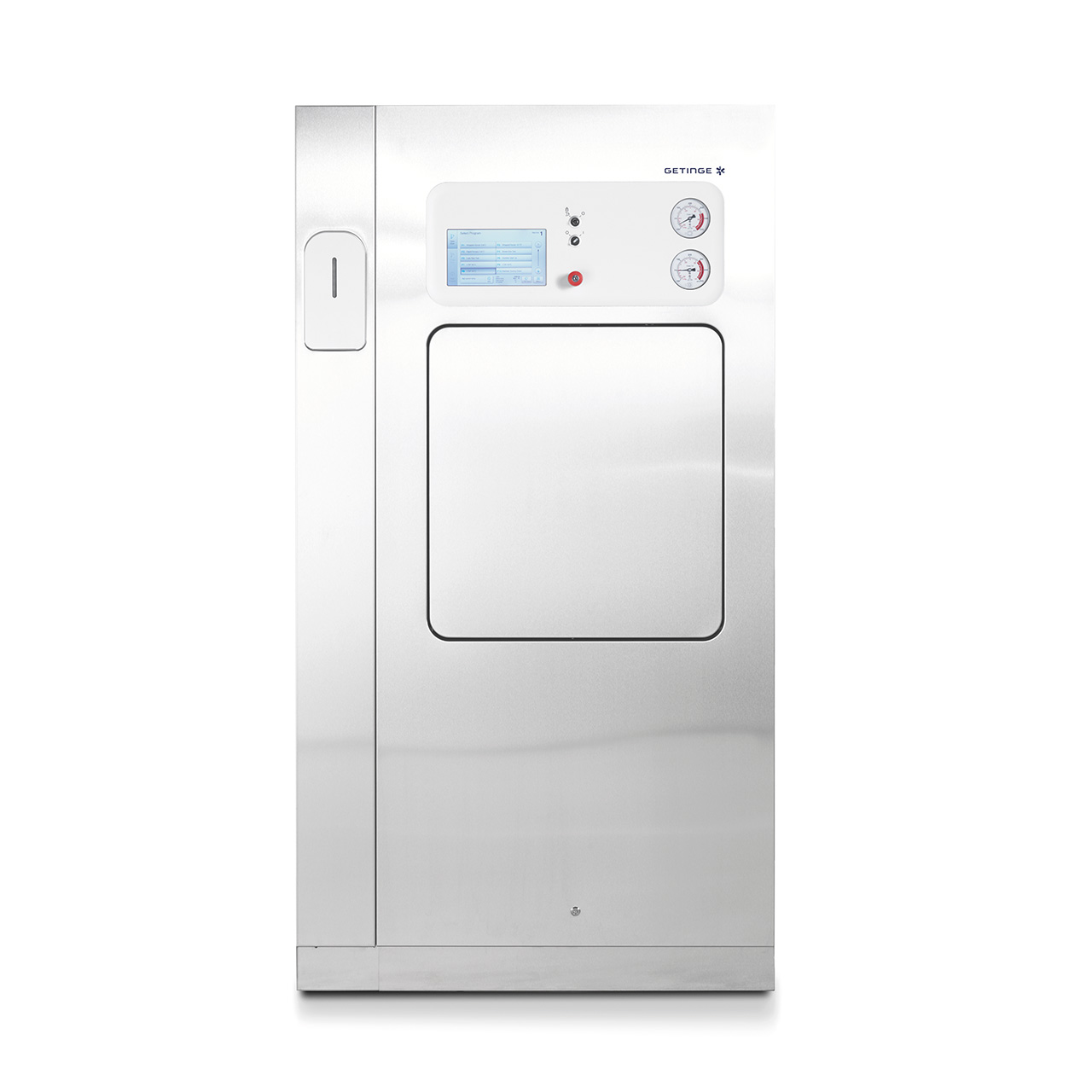
Buy a Getinge GSS67F sterilizer in Nigeria
Request a quotation from Franance for the Getinge GSS67F when your central sterile services department needs a system that combines steam and low-temperature formaldehyde sterilization. Getinge describes steam and formalin (formaldehyde dissolved in water) processes in the same machine. Its international product page lists chamber variants 6710 and 6713, with chamber volumes varying by single- or double-door configuration. Those processes have different load suitability: never infer that a particular endoscope or instrument is compatible from the product family description. Verify the device manufacturer’s instructions, the selected GSS67F process, the validated load configuration and facility procedures before procurement or use. Franance lists the GSS67F in the low-temperature sterilizer category, the horizontal steam sterilizer category, and the floor autoclave category. Open the exact GSS67F filtered listing or the model-filtered product list, then request a Franance quotation. This is a quote order, not online checkout. Nigerian stock, price, delivery, registration, warranty and local service must be confirmed for the specific offer.
Where can I buy a Getinge GSS67F in Nigeria?
Franance lists the Getinge GSS67F as a product available for quotation. Start with the Getinge-filtered low-temperature sterilizer listing, and compare its placement in the horizontal steam sterilizer listings and floor autoclave listings. Each exact model filter should identify the same catalogue product; category membership is not a claim that every process or load is interchangeable.
When you contact Franance, provide your facility name, city and state, delivery address, contact person, quantity, procurement stage and target installation window. Say whether the request concerns a new CSSD, capacity expansion, replacement, refurbishment or a project with defined instrument sets. Include a room plan and process workflow if available. For a quote that includes review of device suitability, list the actual endoscope or instrument manufacturers and models and provide their reprocessing instructions. Do not send only a broad term such as “flexible scopes” and expect it to prove process compatibility.
Request a written proposal naming the GSS67F, chamber variant 6710 or 6713, single- or double-door arrangement, included loading components, formaldehyde consumables, utilities, data/documentation options, installation boundary, commissioning, qualification responsibilities, freight, taxes, warranty and support. Franance will follow up by phone or email to confirm the enquiry. The product listing and Getinge’s international materials do not establish current Nigerian availability, authorized representation, price, lead time or service coverage.
What does the GSS67F do, and how is it different from a steam-only sterilizer?
Getinge describes the GSS67F as a combined high-temperature steam and low-temperature formaldehyde sterilizer. The formalin process uses formaldehyde dissolved in water. In principle, a combined machine can support more than one process pathway in a CSSD, but selection of a cycle for a medical device depends on the device’s own instructions, the sterilizer’s approved process documentation, load preparation, packaging and the facility’s validated procedures.
This matters because the GSS67F is not simply another steam-only autoclave. Franance also lists the Getinge GSS67H and GSS610H as steam sterilizers. The GSS67F’s extra low-temperature process may be relevant to a facility’s defined requirements, but it does not make every heat-sensitive device suitable for formaldehyde processing. Confirm exactly which process will be used for each item and whether all the item’s channels, materials, accessories and packaging are covered by the relevant instructions.
Getinge’s GSS67F product page describes processing endoscopes and many surgical instruments in one sterilizer. The manufacturer’s GSS67F brochure also describes the combined process. These are product-family descriptions, not independent evidence that an individual instrument is compatible or that a cycle is validated for a particular load. Use the current instructions for use, instrument manufacturer directions and facility process controls.
Which chamber configuration should I request: 6710 or 6713?
Getinge lists two GSS67F chamber variants. Its current international page identifies 6710 with a 660 mm chamber width, 700 mm height and 1,000 mm depth; it lists 481 L single-door and 486 L double-door volume, six SPRI baskets or six STU. For 6713, it lists the same width and height, a 1,300 mm depth, 621 L single-door and 609 L double-door volume, nine SPRI baskets or eight STU. The brochure lists the same chamber dimensions and basket/STU counts, but its volume table presents 481 L and 621 L without splitting single- and double-door values. Confirm the current configuration-specific figures in the official technical sheet before final design.
These nominal chamber volumes and loading counts help identify a model variant, but they are not a throughput guarantee. The instruments, containers, trays, packaging, loading arrangement, process selection and operating schedule determine real capacity. A nominal volume does not establish that a load is suitable, that a particular basket or rigid container is included, or that a cycle will meet your department’s validated requirements.
Compare your actual load carriers with the sizes stated in the brochure. Getinge lists SPRI baskets at 585 x 395 x 195 mm, ISO baskets at 600 x 400 x 200 mm, and STU units at 600 x 300 x 300 mm. Ask which carrier standard and trolley arrangement is intended for your facility and whether these items are in the offer. Provide a list of frequently processed trays, sets, scopes and containers, with dimensions, weights and packaging information, for technical review.
How should I determine whether an instrument can use the low-temperature process?
Start with the instrument manufacturer’s instructions for reprocessing, not the sterilizer marketing description. Confirm the permitted sterilization method, exposure conditions, disassembly, cleaning, drying, packaging and any restrictions on lumen length, diameter, material, accessory or repeated processing. Getinge’s statement that GSS67F can process endoscopes or many surgical instruments does not supersede those device-specific instructions.
For each proposed instrument, record manufacturer, model, reusable components, relevant accessories and current instruction revision. Have the CSSD lead and infection-prevention or clinical engineering team compare those instructions with the GSS67F’s current process documentation and the exact proposed cycle. If compatibility is uncertain, obtain a written manufacturer response or validated process guidance before treating the item as compatible. This guide does not prescribe a cycle, exposure, load pattern or sterilization result.
Steam and formaldehyde are distinct processes with different suitability, sterilant, process controls and facility requirements. Do not assume a device approved for steam can use the low-temperature process, or vice versa. Likewise, a “heat-sensitive” label does not establish compatibility with formaldehyde. Instrument design and the manufacturer’s validated reprocessing instructions determine the permitted method.
What should I know about formaldehyde consumables and staff safety?
Getinge’s GSS67F brochure states that its non-reusable formaldehyde bottles are intended for use with GSS67F and that an alarm activates when a bottle is empty. Ask whether these bottles, required process consumables, storage arrangements and starter quantities are included in the quote. Confirm country-specific supply, replenishment route, lead time, shelf life, handling instructions and disposal requirements with the supplier and applicable local authorities. The catalogue entry does not establish that consumables are stocked in Nigeria.
Request the current safety data sheet, instructions for storage and handling, spill response, ventilation requirements and personal protective equipment guidance for all process chemicals. Have the facility’s occupational health, safety and environmental teams review chemical storage and waste arrangements before installation. Do not assume that the manufacturer’s general environmental statements replace local risk assessment, discharge approval, workplace controls or waste-management procedures.
The operating process and chemical route are separate from the equipment’s claim of a closed system. Confirm the bottle connection, monitoring and alarm response in the current operator documentation. Define who checks consumables, records changes and responds to an empty-bottle or process alarm. Include a realistic supply continuity plan before choosing the combined low-temperature function for routine workflows.
How should the CSSD be planned for chamber doors and load movement?
Getinge’s GSS67F brochure describes a vertical chamber door and claims that it requires less floor space than horizontal sliding doors. Whether that layout works depends on the ceiling, overhead services, operator position, doors and movement path at the installation site. Ask for a dimensioned general-arrangement drawing for the proposed 6710 or 6713, including service clearances, door travel and maintenance access. Do not rely on product photographs or brochure language to determine fit.
Decide whether the CSSD requires a single-door or double-door pass-through arrangement. A double-door workflow may support separation between loading and unloading zones, but it must match the facility’s actual clean/dirty zoning, wall arrangement and operating procedures. Provide the planned room division and material flow to the project designer and supplier. Verify where controls, loading interfaces and maintenance panels will face, and how technicians will access the unit.
Map the entire route from receiving dock to the equipment room: truck access, doors, lift car, corridor turns, ramps and any floor-loading constraints. Ask for the shipped dimensions, weight, split or modular delivery arrangement, rigging method, offloading equipment and who will move the unit into position. Confirm required floor foundation, anchoring and wall opening information from the current installation manual. No site survey or installation is included unless the quote explicitly says so.
What utilities, room services and data interfaces should I confirm?
Do not size services from the model name or a general brochure. Request a configuration-specific utility schedule covering electrical supply, steam source and quality, water, drainage, cooling, ventilation, compressed air or other required connections, environmental conditions and peak versus average demand. Have the facility’s qualified engineering team compare those requirements with the existing services and local backup arrangements. The steam and formaldehyde operating modes may create different process and facility considerations; obtain the exact technical data for the requested configuration.
Getinge describes a user interface and automatic start-up features in its product materials, while the brochure discusses RFID access, process data and Getinge Online/T-DOC integration capabilities. These product-family references do not prove that software, licences, network hardware, cybersecurity review, printers, data storage or integration are included in a particular offer. List the facility’s requirements for user accountability, cycle records, export, traceability, network access and system integration, and request an itemized interface proposal.
For Nigeria, include the facility’s power quality and continuity plan in the technical review. Ask the supplier to specify permissible supply conditions and any required protection or backup equipment; do not assume an ordinary UPS or generator is suitable for this high-capacity sterilizer. Confirm earth bonding, utility isolation, water treatment requirements and availability of the relevant consumables. Coordinate with biomedical engineering, facilities, IT and CSSD leadership before approving the equipment schedule.
How should a facility plan validation, monitoring and routine operation?
Buying a sterilizer does not by itself validate the sterilization process. The World Health Organization’s decontamination and reprocessing aide-memoire emphasizes that reprocessing consists of sequential steps from receipt and processing through storage and distribution, and that quality-control procedures such as validation matter at each step. The U.S. CDC’s sterilizing practices guidance describes verification, monitoring and load preparation as parts of a complete program. Facilities should follow applicable Nigerian requirements, current manufacturer instructions and professional guidance relevant to their operations.
Before purchasing, define who is responsible for site acceptance, installation checks, operational qualification, performance qualification, routine testing, load release, record retention and response to failures. Ask Getinge or the supplier to specify the commissioning and qualification services available, the instruments and consumables required, documentation deliverables, and which tasks remain with the facility. These responsibilities should be written into the project scope, not inferred from “installation” or “commissioning.”
Plan training for operators, supervisors, maintenance personnel and those who review cycle records. Include routine cleaning and maintenance, alarm response, consumable changes, monitoring requirements and contingency workflows. A user interface that displays process information does not replace independent indicators or the facility’s documented release criteria. The purchaser must confirm how records are transferred, retained, audited and linked to each load.
How does GSS67F differ from GSS67H and GSS610H?
The GSS67F combines steam and low-temperature formaldehyde processes. GSS67H and GSS610H are steam sterilizer product families. The catalogue assigns GSS67F to low-temperature sterilizer, horizontal steam autoclave and floor autoclave categories; the other two models are listed in steam-autoclave and floor-autoclave categories. Category placement helps find products but does not make the operating processes equivalent.
GSS67H uses a chamber-size family identified on Getinge’s product page as models 10, 13, 17 and 20, ranging from 468 to 937 L. GSS610H has chamber depth variants 10, 14, 15 and 21 and substantially different chamber volumes described on its own manufacturer page. GSS67F uses variants 6710 and 6713, whose documented chamber volumes and basket/STU counts differ. Do not compare only litre capacity: review chamber geometry, process needs, loading, utilities, throughput requirements, door configuration and installation space.
For context, you can open the GSS67H steam sterilizer listing and the GSS610H steam sterilizer listing. Ask the project team to compare each model’s current technical documentation rather than treating the product guide as a substitute for engineering and process review.
What should I include in a Getinge GSS67F quotation request?
Identify the required process mix and why a combined system is being evaluated. Name the instrument families and specific models, the verified process pathways under consideration, typical and peak load composition, trays, carriers and daily cycle pattern. Provide the desired chamber variant, single- or double-door preference, CSSD drawing, adjacent equipment, staffing workflow and any constraints on room footprint or height.
Ask Franance to confirm the current GSS67F reference, chamber dimensions and volume, door configuration, loading and unloading equipment, baskets or STUs, formaldehyde bottles and any initial consumables, utility schedule, data or integration options, installation and commissioning scope, qualification support, training, documentation, warranty and service route. Separate included items from optional or excluded items. Provide the destination city and state, access measurements, requested delivery period, procurement contact and expected project timeline.
The final quotation should state price and currency, validity, availability, shipment origin, freight, taxes, delivery point, offloading, installation, commissioning, acceptance tests, warranty, maintenance and local support terms. Ask what assumptions apply to utilities, building works, chemical handling and regulatory documentation. Franance receives a quote enquiry and follows up by phone or email; it does not provide instant online purchase. Use the GSS67F quotation form and approve the proposed scope only after the technical and facility teams review it.
Frequently asked questions about Getinge GSS67F in Nigeria
### Is the GSS67F a steam-only autoclave?
No. Getinge describes it as combining steam sterilization with low-temperature formaldehyde sterilization. Confirm the requested process and configuration in the quote.
### What are the GSS67F chamber variants?
Getinge lists variants 6710 and 6713. Its current product page reports 481/486 L single-/double-door volume for 6710 and 621/609 L for 6713. Verify the exact current configuration-specific sheet before planning.
### Can it sterilize any flexible endoscope?
No universal compatibility is established. Check the endoscope manufacturer’s instructions and Getinge’s current process documentation for the precise device, accessories, load and cycle.
### Are formaldehyde bottles and loading trolleys included?
The GSS67F brochure describes non-reusable Getinge formaldehyde bottles and optional loading systems, but the catalogue record does not define the supplied package. Have the quote list each consumable, trolley, loader and accessory as included, optional or excluded.
### Does Franance sell GSS67F online?
No. Franance accepts a quote request and follows up by phone or email. The listing does not confirm Nigerian inventory or fixed pricing.
Sources and verification limits
- Getinge GSS67F international product page - Getinge GSS67F product brochure - WHO decontamination and reprocessing aide-memoire - CDC sterilizing practices - Franance GSS67F exact filtered listing
Getinge says its product information may not be available or allowed in every country and that product material is not a replacement for the instructions for use or service manual. The brochure is dated and says specifications may change. Confirm the current offered configuration, compatibility, process documentation, applicable regulatory requirements, chemical arrangements, commercial terms and local service in writing. No Nigerian stock, price, warranty, installation, registration or service claim is made here.