

Buy HFNC systems in Nigeria.
Buy HFNC systems in Nigeria through Franance by comparing the equipment class and exact configuration. The current category lists COMEN NF5, Dräger Evita V800 and Dräger Savina 300 NIV. NF5 is a dedicated high-flow heated respiratory humidifier; the Dräger products are ventilator platforms with manufacturer-described high-flow functions. Choose the model required by the facility, review model-specific interfaces, humidification, utilities and accessories, then request a written quote order. Franance follows up by phone or email; online payment is not available.
Products
3 models
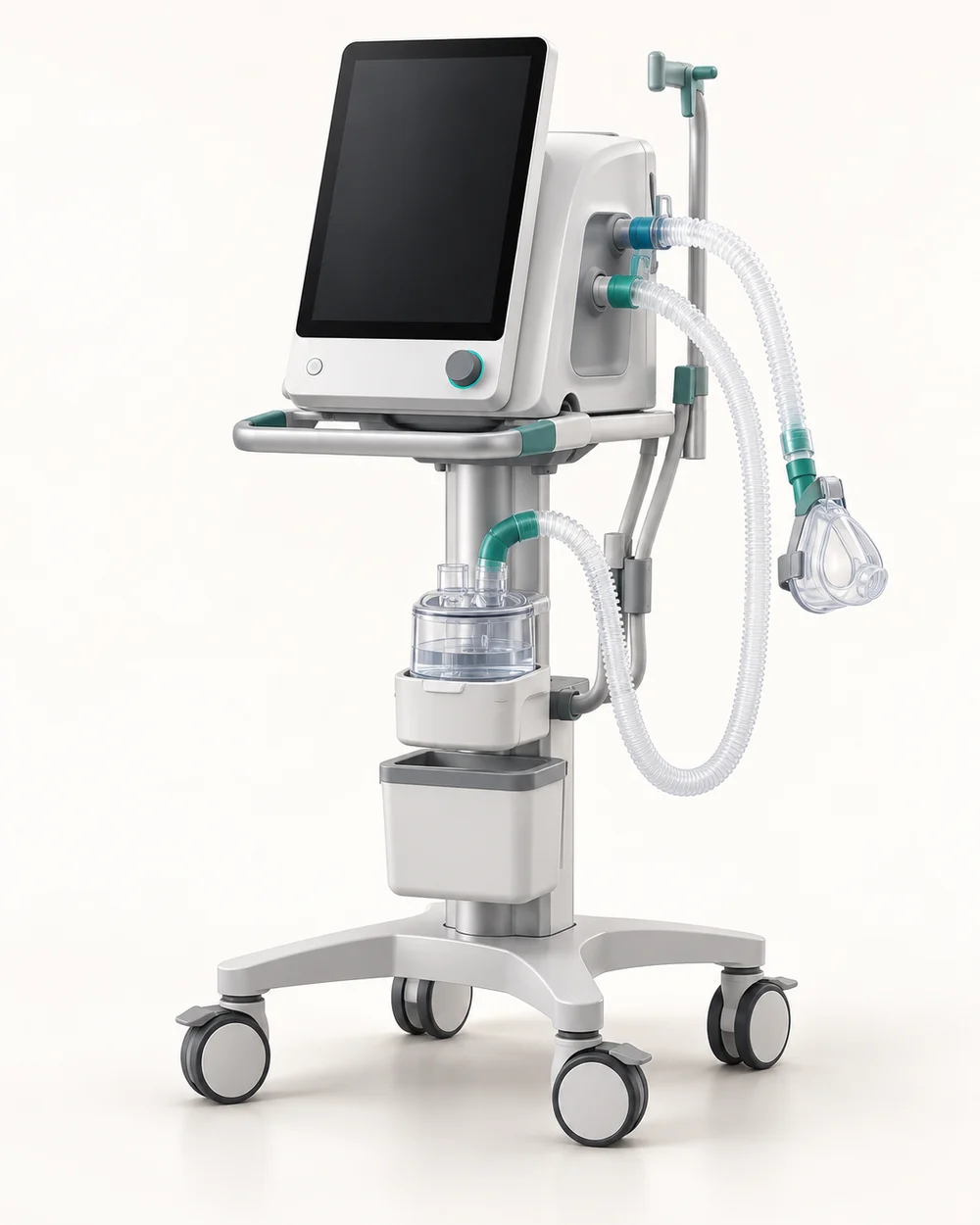
Savina 300 NIV Non-invasive Ventilator
Intensive-care ventilator with non-invasive ventilation
Price on request
Which HFNC systems can I request in Nigeria?
The current category filter returns three distinct products. Use these model-specific brand and category links to see the matching Franance result: COMEN NF5 High-Flow Respiratory Humidifier, Dräger Evita V800, and Dräger Savina 300 NIV. Each result is filtered by brand, category and model query; the phrase “HFNC category” does not mean the three devices are interchangeable or supplied with identical accessories.
Read moreWhat is the difference between a dedicated HFNC unit and a ventilator with high-flow capability in Nigeria?
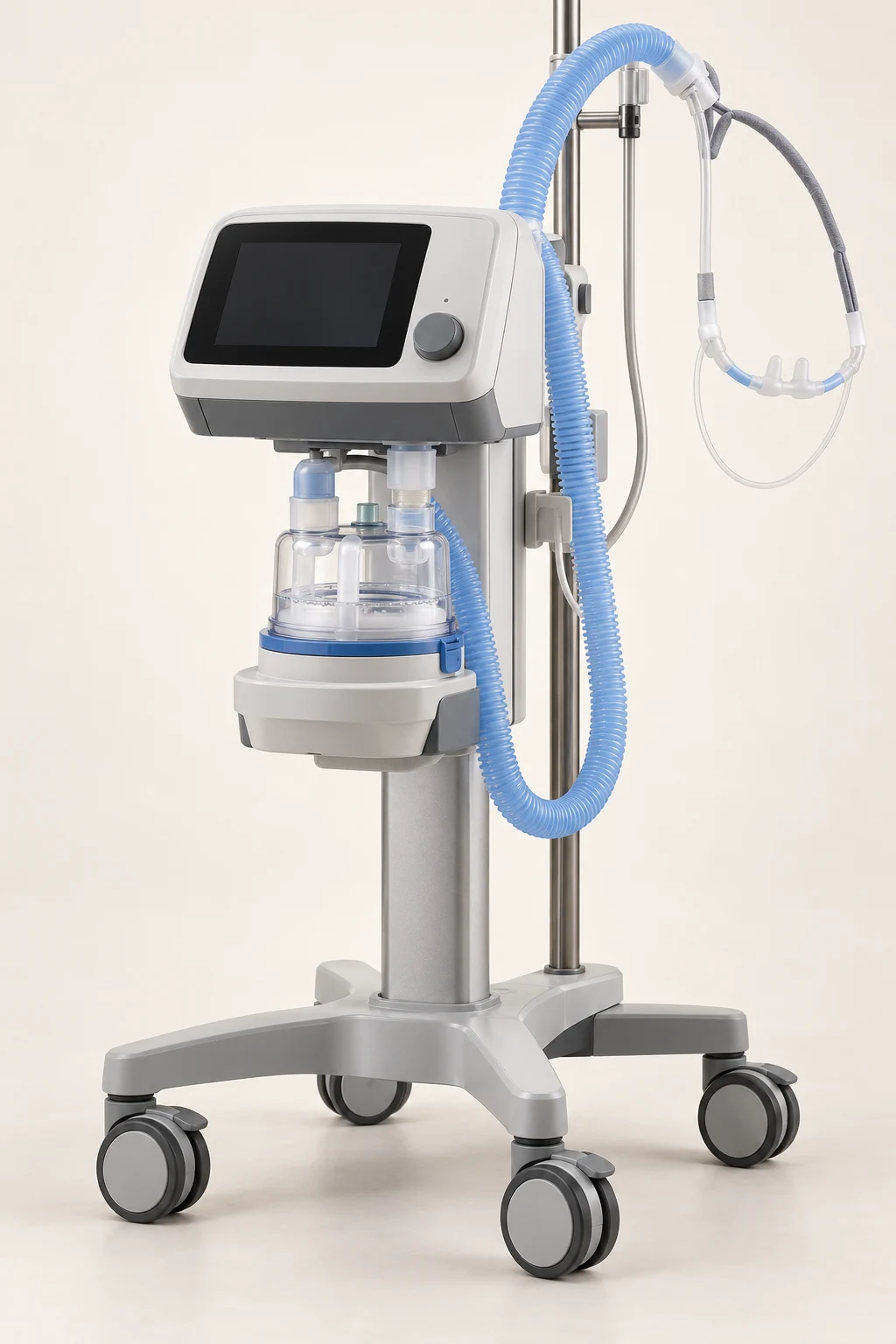
A dedicated high-flow system is designed and listed as high-flow oxygen therapy equipment. COMEN identifies NF5 as a high-flow heated respiratory humidifier with an electronic air-oxygen mixer, temperature monitoring, humidification controls and nasal-cannula interface. The manufacturer lists a 2–80 L/min flow-control range and distinguishes infant/child and adult ranges. Its product page also describes a turbine that does not require compressed-air supply and an integrated battery for intra-hospital transport. Confirm which market-specific version, patient interface, humidifier consumables and optional monitoring are included before treating those published features as part of a quote.
Read moreWhich COMEN NF5 high-flow humidifier is listed in Nigeria?
The category includes the COMEN NF5 listing. COMEN's official NF5 product information calls it a high-flow heated respiratory humidifier. The manufacturer lists a 4.3-inch touch screen, electronic air–oxygen mixing, three temperature sensors, an integrated turbine, optional SpO₂ monitoring and a 2–80 L/min flow-control range. It describes infant/child ranges of 2–30 L/min and adult ranges of 10–80 L/min. These are manufacturer-published product details; they are not a prescription, recommended setting or proof that every option is fitted to the quoted unit.
Read moreBuy HFNC systems in Nigeria
Franance lists three quote-order products in its HFNC category: the COMEN NF5 High-Flow Heated Respiratory Humidifier, Dräger Evita V800 intensive-care ventilator and Dräger Savina 300 NIV intensive-care ventilator. They share a catalogue category because their manufacturers describe high-flow oxygen or HFNC-related capabilities, but they are different equipment architectures. NF5 is dedicated high-flow heated humidification hardware; Evita V800 and Savina 300 NIV are ventilator platforms with documented high-flow functions. Compare the exact requirement and quoted configuration, not category placement alone. Open the HFNC systems listing in Nigeria to review current assignments. The catalogue supports quotation requests: choose a model, specify the facility and requested configuration, and Franance follows up by phone or email. It is not an online checkout, and this page does not prescribe respiratory therapy or determine whether a device is appropriate for any patient.
Which HFNC systems can I request in Nigeria?
The current category filter returns three distinct products. Use these model-specific brand and category links to see the matching Franance result: COMEN NF5 High-Flow Respiratory Humidifier, Dräger Evita V800, and Dräger Savina 300 NIV. Each result is filtered by brand, category and model query; the phrase “HFNC category” does not mean the three devices are interchangeable or supplied with identical accessories.
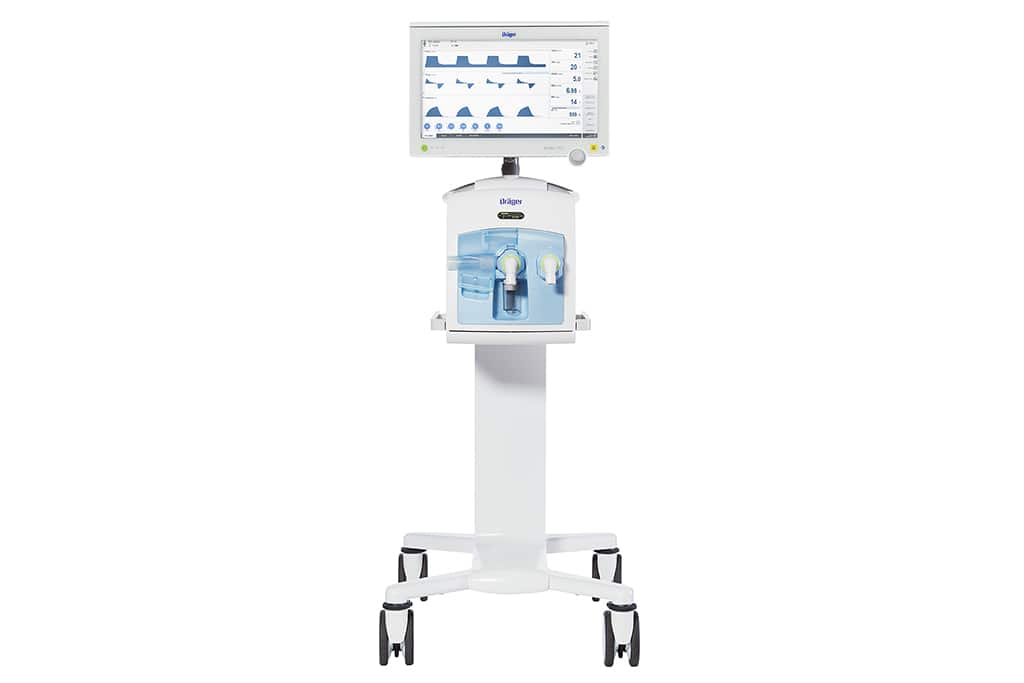
COMEN describes NF5 as a high-flow heated respiratory humidifier. Dräger describes Evita V800 as an ICU ventilator with support for high-flow nasal cannula. Dräger describes Savina 300 NIV as an ICU ventilator that supports transition between high-flow oxygen therapy and non-invasive or invasive ventilation by changing the patient-circuit interface. These definitions matter for a bill of materials: a dedicated humidifier and a ventilator platform differ in gas pathway, circuits, humidification approach, monitoring, accessories, installation and service needs.
Franance product assignments are procurement records, not a statement of clinical equivalence, current stock, regulatory status or compatibility with a facility's existing circuits. Request the exact offered model, regional reference, accessory schedule and manufacturer's current documentation with the quotation.
What is the difference between a dedicated HFNC unit and a ventilator with high-flow capability in Nigeria?
A dedicated high-flow system is designed and listed as high-flow oxygen therapy equipment. COMEN identifies NF5 as a high-flow heated respiratory humidifier with an electronic air-oxygen mixer, temperature monitoring, humidification controls and nasal-cannula interface. The manufacturer lists a 2–80 L/min flow-control range and distinguishes infant/child and adult ranges. Its product page also describes a turbine that does not require compressed-air supply and an integrated battery for intra-hospital transport. Confirm which market-specific version, patient interface, humidifier consumables and optional monitoring are included before treating those published features as part of a quote.
An ICU ventilator is a broader platform. Dräger lists HFNC up to 80 L/min for Evita V800, alongside invasive and non-invasive ventilation and support for active humidification. Its limits, functions and accessories must be checked against the actual delivered software and configuration. Savina 300 NIV is also a ventilator, with Dräger describing high-flow oxygen therapy as one available mode/interface configuration and continuous high flow up to 250 L/min. That published maximum is not an HFNC treatment setting and should not be compared directly with a dedicated HFNC device's therapeutic range: the measurement context, circuit and operating mode differ.
Ask the clinical engineering and respiratory-care teams to identify the equipment class they intend to procure. If they need a dedicated high-flow oxygen therapy system, specify that explicitly. If they need an ICU ventilator that can support a high-flow function, list the required ventilator model, mode, patient category and accessories. A broad “HFNC” request alone is not a sufficient technical specification.
Which COMEN NF5 high-flow humidifier is listed in Nigeria?
The category includes the COMEN NF5 listing. COMEN's official NF5 product information calls it a high-flow heated respiratory humidifier. The manufacturer lists a 4.3-inch touch screen, electronic air–oxygen mixing, three temperature sensors, an integrated turbine, optional SpO₂ monitoring and a 2–80 L/min flow-control range. It describes infant/child ranges of 2–30 L/min and adult ranges of 10–80 L/min. These are manufacturer-published product details; they are not a prescription, recommended setting or proof that every option is fitted to the quoted unit.
For a Nigeria quotation, identify the requested NF5 market version, intended facility, patient-category specification as set by the facility, expected range, oxygen blending requirement, compatible nasal cannula/interface, humidification and water-chamber setup, single-use or reusable circuit parts, trolley and transport requirement. State if optional SpO₂ monitoring is required and ask for the exact compatible sensor technology and supplied components. Confirm whether a humidifier chamber, heater wire, temperature probe, tubing, cannula sizes, power cord, battery and trolley are included, separately quoted or not available in the proposed package.
COMEN describes the NF5 turbine as eliminating the need for compressed-air supply and its integrated battery as supporting intra-hospital transport. Do not infer that there is no oxygen source requirement, that the battery provides a particular runtime, or that the local installation needs no facility review. Ask the supplier to identify electrical input, oxygen connection and purity/pressure requirements, battery configuration, charging time, expected runtime under the proposed configuration and maintenance needs in the written offer.
Which Dräger Evita V800 HFNC configuration can I request in Nigeria?
The Evita V800 HFNC-category result is a cross-assigned ICU ventilator. Dräger's official product information describes high-flow nasal cannula support up to 80 L/min, the possibility of limiting maximum pressure, high-flow oxygen with active humidification, and transition between oxygen therapy, NIV and other ventilation functions. The product remains an ICU ventilator; its presence here does not change its equipment identity or mean a standard unit automatically includes every HFNC-related option.
Ask the quote to state whether the required high-flow function is enabled on the offered V800 configuration, which software version or option is needed, which patient category and flow range are supported in that configuration, and which compatible circuit, humidifier, nasal interface, measurement and monitoring components are supplied. Confirm whether the requested capability is included, requires a licence/accessory, or is not available in the proposed unit. Confirm all installation, gas, power, mounting and training scope with the receiving facility.
The manufacturer's stated maximum is technical product information, not individualized treatment direction or an assurance that a particular circuit or patient interface works with every software version. Do not use a generic Evita V800 listing to infer an accessory's compatibility. Require exact Dräger part references or written compatibility confirmation for the offered model and regional version.
Which Dräger Savina 300 NIV high-flow configuration is listed in Nigeria?
The category's Savina 300 NIV filtered result is also a cross-assigned ventilator, specifically the NIV-labelled product record. Dräger's official Savina 300 NIV product information describes a turbine that compresses ambient air, automatic leak compensation, and transition between high-flow oxygen therapy, NIV and invasive ventilation by changing the patient-circuit interface. Dräger lists continuous high flow up to 250 L/min and describes integrated and external battery options. The figure is a ventilator performance specification; it should not be represented as a patient-appropriate HFNC flow range or treated as equivalent to a dedicated high-flow humidifier's range.
Specify the exact Savina 300 NIV variant, required operating function, circuit and interface, oxygen-source arrangement, humidification arrangement, battery package, trolley and optional items. Ask whether the quotation includes the components required for the intended high-flow configuration, or only the ventilator platform. Confirm the offered software and configuration against current manufacturer instructions. Because the product can be configured for several functions, neither category membership nor a model name alone confirms which mode, accessories or package is supplied.
Dräger describes turbine operation without dependence on central compressed-air supply, but oxygen still needs to be provided as specified for the configuration. Confirm oxygen supply requirements, source, connectors and facility capacity; power demand and backup; and battery configuration and runtime for the offered package. Obtain the information in writing rather than extrapolating from a general product page.
How should I compare flow, humidification and patient interfaces in Nigeria?
Do not compare headline flow numbers without checking what each figure describes. NF5's published flow-control range belongs to a dedicated high-flow heated humidifier. Evita V800's HFNC figure belongs to an ICU ventilator function. Savina 300 NIV's continuous high-flow specification is presented by Dräger in the context of its ventilator platform. They differ in architecture, interfaces, operating modes and accessories. The responsible facility team should define which specification is relevant; this guide does not choose a device or treatment setting.
List the required user/patient category and compatible interface family, but avoid assuming that cannulas, humidifier chambers, heater wires, breathing circuits or connectors are universal. Ask for manufacturer part numbers and written compatibility against the exact model and market version. Clarify the supplied and optional items, reusable and single-use parts, replacement frequency stated by the manufacturer, cleaning/reprocessing instructions and storage requirements. Where a monitoring option is requested, specify sensor technology and confirm compatibility, cable and disposable sensor references.
Humidification details also require precision. Identify whether the system uses a dedicated heated humidifier, active humidification integrated into a ventilator circuit, or another approved configuration. Request the chamber type, water specification, temperature probe, heater-wire arrangement, circuit configuration and condensation-management accessories appropriate to the offered product. Do not infer these from a product photograph or the words “heated” or “high flow.”
What power, oxygen and facility details should I confirm for Nigeria delivery?
Give Franance the destination facility, city and state, department, intended room or bedspace count and whether equipment must move between rooms. Ask the supplier to confirm input voltage and frequency, plug and earthing needs, power consumption, backup-power requirements, battery package and charging arrangement. If the facility has generators, UPS or medical-grade outlets, provide the engineering team's requirements and ask for compatibility confirmation. Do not assume a device's battery replaces room power or supports a particular operating duration without a written model-specific specification.
State the oxygen source and its available outlet/connector, pressure and capacity as confirmed by the facility. Where the system or configuration uses medical air, identify that separately and ask the supplier to confirm whether a central supply or built-in turbine is used. Do not treat the absence of a compressed-air connection as absence of oxygen-source, humidification, electrical or ventilation requirements. Ask whether commissioning, acceptance checks, staff orientation, preventive maintenance and service response in the destination state are offered, and define each item in the quotation.
For multiple units, attach a schedule showing each ward or bedspace, requested equipment class, model/function, accessories, quantity, power/oxygen arrangement and delivery point. Request separate line items for equipment, circuits and consumables, spares, installation, training, warranty and service. This makes technical and commercial comparison clearer and allows facility engineering to review the installation scope before an order is placed.
What consumables, accessories and maintenance should I include in the quote?
Request a complete model-specific accessory schedule. Depending on the offered device and configuration, the facility may need patient interfaces, breathing circuits, humidifier chambers, heater wires, temperature probes, oxygen hoses, filters, monitoring sensors, trolley or mounting parts, batteries and power cables. This is a checklist for quote review, not a claim that every item is compatible with every model or needed for every configuration. Ask the supplier to label each line as included, optional, separately priced or facility-supplied, with manufacturer part number and quantity.
For recurring supplies, confirm availability and compatible references for the intended model and patient interface. Ask about shelf life and storage only where the manufacturer specifies it; request replacement intervals and cleaning/reprocessing instructions from the current user manual. Do not assume a generic cannula, tubing, water chamber or sensor can be substituted based on a similar shape or connector. If alternatives are proposed, request written evidence that the manufacturer identifies them for the exact device and intended configuration.
Clarify preventive maintenance, inspection, calibration or verification tasks applicable to the specific equipment, software updates, repair route, warranty terms and availability of replacement parts. Ask which checks are performed before delivery and what documentation is handed over. Any local service commitment should name the responsible provider, geographic coverage, response target, exclusions and escalation path. Franance's catalogue does not itself establish Nigerian stock or service coverage; ask for the current commercial and technical position in the quotation.
What should a Nigeria HFNC quotation include?
Send a written request naming the chosen product and exact model: COMEN NF5, Dräger Evita V800, or Dräger Savina 300 NIV. State whether you need a dedicated HFNC humidifier or an ICU ventilator with documented high-flow capability. Include quantity, delivery city and state, facility type, department, bedspace count, required patient-category configuration, flow/function specification approved by the facility, oxygen and medical-air source, power and backup details, humidification setup, compatible circuits and interfaces, monitoring options, trolley or mounting requirements, spares and recurring consumables.
Ask Franance to return a quote that identifies the offered manufacturer reference, regional version, included and optional accessories, software or licences, compatible consumables, electrical and gas requirements, delivery time, shipping/installation scope, training, warranty, local support and validity period. Ask the supplier to flag deviations from the requested specification rather than silently substituting a model or accessory. For a new installation or multi-bed project, request a site survey or written utility/interface review before finalizing the order.
Franance handles quote orders and follows up by phone or email; the product pages do not provide online purchase or payment. Avoid sending patient-identifying information. For a clinical specification, share only equipment requirements approved by the facility's responsible clinical and biomedical engineering teams.
Can I use this guide to select HFNC treatment for a patient in Nigeria?
No. This guide compares equipment descriptions and supports procurement. It does not diagnose a condition, recommend high-flow therapy, set flow or oxygen values, determine which patient group should receive a mode, or advise changing from one ventilator or interface to another. Use the responsible clinical team's decision and the current manufacturer instructions for use, training and operation.
Technical documents and product pages can differ by region and revision. The COMEN and Dräger references linked here establish the specific capabilities noted in this guide, but they do not establish the exact package, regulatory status, availability, accessories, warranty or support Franance can currently supply in Nigeria. Verify those points in writing for the exact offered unit before issuing a purchase order.
Where can I compare HFNC models and request a quotation in Nigeria?
Start with the complete HFNC systems category, then compare the COMEN NF5, Dräger Evita V800 and Dräger Savina 300 NIV filtered results. Related listings include ICU ventilators, non-invasive ventilators, and the broader respiratory-care catalogue. Those pages help distinguish the equipment families; they do not imply the models have equal capabilities.
For a quote, use Franance's contact page and include the exact model, configuration, accessories, facility utilities, quantity and delivery location. Request a model-specific written response that confirms the actual supply scope and any deviations. Franance will follow up by phone or email.
Common questions
Which products are assigned to Franance's HFNC category?
The current filtered listing contains COMEN NF5 High-Flow Heated Respiratory Humidifier, Dräger Evita V800 and Dräger Savina 300 NIV. They have different equipment architectures and are not interchangeable by category assignment.
Is Evita V800 a dedicated HFNC device?
Dräger identifies Evita V800 as an ICU ventilator and documents HFNC support as a function. Confirm the enabled configuration and compatible accessories; do not assume the listing is a dedicated standalone HFNC package.
Does Savina 300 NIV's 250 L/min figure mean that is an HFNC setting?
No. Dräger publishes continuous high flow up to 250 L/min for the Savina 300 NIV ventilator. That platform specification is not a patient-specific setting or a directly comparable dedicated-HFNC treatment range.
Can I request a quote for an HFNC system in Nigeria?
Yes. Send Franance the model, facility, delivery location, configuration, interface and circuit requirements, utilities, accessories, quantity and service expectations. Franance follows up by phone or email; online checkout is not offered.
Does this guide recommend HFNC therapy or settings?
No. It is equipment procurement information only. Clinical selection, settings and use are determined by qualified clinicians using current manufacturer instructions.
Request an HFNC systems quotation from Franance.
Send the exact model, required configuration, compatible interfaces and circuits, accessories, facility utilities, quantity and destination. Ask for the regional reference, included scope, delivery, installation and support terms in writing. Franance will follow up by phone or email.
Request an HFNC systems quotationNeed an equipment quote?
Add the models you need to a quote order, or send us your equipment list.