

Buy Auto Refractor in Nigeria.
Browse auto refractor and request a quotation for your facility in Nigeria. Include the configuration, quantity and delivery location you need.
Products
2 models
Which auto refractors are listed in Nigeria?
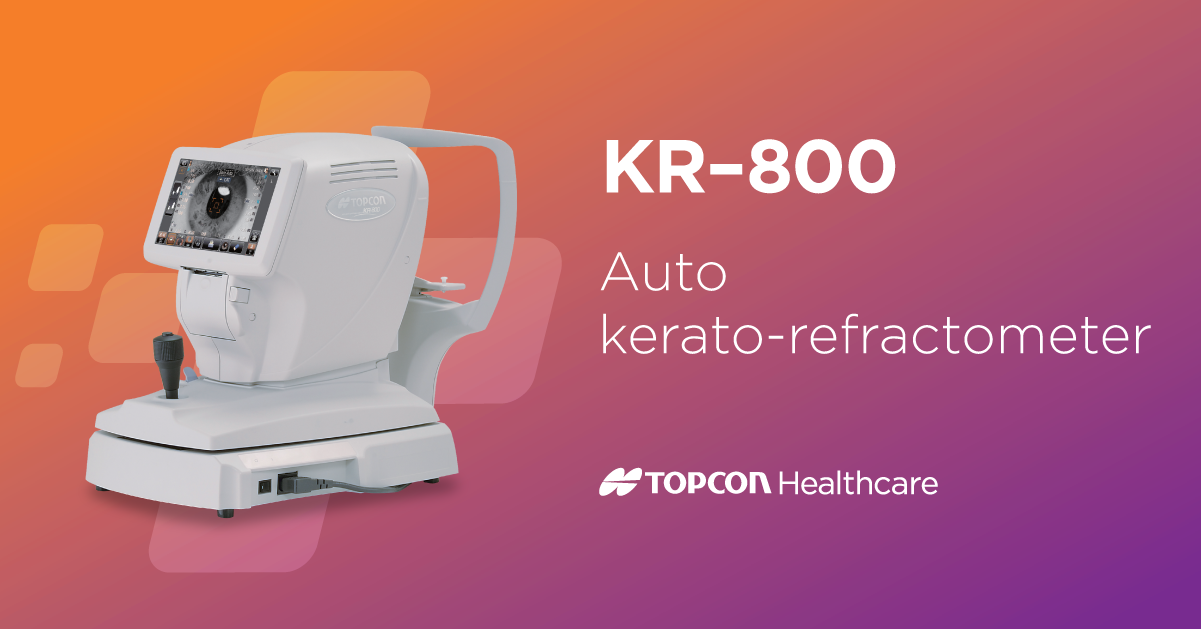
The current Franance listing has two Topcon models in this leaf: the KR-800 Auto Kerato-Refractometer and KR-1 Fully-Automated Kerato-Refractometer. Browse the full auto refractor listing for the assigned models, or the broader ophthalmology equipment category for related eye-care equipment.
Read moreWhat does a kerato-refractometer measure?
An auto refractor provides objective measurements of refractive power. A kerato-refractometer also measures corneal curvature. For the two listed Topcon models, manufacturer specifications include spherical and cylindrical refractive power, astigmatic axis, corneal curvature radius, corneal refractive power and corneal astigmatic values. Topcon lists the KR-800 pupil minimum as 2 mm, and lists that same minimum for the KR-1. Such specifications describe the instrument’s measurement capabilities; they do not establish that a reading can be obtained in every patient or that it replaces a complete eye examination.
Read moreHow do the KR-800 and KR-1 differ?
The KR-800 is described by Topcon as a compact, easy-to-use auto kerato-refractometer with Rotary Prism measurement, an 8.5-inch colour touchscreen and joystick. KR-1 is a fully automated kerato-refractometer featuring Rotary Prism technology, a 360-degree rotatable touchscreen and USB or LAN export. The manufacturer presents KR-1 as allowing multiple exam-room layouts through its rotating panel. Compare the actual operator interaction and intended workflow in a product demonstration if available.
Read moreBuy Auto Refractors in Nigeria: Compare Topcon KR-800 and KR-1
To buy an auto refractor in Nigeria, decide whether your clinic needs objective refraction alone or combined refractive and keratometric measurements, then compare the exact device, measurement range, alignment workflow, data connections, room layout and service terms. Franance lists the Topcon KR-800 Auto Kerato-Refractometer and KR-1 Fully-Automated Kerato-Refractometer. Both are kerato-refractometers, so their listings should not be described as refractometers that only measure spherical prescription. Browse the auto refractor category in Nigeria, compare the Topcon KR-800 listing and Topcon KR-1 listing, then request a quotation from Franance. Franance follows up by phone or email; the page is a quote order, not online checkout. The KR-800 manufacturer page describes a joystick-controlled 8.5-inch colour touchscreen and Rotary Prism technology; Topcon describes KR-1 as fully automated, with a rotatable touchscreen control panel. Both manufacturer pages list refraction, corneal curvature and data-export specifications. These are equipment specifications, not a recommendation for a particular patient or clinical result. The exact regional package, interoperability, local availability and price must be confirmed in a written offer.
Which auto refractors are listed in Nigeria?
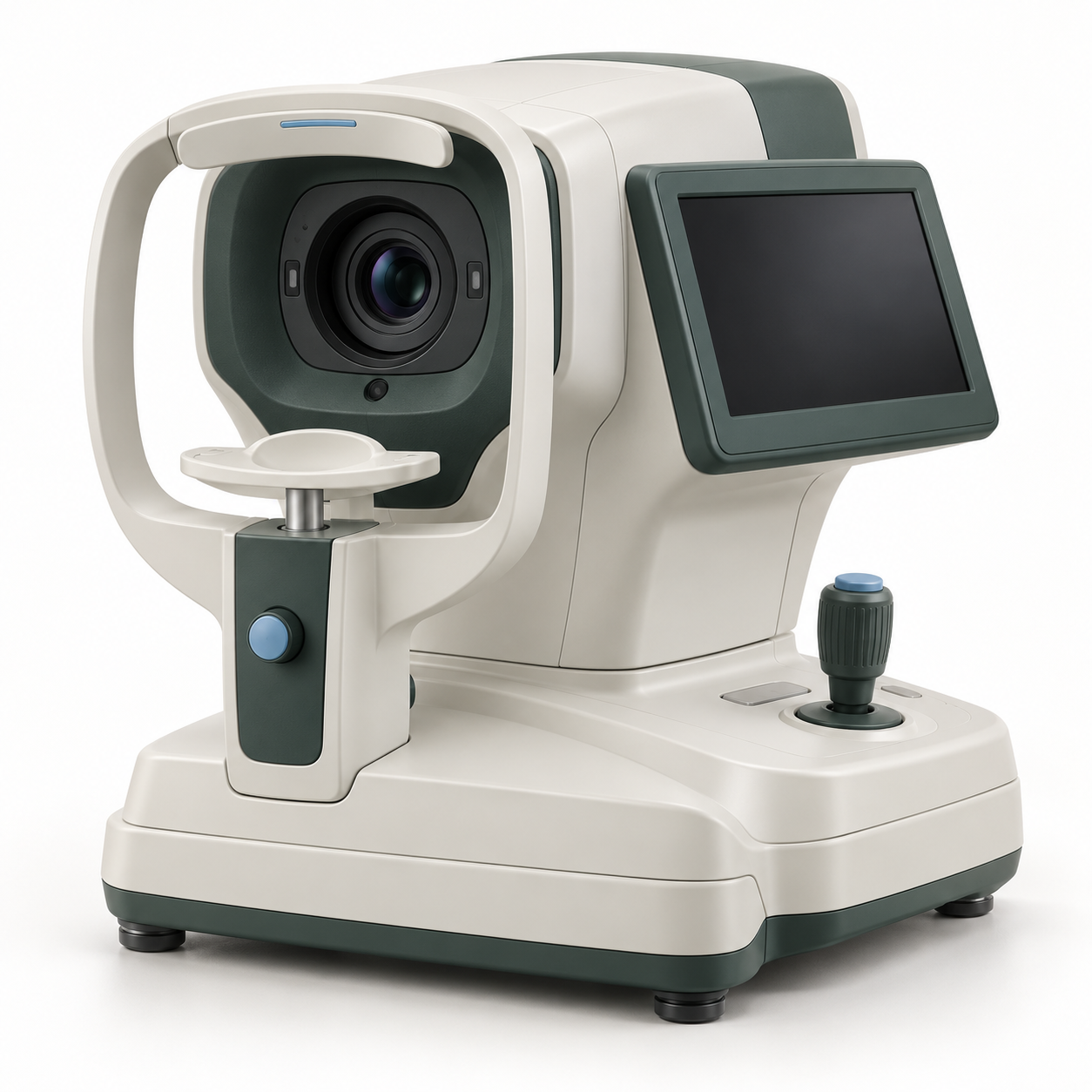
The current Franance listing has two Topcon models in this leaf: the KR-800 Auto Kerato-Refractometer and KR-1 Fully-Automated Kerato-Refractometer. Browse the full auto refractor listing for the assigned models, or the broader ophthalmology equipment category for related eye-care equipment.
Topcon calls both devices kerato-refractometers: they measure refractive power and corneal curvature. The KR-800 product page highlights a joystick and 8.5-inch colour touchscreen. Topcon describes KR-1 as fully automated with a control panel that rotates through 360 degrees. Its product page highlights touchscreen operation, a space-saving layout and USB or LAN data export. The category contains exactly those two current product records, so do not assume other products in Topcon’s broader international range are part of this Franance selection.
What does a kerato-refractometer measure?
An auto refractor provides objective measurements of refractive power. A kerato-refractometer also measures corneal curvature. For the two listed Topcon models, manufacturer specifications include spherical and cylindrical refractive power, astigmatic axis, corneal curvature radius, corneal refractive power and corneal astigmatic values. Topcon lists the KR-800 pupil minimum as 2 mm, and lists that same minimum for the KR-1. Such specifications describe the instrument’s measurement capabilities; they do not establish that a reading can be obtained in every patient or that it replaces a complete eye examination.
A clinic should have its optometrist or ophthalmologist define how the instrument fits the pre-test or refraction workflow. Ask which measurements must be available, what range is needed for the service, how operators position patients, and how results are reviewed with other examination findings. Do not purchase solely on a general “auto refractor” label if corneal curvature is required, or infer that keratometry alone provides every measurement needed for contact-lens fitting or specialist evaluation.
Model specifications use different display increments for some measurements, including refraction and corneal powers. These are technical details to compare against your service’s requirement, not patient-care instructions. Follow the instrument’s current instructions for use and the clinic’s approved protocols.
How do the KR-800 and KR-1 differ?
The KR-800 is described by Topcon as a compact, easy-to-use auto kerato-refractometer with Rotary Prism measurement, an 8.5-inch colour touchscreen and joystick. KR-1 is a fully automated kerato-refractometer featuring Rotary Prism technology, a 360-degree rotatable touchscreen and USB or LAN export. The manufacturer presents KR-1 as allowing multiple exam-room layouts through its rotating panel. Compare the actual operator interaction and intended workflow in a product demonstration if available.
The published KR-800 specifications include a spherical refractive-power range from -25 D to +22 D, cylindrical power from 0 D to +10 D, an astigmatic axis of 0 to 180 degrees, a pupil minimum of 2 mm and a corneal radius range from 5.00 to 10.00 mm. Topcon’s KR-1 page reports spherical power from -25 D to +22 D, a 2 mm minimum pupil and a corneal radius range from 5.00 to 10.00 mm. Manufacturer pages may be revised or vary by region; verify the current specification sheet for the exact unit before comparing these figures or placing an order.
Topcon lists KR-800 at 15 kg with 100–240 V AC, 50–60 Hz and 30–70 VA. KR-1 is listed at 19 kg with 100–240 V AC, 50–60 Hz and 75 VA. Confirm the exact dimensions, shipping weight, electrical connector and accessory set against the offered regional variant. These differences may affect bench planning and room placement, but do not determine which instrument is clinically appropriate.
Which model suits a clinic’s examination room and workflow?
Start from the clinical service specification and operator workflow. Consider how many examination lanes will use the instrument, the intended patient flow, who will position the patient and who will review results. If the clinic needs manual joystick-assisted operation, examine the KR-800’s manufacturer-described control arrangement. If a rotatable display and fully automated operation match the planned workflow, evaluate the KR-1. A product feature should be judged with the clinicians who will use it rather than inferred to improve throughput or clinical outcomes.
Measure the space available on the examination table or stand and the working distance around the patient. Compare the instrument body dimensions, chin-rest and forehead-rest access, operator sightline, display orientation, stool position, patient approach and cleaning access with the actual room layout. Topcon emphasizes compact dimensions for KR-800 and a rotatable control panel for KR-1, but the clinic should verify that either unit fits the specific lane and furniture.
Consider whether the auto refractor will be a standalone pre-test device or part of a connected exam lane. Topcon’s product family includes other systems and offers a digital exam lane concept, but neither fact means the required companion equipment, software or integration is included in these standalone catalogue listings. List each device, mount, chair, table, phoropter, chart and computer that the clinic expects to connect, then request confirmation of compatibility and package boundaries.
How should I plan USB, LAN and patient data integration?
Both current manufacturer pages describe USB and LAN data export; the KR-800 specification also lists RS-232C export, while KR-1 lists USB import, RS-232C export and LAN export. The exact connector directions and supported data workflow matter. A port listing does not establish interoperability with a named electronic medical record (EMR), hospital information system, optical practice system, printer or software version.
Ask the clinic’s IT team to name the target system, required data fields, destination workstation, network arrangement, security policy and record-matching workflow. Request Topcon or the supplier to confirm supported interfaces, export format, software requirements, licensing, cabling and any additional adapter or workstation. If the device is intended to operate standalone, specify whether local storage, printing or manual transfer is required and confirm what the offered configuration supports.
Do not assume that a USB connection imports or exports the same way as LAN or RS-232C. Request a system diagram and the exact interface specification for the offered model. Ask who is responsible for configuration, testing and user training, and whether an interface demonstration can be included in commissioning. Do not put identifiable patient data in a procurement test unless the clinic’s information-governance process permits it.
What space, power and installation details should I verify?
The KR-800 page reports dimensions of 317–341 mm wide, 521–538 mm deep and 447–477 mm high, a weight of 15 kg, and 100–240 V AC, 50–60 Hz, 30–70 VA. The KR-1 page reports 19 kg and 100–240 V AC, 50–60 Hz, 75 VA; its dimension text on the page appears to contain a width-unit formatting error, so use the current manufacturer data sheet rather than copying that dimension as printed. Confirm dimensions, weight, operating clearances and table or stand requirements before purchase.
For a Nigerian site, have facilities or electrical staff confirm the actual power connection, voltage range, frequency, plug, grounding and backup supply against the offered variant and instructions. While the published power ranges appear to cover common supply frequencies, this does not confirm the included plug, adapter, accessory package or suitability of the clinic’s backup system. Ask the quote to specify these details.
Plan delivery access, installation location, staff access and a stable, suitable surface. Request the installation and commissioning scope and ask whether the supplier will verify operation, configure any data output and provide a handover. If the instrument is part of a larger exam lane, have the whole room arrangement reviewed so patient and staff movement, cable routing and equipment sightlines work together.
What should I include in a Topcon auto refractor quotation request?
Tell Franance the intended model or requirement, whether refractive and corneal-curvature measurements are needed, room layout, operator workflow, data interface, computer or EMR destination, quantity, delivery address, city and state. Include the model of any existing Topcon or third-party equipment with which the unit must connect. If you are evaluating both models, ask for a side-by-side offer and demonstration or technical review.
Request an itemized quotation naming KR-800 or KR-1 and the exact manufacturer reference, regional variant, technical specification, included stand or table, chin-rest consumables, printer or other accessories if required, interface components, software or licenses, manuals, installation, configuration, training, warranty and service terms. Ask Franance to state price, availability and delivery assumptions for your Nigerian destination. The catalogue does not show an online purchase price or confirm that a device is in stock.
Ask for the model’s current instructions for use and confirm which measurements, connections and accessories apply to the actual offer. Have clinical staff approve the requirement, IT review the data flow and facilities staff check the site. Request a Topcon auto refractor quotation from Franance.
Frequently asked questions about auto refractors in Nigeria
### Does the listed Topcon KR-800 measure keratometry?
Yes. Topcon describes KR-800 as an auto kerato-refractometer, and its specification includes corneal curvature and corneal refractive measurements. Verify the exact configuration and current specifications for the offered unit.
### Is the KR-1 fully automated?
Topcon describes the KR-1 as a fully automated kerato-refractometer with a rotatable touchscreen panel. Confirm the precise regional model and package in the quotation; the listing does not establish what accessories or connected systems are included.
### Can either model connect to an EMR?
Topcon lists data export interfaces, including USB and LAN, but interface presence alone does not establish compatibility with a specific EMR or software. Request written confirmation for the exact system, data format, license and configuration.
### Are the KR-800 and KR-1 available at a confirmed price in Nigeria?
No price, stock, delivery, registration, warranty or local service is confirmed by the catalogue or manufacturer pages. Ask Franance to confirm these terms in a written quotation for your destination.
Sources and limitations
- Topcon KR-800 Auto Kerato-Refractometer — manufacturer features, measurements, interface, dimensions, weight and power data. Accessed 20 October 2026. - Topcon KR-1 Fully-Automated Kerato-Refractometer — manufacturer features, measurement ranges, interfaces, weight and power data. Accessed 20 October 2026. - Topcon auto-refractor product category — current manufacturer product-family names and distinctions. Accessed 20 October 2026.
Specifications may change and regional packages can differ. Confirm the current documents for the offered model. This guide is purchasing information, not clinical advice. It does not establish Nigerian stock, price, registration, delivery, warranty, interoperability or local support.
Common questions
Does Topcon KR-800 measure corneal curvature?
Yes. Topcon identifies KR-800 as an auto kerato-refractometer and lists corneal-curvature and corneal-power measurements. Confirm the current specification for the exact offered unit.
Is the KR-1 fully automated?
Topcon describes the KR-1 as fully automated with a rotatable touchscreen panel. Verify the exact regional configuration and included accessories in the quotation.
Can either model connect to my EMR?
Topcon lists USB and LAN interfaces, but these do not prove compatibility with a named EMR. Request written confirmation of the software, format, configuration and licence required.
Are these auto refractors confirmed available in Nigeria?
The catalogue and manufacturer pages do not establish Nigerian stock, price, registration, delivery, warranty or local service. Franance can confirm the terms for your destination in a written quotation.
Request a Topcon auto refractor quotation from Franance.
Specify KR-800 or KR-1, the examination-room layout, required measurements, data destination, accessories, quantity and delivery city and state. Ask the offer to name the exact regional model and reference, current specifications, interface and software details, installation and training scope, price, availability, delivery, warranty and service terms.
Request an auto refractor quoteNeed an equipment quote?
Add the models you need to a quote order, or send us your equipment list.