

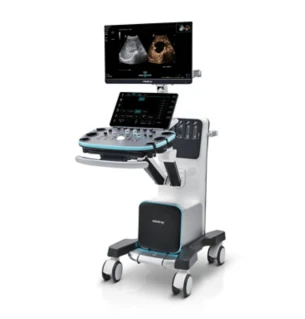
Buy Ultrasound Scanner (General) in Nigeria.
Browse ultrasound scanner (general) and request a quotation for your facility in Nigeria. Include the configuration, quantity and delivery location you need.
Products
9 models
Where can I buy a general ultrasound scanner in Nigeria?
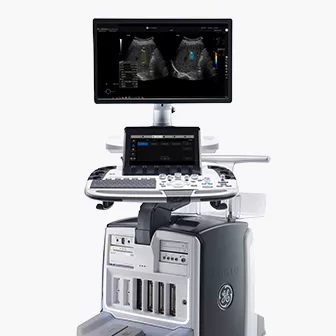
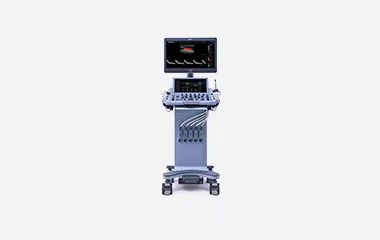
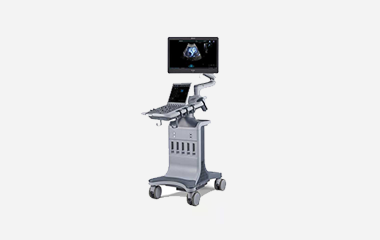
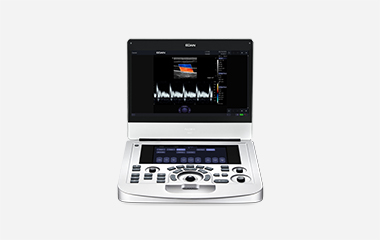
Start with the general ultrasound scanner category in Nigeria and compare the currently listed Mindray Resona I9 and GE HealthCare LOGIQ E10. These filtered listings identify the catalogue records assigned to this category today; they do not imply that these are the only systems available from the manufacturers or that a specific unit is in stock.
Read moreWhich general ultrasound scanner models does Franance list?
The current category contains two catalogue records. Mindray’s Resona I9 listing is presented by Mindray as a general-imaging diagnostic ultrasound system built around its ZONE Sonography Technology+ platform. The manufacturer describes imaging, workflow and application capabilities on its product page; exact features and options should be verified against the regional model code and written offer.
Read moreWhat should a facility assess before choosing a general-purpose ultrasound system?
Define the workload before selecting a platform. List the examinations and patient groups the facility expects to serve, such as abdominal, vascular, small-parts, musculoskeletal, urological, paediatric or other approved applications. A system’s suitability depends on its supported transducers, application software, measurements, image review and workflow for those tasks. The clinical users and biomedical or clinical engineering team should set the acceptance criteria; a higher feature count or broad marketing description alone does not prove that a configuration fits.
Read moreBuy General Ultrasound Scanners in Nigeria: Compare Systems and Request a Quote
Buy a general-purpose ultrasound scanner in Nigeria by matching the system, probes, software and service scope to the examinations your facility actually performs. Franance currently lists the Mindray Resona I9 and GE HealthCare LOGIQ E10 in this category. Both are console-based diagnostic ultrasound platforms, but their configurations, application packages, probes and regional options must be checked model by model. The catalogue supports quotation orders: Franance follows up by phone or email, and there is no online payment or automatic confirmation of price, stock, registration, delivery or installation.
Where can I buy a general ultrasound scanner in Nigeria?
Start with the general ultrasound scanner category in Nigeria and compare the currently listed Mindray Resona I9 and GE HealthCare LOGIQ E10. These filtered listings identify the catalogue records assigned to this category today; they do not imply that these are the only systems available from the manufacturers or that a specific unit is in stock.
For a useful enquiry, give Franance the intended applications, facility type, destination city and state, required quantity, project timing and the main clinical and technical requirements. Name the preferred model if you have one, or provide a performance specification if you want options compared. Include any requested probes, software, trolley, printer, connectivity, installation, applications training and service scope. Franance can follow up by phone or email to clarify the requirements and prepare a written quotation. Ask the proposal to state the exact model and configuration, price basis, availability, inclusions, exclusions and delivery assumptions.
Which general ultrasound scanner models does Franance list?
The current category contains two catalogue records. Mindray’s Resona I9 listing is presented by Mindray as a general-imaging diagnostic ultrasound system built around its ZONE Sonography Technology+ platform. The manufacturer describes imaging, workflow and application capabilities on its product page; exact features and options should be verified against the regional model code and written offer.
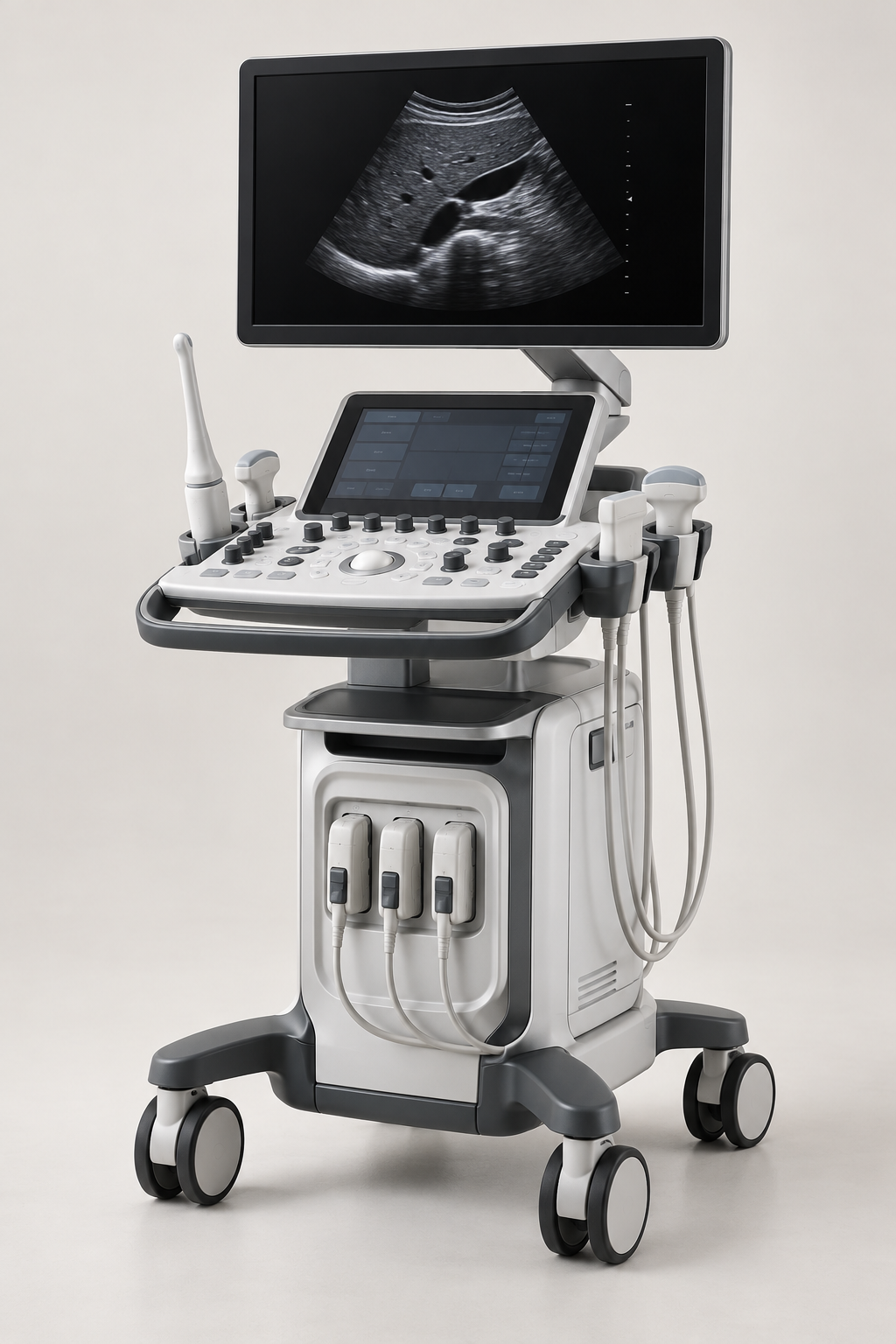
GE HealthCare’s LOGIQ E10 listing belongs to the LOGIQ E10 Series. GE HealthCare describes the series as a configurable platform for diverse full-body imaging applications, with software and workflow tools that depend on system model and configuration. The series page distinguishes LOGIQ E10 from LOGIQ E10s, so buyers should request the precise model name, hardware revision, software versions and included options rather than treating the family name as a complete specification.
The product pages are starting points for procurement, not independent clinical assessments. Request current manufacturer documentation for the exact configuration being quoted, and compare it with a facility-approved requirement schedule. A product title, marketing description or image does not establish what probes, licences, accessories, training, installation or warranty are included in a particular transaction.
What should a facility assess before choosing a general-purpose ultrasound system?
Define the workload before selecting a platform. List the examinations and patient groups the facility expects to serve, such as abdominal, vascular, small-parts, musculoskeletal, urological, paediatric or other approved applications. A system’s suitability depends on its supported transducers, application software, measurements, image review and workflow for those tasks. The clinical users and biomedical or clinical engineering team should set the acceptance criteria; a higher feature count or broad marketing description alone does not prove that a configuration fits.
Write down expected examination volume, number of rooms, user experience, patient mix, portability needs, reporting process and future expansion. Distinguish requirements from preferences. Ask each bidder to mark requested functions as standard, optional, unavailable or requiring a separate licence. Check whether the proposed system can support the intended probes simultaneously, how many active probe ports are supplied, and what accessories or adapters are required. Where a feature depends on software, identify the licence name and version, its duration and any renewal or connectivity conditions.
Do not choose solely by a list of isolated specifications such as monitor size, channel count, frame rate or advertised image modes. Professional guidance from the American Institute of Ultrasound in Medicine notes that some objective specifications are useful, while several system or transducer values in isolation may not predict the diagnostic performance a user experiences. Compare the complete configured system against the facility’s defined clinical tasks and manufacturer evidence.
Which probes and accessories should I include in the ultrasound quotation?
Probe selection is central to the specification. Describe the exams and anatomy first, then request the manufacturer’s transducer list for the exact system. A typical facility may evaluate a curved-array probe for general abdominal work, a linear-array probe for superficial structures and vascular applications, and additional phased-array, endocavity or specialty probes where its approved services require them. These are examples to structure a discussion, not a prescription or a statement that any specific probe is included with the listed models.
For every transducer, record its exact model or part number, frequency range, intended application, connector compatibility, quantity and included accessories. Ask how the quoted probe is cleaned and disinfected, whether it requires a specified low-temperature sterilisation process, and what approved products and procedures apply. Confirm availability of probe covers, gel, cable supports, holders and replacement parts where needed. Probe compatibility and processing instructions must come from the manufacturer’s current instructions for use; do not assume that a connector or similar-looking model is interchangeable.
Also identify the supplied monitor, control panel, trolley, battery, printer or reporting accessories, gel warmer and any required network or power components. WHO’s general ultrasound technical-specification template treats accessories, consumables, spare parts, utilities, environmental conditions, acceptance testing and user training as procurement topics. Use the schedule to surface what is needed for a complete installation and what is consumable or separately priced.
How should I compare image quality, software and workflow claims?
Ask for a model-specific technical document that explains the imaging platform, available modes, transducers, software and supported applications. Compare the system using representative clinical tasks and the same evaluation process for each bidder. A demonstration can help users assess image presentation, controls, exam presets, measurement workflow, annotations, review and reporting, but it should be planned by qualified staff and should not substitute for a technical specification or clinical validation.
For software-assisted measurements or automated functions, request the exact feature name, intended use, compatible software version, licence status and any required data connection. Check whether it is available in the offered region and configuration. Ask how upgrades are delivered, who can install them, whether they affect existing workflows and how cybersecurity and patient-data responsibilities are handled. Avoid comparing product families based only on terms such as “AI,” “premium” or “advanced”; require the supplier to map each requested function to the offered configuration and its evidence.
Assess the whole workflow: image storage and export, DICOM services where required, worklist integration, reporting tools, network access, backup and user access controls. Document the facility’s existing PACS, RIS or other systems and ask the supplier to identify interfaces, licences and integration work that are included or excluded. Franance can include these requirements in a quote order so the written proposal can be reviewed against the facility’s actual workflow.
What power, room and environmental requirements should I plan for?
Before ordering, ask for the current site-planning guide for the exact model and configuration. Confirm the permitted operating temperature and humidity, mains input, grounding, power protection, room layout, trolley footprint, access route, clearances, network connections and any cooling or ventilation requirements. The room should allow safe movement of the system and patient, access for cleaning and maintenance, and a workflow that follows facility infection-prevention procedures.
Check the building’s power quality and outlet placement with qualified engineering staff. Confirm whether the system has a battery and what functions or operating time it supports; do not assume a battery is included or that it can replace the facility’s power-protection plan. If the unit will be moved between rooms, evaluate door widths, lift access, floor transitions, cable management and parking or storage. For a fixed room, plan examination couch compatibility, privacy and access to the patient and operator controls.
Agree who will inspect the site, deliver and position the system, configure network connections, perform acceptance checks and train users. Record any civil, electrical, network or furniture work that the customer must complete. These responsibilities and dependencies should be written into the quotation rather than inferred from a product listing. The actual requirements are model- and configuration-specific, so use the manufacturer’s documentation and local engineering review.
What regulatory documents and acceptance checks should a Nigerian buyer request?
Ask the supplier to identify the exact medical-device manufacturer, model, intended market configuration and applicable product documents. NAFDAC’s current medical-device registration guidance states that medical devices imported, advertised, sold, distributed or used in Nigeria are subject to registration requirements under the applicable rules. The buyer should request the relevant registration or regulatory evidence for the offered product and verify requirements with NAFDAC or a qualified regulatory adviser. A catalogue entry or supplier statement alone does not prove registration status.
Before acceptance, agree a documented checklist that maps the order to delivery: model and serial-number identity, supplied probes and accessories, software and licences, manuals, labels, installation condition, power-on checks, image and measurement functions, network connections, user accounts, acceptance records and training. Define who performs each check and how discrepancies are resolved. Clinical users should validate the agreed workflow; biomedical engineering should record asset details and maintenance information.
Ask for the manufacturer’s instructions for use, service and maintenance documentation, warranty terms, preventive-maintenance schedule, spare-parts process and service escalation route. Confirm training coverage for operators and technical staff, and specify whether it is onsite or remote, how many participants are included and what completion records are supplied. Requirements vary by product and transaction; this guide is procurement information, not legal, clinical or engineering advice.
What affects the price of a general ultrasound scanner in Nigeria?
There is no dependable single price for a “general ultrasound machine.” The quotation depends on the exact system and hardware revision, probes, application packages, software licences, accessories, trolley, printer or other peripherals, delivery destination, installation, training, warranty and service scope. Exchange rates, shipping, import responsibilities, taxes or duties and project-specific requirements can also affect a delivered cost. A brief catalogue description does not establish any of these commercial terms.
Request separate line items for the system, each transducer, software or licence, accessories, freight and insurance, import or clearance responsibilities, installation, commissioning, training, warranty and ongoing maintenance. Ask for the quote currency, validity period, delivery point, estimated lead time and all exclusions. Confirm whether pricing is for a new system and the exact product condition. Any refurbished or demonstration unit should be identified explicitly with its serial number, history, software status and warranty.
For a fair comparison, send each supplier the same technical schedule and ask them to mark every item included, optional, unavailable or requiring clarification. Franance displays starting prices where available, but final commercial terms must be confirmed for the selected configuration and destination in a written quotation. Submitting a request is a quote order, not an online purchase or a commitment to buy.
How do I request a general ultrasound scanner quotation from Franance?
Use the general ultrasound scanner category to review the range, then submit a quote order for the Mindray Resona I9, the GE HealthCare LOGIQ E10, or an approved performance specification. Include your facility name, contact details, quantity, destination state and city, project timing, intended applications, required probes, software, connectivity, requested services and any site constraints.
Franance will follow up by phone or email to clarify the enquiry and prepare a quotation for review. Ask the written offer to confirm the exact model, configuration, product condition, itemised price, availability, delivery assumptions, regulatory documentation, inclusions, exclusions, installation and training responsibilities, warranty and support terms. If several configurations are proposed, request a side-by-side schedule so the clinical and engineering teams can evaluate them against the same requirements.
For a project-specific enquiry, request a general ultrasound scanner quotation from Franance. Include the delivery location and required scope so the follow-up can address your facility rather than a generic system description.
Common questions
Which general ultrasound scanners does Franance list?
The current category lists the Mindray Resona I9 and GE HealthCare LOGIQ E10. Confirm the exact regional model, probes, software and accessories in a written quotation.
Does the category price include all probes and software?
Not necessarily. Ask for an itemised configuration showing each transducer, licence, accessory, installation, training and service inclusion or exclusion.
Can I buy an ultrasound scanner online from Franance?
No. Franance accepts quote orders and follows up by phone or email with a written quotation; there is no online checkout.
Does a listing confirm stock or NAFDAC registration?
No. Current availability and applicable regulatory evidence must be confirmed for the exact device and transaction.
Request a general ultrasound scanner quotation from Franance.
Send your facility, destination, applications, preferred system, required probes and software, site constraints, quantity and requested project services. Ask the written offer to confirm the precise configuration, regulatory documents, availability, price basis, inclusions and exclusions.
Request an ultrasound quoteNeed an equipment quote?
Add the models you need to a quote order, or send us your equipment list.