

Buy Ultrasound Probe/Transducer (Linear/Convex/TVS) in Nigeria.
Buy ultrasound probes and transducers in Nigeria through Franance. The current category lists four exact linear and convex models from Philips, Mindray and GE HealthCare. Match each probe to the installed scanner and software release, then request a written quotation; TVS/endocavity probes are a distinct requirement and are not among these four current listings.
Products
4 models
Which ultrasound probes can I request a quote for in Nigeria?
The current listing contains four products. Use the model-filtered links to see each exact catalogue record:
Read moreWhat is the difference between linear, convex and TVS ultrasound probes?
The array and footprint influence how an ultrasound system forms the image and what examination workflows the transducer is designed to support. In general, linear arrays have a flatter footprint and are commonly associated with superficial or small-part applications; convex or curved arrays have a curved footprint and are often designed for broader or deeper fields; endocavity transducers are designed for a particular internal examination approach, such as endovaginal imaging. These broad descriptions help sort requirements, but they cannot determine clinical suitability on their own.
Read moreHow do I check if an ultrasound probe is compatible with my scanner?
Start from the scanner, not from a broad probe category. Record the manufacturer, exact model family, model variant, serial number, hardware version and software release. Then record the installed probe's full part number, connector and any visible revision. Give these details to Franance and request a written compatibility check against the applicable manufacturer's operator manual, probe matrix or technical support response.
Read moreBuy ultrasound probes and transducers in Nigeria
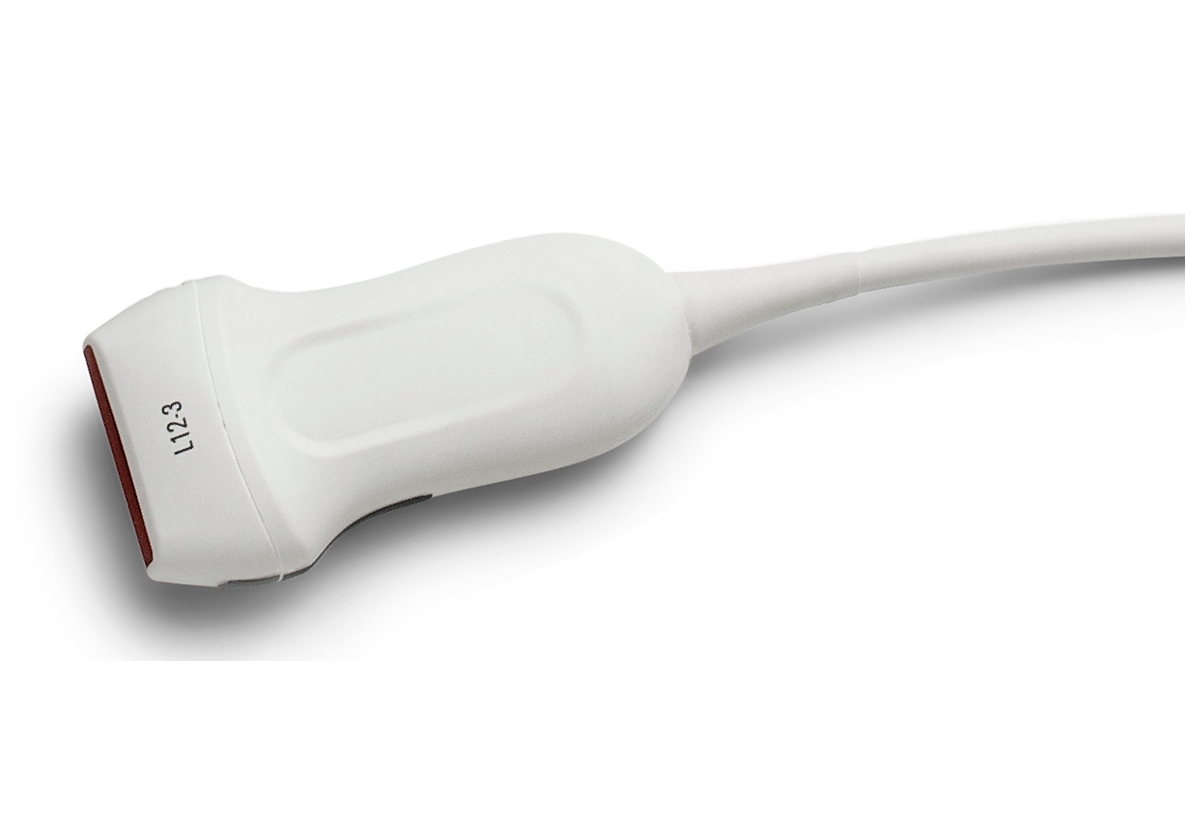
Franance currently lists four ultrasound probes in this category: the Philips L12-3 and Mindray L12-3E linear transducers, the GE HealthCare L4-12t-RS linear probe, and the GE HealthCare C1-5-RS convex probe. Each is a make- and model-specific accessory. Before you request a quotation, match the requested probe reference to the exact ultrasound scanner, serial number, hardware and software release, then confirm compatibility against current manufacturer documentation. The category name also refers to linear, convex and TVS/endocavity types, but there is no TVS probe among these four current product assignments. A general category label is not a promise that every probe family is listed or available. If you need a transvaginal or other endocavity transducer, identify the exact supported model for the host console and state that requirement separately. Franance handles quote orders rather than online payment: submit the model and requirements, then the team follows up by phone or email and confirms the offer in writing.
Which ultrasound probes can I request a quote for in Nigeria?
The current listing contains four products. Use the model-filtered links to see each exact catalogue record:
- Philips L12-3 linear transducer
- Mindray L12-3E linear transducer
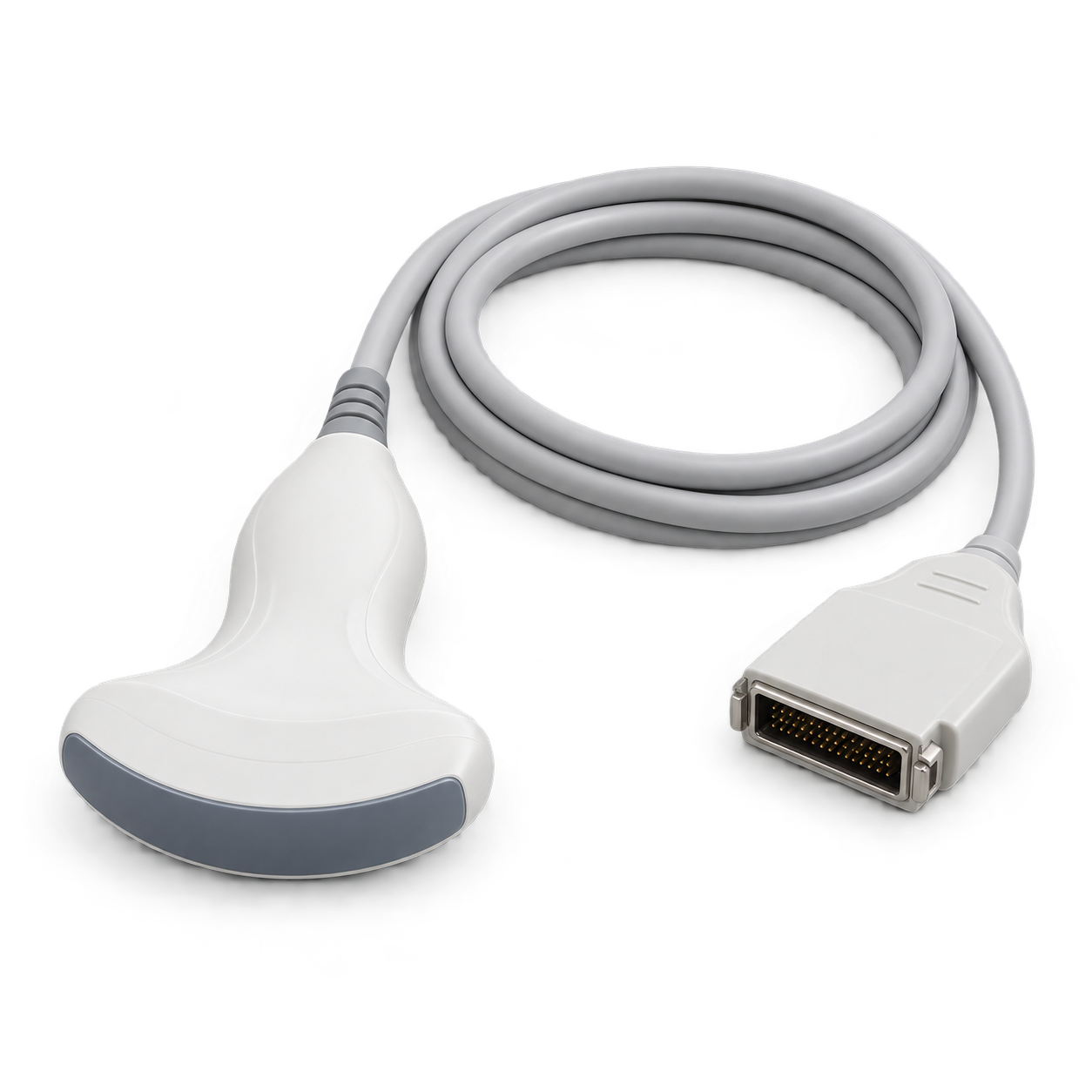
- GE HealthCare C1-5-RS convex probe
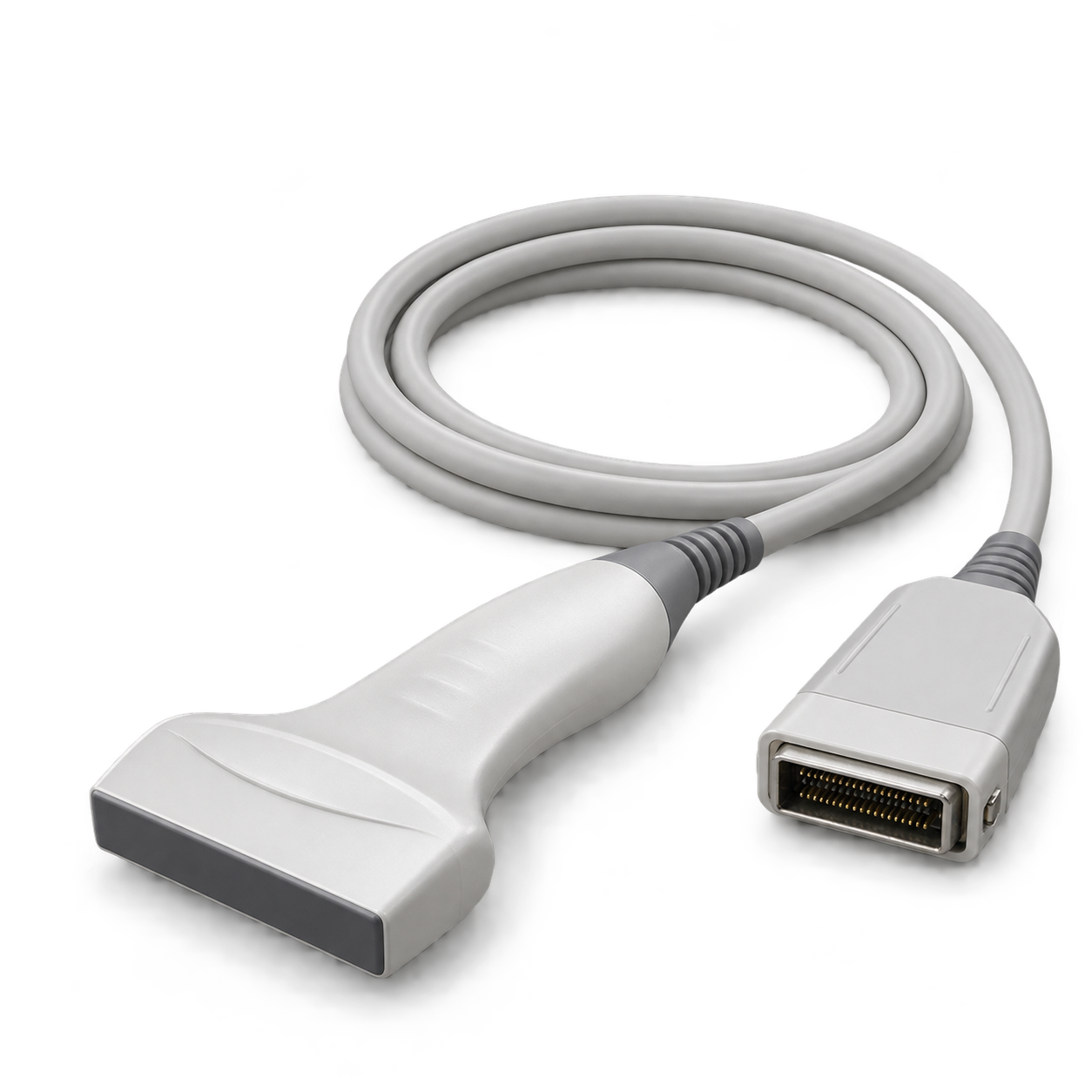
- GE HealthCare L4-12t-RS linear probe
These records are shown because they have an assignment to the ultrasound systems probe category. Mindray L12-3E and both GE models also have an imaging-spare-parts classification, which supports browsing the same items in the service-parts context. A listing is not proof of present stock, remaining manufacturer support for a particular console, or a compatible package for your site. Request confirmation for the exact reference you intend to install.
The manufacturer information gives a useful starting point for comparison. Philips describes the L12-3 as a broadband linear array with 160 elements, a 12–3 MHz range and a 38 mm aperture. Mindray's transducer sheet identifies the L12-3E as a linear probe and provides a frequency bandwidth and field of view in a DC-70 system context. GE's Probe Picker identifies the L4-12t-RS as a high-frequency linear array and the C1-5-RS as a wideband convex array. The system manual remains the controlling source for compatibility and use with a particular ultrasound console.
What is the difference between linear, convex and TVS ultrasound probes?
The array and footprint influence how an ultrasound system forms the image and what examination workflows the transducer is designed to support. In general, linear arrays have a flatter footprint and are commonly associated with superficial or small-part applications; convex or curved arrays have a curved footprint and are often designed for broader or deeper fields; endocavity transducers are designed for a particular internal examination approach, such as endovaginal imaging. These broad descriptions help sort requirements, but they cannot determine clinical suitability on their own.
The intended application, approved protocol, system compatibility, frequency range, footprint, field of view, operating modes, software and accessories all matter. Do not select a probe based only on the word “linear,” “convex,” a nominal frequency, or a product photograph. The clinical department should define its examinations and required functions. Biomedical engineering and procurement can then verify model references, compatibility, installation and lifecycle requirements.
TVS is commonly used to describe transvaginal ultrasound. The probe may be listed by a manufacturer as endovaginal or endocavity rather than by the abbreviation TVS. For instance, Philips describes the C10-3v as a curved-array transducer for endovaginal applications. That example clarifies the class; it is not a current item in Franance's four assigned products here. Confirm the intended probe name and exact part number for the console you own. Also identify any required covers, biopsy guides, cleaning or disinfection instructions, storage, inspection and acceptance documentation using the manufacturer's instructions and facility policy.
This page is procurement guidance, not clinical advice. A qualified clinician must determine whether a probe and ultrasound system are appropriate for an examination or patient. Manufacturer marketing applications do not replace clinical protocols, staff competency, system manuals or local governance.
How do I check if an ultrasound probe is compatible with my scanner?
Start from the scanner, not from a broad probe category. Record the manufacturer, exact model family, model variant, serial number, hardware version and software release. Then record the installed probe's full part number, connector and any visible revision. Give these details to Franance and request a written compatibility check against the applicable manufacturer's operator manual, probe matrix or technical support response.
Compatibility may vary within the same product family. GE states that the L4-12t-RS and C1-5-RS can depend on the ultrasound system release and directs users to the system manual. Its Service Shop listings identify compatible product families for those references but still include release caveats. A model appearing in a manufacturer's list should therefore be treated as a starting check, not a guarantee for every software version or hardware configuration.
For the Mindray L12-3E, the manufacturer transducer sheet cited in the product record describes it in a DC-70 context. Confirm the exact DC-70 edition and software/hardware version instead of assuming compatibility with every Mindray console. Philips' L12-3 page supplies probe specifications and applications; the public page alone does not identify a universal list of host systems. Request the applicable Philips system compatibility documentation for the scanner being serviced.
Ask the seller or manufacturer to confirm, in writing, the exact probe code, connector, compatible scanner/version, enabled applications and modes, required software, accessories and any limitations. If the probe is being purchased as a replacement, ask the supplier to compare the current installed part number and service history with the proposed replacement. Resolve any mismatch before an order is approved. Never assume that a physically similar connector means electrical, software or application compatibility.
How do the four listed ultrasound transducers differ?
The Philips L12-3 is a linear probe whose official specifications include 160 elements, a 12–3 MHz range and 38 mm aperture. Philips lists vascular, interventional, bowel, musculoskeletal, small-parts and superficial imaging applications, and identifies it as biopsy capable. The manufacturer notes country-specific availability. Confirm that the relevant host system supports the reference and that any intended accessory is compatible.
The Mindray L12-3E is also a linear transducer. Mindray's transducer sheet lists a 4.4–13.5 MHz bandwidth, 38.1 mm field of view and NGB-007 multi-angle reusable needle-guide support in the DC-70 context. Confirm that these specifications match the correct document and hardware/software generation for the system under consideration. Do not infer that NGB-007 is included in a quote unless it is listed as a line item.
The GE HealthCare L4-12t-RS is a wideband linear array with configurable buttons. GE's Probe Picker lists a 3.4–12.6 MHz frequency range, a 12.7 x 47.1 mm footprint and applications including musculoskeletal, peripheral vascular, vascular access, small parts, nerve block and related uses. GE Service Shop identifies item 5435010 and notes an exact-replacement equivalent item 5433596; current item status and any exchange or core-return conditions must be confirmed for the specific offer.
The GE HealthCare C1-5-RS is a wideband convex array. GE's Probe Picker lists 1.4–5.7 MHz and a 17.2 x 69.3 mm footprint. GE Service Shop identifies item 5499608 and shows product-family and compatible-console details, with a warning that system release affects compatibility. Confirm the probe reference, console, version and commercial condition before requesting a replacement.
These specification summaries are not a ranking, a clinical comparison or an assertion that the products are interchangeable. Their numerical ranges are transducer characteristics, not recommendations for an examination. Verify all values and application notes against current documentation for the offered region and exact system. Current catalogue listings can change; Franance confirms the model quoted for your enquiry.
Which ultrasound probe should a Nigerian hospital buy?
There is no one probe that is right for every scanner or facility. The hospital's qualified clinical team should define the approved examination mix and minimum technical requirements. For existing equipment, begin with the scanner model, version and currently supported probe schedule. For a new console, write the system and probe requirements together so that the supplier can confirm the complete configuration rather than quote a probe in isolation.
Create a comparison sheet with the exact probe code, array type, manufacturer's stated frequency range, footprint, field of view when documented, system compatibility, enabled modes or applications, accessory needs and required condition. Add the scanner model and software version to every row. Keep required features separate from optional accessories, and ask suppliers to state any exclusions. For a replacement, clarify whether the offer is new, refurbished, repaired, exchange or another condition and what inspection, warranty and return conditions apply.
The WHO user guide to medical-device technical specifications recommends using structured requirements as part of procurement planning. WHO's ultrasound-system specification template also includes accessories, spare parts, probe commissioning, acceptance testing and training among the procurement topics. Use these resources as planning references, then adapt requirements to your facility, manufacturer's instructions and clinical governance.
Review probe handling, transport, cleaning, disinfection, storage and inspection procedures before selection. Ask the manufacturer for instructions for use that apply to the exact probe and intended use. Consider serviceability and replacement availability as lifecycle questions, but do not infer local parts, support or warranty from an overseas manufacturer's web listing. Franance can discuss a requirement and state what is confirmed for the actual quote.
What information should I send for an ultrasound probe quotation?
For a clear quote order, send the details below. Avoid patient names, images or other patient-identifying information; it is not needed to identify an equipment accessory.
1. The scanner manufacturer, exact family and model variant, serial number, hardware version and software release.
2. The full existing probe model and part number, connector details, and whether it is a replacement or additional probe.
3. The exact requested probe reference, quantity, intended approved application and any required accessory or guide.
4. The required condition and any inspection, testing, acceptance or documentation requirements.
5. Facility name, department, procurement contact, delivery city and state in Nigeria.
6. Any requested installation, commissioning, staff handover, training, service or warranty scope as separate requirements.
7. A procurement deadline or tender specification, if applicable, and any quote-format requirements.
Ask for the written offer to identify the exact probe code and condition, compatible scanner model and release, included accessories, exclusions, price, quote validity, delivery estimate and warranty or return terms. Where compatibility has not been confirmed, keep it as an open item and obtain the manufacturer documentation before authorising a purchase. For an exchange item, make any return-core or old-part condition explicit before the order is approved.
You can request an ultrasound probe quotation from Franance. The team will follow up by phone or email to confirm the requirements and the written commercial terms.
Can Franance deliver ultrasound probes across Nigeria?
Provide the destination city and state in your enquiry. Franance can review the requested item and destination and confirm whether it can quote supply and any requested service scope for that specific order. This category does not promise that every model is in stock in Nigeria, that delivery is available to every address, or that a fixed delivery date or warranty applies.
If the probe is for a facility outside a major city or for a multi-site project, include each delivery point separately. Ask whether the offer includes freight, insurance, customs/import handling, delivery to the receiving room, inspection, commissioning or staff training; do not assume these are included. Have the facility's biomedical engineering team verify any site requirements and acceptance process before approving the offer.
Can I buy an ultrasound transducer online from Franance?
No. Franance does not take online payment for ultrasound transducers. The catalogue supports a quote-order enquiry: select the exact product reference or send the scanner details and approved requirement, then Franance follows up by phone or email. The written quotation states the price, confirmed model, availability and agreed delivery or service terms.
Start with the complete ultrasound probe and transducer listing, explore the wider ultrasound systems category, or contact Franance for a quotation. Include the scanner model and software version so the enquiry can focus on the precise compatible reference.
Common questions
Which ultrasound transducers does Franance currently list in this category?
The current category contains four models: Philips L12-3 and Mindray L12-3E linear transducers, GE HealthCare L4-12t-RS linear probe, and GE HealthCare C1-5-RS convex probe. The category list does not establish stock or host-scanner compatibility.
Are the listed probes compatible with any ultrasound scanner?
No. Compatibility depends on the exact scanner family and model, connector, hardware and software release, and manufacturer restrictions. Send the scanner details and request compatibility confirmation against the applicable manual or manufacturer matrix before approving a quote.
Does this category currently include a TVS or endocavity probe?
No endocavity or TVS probe appears in the four current product assignments. TVS is a separate probe requirement. Specify the exact host system, required endocavity model and intended approved workflow so Franance can confirm whether it can be sourced and quoted.
What information should I send for an ultrasound probe quote in Nigeria?
Include the scanner manufacturer, model, serial number, hardware and software version, existing probe part number, requested probe reference, quantity, required condition, approved application, accessory needs, facility and delivery city/state. Franance will confirm compatibility and commercial terms in a written quotation.
Can Franance deliver a probe to every state in Nigeria?
Provide the destination city and state. Franance confirms availability, delivery and any requested inspection or technical scope for that specific quotation; the catalogue does not promise stock or a fixed delivery time across every location.
Can I purchase an ultrasound probe online from Franance?
No online payment is taken. Submit a quote-order enquiry and Franance will follow up by phone or email, then confirm the offered model, compatibility, price, delivery and terms in writing.
Request an ultrasound probe quotation from Franance.
Send the exact scanner model and serial number, software release, existing probe reference, required model and quantity, intended approved application, condition and any accessory needs, plus your facility and delivery city/state. Franance will review compatibility and confirm the available offer and terms in writing.
Request a quotationNeed an equipment quote?
Add the models you need to a quote order, or send us your equipment list.