

Buy 16-Slice CT Scanner in Nigeria.
Browse 16-slice ct scanner and request a quotation for your facility in Nigeria. Include the configuration, quantity and delivery location you need.
Products
2 models
Where can I buy a 16-slice CT scanner in Nigeria?
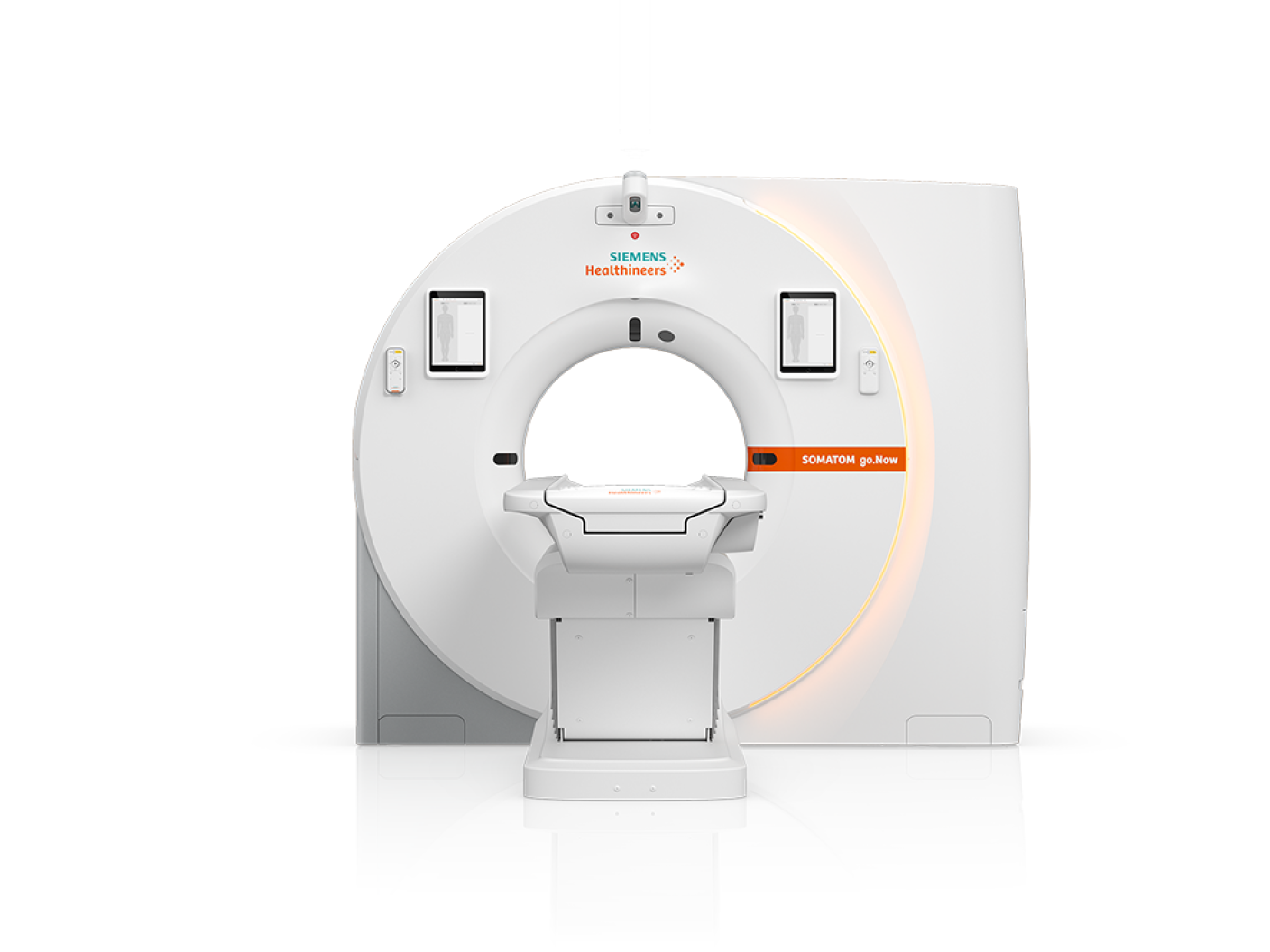
Start with the 16-slice CT scanner category in Nigeria, then compare the Siemens SOMATOM go.Now listing and Neusoft NeuViz 16 Classic listing. These filtered pages identify current catalogue records, not all systems available in the market or a confirmed unit in stock.
Read moreWhich 16-slice CT scanner models does Franance list?
The category currently contains two records. Siemens Healthineers publishes SOMATOM go.Now specifications including 16 acquired slices (with a stated 32-slice option for IVR), 16 × 0.7 mm z-coverage, 112 reconstructed slices, up to 0.5-second rotation time, 32 kW power, 3.5 MHU tube capacity, a 70 cm bore and a 160 kg standard table load with an optional higher limit. Siemens marks certain values or features as optional and notes that products and services are not commercially available in every country or modality. The precise regional offer must be checked.
Read moreWhat does “16-slice CT” mean when comparing scanners?
“16-slice” is a useful search and category term, but it is not a complete scanner specification. Manufacturers may separately report detector rows, acquired slices, reconstructed slices, z-coverage, optional modes, interpolation or software-dependent output. For example, Siemens identifies SOMATOM go.Now as 16 acquired slices and separately lists 112 reconstructed slices and an optional 32-slice IVR configuration. Neusoft describes NeuViz 16 Classic as 16-slice with a 32-row detector and a design based on a 64-slice platform. Those phrases refer to different system details and should not be treated as identical measures.
Read moreBuy a 16-Slice CT Scanner in Nigeria: Compare Models and Request a Quote
Buy a 16-slice CT scanner in Nigeria by comparing the exact acquisition specification, clinical workload, tube and generator, reconstruction tools, room requirements, radiation-safety plan and lifecycle support. Franance currently lists Siemens Healthineers SOMATOM go.Now and Neusoft NeuViz 16 Classic. Their shared “16-slice” category label does not make the two configurations equivalent: manufacturers describe detector, acquired and reconstructed slice capabilities differently. Franance accepts quotation orders and follows up by phone or email. There is no online payment or automatic confirmation of price, stock, regulatory status, delivery or installation.
Where can I buy a 16-slice CT scanner in Nigeria?
Start with the 16-slice CT scanner category in Nigeria, then compare the Siemens SOMATOM go.Now listing and Neusoft NeuViz 16 Classic listing. These filtered pages identify current catalogue records, not all systems available in the market or a confirmed unit in stock.
For a quotation, send your facility and destination city/state, expected workload, required examinations and applications, existing CT room and power status, networking needs, project timeline and installation or service scope. If you have a technical specification, include it. If you want the supplier to propose an option, identify whether your requirement is a performance outcome or an exact model. Franance can follow up by phone or email and prepare a written quote order for review. Ask the offer to state the exact model, configuration, price basis, availability, delivery assumptions, included services and exclusions.
The system is a major imaging project. A catalogue label cannot replace review by radiologists, medical physicists, biomedical engineers, radiation-safety specialists and facility engineers. Confirm the exact equipment and project scope with those stakeholders before making a procurement decision.
Which 16-slice CT scanner models does Franance list?
The category currently contains two records. Siemens Healthineers publishes SOMATOM go.Now specifications including 16 acquired slices (with a stated 32-slice option for IVR), 16 × 0.7 mm z-coverage, 112 reconstructed slices, up to 0.5-second rotation time, 32 kW power, 3.5 MHU tube capacity, a 70 cm bore and a 160 kg standard table load with an optional higher limit. Siemens marks certain values or features as optional and notes that products and services are not commercially available in every country or modality. The precise regional offer must be checked.
Neusoft describes NeuViz 16 Classic as a 16-slice CT based on a 64-slice platform, with a 32-row detector, 4 MHU tube, 70 cm aperture, gantry tilt and iterative reconstruction tools. Some regional Neusoft pages describe features and performance differently, so use the documentation matching the offered model, revision and market rather than transferring specifications from another model or market.
The comparison should be model-specific. Record the manufacturer, model and software revision; detector rows and width; number of acquired and reconstructed slices; z-coverage; rotation options; tube and generator; table limits; bore; applications; reconstruction; dose-management features; and included workstations. Ask which values are standard, optional or subject to configuration, and request the technical document that supports each value.
What does “16-slice CT” mean when comparing scanners?
“16-slice” is a useful search and category term, but it is not a complete scanner specification. Manufacturers may separately report detector rows, acquired slices, reconstructed slices, z-coverage, optional modes, interpolation or software-dependent output. For example, Siemens identifies SOMATOM go.Now as 16 acquired slices and separately lists 112 reconstructed slices and an optional 32-slice IVR configuration. Neusoft describes NeuViz 16 Classic as 16-slice with a 32-row detector and a design based on a 64-slice platform. Those phrases refer to different system details and should not be treated as identical measures.
Before tendering, define the clinical tasks, patient groups and image requirements. Ask bidders to map the proposed hardware and software to each requirement, identify the acquisition and reconstruction method, and provide model-specific documentation. Avoid comparing one system’s acquired-slice count with another’s reconstructed-slice count or platform lineage. Ask the supplier to state any assumptions about software version, options, scanning mode, reconstruction and post-processing.
The intended workload matters more than a headline count by itself. Review the exams the department will perform, throughput needs, patient population, table capacity, workflow, dose tools, image-review and connectivity requirements. The clinical and medical-physics teams should set acceptance criteria and evaluate the system against a balanced specification rather than a single marketing metric.
How should a facility compare a 16-slice CT scanner?
Prepare a side-by-side schedule that covers exact model and generation, detector configuration, acquired and reconstructed slices, z-coverage, rotation times, tube and generator ratings, kV and mA ranges, bore, table load, patient positioning, software and post-processing, cardiac or interventional options if needed, dose-management tools, console and workstation, DICOM interfaces, accessories and service scope. Mark every item as standard, optional, separately licensed or not offered. Require the quoted option code and current manufacturer evidence for key capabilities.
Evaluate the complete workflow: patient preparation, positioning, protocol selection, scan, reconstruction, review, reporting, storage and transfer. Ask radiology users to assess usability for the facility’s exams. Confirm how images reach the PACS/RIS or other information systems, which DICOM services and software licences are included, and who performs configuration and acceptance testing. A console feature does not guarantee connectivity to a particular hospital system.
Ask for the evidence behind dose and image-quality claims. Request the test or protocol conditions, reconstruction setting, phantom or clinical method and comparison basis. A vendor statement such as “low dose” is not an individualized patient protocol or a guaranteed outcome. Qualified medical physicists and clinical staff must evaluate the claims and manage protocols according to applicable professional procedures.
What CT room, power and site requirements must I plan?
Ask for the current site-planning guide for the exact scanner configuration. Review room and control-area dimensions, gantry and table footprint, equipment weights, floor loading, service clearances, access route, ceiling height, temperature, humidity, ventilation, heat load, electrical supply, grounding, network, lighting and any cooling or water requirements. Large equipment may need a rigging plan, temporary building opening, lift review or special delivery route. Have facility engineers and the manufacturer or qualified installer assess the actual site.
Power planning should be model-specific. Confirm input voltage, phase, frequency, connected load, peak and transient demand, grounding, circuit protection and power-conditioning requirements. Coordinate generator or UPS sizing with qualified electrical staff and identify the loads that need backup. Do not assume that a nominal kW rating alone describes the facility connection. Include HVAC and environmental needs and define responsibilities for civil, electrical and room-preparation work.
Radiation shielding is also site-specific. A qualified radiation-protection professional should calculate and document requirements for the room, scan workload, neighbouring occupancy, scanner configuration and applicable Nigerian rules. Do not copy a shielding thickness from another hospital or generic online calculator. The facility should establish controlled access, warning systems, operating procedures and quality assurance under professional oversight.
What regulatory, radiation-safety and acceptance documents should I request?
Ask for the exact model identity, manufacturer, regional configuration, intended-use documents, instructions for use, technical specifications, conformity documents, service manuals and applicable Nigerian registration evidence. NAFDAC’s current medical-device guidance states that medical devices imported, advertised, sold, distributed or used in Nigeria are subject to registration requirements under applicable rules. Verify the status and documentation for the specific product and transaction with NAFDAC or a qualified regulatory adviser; a catalogue page does not establish registration.
For radiation safety, identify applicable Nigerian laws and regulatory requirements and consult qualified radiation-protection and medical-physics professionals. The WHO-IAEA technical specifications for imaging devices provide procurement context for CT system configuration and connectivity, but the publication’s emergency-response scope does not define every facility’s routine purchase requirements. Use current local requirements and model-specific documents for the actual project.
Agree a documented acceptance plan before ordering. It should verify delivered model and serial identity, included components and options, installation completion, safety interlocks, scanner functionality, image and dose displays, network integration, acceptance testing, calibration and quality-control baselines, training, manuals and handover. Name who conducts and signs each check and how deviations are corrected. Confirm whether independent acceptance testing or medical-physics measurements are included or separately arranged.
What installation, service and lifecycle support should the quotation include?
CT scanners require planned maintenance, qualified service, component replacement and dependable software support. Request a service plan with preventive-maintenance frequency, corrective-response process, parts and tube coverage, software updates, remote support conditions, uptime measurement, escalation contacts, working hours, travel charges and exclusions. Ask where service engineers are based, which territories are covered and which activities are done by the manufacturer, an authorized partner or the supplier. Do not assume local support is included without written evidence.
Define installation, commissioning, acceptance testing, applications training, operator training, service training and handover as separate deliverables. Request duration, participant limit, venue, language, dates, prerequisites and completion records. Clarify whether site survey, room readiness sign-off, rigging, shielding, power modifications, HVAC, networking, contrast injector, workstations, PACS/RIS integration and radiation-safety approvals are within the supplier’s scope or the facility’s responsibility.
The warranty should state its start date, duration, covered components, exclusions, labour and travel, response target, claims process and any uptime or tube terms. Request a lifecycle schedule for consumables and replacement parts and include downtime planning. Compare total cost over the facility’s chosen planning period, including energy, service, replacement components, software, room upkeep and eventual decommissioning—not only the initial equipment price.
What affects the price of a 16-slice CT scanner in Nigeria?
There is no reliable single price for all 16-slice CT projects. Cost depends on scanner generation and condition, configuration, tube and generator, reconstruction and clinical applications, workstations, software, accessories, delivery, import and clearance, site readiness, shielding, power, cooling, installation, commissioning, training, warranty and service. Currency and quote validity also matter. A manufacturer’s global page or starting price is not a final Nigerian project price.
Ask for an itemised quotation that separates equipment, options, freight and insurance, import responsibilities, duties and taxes treatment, room work, shielding, electrical and HVAC work, installation, acceptance tests, integration, training, warranty and ongoing maintenance. State the exact facility address and state, access constraints, project date and existing equipment. Ask the supplier to list assumptions, exclusions and customer prerequisites, and to confirm product condition if the proposal is not for a new unit.
For a fair comparison, give each bidder the same performance specification and site information. Ask them to respond line by line with the offered value, evidence, option code, inclusion status and deviation. The least expensive system may not include the same clinical applications, infrastructure work or service coverage. Franance can follow up on a quote order and provide written commercial terms for the specified destination and scope.
How do I request a 16-slice CT scanner quotation from Franance?
Review the 16-slice CT scanner category and the SOMATOM go.Now and NeuViz 16 Classic listings. Include your facility name, contact details, destination city and state, model preference or approved specification, quantity, clinical applications, project timing, site survey status, room and power information, network requirements, requested services and import or regulatory questions.
Franance will follow up by phone or email to clarify the requirements and prepare a written quotation for review. Ask the offer to confirm exact model and configuration, detector and slice definitions, options and licences, product condition, current availability, regulatory evidence, site assumptions, delivery terms, installation and acceptance scope, training, warranty, service, itemised price and exclusions. Have the clinical, engineering, medical-physics and procurement teams review the offer together.
To discuss a project, request a 16-slice CT scanner quotation from Franance. A quote order begins a conversation; it is not an online purchase or a confirmation of stock, delivery or clinical suitability.
Common questions
Are the SOMATOM go.Now and NeuViz 16 Classic equivalent because both are 16-slice CT scanners?
No. Slice, detector, acquisition, reconstruction, tube, generator, software and optional configurations differ. Compare the exact model specifications against your approved performance requirements.
Does a 16-slice CT quotation include room construction and shielding?
Not by default. Ask the written proposal to identify room work, shielding, electrical and HVAC changes, installation, acceptance testing, integration and training responsibilities.
Does Franance confirm stock or final price on the category page?
No. Availability and commercial terms must be confirmed for the exact configuration and destination in a written quotation.
Can I pay for a scanner online through Franance?
No. Franance accepts quote orders and follows up by phone or email; there is no online checkout.
Request a 16-slice CT scanner quotation from Franance.
Send your facility, destination, model preference or approved specification, workload, site and power status, applications, networking, requested services and project timeline. Ask the written offer to confirm exact system configuration, regulatory evidence, availability, installation, acceptance, warranty, support, price basis and exclusions.
Request a CT quoteNeed an equipment quote?
Add the models you need to a quote order, or send us your equipment list.