

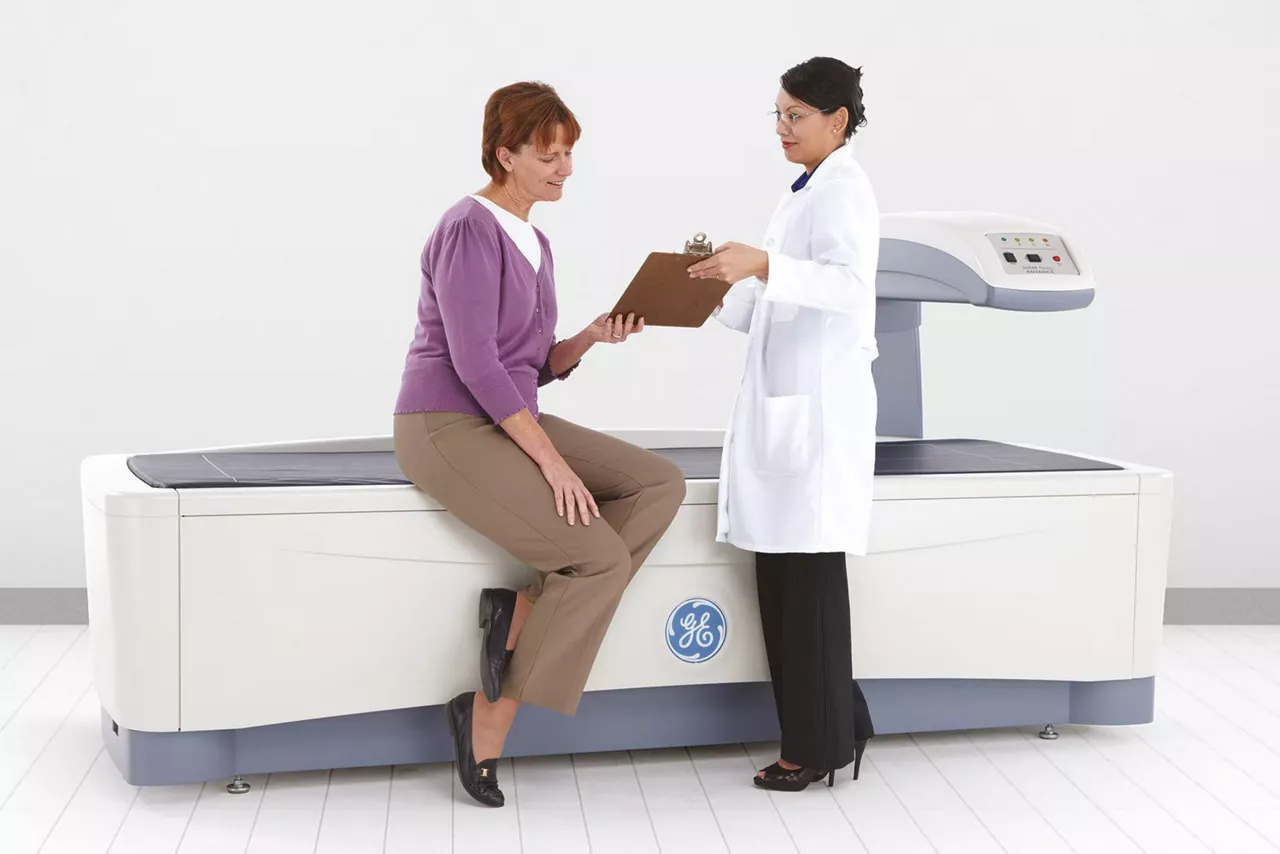
Buy DEXA Bone Densitometry System in Nigeria.
Buy a DXA bone densitometry system in Nigeria through Franance by comparing clinical applications, software, room requirements, workstation, quality-control plan and service scope. The current category lists GE HealthCare Prodigy DXA, GE HealthCare Lunar iDXA and Hologic Horizon DXA System. Manufacturer options vary by configuration and region, so ask for an itemized written quote for the exact system and destination.
Products
3 models
Which DXA systems are listed by Franance?
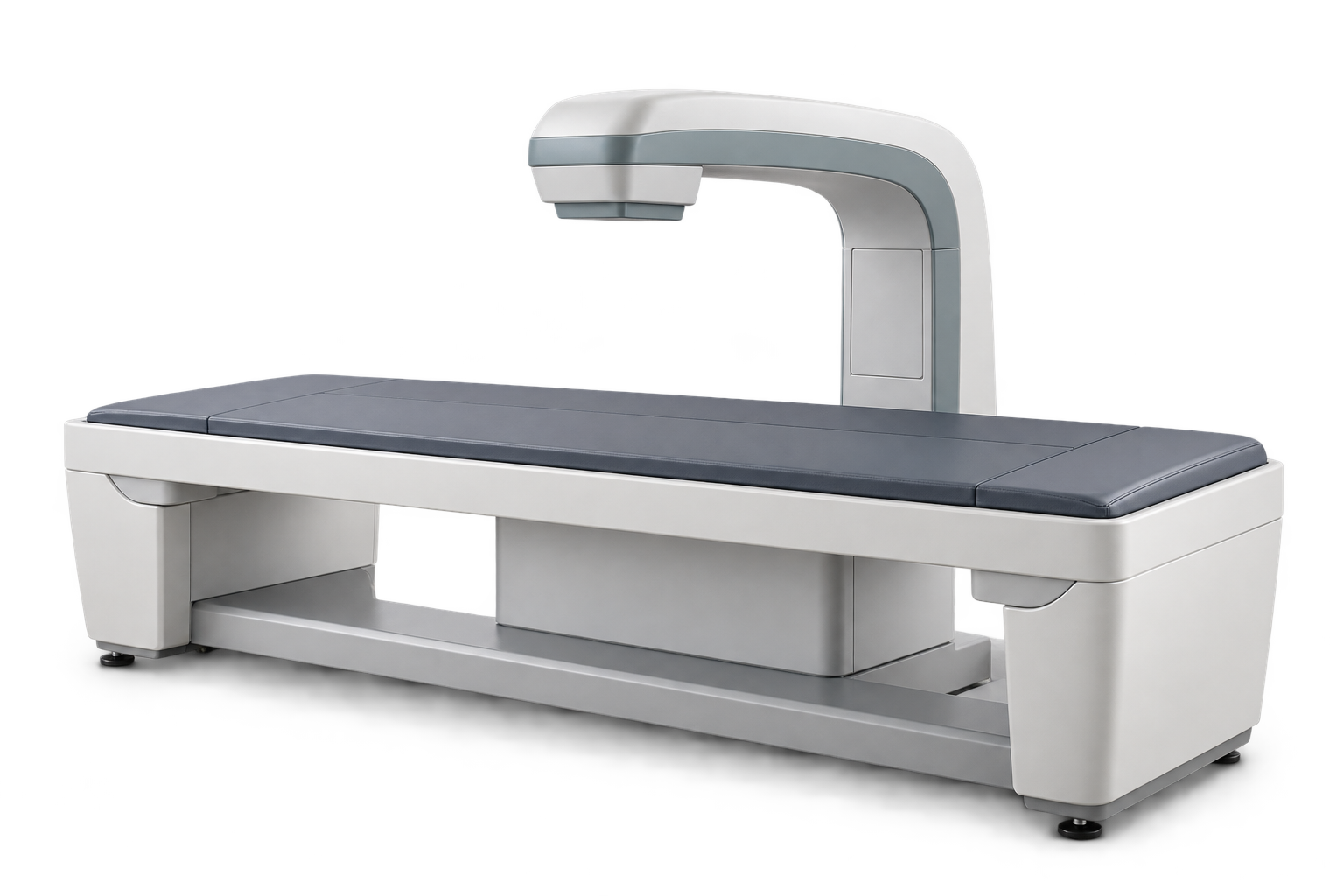
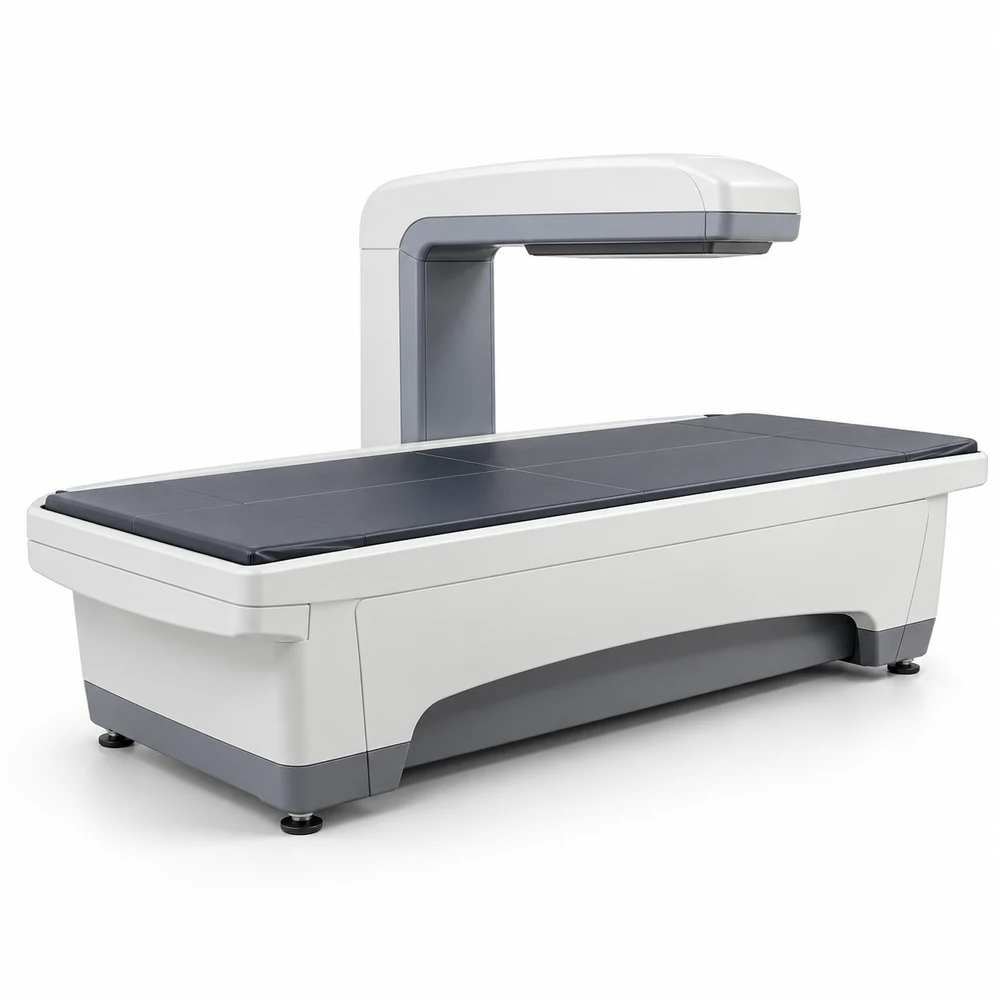
The current category has exactly three product records. GE HealthCare Prodigy DXA is described by GE as a bone mineral density and body-composition system, available in full and compact sizes with optional application packages. GE HealthCare Lunar iDXA is GE's Lunar DXA system; the manufacturer describes it as a high-precision bone-health and body-composition platform and publishes configuration-specific system and site-planning information. Hologic Horizon DXA is Hologic's DXA platform, with manufacturer materials describing bone-density and body-composition applications and model-dependent configurations.
Read moreWhat does a DXA bone densitometry system measure?
Dual-energy X-ray absorptiometry (DXA, also written DEXA) uses two X-ray energy levels and detector measurements to estimate bone mineral content and density at selected skeletal sites. Depending on model, software, protocol and intended use, a platform may also offer vertebral assessment, body-composition estimates, fracture-risk tools or other analysis applications. GE lists Prodigy applications for bone mineral density and body composition, with optional tools such as Trabecular Bone Score, Advanced Hip Assessment, FRAX and CoreScan subject to configuration and regional availability. Hologic describes Horizon as supporting bone-density and body-composition workflows, with capabilities and options depending on the model and software.
Read moreHow should I compare Prodigy, Lunar iDXA and Horizon?
Compare the offered configuration rather than treating the family name as a complete specification. For Prodigy, identify full or compact form, included workstation and software, standard applications, options, detector and intended workflow. GE says optional functions and features can depend on the base model and may not be available in every region; ask the supplier to mark each requested option as included, optional, unavailable or requiring separate licensing.
Read moreBuy DXA Bone Densitometry Systems in Nigeria
Buy a DXA bone densitometry system in Nigeria through Franance by comparing the clinical applications, software, room requirements, workstation, quality-control plan and service scope that your facility needs. The current DXA category lists three systems: GE HealthCare Prodigy DXA, GE HealthCare Lunar iDXA, and Hologic Horizon DXA System. Manufacturer options vary by configuration and region, so a product family name does not confirm that every software application, accessory or service is included in a Nigeria quotation. Franance handles quote orders rather than online payment. Share the intended services, facility location, room details and required applications. Franance can follow up by phone or email to clarify the request. Equipment price, availability, delivery, regulatory documentation, installation, training, warranty and local servicing must be confirmed in a written proposal.
Which DXA systems are listed by Franance?
The current category has exactly three product records. GE HealthCare Prodigy DXA is described by GE as a bone mineral density and body-composition system, available in full and compact sizes with optional application packages. GE HealthCare Lunar iDXA is GE's Lunar DXA system; the manufacturer describes it as a high-precision bone-health and body-composition platform and publishes configuration-specific system and site-planning information. Hologic Horizon DXA is Hologic's DXA platform, with manufacturer materials describing bone-density and body-composition applications and model-dependent configurations.
Use the exact listings for Prodigy DXA, Lunar iDXA and Horizon DXA to compare the catalogue records. These are different manufacturer's systems and software ecosystems. Do not assume their measurements, reference databases, positioning aids, analysis packages, reports or service parts are interchangeable.
What does a DXA bone densitometry system measure?
Dual-energy X-ray absorptiometry (DXA, also written DEXA) uses two X-ray energy levels and detector measurements to estimate bone mineral content and density at selected skeletal sites. Depending on model, software, protocol and intended use, a platform may also offer vertebral assessment, body-composition estimates, fracture-risk tools or other analysis applications. GE lists Prodigy applications for bone mineral density and body composition, with optional tools such as Trabecular Bone Score, Advanced Hip Assessment, FRAX and CoreScan subject to configuration and regional availability. Hologic describes Horizon as supporting bone-density and body-composition workflows, with capabilities and options depending on the model and software.
The scanner does not independently establish a diagnosis or replace qualified interpretation. A clinical service needs trained staff, consistent acquisition and analysis protocols, patient-history context, quality control and reporting appropriate to its practice. Before procurement, identify whether the system is for routine bone-health service, body composition, research, specialty assessment or a defined mix. Confirm that the proposed applications and reference data support the facility's approved use. Clinical decisions and patient care must remain with qualified health professionals.
How should I compare Prodigy, Lunar iDXA and Horizon?
Compare the offered configuration rather than treating the family name as a complete specification. For Prodigy, identify full or compact form, included workstation and software, standard applications, options, detector and intended workflow. GE says optional functions and features can depend on the base model and may not be available in every region; ask the supplier to mark each requested option as included, optional, unavailable or requiring separate licensing.
For Lunar iDXA, ask for the exact package, software version and applications, workstation specification, included accessories and available connectivity. GE's published technical literature includes system dimensions, room layouts, power and environmental specifications for particular iDXA configurations. Confirm those values from the current installation documents for the version offered rather than relying on an old brochure. For Hologic Horizon, establish which model and software build is offered, the analysis and reporting packages, body-composition or advanced applications, workstation and integration requirements. Hologic's product and document pages show the software and documentation are release-specific.
Build a comparison table around your use: scan types and patient volume; measurement sites and protocols; positioning aids; patient weight and access needs; body-composition applications; software licences; report format; quality-control tools; connectivity; workstation lifecycle; training; and service. Ask each bidder to identify the exact configuration and all exclusions. Manufacturer claims such as scan speed, precision or image quality should be read in the context of the stated model, protocol, software and manufacturer test conditions; they do not guarantee identical performance at your site.
What room, electrical and environmental requirements should I plan?
Obtain the manufacturer's current pre-installation manual and final installation drawings for the exact model before selecting or modifying a room. Check the scanner footprint, patient-table travel, operator workstation, wheelchair and stretcher access, patient transfer space, cleaning route, power, earthing, network, environmental temperature, humidity, ventilation and maintenance clearances. Plan the delivery route from the loading entrance to the room, including lifts, door widths, ramps, corridor turns and floor-loading capacity. Request packaged and installed dimensions and weight, not only a product photograph.
As an example of why model-specific planning matters, GE publishes Lunar iDXA room layouts and electrical details; a current regional brochure describes a dedicated circuit, voltage ranges, environmental limits and equipment dimensions for that particular configuration. Do not copy these requirements to a Prodigy, another iDXA package or a Hologic Horizon. Request the exact model's current site-planning documents and have the facility's engineering team check them against the proposed room and Nigeria's electrical supply conditions. Include a suitable power-conditioning or UPS strategy only after the manufacturer or qualified engineer confirms the appropriate design; do not assume a generic office UPS is adequate.
DXA uses ionizing radiation. Do not infer shielding requirements from another country, another system or a general brochure. Obtain a site-specific radiation-protection assessment from qualified professionals and confirm requirements with the responsible Nigerian regulatory authorities before installation and clinical operation. GE's literature cautions that local requirements vary; a manufacturer's general statement about shielding in a particular country does not settle Nigerian requirements.
How do quality control, calibration and reference databases affect service?
Request the manufacturer's installation acceptance procedure and the quality-control protocol for the exact scanner and software. Clarify the phantom or calibration device supplied, baseline establishment, daily or periodic checks, test records, thresholds for investigation, service escalation and how QC results are retained. Confirm who performs installation qualification, operator training, acceptance testing and application configuration. A system should not be treated as ready for clinical service solely because it powers on or produces images.
Longitudinal bone-density comparison depends on consistent acquisition, analysis, calibration and software. If replacing an existing scanner or adding a second vendor, ask the clinical lead and physicist or other qualified specialist to plan how prior measurements will be handled. GE and Hologic platforms have distinct calibration methods, analysis software, positioning and reference materials. A value from one manufacturer's system is not automatically equivalent to a value on another. Plan any necessary cross-calibration or transition under applicable professional guidance; do not promise direct comparability without evidence and a defined protocol.
What software, reporting and connectivity should I specify?
List the intended workflows and interfaces before the quote. Specify whether exams must be stored or queried through PACS, whether DICOM send/receive or worklist integration is required, whether results must populate an electronic medical record or reporting system, and who will configure and test each interface. Ask for the DICOM conformance statement and supported software versions, licence requirements, network ports and security requirements. If the scanner workstation is bundled, identify its operating system, support lifecycle, storage, monitor, backup approach, user roles and remote service configuration.
Define the report outputs, measurement units, reference population or database and any required export or research functions. Confirm how software updates, licence renewals, cybersecurity patches and workstation replacement will be handled. Don't infer that optional applications named on a marketing page are included in the offered software. Request a dated, itemized schedule of the applications and licences, along with the version, permitted use and ongoing costs. If the facility has limited or intermittent internet access, ask which service and update functions require remote connectivity and what offline support path exists.
What installation, training and maintenance should the quote include?
State whether the proposal covers freight to the Nigerian destination, import and handling arrangements, room inspection, installation, calibration, acceptance testing, applications training, user manuals, clinical workflow setup, DICOM integration, warranty, preventive maintenance and post-warranty service. Request named responsibilities for each step and an exclusions list. Ask for documentation needed for equipment registration, radiation-safety review and facility records, while confirming regulatory requirements independently with the responsible Nigerian authority.
For maintenance, request the recommended preventive-service schedule, consumables, phantom or QC accessory replacement, software support term, parts availability, service response expectations, remote diagnostics, local engineer coverage and call-out or travel charges for your state and city. Clarify whether service is direct from the manufacturer, an authorized partner or another provider, and whether the quoted warranty is valid in Nigeria. Training should address acquisition, positioning, analysis, QC, reporting and safe patient handling for the roles at the site. Include refresher training and staff turnover assumptions in the lifecycle plan.
What should I send for a DXA quotation in Nigeria?
Provide the hospital or clinic name, state and city, department, intended clinical and research applications, expected patient volume, current equipment, room drawings or dimensions, delivery route, electrical details, network/PACS requirements, target installation date and preferred system or configuration. Specify patient access and weight requirements relevant to your facility, software options, workstation, accessories, training, regulatory documents, warranty, service coverage and any migration from an existing DXA platform.
Ask for a written comparison showing exact model/configuration, included applications and licence terms, room and power assumptions, equipment and workstation specifications, installation/commissioning scope, training, connectivity, warranty, preventive service, exclusions, freight, lead time and local technical support. Request manufacturer site-planning and acceptance documents before committing to room works. A quote request does not confirm product availability, registration, local service, or successful room approval; each item must be confirmed for the offered model and destination.
Where can I review the listed DXA systems?
Browse the DXA bone densitometry category in Nigeria and its exact GE HealthCare Prodigy DXA, GE HealthCare Lunar iDXA and Hologic Horizon DXA filtered listings. Brand views are also available for GE HealthCare DXA systems and Hologic DXA systems, according to current assigned records.
Request a DXA bone densitometry quotation in Nigeria
Send Franance the required application mix, facility and room details, expected patient volume, software and connectivity needs, installation date, destination state and city, training, radiation-protection review, warranty and service expectations. Ask for the exact system configuration, manufacturer planning documents, itemized inclusions and exclusions, and written confirmation of Nigeria availability and support. Request a DXA bone densitometry quote.
Common questions
What does DXA equipment measure?
DXA uses two X-ray energy levels to estimate bone mineral density at selected sites. Depending on the model, configuration and software, systems may also offer body-composition or other analysis applications. Qualified clinicians interpret results in context.
Are GE and Hologic DXA results interchangeable?
Do not assume direct interchangeability. Systems use manufacturer-specific acquisition, calibration, analysis software and reference data. A qualified clinical and technical team should plan any platform transition or cross-calibration.
Does a DXA system need room or radiation-safety review?
Yes. Obtain current installation requirements for the exact model and have qualified professionals assess the site and radiation-protection needs. Confirm applicable Nigerian requirements with the responsible authorities.
Can I buy a DXA scanner online from Franance?
No. Send a quotation request with the intended applications, site details, configuration, installation and service needs. Franance will follow up by phone or email; price, availability and Nigeria support must be confirmed in writing.
Request a DXA bone densitometry quotation from Franance.
Send the application mix, patient volume, room drawings and delivery route, power/network details, preferred configuration, required software, installation date, Nigerian destination, training, radiation-protection review and service needs. Ask for current model-specific planning documents and an itemized proposal covering applications, licences, installation, training, warranty, support and exclusions. Listing a product does not guarantee availability or local service.
Request a DXA quoteNeed an equipment quote?
Add the models you need to a quote order, or send us your equipment list.