

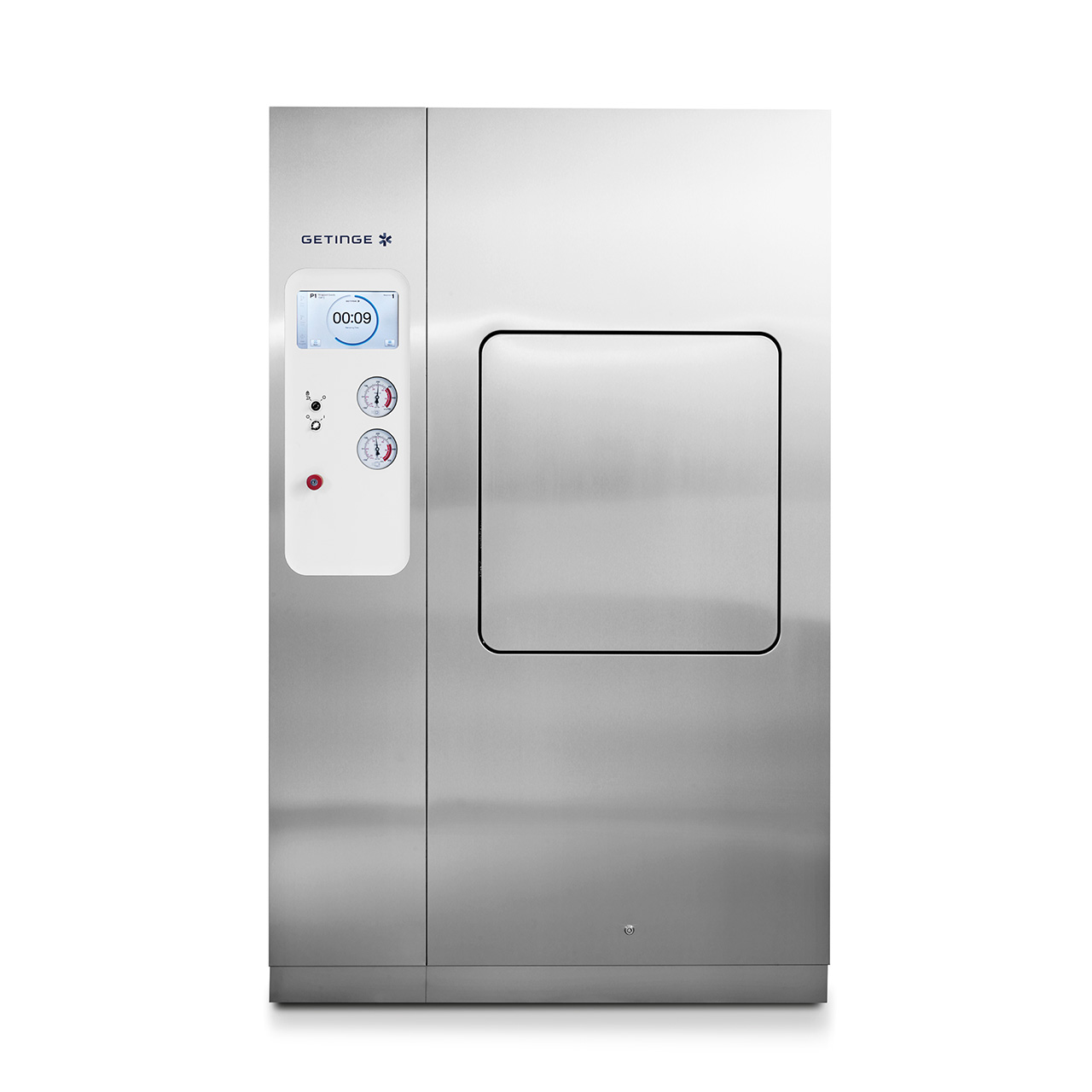
Buy a Getinge GSS67H steam sterilizer in Nigeria
Request a quotation from Franance for the Getinge GSS67H when a hospital CSSD needs a high-capacity steam sterilizer and the facility has a defined load, room, utilities and workflow. Getinge’s international product page lists chamber variants 10, 13, 17 and 20. Their chamber volumes range from 468 to 937 litres, with variant 20 listed as a 937 L double-door configuration. Chamber width and height are 660 and 700 mm, while chamber depth ranges from 1,000 to 2,000 mm. Select a variant from actual processed loads and space requirements; do not treat nominal chamber volume as validated usable capacity or a throughput guarantee. Franance lists this product in the horizontal steam autoclave category and the floor autoclave category. Open the Getinge GSS67H exact filtered listing or its model-filtered horizontal sterilizer list, then request a quotation. This is a quote order, not an online purchase. Nigerian availability, price, installation, warranty and service must be confirmed in the specific offer.
Where can I buy a Getinge GSS67H steam sterilizer in Nigeria?
Franance accepts quotation requests for the Getinge GSS67H. Use the Getinge brand and horizontal steam category listing filtered to GSS67H or browse the exact GSS67H filtered product list. The same product is assigned to the broader floor autoclave category, with a GSS67H-filtered floor autoclave listing. The route identifies the catalogue item; it does not confirm a specific unit is available or priced for Nigeria.
When requesting a quote, provide your facility name, city and state, full address, quantity, procurement stage, target project date and contact. Identify whether the sterilizer is for a new CSSD, expansion, replacement or modernization. Attach an equipment-room plan, sterilization workflow, existing utility schedule and any load or throughput study. If a consultant has defined chamber volume, door arrangement or loading equipment, include that specification rather than asking for a generic “large autoclave.”
Ask the written quote to identify the exact GSS67H chamber variant, single- or double-door arrangement, loading/unloading equipment, baskets or STUs, utilities, interface and data features, installation, commissioning, qualification, training, documentation, warranty, freight, taxes and after-sales support. Franance follows up by phone or email; there is no online checkout. Do not infer Nigerian stock, Getinge authorization, price, delivery time, warranty eligibility or local service from an international product page.
What is the Getinge GSS67H?
Getinge identifies GSS67H as a high-capacity steam sterilizer for healthcare sterilization departments. It is designed for processing medical items suitable for steam sterilization; the item manufacturer’s instructions and the facility’s validated process determine whether a particular device and load can be processed. A sterilizer model does not replace cleaning, inspection, packaging, load preparation, monitoring, release criteria or recordkeeping.
The manufacturer describes its Centric user interface, monitoring and recording of cycle performance data, and chamber options. Getinge’s page also states performance comparisons such as faster processing and reduced utility consumption, but these are manufacturer claims based on their comparison and conditions. They do not guarantee the throughput, water or energy use at a particular Nigerian facility. Base any business case on the actual load mix, services, cycle program, staffing, maintenance and locally confirmed configuration.
The GSS67H is a steam-only product family. It differs from Getinge GSS67F, which is described as combining steam with low-temperature formaldehyde sterilization. It also differs from GSS610H, another Getinge high-capacity steam family with distinct chamber-depth variants and specifications. Compare each model’s current technical documentation and operating requirements; do not transfer chamber data, accessory compatibility or performance assumptions between families.
Which chamber variant should I request: 10, 13, 17 or 20?
Getinge’s current international product page lists four GSS67H variants. Variants 10, 13 and 17 are listed for both single- and double-door arrangements at 468, 609 and 796 L respectively. Variant 20 is shown only as a double-door arrangement at 937 L. The page lists a 660 mm chamber width and 700 mm chamber height across the family, with chamber depth of 1,000 mm for 10, 1,300 mm for 13, 1,700 mm for 17 and 2,000 mm for 20.
Getinge also lists STU, ISO and SPRI capacities: variant 10 shows 6 of each; variant 13 lists 8 STUs and 9 ISO/SPRI; variants 17 and 20 list 10/12 STU and 12 ISO/SPRI, respectively. Confirm the current technical sheet, the definition and dimensions of the load unit, and the actual loader/carrier set that the quotation includes. These published counts are a configuration reference, not evidence that all loads can be processed in every cycle or that a particular load will fit.
Build the choice from representative load data. List instrument sets, containers, trays, packs, weights, dimensions and typical daily batches. Identify peak demand, planned operating shifts, desired loading patterns and whether the CSSD serves one or multiple buildings. Have Getinge or the supplier model chamber loading against the facility’s actual carriers and validated process needs. Nominal litres alone do not account for load shape, packaging, spacing, sterilant circulation or the quantity of usable carriers.
Should I specify one door or a double-door pass-through layout?
The GSS67H product page lists single-door options for chamber variants 10, 13 and 17 and double-door options for all four variants, with model 20 listed as double-door only. A double-door arrangement may fit a pass-through workflow between dirty/clean areas, but it requires matching wall openings, room zoning, interlocks, services and operating procedures. A double door by itself does not create a validated separation or guarantee correct CSSD traffic flow.
Provide a room plan marking dirty receipt, decontamination, inspection and assembly, sterilizer loading, unloading and sterile storage. Indicate where each side of the equipment faces, what barriers and pass-through routes already exist, and where staff and carts move. Ask for a configuration-specific drawing with door travel, maintenance access, service clearances, control positions and wall interface. Confirm whether civil works, partitioning or sealing are included or remain the facility’s responsibility.
Single-door configurations can suit rooms where loading and unloading take place from one side, subject to facility workflow and local requirements. The correct choice depends on the CSSD design and project specification, not just preference or the number of doors shown in a photograph. Confirm the intended installation and process zoning with the infection-prevention lead, CSSD manager, facilities team and project engineer.
How do I verify load and device compatibility?
Begin with each device manufacturer’s reprocessing instructions. Check the permitted method, cycle conditions, disassembly, cleaning, drying, packaging and any limitations for lumens, materials, accessories and repeated processing. Then compare those directions with the current GSS67H operating instructions and the facility’s validated cycle and load configuration. The product category or name alone cannot establish compatibility.
The U.S. CDC’s sterilizing practices guidance explains that sterile product delivery depends on factors including device preparation, packaging, loading, sterilizer monitoring and cycle appropriateness. WHO’s decontamination and reprocessing aide-memoire describes a sequence of facility processes and quality controls, including validation. Use the current applicable local requirements and professional standards for the Nigerian facility.
For procurement, prepare a representative load list with manufacturer, model, tray or container, packaging method and dimensions. Identify implant loads or any special processing requirements to the facility’s CSSD lead. Ask for evidence that the quoted configuration and loading accessories match the intended workload, and agree on who will perform installation verification and qualification. No guide can define a cycle for a particular instrument or replace manufacturer instructions, facility validation or clinical judgment.
What loading equipment and accessories should I include?
Getinge refers to basket and STU loading capacity and promotes a range of manual and automatic loading solutions. A sterilizer quote may require loading trolleys, transfer equipment, shelves, racks, carrier interfaces, loaders/unloaders or room-side accessories. The product record does not state which are included. Ask the supplier to list every loading component by model and quantity, and show how it is compatible with the chosen chamber variant and existing CSSD workflow.
Identify the preferred carrier standard and the exact sizes used by the facility. Confirm how instruments and containers move from assembly to the sterilizer, then to unloading and sterile storage. For a manual arrangement, consider cart clearances, safe movement and staff workflow. For an automatic solution, confirm controls, sensors, electrical/service interfaces, software and safety provisions. Do not assume that an automatic loader, trolley or transfer system is bundled with the base sterilizer.
Request a loading diagram that reflects the facility’s actual load types and carrier configuration. Ask whether required adapters, racks or dedicated carts must be purchased separately and whether those components can pass through doors, lifts and corridors. Confirm whether accessories arrive assembled and how setup, testing, maintenance and spare parts are handled. An empty chamber volume calculation is not a complete loading design.
What utilities and installation conditions should I confirm?
Request an exact utility schedule for the proposed GSS67H variant and door arrangement. Confirm electrical supply, steam source and quality, water, drainage, cooling, ventilation and any other connections or environmental constraints in the current installation manual. Establish demand during start-up, peak cycle and standby; do not size the site from marketing material or the model name. Have qualified local engineering staff assess the facility’s existing services and approved changes.
Plan for service access, heat and moisture management, floor loading, anchoring, safe isolation and maintenance clearance. The quoted overall dimensions and shipment package may differ from chamber dimensions; request the external equipment envelope, weights, centre of gravity, door travel and rigging requirements. Confirm lifting route from receiving dock to the installation room, including the smallest door, turns, lift car, ramps, thresholds and structural restrictions.
For a Nigerian delivery, agree who handles importation, customs, freight, offloading, rigging, positioning, utility connections, commissioning and building work. Request a site survey if available and specify whether it is included, chargeable or outside scope. The product listing does not confirm installation services or a local engineering presence. Obtain those commitments and responsibilities in the written offer before placing an order.
What does the Centric interface and cycle data provide?
Getinge describes Centric as the GSS67H user interface and states that the sterilizer monitors and records cycle performance data. The product page says records can be printed, stored and read by sterile-supply management and traceability solutions. It also describes functionality with or without gloves. These descriptions are not a commitment that a printer, server, software license, network connection, integration, remote access or data migration is part of a particular quote.
Define information requirements with the CSSD manager and IT team. Ask what cycle data is retained on the machine, how it is exported, whether users need RFID or log-in credentials, which optional software or interfaces are available, how backups and time synchronization work, and what network access is required. Confirm data ownership, cybersecurity review, local retention and support responsibilities. If the facility needs integration with a traceability platform, name the system and version and request a written compatibility proposal.
Cycle records are one input to process monitoring; they do not by themselves establish sterile status or substitute for independent monitoring, load controls and validated release procedures. Determine required monitoring and record retention with the facility quality system and applicable requirements. Include any printers, barcoding, network ports or interfaces as explicit line items in the quotation.
How should the CSSD plan validation, staff training and service?
WHO describes decontamination and reprocessing as multiple linked steps with quality-control procedures, including validation, to ensure the equipment and processes function correctly. CDC guidance likewise describes verification before routine use and monitoring as part of a comprehensive sterilization program. A machine purchase alone does not validate loads or the overall CSSD. Define the acceptance, installation qualification, operational checks, performance qualification and ongoing monitoring required for the facility.
Ask the supplier to specify what is available for installation and qualification: site readiness review, startup, calibration, test instrumentation, documented protocols, test materials, training, reports and responsibilities for corrective action. Confirm what the facility must provide and who approves the results. Keep product-specific qualification documentation distinct from validation of each instrument family, packaging method and load pattern.
Build training into project planning for operators, supervisors, maintenance staff and record reviewers. Cover start-up, loading, cycle selection under approved procedures, alarms, downtime, routine cleaning, planned maintenance and record retrieval. Request manuals in accessible form and clarify the service route, response arrangements, spare parts, preventive maintenance intervals and warranty exclusions. Do not infer a local service agreement from Getinge’s international support pages.
Plan for disruption and continuity. Ask about maintenance access, consumables, critical spare parts, recommended service intervals and what happens if the unit is unavailable. The supplier should state which parts and technical support are available for Nigeria, who provides them and under what commercial terms. Arrange alternative capacity according to the facility’s own continuity policy; this product guide does not promise uninterrupted operation or cycle outcomes.
How does the GSS67H compare with GSS610H and GSS67F?
The GSS67H is a steam sterilizer with variants 10, 13, 17 and 20, including a 937 L double-door option. GSS610H is a separate steam family with variants 10, 14, 15 and 21 and different chamber data. Compare their current dimensions, loading and utility requirements for the selected configuration.
GSS67F is materially different because Getinge describes it as a combined steam and low-temperature formaldehyde sterilizer. If the requirement includes instruments that cannot use steam, assess the exact approved processing method and device instructions. Do not choose GSS67F simply because it has a low-temperature function, nor treat that function as a replacement for validating a steam process.
Compare the three families against the same project schedule: validated loads, workload, chamber and carrier dimensions, door arrangement, utilities, data integration, service and installed scope. Review the GSS610H listing and GSS67F listing, then request current technical sheets.
What should I include in a Getinge GSS67H quotation request?
Provide the required GSS67H variant, door arrangement, preferred loading approach, planned volume of work, carrier type, representative loads and number of units. Include a facility drawing with room dimensions, CSSD zoning, access route, existing utilities and any IT or traceability requirements. State the project city and state, target installation date, construction status, contact person, budget process stage and required shipping destination.
Ask the proposal to state the exact model and variant, chamber dimensions and volume, door configuration, included basket/STU systems, trolley and loader package, controls and data features, utility connections and demand, installation and civil works, commissioning and qualification, training, manuals, consumables, warranty, preventive maintenance, parts support and exclusions. Request separate pricing or explicit scope for equipment, accessories, services, freight, duties and taxes.
For Nigerian procurement, have the supplier confirm current availability, shipment origin, delivery estimate, import responsibility, delivery point, offloading/rigging, site readiness, payment terms, quote validity, warranty eligibility and local service route in writing. Franance handles the enquiry as a quote order and follows up by phone or email. Use the GSS67H quote form after reviewing the exact filtered model listing. No online checkout or fixed Nigerian price is represented.
Frequently asked questions about Getinge GSS67H in Nigeria
### What chamber sizes are listed for the GSS67H?
Getinge lists 468 L, 609 L and 796 L variants for single or double doors, and a 937 L double-door variant. The chamber depth varies from 1,000 to 2,000 mm. Confirm the exact current model and document before planning.
### Does the GSS67H include loading trolleys or an automatic loader?
The manufacturer describes loading choices and capacity by carrier type, but Franance’s catalogue record does not define a supplied package. Ask the quote to list each trolley, rack, basket, STU and automatic loader as included, optional or excluded.
### Is Getinge GSS67H suitable for every surgical instrument?
No. Compatibility depends on the device manufacturer’s reprocessing instructions, load configuration, packaging and facility-validated process. The model name alone does not prove compatibility.
### Can the double-door model be installed as a pass-through unit?
Getinge lists double-door variants, but the room design, wall opening, services, door access and workflow must be assessed for the actual site. Request a dimensioned layout and installation review.
### Can I buy the GSS67H online from Franance?
No. Submit a quotation request. Franance follows up by phone or email to confirm configuration and commercial terms.
Sources and verification limits
- Getinge GSS67H international product page and technical data - Getinge GSS67H product brochure - WHO decontamination and reprocessing aide-memoire - CDC sterilizing practices - Franance GSS67H exact filtered listing
Getinge’s product page is for professional audiences and states that information is not a substitute for the instructions for use or service manual and may not be available or allowed in every country. Performance comparisons are manufacturer statements and are not a guaranteed result for a Nigerian installation. The product-specification PDF URL in the catalogue metadata returned 404 during this review; the brochure and online technical table are useful for preliminary selection, but request the current formal specification and installation documents for the exact offer. Confirm technical details, regulatory requirements, utilities, compatibility, configuration and commercial terms in writing.